天弘基金

Search documents
公募指增业务驶上发展快速路
Zhong Guo Zheng Quan Bao· 2025-12-10 20:17
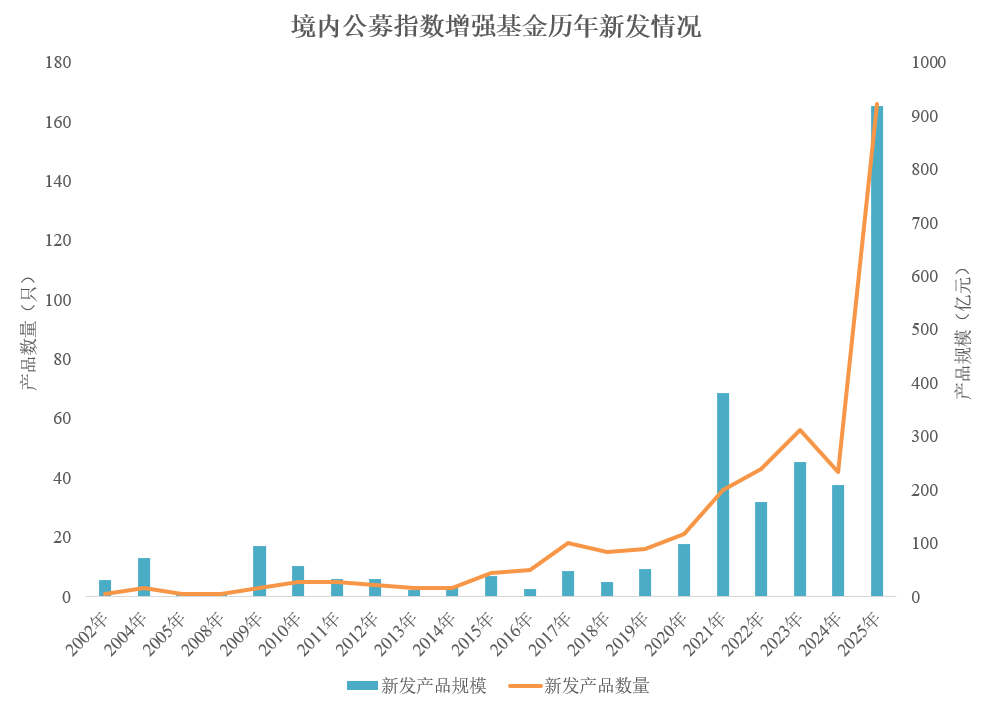
Core Insights - The public fund industry is experiencing explosive growth in index-enhanced products, with 168 new funds established this year, totaling over 92 billion yuan, surpassing the total issuance of the past three years [1][2][3] Group 1: Market Dynamics - The rapid development of index-enhanced products is attributed to a combination of policy guidance, market evolution, and changing investor demand [3][6] - Regulatory frameworks emphasize performance benchmarks, leading public institutions to focus on products that track specific indices while aiming for excess returns [1][3] - The market is seeing a shift towards clearer styles and controllable risks, with investors favoring index-enhanced products that meet these criteria [3][6] Group 2: Product Development - Public institutions are increasingly focusing on newer broad-based indices such as the CSI A500 and the Sci-Tech Innovation Board Index, with 65 and 28 new products launched respectively, accounting for over half of the new index-enhanced products [2][4] - Traditional broad-based indices like the CSI 300 and CSI 500 also saw significant interest, with 35 new products launched this year [2][4] Group 3: Institutional Strategies - Leading institutions have developed comprehensive product matrices covering mainstream broad-based indices, with firms like China Merchants Fund leading with 21 products [4][5] - Mid-tier institutions are accelerating their index-enhanced product offerings, with firms like Huashang Fund and Bodao Fund launching multiple new products this year [4][5] - New entrants in the market are also exploring index-enhanced products, leveraging their quantitative research capabilities to enhance their product lines [5][6] Group 4: Differentiation and Future Outlook - Institutions are focusing on creating differentiated strategies based on their unique resources and capabilities, with some prioritizing core broad-based indices before expanding into innovative products [6][7] - The future of index-enhanced products will depend on their ability to deliver stable excess returns, effective risk management, and investor-centric design [7]
“强制跟投”影响几何?年内公募已豪掷42亿自购股混基金
2 1 Shi Ji Jing Ji Bao Dao· 2025-12-10 13:20
Core Viewpoint - The newly proposed "Guidelines for Performance Assessment and Compensation Management of Fund Management Companies" aims to materialize the principle of "prioritizing the interests of investors" through a series of reforms in compensation management within the fund industry [1][2]. Group 1: Key Changes in Compensation Management - The new guidelines enhance the "follow investment" (跟投) requirements for fund managers and executives, mandating that they invest a significant portion of their performance-based compensation into the funds they manage [1][4]. - Specifically, fund executives must invest at least 30% of their total performance compensation in their company's public funds, with at least 60% of that in equity funds. Fund managers are required to invest at least 40% of their performance compensation in the funds they manage, subject to certain exceptions [4][5]. - Compared to the previous guidelines from 2022, the new rules have increased the follow investment requirements for key personnel, which were previously set at 20% for executives and 30% for fund managers [5]. Group 2: Impact on Industry Practices - The guidelines are expected to reverse the short-term incentive trends in the fund industry, thereby deeply binding the interests of fund managers with those of investors, promoting stable operations and sustainable development within the industry [2][6]. - The requirement for a minimum holding period of one year for follow investments is anticipated to prevent aggressive strategies aimed at short-term rankings, enhancing product stability and investor experience [5][6]. - The increase in self-purchase activities by public funds, which reached a net purchase amount of 4.211 billion yuan in 2025, reflects a growing confidence in the long-term prospects of the capital market and the fund's research capabilities [7][8]. Group 3: Trends in Self-Purchase Activities - In 2025, public funds significantly increased their self-purchase of stocks and mixed funds, with net purchases amounting to 4.211 billion yuan, a 165% increase compared to the previous year [7][8]. - The self-purchase behavior of fund companies has shown a preference for flexible mixed funds and passive index funds, indicating a strategic focus on long-term investments and stability during market fluctuations [10][11]. - Major fund companies, including ICBC Credit Suisse, Guotai Junan, and Yongying Fund, have led in self-purchase amounts, with several companies exceeding 300 million yuan in net purchases [9][10].
港股通央企红利ETF天弘(159281)跌0.79%,成交额4334.07万元
Xin Lang Cai Jing· 2025-12-10 10:38
Core Points - The Tianhong CSI Hong Kong Stock Connect Central State-Owned Enterprises Dividend ETF (159281) closed down 0.79% on December 10, with a trading volume of 43.34 million yuan [1] - The fund was established on August 20, 2025, with an annual management fee of 0.50% and a custody fee of 0.10% [1] - As of December 9, the fund had a total of 310 million shares and a total size of 313 million yuan [1] - Over the past 20 trading days, the cumulative trading amount reached 778 million yuan, with an average daily trading amount of 38.91 million yuan [1] - The current fund manager is He Yuxuan, who has managed the fund since its inception, achieving a return of 4.01% during the tenure [1] Holdings Summary - The top holdings of the Tianhong CSI Hong Kong Stock Connect Central State-Owned Enterprises Dividend ETF include: - COSCO Shipping Holdings (0.85% holding, 218,000 shares, market value of 2.9175 million yuan) [2] - Orient Overseas International (0.40% holding, 10,500 shares, market value of 1.3717 million yuan) [2] - China Foreign Transport (0.33% holding, 270,000 shares, market value of 1.1396 million yuan) [2] - China Petroleum & Chemical Corporation (0.32% holding, 162,000 shares, market value of 1.0973 million yuan) [2] - CITIC Bank (0.32% holding, 175,000 shares, market value of 1.1136 million yuan) [2] - CNOOC (0.29% holding, 58,000 shares, market value of 1.0041 million yuan) [2] - China Shenhua Energy (0.29% holding, 30,500 shares, market value of 982,600 yuan) [2] - China People's Insurance Group (0.29% holding, 164,000 shares, market value of 1.0107 million yuan) [2] - China Unicom (0.28% holding, 104,000 shares, market value of 952,800 yuan) [2] - Agricultural Bank of China (0.27% holding, 189,000 shares, market value of 933,900 yuan) [2]


中证1000指数ETF今日合计成交额24.66亿元,环比增加34.90%
Zheng Quan Shi Bao Wang· 2025-12-10 09:33
Core Viewpoint - The trading volume of the CSI 1000 Index ETFs reached 2.466 billion yuan today, an increase of 638 million yuan from the previous trading day, representing a growth rate of 34.90% [1] Trading Volume Summary - The Southern CSI 1000 ETF (512100) had a trading volume of 1.13 billion yuan today, up 417 million yuan from the previous day, with a growth rate of 58.41% [1] - The Huaxia CSI 1000 ETF (159845) recorded a trading volume of 1.013 billion yuan, an increase of 122 million yuan, with a growth rate of 13.75% [1] - The Fortune CSI 1000 ETF (159629) saw a trading volume of 125 million yuan, up 58.06 million yuan, with a growth rate of 86.39% [1] - The Fortune CSI 1000 ETF (159629) and the GF CSI 1000 ETF (560010) had the highest increases in trading volume, with growth rates of 86.39% and 78.85% respectively [1] Market Performance Summary - As of market close, the CSI 1000 Index (000852) rose by 0.37%, while the average increase for related ETFs tracking the CSI 1000 Index was 0.30% [1] - The top performers among the ETFs included the Guotai CSI 1000 Enhanced Strategy ETF (159679) and the E Fund CSI 1000 ETF (159633), which increased by 0.57% and 0.55% respectively [1]
一站式布局科技前沿!科创综指ETF天弘(589860)跟踪指数翻红向上,机器人ETF(159770)近22日“吸金”2.50亿元
Sou Hu Cai Jing· 2025-12-10 07:09
Group 1 - The core viewpoint of the news highlights the performance of the Tianhong Sci-Tech Index ETF and the Robot ETF, showcasing significant trading volumes and price increases in their respective underlying stocks [1][2]. - The Tianhong Sci-Tech Index ETF (589860) recorded a turnover of 9.76% with a transaction volume of 30.1273 million yuan, while the underlying Sci-Tech Composite Index (000680) rose by 0.19% [1]. - The Robot ETF (159770) achieved a transaction volume of 166.7 million yuan, with the underlying China Securities Robot Index (H30590) increasing by 0.49% [1]. Group 2 - The Tianhong Sci-Tech Index ETF covers 97% of the market capitalization of the Sci-Tech Board, focusing on early-stage innovation investment opportunities in strategic emerging industries [2]. - The Robot ETF encompasses both hardware and software sectors within the robotics industry, including core components, algorithm control modules, and motor battery modules [2]. - Recent trading data indicates that the Robot ETF has seen a net inflow of 250 million yuan over 14 out of the last 22 trading days, reflecting strong investor interest [1]. Group 3 - New Yi Sheng's stock price reached a historical high, with a total market capitalization exceeding 430 billion yuan [3]. - Companies like Yushun and Zhiyuan are competing for advertising sponsorship for the 2026 Spring Festival Gala, with bids exceeding 100 million yuan, indicating a competitive landscape in the intelligent technology sector [4]. - Open Source Securities suggests that the dual drivers of technology and cyclical industries will continue to thrive, supported by a global technology cycle and improving profitability in the sector [5].


贵州:加大白酒线上销售力度,食品饮料ETF天弘(159736)昨日获净申购2200万份,机构:白酒配置性价比显现
2 1 Shi Ji Jing Ji Bao Dao· 2025-12-10 01:33
Group 1 - The three major indices showed mixed performance, with the Shanghai Composite and Shenzhen Component indices experiencing fluctuations and declines, while the ChiNext index saw a late rally [1] - The China Securities Food and Beverage Index fell by 0.83%, with notable increases in stocks such as Yiming Food (over 6%), Junyao Health (over 5%), and Xiangpiaopiao (over 4%) [1] - The Tianhong Food and Beverage ETF (159736) recorded a net subscription of 22 million units, bringing its latest circulating share count to 7.846 billion units and a circulating scale of 5.454 billion yuan as of December 8 [1] Group 2 - According to a report from GF Securities, the liquor sector has undergone a four-year adjustment period, and by 2025, it is expected to reach a "valuation + performance" double bottom, indicating a favorable configuration cost-performance ratio [2] - The consumer price index (CPI) is expected to gradually recover by 2026, with leading companies in the mass consumer goods sector continuing to launch new products, which is anticipated to accelerate revenue growth during the CPI upturn [2]

股混基金自购规模超40亿元 新规强化公募机构与投资者利益绑定
Zhong Guo Zheng Quan Bao· 2025-12-09 23:23
Core Viewpoint - The recent issuance of the "Guidelines for Performance Assessment Management of Fund Management Companies (Draft for Comments)" by regulatory authorities aims to enhance the long-term incentive and constraint mechanisms within the fund management industry, promoting a stronger alignment of interests between fund management companies and fund shareholders [2][6]. Group 1: Guidelines and Requirements - Fund management company executives and key business department heads are required to invest at least 30% of their total performance compensation in public funds managed by their company, while fund managers must invest at least 40% of their total performance compensation in the public funds they manage [2][4]. - The guidelines emphasize the concept of "performance compensation holding base," mandating that the holding period for these investments must be no less than one year [2][3]. Group 2: Self-Purchase Trends - As of December 7, 2023, 136 public fund companies have initiated self-purchases, totaling 8,400 instances, with net subscriptions for equity funds exceeding 4 billion yuan [4][6]. - Notably, Guotai Fund has recorded the highest number of self-purchases at 782 times, followed by Invesco Great Wall Fund with 607 times [4]. Group 3: Market Implications - The self-purchase trend reflects fund companies' confidence in their investment management capabilities and the long-term value of their products, which is expected to stabilize investor expectations and enhance confidence in holding [6][7]. - The focus on equity products for self-purchases indicates a positive outlook on market valuation recovery and economic fundamentals, suggesting that fund companies will prioritize long-term performance over short-term gains [6][7].
股混基金今年自购规模超40亿元
Zhong Guo Zheng Quan Bao· 2025-12-09 20:22
Core Viewpoint - The recent issuance of the "Guidelines for Performance Assessment Management of Fund Management Companies (Draft for Comments)" by regulatory authorities aims to enhance the long-term incentive and constraint mechanisms within the fund management industry, promoting better alignment of interests between fund management companies and fund shareholders [2][3]. Group 1: Regulatory Guidelines - The guidelines require senior management and key business department heads of fund companies to invest at least 30% of their annual performance compensation in public funds managed by their company, while fund managers must invest at least 40% of their performance compensation in the public funds they manage [2][3]. - The guidelines emphasize "performance compensation holding," mandating that the holding period for these investments must be no less than one year [2][3]. Group 2: Self-Purchase Trends - As of December 7, 2023, 136 public fund companies have initiated self-purchases, totaling 8,400 instances, with net subscriptions for equity mixed funds exceeding 4 billion yuan [3][4]. - Notably, Guotai Fund has the highest number of self-purchases at 782 times, followed by Invesco Great Wall Fund with 607 times, and several other companies exceeding 500 times [3]. Group 3: Investment Focus - The self-purchase trend indicates a strong focus on equity products, reflecting the industry's confidence in the long-term value of equity assets and expectations for market valuation recovery and economic improvement [4][5]. - Fund companies' self-purchase actions are seen as a commitment to long-term development, enhancing risk control and sustainable investment value, which may lead to improved long-term performance stability [5].
卡位布局投资机会 超120只基金冲刺年底发行
Shang Hai Zheng Quan Bao· 2025-12-09 18:53
Core Insights - The current wave of new fund issuance has reached a peak, with 112 funds being launched as of December 9, indicating a strong market interest and optimism for investment opportunities in the upcoming year [1][2] Fund Issuance Overview - Over 120 new funds are either currently being issued or are set to be launched, with equity funds making up more than 60% of the total, specifically 69 equity funds [1][2] - Index funds are a key focus area, with a diverse range of offerings including broad-based index funds like the ChiNext ETF and sector-specific funds such as robotics and AI ETFs [2] Active Fund Management - Notable fund managers are leading the issuance of active equity funds, including Zhang Jiansheng for the Baodao Shengxiang Quality Growth Mixed Fund and Lin Qingyuan for the Ping An Industry Competitiveness Mixed Fund [2] Fixed Income and Multi-Asset Products - The "fixed income plus" products are also seeing significant interest, with 18 secondary bond funds currently being issued, designed to meet the needs of conservative investors [2] - FOF (Fund of Funds) products are gaining traction, with 10 FOFs being issued, some utilizing an ETF-FOF operational model [2] Market Trends and Performance - The year-to-date performance of equity mixed funds has shown a rise of over 30%, attracting substantial capital inflow, particularly in the fourth quarter [3] - The total number of new funds established this year has reached 1,510, with a combined issuance scale of 1.09 trillion yuan [3] Regulatory and Strategic Alignment - The current fund issuance trends align with the regulatory push for high-quality development in public funds, as outlined in the China Securities Regulatory Commission's action plan [6] - The plan emphasizes support for innovative development of actively managed equity funds and the expansion of various index funds, catering to different risk preferences among investors [6]
指增产品 大爆发!已超过去三年总和
Zhong Guo Zheng Quan Bao· 2025-12-09 13:28
Wind数据显示,2025年以来,公募行业共新成立166只指数增强基金,合计新发规模超910亿元,两项数据均超越过去三年指增产品的新发总 和。 由于基金管理人的积淀差异,指增产品布局的"进度条"已然形成梯度:部分头部机构指增产品线已形成对主流指数的全覆盖;部分中游机构 刚开始发力布局;还有部分小型机构今年初步试水,成立公司旗下首只指增产品。 此外,公募行业今年不断拓展视野,在指增产品方面纳入更多"新鲜"标的指数,诞生了诸多"首只"产品。比如,华夏上证综合全收益指数增 强、建信中证A股指数增强以及涵盖港股的兴全中证沪港深500指数增强、兴全中证沪港深300指数增强、国联中证港股通综合指数增强等, 都是全市场首只跟踪对应标的指数的指增产品。 指增产品爆发式增长 今年5月,证监会发布《推动公募基金高质量发展行动方案》,着重强化了业绩比较基准的约束作用,无论是绩效考核、分类评价还是薪酬管 理等,都将围绕业绩比较基准这一锚点展开相关工作。 监管导向已经明显传导到产品端。今年以来,紧密跟踪标的指数且力争在此基础上做出超额收益的指数增强产品,成为公募机构争相布局的 重点品种。 Wind数据显示,截至12月9日,今年以来新成 ...