宝洁公司

Search documents
The Safest Dividend ETF for a Recession -- Based on 30 Years of Market Data
The Motley Fool· 2025-12-02 11:07
Core Insights - Exchange-traded funds (ETFs) provide a means for investors to diversify portfolios and manage risks during economic downturns [1][2] - Consumer staples are identified as a resilient sector during recessions, historically outperforming other sectors [4][5] Investment Strategy - Long-term investors should prepare for volatility and consider exposure to defensive sectors, which can provide reliable passive income during recessions [3] - Allocating a portion of capital to defensive ETFs like the Consumer Staples Select Sector SPDR Fund (XLP) is recommended, especially as investors approach retirement [10][11] Sector Performance - Consumer staples have shown strong performance historically, with an average return of 14% in the 12 months preceding recessions and 10% in the 12 months following [6][5] - The sector has consistently outperformed others during recession periods since 1990, including notable economic downturns [5] ETF Details - The Consumer Staples Select Sector SPDR Fund (XLP) has a yield of 2.71% and a diversified investment across various consumer staples categories [7][8] - Top holdings in the fund include Walmart (11.05%), Costco Wholesale (9.33%), Procter & Gamble (8.18%), Coca-Cola (6.62%), and Philip Morris International (5.77%) [12]


How Astellas’ CFO weighs cash management, leadership and ‘nomikai’ culture
Yahoo Finance· 2025-12-02 10:00
Core Insights - The pharmaceutical industry faces high risks due to low success rates in R&D, but cash flow can be predictable for several years with good assets before losing exclusivity [1] - Astellas, one of Japan's largest drugmakers, generated over ¥1 trillion (approximately $6.4 billion) in revenue in the first half of FY2025, highlighting its significant global presence and the pressure on finance to support growth and manage volatility [5][9] - The CFO of Astellas emphasizes the need for transformation due to a major loss of exclusivity on a large asset, focusing on providing visibility across various scenarios to prepare for potential impacts [6][15] Financial Strategy - Astellas is prioritizing investments in future growth areas such as technology and R&D, while also ensuring sustainable returns to shareholders through stable dividend growth and share buybacks [8] - The company is actively working on strengthening its balance sheet after shifting from a net cash position to a net debt position following a $6 billion acquisition [9][10] - Astellas has successfully reduced its gross leverage ratio from 3.4 two years ago to around 1.6 after the first half of this year, indicating steady improvement in financial health [13] Operational Focus - The CFO is restructuring cash pooling and improving borrowing structures while collaborating closely with the supply chain to optimize cash flow and reduce inventory [12] - Astellas is focusing on cash productivity and working capital improvement to free up cash and pay down debt, which is essential for reducing leverage [11] Cultural and Communication Shifts - There is a cultural shift in Japan, with younger employees moving away from traditional after-work socializing (nomikai) and preferring organized communication during working hours [22][27] - The CFO is adapting to this change by creating opportunities for direct communication through town halls and roundtable sessions, ensuring that employees feel supported without the pressure of after-work events [25][27]

植物医生冲击深主板,开4300多家门店!上市前突击分红
Ge Long Hui· 2025-12-02 09:21
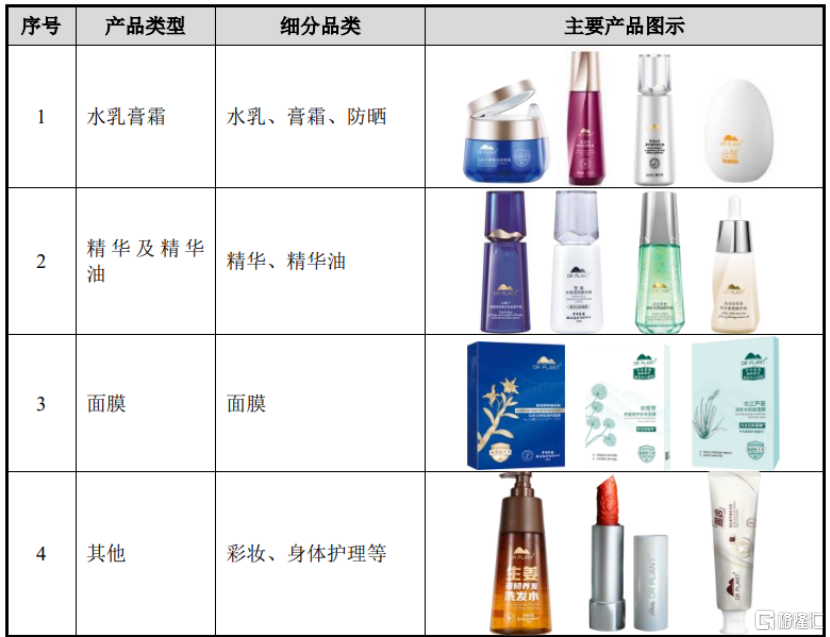
Core Insights - The skincare and cosmetics market in China is rapidly growing, becoming the second largest globally, with significant potential for future growth due to increasing consumer spending and beauty care habits [1][12] - Beijing Plant Doctor Cosmetics Co., Ltd. is preparing for an IPO, focusing on high-altitude plant skincare products, with projected revenue exceeding 2.1 billion yuan in 2024 [1][20] Industry Overview - The cosmetics industry is segmented into various categories, with skincare products accounting for 50.49% of the total market, projected to reach 271.2 billion yuan in 2024 [4] - The market is characterized by intense competition, with both international brands like L'Oréal and domestic brands like Proya and Pechoin vying for market share [12][17] Company Profile - Plant Doctor specializes in skincare, offering products derived from high-altitude plants, with a diverse product range including creams, serums, and masks [4][5] - The company has established a research center in collaboration with the Kunming Institute of Botany and has multiple R&D bases across China and Japan [5] Financial Performance - Plant Doctor's revenue has shown slow growth, with figures of approximately 2.12 billion yuan in 2022, 2.15 billion yuan in 2023, and 2.16 billion yuan in 2024 [14] - The company's gross profit margin has fluctuated, with rates of 55.22% in 2022, 60.34% in 2023, and 58.9% in 2024, which is lower than some competitors [14][15] Sales and Distribution - The company employs a mixed sales model, with 64% of revenue from distribution and 36% from direct sales, indicating a reliance on distributors [6][10] - Despite the growth of e-commerce in the cosmetics sector, Plant Doctor still derives over 70% of its revenue from offline sales [10] Management and Ownership - The company was founded in 2016 and has undergone structural changes, with key management holding significant shares and control over the company [21][22] - Recent cash dividends have primarily benefited major shareholders, raising questions about the allocation of funds [22] Future Outlook - The IPO aims to raise approximately 999.8 million yuan for marketing, brand development, and production upgrades, indicating a strategic focus on enhancing market presence and operational efficiency [20]
又一AI产品全面免费,这次是京东数字人
Guan Cha Zhe Wang· 2025-12-02 09:18
Core Insights - JD.com has officially announced that its digital human live streaming service will be free for all merchants, marking a significant step in the adoption of AI technology in the e-commerce live streaming sector [1][3] - The platform aims to lower technical barriers for merchants, enhancing operational efficiency and sales conversion rates [1][3] Group 1: Service Features - Merchants can access the service by logging into the JD Mai service market, searching for "JD Official Digital Human," and completing the subscription process [1] - The service offers 24/7 uninterrupted live streaming and integrates various AI capabilities, including nearly 300 selectable avatars, over 200 stylized voice options, automatic script generation, real-time interaction responses, and automatic content slicing and distribution [1][3] - The digital human live streaming costs approximately one-tenth of traditional live streaming, with an average conversion rate increase of about 30% [3] Group 2: Market Impact - Over 45,000 brands have already adopted the service, and the number of merchants using digital human live streaming is expected to grow nearly sixfold by the 2025 "Double 11" shopping festival, contributing hundreds of billions in total merchandise volume (GMV) [3][5] - JD.com will provide some public traffic resources to merchants using digital human live streaming to enhance exposure and conversion efficiency [3] Group 3: Technical Advancements - The digital human technology is based on JD's self-developed JoyAI model, with the core module LiveHuman capable of generating high-quality videos in minutes, achieving breakthroughs in lip-syncing, natural expression, and hand movement accuracy [4] - The model employs advanced techniques such as flow matching, DPO reinforcement learning, and distribution matching distillation, improving inference speed by six times and addressing long-standing issues in AI-generated hand distortions [4] Group 4: Broader Applications - Beyond e-commerce, JD's digital human technology has expanded into various fields, including cultural promotion, brand endorsement, and advertising production [5] - The company collaborates with brands like Lenovo and MCM to create IP-based digital personas, evolving digital humans from mere execution tools to creative entities [5] Group 5: Industry Context - In the increasingly competitive landscape of live e-commerce, platforms are accelerating the integration of AI technology to optimize supply-side efficiency [5] - The comprehensive free offering of digital human live streaming by JD.com represents a significant support for the digital transformation of small and medium-sized enterprises [5]



高嵩出任捷豹路虎中国市场“新帅” 负责品牌战略与全域营销
Zhong Guo Jing Ying Bao· 2025-12-02 01:56
Group 1 - Jaguar Land Rover China has appointed Gao Song as the new Executive Vice President of Marketing, effective December 1, signaling a strategic shift towards brand rejuvenation and market expansion in China [2][3] - Gao Song brings nearly 20 years of experience in marketing and business management from top companies such as Procter & Gamble, Clarins, and Michelin, with expertise in brand building, e-commerce operations, product innovation, and business transformation [2][3] - During his tenure at Michelin, Gao transformed the traditional dealer collaboration model and established a consumer-driven marketing system, accumulating 12 million precise user leads and over 1 million members within five months [2] Group 2 - Gao's previous achievements include a 5.5 times increase in sales for Clarins in the Chinese high-end skincare market and successful brand launches at Procter & Gamble, showcasing his strong brand management and cross-department collaboration skills [3] - The Chief Commercial Officer of Jaguar Land Rover China, Wu Chen, emphasized Gao's diverse industry experience and innovative thinking as essential for expanding the market and solidifying brand value [3] - Gao expressed his commitment to enhancing user experience and innovation for luxury brands, aiming to maintain the unique identities of the four brands under Jaguar Land Rover and lead the company in the modern luxury market [3]

Is VDC or IYK the Stronger Consumer Staples ETF? Here's What Investors Need to Know.
The Motley Fool· 2025-12-01 22:10
Core Insights - The Vanguard Consumer Staples ETF (VDC) offers lower costs and greater diversification compared to the iShares US Consumer Staples ETF (IYK), which has shown slightly better recent performance and a marginally higher yield [1][2]. Cost and Size Comparison - IYK has an expense ratio of 0.38%, while VDC has a significantly lower expense ratio of 0.09%, making VDC more cost-effective for investors [3][8]. - As of December 1, 2025, IYK's one-year return is -2.7% and VDC's is -3.5% [3]. - IYK has a dividend yield of 2.43% compared to VDC's 2.22%, indicating a slight advantage for IYK in terms of income generation [3]. - VDC has assets under management (AUM) of $8.3 billion, significantly higher than IYK's $1.3 billion [3]. Performance and Risk Comparison - Over a five-year period, IYK experienced a maximum drawdown of -15.04%, while VDC had a drawdown of -16.56% [4]. - An investment of $1,000 in IYK would have grown to $1,268 over five years, compared to $1,254 for VDC [4]. Holdings and Sector Focus - VDC consists of 105 holdings, with 98% in consumer defensive stocks, including major positions in Walmart, Costco Wholesale, and Procter & Gamble [5]. - IYK has a smaller portfolio of 55 holdings, with a notable 11% allocation to healthcare stocks, and its largest holdings include Procter & Gamble, Coca-Cola, and Philip Morris International [6]. Investment Strategy - Both ETFs provide exposure to the consumer defensive sector, which tends to perform well during market volatility [7]. - VDC focuses almost entirely on consumer defensive stocks, while IYK includes a significant allocation to healthcare, offering a different approach to sector exposure [9].

Which Consumer Staples ETF Reigns Supreme: VDC or FSTA?
Yahoo Finance· 2025-12-01 17:28
Core Insights - The Vanguard Consumer Staples ETF (VDC) and Fidelity MSCI Consumer Staples ETF (FSTA) provide similar exposure to the U.S. consumer staples sector, with VDC having a larger assets under management (AUM) [2][8] - Both ETFs have nearly identical expense ratios and dividend yields, with FSTA being slightly cheaper at 0.08% compared to VDC's 0.09% [5][8] - Performance metrics show that both ETFs have similar risk profiles and returns, with minor differences in their top holdings [6][9] Cost & Size Comparison - FSTA has an expense ratio of 0.08% while VDC has 0.09% - As of November 28, 2025, FSTA's 1-year return is -3.7% and VDC's is -3.4% - FSTA offers a dividend yield of 2.3% compared to VDC's 2.2% - AUM for FSTA is $1.3 billion and for VDC is $8.3 billion [4][5] Performance & Risk Metrics - The maximum drawdown over 5 years for FSTA is -16.56% and for VDC is -16.54% - Growth of $1,000 over 5 years results in $1,254 for FSTA and $1,255 for VDC [6] Holdings & Sector Allocation - VDC employs a full replication strategy with 103 holdings, focusing on large-cap consumer defensive stocks like Walmart, Costco, and Procter & Gamble [7] - Sector allocation for VDC is 98% consumer defensive and 1% consumer cyclical - FSTA closely mirrors VDC's sector weightings and top holdings, with 104 stocks in its portfolio [9]
“不在中国也会在其他市场跟中企交锋,留下来才能紧跟创新步伐”
Guan Cha Zhe Wang· 2025-12-01 08:14
Core Insights - The article highlights the challenges faced by Western companies in the Chinese market, which has shifted from being a lucrative opportunity to a competitive battleground due to the rise of local brands and changing consumer behavior [1][2]. Group 1: Market Dynamics - China's consumer market is maturing, leading to more rational spending habits among consumers, which has intensified competition from local brands [1][5]. - Western companies are increasingly viewing China as an "innovation testing ground" and a "competitive gym" to adapt their strategies [1][11]. - A significant number of foreign brands are adjusting their strategies to cater to local tastes, accelerate product development, and lower prices to remain competitive [2][12]. Group 2: Competitive Landscape - Starbucks has sold a majority stake in its China operations to a local private equity firm, losing market share to local competitors like Luckin Coffee, which has surpassed Starbucks in sales and store numbers [5][12]. - A survey by the American Chamber of Commerce in Shanghai indicated that 63% of respondents identified local competition as their primary challenge, with local brands able to bring products to market more quickly [5][11]. - In the automotive sector, local brands like BYD have overtaken established foreign brands such as Volkswagen, which saw a 7% year-on-year decline in deliveries in China [5][9]. Group 3: Strategic Adjustments - Volkswagen is implementing a "China for China" strategy, focusing on developing products specifically for Chinese consumers, with a new model taking 30% less time to develop compared to previous efforts [9][10]. - Procter & Gamble has reported significant progress in its China operations after refocusing on products designed for local consumers, showcasing a whitening toothpaste specifically for the market [14]. - IKEA plans to lower prices on over 150 popular items and invest more than $22 million in the Chinese market, while also introducing over 1,600 new products tailored for local consumers [12][13]. Group 4: Success Stories - Some companies have managed to thrive despite the competitive landscape, with Ralph Lauren reporting over 30% year-on-year sales growth in China, and Estée Lauder seeing a 9% increase in revenue in the mainland [14]. - 3M has identified China as its fastest-growing region, launching a new product in just 10 months to keep pace with local demand [14].

华尔街日报:中国曾经是西方公司的摇钱树,现在却成了试验场
美股IPO· 2025-12-01 01:03
Core Viewpoint - The era of easy profits for Western companies in China has ended, with increasing competition and a more cautious consumer base leading to significant challenges in the market [1][3]. Market Dynamics - China's economic slowdown has made consumers more cautious, resulting in intensified competition and price wars, which have significantly compressed profit margins [3][7]. - Local competitors are rapidly gaining market share, often outpacing international brands in various sectors [4][6]. Strategic Adjustments - International brands are adapting their strategies to better align with Chinese consumer preferences, including product adjustments, faster R&D, different marketing approaches, and price reductions [3][4]. - Companies like Starbucks have had to sell majority stakes in their Chinese operations due to competition from local brands like Luckin Coffee, which has surpassed Starbucks in sales and store numbers [4][6]. Industry-Specific Challenges - The automotive sector is experiencing fierce competition, with local brands like BYD overtaking established foreign brands such as Volkswagen, which reported a 7% decline in quarterly deliveries in China [9][10]. - Volkswagen is shifting its strategy to focus on local R&D and production to better cater to Chinese consumers, highlighting the need for foreign companies to remain competitive in the local market [10][12]. Consumer Expectations - Consumer demands in China have evolved, with higher expectations for quality relative to price, prompting brands like Guerlain to introduce more affordable luxury products [14][15]. - Companies like IKEA are lowering prices on popular items and investing significantly in the Chinese market, while Procter & Gamble is focusing on innovative products tailored for Chinese consumers [16][17]. Performance Insights - Some companies are still thriving in the Chinese market, with Ralph Lauren reporting over 30% sales growth and Estée Lauder seeing a 9% increase in revenue [20]. - 3M has identified China as its fastest-growing market, emphasizing the need for rapid product development to keep pace with local manufacturers [22].

Potentially 12%-15% Consistent Income: Monthly Options Series (December 2025)
Seeking Alpha· 2025-11-30 13:30
Group 1 - The primary goal of the "High Income DIY Portfolios" service is to provide high income with low risk and capital preservation for DIY investors [1] - The service offers seven portfolios designed for income investors, including retirees, featuring three buy-and-hold portfolios, three rotational portfolios, and a conservative NPP strategy portfolio [1] - The portfolios aim to create stable, long-term passive income with sustainable yields, including two high-income portfolios and two dividend growth investment (DGI) portfolios [1] Group 2 - The author of the article has 25 years of investment experience and focuses on dividend-growing stocks with a long-term investment horizon [2] - A unique 3-basket investment approach is applied, targeting 30% lower drawdowns, 6% current income, and market-beating growth over the long term [2] - The service includes a total of 10 model portfolios with varying income targets, buy and sell alerts, and live chat for portfolio management [2]