
南方电网

Search documents
鸿蒙破局 生态突围
Sou Hu Cai Jing· 2025-08-21 01:17
Core Insights - The core idea of the article emphasizes the robust growth of the Harmony operating system, driven by its foundational principle of "open collaboration and shared value" [2][3][6] - Harmony's explosive growth is attributed to a collaborative ecosystem involving developers, partners, and users, which fosters deep cooperation and value creation [3][14] Development Stages - The evolution of Harmony can be divided into three stages: the "driving" phase before 2019 focused on strategic technology layout, the "repairing" phase where it expanded into various IoT fields, and the current "manufacturing" phase showcasing its self-sustaining growth [4][5] - The launch of Harmony 1.0 in August 2019 marked the beginning of its journey, emphasizing an open design to break device silos and achieve seamless collaboration [4][5] Developer Ecosystem - Developers are identified as the core driving force of the Harmony ecosystem, with Huawei simplifying the development process and providing tools and resources to encourage innovation [6][8] - The "Harmony Campus Developer Program" has effectively engaged students, fostering a vibrant community of young developers who contribute innovative ideas and tools to the ecosystem [8] Partner Contributions - Partners play a crucial role in the Harmony open platform, transforming open technology into practical solutions across various industries [10][12] - Successful implementations, such as the "Dianhong" solution by China Southern Power Grid, demonstrate the significant impact of partners in enhancing operational efficiency and addressing industry challenges [12] User Engagement - Users are considered the foundation and driving force of the Harmony ecosystem, with their feedback and experiences shaping the platform's evolution [14] - The growth in user numbers is seen as a vital internal driver for the ecosystem's continuous development, reinforcing the importance of user engagement in the overall strategy [14] Future Outlook - The article concludes that the prosperity of open ecosystems relies on multi-dimensional collaborative innovation, where all participants can share value and grow together [17][19] - The future technological landscape is envisioned as a collaborative effort among numerous open ecosystems, emphasizing the need for open-mindedness and cooperative strength to achieve shared success [19]


我的亲人是英雄!从家史故事,读懂14年抗战→
Bei Jing Ri Bao Ke Hu Duan· 2025-08-21 00:12
转自:北京日报客户端 抗战14年, 给你的家族留下了怎样的痕迹? 你的家里, 还能找到他们的故事吗? 日前, "国资小新"联合光明日报 在知乎平台真诚发问, 收到了多位国资央企在职或退休职工和 上百位网友的家史分享。 80年了,"抗战胜利"四个字, 于历史是庄重的句点, 于民族是重生的里程碑。 于家庭, 则是亲人血和泪的过往、 荣誉和担当的传承。 "你若记得,我便活过。" 抗战 14年,给你的家族 下了怎样的痕迹? "父亲和伯父没留下一张照片, 我至今也不知道他们的样子" 1939年,我的父亲王克和、伯父王克俭、叔叔王凯琦 一同加入八路军,投身抗日。 1941年父亲牺牲,年仅22岁。在弹尽粮绝、战友牺 牲、阵地被围的绝境下,他摔碎步枪,拉响最后一颗 手榴弹,与冲上来的日军同归于尽。第二年,伯父也 牺牲了。 他们的家人, 是冲锋陷阵的战斗英雄。 草鞋踏碎泥泞,步枪刺破烽烟。 他们用血肉之躯,筑起民族不屈的长城。 "弟兄们,身后就是家园!" 父亲和伯父没留下一张照片,我至今也不知道他们长 什么样子。只剩叔叔历经抗日战争、解放战争,在抗 美援朝长津湖战役中幸存,带着满身伤痕归国,继续 参加新中国的建设。 后来,我成 ...

大模型抢滩新能源,从喧嚣走向落地
2 1 Shi Ji Jing Ji Bao Dao· 2025-08-19 10:43
Group 1 - The core viewpoint of the articles highlights the rapid development and application of large models in the energy sector, transitioning from general to specialized fields [1] - Several major energy companies, including China National Petroleum Corporation and State Power Investment Corporation, have launched large models aimed at enhancing efficiency in energy production and management [1][2] - The energy industry has begun to adopt large models for various applications, including grid scheduling, coal and nuclear power production, and renewable energy management [1][2] Group 2 - In the renewable energy sector, power forecasting using large models has become a critical application, addressing the challenges posed by the increasing share of renewable energy in the grid [2] - Traditional forecasting methods are becoming inadequate due to the complexity of weather conditions and the growing scale of renewable energy installations, necessitating the use of advanced large models [2][3] - Companies like Google DeepMind and Huawei are developing sophisticated weather prediction models that enhance the accuracy of renewable energy power forecasting [2] Group 3 - Large models can optimize the allocation of renewable energy in real-time, significantly reducing the waste of wind and solar power [3] - The integration of large models in equipment maintenance can improve operational efficiency by analyzing vast amounts of energy data and enabling predictive maintenance [3] - Collaboration with advanced technologies such as drones and robots can further enhance the application of large models in energy equipment inspection [3] Group 4 - Prior to the emergence of large models, the energy sector primarily utilized specialized small models for specific tasks, which had limited data requirements [4] - The introduction of large models has expanded the scope of applications in the energy sector, addressing more complex challenges such as grid stability and renewable energy integration [5] Group 5 - Various technical routes for large models exist, with time-series models showing significant potential in renewable energy power forecasting [6] - The integration of more meteorological data into time-series models can enhance predictive accuracy and improve energy dispatching [6] Group 6 - The maturity of language models in the energy sector is currently low due to the lack of available data compared to general language models [7] - The fragmentation of IT and OT systems in the energy industry complicates the effective integration of heterogeneous data, which is essential for AI applications [7] - Developing reliable and interpretable industrial AI models that combine expert knowledge with AI algorithms remains a challenge in the energy sector [7]
大模型抢滩新能源,从喧嚣走向落地
2 1 Shi Ji Jing Ji Bao Dao· 2025-08-19 05:53
Core Insights - The race for large models has shifted from general to specialized fields, particularly in the energy sector, with several major companies launching energy-focused large models [1] - The energy industry has begun to implement large models in various applications, including grid scheduling and power generation, despite previous concerns about the complexity and cost sensitivity of industrial scenarios [1] Group 1: Large Model Applications in Energy - Multiple energy large models have been introduced, such as China National Petroleum's Kunlun model app and State Grid's "Qingyuan" model for the power generation industry [1] - Large models are being utilized for real-time allocation of renewable energy, significantly reducing the waste of wind and solar power [3] - The integration of large models in predictive maintenance for energy equipment has improved operational efficiency and reduced unplanned downtime [3] Group 2: Power Prediction and Optimization - Renewable power forecasting is one of the most mature applications of large model technology, essential for electricity trading [2] - Traditional forecasting methods are becoming inadequate due to the increasing randomness and volatility of renewable energy sources, necessitating the use of advanced models [2] - Companies like Google DeepMind and Huawei are developing weather prediction models that enhance the accuracy of renewable power forecasts [2] Group 3: Challenges and Considerations - While large models offer extensive capabilities, there are scenarios where smaller, specialized models can effectively address specific issues at a lower cost [5] - The energy sector faces challenges in data integration due to the historical separation of IT and operational technology systems, complicating the development of effective AI models [8] - The complexity of industrial scenarios requires AI models to not only recognize data patterns but also incorporate deep industrial knowledge for reliable applications [8]
电网行业研究框架培训
2025-08-18 15:10
Key Points Summary of the Electric Power Equipment Industry Research Industry Overview - The electric power equipment industry is divided into three main categories: transmission and transformation, distribution, and consumption, with transformers and switches being the core products, accounting for over 60% of the industry share [1][5][21] - Major companies like NARI and China XD Electric are gradually achieving full coverage, while international giants such as Siemens Energy and Hitachi Energy have covered all categories and voltage levels [1][6] Core Insights and Arguments - Downstream demand is concentrated in three areas: power generation, grid, and consumption, with the grid side dominated by the State Grid, whose capital expenditure is closely related to overall electricity consumption [1][7] - The construction of ultra-high voltage (UHV) systems is policy-driven, benefiting related companies significantly, as seen during the 2004-2008 500 kV backbone network construction period, which led to substantial revenue growth for equipment manufacturers [1][8] - The new power system faces challenges such as large deviations in generation load, poor generation stability, and a decrease in base load power sources. Solutions include energy storage, UHV, digital upgrades in grid dispatching, electricity market trading, and hybrid AC/DC distribution networks [1][10][11] Investment Trends - Grid investment is expected to continue growing, with a projected growth rate exceeding double digits in 2024 and a year-on-year increase of 14.6% in the first half of 2025, maintaining around 10% growth for the year [1][12] - The second half of 2025 will see a concentrated bidding for UHV projects, which will drive order increases [1][12] Order and Export Dynamics - In the first half of 2025, UHV bidding was limited, resulting in only a slight order growth of 5%. The transition period for metering equipment has led to a decline in bidding volume, while the export of transformers to North America, Europe, Asia, and Latin America has increased by over 50% year-on-year [1][13] Digitalization and AI in the Industry - The State Grid is continuously upgrading its dispatching system, with significant growth in new generation dispatching system application software. AI is becoming a key application area, with two rounds of AI server bidding in the first half of the year, totaling 293 units valued at 100 million to 200 million yuan [1][14] Market Changes and Future Outlook - The overseas market's reliance on Chinese manufacturing is increasing, with transformer imports to the US growing by 35% and to the EU by 15% year-on-year [1][20] - The electric power equipment industry is expected to see core changes, including significant growth in overseas markets, new equipment and business model opportunities, and progress in large engineering projects [1][21] Conclusion - The electric power equipment industry is poised for growth driven by policy support, technological advancements, and increasing global demand for Chinese manufacturing capabilities. Companies should focus on domestic and international order progress to seize investment opportunities [1][21]
云南发布第三批零碳园区建设名单
Zhong Guo Hua Gong Bao· 2025-08-18 13:33
Core Insights - The Yunnan Provincial Development and Reform Commission and the Provincial Department of Industry and Information Technology have announced the third batch of provincial-level zero-carbon park construction, which includes five selected parks [1] - The selected parks are Yiliang Industrial Park, Zhaoyang Economic and Technological Development Zone, Mengzi Economic and Technological Development Zone (Nonferrous Metals and Green Energy Area), Simao Industrial Park (Ning'er Area), and Huaping Industrial Park (Shilongba Clean Energy Industry Area) [1] Summary by Categories Zero-Carbon Parks - Five parks have been selected for zero-carbon construction in Yunnan, marking the third batch of such initiatives [1] - The total number of provincial-level zero-carbon parks initiated in Yunnan has reached 15 across three batches [1] Yiliang Industrial Park - Yiliang Industrial Park has become a significant recycling resource utilization base in Kunming, leveraging projects like the Southern Power Grid's "source-network-load-storage integration project" and China Resources New Energy's "green electricity intelligent manufacturing shared energy storage demonstration project" [1] - The park aims to integrate energy storage into smart grid and green electricity center construction, achieving flexible power regulation and dual empowerment of smart grid and energy carbon management [1] - By 2027, the park plans to form a "green electricity+" industrial ecosystem with a total output value exceeding 10 billion yuan [1]
8月电价新规来了,分时用电如何省钱最划算
Sou Hu Cai Jing· 2025-08-17 23:57
Core Viewpoint - The recent electricity price adjustment by the State Grid is a comprehensive reform of the pricing system, aimed at optimizing energy resource allocation and encouraging changes in electricity consumption habits [1][5][11]. Group 1: Pricing System Changes - The new pricing scheme divides the day into five distinct time periods: super peak, peak, flat, low valley, and super low valley, significantly increasing the price differences between these periods [4][11]. - During super peak hours, electricity prices can be up to five times higher than during low valley periods, emphasizing the need for consumers to adjust their usage patterns [4][6]. Group 2: Seasonal Pricing Impact - Summer and winter are identified as peak seasons for electricity usage, with prices in regions like Guangzhou rising approximately 35% during summer super peak hours compared to spring and autumn [4][11]. - High-energy-consuming devices such as air conditioners and electric vehicles contribute significantly to electricity costs during these peak seasons, necessitating careful planning of usage times [4][11]. Group 3: Tiered Pricing Structure - The new pricing model links basic electricity rates with a tiered pricing system, ensuring that basic needs are met while imposing higher costs on high-consumption users [5][11]. - Households consuming over 500 kWh per month may face costs approximately 40% higher per kWh compared to lower-tier users, highlighting the importance of energy conservation [5][11]. Group 4: Resource Optimization and Environmental Goals - The electricity price adjustment aims to alleviate pressure on the grid by shifting some peak demand to low valley periods, potentially saving hundreds of billions in infrastructure investments [6][11]. - By promoting efficient energy use and reducing waste, the initiative aligns with national goals for energy conservation and environmental protection [8][11]. Group 5: Practical Recommendations for Consumers - Consumers are advised to monitor electricity usage during different time periods, reduce the use of high-power appliances during peak hours, and take advantage of low valley periods for activities like charging electric vehicles [10][11]. - Setting air conditioning to around 26°C and preheating water heaters are practical steps to save on electricity costs while maintaining comfort [10][11].
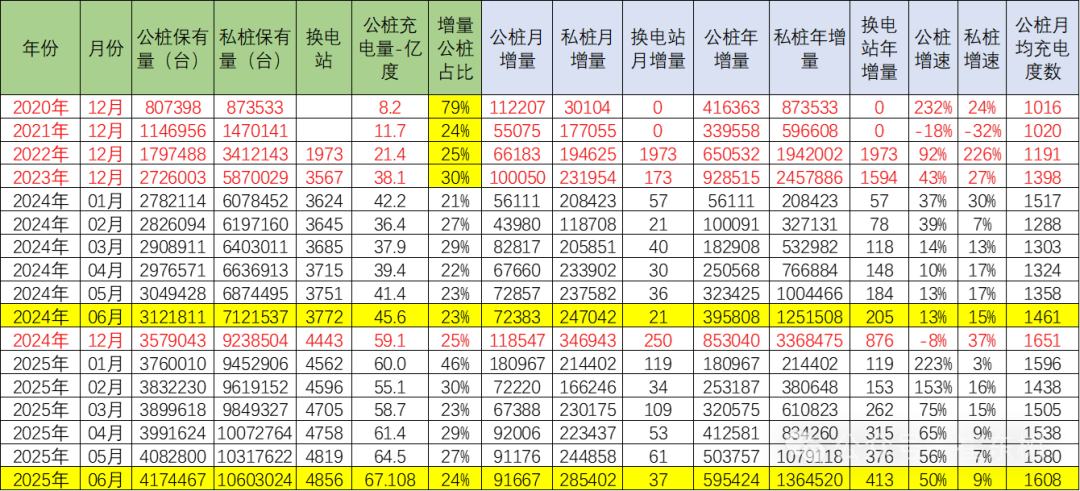
崔东树:6月充电公桩总量达417万个 数量较上月增长9.1万个
智通财经网· 2025-08-17 02:19
Core Insights - The rapid growth of China's charging infrastructure is highlighted, with public charging piles expected to reach 4.17 million by June 2025, showing a monthly increase of 91,000 and a year-on-year growth of 50% [1][5] - The ratio of public to private charging piles is approaching 1:1, indicating a balanced growth in charging infrastructure relative to electric vehicle sales [1][17] - Despite the growth, challenges remain in the charging infrastructure, including uneven distribution, outdated technology, and service quality issues [1][9] Charging Pile Overview - As of June 2025, there are 4.17 million public charging piles and 10.6 million private charging piles, with public piles showing a monthly increase of 91,000 and private piles increasing by 285,000 [1][5] - The average monthly charging per public pile is 1,608 kWh, up from 1,461 kWh in June of the previous year [1][5] - The charging utilization rate of public piles is three times that of private piles, indicating higher efficiency in public charging infrastructure [1][17] Growth Trends - In 2023, public charging piles increased by 930,000, with a year-on-year growth rate of 43%, while private piles grew by 2.46 million, marking a 27% increase [5] - The growth rate of public charging piles in 2024 is projected to be 850,000, with a slight decline in growth rate compared to 2023 [5] - The first half of 2025 is expected to see a continued increase in both public and private charging infrastructure, maintaining a balanced growth trajectory [1][5] Regional Analysis - Regions such as Guangdong, Jiangsu, and Zhejiang have shown significant growth in public charging infrastructure, while cities like Beijing and Shanghai are experiencing slower growth despite having a large existing base [9][8] - The distribution of charging piles is uneven, with developed cities having a higher concentration, leading to disparities in access and utilization [9] Industry Characteristics - The charging infrastructure industry is characterized by a mix of operators, including manufacturers, state-owned enterprises, and third-party service providers, each adopting different business models [10][11] - The market is becoming increasingly concentrated, with leading operators capturing a larger share of the market due to competitive advantages in funding, location, and technology [12][15] - The trend towards high-power DC charging stations is evident, with a growing demand for faster charging solutions to meet the needs of electric vehicle users [14][15]
579%!美的操盘,科陆电子连亏四年后大幅扭亏
Xin Jing Bao· 2025-08-15 13:34
Core Viewpoint - After four consecutive years of losses, Kelu Electronics, a subsidiary of Midea Group, has reported a significant turnaround in its financial performance for the first half of 2025, with a revenue increase of 34.66% and a net profit surge of 579.14% compared to the previous year [1][3]. Financial Performance - Kelu Electronics achieved a revenue of 2.573 billion yuan in the first half of 2025, marking a year-on-year growth of 34.66% [1]. - The net profit attributable to the parent company reached 190 million yuan, reflecting a remarkable year-on-year increase of 579.14% [1]. - In Q1 2025, the company reported a revenue of 1.214 billion yuan and a net profit of 67 million yuan, indicating that the net profit for Q2 doubled compared to Q1 [3]. Business Segments - The two main business segments of Kelu Electronics are smart grid and energy storage, with the energy storage segment showing significant growth. In the first half of 2025, the energy storage business generated 1.282 billion yuan in revenue, a year-on-year increase of 177.15%, accounting for nearly half of the company's total revenue [3]. - The contribution from overseas markets has also increased significantly, with foreign market revenue reaching 1.281 billion yuan, a year-on-year growth of 126.84%, making up 49.78% of total revenue [3]. Company Background and Ownership Changes - Kelu Electronics was founded in 1996 by entrepreneur Rao Luhua and has been a prominent player in the domestic energy storage sector. The company faced severe losses due to aggressive expansion, leading to a change in ownership to Shenzhen State-owned Assets [3]. - In 2022, Midea Group acquired Kelu Electronics, marking another significant investment in the energy storage sector following its acquisition of Hong Kong New Energy in 2020 [3]. Future Outlook - Kelu Electronics has been undergoing a long process of turning around its financial performance since Midea's acquisition. The company reported cumulative losses of nearly 1.8 billion yuan from 2021 to 2024 [3]. - The company has set performance targets for its stock option incentive plan, aiming for net profits of no less than 20 million yuan in 2025, 110 million yuan in 2026, and 370 million yuan in 2027 [4]. Challenges - Kelu Electronics continues to face challenges, including ongoing litigation and the impact of being "blacklisted" by a key client, Southern Power Grid. The company was ordered to pay 33.16 million yuan due to a contract dispute, which negatively affected its cash flow [5]. - The market ban imposed by Southern Power Grid, which lasts for 18 months starting from July 29, 2024, restricts Kelu Electronics from participating in any bidding activities within the Southern Power Grid system, significantly impacting its revenue from this important client [5].


中电建协:我国电源与电网建设呈现规模扩张与结构优化并进态势
2 1 Shi Ji Jing Ji Bao Dao· 2025-08-15 08:02
Core Insights - In 2024, major power companies in China completed investments of 1.8178 trillion yuan, representing a year-on-year increase of 13.9% [1] - The total installed power generation capacity reached 3.35 billion kilowatts, with a year-on-year growth of 14.6% [2] - The application of intelligent technologies in the power construction industry has become widespread, enhancing safety and efficiency [2] Investment Overview - Total investment in power generation projects was 1.2094 trillion yuan, up 13.2% year-on-year, while investment in grid construction reached 608.4 billion yuan, increasing by 15.3% [1] - Renewable energy investments included 447.8 billion yuan in solar power (up 1.9%) and 316.3 billion yuan in wind power (up 10.9%) [1] Installed Capacity Details - Hydropower capacity reached 440 million kilowatts, growing by 3.6%, while solar power saw a significant increase of 45.4% to 890 million kilowatts [2] - Coal-fired power capacity was 1.19 billion kilowatts, with a growth of 2.6%, while gas-fired power capacity increased by 13.9% to 140 million kilowatts [2] Company Performance - Overall revenue for power survey and design companies was 430 billion yuan, with a net profit margin of 3.8%, down 0.2 percentage points [3] - Revenue for thermal and hydropower construction companies reached 679.8 billion yuan, with a net profit margin of 1.5%, down 0.3 percentage points [3] Human Resource Efficiency - Power survey and design companies reported an average revenue per employee of 4.697 million yuan, up 8.3%, while net profit per employee was 181,000 yuan, up 3.4% [4] - In contrast, thermal and hydropower construction companies saw a decline in net profit per employee to 51,000 yuan, down 3.8% [5] Future Outlook - The power generation and grid construction sectors are expected to continue expanding in scale while optimizing structure during the 14th Five-Year Plan period [6] - The industry is anticipated to maintain strong growth through market reforms, technological innovation, and upgrades in the industrial chain [6]