Neuralink

Search documents
If Elon Musk’s Net Worth Was Divided Among Tesla Employees, How Much Would Each One Get?
Yahoo Finance· 2025-12-07 12:12
When it comes to the richest people on Earth, it can be difficult to comprehend just how much they have. For perspective, if you decided to count from one to a billion, it would take you over 95 years. Even with this example, trying to wrap your head around the idea of having hundreds of billions of dollars seems impossible. Check Out: If the Top 10 Billionaires’ Wealth Was Distributed Equally in America, How Much Money Would Each Person Get? Read Next: 6 Subtly Genius Moves All Wealthy People Make With Th ...

修复瘫痪、增强常人,脑机接口会成未来人类「外挂」吗?
36氪· 2025-12-07 09:55
Core Viewpoint - The article discusses the emerging potential of brain-computer interfaces (BCIs) in consumer healthcare over the next five to ten years, highlighting significant advancements and investments in the field, particularly in the context of medical applications and the integration of AI technologies [4][10]. Group 1: Industry Developments - In mid-2025, Neuralink, led by Elon Musk, secured $650 million in funding, reaching a valuation of $9 billion, expanding its focus from severe motor function disorders to include rehabilitation for patients with speech and vision impairments [4]. - In August, Sam Altman initiated the establishment of Merge Labs, aiming to raise $250 million from OpenAI to utilize ultrasound technology for reading and modulating brain signals [5]. - In November, Synchron raised $200 million in Series D funding, while Paradromics received FDA approval to commence human clinical trials for speech function restoration using BCIs [6]. Group 2: Chinese Market Dynamics - Chinese BCI startups, such as Borui Kang and Ladder Medical, are progressing steadily under strict medical device regulations, leveraging domestic clinical resources to advance clinical trials and product optimization [7]. - Ladder Medical's invasive BCI system completed China's first prospective clinical trial at Huashan Hospital in March, and in November, it entered the "green channel" of the National Medical Products Administration, potentially shortening the clinical validation to market access timeline [7]. Group 3: Application Scenarios - The primary application scenarios for BCIs include brain-controlled systems for decoding motor and speech intentions, neuroregulation for managing brain disorders, and sensory reconstruction for restoring lost sensory functions [11][12]. - The clinical value of BCIs in treating diseases is expected to be validated within the next three to five years, improving patients' quality of life and work capabilities [13]. Group 4: Future Prospects - The consumer healthcare attributes of BCIs are anticipated to emerge in the next five to ten years, transforming human-machine interaction and enhancing efficiency through direct brain control of intelligent devices [14]. - The goal of Ladder Medical's BCI system is to enable severely disabled patients to control external electronic devices and improve their quality of life, including daily activities and re-engagement with the digital world [15][17]. Group 5: Data and AI Integration - The accumulation of single-cell data from BCIs is crucial for advancing neuroscience understanding and enhancing product design and application scenarios [21][23]. - AI and algorithms will play a significant role in processing complex brain data, with the potential to develop a foundational model that improves the performance of future patients' decoding capabilities [24]. Group 6: Human-Machine Fusion - The integration of BCIs with AI is seen as a necessary evolution, creating a seamless connection between humans and machines, which could lead to enhanced capabilities beyond current human limits [27][29]. - The article emphasizes the importance of maintaining human control over AI systems to prevent loss of agency, advocating for a harmonious coexistence between humans and intelligent systems [29].

十五五规划十大投资机会梳理:精益求精-20251206
Shenwan Hongyuan Securities· 2025-12-06 14:26
Group 1: Strategic Overview - China is transitioning from a global rule adapter to a co-builder and responsible stakeholder in international governance[3] - The 14th Five-Year Plan (14th FYP) focused on economic security, while the 15th Five-Year Plan (15th FYP) emphasizes "development and security" across all sectors[3] - The 15th FYP identifies emerging industries as "pillar industries," focusing on new energy and new materials, with a core strategy of cluster development and large-scale application[3] Group 2: Investment Opportunities - The 15th FYP highlights ten key investment areas: 1) Artificial Intelligence, 2) Robotics, 3) Aerospace, 4) Drones/Low-altitude Economy, 5) Strategic Resource Metals, 6) Shipping, 7) Controlled Nuclear Fusion, 8) Energy Storage, 9) Brain-Machine Interfaces, 10) Innovative Pharmaceuticals[3] - The Chinese robotics industry is transitioning from product definition to commercialization, with AI expected to empower various sectors by 2026[3] - The aerospace industry is a key focus, with the establishment of a new space administration and a three-year action plan for commercial aerospace development[3] Group 3: Economic and Security Considerations - The 15th FYP emphasizes the strategic importance of national defense and security, with a focus on political security as a priority[3] - The plan includes new initiatives for the development and reserve of strategic mineral resources, enhancing the national security framework[3] - Risks include potential delays in policy implementation and slower-than-expected industry capacity adjustments, influenced by international geopolitical changes[3]
X @Elon Musk
Elon Musk· 2025-12-06 14:10
RT Neuralink (@neuralink)We recently hosted a discussion with @synapticure, where Brad, Jake, and Nick shared their experiences living with ALS and using their Neuralink devices as participants in our clinical trials. ...
离开Neuralink后,麦克斯・霍达克在打造更离奇的东西
Xin Lang Cai Jing· 2025-12-05 14:14
Core Insights - The article discusses the advancements and ambitions of Science Corp, particularly in the field of brain-computer interface (BCI) technology, led by CEO Max Hodak, who previously co-founded Neuralink [1][2][3] Company Overview - Science Corp was founded by Max Hodak and three former Neuralink colleagues approximately four years ago, aiming to create innovative BCI solutions [2][3] - The company is focused on generating revenue by manufacturing and selling tools for researchers, transforming expensive systems into affordable devices [3][19] Product Development - The initial commercial product, named Prima, involves a tiny computer chip implanted in the retina to restore vision for patients with late-stage macular degeneration, achieving an 80% success rate in clinical trials [4][20] - The company acquired the Prima technology from Pixium Vision and has optimized it for clinical trials, with plans to launch in Europe next summer [4][20] Future Innovations - Science Corp is exploring optogenetic gene therapy to make neurons light-sensitive, aiming to eliminate the need for electrodes in BCI applications [5][21][22] - The company is also investigating the potential to cultivate new brain tissue, which could overcome limitations associated with traditional electrode technology [7][23] Long-term Vision - Hodak envisions that BCI technology could eventually lead to the creation of conscious machines, addressing the fundamental nature of consciousness and its implications for human experience [10][24][25] - By 2035, Hodak predicts that BCI technology will be available for patients, potentially allowing for consciousness uploading as a treatment option for terminal illnesses [12][26] Economic Implications - The article highlights concerns about the economic model of healthcare as BCI technology becomes more prevalent, suggesting that it may lead to increased healthcare costs and a divide between wealthy and less affluent individuals [14][27] - Hodak argues that while consumer technology tends to become cheaper and more accessible, the healthcare sector operates under a fixed funding model that may not sustain the rising costs associated with advanced BCI technologies [14][27]
X @TechCrunch
TechCrunch· 2025-12-05 12:58
After Neuralink, Max Hodak is building something stranger https://t.co/wtIcrNbWfX ...
X @Elon Musk
Elon Musk· 2025-12-05 05:22
RT DogeDesigner (@cb_doge)Neuralink is working on tech to• Give sight to people born blind.• Restore hearing for the deaf.• Help those with spine injuries walk again• Let paralyzed people control devices with thoughts.• Help amputees use advanced robotic limbs.Here is how the implant is done: https://t.co/4O0GEIRbKY ...
马斯克收心了?官宣了39岁印度裔伴侣:相貌普通为他生了4个孩子
Sou Hu Cai Jing· 2025-12-05 04:04
Group 1: Elon Musk's Background and Achievements - Elon Musk was born in 1971 in South Africa and has a strong interest in technology from a young age, leading to his self-education in programming [1] - He moved to Canada in 1989, attended Queen's University, and later transferred to the University of Pennsylvania, where he majored in physics and economics [1] - Musk founded several companies including Zip2, PayPal, SpaceX, and Tesla, amassing a fortune worth hundreds of billions of dollars [1] - Tesla's factory in Shanghai has contributed significantly to the growth of the new energy vehicle industry in China [1] Group 2: Musk's Personal Life and Family - Musk has a complex personal life, having been married three times and fathering 14 children, with a focus on encouraging intelligent individuals to have more children [3][5] - His relationship with Shivon Zilis, a high-ranking executive at Neuralink, has garnered attention, especially after they had multiple children together [11][15] - Zilis, who has a strong academic background and experience in AI, has been a significant partner in Musk's ventures, particularly in the field of brain-machine interfaces [8][18] Group 3: Neuralink and Future Prospects - Neuralink, co-led by Zilis, is working on groundbreaking brain-machine interface technology that could revolutionize medical fields and assist disabled individuals [18][20] - The company is expected to achieve new breakthroughs in 2025, with Zilis playing a crucial role in its development [24] - Musk's focus on expanding his technological empire continues, with a strong emphasis on the importance of family and cultural diversity in his personal life [22][24]

瞄准SpaceX后花园:传OpenAI寻求控股火箭企业,太空或成AI算力新战场
3 6 Ke· 2025-12-04 23:59
Core Insights - OpenAI's CEO Sam Altman is planning a potentially disruptive acquisition or partnership with a commercial rocket company to compete directly with SpaceX [1] - The motivation behind this move is the exponential growth in AI's demand for computing power, which may exceed Earth's energy supply and environmental capacity [2] - OpenAI is currently facing significant challenges, including competition from Google's Gemini and financial pressures due to a nearly $60 billion future computing resource procurement agreement [3] Group 1: Strategic Moves - Altman has initiated discussions with Stoke Space Company, exploring equity cooperation with the aim of OpenAI eventually gaining controlling interest through multiple rounds of investment, expected to reach several billion dollars [1] - Google has already begun actions in this domain, partnering with Planet Labs to launch a test satellite equipped with its AI chips by 2027, marking the first step towards building a "space-based computing" network [2] Group 2: Competitive Landscape - If the collaboration with the rocket company is successful, it will expand the competitive landscape between Altman and Elon Musk across at least four fronts: space launches, AI, brain-machine interface technology, and a potential social network project that could challenge Musk's X (formerly Twitter) [4][5] - OpenAI's internal "red alert" mechanism has been activated due to competitive pressures, leading to delays in other product plans to focus resources on immediate challenges [3] Group 3: Industry Challenges - The aerospace industry presents significant challenges, including high capital investment, long development cycles, and stringent regulations, making it fundamentally different from the fast-paced internet sector [6] - Even with OpenAI's potential funding and technical support, it may take a decade or longer for new rocket designs to achieve reliable commercial launch capabilities, making it difficult to disrupt SpaceX's market dominance in the short term [6]
无法短期变现的脑机接口,如何先活下去?
Sou Hu Cai Jing· 2025-12-04 12:13
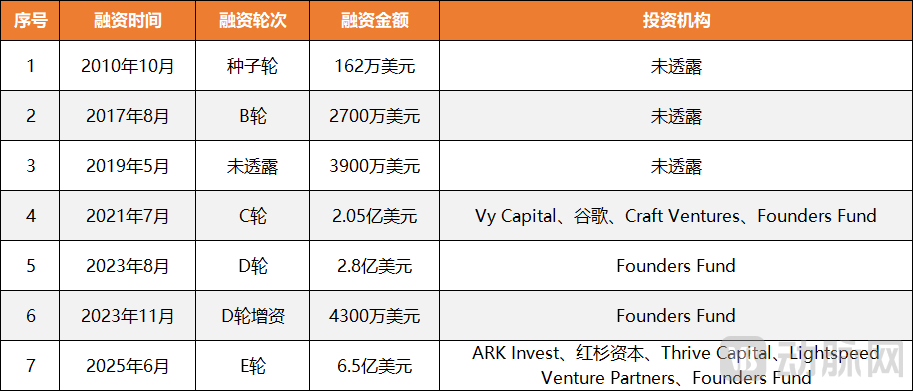
Core Insights - Neuralink has completed a $650 million Series E funding round, setting a new record in the brain-computer interface (BCI) sector, bringing its total funding to over $1.3 billion, which is significant compared to the global BCI market size of $2.6 billion in 2024 [1][2] - Despite substantial funding, Neuralink faces high operational costs, burning several hundred million dollars annually without a clear path to commercialization [2][3] - The BCI industry is experiencing a funding boom, with nearly 100 financing events in the past five years in China alone, totaling over 10 billion yuan, indicating strong investor interest [3][4] Funding Landscape - Neuralink's funding history includes multiple rounds, with significant contributions from major investors like ARK Invest and Sequoia Capital in the latest round [2] - The BCI sector has seen a 30% increase in financing events in China from January to November 2025, with notable records set by companies like JieTi Medical [5] - Government funding is becoming increasingly important, with various local and national policies supporting BCI development, including a 10 billion yuan fund in Tianjin [6][7] Market Dynamics - The BCI market is characterized by a lack of stable commercialization and profitability, leading many companies to face survival challenges [3][4] - Investors are shifting focus from upstream technology to practical clinical applications and commercialization capabilities, indicating a maturation of the investment landscape [6] - The potential applications of BCI technology, such as restoring vision or mobility, present significant market opportunities, attracting early investments [4] Product Development and Commercialization - Companies are adopting a "laying eggs along the way" strategy, focusing on both research and consumer applications to maintain cash flow [9][10] - Non-invasive BCIs are targeting consumer healthcare markets, while invasive BCIs are focusing on research applications due to the complexity of clinical scenarios [10][12] - Successful commercialization examples include products like the intelligent bionic hand from QiangNerve Technology, which has seen rapid sales growth [11] Future Outlook - 2025 is anticipated to be a pivotal year for the BCI industry in China, with significant clinical advancements expected [15] - Challenges remain in signal processing, material compatibility, and market education, which could delay widespread commercialization [16] - Companies must balance short-term survival with long-term innovation to thrive in the evolving BCI landscape [18][19]