天基算力

Search documents
xAI全员会:马斯克重组四大战队,推出“巨硬”项目挑战微软,到月球建卫星工厂与数据中心
Hua Er Jie Jian Wen· 2026-02-12 01:00
Core Insights - The article discusses Elon Musk's ambitious plans for xAI, including the "Macrohard" project aimed at achieving full automation in office tasks to compete with Microsoft, and the establishment of a lunar manufacturing base to address AI energy consumption challenges [1][2]. Group 1: Organizational Structure and Projects - xAI has been restructured into four main teams, each led by different technical leaders reporting directly to Musk, reflecting dissatisfaction with current AI model development progress and a need for accelerated product deployment [2][5]. - The "Macrohard" project, led by Toby Pohlen, aims to enable AI to perform any task that humans can do with computers, indicating a shift from simple chatbots to enterprise-level automation [2][5]. - Other teams include Grok, focusing on chatbots and voice functions; Coding, responsible for application coding systems; and Imagine, which specializes in video and image generation models [5]. Group 2: Vision and Infrastructure - Musk presented a vision for extending AI infrastructure beyond Earth, proposing the establishment of space-based data centers and a lunar AI satellite factory, utilizing a lunar mass driver for satellite launches [4]. - This ambitious plan supports the rationale for the merger between xAI and SpaceX, as xAI continues to build data centers on Earth, including a facility in Memphis to deploy a large Nvidia GPU cluster [4]. Group 3: Financial Performance and Challenges - Recent operational data revealed that xAI's integration with the X platform has led to significant commercialization progress, with a monthly cash burn of approximately $1 billion prior to the merger [6][7]. - The new CFO, Bret Johnsen, is tasked with leveraging SpaceX's $16 billion revenue and $8 billion EBITDA to support xAI's extensive computational infrastructure needs [7]. Group 4: Internal Dynamics and Leadership Changes - The company is experiencing significant internal upheaval, with several executives, including co-founders Tony Wu and Jimmy Ba, leaving the company, resulting in a reduced founding team [8]. - Musk indicated that such changes are a natural outcome of rapid company growth, emphasizing the need for structural evolution and the promotion of technical talent to enhance execution [8]. Group 5: User Engagement and Revenue Growth - The X platform's subscription service has surpassed $1 billion in annual recurring revenue (ARR), driven by holiday marketing efforts [10]. - The Imagine tool is generating 50 million videos daily, with over 6 billion images created in the past 30 days, indicating high user engagement despite potential controversies surrounding content [10].
瞄准2030年前后实现商用 上海启动6G信通智谷 孵化器训练场就在上下楼 把算力送入太空 迎接6G时代
Jie Fang Ri Bao· 2025-12-28 02:11
Core Viewpoint - The establishment of the Shanghai 6G Communication Intelligence Valley marks a significant step in the development and commercialization of 6G technology, aiming to create a robust ecosystem for innovation and collaboration in the telecommunications industry [1][2]. Group 1: Infrastructure and Development - The Shanghai 6G Communication Intelligence Valley has been fully constructed and is operational, covering an area of 60 acres and serving as the core area for the future 6G industry cluster in Shanghai [1]. - The park includes various facilities for technology research and development, incubation acceleration, concept validation, and talent services, with over 30 companies from the telecommunications industry already settled in the area, indicating the initial emergence of industrial cluster effects [2]. Group 2: Applications and Innovations - Six major application scenarios for 6G have been identified internationally, including immersive communication, low-latency communication, ultra-large-scale connectivity, integrated space-ground communication, and the fusion of communication with artificial intelligence and perception [2]. - The "National Science and Technology Innovation" project team has developed non-invasive brain-computer interface products, which are expected to align with the arrival of the 6G era, enhancing consumer-level applications [7][8]. Group 3: Investment and Financial Support - The 6G Communication Intelligence Valley has established a financial support system, including a dedicated fund of 1 billion yuan for the "6G Communication Valley Eagle Cultivation Plan" and a 3 billion yuan 6G industry incubation fund, aiming to attract over 20 billion yuan in industry guidance funds [8]. - The industry anticipates that by 2030, the 6G future industry cluster in Shanghai will aim to achieve an industrial scale exceeding 100 billion yuan, establishing itself as a globally influential base for new-generation mobile communication technology innovation and manufacturing services [8].
算力“上天” 安徽迈入“五算合一”时代
Zhong Guo Jing Ying Bao· 2025-12-19 18:36
Core Viewpoint - The integration of computing power into industrial development is becoming crucial, shifting its value from resource supply to practical application, with the establishment of a comprehensive computing power scheduling platform in Anhui Province marking a significant advancement in this field [1][2]. Group 1: Computing Power Integration - The Anhui Provincial Computing Power Scheduling Platform is the first in the country to integrate general computing, intelligent computing, supercomputing, and quantum computing, achieving a "five-computing fusion" system with the addition of space-based computing [2][3]. - The platform enables a full-chain integration of "space-based observation - data reception - computing power scheduling - information extraction - scene service" at the provincial level, positioning Anhui as a leader in resource coordination and data value activation [2][3]. Group 2: Applications and Innovations - The integration of space-based computing allows for various satellite remote sensing services, including archival imaging and programmed shooting, with applications in agriculture monitoring, environmental protection, emergency command, and land planning [3][4]. - Six innovative application scenarios driven by the fusion of satellite data and computing power were showcased, covering areas such as forestry fire prevention, agricultural supervision, urban safety, and water resource monitoring [7]. Group 3: Infrastructure Development - By the end of 2025, Anhui Province is expected to have seven data center projects operational, with a total of 15,000 standard racks and intelligent computing resources reaching 31,000 P, accounting for over 70% of the provincial total [4]. - Since its launch in May 2024, the platform has aggregated various computing powers, including 639.2 P of general computing, 41,493.6 P of intelligent computing, 33.3 P of supercomputing, 2,070 bits of quantum computing, and 1.1 P of space-based computing, with a total transaction amount exceeding 400 million yuan [4]. Group 4: Strategic Vision - The collaboration between the Anhui Provincial Computing Power Scheduling Platform and the China Academy of Space Technology aims to address industry pain points and enhance the application of satellite data, creating a robust ecosystem for technological, industrial, and research synergy [6][8]. - The strategic positioning of Wuhu City as a key player in the space information industry is emphasized, leveraging its advantages as a node city in the "East Data West Computing" initiative to gather industrial elements and plan for future developments [6].
商业航天不是送火箭,是建“太空基础设施”:下一代产业链正在重构
3 6 Ke· 2025-12-12 12:11
Core Viewpoint - The article discusses the transition of the commercial space industry from a 1.0 era focused on rocket launches to a 2.0 era centered around space-based infrastructure and computing capabilities, highlighting the competitive landscape dominated by the United States and the strategic developments in China's space sector [1][25]. Group 1: Commercial Space Industry Transition - The commercial space industry is evolving from a focus on rocket launches to a new phase characterized by space-based computing and infrastructure, termed "Commercial Space 2.0" [1][25]. - The cost of low Earth orbit (LEO) satellites has decreased by over 90% in the past decade, enabling industrial-scale production and transforming satellites into "space terminal devices" [2][5]. - The establishment of the Hainan International Commercial Space Launch Center aims to enhance launch frequency and efficiency, with a target of achieving "monthly launches" by 2025 [6][7]. Group 2: Competitive Landscape and Global Initiatives - The U.S. Starlink program has set a precedent in the commercial space sector, with plans to deploy a constellation of 42,000 satellites, leading to intense competition for orbital slots among nations [8][19]. - China's satellite launch prices are competitive globally, with low Earth orbit service prices not significantly higher than those of SpaceX, indicating a strong position in the global market [5][19]. - Various Chinese companies, including China Star Network and Shanghai Yuanxin, are planning large-scale satellite constellations, with the former aiming to deploy 12,992 satellites [13][15]. Group 3: Technological Developments and Future Prospects - The development of reusable rockets is crucial for reducing costs and accelerating the deployment of satellite constellations, with several models expected to launch by the end of 2025 [20][22]. - The article highlights the need for a large-capacity, low-cost, and reliable reusable rocket to meet the demands of the commercial space industry [19][20]. - The establishment of a dedicated regulatory body for commercial space in China signifies a commitment to fostering industry growth and innovation [25][26].

瞄准SpaceX后花园:传OpenAI寻求控股火箭企业,太空或成AI算力新战场
3 6 Ke· 2025-12-04 23:59
Core Insights - OpenAI's CEO Sam Altman is planning a potentially disruptive acquisition or partnership with a commercial rocket company to compete directly with SpaceX [1] - The motivation behind this move is the exponential growth in AI's demand for computing power, which may exceed Earth's energy supply and environmental capacity [2] - OpenAI is currently facing significant challenges, including competition from Google's Gemini and financial pressures due to a nearly $60 billion future computing resource procurement agreement [3] Group 1: Strategic Moves - Altman has initiated discussions with Stoke Space Company, exploring equity cooperation with the aim of OpenAI eventually gaining controlling interest through multiple rounds of investment, expected to reach several billion dollars [1] - Google has already begun actions in this domain, partnering with Planet Labs to launch a test satellite equipped with its AI chips by 2027, marking the first step towards building a "space-based computing" network [2] Group 2: Competitive Landscape - If the collaboration with the rocket company is successful, it will expand the competitive landscape between Altman and Elon Musk across at least four fronts: space launches, AI, brain-machine interface technology, and a potential social network project that could challenge Musk's X (formerly Twitter) [4][5] - OpenAI's internal "red alert" mechanism has been activated due to competitive pressures, leading to delays in other product plans to focus resources on immediate challenges [3] Group 3: Industry Challenges - The aerospace industry presents significant challenges, including high capital investment, long development cycles, and stringent regulations, making it fundamentally different from the fast-paced internet sector [6] - Even with OpenAI's potential funding and technical support, it may take a decade or longer for new rocket designs to achieve reliable commercial launch capabilities, making it difficult to disrupt SpaceX's market dominance in the short term [6]
首发民营大型火箭成功入轨意味着什么?
2025-12-04 02:21
Summary of Key Points from Conference Call Records Industry Overview - The successful launch of the Zhuque-3 rocket indicates that private large rocket companies will play a significant role in the satellite launch market by 2026, with an expected increase in liquid large rocket launches to over 100 next year, up from approximately 70 this year, significantly enhancing satellite launch capacity [1][2][11] - The commercial aerospace market is expanding, with a projected demand for 20,000 to 30,000 communication satellites, leading to a market size in the hundreds of billions [1][7] Core Insights and Arguments - The Zhuque-3 rocket's successful second-stage entry into orbit, despite the first stage's landing failure, is seen as a significant achievement for the commercial aerospace industry, particularly in alleviating the current capacity bottleneck in satellite launches [2] - The successful launch is expected to accelerate the listing process for private rocket companies like Blue Arrow Aerospace, which is currently in the brokerage guidance stage and plans to submit materials next year [2][3] - The technology for reusable first-stage rockets is highly complex, with domestic companies like Blue Arrow Aerospace making significant progress, potentially leading to one or two companies achieving first-stage recovery within the next 1-2 years [4] Market Dynamics - The commercial aerospace sector is anticipated to perform well, with several companies, including Blue Arrow Aerospace and others, expected to achieve market valuations in the hundreds of billions post-listing, which will alleviate funding pressures in the industry [5] - Stardust Company has achieved breakeven with nearly $20 billion in revenue, providing high-quality, low-cost communication services, and is set to launch its Starlink V3 version next year, which may outperform 5G networks [5][6] Investment Opportunities - The demand for space computing capabilities is emerging as a new growth point, with a projected investment of $70 billion to build a 1 GW space computing center, which is commercially viable and addresses ground energy shortages [7] - Companies benefiting from the normalization of private rocket launches include Shanghai Huanxun, Zhenlei Technology, and Shaanxi Huada, which are positioned well within the satellite manufacturing segment [9] Competitive Landscape - There is a significant gap between China and the US in the commercial aerospace sector, with the US expected to launch more than double the number of rockets compared to China in 2024, and 90% of global communication payloads being launched by the US [8] - The Chinese government is prioritizing the development of commercial aerospace to close this gap, implementing supportive policies and establishing a dedicated commercial aerospace department [8] Future Projections - The satellite launch schedule for 2026 is expected to see a substantial increase, with plans for the delivery of at least 300 enhanced version satellites and the completion of the first phase of the "Yuanxin" satellite network, which will further drive industry orders and revenue growth [11]
软件ETF(515230)涨超2.1%,机构称天基算力与信创或驱动行业修复
Mei Ri Jing Ji Xin Wen· 2025-11-17 06:57
Group 1 - The core viewpoint is that China's space computing constellation is accelerating its construction, with the "Three-Body Computing Constellation" officially entering the networking phase, aiming to complete the deployment of over 50 computing satellites by 2025 to build an integrated space-ground computing network [1] - NVIDIA's H100 has achieved space compatibility, with computing power reaching 100 times that of previous space computers, and future tests will focus on AI processing applications [1] - SpaceX plans to accelerate its space computing layout, with the "Starship" expected to achieve an annual deployment of 1 terawatt of AI computing power, and the capacity of V3 satellites is projected to increase tenfold to 1 Tbps [1] Group 2 - The software ETF (515230) tracks the software index (H30202), which selects listed companies involved in application software, system software development, and related IT services to reflect the overall performance of the software and IT services industry [1] - This index highlights technological innovation and growth characteristics, serving as an important indicator of the development status of the domestic software industry [1]
数据中心不必建在地球!中国企业已经把算力设施送到了太空
量子位· 2025-05-14 08:55
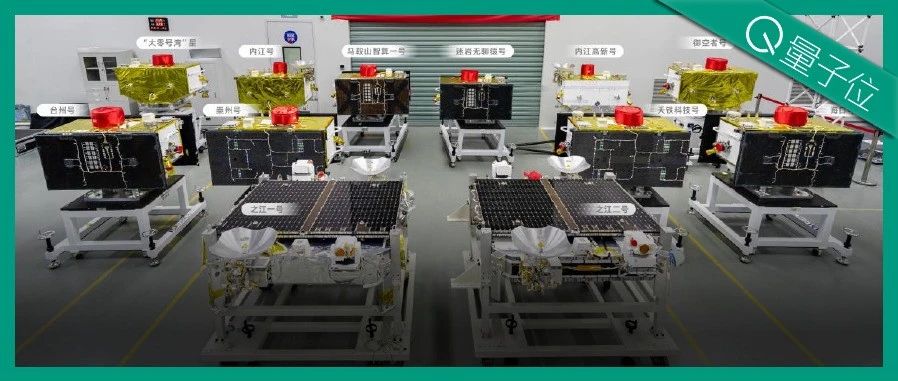
Core Viewpoint - The launch of 12 space computing satellites marks the beginning of a new era in global space computing, initiated by the "Star Computing" program led by Guoxing Aerospace, aiming to establish a vast network of 2800 satellites in space for advanced computing capabilities [2][4][14]. Group 1: Launch and Capabilities - The 12 satellites are equipped with space computing and interconnectivity capabilities, forming the world's first space computing constellation [2][4]. - Each satellite's computing power has been enhanced from Tera-scale to Peta-scale, achieving a total in-orbit computing capacity of 5 Peta Operations Per Second (POPS) [8]. - The satellites utilize laser communication technology, enabling inter-satellite communication speeds of up to 100 Gbps [9]. Group 2: Energy Efficiency and Cost Reduction - Deploying computing power in space is an effective way to save energy costs, as satellites can harness solar energy without atmospheric interference [22]. - The cost of satellite launches is decreasing, with estimates for Chinese satellite launch costs expected to be around 60,000 yuan per kilogram in 2023 [27]. - The cold environment of space serves as a natural cooling source, reducing the energy required for cooling computing equipment [25]. Group 3: Applications and Future Developments - The space computing satellites will support real-time processing of vast amounts of deep space exploration data, enhancing scientific research capabilities [12][13]. - The "Star Computing" program plans further launches, with the next constellation already in the design phase [15][14]. - The satellites are designed to process data on-site, improving the timeliness of data applications, especially in natural disaster monitoring [28][29]. Group 4: Global Trends and Comparisons - The concept of deploying data centers in space is gaining traction globally, with initiatives in the EU and the US exploring similar projects [35][40]. - The EU has already invested 2 million euros to validate the feasibility of space data centers, while companies in the US are planning to establish data centers on the Moon [36][38]. - China's first batch of computing satellites is already operational, positioning the country at the forefront of this emerging trend [42].