
中国电科

Search documents
势银研究 | 本土成熟制程庞大体量驱动中国半导体设备快速进步
势银芯链· 2025-07-30 03:32
Core Viewpoint - The semiconductor industry in China is transitioning from a global cooperative model to a regional strategic industry due to geopolitical factors, with significant growth in domestic wafer production capacity expected in the coming years [2][3]. Group 1: Market Trends - By 2024, China's mainland wafer production capacity is projected to account for nearly 25% of the global total, increasing to 31% by 2029, indicating a strong demand signal for local semiconductor equipment manufacturers [2]. - The equipment market size for wafer fabrication in mainland China is expected to reach $41.2 billion in 2024, leading other regions globally. However, a decline of 5% to $39 billion is anticipated in 2025 due to prior expansions and equipment stockpiling [2]. Group 2: Competitive Landscape - The impressive performance of equipment manufacturers in mainland China is attributed to their enhanced technological competitiveness and market development capabilities, supported by strong backing from the government and clients [3]. Group 3: Industry Players - A detailed table lists various companies involved in different process nodes, highlighting key players in the semiconductor equipment sector, such as North Huachuang, SMIC, and others, across various technologies [4].





新会员 | 中科纳通10余年专注“导电屏蔽材料”研发制造
中关村储能产业技术联盟· 2025-07-23 08:22
Core Viewpoint - Zhongke Natong has officially become a member of the Zhongguancun Energy Storage Industry Technology Alliance, indicating its commitment to the energy storage sector and enhancing its industry presence [1]. Company Introduction - Zhongke Natong was established in 2012 in Beijing Huairou Science City and is recognized as a "specialized, refined, distinctive, and innovative" enterprise in Beijing, as well as a national high-tech enterprise [3]. - The company focuses on the research and development of polymer conductive materials, with core product lines including conductive pastes, conductive adhesives, and conductive elastomers, serving renowned clients such as Huawei, China Electronics Technology Group, Qualcomm, and BYD [3]. Product Applications - Conductive elastomers are widely used in various fields, including new energy (photovoltaics and energy storage), smart automotive, communication base stations, drones, and emerging smart hardware devices [10][6]. - The company has developed conductive elastic connectors and EMI conductive adhesives, which are essential for electromagnetic interference (EMI) shielding in electronic devices [21][5]. Product Features - Conductive elastomers are characterized by being lightweight, having low contact resistance, and high chemical stability, with temperature resistance ranging from -55°C to 160°C [13]. - The conductive shielding paste is 100% independently developed and possesses core technologies and patented products, ensuring high reliability and long-term cooperation with major clients like Huawei [14]. Product Data - The company offers a range of products with specific performance metrics, such as: - Volume resistivity ≤2 mΩ·cm for various conductive pastes [18]. - EMI shielding effectiveness exceeding 100 dB for FIP conductive nickel-carbon glue [53]. - The products are designed for high flexibility, excellent adhesion to substrates like silicone, and good wear resistance, making them suitable for outdoor applications [19][34]. Customization and Cost Efficiency - Zhongke Natong provides customized development options, allowing for tailored solutions that reduce costs while maintaining high performance, such as using conductive pastes for direct coating, which is more cost-effective than traditional methods [42][44]. - The company emphasizes the ability to offer unique value through customized R&D products and solutions, particularly in the fields of 5G base stations, photovoltaic energy storage, and new energy vehicles [37].

大国博弈下的隐形战场:隐身材料技术与投资机遇深度解析
材料汇· 2025-07-22 15:54
Core Viewpoint - Stealth materials are essential for modern military technology, significantly enhancing the survivability and effectiveness of weapon systems by reducing detection rates and improving combat capabilities [3][4][45]. Group 1: What are Stealth Materials - Stealth materials are the foundational elements of stealth technology, allowing for reduced detection rates while maintaining the shape of military equipment [3][4]. - They can be categorized by spectrum (radar, infrared, visible light, laser, and sound) and by purpose (stealth coatings and structural materials) [5]. Group 2: Types of Stealth Materials - Radar Absorbing Materials (RAM) are crucial for stealth, designed to absorb radar waves and minimize reflection [8][9]. - Structural RAM serves dual purposes, acting as both structural components and stealth materials, with advancements in composite materials enhancing their effectiveness [9][10]. - Infrared stealth materials are increasingly important due to their ability to evade detection by infrared systems, with developments in both single and composite types [17][19]. Group 3: Future Prospects - The development of stealth materials is focused on practical applications, lightweight designs, multi-spectrum capabilities, multifunctionality, smart materials, and high-temperature resistance [36][38][39][40][41][43]. - The demand for stealth materials is driven by geopolitical tensions, modernization of military equipment, and the need for advanced stealth capabilities across various platforms [46][48]. Group 4: Investment Logic - The investment in stealth materials is supported by strong demand from military modernization, high technical barriers, and significant market potential due to increasing defense budgets [45][46][48]. - Key investment considerations include technological strength, engineering capabilities, core supplier status, and the sustainability of orders [52][53].

用“一束光”闯出高端仪器“国产路”
仪器信息网· 2025-07-16 07:48
Core Viewpoint - The article highlights the successful development and commercialization of the ultra-high-resolution optical vector analysis technology by Nanjing University of Aeronautics and Astronautics (NUAA), which has achieved significant milestones in patent conversion and has been recognized as an excellent case for national patent application in 2025 [1][2]. Group 1: Technology Development - The research team, led by Professor Pan Shilong, identified a critical need for domestic high-end testing instruments due to reliance on foreign manufacturers, which posed challenges for scientific research and industrial development in China [3]. - The team developed the ultra-high-resolution optical vector analyzer using microwave photonics methods, integrating measurement functions for various optical components, which can be applied in multiple fields such as fiber optic communication and integrated photonics [5]. - The technology has achieved a wavelength resolution of 50 kHz (0.4 femtometers), a dynamic range improvement of 15 dB, and a phase accuracy enhancement of 2.5 times within a 40 GHz range, positioning China's optical vector analysis technology at the forefront globally [8]. Group 2: Commercialization and Market Impact - The transition from laboratory prototypes to commercial products faced challenges, including funding shortages and low market recognition, which the team overcame through strategic partnerships and product demonstrations [9][10]. - By 2018, the technology had successfully replaced imported high-end instruments, supporting over 100 types of high-end optical device development for major companies like Huawei and China Aerospace Science and Technology Corporation [10]. - The technology has been recognized as internationally pioneering, with 58 products achieving mass production and self-sufficiency, significantly reducing China's dependence on imported measurement equipment [10]. Group 3: Future Prospects - The demand for high-end optical devices is expected to grow with the advancement of emerging technologies such as 5G/6G communication and artificial intelligence, prompting the team to continue innovating and exploring new frontiers like quantum communication [10].

护航天舟九号发射 中国电科编织飞天“测控通信网”打造“能源矩阵”
Huan Qiu Wang Zi Xun· 2025-07-15 08:21
Group 1 - China successfully launched the Tianzhou-9 cargo spacecraft on July 15, 2023, from the Wenchang Space Launch Site in Hainan [1] - China Electronics Technology Group Corporation (CETC) developed a highly autonomous and stable measurement and control communication network to ensure the successful delivery of cargo to space [1] - The new generation of land-sea-air measurement and control communication system developed by CETC is crucial for tracking the spacecraft's trajectory and providing real-time data [1][2] Group 2 - CETC's radar measurement system enhances safety and reliability by providing accurate tracking of the rocket's ascent, regardless of weather conditions [2] - The semi-rigid solar cell array developed by CETC's Blue Sky division is a high-voltage, megawatt-level product that reduces operational temperature, enabling efficient cargo transport to space [2] - The satellite communication system created by CETC ensures seamless data transfer between Tianzhou-9 and ground control, facilitating real-time command and data transmission [2] Group 3 - CETC's 23rd Institute developed lightweight, compact, and highly reliable aerospace cables that can withstand extreme conditions in space, ensuring effective signal transmission [3] - The 55th Institute of CETC produced various core chips and power amplifier modules to establish a reliable information transmission link between the spacecraft and ground terminals [3]
国务院国资委:强化自主创新协同创新融通创新 激发高质量发展新动能
智通财经网· 2025-07-10 01:13
Core Viewpoint - The emphasis is on strengthening independent innovation and collaborative innovation to stimulate new momentum for high-quality development in state-owned enterprises and the national economy [2][3]. Group 1: Strategic Focus - The focus is on developing strategic emerging industries and seizing future development high points to contribute to achieving high-level technological self-reliance and building a strong technological nation [3][4]. - The State-owned Assets Supervision and Administration Commission (SASAC) will further support enterprises in conducting original and leading technological breakthroughs, establishing a controllable technology system, and promoting deep integration of technological and industrial innovation [4][5]. Group 2: Innovation and Collaboration - The need for a mechanism that integrates innovation chains and industrial chains to enhance collaboration among various ownership enterprises is highlighted [3][5]. - The importance of creating a high-level innovation ecosystem by learning from the agile innovation practices of private enterprises is emphasized, along with the need to strengthen the evaluation system for talent based on innovation value and contribution [5]. Group 3: Technological Development - The report mentions the necessity for state-owned enterprises to become national strategic technological forces, particularly in fields like integrated circuits and artificial intelligence, aiming for more original and disruptive achievements [5]. - The SASAC aims to foster more benchmark enterprises and phenomenon-level products through strategic capital investment [4].
又有两家UWB厂商完成融资!
Sou Hu Cai Jing· 2025-07-03 07:45
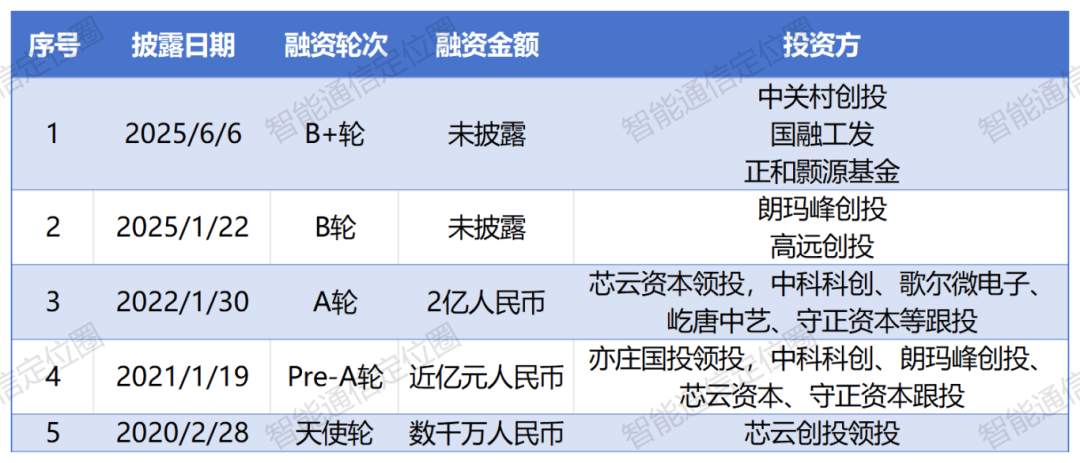
Group 1: Company Overview - Shenzhen Nuri Chip Technology Co., Ltd. (Nuri Chip) has successfully completed a B+ round of financing, with the amount undisclosed, backed by investors including Zhenghe Haoyuan, Zhongguancun Venture Capital, and Beigong Investment [1][3] - Beijing Quanji Technology Co., Ltd. (Quanji Technology) has completed a C round financing of several million yuan, with Wuhu Construction Investment as the investor and Wanchuang Investment Bank serving as the financial advisor [2][11] Group 2: Nuri Chip's Achievements - Nuri Chip specializes in the design and development of wireless communication system chips, offering a full range of high-performance products, including the self-developed Ursa Major series UWB positioning communication system chips [3][5] - Since its establishment in 2016, Nuri Chip has achieved multiple "firsts," including being one of the earliest manufacturers to launch UWB chips in China, with eight UWB chips mass-produced across three major series [5][10] - In the smartphone sector, Nuri Chip's UWB chips are set to be mass-produced in flagship models of leading domestic manufacturers by the second half of 2024, with significant adoption in the automotive market, achieving over 80% coverage [7][8] Group 3: Quanji Technology's Innovations - Quanji Technology is recognized as a pioneer in high-precision positioning perception using UWB technology, having created a new category of UWB-AOA single base station positioning, significantly reducing costs [11][12] - The company has established a broad application of its products across various industries, including automotive, energy, and aviation, with notable clients such as JD.com, Bosch, and Huawei [11][12] - In May, Quanji Technology launched a child detection product in collaboration with Junlian Zhixing, utilizing advanced UWB CPD algorithms for comprehensive monitoring and intervention [11][12]
数字低空如何“振翅高飞” 多重挑战待协同破局
Sou Hu Cai Jing· 2025-07-01 23:08
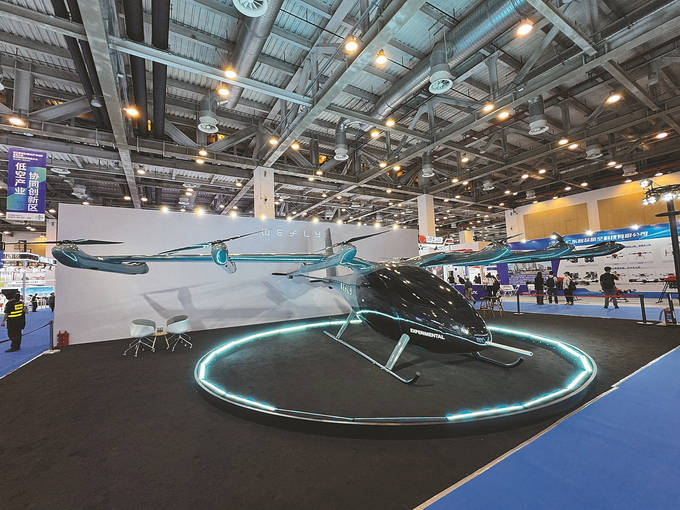
Core Viewpoint - The low-altitude economy in Jiangsu is rapidly developing, with significant advancements in technology and applications, highlighted by two major industry conferences focusing on low-altitude economic strategies and innovations [3][4][5]. Group 1: Industry Developments - China Electronics Technology Group Corporation (CETC) launched three major product systems: "Tianxing" for low-altitude traffic management, "Tianwei" for monitoring and protection, and "Tiangong" for specialized aircraft solutions [4]. - The "Tianmu" low-altitude model, China's first self-developed aviation transport model, enhances operational efficiency by 50% through AI-driven management [4][7]. - The low-altitude flight service platform in Nanjing has completed over 100,000 flights in six months, marking a growth of over 500% compared to the previous year [5][6]. Group 2: Challenges and Solutions - The industry faces challenges such as data integration for flight management, with many companies' flight data not yet under regulatory oversight [8]. - There is a significant imbalance between infrastructure investment and returns, prompting the need for government-led initiatives to attract private capital [8]. - Solutions being explored include the introduction of AI models in management systems and regional collaborations to expand airspace resources [8][9]. Group 3: Future Outlook - The vision for the future includes the potential for 10,000 low-altitude flying vehicles over each city within the next decade, indicating a strong growth trajectory for the industry [10].
全球β-氧化镓单晶片总体规模及主要厂商占有率和排名
QYResearch· 2025-07-01 08:48
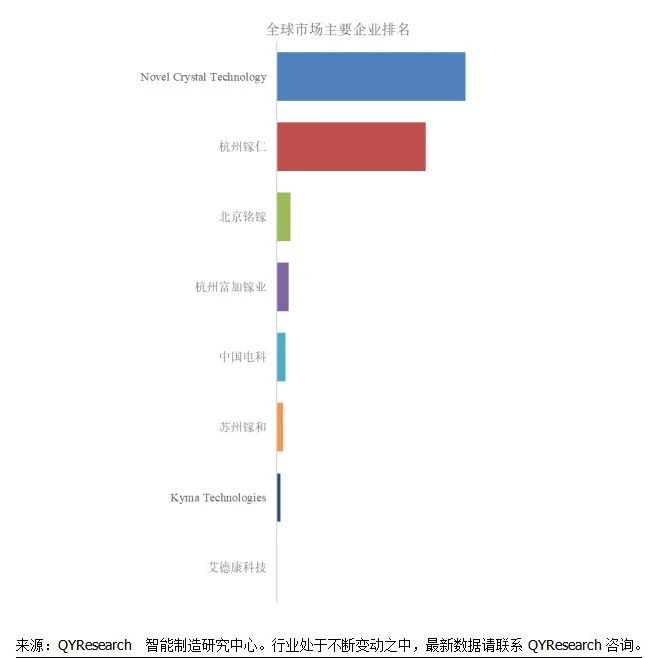
Core Viewpoint - The global market for β-Gallium Oxide (β-Ga2O3) single crystal wafers is projected to reach $430 million by 2031, with a compound annual growth rate (CAGR) of 27.6% from 2024 to 2030, driven by its superior electrical properties and wide bandgap characteristics [1]. Market Overview - β-Ga2O3 is a wide bandgap semiconductor with a bandgap of approximately 4.9 eV, offering excellent electrical performance, including high breakdown field strength (8 MV/cm) and high ultraviolet transmittance [1]. - The market is dominated by 4-inch wafers, which account for about 54.8% of the market share [6][8]. - The primary application for β-Ga2O3 wafers is in education and research, representing approximately 53.2% of the demand [9]. Key Drivers - The wide bandgap property of β-Ga2O3 allows for high-temperature and high-voltage applications, making it suitable for high-power and high-frequency devices [14]. - The high breakdown field strength of β-Ga2O3 (8-10 MV/cm) surpasses that of traditional materials like silicon and gallium nitride, increasing its demand in high-voltage applications [14]. - Advancements in crystal growth technologies, such as the Czochralski method, support the large-scale production of high-quality β-Ga2O3 wafers [17]. - The decreasing manufacturing costs due to optimized production processes enhance the competitiveness of the industry [18]. Challenges - The difficulty in controlling crystal defects in β-Ga2O3 affects the stability and reliability of devices [19]. - The lack of mature p-type doping technology limits the flexibility in device design [19]. - Existing manufacturing equipment is primarily designed for traditional materials, creating a gap in the supply chain for β-Ga2O3 [21]. Industry Opportunities - The high-power and high-voltage device market presents significant growth potential for β-Ga2O3, especially in power management and electric vehicle drive systems [24]. - The unique properties of β-Ga2O3 make it ideal for ultraviolet light detection and emission applications, catering to environmental monitoring and healthcare needs [25]. - The rise of electric vehicles and smart grids increases the demand for efficient wide bandgap semiconductor devices [26]. - Emerging applications in space technology and military defense create new opportunities for high-performance materials [27]. - Government support and capital investment in wide bandgap semiconductor development provide a favorable environment for industry growth [29]. - The global push for energy transition and efficiency improvements positions β-Ga2O3 as a key material in achieving these goals [30].
现场发布“天行、天卫、天工”三大产品体系
Nan Jing Ri Bao· 2025-06-27 02:28
Core Viewpoint - China Electronics Technology Group Corporation (CETC) is advancing its low-altitude economy initiatives by launching three product systems: "Tianxing," "Tianwei," and "Tiangong," along with the "Low-altitude Economic Concentric Circle Plan" which includes three special actions [1][2]. Group 1: Product Systems - The "Tianxing" series focuses on urban air traffic, providing an integrated low-altitude intelligent network and comprehensive management services, addressing needs such as air situation monitoring, collaborative decision-making, and resource scheduling [1]. - The "Tianwei" series targets low-altitude safety, offering solutions for drone regulation and protection of important targets, featuring a comprehensive safety control platform and various detection and countermeasure devices [1]. - The "Tiangong" series encompasses the entire production chain from core component development to system adaptation, covering various flight platforms to meet diverse application needs [2]. Group 2: Special Actions - The "Government-Enterprise Collaboration" action aims to partner with local governments to establish national benchmarks for low-altitude management services [2]. - The "Industry Symbiosis" action focuses on gathering advantages across the entire chain to promote high-quality development in the sector [2]. - The "Innovation Leadership" action seeks to collaborate with research institutions to develop forward-looking capabilities in the low-altitude domain [2].