
实丰文化

Search documents
陪伴机器人,正在改写9亿人的孤独经济
机器人大讲堂· 2026-01-11 09:39
Core Insights - The article discusses the rise of companion robots, driven by the dual forces of emotional consumption and AI technology, transforming from toys to essential companions in various life scenarios [1][3]. Group 1: Market Demand - The "loneliness economy" is emerging, with 900 million people creating a strong demand for companionship. As basic needs are met, higher-level needs such as belonging and self-actualization are becoming central to consumption, with "emotional value" being key to product pricing [4][5]. - By 2025, the online market for AI toys in China is expected to surge by 394.9%, with emotional companionship products growing the fastest, increasing their market share from 7.0% to 15.7% [4]. Group 2: Target Demographics - Over 120 million young adults aged 18-35 live alone, showing a strong demand for anthropomorphic interaction products. Women aged 25-30 represent 72% of the consumer base for companion robots, willing to pay for aesthetics and empathy [7]. - The elderly population in China has reached 280 million, with over 50% being empty nesters. High-end companion robots are becoming essential in the elderly care market, despite their higher price points [7]. Group 3: Market Growth Projections - The global AI companionship market is projected to grow from $30 million to between $70 billion and $150 billion by 2030. The domestic market is expected to reach approximately $1 billion in 2024 and $3.86 billion by 2030, with a compound annual growth rate of 75% [9]. Group 4: Technological Advancements - The rise of companion robots is attributed to advancements in AI technology, enabling a shift from passive responses to active empathy. New generation robots can understand context, emotions, and subtleties in conversation, providing personalized interactions [10][11]. - Multi-modal sensors are being integrated into companion robots, allowing them to perceive voice, visual, tactile, and environmental cues, enhancing user interaction [14]. Group 5: Market Structure - The companion robot market is attracting three types of players: traditional toy manufacturers, tech startups, and IP holders, leading to differentiated competition [17]. - Traditional toy companies leverage established supply chains and IPs to transition into the AI space, while tech firms focus on high-end markets with advanced emotional interaction capabilities [19][21]. Group 6: Product Evolution - Companion robots are categorized into three price tiers: entry-level (100-500 RMB), mid-range (500-3000 RMB), and high-end (over 3000 RMB), catering to different user needs [26][28][30]. - Entry-level products focus on basic interactions and are popular among cost-conscious parents, while mid-range products are favored by urban professionals seeking emotional support [27][29]. Group 7: Future Trends - The market for companion robots is expected to transition from "conceptual popularity" to "demand-driven" growth, with four key trends: precision in emotional computing, deeper IP integration, diversified scene expansion, and service-oriented monetization models [31][34][35]. - Companies are exploring subscription services and dual revenue models to enhance profitability beyond single sales [36]. Group 8: Challenges and Opportunities - Despite the promising market outlook, challenges such as technology integration and safety risks remain prevalent. The industry must address issues related to data privacy and user dependency on technology [37][39]. - The reduction in computing costs and advancements in AI capabilities present significant opportunities for improving the cost-effectiveness of companion robots [40].

阿里云“杀入”AI硬件
财联社· 2026-01-10 10:25
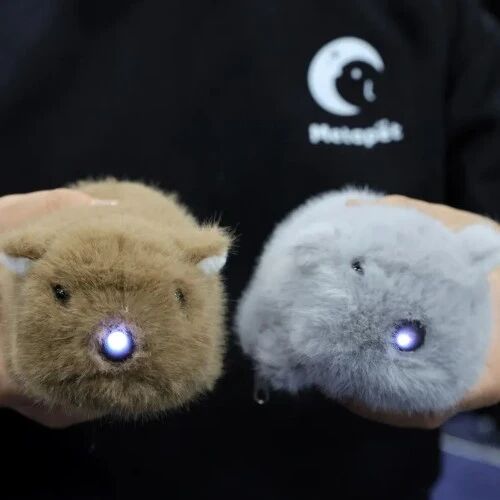
Group 1 - The core viewpoint of the article emphasizes that major tech companies, including Alibaba Cloud, are aggressively entering the AI hardware market to capture the next generation of smart entry points and integrate "cloud-edge-end" solutions [3][31]. - Alibaba Cloud showcased its multi-modal interaction development kit at the AI hardware exhibition, integrating three foundational models for various AI hardware applications [3][4]. - The competition among tech giants in AI hardware is driven by the need to bridge the gap between cloud-based large models and physical applications, making AI hardware a crucial container for deploying these capabilities [3][31]. Group 2 - Various AI toys and robots powered by Alibaba's foundational models were prominently displayed at the exhibition, indicating a broad coverage of AI hardware categories [4][5]. - Companies like Ubiquiti and Shifeng Culture launched AI products that utilize Alibaba's models, showcasing capabilities such as emotional interaction and intelligent voice responses [5][7]. - The integration of Alibaba's models into products like AI glasses and smart toys highlights the trend towards creating emotionally engaging and interactive devices [11][19]. Group 3 - Alibaba Cloud's strategy involves collaborating closely with chip and module partners to enhance the capabilities of AI hardware, indicating a fragmented product landscape [26][25]. - The company is optimistic about the growth of smart hardware in 2026, predicting the emergence of new product categories beyond traditional devices [26]. - The exploration of embodied intelligence through multi-modal interaction and VLA models is a key focus for Alibaba Cloud, with expectations for significant advancements in the coming years [28][29]. Group 4 - The article discusses the parallel development of GUI and A2A paradigms in AI, with Alibaba Cloud actively engaging in both areas [29][30]. - The future of AI hardware is expected to shift from passive responses to proactive services, driven by advancements in multi-modal perception and agent memory technologies [32][31]. - The industry faces challenges in aligning user expectations with actual experiences, particularly in the AI toy sector, where high return rates indicate unmet consumer demands [31][32].

文娱用品板块1月9日涨1.96%,浙江正特领涨,主力资金净流出2187.94万元



Zheng Xing Xing Ye Ri Bao· 2026-01-09 08:54
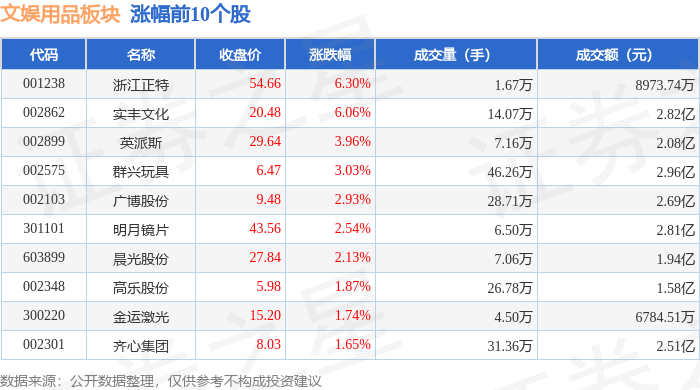
Market Overview - The entertainment products sector increased by 1.96% on January 9, with Zhejiang Zhengte leading the gains [1] - The Shanghai Composite Index closed at 4120.43, up 0.92%, while the Shenzhen Component Index closed at 14120.15, up 1.15% [1] Stock Performance - Zhejiang Zhengte (001238) closed at 54.66, up 6.30% with a trading volume of 16,700 lots and a transaction value of approximately 89.74 million yuan [1] - Shifeng Culture (002862) closed at 20.48, up 6.06% with a trading volume of 140,700 lots and a transaction value of approximately 282 million yuan [1] - Yingpais (002899) closed at 29.64, up 3.96% with a trading volume of 71,600 lots and a transaction value of approximately 208 million yuan [1] - Other notable stocks include Qunxing Toys (002575) up 3.03%, Guangbo Co. (002103) up 2.93%, and Mingyue Optical (301101) up 2.54% [1] Capital Flow - The entertainment products sector experienced a net outflow of 21.88 million yuan from institutional investors and 61.22 million yuan from retail investors, while there was a net inflow of 83.10 million yuan from individual investors [2] - The capital flow for individual stocks shows that Morning Light Co. (6688809) had a net inflow of 21.91 million yuan from institutional investors, while Yingpais (002899) had a net inflow of 17.11 million yuan [3] - Shifeng Culture (002862) saw a net inflow of 9.77 million yuan from institutional investors, but a net outflow of 24.80 million yuan from retail investors [3]
政策供给双驱动,游戏板块景气度持续攀升,游戏ETF(159869)近10个交易日累计“吸金”达13.94亿元
Mei Ri Jing Ji Xin Wen· 2026-01-09 05:50
Core Viewpoint - The gaming sector is experiencing a significant upward trend, with the gaming ETF (159869) rising over 1.5% and all constituent stocks showing positive performance, indicating strong investor interest and potential growth in the industry [1]. Group 1: ETF Performance - As of January 8, the gaming ETF (159869) has reached a scale of 14.103 billion yuan, attracting a total of 1.394 billion yuan in the last 10 trading days, providing investors with a convenient tool to invest in leading A-share gaming companies [1]. - Notable stocks within the ETF include BoRui Communication, which hit the daily limit, and others like ShiFeng Culture, FuChun Co., ShenZhou TaiYue, ZheShu Culture, and ShunNet Technology showing significant gains [1]. Group 2: Publisher Revenue Insights - By December 2025, the top 10 mobile game publishers in China are expected to maintain a stable revenue ranking, with Tencent, DianDian Interactive, and Lemon Microfun leading the list [1]. - DianDian Interactive has achieved over 4 billion USD in global cumulative revenue from its games "Whiteout Survival" and "Kingshot," securing its second position in the rankings [1]. - Lemon Microfun has seen a remarkable year-on-year revenue increase of 165%, driven by Christmas and New Year themed events across its various synthesis games [1]. Group 3: Industry Outlook - According to Dongfang Securities, multiple regions have proposed pilot programs for local processing of game licenses, which is expected to enhance the efficiency of license approvals and accelerate game supply [1]. - The overall game supply is projected to increase, with a robust pipeline of new products anticipated for 2026 [1]. - The gaming sector is poised for transformation through advancements in AI, content, and commercialization models, highlighting investment opportunities in the gaming ETF (159869) that tracks the performance of A-share listed companies in the animation and gaming industry [1].
文娱用品板块1月8日涨0.25%,三柏硕领涨,主力资金净流出8969.22万元
Zheng Xing Xing Ye Ri Bao· 2026-01-08 08:51
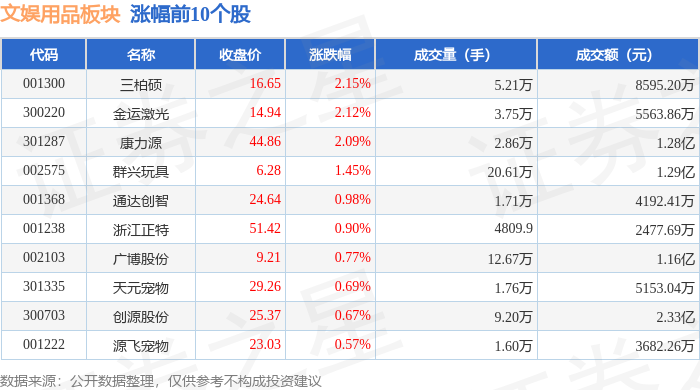
Group 1 - The entertainment products sector increased by 0.25% on January 8, with Sanbai Shuo leading the gains [1] - The Shanghai Composite Index closed at 4082.98, down 0.07%, while the Shenzhen Component Index closed at 13959.48, down 0.51% [1] - Key stocks in the entertainment products sector showed various performance metrics, with Sanbai Shuo closing at 16.65, up 2.15%, and Guangyuan Qufen at 14.94, up 2.12% [1] Group 2 - The entertainment products sector experienced a net outflow of 89.69 million yuan from institutional funds, while retail investors saw a net inflow of 160 million yuan [2] - The trading volume and turnover for key stocks in the sector varied, with Sanbai Shuo achieving a turnover of 85.95 million yuan [1][2] - The detailed fund flow for individual stocks indicated that Morning Light Co. had a net inflow of 13.51 million yuan from institutional investors [3]
AI玩具,也开始割韭菜了?
创业邦· 2026-01-08 07:25
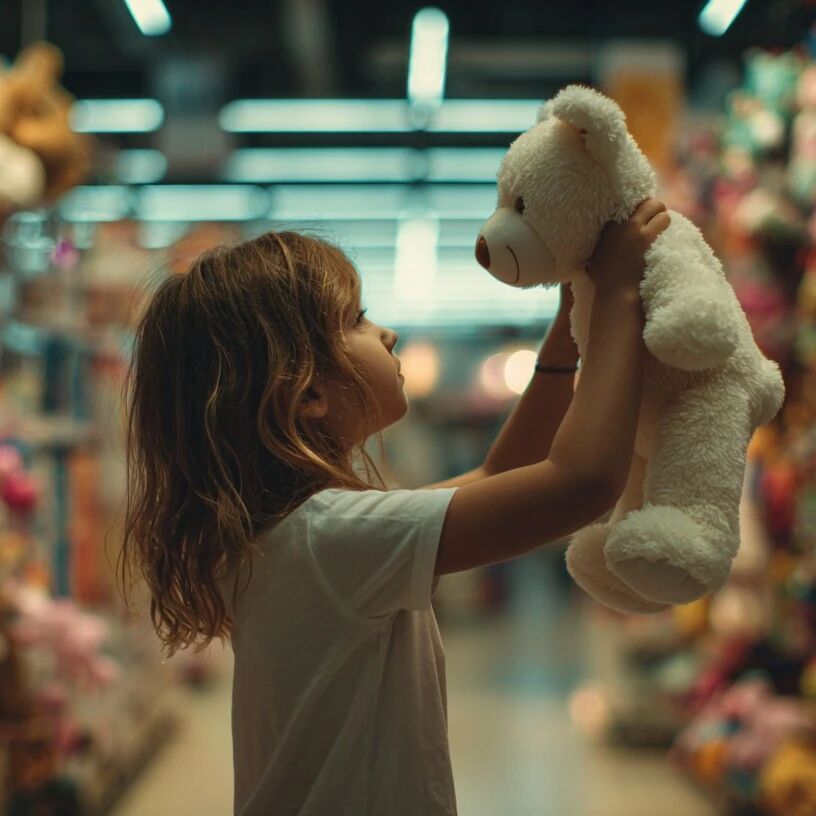
Core Viewpoint - The AI toy industry is experiencing a significant market growth, projected to reach $224.75 billion by 2025, driven by the increasing demand for emotional value in consumer products [6][8]. Market Dynamics - The AI toy sector has attracted 96 investment institutions, including major players like ByteDance and Coca-Cola, with a notable increase in financing events since 2024 [6]. - Despite the capital influx, feedback from consumers and manufacturers indicates a disconnect between high prices and actual product performance, leading to skepticism about the industry's sustainability [7][21]. Consumer Expectations vs. Reality - Consumers have high expectations for AI toys, anticipating advanced emotional interactions, but many products fail to deliver even basic conversational capabilities [10][14]. - The average gross margin for AI toys varies significantly, with basic models at 50%-65% and high-end models reaching 70%-85%, yet the actual technology often does not justify the high prices [12][15]. Product Performance Issues - Many AI toys exhibit delayed responses and lack coherent conversational abilities, leading to consumer disappointment and a growing distrust in the products [14][15]. - The reliance on generic large models for AI functionality results in a lack of unique interactive experiences, causing many toys to be perceived as ineffective [20][22]. Supply Chain and Production Insights - The production of AI toys is characterized by low-cost components and rapid assembly, leading to a market flooded with similar products lacking differentiation [12][20]. - The actual sales volume of high-end AI toys is lower than expected, with basic models being more popular among consumers [17][21]. Market Trends and Future Directions - Many AI toy companies are shifting focus from consumer markets to B2B partnerships, seeking stable revenue streams through collaborations with sectors like education and tourism [21]. - The current trend of prioritizing quick assembly over product quality may hinder the development of truly innovative and competitive consumer brands in the long run [21][22].
版号常态化+新品大年催化,游戏ETF(159869)午盘持续上扬涨近1.2%
Mei Ri Jing Ji Xin Wen· 2026-01-08 07:22
Group 1 - The gaming sector remains strong, with the gaming ETF (159869) rising approximately 1.2% as of January 8, driven by stocks such as Guomai Culture, Borui Communication, Perfect World, and others showing significant gains [1] - As of January 7, the ETF's scale reached 13.707 billion, providing investors with a convenient tool to invest in leading A-share gaming companies [1] - First Capital Securities anticipates that with the normalization of game approvals and industry recovery, gaming companies are increasing investment in new product development, expecting a concentrated launch period in 2026 [1] Group 2 - The gaming sector is catalyzed by multiple factors including AI, content, and commercialization model transformations, with the gaming ETF (159869) tracking the performance of A-share listed companies in the animation and gaming industry [2]
谁在为AI玩具的“情绪价值”买单?
Xin Lang Cai Jing· 2026-01-07 10:53
Core Insights - The AI toy industry is experiencing a significant mismatch between the high prices of products, often ranging from hundreds to thousands of yuan, and the actual technological capabilities, which are often limited and result in delayed responses and poor interaction quality [3][4][17] - The market for AI toys is projected to grow significantly, with estimates suggesting it could reach $224.75 billion by 2035, driven by the increasing demand for emotional companionship [3][19] - Despite the enthusiasm in the capital market, feedback from consumers and manufacturers indicates a disconnect, with many products failing to meet expectations [4][19] Industry Overview - The AI toy market has attracted 96 investment firms, including major players like ByteDance and Coca-Cola, indicating strong interest and potential for growth [3][19] - The gross margin for AI toys varies significantly, with basic models achieving margins of 50%-65% and high-end models priced between 1500 to 3000 yuan achieving margins of 70%-85% [7][22] - Many AI toys are built using low-cost components, with core chip costs dropping below 50 yuan, leading to a proliferation of similar products in the market [22][28] Consumer Experience - Consumers report that AI toys often fail to deliver on their promises of emotional interaction, with many products exhibiting poor memory and response capabilities [10][25] - The return rate for AI toys on e-commerce platforms is alarmingly high, reaching 30%-40%, with some brands experiencing return rates as high as 80% during promotional events [29][30] - There is a growing trend among parents to be more cautious with spending, leading to a decline in consumer confidence in AI toys [29][30] Market Dynamics - The industry is characterized by a rapid production cycle, with simple AI toys being produced quickly, but this has led to a lack of innovation and differentiation in the market [28][30] - Many companies are shifting their focus from consumer (C-end) markets to business (B-end) partnerships, seeking stable revenue streams through collaborations with sectors like education and tourism [30] - The current landscape reveals a significant gap between the marketed emotional value of AI toys and their actual performance, necessitating a reevaluation of product offerings [30]
AI玩具,也开始割韭菜了?
投中网· 2026-01-06 06:11
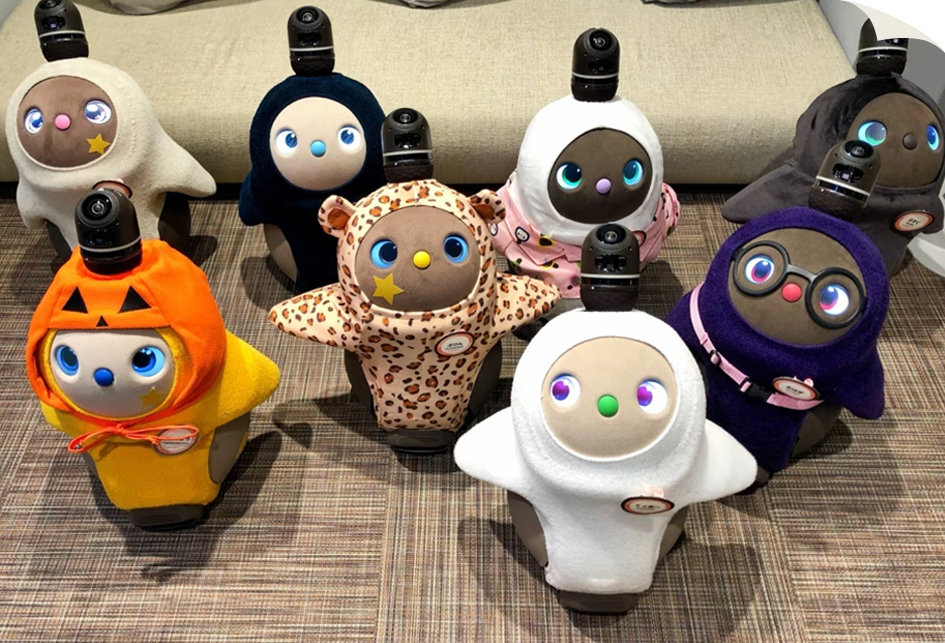
以下文章来源于凤凰网科技 ,作者凤凰网科技 凤凰网科技 . 凤凰科技频道官方账号,带你直击真相。 将投中网设为"星标⭐",第一时间收获最新推送 被高估的"情绪价值"。 作者丨 林阳 编辑丨 赵子坤 来源丨 凤凰网财经 "我想要它能从我的只言片语中发现我的闪光点,让我感受到被爱。" 北京 海淀 的 无 界 咖啡馆 里 , 一位顾客向AI玩具品牌创始人吐露心声。她轻抚着面前毛绒玩具, 停顿片刻后略显失望:"但延迟反应已经让我失去一半兴趣了,好像总是不明白我在说什么。" 她 买单 的 是,数百甚至上千元、标榜"情感陪伴"的高溢价产品,得到的却是价值仅几十元的技术 内核提供的迟钝反应。这种支付与获得之间巨大的价值错配,正在成为整个AI玩具行业的真实写照。 2025年,被从业者们视为"AI玩具元年"。当"情绪价值"成为消费市场的硬通货,AI与玩具的结合, 被视为最直接的技术解决方案。市场研究机构预测,其市场规模将在十年内飙涨超过五倍,高达 2247.5亿美元。 资本市场闻风而动。IT桔子数据显示,AI玩具赛道已经吸引了96家投资机构的参与,包括字节跳 动、联想创投、京东科技、可口可乐、赛福投资基金、金沙江创投等头部投资 ...

实丰文化跌2.09%,成交额5466.13万元,主力资金净流出670.19万元
Xin Lang Cai Jing· 2026-01-06 03:12
Core Viewpoint - Shifeng Culture's stock has experienced a decline in recent trading sessions, with a notable drop in both share price and market performance, indicating potential challenges in the company's financial health and investor sentiment [1][2]. Group 1: Stock Performance - On January 6, Shifeng Culture's stock fell by 2.09%, trading at 19.19 CNY per share, with a total transaction volume of 54.66 million CNY and a turnover rate of 2.22% [1]. - Year-to-date, the stock price has decreased by 1.74%, with a 3.62% drop over the last five trading days and a 9.99% decline over the past 20 days [1]. - The stock has seen a slight increase of 1.11% over the last 60 days [1]. Group 2: Financial Performance - For the period from January to September 2025, Shifeng Culture reported a revenue of 328 million CNY, reflecting a year-on-year growth of 5.81% [2]. - The company recorded a net profit attributable to shareholders of -58.79 million CNY, representing a significant year-on-year decrease of 1399.85% [2]. Group 3: Shareholder and Dividend Information - As of September 30, 2025, the number of shareholders decreased by 21.97% to 25,500, while the average number of circulating shares per person increased by 28.16% to 4,954 shares [2]. - Since its A-share listing, Shifeng Culture has distributed a total of 18 million CNY in dividends, with 3.6 million CNY distributed over the past three years [3]. - Notably, Huashang Advantage Industry Mixed A (000390) has exited the list of the top ten circulating shareholders as of September 30, 2025 [3].