NatWest Group plc

Search documents
高盛:德银(DB.US)今年迄今已跑赢大盘 下调评级至“中性”
Zhi Tong Cai Jing· 2025-08-27 02:21
Core Viewpoint - Goldman Sachs downgraded Deutsche Bank's rating from "Buy" to "Neutral" and Deutsche Commercial Bank's rating from "Neutral" to "Sell" due to their stock performance exceeding the market since the beginning of the year [1] Group 1: Market Performance - The European banking sector has risen nearly 50% year-to-date, significantly outperforming the overall European stock market [1] - Factors contributing to this growth include strong growth momentum, a more stable and steeper interest rate trajectory, and ongoing performance growth and rating upgrades [1] Group 2: Analyst Outlook - Goldman Sachs maintains an optimistic outlook for European banks, projecting an average potential stock price increase of about 10% over the next 12 months, with some stocks rated "Buy" expected to rise by approximately 20% [1] - Stocks rated "Buy" include UBS Group, ING Group, Lloyds Banking Group, BNP Paribas, National Westminster Group, Santander Bank, and HSBC [1] Group 3: Interest Rate Environment - The interest rate curve has steepened this year, with expectations for final rates trending towards a range-bound movement, enhancing investor confidence in the medium-term outlook for net interest income [1]




5 Low-Leverage Stocks to Watch Ahead of a Possible September Rate Cut
ZACKS· 2025-08-25 15:11
Core Insights - U.S. stock indices rose over 1.5% on August 22, 2025, following Federal Reserve Chair Jerome Powell's indication of a potential interest rate cut next month, leading to increased trader optimism and a notable rise in Wall Street [1][10] Investment Strategy - Investors are encouraged to consider low-leverage stocks such as NatWest Group, Sterling Infrastructure, Luxfer Holdings, Evercore, and Hillman Solutions Corp. as safer investment options due to their lower risk profile [2][10] - The focus on low-leverage stocks is based on the understanding that companies with excessive debt financing may face significant losses during economic downturns [5][6] Low-Leverage Stocks - Leverage refers to the practice of borrowing capital for operations and expansion, typically through debt financing, which can pose risks if returns do not exceed interest costs [4][5] - A lower debt-to-equity ratio indicates improved solvency and reduced financial risk for a company, making it a crucial metric for investors [7][9] Company Highlights - **NatWest Group (NWG)**: Announced a £140 million lending for essential upgrades to the UK's Haweswater Aqueduct, with a projected 20.1% sales improvement for 2025 and a long-term earnings growth rate of 10.9% [15][16] - **Sterling Infrastructure (STRL)**: Reported a 21% year-over-year revenue increase and a 40.8% surge in earnings per share for Q2 2025, with a projected 45.9% earnings improvement for 2025 [17][18] - **Luxfer Holdings (LXFR)**: Achieved a 5.8% increase in adjusted net sales and a 25% rise in adjusted earnings per share for Q2 2025, with a long-term earnings growth rate of 8% [19][20] - **Evercore (EVR)**: Reported a 20.7% increase in adjusted revenues and a 30.4% rise in earnings for Q2 2025, with a projected 15.9% sales improvement for 2025 [20][21] - **Hillman Solutions (HLMN)**: Experienced a 6.2% sales increase and a 6.3% growth in adjusted earnings per share for Q2 2025, with a projected 6.6% sales improvement for 2025 [22][23]






Buy These 5 Low-Leverage Stocks Amid Tariff-Induced Uncertainty
ZACKS· 2025-08-06 14:36
Core Insights - Major U.S. stock indices experienced a decline of nearly 1% on August 5, 2025, due to weaker-than-expected services data and ongoing tariff uncertainties, particularly with Trump threatening tariffs as high as 250% on pharmaceuticals [1][10] - Despite market volatility, low-leverage stocks are highlighted as safer investment options during economic uncertainty, with specific companies recommended for their strong earnings growth and low debt levels [2][10] Market Overview - The U.S. stock market is currently facing challenges due to tariff-related uncertainties and weaker economic data, leading to a lack of confidence among investors [2][10] - The recent wave of corporate earnings that exceeded estimates has been overshadowed by tariff concerns, impacting overall market optimism [1] Investment Strategy - Investors are advised to consider low-leverage stocks as a protective measure against potential economic downturns, with a focus on companies that exhibit solid earnings growth and lower debt-to-equity ratios [6][9] - The debt-to-equity ratio is emphasized as a critical metric for assessing financial risk, with lower ratios indicating better solvency [7][9] Recommended Low-Leverage Stocks - **NatWest Group (NWG)**: Collaborating with Google Cloud to enhance growth, with a projected 20.1% sales improvement for 2025 and a long-term earnings growth rate of 10.9% [15][16] - **Zions Bancorporation (ZION)**: Reported a 9% year-over-year increase in net interest income, with a 5% expected earnings growth for 2025 [17][18] - **Luxfer Holdings (LXFR)**: Achieved a 5.8% increase in adjusted net sales and a 25% rise in adjusted earnings per share, with a long-term earnings growth rate of 8% [19][20] - **Kingstone Companies (KINS)**: Declared a quarterly cash dividend, indicating strong financial health, with a projected 37.9% improvement in both sales and earnings for 2025 [21][22] - **Ingredion Inc. (INGR)**: Reported a 1% increase in adjusted operating income, with a long-term earnings growth rate of 11% and a 1% sales improvement expected for 2025 [23][24]




NatWest Group(NWG) - 2025 Q2 - Earnings Call Presentation
2025-07-25 12:00
Financial Performance - Attributable profit reached £2.5 billion in H1'25, an 18.5% increase compared to H1'24[5, 10] - Total income, excluding notable items, increased by 13.7% to £8.0 billion in H1'25[5, 10] - Return on Tangible Equity (RoTE) improved to 18.1% compared to 16.4% in H1'24[5, 10] - Earnings per share increased by 28% to 30.9p in H1'25[5] Balance Sheet Strength - Customer loans increased by 3.2% to £384 billion compared to December 2024[5] - Customer deposits increased by 1.0% to £436 billion compared to December 2024[5] - Assets Under Management (AUMA) increased by 5.9% to £52 billion compared to December 2024[5] - The CET1 ratio is strong at 13.6%[5, 8] Strategic Initiatives - The group added 1.1 million customers, including over 100,000 organically, bringing the total to over 20 million[7] - The group delivered £110 billion of Climate and Sustainable Finance and introduced a new £200 billion Climate and Transition Finance target[7] - A £750 million share buyback program was announced, equivalent to 40bps of surplus capital[8]
X @Bloomberg
Bloomberg· 2025-07-25 06:30
Financial Performance - NatWest Group raises its guidance for the year [1] - NatWest Group reported second-quarter earnings that topped analyst estimates [1] Capital Allocation - NatWest Group announced a £750 million share buyback [1]
X @BBC News (World)
BBC News (World)· 2025-07-15 10:12
NatWest continues exit from Republic of Ireland https://t.co/KwQNBe77aW ...
5 Must-Buy Thriving Non-Tech Behemoths of Q1 Set to Tap More Gains
ZACKS· 2025-06-10 12:26
Market Overview - U.S. stock markets are experiencing a positive trend after recent volatility, with the S&P 500 near its all-time high and both the Nasdaq Composite and Dow showing positive year-to-date performance [1][2] Economic Factors - Ongoing trade negotiations between the U.S. and China, stability in the U.S. labor market, and a declining inflation rate have improved market sentiment towards equities [2] Investment Opportunities - Non-tech stocks have shown significant appreciation year to date, alongside discussions of AI, quantum computing, and 5G/6G technologies [3] Recommended Stocks - Five corporate giants with market capitalizations over $50 billion have provided returns exceeding 40% year to date, all holding a Zacks Rank 1 (Strong Buy) [4][5] Howmet Aerospace Inc. (HWM) - Benefits from strong momentum in the commercial aerospace market and defense aerospace business, supported by rising U.S. and international defense budgets [8] - Expected revenue and earnings growth rates of 8.5% and 28.6% respectively for the current year, with a 4.2% improvement in earnings estimates over the last 30 days [9][10] Newmont Corp. (NEM) - Progressing with growth projects, including the Tanami expansion and the acquisition of Newcrest, which enhances operational synergies [11] - Expected revenue and earnings growth rates of 2% and 20.1% respectively for the current year, with a 9.7% improvement in earnings estimates over the last 30 days [12] Philip Morris International Inc. (PM) - Strong pricing power and an expanding smoke-free product portfolio, with products like IQOS and ZYN driving growth [13] - Expected revenue and earnings growth rates of 8.1% and 13.7% respectively for the current year, with a 4.6% improvement in earnings estimates over the last 60 days [15] NatWest Group plc (NWG) - Provides a range of banking and financial services, with expected revenue and earnings growth rates of 20.1% and 17.3% respectively for the current year, and a 6.8% improvement in earnings estimates over the last 30 days [16][17] Deutsche Bank Aktiengesellschaft (DB) - First-quarter 2025 results benefited from increased revenues and lower expenses, with a focus on stable, capital-light businesses driving revenue growth [18][19] - Expected revenue and earnings growth rates of 12% and over 100% respectively for the current year, with a 4.2% improvement in earnings estimates over the last 60 days [19]



全球债市“暴风前夕”:交易员每日上报风险,备战下一轮冲击
智通财经网· 2025-06-06 11:26
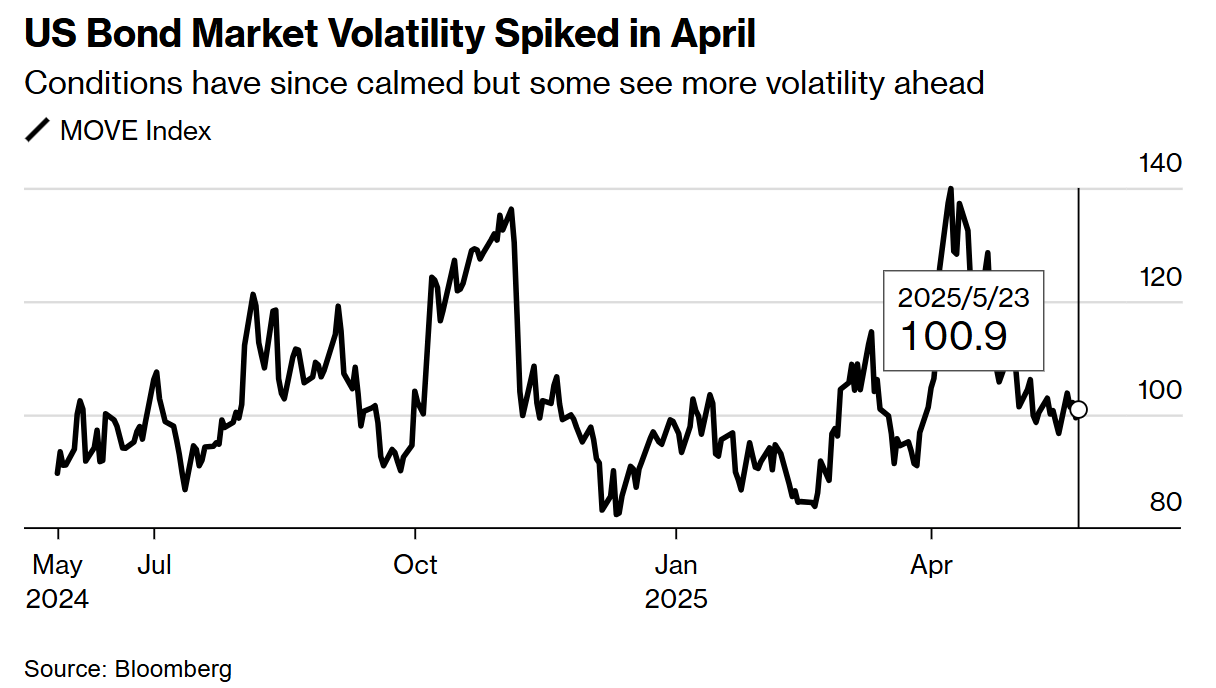
Core Viewpoint - The market turbulence following President Trump's announcement of increased tariffs appears to have subsided, but the risk departments of major global banks remain cautious, implementing measures to mitigate potential losses while potentially sacrificing profits [1]. Group 1: Market Reactions and Strategies - Major banks like Bank of America, NatWest Markets, and Dutch Bank are taking precautionary measures such as daily risk inquiries, stress testing portfolios, and reducing swap positions to lower the risk of significant losses [1]. - Despite the recent calm in the markets, there are concerns about a potential new shock comparable to the one in April, particularly with the upcoming deadline for raising the U.S. federal debt ceiling and the expiration of Trump's tariff exemptions [1]. Group 2: Bond Market Dynamics - The volatility in the U.S. bond market surged to a two-year high in April, with both U.S. Treasuries and equities experiencing significant sell-offs, indicating a breakdown of the safe-haven role of U.S. bonds during stress periods [6][7]. - There are signs of a rebound in demand for longer-term bonds, as weak U.S. economic data has recently pushed up Treasury prices, while Japan's 30-year bond auction results were better than expected [5]. Group 3: Risk Management Practices - The uncertainty in the market has led to a reduction in positions by trading departments, with a focus on managing risks associated with potential volatility spikes, particularly in light of upcoming employment data [5][6]. - Risk management techniques such as scenario analysis and Value at Risk (VaR) are being employed to assess potential losses, but predicting market conditions remains challenging due to the unpredictable nature of current events [6].

低利率时代系列(五):负Carry困境:海外机构如何破局
Soochow Securities· 2025-06-04 14:03
Report Industry Investment Rating No relevant content provided. Core Viewpoints of the Report - Negative carry risk has emerged as a significant challenge in the fixed - income investment field due to the global low - interest - rate environment and monetary policy cycle shifts. Overseas experience shows that addressing negative carry is crucial for institutional profitability, risk resistance, and financial system stability. China's asset management institutions can learn from overseas strategies to manage negative carry risks [10][15]. Summary According to the Table of Contents 1. Negative Carry: Impact in Progress - The cause of negative carry usually stems from asset - liability duration mismatch and interest - rate fluctuations. When the liability - side cost rises due to short - term interest - rate hikes or rigid payment pressure, and the asset - side long - term bond yields are locked or decline, institutions face the risk of return inversion [10]. - Overseas experience indicates that negative carry risks typically occur after a long - term low - interest - rate environment followed by a rapid interest - rate increase. For example, after the Fed's 2022 interest - rate hikes, the US banking industry faced "interest - rate increase + negative carry" pressure. In Japan, after the 2016 negative - interest - rate policy, a "interest - rate decrease + negative carry" situation emerged [10][11]. - China's banks and insurance institutions are also facing challenges of high liability - cost stickiness and low asset returns. They are forced to allocate low - yield bonds due to a shortage of high - quality assets, while liability - side costs adjust slowly [13]. 2. How Do Overseas Asset Management Institutions Break the Deadlock? 2.1 Asset - side: Increase Positive Returns - Japanese insurance institutions hedge negative carry pressure by extending asset duration and increasing ultra - long - term bond allocation, using term premiums to offset short - term return inversions [16]. - US commercial banks, with short - term deposits on the liability side, conduct band - trading by accurately predicting interest - rate cycles. They adjust their bond - asset repricing periods and use interest - rate swaps to hedge risks [21]. 2.2 Liability - side: Cost Control - European insurance institutions implement liability - duration matching strategies by issuing long - term policies or deposits to reduce liability - side interest - rate sensitivity. They lock in low - cost funds during interest - rate declines and adjust duration as interest rates change [22]. - Swiss insurance companies attract low - cost liabilities to form a liquidity buffer, using products like non - guaranteed products to reduce costs [24]. - Overseas asset management institutions use derivatives for duration matching and interest - rate risk hedging. For example, UK banks use structural hedging to improve returns and manage risks, and US insurance companies use interest - rate swaps to hedge interest - rate increase risks [30]. 3. What Strategies Can China Use to Address Negative Carry? - In China, banks face a contradiction between slow - growing deposit business and rigid costs, while asset - side fixed - income assets are highly sensitive to interest - rate fluctuations. The end of the negative carry environment depends on the interest - rate policy cycle [37]. - Strategies for China include dynamic duration adjustment, liability - side innovation and cost control, diversified asset allocation, and re - defining bond asset classifications. These strategies can help Chinese asset management institutions actively manage asset - liability linkages and reduce negative carry risks [38].
5 Momentum Picks to Tap Market Rally in June After an Impressive May
ZACKS· 2025-06-02 14:51
Key Takeaways Major Indexes recorded their strongest month in May since November 2023. Five Zacks Top Rank stocks with Momentum Score A are poised to benefit from June's bullish sentiment. Improved earnings estimates and sector strength support picks like CYBR, KGC, NWG, RYAAY, and PCTY.Wall Street saw an impressive rally in May after severe volatility in the previous two months. The three major stock indexes — the Dow, the S&P 500 and the Nasdaq Composite — were up 3.9%, 6.2% and 9.6%, respectively. The ...