
智元机器人

Search documents
研报掘金丨开源证券:首予金固股份“买入”评级,向多元赛道新材料科技平台升级
Ge Long Hui A P P· 2025-12-26 07:04
Core Viewpoint - The company is transitioning from a wheel manufacturer to a diversified new materials technology platform, focusing on high-performance, low-cost products like the Avatar low-carbon wheels [1] Group 1: Business Transformation - The company is evolving from a "single product supplier" to a "new materials technology platform" through strategic transformation [1] - The integration of new materials with the core wheel manufacturing business is aimed at enhancing product performance and reducing costs [1] Group 2: Strategic Partnerships - The company has signed a strategic cooperation agreement with Ninebot Technology Co., Ltd. to expand into the two-wheeler wheel and frame market [1] - Collaborations have been established with companies like Zhiyuan Robotics, Luming Robotics, and Zhishen Technology to promote the application of new materials [1] Group 3: Market Expansion - The company is entering the emerging electric two-wheeler market, leveraging existing technological advantages for rapid market entry [1] - The establishment of Hangzhou Jingu Embodied Intelligent Technology Co., Ltd. aims to attract professional talent and drive the implementation of new materials like Avatar niobium micro-alloys [1]

具身智能狂奔这一年
腾讯研究院· 2025-12-26 07:04
以下文章来源于腾讯科技 ,作者允智 腾讯科技 . 腾讯新闻旗下腾讯科技官方账号,在这里读懂科技! 允智 本文 作者 萌萌 编辑 2025年,对于 具身智能 行业来说,是一个充满转折和机会的年份。 在资本狂欢和产业试探中,具身智能走过了关键的量产元年。 年初,宇树机器人在春晚上的扭秧歌,成为了日后在线下商场、公园等地看见机器人、机器狗表演的注 脚。 除了机器人表演吸人眼球,另一引人注目的就是行业的融资热度。 IT桔子数据显示,2025年前三季度,国内机器人行业新增一级市场融资事件达610笔,较去年同期的294 笔实现翻倍增长。 从估算金额来看,2025年前三季度,国内机器人创业企业获得的融资总额约500亿元,是去年同期的2.5 倍。 在融资的高热度之下,与其形成高度割裂的,是对行业估值泡沫大的质疑,是技术曲线仍停留在可用向 可靠的爬坡阶段,是工程化与成本、供应链稳定还处在深水区。 这些冰冷的现实,远比精美的商业化故事难以跨越。 这场狂奔的背后,是技术理想与资本现实的错位拉扯,更是产业从概念走向成熟的必经阵痛。 进厂与上市,按下加速键的一年 2025年,行业最大的变化在于节奏。从实验室研发到场景落地,再到资本变现 ...


它们,正批量打造“上纬新材”
投中网· 2025-12-26 06:56
Core Viewpoint - The article discusses the emergence of new investment opportunities in the robotics sector, particularly through acquisitions of traditional manufacturing companies by robotics firms, exemplified by the acquisition of Fenglong Co. by UBTECH Robotics [2][3]. Group 1: Recent Acquisitions - UBTECH Robotics announced it will acquire a 43.01% stake in Fenglong Co. for a total of 1.665 billion yuan, using a combination of agreement transfer and tender offer [2][6]. - This acquisition follows a trend where several robotics companies have adopted similar acquisition strategies, including Zhiyuan Robotics and Qiteng Technology, which have also targeted traditional manufacturing firms [3][7]. Group 2: Stock Performance - The acquisition template has proven effective, with previous cases like Zhiyuan Robotics leading to significant stock price increases, including a 500% rise for the acquired company [4][7]. - Fenglong Co. experienced a surge in stock price following the announcement, reflecting the market's positive response to such acquisitions [4]. Group 3: Financial Details - The acquisition involves a two-step process: an agreement transfer of 65.53 million shares at 17.72 yuan per share, totaling 1.161 billion yuan, followed by a tender offer for an additional 28.45 million shares at the same price, amounting to 504 million yuan [6]. - UBTECH has committed to not transferring or pledging the acquired shares for 36 months post-acquisition, ensuring control over Fenglong Co. [6]. Group 4: Industry Context - UBTECH is the only publicly listed company among the recent acquirers, facing challenges in commercialization despite significant orders amounting to nearly 1.4 billion yuan [9][10]. - Fenglong Co. has shown strong financial performance, with a revenue of 479 million yuan in 2024 and a net profit of 4.59 million yuan, indicating a positive growth trajectory [12]. Group 5: Strategic Synergies - The acquisition is seen as a strategic move for UBTECH to enhance its manufacturing capabilities and scale production, leveraging Fenglong's expertise in precision manufacturing and supply chain management [10][11]. - The article highlights the importance of industry synergy, noting that the most successful acquisitions are those that align closely with the operational needs of the acquiring company [14]. Group 6: Future Implications - The trend of robotics companies acquiring traditional manufacturers is expected to continue, driven by the favorable liquidity of the A-share market and government policies encouraging such mergers [18][19]. - The article suggests that these acquisitions could lead to a long-term positive impact on the Chinese stock market, similar to the missed opportunities during the early internet boom [19].

机器人日租金从3万元跌至3000元
Xin Lang Cai Jing· 2025-12-26 06:24
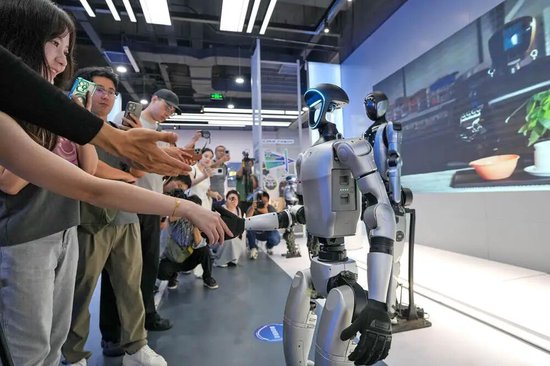
Group 1 - The rental price of humanoid robots has significantly decreased, with daily rental rates dropping from 10,000 yuan to a range of 3,000 to 6,000 yuan [1][17] - The demand for robot rentals has surged ahead of the New Year holiday, with many businesses receiving prepayments for multiple units [1][17] - The market is transitioning from a speculative phase to a more pragmatic development phase focused on real value delivery and practical applications [1][17] Group 2 - The rental market is experiencing structural changes, moving away from simple hardware rentals to comprehensive solutions that include hardware, software, data, and services [1][17] - The peak rental prices observed in March, where daily rates reached as high as 30,000 yuan, are unlikely to return, as the market stabilizes with increased supply [22][24] - The rental model is seen as a viable channel for commercializing humanoid robots, allowing customers to test products at lower costs while providing feedback for product development [25][29] Group 3 - The humanoid robot rental market is projected to exceed 10 billion yuan by 2025, with expectations to reach at least 100 billion yuan by 2026 as platform operations advance [27][28] - The industry is witnessing a shift in customer behavior from impulsive trials to rational evaluations of cost-effectiveness, which is driving rental prices back to reasonable levels [24][25] - The establishment of the "Robot Rental Ecological Alliance" and the upcoming national summit indicate a growing focus on the rental business within the industry [27][28]

机器人日租金从3万元跌至3000元
21世纪经济报道· 2025-12-26 06:16
Core Viewpoint - The rental market for humanoid robots is experiencing a significant price drop, with rental fees now below 10,000 yuan, indicating a shift from speculative demand to a more sustainable market driven by real needs [1][4][9]. Group 1: Market Dynamics - The rental prices for humanoid robots have decreased from a peak of 8,000 to 10,000 yuan per day in March to a range of 3,000 to 6,000 yuan, with some basic models priced around 3,000 yuan and dance versions starting at 5,000 yuan [5][9]. - The demand for robot rentals has surged ahead of the New Year, with many businesses receiving prepayments for multiple units, indicating a robust interest in rental services [1][6]. - The rental market is transitioning from a focus on hardware to a comprehensive service model that includes software, data, and support, reflecting a change in customer expectations from novelty to value creation [1][9]. Group 2: Future Projections - The humanoid robot rental market is expected to exceed 10 billion yuan by 2025, with projections of reaching at least 100 billion yuan by 2026 as platform operations advance [13]. - The industry is anticipated to undergo structural changes, with a focus on rational pricing driven by increased supply and a shift in customer behavior towards value assessment [9][10]. - The rental model is seen as a viable pathway for commercializing humanoid robots, allowing businesses to test products at lower costs while providing feedback for product development [10][11]. Group 3: Industry Challenges - The current rental market faces challenges such as high operational costs, complex collaboration chains, and significant content homogeneity, which could hinder growth [17]. - The customization required for industrial robots makes them less suitable for a rental model, as they often need to be tailored for specific tasks, complicating the reuse of the same product [18]. - Despite the challenges, the demand for humanoid robots in domestic service and companionship is expected to grow, driven by societal changes such as aging populations [18].
机器人租赁平台年末火爆, 但日租价大跌
Xin Lang Cai Jing· 2025-12-26 04:41
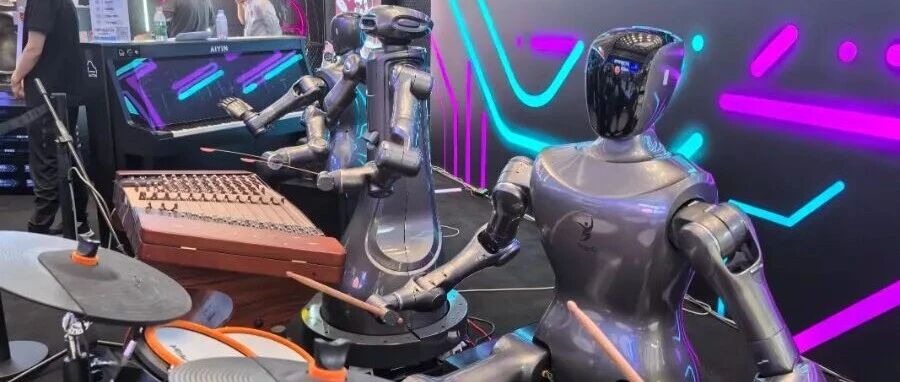
Group 1 - The robot rental market is experiencing explosive growth due to the increase in year-end events and performances, but rental prices are returning to rational levels, with daily rental fees dropping from over 10,000 yuan to hundreds or thousands of yuan [2] - Basic embodied intelligent robots can now be rented for as low as 200 yuan per day, while advanced interactive robots range from 2,000 to 5,000 yuan per day [2] - The rental business is booming, with some platforms reporting bookings extending into February, and prices fluctuating daily [2] Group 2 - The first open robot rental platform, "Qingtian Rental," was launched, aiming to connect over 10 manufacturers, 200 service rental companies, and 300,000 rental customers by 2026 [3] - The platform currently covers 50 core cities in China and plans to expand to over 200 cities by 2026, creating an open robot rental ecosystem [3] - Popular humanoid robots on the platform are available for daily rentals starting from 1,499 yuan, with promotional offers reducing prices to as low as 699 yuan [3] Group 3 - The robot rental market has surpassed 1 billion yuan, with expectations to reach no less than 10 billion yuan next year [10] - Sales of embodied intelligent robots have surged, with transaction volumes increasing by 757% year-on-year during October and November [10] - Despite growth, consumer-grade humanoid robots still face challenges in performing complex tasks and natural emotional interactions, indicating ongoing technological upgrades [10]

全球人形机器人年鉴:从一级市场到二级市场
Robot猎场备忘录· 2025-12-26 04:08
Core Insights - The humanoid robot sector is currently experiencing unprecedented attention globally, particularly in China, where it is supported by policies and government funds [2][21] - The competition among major players in the humanoid robot field is intense, with many startups likely to fail in the commercialization process [3][5] Group 1: Market Overview - Since 2025, major automotive and tech companies have adopted a dual approach of "self-research + investment" in the embodied intelligence sector, but most are still in the early stages without commercially viable bipedal humanoid robots [3][5] - The industry is characterized by a lack of consensus, with various new startups continuously emerging despite existing technological bottlenecks [4][5] Group 2: Commercialization Progress - In the second half of 2025, domestic humanoid robot startups have made significant commercialization progress, surpassing that of leading foreign companies, primarily due to better scene selection rather than advanced technology [5][22] - Current commercial applications remain limited to research, education, and entertainment, with industrial and household applications still a long way off [5][22] Group 3: Technological Development - The humanoid robot sector is entering an era focused on self-research of the robot "brain," driven by breakthroughs in artificial intelligence and large model technologies [5][6] - The dual-system architecture, specifically the VLA model, has become the mainstream approach in the field of embodied intelligence, with no consensus yet on hardware and software technologies [6][8] Group 4: Investment Trends - The secondary market is seeing a surge in interest, particularly in T-chain companies, driven by the positive developments surrounding Tesla's Optimus project [4][11] - Leading startups are increasingly pursuing IPOs, with companies like Zhiyuan Robotics and Yushun Technology initiating their IPO processes [10][11] Group 5: Future Directions - The development of dexterous hands and multi-modal tactile sensors is gaining traction, as these components are crucial for the performance of humanoid robots [9][10] - The healthcare and elderly care sectors are expected to become key focus areas for humanoid robot startups in the future [10]



推出App Store,宇树会迎来它的“苹果商店”时刻吗?
3 6 Ke· 2025-12-26 03:14
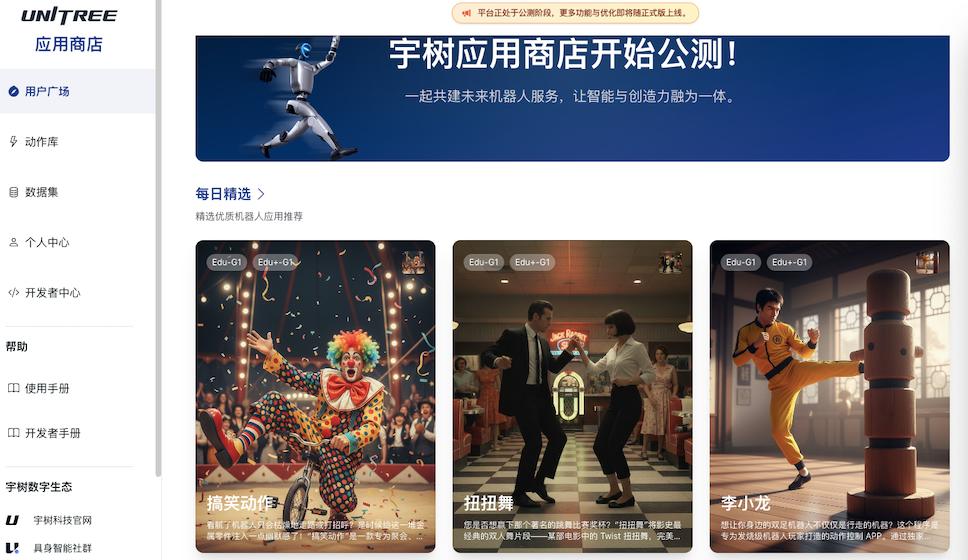
Core Viewpoint - Yushu Technology is making strides in the robotics industry by launching its own "App Store" for humanoid robots, aiming to enhance user engagement and expand its ecosystem [1][5]. Group 1: Company Developments - Yushu Technology has gained attention for its participation in high-profile events, such as the Spring Festival Gala and a concert by Wang Lihong, showcasing the impressive capabilities of its robots [1]. - The newly launched "App Store" allows users to upload and share trained models for various actions, promoting a two-way interaction model [1][2]. - The App Store currently features modules like "User Square," "Action Library," and "Developer Center," with initial offerings including dance and martial arts actions [2][4]. Group 2: User Engagement and Accessibility - The App Store is designed to lower the barrier for users, enabling them to connect their robots via a mobile app without needing coding skills [7]. - Users can upload and download data sets for training and optimizing robot algorithms, enhancing the overall user experience [7]. - This model aims to reduce the costs associated with robot usage, making it more accessible to both individual and enterprise users [7]. Group 3: Industry Implications - The introduction of the App Store model is expected to transform the robotics industry by shifting from high-cost, one-time sales to affordable, standardized hardware and software services [9]. - It may also increase orders from small and medium-sized clients, accelerating the deployment of robots in everyday scenarios [9]. - The platform could facilitate the collection and optimization of action model data, enhancing the capabilities of compatible robot models [9][10].
机器人大战挥别“草莽时代”
Bei Jing Shang Bao· 2025-12-26 01:41
动辄数十亿的资本联姻,参与者身份不尽相同。有的已是港股上市公司,有的没上市企业并未注入资产 和重组计划。有的是人形机器人,有的是四足机器人、特种机器人,并购对象更是涉及环保材料、园林 机械、能源运输、物流仓储等千行百业。 12月24日,优必选宣布收购A股上市公司园林机械制造商锋龙股份的43%股权,豪掷16.65亿元拿下后者 控股权。在此之前数月时间,进行了类似操作的还有智元机器人收购上纬新材、七腾机器人收购胜通能 源…… 算上反向操作的东杰智能收购遨博智能,以及明确IPO进展的宇树科技、云深处科技、乐聚机器人等, 机器人在资本市场的火爆持续到岁末年初。 从内测产品找风投,到秀舞蹈打比赛,再逐渐成为公开市场的香饽饽,以人形机器人破圈为标志的机器 人全链条迎来订单和财富的爆发期。 虽说上市只是又一个阶段的新起点,但能接受大众层级的检验,意味着机器人竞争告别了草根、草莽时 代。市场上有头部领跑者,有当红炸子鸡,有资本领域的长袖善舞,也有大厂明争暗斗和合纵连横—— 新进入者并非没有机会,竞争压力却远超过往。 近期还有市场传闻称,多家人形机器人企业正展开竞逐,不惜重金要拿下总台马年春晚亮相机会。一年 前略显笨拙的"春晚 ...

人形机器人开始“借道A股”
Shen Zhen Shang Bao· 2025-12-26 00:47
Group 1 - The core point of the news is that UBTECH Robotics (9880.HK) is acquiring a controlling stake in Fenglong Co., Ltd. (002931.SZ) through a combination of agreement transfer and tender offer, which will enhance its position in the humanoid robot market [1][2] - UBTECH will acquire a total of 93,957,518 shares, representing 43% of Fenglong's total shares, at a price of 17.72 CNY per share, totaling approximately 1.665 billion CNY [1][2] - After the acquisition, UBTECH's CEO, Zhou Jian, will become the actual controller of Fenglong, further consolidating UBTECH's influence in the industry [1][2] Group 2 - The acquisition is seen as a strategic move to align with both companies' long-term goals and create synergies to accelerate the development and commercialization of humanoid robots [1][2] - Prior to this acquisition, the robotics and AI sector has seen several mergers and acquisitions, indicating a trend of consolidation within the industry [1][4] - UBTECH's recent financial performance shows a revenue of 621 million CNY for the first half of 2025, a year-on-year increase of 27.5%, although it reported a loss of 439 million CNY [3][4] Group 3 - The acquisition may facilitate UBTECH's return to the A-share market, potentially allowing for a dual listing on both Hong Kong and A-share platforms [2][4] - The move is part of a broader trend in the industry where companies are exploring various pathways to access capital markets, including mergers, direct IPOs, and simultaneous listings [4][5] - The industry is witnessing a diversification in listing strategies, with multiple companies pursuing different routes to enhance their market presence [5]