DeepSeek

Search documents
2026年新年献词|顺流逆流,守护我们内心的罗盘!
Zheng Quan Shi Bao Wang· 2025-12-31 02:44
Core Insights - The article reflects on the past year, emphasizing the intertwining of technology and personal experiences as society navigates through challenges and opportunities in 2026 [3][4][6]. Group 1: Technological Developments - The emergence of DeepSeek marked the beginning of a transformative year characterized as the "year of large models" and "year of applications," indicating a significant shift in AI's role across various industries [3]. - AI technologies are reshaping production and sales logic, bringing them closer to individual lives, highlighting the importance of emotional value and personalized connections in consumer services [3][4]. Group 2: Economic Environment - The global macroeconomic landscape is marked by unilateralism and geopolitical tensions, which test the resilience of economies, with China expected to achieve record import and export figures [4]. - The capital market has become a keen observer of these changes, with the Shanghai Composite Index surpassing 4000 points for the first time in a decade, and the total market capitalization of A-shares exceeding one trillion yuan [5]. Group 3: Consumer Trends - There is a growing demand for services that provide emotional resonance and tangible experiences, as seen in cultural events and consumer behaviors that prioritize personal connections over digital interactions [3][5]. - New consumption models that cater to offline experiences and emotional companionship are being revalued in the market, indicating a shift in consumer preferences [5]. Group 4: Future Outlook - The essence of resilience is portrayed as a proactive growth mindset, embracing future challenges with clarity and caution, reflecting a long-term commitment to innovation and development [6]. - The narrative emphasizes the importance of collective effort and shared experiences as society moves into 2026, suggesting that the future is shaped by collaborative actions and mutual support [7].
Manus数十亿美元卖身,中国AI应用的关键词只有一个|深氪
Sou Hu Cai Jing· 2025-12-31 01:58
Core Insights - The article highlights the significant acquisition of Manus, a Chinese AI company, by Meta for over $2 billion, marking a pivotal moment for Chinese AI applications on the global stage [1] - The narrative emphasizes the trend of Chinese AI startups going global, with a focus on strategies for market entry and growth in foreign markets, particularly in the U.S. [2][4] Group 1: Acquisition and Market Impact - Manus, founded by Chinese entrepreneurs, was acquired by Meta for over $2 billion, making it the third-highest acquisition in Meta's history [1] - The acquisition signifies the potential for Chinese AI applications to negotiate with global tech giants, showcasing their rapid growth and market relevance [1][12] - The success of Manus and other Chinese AI companies has led to increased visibility and interest from U.S. investors, with many now actively seeking partnerships with Chinese startups [12][39] Group 2: Strategies for Global Expansion - Chinese AI entrepreneurs are increasingly focusing on international markets, with a consensus forming around the necessity of global expansion for success [2][8] - Strategies for entering foreign markets include leveraging connections with influential figures in the tech industry to gain visibility and traction [4][6] - The rise of advanced AI models has encouraged entrepreneurs to seek commercial opportunities in high-paying markets like the U.S. and Japan [5][18] Group 3: Challenges and Opportunities - Despite the rapid growth, many Chinese AI startups face challenges in understanding and navigating the U.S. market, often requiring significant effort to build relationships and credibility [6][17] - The competitive landscape in the U.S. is intense, with a high volume of startups vying for attention and resources, necessitating a strong marketing and networking strategy [6][14] - The article notes a shift in perception of Chinese AI applications in Silicon Valley, moving from being seen as "copycats" to being recognized for their innovative contributions [11][12] Group 4: Financial Performance and Metrics - The article discusses the impressive revenue growth of Chinese AI companies, with Manus achieving $100 million in annual recurring revenue (ARR) within nine months [22][30] - However, there are concerns about the sustainability of these revenue figures, with many startups facing scrutiny over the reliability of their ARR metrics [26][30] - The current landscape shows that while some companies are achieving rapid financial success, the majority struggle to maintain consistent revenue streams, leading to a focus on short-term gains [27][30]


为什么是这10个词,定义了2025年AI叙事
Tai Mei Ti A P P· 2025-12-31 00:05
Core Insights - The article highlights the significant evolution of AI in 2025, transitioning from simple chat interfaces to advanced reasoning agents capable of complex tasks, marking a shift towards a competitive landscape focused on computational power and efficiency [2]. Group 1: AI Developments - AI has transformed into agents that drive embodied intelligence across various industries, showcasing enhanced multimodal capabilities and reasoning skills akin to human logic [2]. - The year 2025 saw the emergence of key AI terms that influenced decision-making, with a focus on the competitive landscape of AI infrastructure, particularly centered around GPUs [2]. Group 2: Key AI Terms - **GPU**: In 2025, GPUs became a critical indicator of technological prowess, with NVIDIA's Blackwell architecture GPUs dominating high-end shipments, accounting for over 80% of their output [2]. - **Multimodal**: The release of models like Sora 2.0 and Veo 3 marked the transition of multimodal AI from demo stages to practical applications, enabling high-quality video generation and real-time analysis through AI-integrated devices [4]. - **ChatGPT**: As a leading AI application, ChatGPT maintained its position with over 800 million weekly active users and 20 million paid users, evolving into a comprehensive interactive platform [5]. - **NVIDIA**: NVIDIA solidified its status as a cornerstone of the AI economy, achieving a market valuation exceeding $5 trillion, driven by the successful production of Blackwell architecture chips [6]. - **Reasoning**: The concept of reasoning evolved, with AI models demonstrating advanced capabilities in logical reasoning and self-correction, significantly impacting commercial viability [7]. - **OpenAI**: Despite market challenges, OpenAI continued to lead in technology, achieving a valuation of $500 billion following significant investments [8]. - **DeepSeek**: DeepSeek emerged as a major player, achieving competitive performance with a training cost under $300,000, recognized for its innovative architecture [9]. - **Computational Power**: Computational power became a strategic asset in the AI era, with NVIDIA and AMD enhancing their market positions, while domestic players began commercializing their capabilities [10]. - **Robots**: The rise of embodied intelligence positioned robots at the forefront, with advancements in humanoid robots and autonomous systems gaining public attention [11]. - **Agents**: 2025 was dubbed the "Year of the Agent," with AI systems centered around agents proving to unlock significant productivity potential, as evidenced by the success of startups like Manus [12].

财经观察:外媒热议中国2025年经济亮点
Huan Qiu Shi Bao· 2025-12-30 22:34
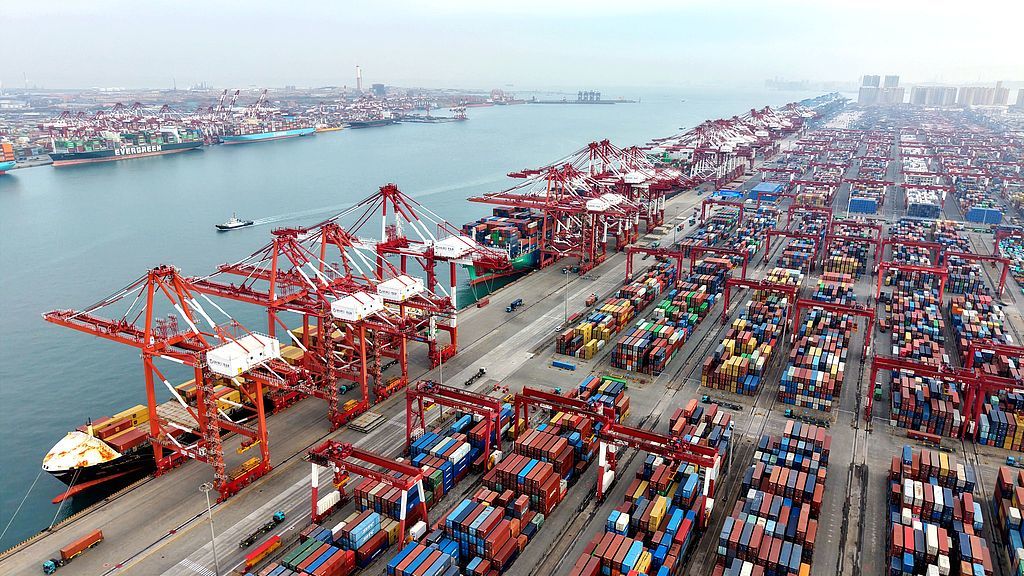
Core Viewpoint - In 2025, China's economy demonstrates resilience and vitality amidst global challenges, attracting international attention and investment opportunities in various sectors, including stock markets, AI development, and soft power expansion [1] Trade Resilience - Despite ongoing U.S. tariff policies, China's goods trade has shown consistent growth, with exports expected to increase by 8% year-on-year in 2025 [2][4] - China achieved a record annual trade surplus of $1 trillion in November 2025, offsetting declines in specific markets through expanded trade with Europe, Latin America, and Africa [4] - China's export innovation and new trade dynamics are crucial for maintaining global supply chain stability, with predictions of increased global market share by 2030 [4] Artificial Intelligence Advancements - 2025 marks a pivotal year for AI, with China's DeepSeek releasing the R1 model, challenging U.S. dominance in the AI sector [5][6] - China has emerged as a leader in open-source AI, with significant competition against U.S. companies, as evidenced by the rapid development and availability of free models [6] - The influence of Chinese technology extends beyond AI into robotics and deep-sea science, showcasing a systematic advancement in various high-tech fields [5] Stock Market Performance - The total market capitalization of A-shares surpassed 100 trillion yuan for the first time in 2025, with significant returns exceeding initial predictions [7][8] - High expectations for the Chinese stock market are supported by a bullish outlook, with forecasts indicating a potential 38% increase by the end of 2027 [7] - Global investors are increasingly interested in Chinese equities, driven by strong market performance and the emergence of innovative companies like DeepSeek [8] Soft Power and Global Influence - China ranks second in the global soft power index, surpassing the UK, with cultural products like the toy "Labubu" gaining international acclaim [9][10] - The success of Chinese lifestyle brands and cultural exports reflects a shift towards China leading global trends rather than merely following them [9] - The expansion of Chinese brands into international markets, including the U.S., highlights the growing global presence of Chinese products [10] Economic Growth Outlook - Multiple international organizations have raised China's GDP growth forecast for 2025 to 5%, recognizing its role as a key stabilizer in global growth [11][12] - Consumer spending is projected to significantly contribute to economic growth, with its quarterly contribution rate rising from 29.7% at the end of 2024 to 56.6% by the third quarter of 2025 [12] - The outlook for 2026 remains positive, with expectations of continued strong performance in the technology sector driven by AI innovations and supportive policies [12]
2025,“中国风”的世界回响
Ren Min Wang· 2025-12-30 21:57
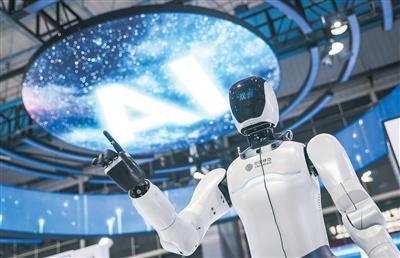
Group 1: Core Insights - In 2025, China's global image has significantly improved, with the country being perceived as "cool" and innovative, driven by technological advancements and cultural exports [15][19][22] - The emergence of Chinese brands like DeepSeek and the popularity of cultural IPs such as Nezha and Labubu highlight China's growing influence in technology and pop culture [16][20][21] Group 2: Technological Innovations - DeepSeek's R1 model, launched in January 2025, surpassed ChatGPT in downloads, achieving this with a training cost of only $294,000, showcasing China's competitive edge in AI technology [16] - China has entered the top ten most innovative economies globally, with the highest number of top innovation clusters for three consecutive years [16] Group 3: Cultural Influence - The animated film "Nezha: The Devil's Child" became one of the top five highest-grossing films globally, marking a significant achievement for Chinese animation [19] - Labubu, a toy character, has gained international popularity, with sales exceeding 10 million RMB on its opening day in Thailand, indicating the global reach of Chinese design [20] Group 4: Market Expansion - BYD captured 18% of the global electric vehicle market in Q2 2025, while Mixue Ice Cream became the largest fast-food chain globally with over 46,000 stores [20][21] - The expansion of brands like Bawang Tea and Meituan reflects China's growing presence in international markets, with plans for significant overseas store openings [21] Group 5: Global Perception - A historical shift in global public opinion occurred in April 2025, with more people believing China will positively impact world affairs compared to the U.S. [23][24] - China's net favorability score reached 8.8, surpassing the U.S. for the first time, indicating a significant change in global perceptions of China [24]




AI创业的终局是委身大厂?
Sou Hu Cai Jing· 2025-12-30 18:08
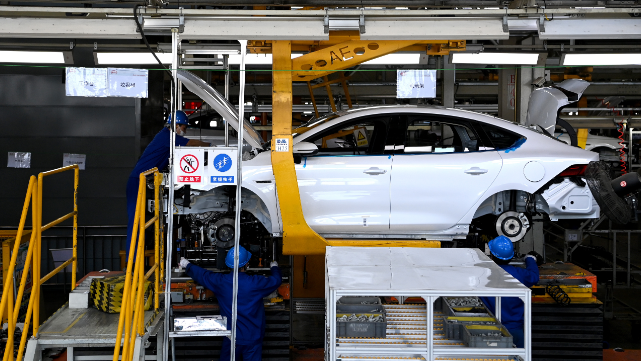
Core Insights - The acquisition of AI startups by major companies is becoming a prevalent trend, with many startups either negotiating for acquisition or already acquired [2][3] - The AI startup landscape is shifting from a focus on independent innovation to dependency on large corporations for resources and market access [4][10] Acquisition Trends - In 2025, there were 262 AI-related acquisitions globally, a 35% increase year-over-year, averaging one acquisition every 1.5 days [3] - Major acquisitions include Nvidia's $20 billion purchase of Groq and OpenAI's $6.5 billion acquisition of io, highlighting the trend of large companies consolidating their positions in the AI market [3] - The average valuation premium for acquired startups is significant, with Manus being acquired for $4.5 billion, a 125% premium over its $2 billion valuation [8] Funding Landscape - AI startups raised a record $150 billion in 2025, with 64% of funding directed towards the top 10% of companies, leaving many smaller startups facing funding shortages [3][11] - Companies that are closely tied to major corporations receive significantly higher funding, averaging three times more than independent startups [18] Market Dynamics - The AI industry is transitioning from a "thousand models" competition to an "ecosystem segmentation" phase, where large companies dominate through resource control and strategic acquisitions [4][10] - The cost of computing power has become a critical barrier for startups, with over 70% of high-end computing resources controlled by major players like Nvidia, Google, and Microsoft [6][10] Strategic Shifts - Startups are increasingly pivoting from general-purpose models to specialized applications due to the high costs and resource constraints associated with large models [6][10] - The trend of "open-source tools" provided by giants like ByteDance and Google is locking startups into their ecosystems, reducing their ability to innovate independently [7][13] Future Outlook - By 2030, the AI industry is expected to stabilize into a structure where a few major players dominate the foundational layer, while numerous vertical champions emerge in specialized fields [21][23] - The survival of AI startups will increasingly depend on their ability to carve out unique niches with proprietary data and industry expertise, as well as their access to affordable computing resources [19][20][24]



2025: 大风大浪里的中国与世界
Sou Hu Cai Jing· 2025-12-30 17:05
Group 1: Anti-Competition Measures - The core focus of the 2025 economic work report is the comprehensive rectification of "involution-style" competition, emphasizing legal governance of low-price disorderly competition and guiding companies to enhance product quality [1] - The newly revised Anti-Unfair Competition Law and Price Law provide institutional support for the "anti-involution" initiative, which has shown positive results in various sectors including platform economy, automotive, photovoltaic, and power batteries [1][2] - The photovoltaic industry has seen the establishment of a "polysilicon capacity integration acquisition platform," and manufacturers of lithium iron phosphate cathode materials have collectively raised prices [1] Group 2: State-Owned Enterprise Reform - 2025 marks the concluding year of the deepening reform of state-owned enterprises, with significant progress reported by the State-owned Assets Supervision and Administration Commission [2] - The reform has led to a clearer strategic function, more standardized corporate governance, and more scientific and effective state asset supervision [2] Group 3: Private Economy Promotion Law - The "Private Economy Promotion Law," effective from May 20, 2025, is China's first foundational law specifically for the development of the private economy, establishing multiple systems to promote fair competition and protect rights [3] Group 4: Local Government Debt Resolution - The resolution of local government debt risks is progressing rapidly, with a plan to replace 10 trillion yuan of hidden debts over five years, achieving nearly 6 trillion yuan in debt replacement by the end of 2025 [4] - The balance of hidden local government debt is expected to drop from 14.3 trillion yuan at the end of 2023 to below 8 trillion yuan by 2025, with significant savings in interest expenses [4] Group 5: Special Long-Term Bonds - The issuance of special long-term bonds reached 1.3 trillion yuan in 2025, an increase of 300 billion yuan from 2024, with 800 billion yuan allocated to support major projects and 500 billion yuan for expanding consumption policies [5] - The bonds have gained favor among institutions, showcasing their advantages in long-term investment and resource allocation [5] Group 6: Consumption Promotion Initiatives - The "Consumption Promotion Special Action Plan" launched in March 2025 includes seven major actions aimed at increasing residents' income and improving consumption quality [6][7] - The plan emphasizes stable employment and reasonable growth of wage income, marking a shift towards demand-side policies [6] Group 7: Social Security Regulations - 2025 is a pivotal year for the social security system, with new regulations encouraging flexible employment and ensuring comprehensive coverage for all workers [8] Group 8: A-Share Market Performance - The Shanghai Composite Index reached 4,000 points for the first time in ten years, driven by a recovery in the technology sector and supported by state funds [8][9] - A-share trading volume exceeded 400 trillion yuan for the first time, with total market capitalization surpassing 100 trillion yuan [9] Group 9: Gold Price Surge - Gold prices experienced a historic rise, reaching a peak of 4,550 USD per ounce, with a year-to-date increase of 70% [10] - The surge is attributed to macroeconomic factors, geopolitical tensions, and significant purchases by central banks [10] Group 10: Innovation in AI and Robotics - The introduction of the "Innovation Growth Layer" on the Sci-Tech Innovation Board has accelerated the IPO process for unprofitable companies, marking a significant step in capital market support for technology innovation [11] - The robotics industry saw a surge in new orders, indicating a shift from concept to practical applications in 2025 [12] Group 11: Changes in the Food Delivery Industry - The food delivery sector underwent significant changes with the entry of new players like JD.com and the upgrade of Ele.me, leading to increased competition and consumer choice [13] Group 12: Challenges in the Animation Industry - The success of "Nezha 2" with a box office of 15.446 billion yuan highlights the rise of Chinese animation, but the industry still faces challenges in global recognition and talent shortages [14][15] Group 13: Regulatory Changes in the Charging Industry - A safety crisis in the charging industry led to the implementation of stringent new regulations, resulting in a significant reshaping of the market [16] Group 14: Automotive Industry Marketing Issues - The automotive market is facing intense competition and marketing irregularities, prompting regulatory responses to restore order and promote healthy industry growth [17]
2025:25个关键词里的中国与世界
Di Yi Cai Jing· 2025-12-30 13:27
Group 1 - The core focus of China's economic work in 2025 is to comprehensively rectify "involution" and disorderly competition, with policies aimed at improving product quality and stabilizing market prices [2] - The reform of state-owned enterprises is nearing completion, with significant progress in strategic functions, governance, and regulatory efficiency [4] - The introduction of the Private Economy Promotion Law marks a significant legal framework for promoting fair competition and protecting the rights of private enterprises [5] Group 2 - The resolution of local government debt risks is progressing rapidly, with a plan to replace 10 trillion yuan of hidden debts, achieving over half of the target by the end of 2025 [6] - The issuance of ultra-long special government bonds reached 1.3 trillion yuan in 2025, with a focus on supporting major projects and expanding consumption [6][7] - A special action plan to boost consumption was launched, emphasizing income growth and improving consumer confidence [8] Group 3 - The A-share market saw the Shanghai Composite Index reach 4000 points for the first time in ten years, driven by a recovery in technology stocks and supportive government policies [10] - Gold prices experienced a historic surge, with spot prices rising from $2625 to a peak of $4550 per ounce, driven by macroeconomic factors and central bank purchases [11] - The introduction of the "Science and Technology Innovation Growth Layer" on the STAR Market accelerated the IPO process for unprofitable companies, marking a significant shift in capital market dynamics [12] Group 4 - The deposit interest rates in China underwent a comprehensive decline, with significant adjustments across various banks, impacting personal investment behaviors [12] - The external environment, including the U.S.-China trade tensions and geopolitical factors, influenced the Federal Reserve's monetary policy, leading to interest rate cuts [14] - The rise of DeepSeek as a key player in the AI sector reshaped global competition, emphasizing open-source strategies and high cost-performance [15] Group 5 - The external delivery market saw significant changes with the entry of new players like JD.com and the upgrade of Ele.me, leading to increased competition and consumer choice [18] - The family disputes within Wahaha highlighted the complexities of family governance in business, affecting brand perception and market dynamics [19] - The success of "Nezha 2" at the box office marked a significant milestone for Chinese animation, reflecting the industry's growth and potential for global recognition [21]
Manus数十亿美元卖身,中国AI应用的关键词只有一个|深氪
36氪· 2025-12-30 13:13
Core Viewpoint - The article emphasizes the emergence of Chinese AI applications in the global market, highlighting the trend of "going overseas" as a key strategy for growth and success in the AI industry [10][11]. Group 1: AI Companies and Their Global Expansion - Manus, a Chinese AI company, was acquired by Meta for over $2 billion, marking a significant milestone for Chinese AI applications on the global stage [8]. - The acquisition demonstrates the potential for Chinese AI applications to negotiate with major global players, as Manus achieved this in less than a year since its establishment [8][9]. - The trend of Chinese AI companies going global is underscored by the increasing number of startups participating in overseas markets, with a notable shift in awareness and understanding of these markets among entrepreneurs [17][18]. Group 2: Strategies for Overseas Growth - Entrepreneurs are leveraging social media to gain visibility and traction in overseas markets, such as engaging with influential figures to drive traffic to their products [13]. - The rise of advanced AI models like Claude and Gemini has encouraged entrepreneurs to seek commercial opportunities in high-paying markets like the US and Japan [16]. - A community-driven approach is prevalent among Chinese AI entrepreneurs, where sharing experiences and strategies is common, fostering a supportive environment for growth [50]. Group 3: Market Dynamics and Challenges - The competition in the US market is intense, with a high volume of startups vying for attention and resources, necessitating significant effort from Chinese companies to establish a foothold [19][20]. - Many Chinese entrepreneurs face challenges in understanding the local market dynamics and building relationships with US media and investors, which requires a proactive approach [21][22]. - The article notes a growing anxiety among entrepreneurs regarding the sustainability of the current AI boom, with predictions of increased competition and potential market saturation in the near future [71]. Group 4: Financial Performance and Metrics - The article highlights the rapid revenue growth of Chinese AI companies, with some achieving $1 million in annual recurring revenue (ARR) within just nine days [54]. - However, there is skepticism regarding the sustainability of these revenue figures, with many companies exhibiting non-recurring revenue patterns, leading to concerns about the reliability of ARR as a metric in the fast-evolving AI landscape [55][56]. - A report indicates that as of August 2025, the ARR for Chinese AI applications is approximately $1.5 billion, with only a limited number of companies achieving significant recurring revenue [62].

被海外巨头高价收购!“逃出”中国的Manus,真的值得被追捧吗?
Xin Lang Cai Jing· 2025-12-30 12:16
Core Viewpoint - Meta's acquisition of Manus, a general AI agent product, for an estimated $4-5 billion, marks its third-largest acquisition and raises questions about the implications for China's tech ecosystem and innovation spirit [1][6][20]. Group 1: Acquisition Details - On December 30, Meta announced the acquisition of Manus's parent company, Butterfly Effect, completing the deal in just over ten days, which surprised investors [1][6]. - The acquisition allows Manus to operate independently under Meta, with its founder becoming a vice president at Meta, integrating Manus into platforms like AI, WhatsApp, and Instagram [6][19]. Group 2: Market Reaction and Initial Success - Manus gained significant attention after a demonstration video went viral, showcasing its capabilities, leading to a surge in demand and a valuation increase to nearly $500 million within two months [15][16]. - The stock market reacted positively, with related AI stocks experiencing significant gains following Manus's launch [15]. Group 3: Technical Concerns - Despite its initial success, Manus faced criticism for lacking a self-developed underlying model, relying instead on existing models and frameworks, which raised questions about its innovation [16][4]. - The open-source community quickly replicated Manus's functionalities, highlighting its reliance on integration rather than original development [16]. Group 4: Strategic Shift and Relocation - Following a $75 million Series B funding round led by Silicon Valley's Benchmark, Manus relocated its headquarters to Singapore to avoid U.S. technology investment scrutiny, resulting in significant layoffs of its Beijing team [17][18]. - The company shifted its strategic partnerships, discontinuing collaborations with domestic firms and removing its Chinese website [18]. Group 5: Broader Implications for Chinese Innovation - The acquisition of Manus by Meta raises concerns about the loss of technological sovereignty and the implications for China's tech ecosystem, as the product became unavailable to mainland users [20][7]. - The narrative of success is questioned, as it reflects a trend where Chinese entrepreneurs sell their innovations to foreign giants, potentially harming local market dynamics and innovation [20][21]. Group 6: Alternative Paths in Innovation - The article suggests that true entrepreneurial spirit should focus on building independent technological capabilities and serving local market needs, contrasting with Manus's trajectory [21]. - Companies like Yushu Technology and DeepSeek are highlighted as examples of firms that prioritize innovation and local market engagement over selling to foreign entities [21].