Neuralink

Search documents
马斯克万亿美元薪酬背后:造车没意思了?
2 1 Shi Ji Jing Ji Bao Dao· 2025-11-11 07:49
Core Insights - Tesla's board has approved a ten-year compensation plan for CEO Elon Musk, valued at up to $1 trillion, which is more of a stringent "bet agreement" than a salary [1] - The plan requires Tesla's market value to increase from over $1 trillion to $8.5 trillion and annual profits to reach $400 billion, a 20-fold increase from last year's profit of approximately $17 billion [1] - The agreement emphasizes breakthroughs in four core areas: vehicle deliveries, Full Self-Driving (FSD), Robotaxi, and humanoid robots [1] Group 1 - Tesla aims to transform from a traditional car manufacturer to a service-oriented business model, akin to "Apple on wheels," where the car serves as a data-collecting platform and a service hub [2] - The strategy involves creating a closed-loop ecosystem that increases user dependency on Tesla's services, thereby enhancing customer retention and revenue generation [2] - Achieving these ambitious goals requires Tesla to simultaneously scale production, innovate technology, and significantly increase profits, which presents a challenging "impossible triangle" in traditional manufacturing [2] Group 2 - China plays a crucial role in Tesla's strategy, providing the most complete and efficient supply chain for the new energy industry, with the Shanghai Gigafactory being one of the most efficient and cost-effective facilities globally [3] - The plan is not just about establishing factories in China but deeply integrating into the local industrial ecosystem to leverage cost efficiencies and reduce R&D expenses [3] - Despite the grand vision, market skepticism remains, as evidenced by a decline in Tesla's stock price, reflecting concerns over the execution challenges and Musk's divided attention among multiple ventures [3]

马斯克万亿美元薪酬背后:造车没意思了?|财经早察
2 1 Shi Ji Jing Ji Bao Dao· 2025-11-11 07:40
Core Viewpoint - Tesla's board has approved a $1 trillion compensation plan for CEO Elon Musk, which is more of a stringent "bet agreement" than a salary, requiring the company's market value to rise from over $1 trillion to $8.5 trillion and annual profits to reach $400 billion within ten years [2][4] Summary by Sections Compensation Plan - The compensation plan is contingent on achieving ambitious targets, including a twenty-fold increase in profits from last year's $17 billion to $400 billion [2] - The agreement specifies breakthroughs in four core areas: vehicle deliveries, Full Self-Driving (FSD), Robotaxi, and humanoid robots [2] Business Model Transformation - Tesla aims to transition from being a traditional car manufacturer to a service-oriented business model, akin to "Apple on wheels," where the car serves as a data-collecting platform and a service hub [3] - The goal is to create a closed-loop ecosystem that locks users into Tesla's services, increasing customer retention and revenue [3] Challenges and Strategic Focus - Musk faces the challenge of scaling production, driving technological innovation, and achieving exponential profit growth simultaneously, which is described as a "impossible triangle" in traditional manufacturing [4] - The Chinese supply chain is identified as a critical lever for Tesla to achieve its ambitious goals, leveraging China's efficient and cost-effective production capabilities [4] Market Sentiment - Despite the grand vision, Tesla's stock has declined, reflecting market skepticism about the feasibility of Musk's ambitious plans and concerns over his divided attention among multiple companies [4][5] - The execution of this strategy is seen as highly challenging, with potential risks if any key aspect, such as FSD or Robotaxi, fails to materialize [4]
外媒:奥特曼试图修复与马斯克之间的紧张关系
Huan Qiu Wang Zi Xun· 2025-11-11 03:19
Core Points - OpenAI CEO Sam Altman privately consulted with Elon Musk's associate about publicly praising Musk, indicating an attempt to ease tensions between them [1][2] - The lawsuit filed by Musk against Altman and OpenAI centers on allegations that OpenAI has strayed from its original mission of developing general artificial intelligence for the benefit of humanity [2][3] Group 1 - The court documents reveal that Altman sent a text to Shivon Zilis, a Neuralink executive, asking if it was a good idea to post a compliment about Musk [2] - Altman later posted on platform X, praising Musk's contributions during a time of declining optimism about the future, which was interpreted as a public gesture to mend their relationship [2][3] Group 2 - The lawsuit includes evidence of long-standing disagreements within OpenAI's founding team, including emails from 2016-2017 showing Musk's deep involvement and dissatisfaction with the organization's efficiency [3] - Musk explicitly stated in a 2017 email that he would not provide further funding unless there was a commitment to continue operating as a non-profit, highlighting the deteriorating relationship between him and Altman [3]


奥特曼私下求和,法庭文件曝光他曾征求建议赞扬马斯克
Feng Huang Wang· 2025-11-11 00:26
Core Viewpoint - The recent court filings reveal a complex relationship between OpenAI CEO Sam Altman and Elon Musk, highlighting attempts to mend ties amid Musk's criticisms of OpenAI's commercialization shift [1][5][6] Group 1: Communication and Relationship Dynamics - Altman privately messaged Shivon Zilis, a close associate of Musk, seeking advice on whether to publicly praise Musk, indicating a desire to repair their relationship [1] - The text message from Altman shows his admiration for Musk's contributions to OpenAI and reflects a pattern of private efforts to address public disputes [4][5] - Historical emails reveal that disagreements over OpenAI's direction have existed since 2016, with Musk expressing frustration over the organization's operational approach [3][4] Group 2: Legal Context and Evidence - The court documents include various communications, including emails and text messages, submitted by Musk's legal team to support claims that OpenAI has strayed from its original mission [2] - Musk's ultimatum in 2017 regarding OpenAI's operational model illustrates the escalating tensions between him and Altman, culminating in Musk's departure from the board [4] - The ongoing legal case in the Northern District of California highlights the high-stakes environment in which these influential figures operate within the AI sector [6]
X @Anthony Pompliano 🌪
Anthony Pompliano 🌪· 2025-11-10 19:30
From the Desk of Anthony Pompliano0:00 The Trump Put Arrives - $2,000 Dividend5:03 Young People Are Rejecting Capitalism7:40 Three Concerns About the Stock Market11:28 The Next Neuralink AdvancementEnjoy! https://t.co/cePOwe9J4L ...
“十五五”规划建议点名,马斯克、奥特曼纷纷押注,脑机接口为什么火?
Sou Hu Cai Jing· 2025-11-10 09:09
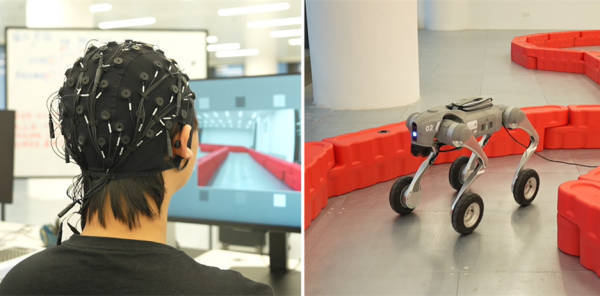
Core Insights - Brain-computer interfaces (BCIs) are emerging technologies that allow for direct communication between the brain and external devices, gaining significant attention from both domestic and international tech giants [1][2][4] - The development of BCIs is seen as a crucial step towards human-machine integration, with potential applications in gaming, communication, and rehabilitation [1][4][49] Industry Overview - The BCI industry is characterized by a mix of hardware and software companies, with a trend towards full-chain solutions, although specialization is expected to emerge as the industry matures [5][6][8] - Current BCI companies can be categorized based on their academic and technical backgrounds, influencing their focus areas such as materials, communication, or robotics [5][6] Technological Development - Understanding of the brain remains rudimentary, with ongoing efforts to decode brain signals and improve communication systems [4][19] - The BCI field is heavily reliant on high-quality data, particularly intracranial data, which is challenging to obtain but essential for training effective models [15][19][20] Data and Model Training - The success of BCI applications hinges on the volume, signal-to-noise ratio, and usability of the data collected [19][20] - The company aims to create a foundational algorithm that can empower various applications within the BCI ecosystem, similar to how OpenAI's models function in AI [11][14] Market Challenges - The lack of consumer-ready BCI products is attributed to the nascent stage of the industry and regulatory hurdles for invasive devices [48][49] - Non-invasive products have not yet achieved widespread acceptance due to performance limitations, necessitating improvements in functionality to increase market penetration [48][49] Future Prospects - The BCI industry is expected to see significant advancements in the next 3 to 5 years, with a growing number of practical applications becoming available to consumers [49][50] - China is positioned to accelerate its BCI development, leveraging its vast clinical resources and data advantages compared to Western counterparts [55][56]
“十五五”规划点名,科技巨头押注,脑机接口为啥火?
Guan Cha Zhe Wang· 2025-11-10 08:41
Core Insights - Brain-computer interfaces (BCIs) are emerging technologies that allow for direct communication between the brain and external devices, gaining significant attention from both domestic and international tech giants [1][3]. Industry Overview - The BCI industry is recognized in China's "14th Five-Year Plan" and is attracting investments from major players like Elon Musk and others [1]. - BCIs can be categorized into invasive, semi-invasive, and non-invasive types, each with its own advantages and disadvantages [30][31]. Current State of Research - Current understanding of the brain is still rudimentary, with researchers likening the process of decoding brain signals to deciphering ancient scripts [5][6]. - The development of BCIs is seen as a cyclical process where advancements in technology lead to better understanding of the brain, which in turn enhances BCI systems [6][7]. Company Positioning - Companies in the BCI space can be classified based on their focus on hardware, software, or a full-chain approach, with each having its own academic and technical roots [7][9]. - The company 岩思类脑 aims to develop core algorithms that serve as a foundational layer for the BCI industry, similar to how OpenAI operates in the AI space [10][11]. Data and Model Training - The company emphasizes the importance of large datasets for training AI models in the BCI field, noting that China has a significant advantage in data availability compared to other countries [14][22]. - High-quality data is crucial for effective model training, with a focus on signal-to-noise ratio and data diversity [18][19]. Technological Advancements - Recent advancements include the ability to decode speech from brain signals in patients with epilepsy, showcasing the potential for practical applications of BCIs [35][36]. - The company has also developed a non-invasive BCI application for gaming, demonstrating the technology's versatility and potential for consumer engagement [44][48]. Market Challenges - The BCI market faces challenges in product commercialization, particularly for invasive devices that require medical certification before they can be widely used [48][49]. - Non-invasive products have yet to achieve a level of functionality that encourages consumer adoption, necessitating improvements in usability [48][49]. Future Outlook - The BCI industry is expected to see significant growth in the next 3 to 5 years, with the potential for widespread consumer adoption of effective BCI devices [50]. - The competitive landscape is characterized by rapid advancements in technology and increasing investment, positioning BCIs as a critical area of focus in global tech competition [57][64].

元宇宙正加速“由虚向实”,应用场景发展前景不断明晰 热潮再起 抢占潮头正当时
Si Chuan Ri Bao· 2025-11-10 00:05
Core Insights - Sichuan is accelerating the development of frontier technologies such as the metaverse and brain-computer interfaces (BCI), establishing demonstration scenarios in smart manufacturing and cultural tourism, leading to a positive industrial development trend [1][3] - A public empowerment platform for the metaverse industry ecosystem in Sichuan is being co-built by relevant departments and enterprises, aiming to integrate resources, technological achievements, case studies, and industrial ecology [1][4] Industry Overview - The metaverse industry is entering a new phase characterized by technological breakthroughs and a shift from virtual to real applications, with significant advancements in interaction technologies like BCIs, spatial computing, and artificial intelligence [2] - The global metaverse market is projected to grow at a compound annual growth rate (CAGR) of 50.74% from 2022 to 2030, with the domestic market expected to exceed 24,000 million by 2026 [2] Sichuan's Position - Sichuan has established a strong foundation for the metaverse and BCI industries, with the "Western Brain Valley" in Chengdu's Jinniu District operational, leveraging clinical resources from Sichuan University [4] - The province faces challenges such as financing and patent delays, with an average patent authorization time of 2.5 years compared to the national average of over one year [4] - The Sichuan government is promoting innovation and ecosystem building through initiatives like the "Sichuan Brain-Computer Interface and Human-Machine Interaction Industry Breakthrough Action Plan (2025-2030)" [3][4]
热潮再起 抢占潮头正当时
Si Chuan Ri Bao· 2025-11-09 22:32
Core Insights - Sichuan is accelerating the development of frontier technologies such as the metaverse and brain-computer interfaces, establishing a favorable industrial development trend in smart manufacturing and cultural tourism [1] - The metaverse concept is experiencing a resurgence due to technological breakthroughs and policy support, with brain-computer interfaces transitioning from laboratory settings to market applications [1] Industry Overview - Key technologies in the metaverse are rapidly advancing, including interaction technologies represented by brain-computer interfaces, spatial computing, and artificial intelligence [1] - The global metaverse market is projected to grow at a compound annual growth rate (CAGR) of 50.74% from 2022 to 2030, with the domestic market expected to exceed 2.4 trillion yuan by 2026 and potentially surpass 5.8 trillion yuan by 2030 [1][1] Sichuan's Strategic Initiatives - Sichuan has launched the "Action Plan for Breakthroughs in Brain-Computer Interface and Human-Computer Interaction Industry (2025-2030)," focusing on innovation, product development, application scenarios, and ecosystem construction [1] - The "Western Brain Valley" in Chengdu has been established, leveraging clinical resources from Sichuan University to create a multifunctional ecosystem for brain-computer interface research and development [1] Challenges and Recommendations - Despite early development and initial industry chain formation, Sichuan faces challenges in financing and patent acquisition, with local companies taking longer to obtain patent authorization compared to the national average [1] - Experts suggest leveraging AI technology to enhance evaluation and decision-making efficiency, and encourage participation in standard formulation and core technology breakthroughs [1]
特斯拉万亿薪酬仍不能让马斯克收心他在AI女伴项目上太热情
Xin Lang Cai Jing· 2025-11-09 18:14
来源:雪球App,作者: 百度老方说,(https://xueqiu.com/1028309055/360630056) 真的是热情洋溢啊。 看起来马斯克跟保安的爱好有相似的地方——国内某保安跟AI聊天近半年,打印了50万字的聊天记 录,并千里迢迢赶赴"AI聊天机器人"的公司"维权"。 这就像是科幻电影《her》照进现实了,"过去只不过是一段我们告诉别人的故事。" 老方说虚拟和现实 的界限已经模糊了。 而埃隆·马斯克旗下的xAI公司也正在全力搞"AI女伴"项目,马斯克本人亲自参与,简直到了痴迷的程 度,他甚至要求员工提交个人生物识别数据,用于训练公司的女性聊天机器人"Ani"。 对,"她"就是下面这个样子。 来源:老方在互联网 众所周知,马斯克在特斯拉获得了巨大胜利——75%的特斯拉股东投票通过了史无前例的薪酬方案—— 他如愿以偿,1万亿美元的报酬正在向他挥手,马斯克也由此成为历史上最贵的CEO。 马斯克一手推动了惊天豪赌:8.5万亿美元市值目标、1200万辆电动车销量、100万个人工智能机器人、 交付2000万辆汽车、投入运营100万辆Robotaxi、核心利润达到4000亿美元……他有信心实现这些业绩 对 ...