
Waymo

Search documents
文远知行CEO韩旭:将实现盈亏平衡 ofo失败证明汽车投放量没那么重要
Feng Huang Wang· 2025-11-26 05:17
Group 1 - The core viewpoint of the article highlights the optimistic outlook of the company, WeRide, regarding overseas opportunities despite not yet entering the profitable U.S. market, with a focus on regions like the Middle East, Europe, and developed Asian countries such as Singapore, Japan, and South Korea [1][2] - As of October 31, the company operates approximately 750 autonomous taxis, which is smaller in scale compared to domestic competitors like Pony.ai and Baidu's Apollo Go, which have deployed 961 and over 1000 autonomous vehicles respectively [1] - The company plans to expand its fleet to between 2000 and 3000 vehicles by the end of 2026, but the CEO expresses no concern regarding the current fleet size [1] Group 2 - The CEO emphasizes that achieving steady profitability and maintaining a flawless safety record are more critical than fleet size, contrasting with the past dominance of Mobike and Ofo in the shared bicycle market [2] - WeRide is on track to achieve breakeven soon, with revenue growth outpacing expenditure growth, indicating confidence in reaching profitability without pressure from investors [2] - The company reported a 144% year-on-year increase in total revenue for Q3, with a remarkable 761% increase in autonomous taxi revenue, leading to a significant stock price increase of 14.72% on the day of the earnings report [2]


Waymo Battles ChatGPT: Which AI Has More Lasting Power?
CNET· 2025-11-25 13:01
AI 领域未来趋势 - 行业专家就大型语言模型(如 ChatGPT)和自动驾驶技术(如 Waymo)的持久性和未来发展展开辩论 [1][2] - 辩论的核心在于哪种 AI 技术具有更强的可扩展性和变革潜力 [6][8] Waymo (自动驾驶) - Waymo 在自动驾驶领域几乎没有竞争对手,进入门槛高,受高度监管 [3][4] - Waymo 在多个城市拥有测试许可,并在伦敦进行海外测试,发展前景光明 [9] - Waymo 面临监管和事故风险,一旦发生严重事故可能导致业务受阻 [9] - Waymo 的发展需要大量的基础设施,如传感器和法律许可,以及广泛的实际道路测试,发展周期缓慢且密集 [19] - Waymo 车辆现在可以上高速公路,在某些城市的速度与 Uber 一样快 [22] ChatGPT (大型语言模型) - ChatGPT 代表了一种更具可扩展性和变革性的技术范式,迭代速度快,成本低,部署无摩擦 [6][7] - ChatGPT 正在重塑沟通、教育、软件开发和研究等领域 [7] - ChatGPT 试图自动化思考,最终将渗透到每个认知产业 [8] - ChatGPT 发现了一种使大型语言模型对个人更有用的方法 [13] - OpenAI 在基础设施(数据中心)上投入了数千亿美元,这是一个巨大的业务限制 [20] 竞争与创新 - 竞争是创新的动力,Waymo 缺乏竞争可能影响其长期发展 [15] - 科技行业的历史表明,第一个进入市场的公司不一定是最终的赢家 [10] 潜在的未来 - 设想未来人们可以在 Waymo 自动驾驶汽车中使用 ChatGPT [23][24]
X @The Economist
The Economist· 2025-11-24 20:25
It’s Waymo complicated than it looks https://t.co/G3khn6nk9w ...
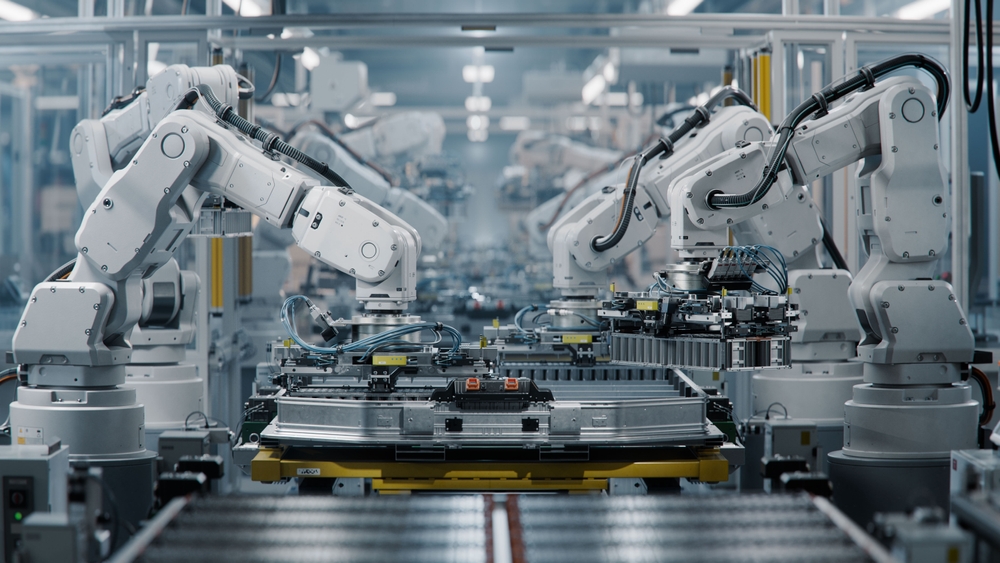
Dr. Henrik Christensen on the Future of the Robotics Industry
Etftrends· 2025-11-24 19:36
VettaFi: Henrik, you've been a pioneer, directing the government's attention toward robotics since 2008 as the lead author of the U.S. robotics roadmap. How does it feel to see robotics finally come to the mainstream focus? Does it surprise you, and what's at stake now? Dr. Henrik Christensen: Good question. We have seen robotics getting big attention, but much of the traditional industrial robotics manufacturing has moved outside of the U.S., primarily to China and Japan. That is a little sad. However, we ...
X @Messari
Messari· 2025-11-24 18:52
.@ROVR_Network's Open Dataset is 10x the size of its web2 competitors.The dataset is being used to train and deploy systems for autonomous driving, robotics, and spatial AI solutions@NaytheForceBwU has full report for free below 👇Matthew Nay (@NaytheForceBwU):.@ROVR_Network released their Open Dataset earlier this year, which has more than 30M KM of driving data, from over 100 countries, and over 1M hours.NVIDIA has only 1,727 hours in its open-sourced dataset from 25 countries, and Waymo has only 570 hours ...
比较研究系列:AI智驾2.0,迈向智能涌现
Ping An Securities· 2025-11-24 12:22
Investment Rating - The report maintains a "Strong Buy" rating for the industry [1] Core Insights - The evolution of intelligent driving has entered the AI 2.0 phase, focusing on scalable capabilities and the ability to autonomously handle extreme edge scenarios, which will further enhance the commercial viability of intelligent driving systems [1] - Major players in the high-level intelligent driving sector are accelerating their entry into the Robotaxi business, leveraging mass-produced vehicles to optimize model training and performance in extreme scenarios [1][79] - The report highlights the importance of diverse real-world data and robust R&D resources as key competitive advantages for players in the AI driving space [81] Summary by Sections 1. Tesla's Software and Hardware Iterations - Tesla's FSD (Full Self-Driving) software has achieved significant milestones, with over 60 billion miles driven cumulatively, showcasing its leading position in intelligent driving [7] - The next-generation AI5 chip is expected to greatly enhance the performance and energy efficiency of Tesla's driving systems [8][9] 2. Development Stages of High-Level Intelligent Driving in China - The industry has transitioned from a rule-based system to a fully data-driven approach, marking the arrival of the AI driving era [15][12] - The current phase emphasizes end-to-end models that utilize extensive data for improved driving performance and user experience [18][19] 3. Technical Architecture: Mainstream Player Directions - The VLA (Vision-Language-Action) model integrates visual, language, and action modalities, enhancing the system's ability to understand and interact with the physical world [27][28] - Huawei's ADS 4.0 emphasizes a scene-driven approach, utilizing cloud simulations to train AI drivers without relying on large language models [49][50] 4. Business Model: Acceleration of Robotaxi Initiatives - The Robotaxi business is seen as a critical avenue for data collection and model optimization, with major players planning to leverage mass-produced vehicles for this purpose [65][66] - The report outlines two main technological routes for Robotaxi operations: the "crossing route" represented by Waymo and the "gradual route" represented by Tesla, each with its own advantages and challenges [67][68] 5. Investment Recommendations - The report recommends investing in companies such as Seres, Horizon Robotics, Great Wall Motors, Li Auto, and Xpeng Motors, which are well-positioned to capitalize on the advancements in AI driving technology [81]




自动驾驶教父Thrun预言,纯视觉路线决胜2026,空中机器人将成新蓝海
3 6 Ke· 2025-11-24 10:25
Core Insights - The discussion at Morgan Stanley's 24th Asia-Pacific Summit featured Sebastian Thrun, a key figure in autonomous driving, and analyst Adam Jonas, covering various aspects of autonomous driving technology, industry stages, and the evolution of companies like Waymo [1][3] Autonomous Driving Technology - The primary technical debate in autonomous driving is between "pure vision" and "multi-sensor fusion" approaches, with Thrun highlighting Tesla's pure vision FSD tests in Austin as a potential industry turning point [4][6] - The cost advantage of pure vision systems is significant, as high-end LiDAR costs thousands of dollars compared to camera costs of only tens of dollars, which could disrupt the multi-sensor fusion approach if proven safe [6] - Pure vision systems face challenges in adverse weather and low-light conditions, requiring advanced AI models to infer complete environmental states from limited visual information [7] Industry Development and Commercialization - Thrun considers the 2005 DARPA Grand Challenge a pivotal moment for the industry, and notes that approximately one-third of the 500 summit attendees had experienced autonomous vehicles, primarily from Waymo [9] - The industry is transitioning from Level 4 (L4) to Level 5 (L5) autonomy, with significant economic value in freeing up driving time, and Thrun predicts the next 3-5 years will be crucial for commercialization [9][11] - Waymo's expansion plans include manual driving tests in cities like Minneapolis and New Orleans, with a goal to extend fully autonomous services to 15 cities by 2026 [9][11] Robotics and Market Dynamics - Thrun expresses caution regarding humanoid robots, suggesting that market expectations may be overly optimistic while underestimating the technical challenges involved [12] - He emphasizes the potential of aerial robots, stating that their growth will surpass that of ground robots, with infrastructure being a key limiting factor [14] - The existing air traffic control systems in the U.S. require significant upgrades to accommodate large-scale aerial robot operations, presenting investment opportunities in eVTOL and air traffic management [16] Waymo's Historical Context and Future Plans - Thrun shared insights into Waymo's origins as a Google moonshot project focused on traffic safety, emphasizing the importance of team dynamics and iterative development [17][18] - Waymo's long-term goal is to achieve fully autonomous driving without human intervention, with a current focus on expanding testing areas and scenarios [18] - The company is adopting a dual-track strategy of validating consumer experiences while exploring B2B opportunities, aiming for sustainable commercialization [18][19] Challenges in Robotaxi Deployment - Despite the acceleration of companies like Waymo and Zoox, Thrun believes the robotaxi industry has not yet reached a critical mass to transform transportation [19][21] - Key factors for reaching this critical point include geographic coverage, healthy competition, and ecosystem spillover effects, with urban density being a significant indicator [21] - The technological challenges for robotaxis include high-precision navigation, obstacle avoidance, and reliability in extreme weather conditions [20][23]


产业链巨变,自动驾驶赛道迎来大逃杀时刻
3 6 Ke· 2025-11-24 10:08
Core Insights - The domestic autonomous driving unicorn, Haomo Zhixing, has announced a work stoppage for all employees starting November 24, indicating significant operational challenges in the industry [1] - The recent IPOs of two major autonomous driving companies, Pony.ai and WeRide, did not lead to a surge in stock prices, with both companies experiencing a decline of about one-third from their peak values [3][8] - The market sentiment towards the Robotaxi sector is shifting from a focus on technology to a more pragmatic approach centered on commercial viability and efficiency, suggesting a potential industry reshuffle [8][9] Company Developments - Pony.ai and WeRide, despite their friendly public interactions during their IPO, are facing similar stock market challenges, indicating a broader skepticism about the outsourcing model in the autonomous driving sector [3][8] - Xpeng Motors announced plans to launch three Robotaxi models by 2026, reflecting ongoing enthusiasm from traditional automakers for Robotaxi services [5][20] - Tesla showcased its Cybercab, a dedicated autonomous vehicle for its Robotaxi fleet, at the China International Import Expo, highlighting its commitment to the Robotaxi market [7] Market Trends - The autonomous driving industry is witnessing a shift from outsourcing to in-house development, with major automakers like Tesla and Xpeng increasingly opting for self-developed solutions [9][10] - The cost advantages of in-house models are becoming apparent, as evidenced by Tesla's significantly lower operational costs compared to competitors like Waymo [16][19] - The transition from modular to end-to-end technology in autonomous driving is reshaping the competitive landscape, with traditional players like Pony.ai and WeRide struggling to adapt [35][45] Financial Performance - Pony.ai has reported cumulative losses of approximately $868 million over four and a half years, with a peak loss of $274 million in 2024, indicating severe financial strain [25][28] - WeRide's financial situation is even more dire, with total losses of about $759.6 million during the same period, reflecting the challenges faced by outsourcing players in the current market [26][30] - Both companies have invested heavily in R&D, with Pony.ai's R&D expenditures reaching $784 million, underscoring the financial burden of keeping pace with rapid technological advancements [28][30] Industry Outlook - The autonomous driving and Robotaxi sectors are entering a phase of intense competition, with established players facing existential threats from both traditional automakers and new entrants like Nvidia [24][46] - The success of companies like Momenta, which have embraced end-to-end solutions, suggests that there may still be opportunities for outsourcing models, albeit in a redefined market context [46]
Safe, Routine, Ready: Does That Spell the End for Tesla's Run-Up?
The Motley Fool· 2025-11-24 09:27
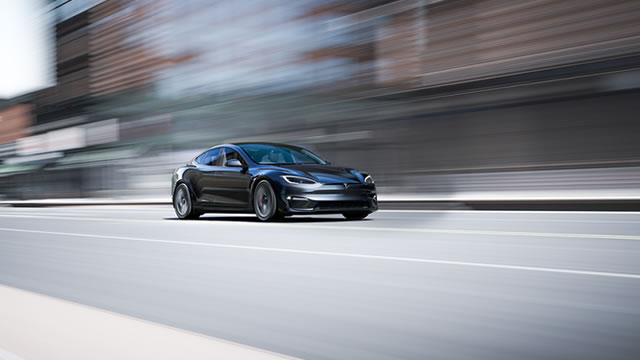
Core Viewpoint - Tesla's stock has seen a significant increase due to robotaxi hype, but there are concerns about its competitive position against Waymo and the overall viability of the robotaxi market [1][2][10] Company Performance - Tesla shares have risen 28% over the past three months, but the company faces declining sales and an aging vehicle lineup [2] - Current market capitalization stands at $1,301 billion, with a price range of $214.25 to $488.54 over the past year [5] Competitive Landscape - Waymo has announced the launch of fully autonomous driving in five new cities, increasing its operational footprint to ten cities, while Tesla is still in the testing phase with only 30 robotaxis in Austin [3][4][7] - Waymo has surpassed 10 million driverless trips across its U.S. operations, showcasing its lead in the autonomous vehicle space [7] Strategic Developments - Tesla plans to expand its robotaxi fleet to about 500 vehicles by the end of the year, but it still relies on a safety monitor, unlike Waymo, which removed this requirement in 2020 [6][8] - Tesla's approach to scaling its robotaxi business may benefit from its existing vehicle fleet and production capacity, as it utilizes a camera-based system rather than LiDAR and radar [8] Future Outlook - CEO Elon Musk's new compensation package is tied to ambitious goals, including operating 1 million robotaxis and achieving significant milestones in technology [9] - Despite the challenges, Tesla's potential for future growth remains, but investors are advised to be cautious about the robotaxi hype due to regulatory and safety uncertainties [10]
X @TechCrunch
TechCrunch· 2025-11-22 21:50
Waymo gets regulatory approval to expand across Bay Area and Southern California https://t.co/fhr3xbC0NN ...