嘉士伯

Search documents
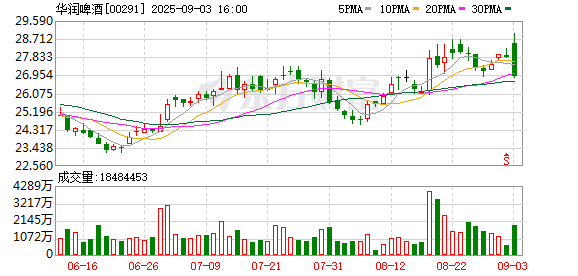
赵春武接棒执掌华润啤酒 啤酒高端化与白酒整合双线挑战如何破局?
Mei Ri Jing Ji Xin Wen· 2025-09-03 14:42
Core Viewpoint - China Resources Beer has appointed Zhao Chunwu as the new chairman of the board, effective September 3, 2025, amidst challenges in the beer and liquor markets, raising questions about the company's strategy moving forward [2][6]. Group 1: Leadership Transition - Zhao Chunwu has been promoted from president to chairman and will also serve as the chairman of the finance committee [2]. - Zhao has a long history with China Resources, starting in 2003 and holding various key positions, including general manager of China Resources Snow Beer [3][4]. - The board has expressed confidence in Zhao's management and leadership abilities, considering him the best candidate for the chairman role [4]. Group 2: Business Performance - In the first half of the year, China Resources Beer reported revenue of 23.942 billion yuan, a year-on-year increase of 0.8%, while net profit attributable to shareholders rose by 23% to approximately 5.789 billion yuan [6]. - The beer segment generated revenue of 23.161 billion yuan, up 2.6%, while the liquor segment saw a decline of nearly 40% to about 781 million yuan [6][7]. Group 3: Strategic Direction - Zhao Chunwu aims to continue the "beer + liquor" dual strategy established by his predecessor, with a focus on enhancing high-end beer market share and addressing challenges in the liquor business [6][7]. - The company faces pressure from international brands in the high-end beer market and must quickly integrate its liquor acquisitions to reverse declining sales [7].


川啤崛起!
Sou Hu Cai Jing· 2025-08-29 13:57
Core Viewpoint - The craft beer trend is reshaping the beer industry landscape, with Sichuan's differentiated development path emerging under the dominance of major players [2][11] Industry Overview - Sichuan's beer production increased by 10.0% year-on-year in the first seven months of 2025, reaching 1.855 million kiloliters, with July alone seeing a significant growth of 23.4% [2] - In contrast to the overall decline in beer production capacity over the past decade, Sichuan's beer capacity is on the rise [2][9] - Guangdong surpassed Shandong in annual beer production for the first time last year, marking a shift in the long-standing dominance of Shandong [2][16] Market Dynamics - The beer industry is experiencing a "decentralization" trend, influenced by factors such as consumption upgrades, demographic changes, strategic adjustments by leading companies, and the impact of emerging categories [2][17] - Major beer brands, including China Resources Snow Beer, Tsingtao, and Budweiser, have established production facilities in Sichuan, contributing to a total capacity of nearly 3 million kiloliters [8][18] Craft Beer Development - The rise of craft beer is providing new momentum for industry upgrades, with several craft beer projects launched in Sichuan, focusing on unique flavors and higher value-added products [10][14] - New craft beer production lines are being established, such as the 250,000-ton project by Sichuan Chuanpi Technology and the 100,000-ton craft beer line by Nanbo Brewery [13][14] Structural Changes - The beer industry is entering a "multi-polar era," with traditional dominance by Shandong being challenged by rising capacities in provinces like Guangdong and Sichuan [16][17] - The shift is driven by regional consumption market restructuring, strategic changes in enterprises, product structure upgrades, and supportive policies and capital investments [17][18] Conclusion - The dual trend of "regionalization of capacity and concentration of brands" in the beer industry is expected to continue for a longer period, despite the decentralization of production capacity [18]
西藏发展股份有限公司2025年半年度报告摘要
Shang Hai Zheng Quan Bao· 2025-08-28 23:32
公司计划不派发现金红利,不送红股,不以公积金转增股本。 登录新浪财经APP 搜索【信披】查看更多考评等级 证券代码:000752 证券简称:ST西发 公告编号:2025-058 一、重要提示 本半年度报告摘要来自半年度报告全文,为全面了解本公司的经营成果、财务状况及未来发展规划,投 资者应当到证监会指定媒体仔细阅读半年度报告全文。 所有董事均已出席了审议本报告的董事会会议。 非标准审计意见提示 □适用 √不适用 董事会审议的报告期利润分配预案或公积金转增股本预案 □适用 √不适用 董事会决议通过的本报告期优先股利润分配预案 □适用 √不适用 公司是否需追溯调整或重述以前年度会计数据 □是 √否 ■ 3、公司股东数量及持股情况 单位:股 ■ 持股5%以上股东、前10名股东及前10名无限售流通股股东参与转融通业务出借股份情况 □适用 √不适用 前10名股东及前10名无限售流通股股东因转融通出借/归还原因导致较上期发生变化 □适用 √不适用 4、控股股东或实际控制人变更情况 控股股东报告期内变更 二、公司基本情况 1、公司简介 ■ 2、主要会计数据和财务指标 □适用 √不适用 公司报告期控股股东未发生变更。 实际控 ...

嘉士伯上半年营业利润、销量不及预期 CEO称下半年可能不会改善
Xi Niu Cai Jing· 2025-08-20 05:57
Core Insights - Carlsberg reported a revenue of DKK 45.855 billion for the first half of 2025, representing an 18.2% year-on-year increase, although organic growth was slightly negative at -0.3% [2][3] - The operating profit reached DKK 7.233 billion, up 15.1% year-on-year, with an organic growth of 2.3% [2][3] - Net profit decreased by 4.7% to DKK 3.562 billion, while adjusted net profit increased by 3.9% to DKK 4.023 billion [2][3] Financial Performance - Total sales volume was 7.63 million hectoliters, a 16.0% increase year-on-year, but organic growth was down by 1.7% [4] - Beer sales volume was 5.27 million hectoliters, showing a decline of 1.3%, while other beverages saw a significant increase of 91.4% to 2.36 million hectoliters [4] - Gross profit stood at DKK 21.113 billion, with EBITDA at DKK 9.7 billion, reflecting strong operational performance [3] Strategic Developments - Carlsberg's premiumization strategy is gaining traction, with high-end brands like Carlsberg Classic, Tuborg, and 1664 Blanc increasingly capturing consumer attention [4] - The premium product portfolio showed stable growth across three major regions, particularly strong in Western Europe and China [4] - Despite the positive developments, the company indicated that organic sales volume decline and lower-than-expected profit growth may lead to a revision of profit forecasts for the remainder of the year [4]

半年盘点|上半年啤酒股业绩分化局势复杂,业内忙出圈业外忙入局
Di Yi Cai Jing· 2025-08-19 10:08
Core Insights - The domestic beer industry is experiencing a complex and differentiated landscape in the first half of 2025, with domestic companies showing rapid profit growth while foreign brands face stagnation or decline [1][2] - The growth in the beer market is primarily driven by the high-end product upgrade, with domestic brands continuing to expand in this segment [2][4] Financial Performance - China Resources Beer reported a revenue of 23.94 billion RMB, a year-on-year increase of 0.8%, and a net profit of 5.79 billion RMB, up 23% [2] - The beer business revenue reached 23.16 billion RMB, growing by 2.6%, with high-end beer sales increasing by over 10% [2] - Budweiser APAC saw a sales decline of 8.2% in the Chinese market, with revenue per hectoliter decreasing by 9.5% [4] Market Trends - The beer consumption landscape is shifting from traditional social drinking to home consumption, with retail channels now accounting for over 60% of beer sales [5][6] - The rise of e-commerce and instant retail has contributed to double-digit growth in beer sales through new retail channels [5][6] Competitive Landscape - The beer industry is facing intense competition, with a reported 0.3% decline in production among large-scale breweries in the first half of 2025 compared to the previous year [6] - Domestic companies are increasingly focusing on high-end product offerings, while foreign brands are losing their competitive edge in this segment [5][6] Strategic Adjustments - Companies are diversifying their product lines to include beverages and enter the liquor market to adapt to market changes [6][7] - China Resources Beer is accelerating the launch of craft and specialty products to meet diverse consumer preferences [7]



嘉士伯上半年业绩不及预期
Zheng Quan Shi Bao Wang· 2025-08-14 07:50
Core Insights - Carlsberg's H1 operating profit increased by 2.3%, while sales volume declined by 1.7%, both falling short of analyst expectations [1] - The CEO indicated that the consumer environment is not expected to improve in H2, but due to effective performance management and cost control, Carlsberg has raised its full-year operating profit growth guidance to a range of 3% to 5% [1] - Carlsberg's H1 operating profit was 7.23 billion Danish kroner (approximately 1.13 billion USD), slightly below the analyst forecast of 7.35 billion Danish kroner [1]
河北上半年规上白酒营收超38亿元;《黄酒酒庄》团标立项
Sou Hu Cai Jing· 2025-08-13 08:55
Group 1 - The core viewpoint of the news highlights the importance of product quality and cultural confidence in the liquor industry, especially during periods of industry adjustment, as emphasized by Zhang Yibo, Chairman of Chengde Jiulongzui Liquor Co., Ltd. [3] - Jiulongzui celebrated its 67th anniversary with a ceremony that underscores its commitment to long-termism through the dual values of quality and culture [3]. Group 2 - Songhe launched its market in Luoyang on August 10, introducing a limited edition product, Songhe Liquor·Han Tang, alongside its main series, aiming to expand its brand presence [4]. - Yanghe held a ceremony for the "Dream Education Development Fund," emphasizing its commitment to social responsibility and support for local education [5]. - The China Alcoholic Drinks Association approved the establishment of a group standard for "Huangjiu Winery," indicating a move towards standardization in the industry [6]. Group 3 - In the first half of 2025, Hebei Province's liquor manufacturing enterprises reported revenues of 3.818 billion yuan, a year-on-year decline of 3.6%, while profit increased by 78.1% to 732 million yuan [7]. - Moutai will sponsor the Singapore Golf Open, which will take place from November 6 to 9, 2025, with a total prize pool of 2 million USD [8]. - Wuliangye initiated a "100-day campaign" in Gansu to boost sales for the second half of 2025 [9]. Group 4 - JianZhuang launched a limited edition gift box in collaboration with table tennis player Wang Hao, aimed at fans and not for public sale [10]. - Gujing's Yearly Original Liquor will introduce a "light version" of its product, with a launch event scheduled in Shenyang [11]. - Chengdu Liquor was selected as part of the second batch of "Chengdu Gifts," showcasing its cultural significance [12]. Group 5 - Jiuziyuan applied for a new patent related to an automated brewing system, enhancing safety and efficiency in the production process [13]. - The Australian government has frozen the tax on draft beer, while spirits remain subject to higher taxes, leading to concerns about competitive fairness in the industry [14][15]. - Carlsberg's brewery expansion project in Vietnam is set to begin operations in September 2025, with an investment of over 3.4 trillion VND, increasing its capacity to 600,000 hectoliters [16].


多家酒企跨界背后:年轻化布局新尝试
Zheng Quan Shi Bao Wang· 2025-08-12 00:41
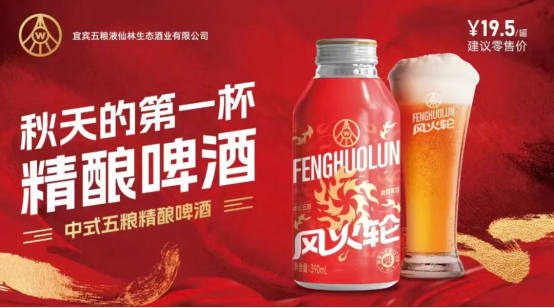
Core Insights - The entry of various companies into the craft beer market reflects a trend towards youth-oriented product offerings and innovation in the beverage sector [2][5][6] Group 1: Market Dynamics - The craft beer market in China is projected to reach a scale of 130 billion yuan by 2025, with a penetration rate of 6.3% [6] - By 2026, the market size is expected to grow further to 160 billion yuan, driven by changing consumer preferences and the rise of the urban middle class [6] - Major foreign players like Budweiser and Carlsberg currently hold significant market shares with established craft beer products [2][6] Group 2: Company Strategies - Yibin Wuliangye's subsidiary, Yibin Wuliangye Xianlin Ecological Wine Co., plans to launch a new craft beer named "Fenghuolun" priced at 19.5 yuan per can [3][4] - Other companies, such as Good Idea and Three Squirrels, are also entering the craft beer space, with Three Squirrels launching three new brands targeting young consumers [4][5] - The entry of traditional liquor companies into the craft beer market is seen as leveraging their existing resources, although the target demographics differ significantly from their traditional consumer base [3][5] Group 3: Consumer Trends - The rise of younger consumers is shifting the demand for alcoholic beverages towards more personalized and emotionally resonant products [5] - Craft beer's diverse ingredients and flavors cater to the evolving tastes of younger consumers, who are more open to trying new products [5] - The craft beer market is characterized by a fragmented competitive landscape, with many brands vying for consumer attention, making it challenging for new entrants to establish a foothold [3][6]

五粮液入局啤酒?多家酒企跨界背后:年轻化布局新尝试
Zheng Quan Shi Bao· 2025-08-11 14:11
Core Insights - The craft beer market in China is attracting numerous new entrants, including companies from various sectors such as food and beverage, with a notable example being Yibin Wuliangye's launch of a new craft beer named "Fenghuolun" priced at 19.5 yuan per can [1][2] - Major foreign players like Budweiser and Carlsberg currently dominate the market with established craft beer products, indicating a competitive landscape where new brands may struggle to gain market share despite low entry barriers [1][8] Industry Trends - The rise of young consumers is reshaping the beverage market, with a shift towards personalized and emotional consumption experiences, prompting companies to innovate and target this demographic through craft beer offerings [7] - The craft beer segment is expected to grow significantly, with projections indicating that by 2025, the market size could reach 130 billion yuan, and further increase to 160 billion yuan by 2026, driven by changing consumer preferences and the expansion of the urban middle class [7][8] Competitive Landscape - The craft beer market in China is currently fragmented, with Budweiser and Carlsberg holding substantial market shares through their successful craft beer products, while the industry is anticipated to undergo consolidation in the future [8] - Traditional liquor companies, such as Wuliangye and Zhenjiu, are leveraging their existing resources and brand recognition to enter the craft beer market, although they may face challenges in connecting with a different target consumer base [4][6]
大理举办啤酒嘉年华 点燃夏日文旅消费新热潮
Sou Hu Cai Jing· 2025-08-09 15:35
Group 1 - The "2025 Dali Beer Carnival and Dali Prefecture Consumption Promotion Event" was launched on August 8, aiming to activate Dali's cultural tourism consumption through a three-day celebration that integrates beer culture, intangible cultural heritage experiences, and nighttime economy [1] - The event featured various attractions, including a performance by a national music band, a drone show displaying "Wind, Flower, Snow, Moon" and Dali beer bottle designs, and hands-on experiences in traditional crafts like tie-dyeing [3][7] - The carnival is designed to be accessible to all, with no entry fee, allowing families and young people to participate in activities such as wood carving and drinking competitions, reflecting the local community's enthusiasm [10] Group 2 - Dali Beer, established in 1988, has evolved from a local brand to part of the Carlsberg global system, maintaining a commitment to quality while expanding its production capacity and market reach [11] - The company aims to promote local economic prosperity and cultural heritage through its products and events, encouraging more people to discover and appreciate Dali [13] - The carnival will continue to feature performances and cultural experiences, maintaining its philosophy of "zero threshold participation and full-scene carnival" to inject ongoing vitality into Dali's economy [15]