四方精创

Search documents
2025年谁流落亏损榜?“亏损王”爱调仓折腾,多位知名老将在列
Feng Huang Wang· 2026-01-03 23:21
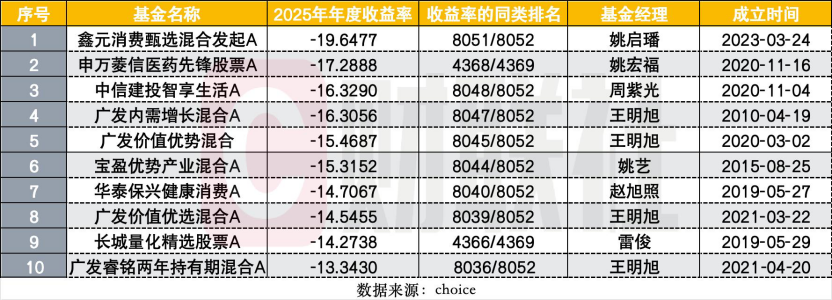
Core Viewpoint - The A-share market in 2025 exhibited a clear structural bull market, with significant performance disparities among active equity funds, highlighted by the top-performing fund achieving a record annual return of 233.29% while others faced substantial losses, including the worst performer with a -19.65% return [1][4]. Group 1: Market Performance - The Shanghai Composite Index, Shenzhen Component Index, ChiNext Index, and Sci-Tech Innovation 50 Index rose by 18.41%, 29.87%, 49.57%, and 35.92% respectively in 2025 [1]. - A total of 4888 active equity products from 160 public fund institutions reported positive returns, while 144 products from 68 institutions experienced losses [1][9]. Group 2: Fund Performance Disparities - The top-performing fund, Yongying Technology Smart Selection, achieved a record annual return of 233.29%, surpassing the previous record set by Wang Yawei in 2007 [1]. - The worst-performing fund, Xinyuan Consumption Selection, recorded a -19.65% return, marking a significant gap of 252.94% from the top performer [2][4]. Group 3: Xinyuan Consumption Selection Analysis - Xinyuan Consumption Selection's poor performance is attributed to aggressive trading strategies, frequent personnel changes, and scale challenges, leading to a lack of coherent investment logic [3][5]. - The fund's industry allocation showed erratic shifts, moving from heavy investments in pharmaceuticals to technology and later to media, missing key market trends [5][6]. Group 4: Fund Manager Insights - Notable fund managers, including Wang Mingxu and Han Weijun, saw their products listed among the worst performers, with their total managed assets shrinking by over 70% compared to previous peaks [3][9][12]. - Xinyuan Consumption Selection faced a critical challenge to meet its scale assessment, needing to grow from 0.29 billion to 2 billion within three months [7][8]. Group 5: Institutional Investment Trends - Institutional ownership in Xinyuan Consumption Selection dropped from over 95% to 42.94% by mid-2025, indicating a significant withdrawal of institutional funds [7]. - The trend of multiple products from the same fund manager appearing on the loss list highlights a broader issue within the industry, affecting even previously successful managers [9][10].

乘Web3与AI东风,四方精创赴港抢占数字金融新高地
Zhi Tong Cai Jing· 2025-12-31 13:46
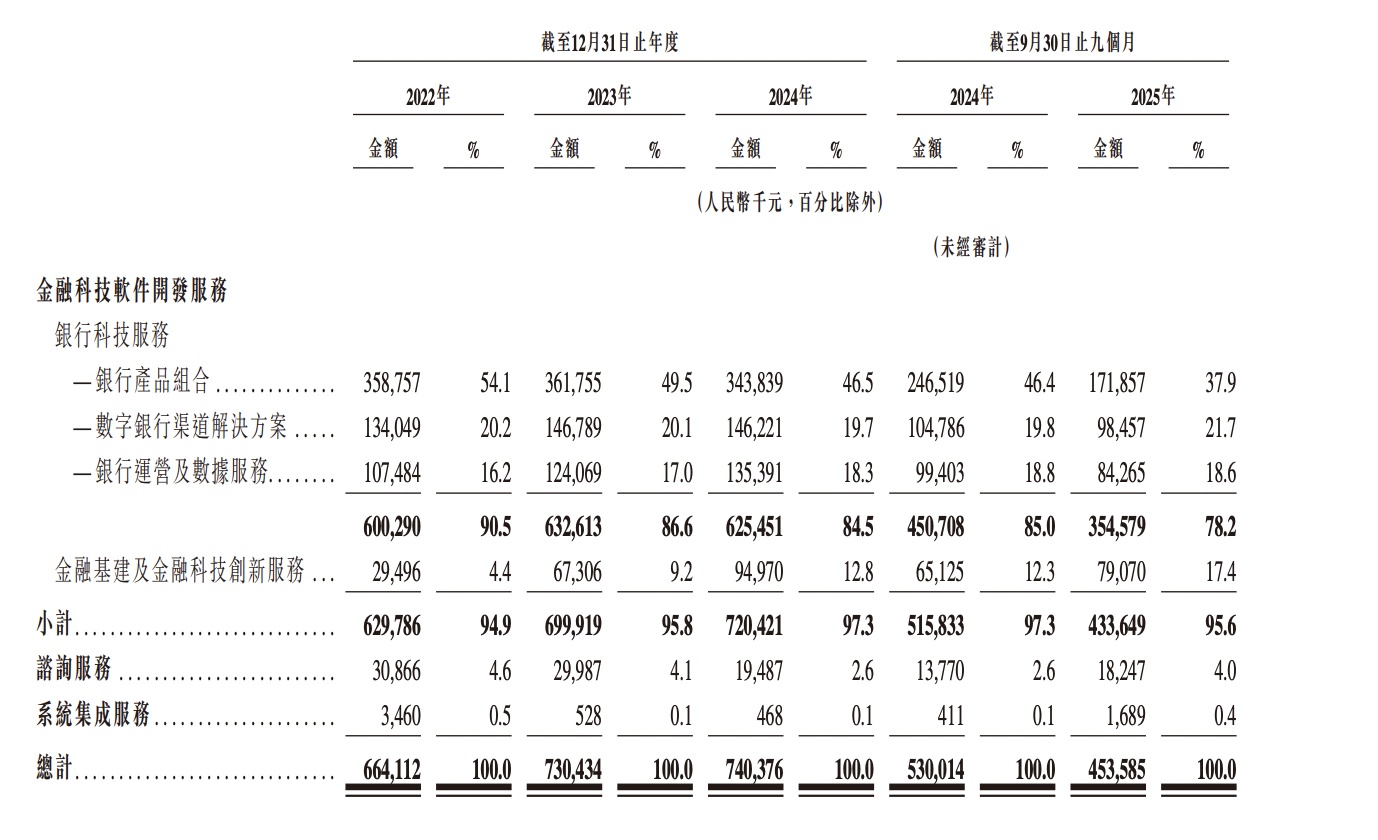
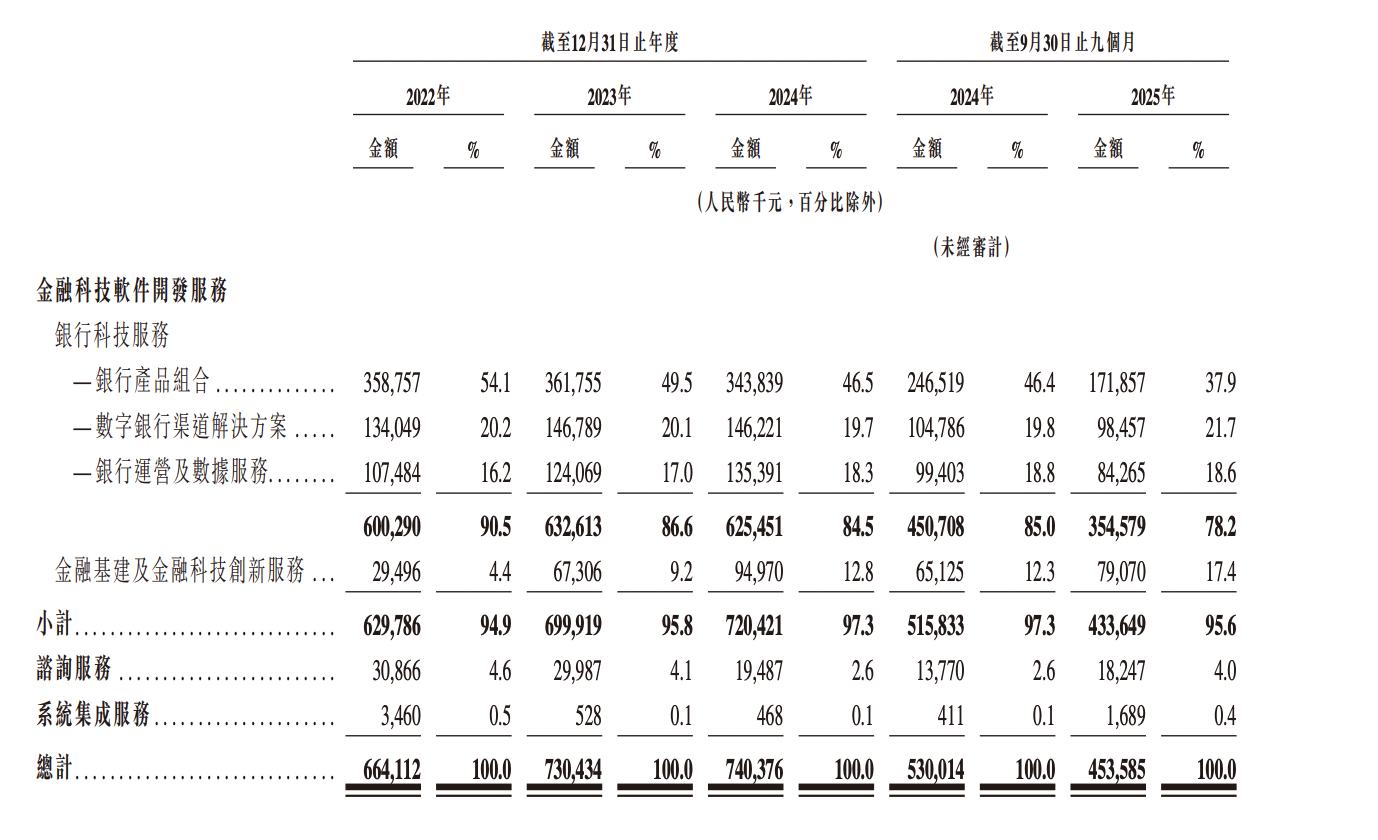
Core Insights - The global fintech industry is undergoing structural changes driven by AI, blockchain, and Web3, with Hong Kong emerging as a key hub for digital financial innovation in Asia due to its unique advantages [1][10] - Sifang Jingchuang (300468) has submitted an application for an H-share listing on the Hong Kong Stock Exchange, aiming to leverage its experience in digital transformation within the banking sector [1][2] Company Overview - Sifang Jingchuang provides comprehensive fintech solutions to banks, regulatory bodies, and financial institutions in mainland China, Hong Kong, and Southeast Asia, focusing on software development, consulting, and system integration services [2][3] - The company’s core revenue source is fintech software development services, which accounted for over 90% of total revenue, with significant contributions from banking technology services [3][4] Financial Performance - The company reported revenues of 664 million RMB in 2022, 730 million RMB in 2023, and 740 million RMB in 2024, with profits of 41.19 million RMB, 47.38 million RMB, and 67.36 million RMB respectively [3][4] - The fintech software development segment's revenue is projected to reach 625 million RMB in 2024, maintaining a dominant share of total revenue [4][5] Market Growth - The fintech software development service market in mainland China and Hong Kong is expected to grow from 100.3 billion RMB in 2020 to 158.8 billion RMB in 2024, with a compound annual growth rate (CAGR) of 12.2% [7] - Hong Kong's fintech software development market is projected to expand from 9 billion RMB in 2024 to 36.3 billion RMB by 2029, with a CAGR of 32.3% [10][13] Competitive Landscape - Sifang Jingchuang is the largest fintech software development provider in Hong Kong, holding approximately 11% of the market share [13] - The competitive landscape in Hong Kong is fragmented, with the top five providers accounting for 31.9% of the market [13] Strategic Focus - The company plans to use the funds raised from the listing to enhance R&D capabilities, improve delivery capacity, and strengthen sales capabilities in both domestic and global markets [15] - Sifang Jingchuang aims to transition from a leading service provider to a trusted ecosystem builder in the rapidly growing Asian digital finance landscape [15]

新股前瞻|乘Web3与AI东风,四方精创赴港抢占数字金融新高地
智通财经网· 2025-12-31 11:25
Core Viewpoint - The global fintech industry is undergoing structural changes driven by AI, blockchain, and Web3, with Hong Kong emerging as a key hub for digital financial innovation in Asia due to its unique advantages and regulatory framework [1]. Company Overview - The company, Sifang Precision, focuses on providing comprehensive fintech solutions to banks, regulatory bodies, and financial institutions in mainland China, Hong Kong, and Southeast Asia, covering software development, consulting, and system integration services [2]. - Sifang Precision's core revenue source is fintech software development services, which consistently accounts for over 90% of total revenue [3]. Financial Performance - The company reported revenues of 664 million, 730 million, 740 million, and 454 million RMB over the past four years, with corresponding profits of 41.19 million, 47.38 million, 67.36 million, and 66.58 million RMB [3]. - The fintech software development services segment generated revenues of 629 million, 699 million, and 720 million RMB from 2022 to 2024, representing 94.9%, 95.8%, and 97.3% of total revenue respectively [3]. Market Growth - The fintech software development services market in mainland China and Hong Kong is projected to grow from 100.3 billion RMB in 2020 to 158.8 billion RMB in 2024, with a compound annual growth rate (CAGR) of 12.2% [7]. - Hong Kong's fintech software development services market is expected to reach 90 billion RMB in 2024, with a CAGR of 32.3% from 2024 to 2029, growing to 363 billion RMB by 2029 [10]. Competitive Landscape - Sifang Precision is the largest fintech software development service provider in Hong Kong, holding approximately 11.0% of the market share [13]. - The competitive landscape in Hong Kong is fragmented, with the top five providers accounting for 31.9% of the market share [13]. Strategic Focus - The company plans to use the funds raised from its IPO to enhance R&D capabilities, improve delivery capabilities, strengthen sales in mainland China and global markets, and pursue potential investments and acquisitions [15]. - Sifang Precision aims to transition from a leading service provider to a trusted ecosystem builder in the rapidly growing Asian digital finance landscape [15].
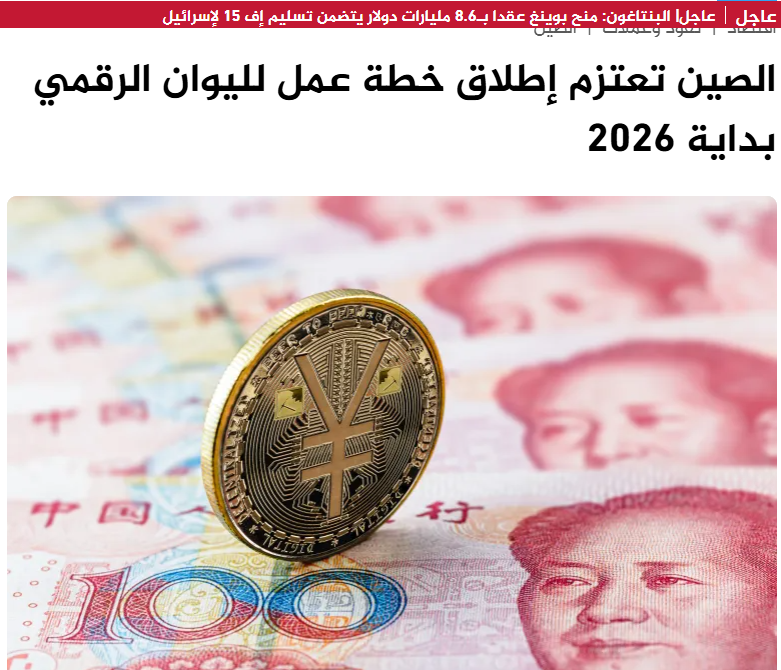
重磅利好突袭!这一板块集体爆发
Sou Hu Cai Jing· 2025-12-30 14:44
Core Insights - The People's Bank of China has introduced a new action plan to enhance the management and service system for digital currency, with a new digital RMB framework set to launch on January 1, 2026 [1][2] - As of November 2025, the digital RMB has processed 3.48 billion transactions, amounting to 16.7 trillion yuan, with 230 million personal wallets opened through the digital RMB app [1] - The digital RMB is evolving into a strategic tool that integrates finance, technology, and data, enhancing trade efficiency and national competitiveness [3] Group 1: Digital Currency Developments - The digital RMB's management system and infrastructure will officially start in 2026, indicating a significant step in China's digital currency evolution [1] - The digital RMB has seen substantial adoption, with 3.48 billion transactions and a total transaction value of 16.7 trillion yuan by late 2025 [1] - The digital RMB app has facilitated the opening of 230 million personal wallets, showcasing its growing user base [1] Group 2: Challenges and Opportunities - The article outlines four key challenges faced by central banks regarding digital currency: modern payment tools' impact on monetary control, risks of financial disintermediation, the relationship between digital cash and commercial banks, and the balance between centralized management and decentralized blockchain features [2] - The Chinese government is exploring international cooperation in digital finance, particularly through the mBridge project for cross-border payments with countries like Thailand and the UAE [2] - Predictions suggest that by 2030, the global cross-border payment market could reach $290 trillion, with the RMB's share potentially between 10% and 20%, and digital currency penetration between 20% and 40% [2] Group 3: Blockchain and Industry Growth - As of December 25, 2025, China has registered 74,600 blockchain-related companies, marking a record high in the past five years, with the majority located in South China [3] - The number of existing blockchain companies in China has steadily increased over the past decade, with a notable acceleration in growth since 2019, totaling 289,400 companies by late 2025 [3] - The development of digital RMB is seen as a strategic asset that leverages blockchain technology to enhance trade efficiency and align with national interests [3]





数字人民币系列点评:数字人民币重大变化:从M0到M0
Shenwan Hongyuan Securities· 2025-12-30 14:13
Investment Rating - The industry investment rating is "Overweight" indicating a positive outlook for the digital currency sector compared to the overall market performance [8]. Core Insights - The People's Bank of China has introduced an action plan to enhance the management and service system for digital currency, set to be implemented on January 1, 2026. This plan redefines digital currency from M0 to M1, integrating it into the reserve system and allowing interest payments on digital currency wallet balances [2]. - The action plan emphasizes a hybrid model combining account-based management and blockchain efficiency, highlighting the importance of compliance and regulation [2]. - With the M1 positioning, both individuals and commercial banks are incentivized to adopt and promote digital currency, enhancing its security and convenience compared to traditional electronic payments [2]. - The government is actively promoting cross-border digital currency payments, with initiatives such as the establishment of an international operation center in Shanghai and the launch of a cross-border digital payment platform [2]. - Various local governments are implementing measures to encourage the use of digital currency, such as issuing coupons and integrating it with cultural activities, indicating a strong push towards building a digital currency ecosystem [2]. Summary by Sections Regulatory Developments - The central bank's action plan includes integrating digital currency into the reserve system, allowing banks to pay interest on digital currency wallet balances, thus treating it similarly to deposits [2]. Market Dynamics - The shift to M1 is expected to motivate banks and individuals to engage more with digital currency, enhancing its usability and attractiveness [2]. Government Initiatives - The government is focusing on cross-border payment solutions and has launched several platforms to facilitate digital currency transactions, aiming to reduce transaction times significantly [2]. Related Companies - Companies involved in the digital currency ecosystem include those updating banking IT systems (e.g., Newland, Sifang Jingchuang), promoting payment solutions (e.g., Lakala), and hardware wallet providers (e.g., GDT, Feitian Integrity) [2][3].




四方精创:过往业绩期间,公司和赢时胜竞争较少
Zheng Quan Ri Bao· 2025-12-30 12:08
Group 1 - The core business of the company is software development services, consulting services, and delivery of products and solutions aimed at the financial industry, primarily banks [1] - Historically, the company has faced limited competition from Ying Shisheng [1]
四方精创:公司有欧洲地区的业务合作
Zheng Quan Ri Bao Wang· 2025-12-30 11:41
证券日报网讯12月30日,四方精创(300468)在互动平台回答投资者提问时表示,公司有欧洲地区的业 务合作,但占比很小,对收入的贡献有限。 ...
数字人民币行业动态点评:数字人民币走向存款货币时代,金融IT和支付公司有望受益
EBSCN· 2025-12-30 08:43
行业研究 数字人民币走向存款货币时代,金融 IT 和支付公司有望受益 2025 年 12 月 30 日 ——数字人民币行业动态点评 要点 事件:12 月 29 日,中国人民银行副行长陆磊发表《守正创新 稳步发展数字人 民币》文章。文章提到,中国人民银行出台了《关于进一步加强数字人民币管理 服务体系和相关金融基础设施建设的行动方案》,新一代数字人民币计量框架、 管理体系、运行机制和生态体系将于 2026 年 1 月 1 日正式启动实施,标志着数 字人民币由现金型 1.0 版进入存款货币型数字人民币 2.0 版,升级为具备信用创 造和资产属性的金融基础设施,从而激活了整个金融体系的积极性,为大规模应 用和生态繁荣奠定了基石。 数字人民币以央行为主导,依托商业性金融机构和现有支付体系,在全球率先试 验成功"中央银行-商业机构"双层运营架构,形成中国特色数字货币发展道路: 当前,境内和跨境数字人民币试验推广取得积极成效,在各国央行试验推进的项 目中,数字人民币处于领跑态势。截至 2025 年 11 月末,数字人民币累计处理 交易 34.8 亿笔,累计交易金额 16.7 万亿元。通过数字人民币 APP 开立个人钱 包 ...
四方精创股价跌1.14%,华宝基金旗下1只基金位居十大流通股东,持有694.8万股浮亏损失312.66万元
Xin Lang Cai Jing· 2025-12-30 02:08
Group 1 - The core point of the article highlights the performance and business structure of Sifang Jingchuang, which saw a decline of 1.14% in stock price, trading at 38.88 yuan per share with a market capitalization of 20.632 billion yuan [1] - Sifang Jingchuang, established on November 21, 2003, and listed on May 27, 2015, is based in Shenzhen, Guangdong Province, and provides full-process solutions for financial institutions, focusing on digital transformation and traditional business [1] - The company's revenue composition indicates that software development and maintenance account for 95.86%, consulting services for 3.77%, and system integration for 0.36% [1] Group 2 - Data shows that Huabao Fund's Huabao CSI Financial Technology Theme ETF (159851) is among the top ten circulating shareholders of Sifang Jingchuang, having increased its holdings by 3.3445 million shares in the third quarter, totaling 6.948 million shares, which represents 1.31% of circulating shares [2] - The Huabao CSI Financial Technology Theme ETF has a current scale of 12.319 billion yuan, with a year-to-date return of 17.4% and a one-year return of 11.8% [2] - The fund manager, Chen Jianhua, has a tenure of 13 years and 12 days, with a total fund asset scale of 27.702 billion yuan, achieving a best return of 177.41% during his tenure [3]
中国将成为首个为央行数字货币计息的经济体
Huan Qiu Wang· 2025-12-30 01:55
半岛电视台发文称,中国人民银行副行长陆磊发表在《金融新闻》(Financial News)上的文章中表示:"数字 人民币的未来将建立在基于区块链的新型支付、交易和发行金融系统之上。"截至11月底,中国已经处理了348 亿笔数字人民币交易,总价值达到16.7万亿元人民币(2.38万亿美元)。 【环球网财经综合报道】日前,中国人民银行出台了《关于进一步加强数字人民币管理服务体系和相关金融基 础设施建设的行动方案》,该《行动方案》将于2026年1月1日起正式启动实施。 根据方案部署,新一代数字人民币的计量框架、管理体系、运行机制与生态体系将同步落地。其中主要亮点包 括:数字人民币钱包余额将计付利息;银行类运营机构的数字人民币纳入准备金制度框架管理,其钱包余额统 一计入存款准备金交存基数;参与运营的非银行支付机构则需实行100%的数字人民币保证金要求等。 据此,中国将成为首个为央行数字货币计息的经济体。届时,数字人民币钱包余额将按照活期存款计付利息, 数字人民币将从"数字现金时代"迈入"数字存款货币"时代。 报道还提到,数字人民币的下一步是到2026年1月推出"新一代"数字人民币,包括评估框架、管理体系、运营 机制和 ...