Boston Dynamics

Search documents
头部具身智能人形机器人公司最新估值/市值
自动驾驶之心· 2025-09-20 16:03
更多干货,欢迎加入国内首个具身智能全栈学习社区 : 具身智能之心知识星球 (戳我) , 这里包含所有 你想要的。 编辑丨具身智能之心 点击下方 卡片 ,关注" 具身智能之心 "公众号 >> 点击进入→ 具身 智能之心 技术交流群 头部具身智能人形机器人公司最新估值或市值一览。除了已上市公司外,这里展示的都是已完成或 正在交割的真实估值,未经实际交割、未获交易确认的估值均未列入,单位为人民币。注意,各公 司成立时间和融资阶段差异大。估值高低与技术、商业化水平不能简单划等号。 以下数字仅做参考,如有不足或者遗漏,欢迎后台留言。 Figure AI 2736亿 优必选 555亿 Sklid AI 324亿 Physical Intelligence 170亿 宇树科技 160亿 智元机器人 150亿 Apptronik 144亿 Field AI 144亿 Boston Dynamics 70亿 银河通用 70亿 星海图 70亿 自变量 60亿 它石智航 50亿 Agility Robotics 126亿 云深处机器人 80亿 傅利叶机器人 80亿 乐聚机器人 80亿 World labs 70亿 Sanctuar ...

Figure向真实世界挤了挤
Hu Xiu· 2025-09-20 11:08
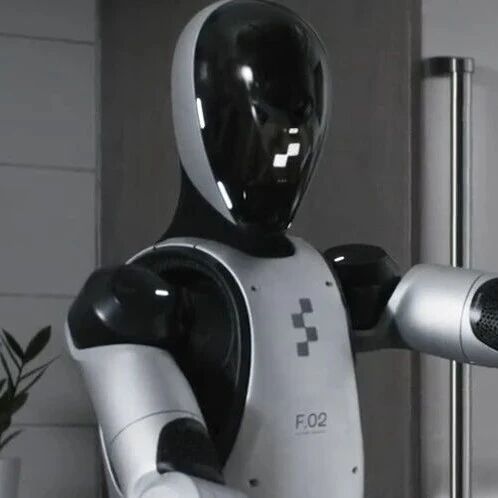
Core Insights - Figure has announced a strategic partnership with Brookfield to expand AI infrastructure and create the world's largest humanoid robot pre-training dataset [1][5] - The collaboration allows Figure to collect real-world training data for humanoid robots, moving beyond pure technology to practical applications [1][5] Company Summary - Figure will utilize Brookfield's diverse properties, including over 100,000 residential units and 5 billion square feet of commercial space, to gather critical training data for humanoid robots [1][2] - The data collection will begin in August 2025 and will cover various environments, enhancing the robots' adaptability to different cultural contexts and usage scenarios [2][3] - Initial tests at Figure's California R&D center have shown a 35% improvement in navigation capabilities and a 20% increase in action accuracy for the Helix model [3] Industry Summary - The partnership may trigger a "data race" in the humanoid robot industry, with competitors like Tesla and Boston Dynamics also advancing similar technologies [4] - The global humanoid robot market is projected to reach $50 billion by 2030, with real-world data becoming a critical competitive factor [4] - This collaboration represents a significant intersection of technology and real estate, exploring AI-driven future lifestyles and reshaping the robotics industry [5]
头部具身智能人形机器人公司最新估值/市值
具身智能之心· 2025-09-20 06:12
编辑丨具身智能之心 点击下方 卡片 ,关注" 具身智能之心 "公众号 >> 点击进入→ 具身 智能之心 技术交流群 更多干货,欢迎加入国内首个具身智能全栈学习社区 : 具身智能之心知识星球 (戳我) , 这里包含所有 你想要的。 头部具身智能人形机器人公司最新估值或市值一览。除了已上市公司外,这里展示的都是已完成或 正在交割的真实估值,未经实际交割、未获交易确认的估值均未列入,单位为人民币。注意,各公 司成立时间和融资阶段差异大。估值高低与技术、商业化水平不能简单划等号。 以下数字仅做参考,如有不足或者遗漏,欢迎后台留言。 Figure AI 2736亿 优必选 555亿 Sklid AI 324亿 Physical Intelligence 170亿 宇树科技 160亿 智元机器人 150亿 Apptronik 144亿 Field AI 144亿 Agility Robotics 126亿 云深处机器人 80亿 傅利叶机器人 80亿 乐聚机器人 80亿 World labs 70亿 Sanctuary AI 70亿 Boston Dynamics 70亿 银河通用 70亿 星海图 70亿 自变量 60亿 ...
从数采方案来看,具身数据的需求有哪些?
具身智能之心· 2025-09-19 16:04
点击下方 卡片 ,关注" 具身智能 之心 "公众号 编辑丨 具身智能之心 本文只做学术分享,如有侵权,联系删文 >> 点击进入→ 具身智能之心 技术交流群 更多干货,欢迎加入国内首个具身智能全栈学习社区 : 具身智能之心知识星球 (戳我) , 这里包含所有你想要的。 当前,具身智能已成为全球的新焦点,如何打造一个通用的本体和大脑是各个创业公司一直努力突破的,更是受到资本和产业界的高度关注。而数采作为基础模 块,是重中之重,好的数据更是很多算法取得效果的基础。 今天就为大家全面梳理下具备研发和产品力的数采领域相关公司,深入分析其技术特点、产品布局和应用场景,为公司提供行业全景图,助力战略决策和业务拓 展。 重点关注 :专注于数据采集设备与解决方案的企业,包括硬件采集设备、软件平台及整体解决方案。 国内公司 星海图 自研数采任务管理平台 :支持任务发布、上传、存储、审核等全流程 可视化管控,高效管理,无惧数据丢失! 一站式数据采集链路 :任务下发 → 采集 → 清洗 → 补采 → 压缩 → 上传 → 审核 → 标注 → 存储 兼容主流算法与格式 :输出格式:rosbag、ARIO、lerobot;适配模型:ACT ...

海外人形机器人:特斯拉引领,迈向具身智能新纪元
Minsheng Securities· 2025-09-19 11:55
Investment Rating - The report maintains a positive investment outlook on the humanoid robotics industry, particularly highlighting Tesla's leadership and the rapid evolution of startups like Figure AI, Agility Robotics, and 1X Technologies, with 2025 expected to be a pivotal year for mass production in the sector [4][5]. Core Insights - The humanoid robotics industry is entering a new era of embodied intelligence, driven by advancements in large models that enhance perception, decision-making, and execution capabilities. The report emphasizes the acceleration of industrial applications in manufacturing, logistics, and home services [1][9]. - Tesla's Optimus robot is making significant strides in both software and hardware, with expectations of mass production reaching 1 million units by 2027. The robot's capabilities are rapidly evolving, with notable improvements in movement and functionality anticipated in the coming years [2][10]. - The competitive landscape is characterized by a diverse array of hardware developments from leading companies, with significant investments and collaborations enhancing the industry's growth potential [3][11]. Summary by Sections Introduction - The report outlines the evolution of the humanoid robotics industry, detailing its transition from traditional control systems to a new era of embodied intelligence, with a focus on technological advancements and competitive dynamics [9]. Development History - The industry has progressed through four key stages: exploratory, integrated, high-dynamic, and intelligent development, with significant contributions from both Japan and the United States in shaping the current landscape [14][20]. Technical Routes - The primary research directions in humanoid robotics are bifurcated into bionic simulation and functional learning, with Japan focusing on realistic bionic robots and the U.S. leading in functional learning and complex environment operations [20][21]. Competitive Landscape - Major tech companies are actively investing and developing humanoid robotics through a combination of internal R&D, strategic investments, and partnerships. The U.S. leads in the number of startups and total funding in the sector [27][30]. Investment Recommendations - The report suggests focusing on automotive parts companies with strong production capabilities and customer relationships, particularly those that can provide localized support for humanoid robotics manufacturers [4][5]. Future Trends - The report anticipates that large models will continue to empower humanoid robots, enhancing their capabilities in various applications, including industrial manufacturing, logistics, and home services [31][33].

Nvidia Just Posted 56% Sales Growth, but the Market Shrugged. Should You?
The Motley Fool· 2025-09-03 09:30
Core Viewpoint - Nvidia is experiencing significant revenue growth, driven by its leadership in artificial intelligence, with a reported 56% revenue increase in the most recent quarter and nearly 700% growth over the past three years [1][2]. Group 1: Revenue Growth and Market Reaction - Despite impressive sales growth, Nvidia's stock has declined by 6% since the fiscal 2026 second-quarter announcement on August 27, which may concern long-term investors looking to capitalize on the AI revolution [2][4]. - Nvidia's data center revenue growth is expected to continue, with global data center infrastructure investments projected to reach approximately $600 billion by 2025, potentially doubling in the following two years [6]. Group 2: Robotics and AI Infrastructure - Nvidia's new Jetson Thor robotics computing platform is now available, with early adopters including major companies like Amazon, Boston Dynamics, and Meta Platforms, indicating strong demand for robotics solutions [8]. - The Automotive and Robotics segment saw a 69% year-over-year revenue increase in Q2, reaching a record $586 million, highlighting the growing need for compute power in robotic applications [9]. Group 3: Geopolitical Concerns and Future Outlook - Nvidia reported no sales from China in the latest quarter, which previously accounted for about 13% of its overall sales, raising concerns about potential revenue loss due to geopolitical tensions and export restrictions [10][11]. - CEO Jensen Huang emphasized the importance of physical AI for future growth, suggesting that every industrial company will require facilities for both machine and robotic AI production [12].

英伟达推出“Thor”,谁赚了?
Tai Mei Ti A P P· 2025-08-29 07:57
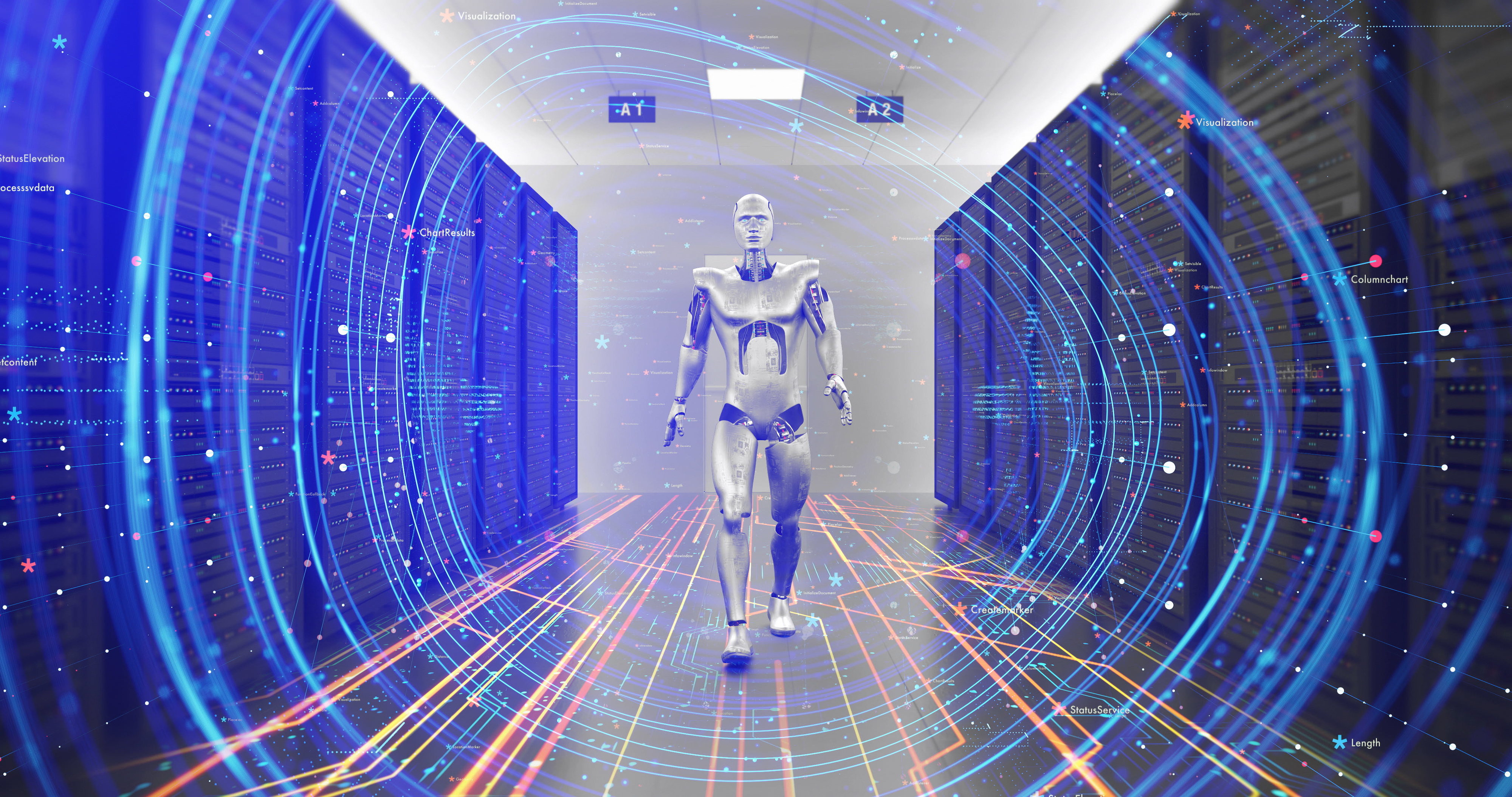
Core Insights - NVIDIA has launched Jetson Thor, a high-performance computing platform designed for physical AI and humanoid robots, which is being referred to as the "new brain for robots" [1][2][4] - Jetson Thor is based on the Blackwell architecture, offering significant performance improvements, including 2070 TFLOPS of AI computing power, which is 7.5 times that of the previous Orin series and 7000 times that of products from a decade ago [2][4] - The platform aims to create a unified computing architecture from cloud to edge, significantly reducing development complexity and accelerating the evolution of robotic technology [4][12] Performance and Efficiency - Jetson Thor boasts a 3.5 times improvement in energy efficiency, allowing developers to achieve more computational capabilities within limited power budgets, which is crucial for mobile robotic platforms [2] - The memory configuration includes 128GB LPDDR5X and a bandwidth of 273GB/s, supporting 100Gbit/s Ethernet [2] Market Positioning - NVIDIA positions Jetson Thor as an essential component for robot development, alongside its DGX systems for AI model training and the Omniverse platform for simulation testing, creating a closed-loop ecosystem [2][4] - The starting price for the Jetson Thor kit is $3,499, maintaining NVIDIA's strategy of providing top-tier hardware for high-performance computing while ensuring ecosystem partners can achieve sufficient returns [4] Ecosystem and Developer Engagement - The NVIDIA Jetson platform has attracted over 2 million developers and has a growing ecosystem of over 150 hardware systems, software, and sensor partners [5] - The launch of Jetson Thor comes at a time when the robotics industry is experiencing significant investment activity, with 88 financing events in the first half of 2025, a nearly 80% year-on-year increase [7] Strategic Intent - NVIDIA's introduction of Thor is aimed at capturing the emerging humanoid robot market, which is currently fragmented, by establishing itself as a standard provider through its hardware and software ecosystem [8][12] - The company is betting on the "physical AI" era, which includes systems that interact with the real world, such as robots and autonomous vehicles, with a focus on real-time understanding and decision-making capabilities [12][13] Competitive Landscape - The launch of Jetson Thor poses challenges for competitors like Qualcomm, Huawei, and Horizon, who may not remain passive in response to NVIDIA's strong market entry [16] - The increasing reliance on NVIDIA's technology may create pressure on other robotics manufacturers, as the performance of their products may become standardized around NVIDIA's capabilities [18] Industry Implications - The introduction of Jetson Thor may lead to a new phase of competition in the robotics industry, where the focus shifts from hardware performance to algorithm innovation and application commercialization [18] - Concerns arise for Chinese robotics manufacturers regarding the dependency on foreign chips, as geopolitical tensions may pose risks to their supply chains and operational stability [19]
每周观察 | 英伟达机器人“新大脑”推升芯片市场规模有望达4,800万美元以上;2Q25 NAND Flash营收季增逾20%
TrendForce集邦· 2025-08-29 03:44
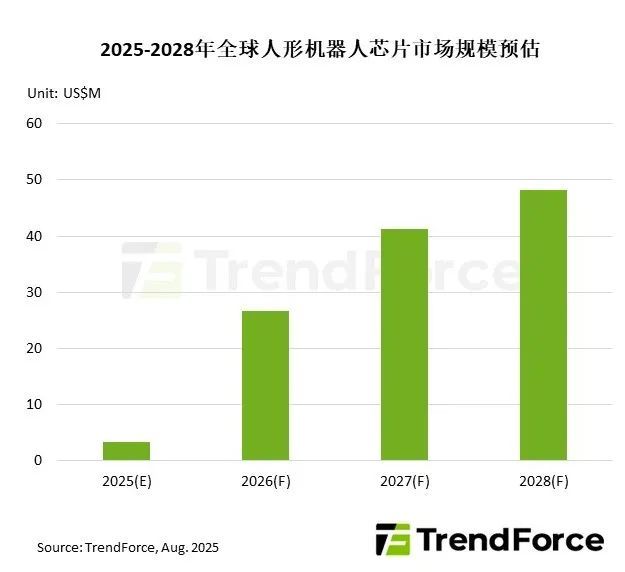
Group 1 - NVIDIA's newly launched Jetson Thor is considered the physical intelligence core for robots, featuring Blackwell GPU and 128 GB memory, achieving 2070 FP4 TFLOPS AI computing power, which is 7.5 times that of the previous Jetson Orin [2] - The introduction of Jetson Thor enables advanced humanoid robots to process large sensory data and large language models (LLM) in real-time, enhancing their ability to see, think, and act [2] - The humanoid robot chip market is expected to exceed $4.8 billion by 2028, driven by the adoption of this technology by companies like Agility Robotics, Boston Dynamics, and Amazon [2] Group 2 - In Q2 2025, the NAND Flash industry is projected to see a quarter-over-quarter revenue increase of over 20%, despite a slight decline in average selling prices (ASP) [4] - Major manufacturers have implemented production reduction strategies to alleviate supply-demand imbalances, resulting in significant growth in overall output [4] - The combined revenue of the top five NAND Flash manufacturers reached $14.67 billion in Q2 2025, reflecting a 22% quarter-over-quarter increase [5]

TrendForce:预计人形机器人芯片市场规模有望于2028年突破4800万美元
Zhi Tong Cai Jing· 2025-08-26 07:49
Group 1 - TrendForce's latest research indicates that NVIDIA's newly launched Jetson Thor is expected to enhance computational power for robots, potentially expanding the chip market [1] - The humanoid robot chip market is projected to exceed $48 million by 2028, driven by the adoption of Jetson Thor by companies like Agility Robotics, Boston Dynamics, and Amazon [1] - Jetson Thor features a Blackwell GPU and 128 GB memory, achieving 2070 FP4 TFLOPS AI computing power, which is 7.5 times that of the previous Jetson Orin [1] Group 2 - The International Federation of Robotics (IFR) suggests that humanoid robot development varies by country, with short-term focus on pilot projects, mid-term scaling in manufacturing and services, and long-term integration into daily household scenarios [4] - TrendForce notes that despite the powerful performance of the NVIDIA Jetson Thor series, its development kit is priced at $3,499, significantly higher than the previous Jetson Orin's $1,499 [4] - The industry trend aims to lower humanoid robot prices for broader adoption, indicating that companies planning simpler tasks may opt for more affordable chips [4]

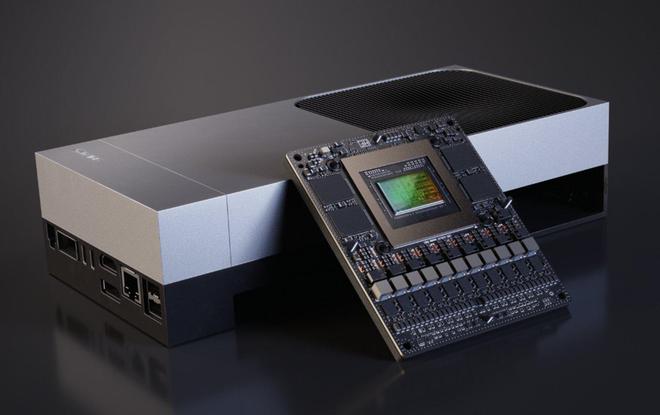
Nvidia's new 'robot brain' goes on sale for $3,499 as company targets robotics for growth
CNBC· 2025-08-25 15:00
Core Insights - Nvidia has launched its latest robotics chip module, the Jetson AGX Thor, priced at $3,499 for a developer kit, which is aimed at enabling the creation of robots [1] - The company views robotics as a significant growth opportunity, with overall sales tripling in the past two years, driven largely by advancements in artificial intelligence [2] Product Details - The Jetson Thor chips are based on Nvidia's Blackwell graphics processor and are reported to be 7.5 times faster than the previous generation, equipped with 128GB of memory to support large AI models [3][4] - After prototyping with the developer kit, companies can purchase production-ready Thor T5000 modules at $2,999 each for orders exceeding 1,000 units [2] Market Position - Despite the rapid growth in robotics, it currently accounts for only about 1% of Nvidia's total revenue, although the sector is expanding quickly [5] - Nvidia's combined automotive and robotics division reported $567 million in quarterly sales in May, reflecting a 72% year-over-year increase [6] Applications - The Jetson Thor chips can also be utilized in self-driving cars, particularly from Chinese manufacturers, with Nvidia's automotive chips running on a specialized operating system called Drive OS [7]