
Equinor ASA

Search documents
韩国船厂狂揽订单,中国为啥接不到单,背后是能源战争!
Sou Hu Cai Jing· 2025-12-23 06:32
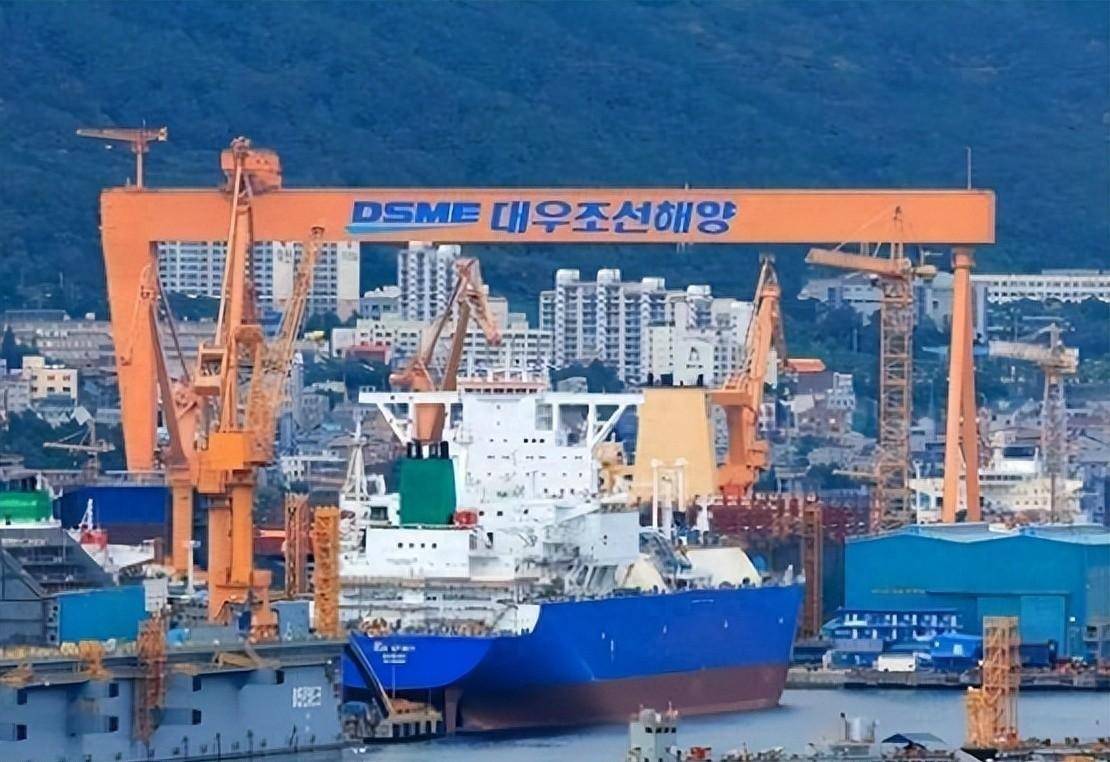
Group 1 - The South Korean shipbuilding industry is thriving, with Hanwha Ocean securing orders for seven liquefied natural gas (LNG) carriers totaling $1.75 billion, with each priced at $250 million, expected to be delivered by 2029 [1] - HD Hyundai has also reached an agreement with Nippon Yusen for four plus four vessels, with a unit price of $260 million, potentially bringing the total contract value to $2.08 billion [1] - All these vessels will be leased to Cheniere Energy in the United States, and this year, global orders for LNG carriers over 140,000 cubic meters have reached 21, all won by three South Korean shipbuilders, with no orders from China [1] Group 2 - Hanwha Ocean received $9.83 billion in orders this year, nearly tripling from last year, with 60% being LNG carriers, supported by long-term charters with clients [3] - The high-pressure engines used by South Korean shipbuilders are particularly favored by European shipowners for their environmental performance [3] - The shipyards in South Korea are fully booked until 2029, while the global planned delivery of new ships is only 17, indicating a significant supply-demand imbalance as LNG terminal production capacity is set to reach 52 million tons next year [3] Group 3 - The competition in the shipbuilding industry is not just about manufacturing but also about how energy flows and capital regulations, with U.S. LNG production increasing by 80 million tons annually [4] - Korean shipyards are preferred by charterers for their reliability and timely deliveries, supported by the Korean government promoting carbon compliance technologies [4] - Chinese shipyards face challenges in meeting international standards for new propulsion system certifications and gaining entry into the networks of major charterers and energy companies [4] Group 4 - By 2029, there are only about 70 LNG ship orders globally, while actual demand exceeds 150 ships, highlighting the urgency for China to secure 5 to 8 orders by 2025 to avoid missing out on this development cycle [4] - Chinese shipyards have the capability but lack a breakthrough point, with low pricing being a potential strategy, though it is insufficient without reliability in delivery [4] - The rapid development of South Korea is attributed to their advanced technology and strategic partnerships across the entire supply chain, while China is still fragmented and lacks established trust with clients [5] Group 5 - The global LNG market is changing, and competition in the shipbuilding industry is intensifying, with time running out for China to take action [5] - If no significant steps are taken by 2025, China may lose its eligibility to participate in bidding for future projects [5] - Success in this industry requires a combination of technology, client acquisition, and competitive pricing, all of which South Korea has successfully integrated [5]

Equinor discovers oil and gas near Tyrihans field offshore Norway
Yahoo Finance· 2025-12-22 13:33
Core Insights - Equinor, along with its partners, has discovered oil, condensate, and gas in the Tyrihans Øst prospect located in the Norwegian Sea, approximately 250km southwest of Brønnøysund [1] - The exploration well 6407/1-B-2 H reached a measured depth of 4,590m and encountered significant hydrocarbon columns in two geological formations [2] Discovery Details - The well found around 6m of condensate and light oil in the Garn Formation, and a 63m gas and condensate column in the Ile Formation, with varying reservoir characteristics [2] - Preliminary estimates suggest the discovery contains between 0.2 and 1.3 million standard cubic metres of recoverable oil equivalent, translating to one to eight million barrels [3] Future Plans - Equinor and its partners plan to evaluate the discovery for potential production, aiming to route production from Tyrihans to the Kristin installation [4] - The company will assess the commercial viability and development options for the Tyrihans Øst discovery within existing infrastructure and future field developments [4]

Equinor extends IMR services agreement with Subsea7
Yahoo Finance· 2025-12-22 09:38
Core Points - Equinor has extended its agreement with Subsea7 for subsea inspection, maintenance, and repair (IMR) services for the Seven Viking vessel, which supports operations at oil and gas wells across the Norwegian Continental Shelf [1][2] - The contract extension allows the Seven Viking vessel to operate in the region until the end of 2027, with a value between $50 million and $150 million [2] - Equinor has finalized a contract with Odfjell Drilling for the use of the Deepsea Aberdeen rig, covering drilling operations on the Norwegian Continental Shelf [3][4] - The Odfjell contract is expected to add approximately $373 million to the company's firm order backlog, excluding additional services and bonuses [5] - Equinor has also extended its contract with DeepOcean for subsea IMR services, maintaining support through 2026 and into 2027 [6]
挪国油拟开发巴伦支海油气
Zhong Guo Hua Gong Bao· 2025-12-19 03:17
Core Viewpoint - Equinor and its partners are investing over 4 billion Norwegian Krone to develop the Isfjellet oil and gas discovery in the Barents Sea, with production expected to start in Q4 2028 [1] Group 1: Investment and Development - The Isfjellet project is a subsea development with estimated recoverable oil reserves of 46 million barrels [1] - The project benefits from its proximity to the Johan Castberg oil field, allowing for the reuse of standardized equipment and drilling designs [1] - Equinor has applied to the Norwegian Ministry of Energy for confirmation of environmental impact assessment obligations and is seeking an exemption from submitting a complete development and operation plan [1] Group 2: Production and Potential - The Johan Castberg field currently produces approximately 220,000 barrels per day, with total recoverable reserves estimated between 450 million and 650 million barrels [1] - There is additional potential of 250 million to 550 million barrels through new wells and satellite tie-backs [1]
国际石油公司低碳投资“踩刹车”,有何启示?
Xin Lang Cai Jing· 2025-12-19 02:33
Core Viewpoint - Global low-carbon energy investment continues to grow, with the International Energy Agency (IEA) predicting that total clean energy investment will exceed $2.2 trillion by 2025. However, the oil and gas industry's low-carbon investment remains above $30 billion, but its share is declining [1]. Group 1: Investment Trends - International oil companies have been rapidly investing in low-carbon and renewable energy sectors due to government policies, market trends, and shareholder interests. However, they are now facing internal and external pressures that are affecting their low-carbon strategies [2]. - Companies that have diversified quickly over the past five years are experiencing dual pressures of value growth and cash flow stability, leading some to adjust their carbon reduction targets and prioritize short-cycle, high cash flow projects [2][6]. - Despite some companies lowering their carbon reduction goals, overall low-carbon investment by international oil companies has steadily increased since 2020, with European firms leading in investment scale and growth compared to their American counterparts [6][10]. Group 2: Key Investment Areas - The three main focus areas for low-carbon investments by international oil companies are renewable electricity (wind and solar), biofuels, and Carbon Capture, Utilization, and Storage (CCUS), with a total investment of $86.4 billion in these areas over the past decade [7]. - European companies are diversifying their investments across various sectors, while American companies are more focused on CCUS and biofuels. CCUS is viewed as a "certain strategic pillar" for the industry, with many projects underway in Europe and North America [8][9]. - Hydrogen is also a strategic focus, with European companies favoring green hydrogen and American companies leaning towards blue hydrogen, although recent uncertainties have led to a more cautious approach to hydrogen investments [9]. Group 3: Resource Dependency - The transition to green energy is increasing the demand for key mineral resources, with lithium demand expected to grow more than threefold by 2023. This trend highlights the oil and gas industry's growing reliance on mineral resources to support green transitions [10]. - Companies like ExxonMobil are entering the lithium market, with plans to produce lithium materials for over 1 million electric vehicles by 2030, indicating a strategic shift towards securing essential resources for future energy needs [10].


原油追踪-库存积压下布伦特原油跌至 50 美元区间,长期供应上行风险加剧-Oil Tracker_ Brent in the 50s as Stocks Land and Upside Risks to Long-Term Supply Rise
2025-12-18 02:35
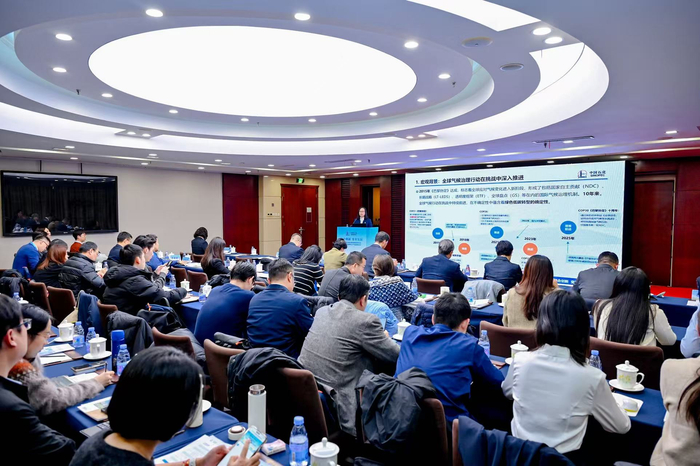
Summary of Key Points from the Conference Call Industry Overview - The report focuses on the oil industry, specifically the Brent crude oil market and its dynamics in relation to global supply and demand factors [1][3][4]. Core Insights and Arguments - **Brent Crude Price Decline**: Brent crude prices have fallen below $60 per barrel, marking the lowest level in four years due to increased oil stockpiles and rising supply risks from Russia and Venezuela [3][4]. - **Global Stock Builds**: The pace of global visible stock builds has accelerated to 2.1 million barrels per day (mb/d) over the last 90 days, resulting in global oil storage reaching a four-year high [3][4]. - **Shifts in Oil Purchases**: Increased purchases of discounted Russian oil by China and India are freeing up more crude for OECD buyers, impacting pricing dynamics [3][4]. - **Market Dynamics**: Higher exports from the Middle East and Brazil, along with a moderation in China's demand, have contributed to softer crude prices in Asia compared to the Atlantic region [3][4]. - **Contango Formation**: The combination of a large global surplus and seasonal builds in OECD is likely to flip Brent and WTI prompt timespreads into contango [3][4]. - **Long-Term Supply Risks**: Escalating tensions between the US and Venezuela, along with potential negotiations for peace in Ukraine, present upside risks to long-term oil supply from these regions [3][4]. - **Net Supply Changes**: Trackable net supply has increased by 1.0 mb/d over the last week, driven by lower demand from OECD Europe and China, alongside higher production from Russia [3][4]. Additional Important Insights - **Refined Products Margins**: Margins for refined products have declined due to increased refinery output in the US, China, and Kuwait, and ongoing peace talks affecting market sentiment [4][5]. - **OECD Commercial Stocks**: OECD commercial stocks now stand at 2,812 million barrels, which is 56 million barrels below the end-of-December forecast [9][13]. - **China and OECD Demand**: The demand nowcast for China oil decreased by 0.3 mb/d to 17.4 mb/d, while OECD Europe oil demand decreased by 0.6 mb/d to 13.3 mb/d [39][45]. - **Oil Rig Counts**: The US oil rig count increased by 1 to 414, while Canada’s count decreased by 3 to 123 [10][9]. Conclusion - The oil market is currently experiencing significant fluctuations due to various geopolitical and economic factors. The decline in Brent prices, coupled with rising stock levels and changing demand dynamics, suggests a complex environment for investors and stakeholders in the oil industry. The potential for increased supply from Russia and Venezuela, along with shifts in purchasing patterns, will be critical to monitor in the coming months [3][4][10].
Odfjell completes acquisition of Deepsea Bollsta and secures refinancing
Yahoo Finance· 2025-12-16 09:42
Acquisition and Contract - Odfjell Drilling has completed the acquisition of the Deepsea Bollsta drilling rig, which includes a drilling contract with Equinor until early 2028, with options for five one-year extensions [1] - The rig will be renamed Deepsea Bergen, with the formal name change set for 2026 [1] Refinancing and Financial Structure - The company has secured long-term funding through a refinancing process, which includes $550 million in term loans and revolving credit facilities, along with a new $650 million bond rated for 5.25 years [2] - The refinancing process has improved pricing, extended maturities to 2031, and retained flexibility through revolving facilities [5] Financial Stability and Earnings Impact - Odfjell Drilling's amortization schedule remains consistent, with an average annual amortization of around $94 million projected over the next five years [3] - The company has no significant debt maturities until 2031, ensuring long-term financial stability [3] - The acquisition was financed entirely through debt and is expected to have an immediate positive impact on earnings [3] Order Backlog and Operational Risk - The acquisition, combined with existing contracts for the Deepsea Nordkapp and Deepsea Aberdeen rigs, boosts the company's secured order backlog by nearly $1 billion since the last reporting period [4] - The company has operated the rig for the past three years and expects minimal operational risk during the integration process [4] Strategic Positioning - Odfjell Drilling has an average of two and a half years of backlog secured across its owned units at attractive day rates, positioning the company well for 2026 [5]
欧洲能源战略何去何从?
Zhong Guo Hua Gong Bao· 2025-12-15 03:01
Group 1 - Europe is restarting domestic oil and gas exploration to reduce dependence on high-priced imported energy, which conflicts with the EU's 2050 carbon neutrality goals and a significant LNG procurement agreement with the US [1][2] - Greece has issued its first offshore oil and gas exploration license to ExxonMobil, with the Ionian Sea area estimated to contain up to 200 billion cubic meters of natural gas, while Italy and the UK are also considering resuming offshore exploration [2] - The EU currently relies on imports for 85% of its natural gas consumption, with the US being the largest supplier, meeting approximately 16.5% of total EU consumption, and expected to account for about 70% of LNG imports by 2026-2029 as the EU phases out Russian gas [2] Group 2 - The development of domestic resources may enhance energy autonomy and potentially lower energy costs, but it conflicts with Europe's green transition goals, which include a commitment to achieve carbon neutrality by 2050 and a 90% reduction in greenhouse gas emissions by 2040 compared to 1990 levels [3] - The EU's commitment to purchase $250 billion worth of US energy products over the next three years creates a tension with its goal of diversifying energy supplies and reducing dependence on the US [3] - The rapid expansion of US LNG export capacity poses a dilemma for Europe, as it is a key source for replacing Russian energy and ensuring short-term energy security, but long-term dependence could undermine European energy autonomy and delay the transition to renewable energy [4] Group 3 - Internal discrepancies in energy policies among major European economies, such as Germany and France, hinder unified coordination, which may weaken Europe's negotiating power against energy giants like the US [4] - The transition to renewable energy, while promising, cannot fully address the immediate supply gap left by natural gas, particularly in heavy industry and heating sectors, necessitating a balance between ideal climate goals and practical energy supply [4]
Cheniere: LNG Negativity Is Not Supported By Fundamentals (Rating Upgrade)
Seeking Alpha· 2025-12-13 10:00
Core Insights - Cheniere Energy (LNG) shares have decreased over 9% this year and are approximately 23% below their all-time highs, primarily due to weaker natural gas spot prices in Europe and Japan [1] Company Performance - The decline in Cheniere Energy's share price is attributed to the downturn in natural gas prices, impacting investor sentiment and market performance [1]

壳牌与Equinor成立合资公司
Zhong Guo Hua Gong Bao· 2025-12-12 03:56
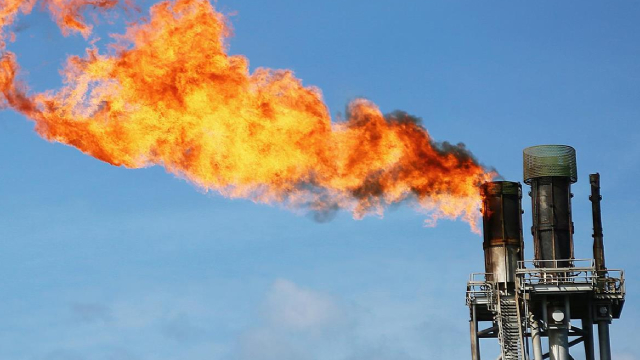
Core Insights - The joint venture Adura has been established by Shell and Equinor, integrating 12 core oil and gas assets in the UK North Sea, making it the largest independent producer in the region, with an expected production exceeding 140,000 barrels of oil equivalent per day by 2026 [1] Group 1: Joint Venture Formation - The formation of Adura aims to enhance operational efficiency, extend the lifespan of oil fields, and ensure the security of energy supply in the UK [1] - The asset portfolio of Adura includes producing oil fields and development projects such as Mariner, Rosebank, Buzzard, and Shearwater, along with some exploration licenses [1] Group 2: Asset Retention and Strategic Focus - Equinor retains its interests in cross-border oil fields, offshore wind projects, and new energy assets like hydrogen and carbon capture and storage [1] - Shell retains its interests in the UK SEGL gas processing system, Bacton terminal, and some decommissioned oil fields [1] Group 3: Industry Implications - The establishment of Adura signifies a shift towards specialized operations in traditional oil and gas assets in the North Sea, focusing on enhancing the value and sustainability of existing assets amid the energy transition [1]