
银河通用

Search documents
国资机器人基金“井喷”:从北到南密集入场,百亿基金年内出手超10次
Xin Lang Cai Jing· 2025-10-26 06:54
Core Insights - The Chinese robotics industry is experiencing a significant influx of state-owned capital, marking a "state-owned moment" since 2025, with 75% of the top 20 funded robotics companies in Q3 2023 backed by state-owned institutions [1][2] Investment Trends - Local state-owned enterprises are not only making isolated investments but are also establishing large-scale industrial investment funds to take a more dominant role in the industry [1] - Beijing and Shanghai are leading the charge in establishing robotics funds, with Beijing's "Beijing Robotics Industry Development Investment Fund" having a total scale of 10 billion yuan, while Shanghai's fund aims for 1 billion yuan [3][4] Fund Establishment and Strategy - Shenzhen has been slower to establish its robotics funds, launching a 3 billion yuan fund group in October 2023, which includes three funds targeting different investment stages [4][8] - Other second and third-tier cities are also launching robotics funds, with notable initiatives in Wuhan, Hefei, Nanjing, Suzhou, and Jiangxi, including a 10 billion yuan fund in Hubei [4][5] Investment Activity - Local state-owned funds are transitioning from preparation to active investment, with rapid deal closures being a common characteristic this year [7][8] - The Beijing fund has made over ten investments in 2023, with some projects seeing returns exceeding 10 times their initial investment [7][8] Ecosystem Development - A "fund + industrial park + industry player" model is becoming standard, where funds select projects, market-oriented investment institutions nurture them, and parks provide the necessary environment [9] - This model has proven attractive, as seen in Wuhan, where early-stage funds are drawing interest due to the supportive infrastructure [9] Market Dynamics - The influx of capital is driving up valuations for top-tier projects, making them increasingly difficult to secure [9][10] - Regions with weaker industrial bases are shifting their investment focus towards upstream components and niche areas to find opportunities [10]

大脑:具身智能落地的关键
Soochow Securities· 2025-10-24 06:02
Investment Rating - The report maintains an "Overweight" rating for the computer industry, indicating a positive outlook for the sector in the next 6 months [1]. Core Insights - The brain is identified as the key to achieving embodied intelligence, with humanoid robots consisting of a brain, cerebellum, and body, where the brain utilizes AI large models for optimal decision-making based on environmental inputs [3][8]. - The technology path for embodied intelligence is still in the exploratory phase, with three main technical routes: end-to-end VLA, brain+cerebellum layered approach, and world model technology [3][13]. - The development of the robot brain is seen as a critical bottleneck for the advancement of embodied intelligence, with current challenges primarily related to model issues rather than data [3][18]. - The global landscape features a diverse array of robot brain manufacturers, with several companies achieving valuations exceeding $1 billion, such as Galaxy General at 11.5 billion yuan and Physical Intelligence at $2.4 billion [3][17][46]. - Investment suggestions highlight the rapid growth of the embodied intelligence market, emphasizing the importance of the brain in this development, and recommend focusing on related companies [3][56]. Summary by Sections 1. Definition and Capabilities of Robot Brain - The humanoid robot's brain is based on AI large models, enabling autonomous navigation, task execution, and human-robot interaction [8][9]. 2. Parallel Exploration of Humanoid Robot Large Model Technologies - The report outlines three main technical routes for humanoid robot brain development: end-to-end VLA, brain+cerebellum layered approach, and world model technology, with ongoing research in each area [13][14]. 3. Industry Participants in Humanoid Robot Brain - Participants are categorized into three types: companies specializing in robot brains, general large model companies, and companies developing their own solutions [17]. 4. Key Bottleneck in Embodied Intelligence Development - The report emphasizes that the robot large model is the most significant challenge facing intelligent agents, limiting the large-scale application of humanoid robots [18][19]. 5. Challenges in Developing Embodied Intelligence Large Models - The report discusses the difficulties in obtaining training data for embodied intelligence, highlighting the scarcity of interaction data with the physical world [20][21]. 6. Diverse Global Robot Brain Manufacturers - The report details various companies in the sector, including Tesla, Figure AI, Physical Intelligence, and others, each with unique approaches and technological advancements [22][31][36].

人形机器人被干到万元以下,还有的同学不知道怎么入门......
具身智能之心· 2025-10-23 04:00
先说说影响,面向消费级,也就是说无论是科研机构、个人都能买得起,批量复购压力也不大啦。 在销量提升的同时,更多研究者将会不断贡献力量,会有很多新的思路融入进来,这对社区的发展 将会是极大的推动。 但也有很多同学,对人形机器人的数据采集、运控、还有特别难的vla任务一知半解,甚至还没找到 门路。在目前这个阶段,确实处于劣势。想要赶上这波浪潮,要对最新的一些内容保持跟进与学 习。 人形机器人被干到万元以下,还有的同学不知道怎么入门...... 今天看到松延动力人形机器人Bumi的信息,不得不说非常可爱,价格更是迷人:9998元。全球首款 万元以内的高性能机器人,再次验证了那句话,价格不是壁垒,供应链和整套技术方案在不断压低 本体价格。 目前这款机器人的价格,甚至低过了某些高端手机的价格。 具身智能之心知识星球一直在关注人形机器人、强化、vla等相关内容的分享,近一年的搭建,社区 内已经完成了技术路线分享、直播、问答、求职、赛事等多个版块的分享。实现了产业、学术、求 职、问答交流等多个领域的闭环。 1)持续的直播分享 社区为大家准备了很多圆桌论坛、直播,从本体、数据到算法,各类各样,逐步为大家分享具身行 业究竟在发 ...


研报掘金丨浙商证券:均胜电子H股发行在即,人形机器人业务获智元过亿订单,维持“买入”评级
Ge Long Hui A P P· 2025-10-21 06:56
Core Viewpoint - Junsheng Electronics is set to issue H-shares, with its humanoid robot business securing over 100 million yuan in orders from Zhiyuan [1] Group 1: Business Developments - On October 16, Zhiyuan officially launched the new generation industrial-grade interactive embodied robot, the Spirit G2, and commenced the first batch of deliveries under a procurement contract exceeding 100 million yuan with Junsheng Electronics [1] - The company has made significant progress in its business layout, including overseas deliveries of robot components such as the back of the head, neck, shoulders, knees, and fingers to a leading client, and is exploring next-generation head display solutions and head assembly supply [1] - Domestically, the company has collaborated with leading clients like Zhiyuan Robotics and Galaxy General, achieving mass supply of customized main control boards and is in the process of delivering various precision IMUs and customized fisheye cameras [1] Group 2: Future Projects - Recently, the company's subsidiary secured projects with two major brand OEMs, aiming to develop and provide a range of automotive intelligent products, including Central Computing Units (CCUs) and intelligent networking products [1] - The total estimated order value for the aforementioned projects over their entire lifecycle is approximately 15 billion yuan, with plans for mass production by 2027 [1]

数亿融资后,这家人形机器人创企宣布解散!
Robot猎场备忘录· 2025-10-21 00:04
Core Viewpoint - The article discusses the dissolution of "OneStar Robotics," a company focused on embodied intelligence, just five months after its establishment and significant funding, highlighting the challenges and competitive landscape in the humanoid robotics sector [2][3]. Company Overview - "OneStar Robotics" was founded on May 9, 2025, focusing on multimodal diffusion model development and high-precision data collection. It was initiated by key figures from Geely Group, including Li Xingxing and Li Ni, and aimed to leverage advanced technology in the automotive sector [4]. - The company completed two rounds of financing, each amounting to several hundred million yuan, within its first five months, attracting investments from various stakeholders, including Geely-related entities and market investors [4]. Recent Developments - The company has been reported to dissolve due to internal conflicts and strategic misalignments with another entity, Qianli Technology. The office staff has vacated, and the official communications have been erased [2][3]. - Following the dissolution, the original Geely-related platforms and business operations are expected to revert to Geely Auto Group, while the technology team may pursue independent ventures [2]. Industry Context - The dissolution of OneStar Robotics marks the first significant failure among the newly funded humanoid robotics startups, reflecting broader challenges in the industry [3]. - The article notes that many automotive companies are entering the humanoid robotics space, with 15 notable firms globally, including 11 from China. However, only a few, like Xiaopeng, have showcased competitive bipedal products [6]. - The influx of talent from the autonomous driving sector into humanoid robotics is noted, with many industry veterans seeking new opportunities in this emerging field [5][6]. Challenges and Competition - The humanoid robotics sector is characterized by intense competition, with many startups struggling to establish a sustainable business model and effective production capabilities [7]. - The article emphasizes that while producing humanoid robots is not inherently difficult, achieving mass production and practical application remains a significant hurdle for most startups [6][7]. - The current landscape is described as chaotic, with issues such as outsourcing and superficial partnerships complicating the market dynamics [6]. Future Outlook - The article suggests that the humanoid robotics industry is at a critical juncture, with a consensus on the long-term potential but significant short-term challenges. The focus is on the need for strategic collaborations and effective commercialization strategies [8].

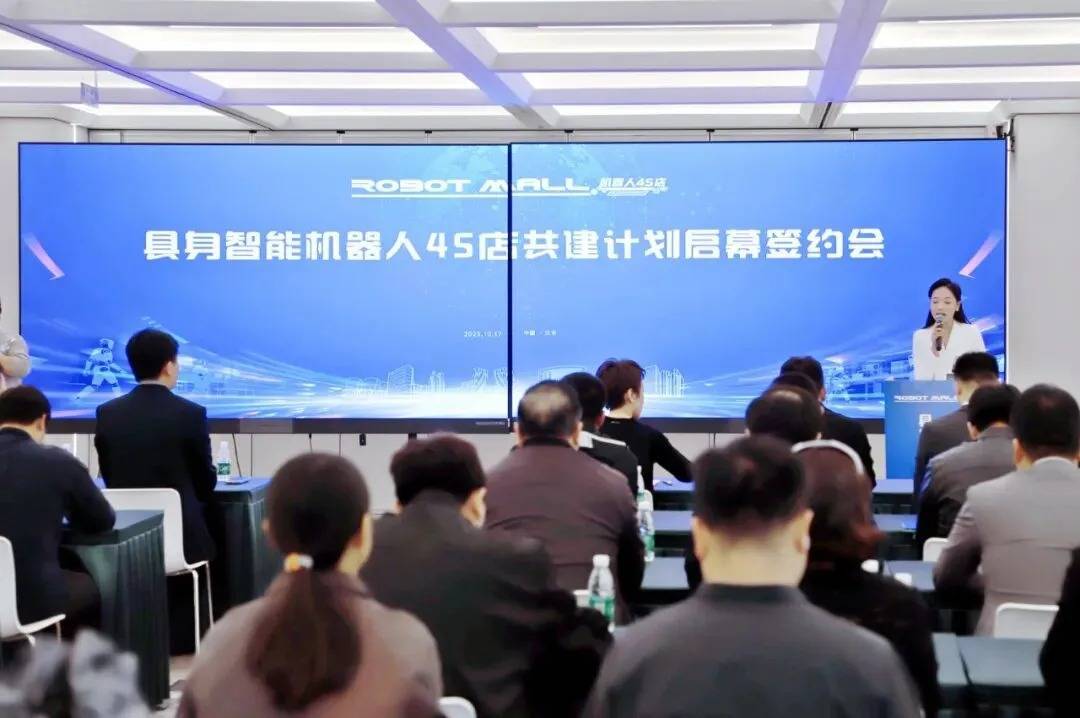
30余家企业签约入驻!全国首家具身智能机器人4S店2.0版即将开业!
Sou Hu Cai Jing· 2025-10-21 00:03
Core Insights - The world's first embodiment intelligent robot 4S store has officially launched a co-construction plan, with over 30 quality robot companies signing agreements to create a new ecosystem for intelligent service in the robotics industry [1][3] Group 1: Co-construction Plan - The signing event took place on October 17 in Beijing, marking the beginning of a collaborative effort among various stakeholders in the robotics industry [1] - The participating companies will collaborate in sales, service, technology, and supply chain, enhancing product offerings and service capabilities [3] Group 2: Service Ecosystem - The 4S store integrates four core functions: sales, spare parts, after-sales service, and information feedback, extending to custom development, financial services, and leasing [3] - Since its opening in August, the store has received intention orders amounting to 63 million yuan, indicating significant market potential [3] Group 3: Customer Engagement - A themed restaurant, "Robot Research Institute," has introduced over 20 types of robots, attracting an average of over 400 visitors daily, showcasing the fusion of technology and commerce [3] - The 2.0 version of the embodiment intelligent robot 4S store is set to officially open by the end of December [3] Group 4: Industry Impact - The collaboration of over 30 companies is expected to strengthen the industrial synergy and foster a new commercial ecosystem for robots, accelerating their integration into various sectors [3]
数码家电行业周度市场观察-20251018
Ai Rui Zi Xun· 2025-10-18 09:27
Investment Rating - The report does not explicitly provide an investment rating for the industry Core Insights - The digital home appliance industry is experiencing significant growth, with a projected retail sales figure of 608.7 billion yuan by 2025, reflecting a 14.9% increase [2] - The AI industry is shifting towards a "Results as a Service" (RaaS) model, which emphasizes quantifiable business outcomes and charges clients only upon achieving these results [2] - The humanoid robot sector is moving from isolated efforts to ecosystem collaborations, with leading companies investing in early-stage projects to enhance supply chain stability and expand application scenarios [4] - The AI video generation market is witnessing a divide between product-focused startups and ecosystem-oriented large companies, with the former facing challenges in monetization [4] - AI is at a pivotal point, transitioning from "human-machine collaboration" to "human-machine delegation," which will redefine job roles and organizational structures [5] - The pre-prepared food controversy has sparked interest in cooking robots, with B2B applications gaining traction despite slower consumer adoption [6] - AI advertising is becoming mainstream, with over 50% of advertisers utilizing AI-generated content, significantly reducing production costs [7] - The travel and local living sectors are leveraging AI to enhance service efficiency during peak travel periods, marking a shift from traffic acquisition to value creation [8] - The cloud computing market in China is undergoing a transformation driven by generative AI, with significant capital investments from aggressive players like ByteDance and Alibaba [14] - The mobile internet landscape is evolving, with major platforms seeing substantial user growth and increased competition in various sectors [14] Summary by Sections Industry Environment - The report highlights the release of a market trend report predicting a retail sales figure of 608.7 billion yuan for home appliances by 2025, driven by consumer segmentation and technological advancements [2] - The AI industry is transitioning to a RaaS model, focusing on measurable outcomes and value creation, with companies like Hengwei Technology leading the charge [2] - The humanoid robot industry is shifting towards collaborative ecosystems, with significant investments in early-stage projects to enhance supply chain stability [4] - The AI video generation sector is characterized by a split between product-focused startups and large companies emphasizing ecosystem development [4] - The AI landscape is evolving towards a model where human roles are redefined, emphasizing strategic oversight rather than direct task execution [5] - The cooking robot market is gaining traction in the B2B sector, driven by efficiency improvements despite slower consumer acceptance [6] - AI advertising is becoming prevalent, with over half of advertisers adopting AI-generated content, leading to significant cost reductions [7] - The travel and local living sectors are increasingly utilizing AI to enhance service efficiency, marking a shift in competitive strategies [8] - The cloud computing market is experiencing a transformation due to generative AI, with aggressive capital investments from leading players [14] - The mobile internet landscape is evolving, with major platforms experiencing significant user growth and competition intensifying across various sectors [14] Top Brand News - Alibaba Cloud launched the AgentOne platform, integrating AI capabilities into business processes to enhance operational efficiency [17] - Volcano Engine is leading the market in model-as-a-service (MaaS), with a significant increase in token usage indicating a surge in demand for AI capabilities [18] - Midea and Huawei have formed a strategic partnership to enhance their smart home ecosystem, focusing on AI and smart manufacturing [19] - OpenAI is making strides towards becoming a "computing empire" with significant cloud service contracts and plans for self-developed chips [20] - JD Health is advancing AI in healthcare, aiming to improve access to quality medical resources through innovative solutions [21] - The AI eyewear market is facing challenges, with Meta's new product failing to meet expectations, highlighting the industry's struggles with technology maturity [27] - The automotive industry is exploring AI integration, with a focus on smart transformation and collaboration across the supply chain [31] - Yushutech is preparing for an IPO, potentially becoming the first publicly listed humanoid robot company in China [32]
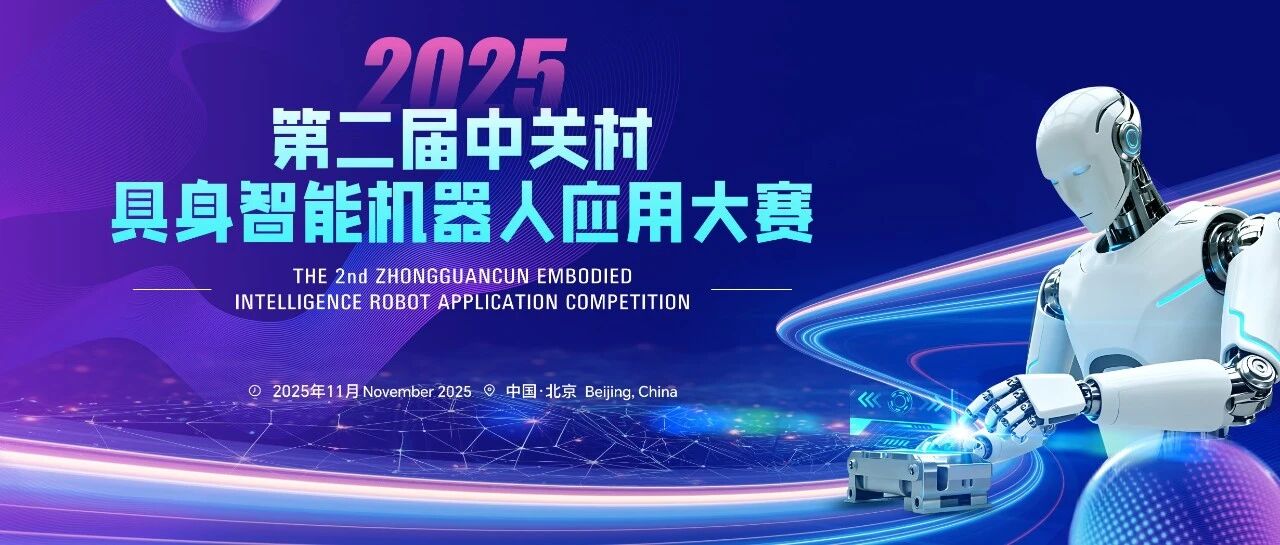
人形机器人落地潮,2025年第二届中关村具身智能机器人应用大赛聚焦落地,持续征集报名中
机器人大讲堂· 2025-10-15 09:00
Core Viewpoint - The humanoid robot industry is entering a critical opportunity period, transitioning from "laboratory exploration" to "scene application," driven by policy design, market demand, technological advancements, and capital support [1] Industrial Scene - The industrial sector is becoming a testing ground for the large-scale application of humanoid robots, focusing on repetitive labor tasks that require flexibility and precision, such as material handling in engine assembly and quality inspection in 3C manufacturing [2][3] - In 2025, global orders for industrial humanoid robots are expected to exceed 10,000 units, with companies like UBTECH and Zhiyuan securing orders worth hundreds of millions [3] Commercial Service Scene - The commercial service sector is poised for significant humanoid robot applications, with over 80 projects awarded in the first half of 2025, totaling more than 330 million yuan, covering retail, dining, and healthcare [5][7] - The rental model is emerging as a solution to cost challenges, with the domestic service robot rental market expected to surpass 2 billion yuan in 2025, lowering entry barriers for small businesses [7] Home Scene - The home scene presents substantial consumer potential but also faces the highest technical challenges and commercialization difficulties, focusing on elderly care, daily chores, and educational companionship [8] - Despite the potential, the commercialization of humanoid robots in home settings is still in its early stages, hindered by issues such as insufficient technology maturity and high costs [8] Upcoming Events - The second Zhongguancun Embodied Intelligent Robot Application Competition will take place in November 2025, focusing on the practical application of humanoid robots and providing a platform for testing their capabilities in various scenarios [10][12] - The competition will feature multiple tracks, including challenges for embodied intelligence models and applications in family services, commercial services, and industrial manufacturing [13]
汽车电子与机器人双轨驱动价值重塑 汽车零部件龙头均胜电子赴港上市
Feng Huang Wang Cai Jing· 2025-10-15 08:35
Core Viewpoint - Junsheng Electronics has received approval from the China Securities Regulatory Commission for its Hong Kong listing, marking the start of its "A+H" dual capital platform strategy, aimed at enhancing its global competitiveness in the automotive industry [1] Group 1: Capital and Investment Strategy - The funds raised from the Hong Kong listing will be allocated to three core areas: expanding smart cockpit integrated research and development, improving global factory efficiency, and strategic investment expansion [1] - The company aims to strengthen its global resource integration capabilities and international market competitiveness through the "A+H" dual capital platform [6] Group 2: Business Performance - Junsheng Electronics reported a revenue of approximately 30.347 billion yuan for the first half of 2025, a year-on-year increase of 12.07%, with a net profit of 707.8 million yuan, up 11.13% [2] - The overall gross margin has increased for ten consecutive quarters, reaching 18.4%, with the automotive electronics segment achieving a gross margin of 21.5% [2] Group 3: Technological Advancements - The company has established 25 R&D centers and over 60 production bases globally, covering major automotive markets in Asia, Europe, and North America [2] - Junsheng Electronics has received new orders for its Central Computing Unit (CCU) and intelligent networking products, with a total lifecycle order value of approximately 15 billion yuan, set to start mass production in 2027 [3] Group 4: Robotics Expansion - The company is actively expanding into the robotics sector, positioning itself as an "automotive + robotics Tier 1" supplier, which has opened new growth opportunities [4] - Junsheng Electronics has established a wholly-owned subsidiary to advance its robotics business and has developed key components for robotic solutions [4] Group 5: Market Outlook - The global humanoid robot market is projected to exceed $100 billion by 2030, with a compound annual growth rate of 35%, positioning Junsheng Electronics favorably in this emerging market [5] - The company's stock price has increased by 125% this year, reflecting strong market recognition of its automotive intelligence and robotics business growth [6]
城市交通可“自适应” AI服务融入日常 会思考的街区有多“聪明”(科技自立自强·科创新空间)
Ren Min Ri Bao· 2025-10-14 22:25
Core Insights - The article highlights the rapid development of AI innovation ecosystems in China, particularly in Haidian District, Beijing, showcasing the integration of AI technologies into urban life and governance [1][2][4]. Group 1: AI Innovation Ecosystem - "Mosu Space" is an AI innovation community that gathers over 100 AI companies, serving as a platform for incubation and acceleration of AI models [1]. - The Haidian AI Innovation District spans 53 square kilometers, housing 37 universities, 96 national research institutions, and over 1,900 AI enterprises, indicating a significant concentration of innovation resources [2]. - The integration of campuses, parks, and communities is reshaping traditional industrial geography, allowing for free flow of innovation [2]. Group 2: AI in Urban Governance - AI traffic signal control systems have improved daily traffic flow by 24.8% by dynamically adjusting signals based on real-time traffic conditions [4]. - AI social workers are enhancing community management by providing 24/7 assistance to residents, significantly improving operational efficiency [4][5]. - The "Guanxin" AI service system in Zhongguancun Street enables efficient management of community issues, with over 80% of general matters resolved at the local grid level [5]. Group 3: AI in Daily Life - AI technologies are being integrated into everyday services, such as the "Galaxy Space Capsule," which utilizes humanoid robots for retail services, enhancing customer experience [6]. - The "Bai Chuan AI Diagnostic Device" is bringing healthcare services to residents' doorsteps, assisting in the diagnosis of over 3,000 common diseases [6]. - The development of vibrant communities that combine living, working, and learning spaces is underway, promoting a new lifestyle through deep integration of technology and urban living [7].