
SpaceX

Search documents
Musk Drives Tesla Closer to Its Transformation With New Chip Factory Plans
Investopedia· 2026-03-23 16:30
Core Insights - Tesla is advancing towards becoming an AI powerhouse with plans for a new chip factory in Austin, Texas, named "Terafab" [2][6] - The factory will produce two types of chips: one for Tesla's electric vehicles and Optimus robots, and another high-power chip for SpaceX and xAI [2][3] Financial Implications - The establishment of the new chip plant is expected to play a crucial role in supporting Tesla's AI initiatives, although it may require an investment of billions of dollars and take several years to complete [4] - Morgan Stanley analysts estimate that launching the chip factory could cost between $35 billion and $45 billion, with the earliest production timeline projected for mid-2028 [5] Market Reaction - Tesla's stock recently saw an increase of approximately 4% amid market volatility, indicating investor interest in the company's future plans [7]


EchoStar Stock Is Now in the S&P 500. Elon Musk's SpaceX Gave it a Boost.
Barrons· 2026-03-23 16:29
Core Insights - Telecom company EchoStar holds approximately $11 billion in stock in SpaceX, which was acquired through the sale of wireless spectrum to the rocket company [1] Group 1 - EchoStar's investment in SpaceX represents a significant financial stake, indicating confidence in the growth potential of the aerospace sector [1] - The acquisition of stock occurred as part of a strategic transaction involving the sale of wireless spectrum, highlighting the interconnectedness of telecommunications and aerospace industries [1]

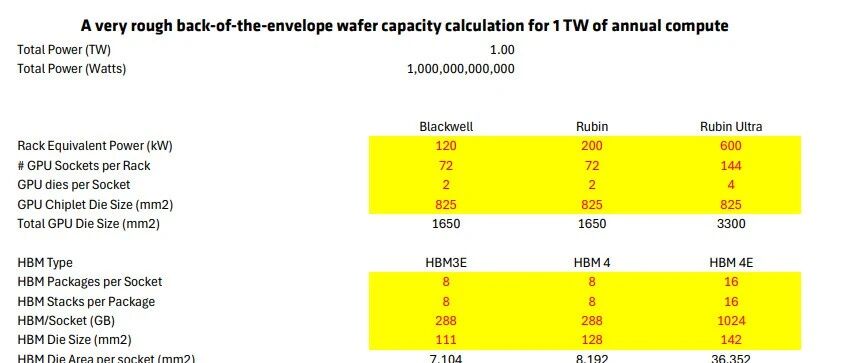
马斯克50 倍全球产能的 Terafab,是野心还是空想?
傅里叶的猫· 2026-03-23 15:00AI Processing
2、50 倍全球产能有多难? Terafab 计划落地奥斯汀,号称要在一个建筑里整合光刻、芯片生产、封装测试全流程,实现 AI 计 算全环节自主制造,还直奔 2 纳米先进制程,主打极致闭环、快速迭代。但这份野心,在产业数据 面前显得无比沉重。 周末马斯克宣布特斯拉、SpaceX、xAI 联手 Terafab 超级芯片工厂计划,目标年产能 1 太瓦算力芯 片,直接干到当前全球总产能的 50 倍,80% 产能送上太空,20% 供给特斯拉机器人与汽车。 这篇文章聊几个关键的问题。 1、马斯克为何非要自己造芯片? 首先,马斯克为何非要自己造芯片?--还是算力太缺了。 当前全球芯片年产能约 20 吉瓦,仅能满足他未来需求的 2%,光是 Optimus 人形机器人,远期年产 10 亿台的目标就需要 100-200 GW算力芯片,更别说 xAI 的超大规模 AI 训练、SpaceX 的太空数据中 心,每一个都是算力吞金兽。 在马斯克看来,地球的算力天花板早已触顶:美国全国电网总容量才 0.5 太瓦,根本撑不起海量 AI、机器人同时运行;而且地面数据中心选址难、散热成本高,反观太空,太阳能效率是地面 5 倍,真空环境零散热成 ...
Musk says Tesla, SpaceX to build $20B Terafab chip plant in Texas
Proactiveinvestors NA· 2026-03-23 14:16
Company Overview - Proactive is a financial news publisher that provides fast, accessible, informative, and actionable business and finance news content to a global investment audience [2] - The company has a team of experienced and qualified news journalists who produce independent content [2] Market Focus - Proactive specializes in medium and small-cap markets while also covering blue-chip companies, commodities, and broader investment stories [3] - The news team delivers insights across various sectors including biotech and pharma, mining and natural resources, battery metals, oil and gas, crypto, and emerging digital and EV technologies [3] Technology Adoption - Proactive is recognized for being a forward-looking technology adopter, utilizing technologies to enhance workflows [4] - The company employs automation and software tools, including generative AI, while ensuring that all content is edited and authored by humans [5]
SpaceX与特斯拉合建芯片厂!
国芯网· 2026-03-23 14:06
Core Viewpoint - Tesla and SpaceX have launched a $25 billion chip manufacturing plant named Terafab in Austin, Texas, aiming to become the world's largest semiconductor wafer factory with a production capacity of 1 terawatt annually [2][4]. Group 1: Project Overview - The Terafab plant is a joint venture between Tesla, SpaceX, and AI company xAI, designed as a comprehensive semiconductor production facility integrating chip design, lithography, manufacturing, storage chip production, advanced packaging, and testing [2]. - The initial production target is set at 100,000 wafers per month, with a full capacity goal of 1 million wafers per month, which would account for approximately 70% of TSMC's current global capacity [4]. Group 2: Technological Focus - The factory will focus on the 2nm process technology, which is currently entering commercial production, a feat that TSMC has taken decades and hundreds of billions of dollars to develop [2][4]. Group 3: Production Goals - The plant is expected to produce between 100 billion to 200 billion customized AI chips and storage chips annually, supporting Tesla's full self-driving software, Cybercab project, and Optimus humanoid robot product line [4]. Group 4: Rationale for In-House Production - Elon Musk acknowledged existing suppliers like Samsung, TSMC, and Micron but emphasized the limitations in their expansion speed, stating that current global chip manufacturing capacity meets only about 2% of Tesla's total computational needs [5].
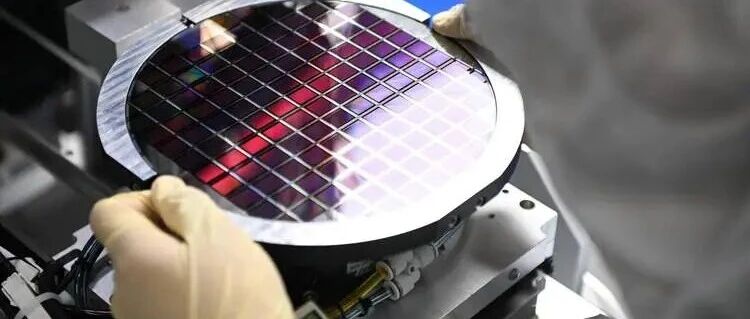
马斯克的Terafab:科技史上最疯狂的基建设想,我们梳理了10个要点与3个趋势
锦秋集· 2026-03-23 12:36
Core Viewpoint - The Terafab project, initiated by Elon Musk, aims to create an unprecedented vertically integrated semiconductor manufacturing system to break the capacity limits of the global semiconductor supply chain, providing essential computational support for autonomous vehicles, humanoid robots, and space data centers. Group 1: Key Points of Terafab - Terafab represents a landmark attempt by tech companies to rewrite the global computational infrastructure supply model, targeting an annual capacity of 1 terawatt (TW) [8] - Musk's involvement is driven by the belief that traditional wafer fabs cannot match the speed and certainty required for AI-era computational supply [8] - The project addresses not only the "chip shortage" but also the inability of existing supply systems to deliver quickly enough to meet tech companies' demands [8] - Demand for high-performance chips is increasing exponentially within Musk's ecosystem due to the simultaneous expansion of autonomous driving, robotics, and large model training [8] - Terafab aims to change the decades-old semiconductor industry organization logic characterized by design, manufacturing, and testing divisions [8] - The project is noteworthy for its goal of vertical integration across the entire industry chain to achieve greater efficiency, collaboration, and supply control [8] - Musk has explicitly included space AI data centers and orbital computational deployment in Terafab's objectives [9] - The estimated funding requirement for the project could reach up to $40 billion [9] - Despite its grand vision, Terafab faces significant challenges in wafer manufacturing, engineering scaling, supply chain coordination, and mass production validation [9] Group 2: Trends - AI is not just a single track in the reconstruction era but serves as a universal engine driving decision-making, R&D, manufacturing, execution, and infrastructure scheduling [10] - The competitive boundaries among tech companies are being redefined, with integration of chips, cloud, models, and applications becoming key to competition [10] - The speed of value creation in the AI industry is outpacing the speed of hardware iteration [10] Group 3: Financial Aspects - The initial investment for Terafab is projected to be between $20 billion and $25 billion, with some analysts estimating total capital expenditure could approach $40 billion [26][27] - The project is expected to support a capacity of 1 terawatt, which is comparable to the total installed power generation capacity of the United States [27] - The funding sources may include a combination of private investment, potential IPO stories for SpaceX, and government support through initiatives like the Texas Semiconductor Innovation Fund [79][80]

TeraFab不是台积电2.0,而是“算力生产方式的革命”
美股研究社· 2026-03-23 12:32
Core Viewpoint - The semiconductor industry is experiencing a collective technological anxiety, with a shift in focus from advanced chip production to the faster and cheaper production of computational power, as exemplified by Elon Musk's TeraFab initiative [1][2][4]. Group 1: TeraFab's Concept and Strategy - TeraFab is not merely a factory akin to TSMC; it represents a fundamental rewrite of the computational production function, focusing on "computational systems" rather than just chips [2][6]. - The competition is shifting from semiconductor efficiency to energy and system integration, with Musk's approach emphasizing the amplification of total energy input rather than just optimizing unit efficiency [6][7]. - TeraFab aims to produce not the most refined chips but the most energy-efficient computational modules, marking a transition from precision to large-scale industrialization [7][8]. Group 2: Energy and System Integration - The strategic advantage of TeraFab lies in its deployment of 80% of computational power in space, leveraging stable energy sources like solar power, which is abundant in the space environment [7][9]. - By utilizing SpaceX's capabilities to reduce launch costs, TeraFab can establish a significant advantage in energy generation and cost, potentially transforming data center location logic [9][10]. - The operational challenges of deploying in space, such as radiation protection and communication delays, are becoming manageable due to advancements in technology [9][10]. Group 3: Recursive System and AI Integration - TeraFab's innovative approach integrates AI into chip design and manufacturing processes, creating a recursive system where improvements in one area lead to exponential advancements in others [11][12]. - This recursive effect allows for real-time adjustments in production, significantly enhancing efficiency and reducing the time required for yield improvements [11][12]. - The goal is to transform hardware manufacturing into a software-like process, potentially breaking the traditional constraints of the hardware industry [12][13]. Group 4: Investment Implications - The focus of competition may shift from semiconductor technology to energy scale and system integration, requiring investors to reassess traditional valuation models based on technological barriers [13][14]. - The success of TeraFab could redefine the landscape of computational power production, emphasizing the importance of energy acquisition and system iteration speed over conventional semiconductor metrics [13][14]. - This paradigm shift presents both significant opportunities and warnings for investors, as adapting to new rules will be crucial for capturing future value in the evolving market [13][14].
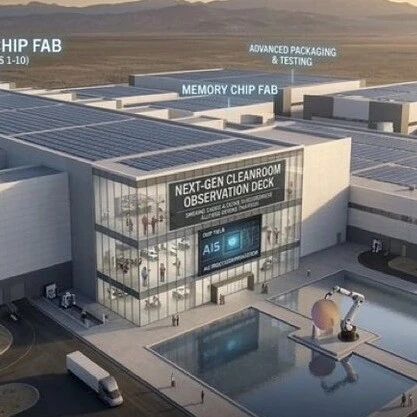
商业航天“五小龙”,谁是中国版SpaceX?
凤凰网财经· 2026-03-23 11:58
Core Viewpoint - The commercial space industry is experiencing a significant surge, particularly with the upcoming IPO of SpaceX, which has reached a valuation of $1.75 trillion, surpassing Meta and nearing Amazon. This has led to increased investment and interest in China's private space companies and related industries, with notable growth in stock prices and funding rounds [4][6]. Group 1: Market Dynamics - The commercial space sector in China has seen a dramatic increase in investment, with 67 financing rounds recorded in 2025, nearly double that of 2024 [4]. - The private rocket company, Galactic Glory, recently completed a financing round of 5.037 billion yuan, setting a record for private rocket financing in China [4]. - The valuation of the five leading private rocket companies in China exceeds 100 billion yuan, with Blue Arrow Aerospace leading the way in the IPO process [5]. Group 2: Technological and Business Model Insights - The success of SpaceX is attributed to its reusable rocket technology and the Starlink satellite internet service, which generates continuous cash flow and reduces launch costs [7][9]. - The Chinese commercial space sector currently lacks advancements in reusable technology and the rapid deployment of its satellite internet systems, which are crucial for future growth [11][12]. - The planned satellite constellations, GW and Qianfan, aim to deploy 12,992 and 15,000 low-orbit satellites by 2027 and 2030, respectively, but as of December 2025, only 244 satellites have been launched [11][12]. Group 3: Investment Valuations and Market Potential - The total valuation of the five leading private rocket companies has increased significantly, with a combined valuation of approximately 1 billion yuan as of early 2026, reflecting a growth of over 325 million yuan in just over a year [16]. - Investors believe that the combined valuation of these companies should not exceed SpaceX's valuation of $1.5 trillion, indicating a speculative market environment [16]. - The market for satellite manufacturing and launch services in China is projected to reach approximately 26.8 billion yuan by 2026, with a growth rate of 49% [39]. Group 4: Challenges and Future Outlook - Despite the optimistic market sentiment, the financial performance of companies like Blue Arrow Aerospace shows significant losses, with cumulative losses exceeding 3.5 billion yuan from 2022 to mid-2025 [6][36]. - The industry consensus suggests that achieving cost-effective rocket recovery is essential for sustainable operations, yet no Chinese private rocket company has successfully implemented this technology to date [38]. - The future of the commercial space industry in China may see consolidation, with expectations that only a few private rocket companies will survive in the long term [42].

X @Elon Musk
Elon Musk· 2026-03-23 11:35
RT Boring_Business (@BoringBiz_)This 2003 lecture from Elon Musk at Stanford University is an absolute gemThe vision he had for what the internet and SpaceX would become all eventually came trueJust goes to show how far ahead of his time he really was https://t.co/yfvqnpTNpl ...
X @Elon Musk
Elon Musk· 2026-03-23 11:28
RT Amy (@_SFTahoe)SPACEX/xAI/TESLA TERAFABLast night was historic. It was BIG. The Terafab announcement is Civilization Level BIG. Make humanity Galactic BIG. Robots that can replicate themselves in Space BIG.♦️Not just because the physical Terafab is an enormous integrated building that will house chip design, memory, packaging — and quite possibly the machines that build the machines — under one roof. It’s BIG because the Terafab is the final missing piece of the puzzle.♦️SpaceX heralded it as “the next s ...