
TotalEnergies SE

Search documents
TotalEnergies Expands Suriname Presence With 25% Stake in Block 53
ZACKS· 2025-07-01 13:41
Core Insights - TotalEnergies SE (TTE) has signed an agreement to acquire a 25% interest in Block 53 offshore Suriname from Moeve, enhancing its partnership with Petronas and APA Corporation in the license [2][11] - The acquisition is expected to bolster TTE's GranMorgu project, which is a low-cost and low-emission venture with an estimated 750 million barrels of recoverable resources and a total investment of $10.5 billion [4][5][11] - The GranMorgu project is anticipated to begin production in the first half of 2028, with a production capacity of 220,000 barrels per day [5] Company Developments - The GranMorgu development, which TTE operates with a 40% stake in the adjacent Block 58, is crucial for expanding production and developing new resources in Suriname's offshore market [3][4] - TTE's recent acquisition aligns with its strategy to utilize existing infrastructure for production increases and resource development [4][11] Industry Context - The offshore exploration sector is vital for meeting global energy demands, with companies like Chevron and ExxonMobil also focusing on similar opportunities [7] - Chevron's offshore exploration activities have expanded significantly, particularly in South America, which could lead to increased energy reserves and opportunities [8] - ExxonMobil is actively pursuing deepwater projects globally, with significant exploration activities in regions like Guyana, Brazil, and the Eastern Mediterranean [9][10]


步履蹒跚!欧盟对俄罗斯液化天然气出口实施制裁后迫使其调整航运
Sou Hu Cai Jing· 2025-07-01 08:11
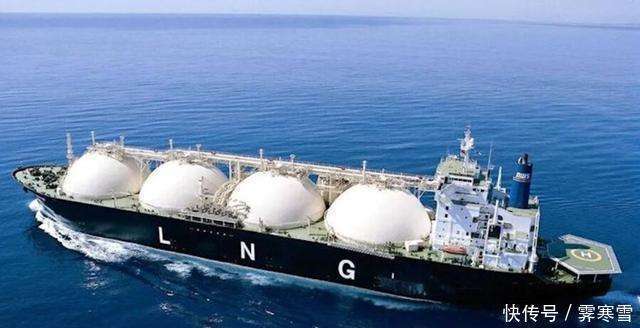
Core Insights - The report by the Center for Energy and Clean Air Research (CREA) highlights Russia's attempt to shift its LNG export routes to domestic waters following the EU's transshipment ban in March 2025, revealing a critical weakness in its energy strategy [1][2] - Despite claims of steady progress on the flagship "Arctic LNG-2" project, the report indicates that logistical challenges and reliance on Western-controlled infrastructure are becoming increasingly apparent [1][3] Group 1: Logistics and Infrastructure - Russia has centralized all transshipment activities at the Murmansk port, with 100% of LNG transshipments occurring domestically from January to May 2025, marking a significant geographical shift [3] - Although ship-to-ship (STS) transshipments only decreased by 8%, the overall transshipment volume dropped by 46%, indicating that Murmansk's facilities cannot match those of European ports [3][5] - The logistics system relies heavily on 15 Arc-7 class LNG carriers, which are crucial for Arctic conditions, but ownership and operational control are distributed among entities from G7 countries, exposing Russia's dependence on Western financial and legal systems [3][5] Group 2: Arctic LNG-2 Project - The "Arctic LNG-2" project, led by Russian gas producer Novatek, continues to progress despite foreign asset freezes and ongoing Western sanctions, with plans to increase annual production capacity to 19.8 million tons through three production lines [8][10] - Analysts warn that sanctions may delay the full construction of "Arctic LNG-2" and limit Russia's ability to deliver LNG to major Asian markets, despite officials asserting that the first production line will be completed as planned [10]
The AI Revolution in Oil & Gas: A New Era of Smart Energy
ZACKS· 2025-06-30 13:36
Industry Overview - The oil and gas industry is undergoing a significant digital transformation driven by artificial intelligence (AI), which is enhancing efficiency, output, and safety amid rising costs and market unpredictability [1] - Major companies are rapidly adopting AI technologies to gain competitive advantages that were previously unattainable [1] BP's AI Strategy - BP has established a decade-long partnership with Palantir Technologies to create a digital twin of its global oil and gas infrastructure, integrating data from over two million sensors for real-time asset management [2] - A new five-year agreement with Palantir allows BP to utilize AI for faster decision-making, optimizing operational performance and production while minimizing errors [3] Chevron's AI Implementation - Chevron employs AI-powered drones in collaboration with Percepto to monitor shale operations, significantly reducing the need for manual inspections and enhancing safety [4] - The use of drones has led to a notable reduction in downtime and improved production reliability, alongside advanced machine learning models to optimize drilling parameters [5] ExxonMobil's Autonomous Drilling - ExxonMobil is pioneering autonomous drilling technology, claiming to be the first to implement AI-based closed-loop drilling automation in deepwater fields, enhancing safety and reducing costs [6] - The company also applies machine learning in its Permian Basin operations to optimize production and minimize downtime [7] TotalEnergies' AI Initiatives - TotalEnergies has partnered with Mistral AI to establish an innovation hub focused on improving industrial performance and energy efficiency while cutting emissions [9] - AI tools are being deployed across both upstream and downstream operations, aiding in predictive maintenance and emissions management [10] Conclusion on AI's Role - AI is now a fundamental necessity in the oil and gas sector, providing tangible improvements in safety, efficiency, and profitability for companies like BP, Chevron, ExxonMobil, and TotalEnergies [11] - The ability of AI to process large data sets and optimize operations is crucial for maintaining competitiveness in a complex energy landscape [12]



山高环能20250627
2025-06-30 01:02
Summary of Conference Call on UCO Industry and Company Insights Industry Overview - The UCO (Used Cooking Oil) market is driven by carbon attributes and green premiums, with prices currently around 7,700-7,800 RMB/ton, reflecting a 500-600 RMB increase since early June [2][5][25] - The market dynamics have shifted due to mandatory bio-jet fuel (SAF) blending policies in Europe and the commissioning of large domestic plants, enhancing the bargaining power of domestic producers [2][5] - The annual production of UCO from regulated kitchen waste treatment plants in China is approximately 800,000 to 900,000 tons, with slow capacity expansion due to strict project approvals [2][3][8] Company Positioning - The company specializes in kitchen organic waste treatment and UCO resource utilization, processing about 4,700-4,800 tons of waste daily with a design capacity of 5,400 tons, achieving an 88% utilization rate [3] - The company’s UCO production is around 90,000 tons annually, positioning it as a leader in the domestic UCO sector [3] Market Dynamics - UCO pricing has been influenced by the European SAF blending mandate, which requires a 2% addition by 2025, leading to increased domestic demand [5][17] - The company’s UCO sales have transitioned from international clients to domestic SAF producers, with major clients including Hai Xin Neng Ke and He Nan Jun Heng [11][12] Production and Supply Chain - UCO is categorized into several types based on quality, with the highest quality sourced from kitchen waste treatment plants, followed by mixed oils and lower-quality oils like gutter oil [9][10] - The company plans to expand its UCO production capacity to 200,000 tons annually through acquisitions and projects like "urban oil fields," targeting a daily processing capacity of 8,000 to 10,000 tons [4][15][16] Regulatory Environment - The UCO industry faces significant regulatory hurdles, with project approvals requiring local government consent and operational experience, limiting the emergence of new large-scale producers [8][9] Future Outlook - The demand for UCO is expected to grow, particularly with European policies mandating higher SAF blending ratios, which could lead to a supply shortage if domestic production does not keep pace [21][22] - The company anticipates a substantial improvement in performance in 2025, driven by cost reductions and increased oil extraction rates, with a focus on monitoring oil price fluctuations [25] Key Risks and Considerations - Oil price fluctuations significantly impact profitability, with a 1,000 RMB increase in oil prices affecting profits by approximately 90 million RMB [25] - The company is advised to keep an eye on UCO price trends and the prices of palm oil and rapeseed oil, as they are closely linked to UCO pricing [25]

(投资中国)中国欧盟商会能源工作组主席徐忠华:欧中新能源合作会越来越多
Zhong Guo Xin Wen Wang· 2025-06-29 09:57
Core Viewpoint - The energy sector is a significant area of cooperation between China and the European Union, with both parties having mutual needs in traditional fossil energy and increasing collaboration in renewable energy [1][2]. Group 1: Traditional Energy Cooperation - Both Europe and China require substantial imports of oil and natural gas, leading to numerous global collaborations in upstream oil and gas exploration and development [1]. - European companies, such as Total Energy, are engaged in cooperative exploration projects with China, aiming to lower costs through joint financing and procurement of Chinese products and services [1]. Group 2: Renewable Energy Collaboration - China has established a strong industrial ecosystem in solar energy, wind power, electric vehicles, and batteries, contributing significantly to global low-carbon transitions [1]. - The Chinese industrial chain provides Europe with affordable green products, while European green innovation concepts greatly benefit China's industrial development [1]. Group 3: Investment Opportunities - European energy companies are keen to invest in China due to its vast market and the significant energy demands arising from its manufacturing sector [2]. - Investing in China offers European companies growth opportunities, as success in the competitive Chinese renewable energy market indicates global competitiveness [2]. Group 4: Policy and Standards - China's commitment to its "dual carbon" policy instills confidence in EU companies, with clear timelines for energy transition and ongoing efforts to align international standards in green electricity and certificates [2]. - The collaboration in areas such as renewable energy development, industrial policy, environmental standards, and supply chain coordination is expected to increase as both parties aim for carbon neutrality [3].
2025年上合组织能源部长会“产业创新驱动能源可持续发展”平行论坛举办
Zhong Guo Xin Wen Wang· 2025-06-27 08:11
Core Viewpoint - The Shanghai Cooperation Organization (SCO) Energy Ministerial Meeting emphasizes the importance of collaborative energy innovation and sustainable development among member countries, focusing on technology research, digital transformation, and green low-carbon development [1][2]. Group 1: Energy Cooperation and Innovation - Representatives from SCO member countries and international energy companies believe in leveraging the SCO platform to enhance consensus on energy innovation and sustainable supply [1]. - The Chinese National Energy Administration highlights the complementary resource and technological advantages among SCO countries, advocating for energy cooperation based on resource complementarity and green transformation [1][2]. - The report from the China Petroleum Group Economic and Technological Research Institute outlines a collaborative framework involving industry, supply, value, and information chains to promote coordinated development [2]. Group 2: Strategic Goals and Future Outlook - The Russian Energy Minister expresses confidence in the potential for new energy project collaborations among SCO countries, which will enhance the organization's capabilities in energy technology [2]. - The report emphasizes the need for a balanced development of traditional fossil fuels and non-fossil energy, advocating for market mechanisms and technological innovation to drive industry advancement [3]. - The focus on deepening green low-carbon cooperation is seen as a core pathway to achieving sustainable development within the SCO framework [3].

巴克莱:霍尔木兹海峡成为焦点 - 测试油价 100 美元情景
2025-06-25 13:03
Summary of Key Points from the Research Report on European Integrated Energy Industry Overview - The report focuses on the **European Integrated Energy** sector, particularly in the context of geopolitical tensions in the Middle East, specifically regarding the **Strait of Hormuz** and its implications for oil prices and energy stocks [1][4]. Core Insights and Arguments - The Iranian parliament has voted to potentially close the **Strait of Hormuz** in response to US airstrikes on Iran's nuclear sites, which could lead to increased energy stock prices, although companies with significant Middle East exposure may underperform [1][4]. - The report anticipates a **worst-case scenario** where oil prices could test **$100 per barrel** if Iranian oil exports are significantly disrupted. If exports are cut in half, Brent crude could rise to **$85 per barrel** [4]. - The **Strait of Hormuz** is crucial for global oil trade, with approximately **15 million barrels per day (mb/d)** of crude oil and **6 mb/d** of products passing through, accounting for about **20% of total oil consumption** [6]. - Major oil companies with high exposure to the Middle East, such as **TotalEnergies, BP, Eni, and ExxonMobil**, may face underperformance risks due to potential disruptions in regional production and logistics [4]. - Companies like **Equinor, Repsol, and Galp** have limited or no exposure to the Middle East, positioning them more favorably in the current geopolitical climate [4]. Additional Important Information - The **Strait of Hormuz** has never been closed, but its strategic importance makes it vulnerable to geopolitical tensions. Saudi Aramco has invested in expanding its East-West pipeline to mitigate risks associated with the Strait [6]. - Current Iranian crude oil production is approximately **3.3 million barrels per day (mbpd)**, representing about **3% of global supply**. Disruptions could have significant implications for global oil markets [6][8]. - Recent disruptions include the cancellation of flights to the Persian Gulf by airlines such as **British Airways** and **Singapore Airlines**, and the shutdown of Israeli gas fields, which could impact regional energy supply chains [11][12]. - Diesel prices have surged to over **$100 per barrel**, driven by increased demand due to potential disruptions in natural gas power generation, benefiting companies like **Repsol, Galp, and OMV** [12]. Conclusion - The report highlights the potential for significant volatility in oil prices due to geopolitical tensions in the Middle East, particularly concerning the **Strait of Hormuz**. Investors should be cautious of companies with high exposure to the region while considering opportunities in firms with limited exposure.
Can Debt Decline & Financial Discipline Boost Prospects of Occidental?
ZACKS· 2025-06-24 15:01
Group 1: Company Overview - Occidental Petroleum (OXY) maintains a strong position in U.S. shale production, particularly in the Permian Basin, leveraging advanced drilling technologies and scale advantages for cost efficiency and high margins [1] - The company's upstream operations generate substantial free cash flow even in moderate oil price environments, providing financial flexibility for shareholder returns and reinvestment in growth [1] Group 2: Debt Management - Debt reduction is critical for unlocking Occidental's full value potential, with net debt reduced from nearly $36 billion to $25 billion by the end of 2024, following robust free cash flow generation since 2020 [2][9] - Occidental lowered debt by $6.8 billion in the past 10 months, reducing annual interest expenses by $370 million and boosting net income [3] - The company has retired all 2025 debt maturities, enhancing its credit ratings and lowering the cost of capital, which provides more flexibility for accretive investments and shareholder returns [4] Group 3: Financial Performance - Despite having a return on equity (ROE) of 16.6%, which is lower than the industry average of 16.89%, Occidental's earnings have consistently beaten estimates, with an average surprise of 24.34% over the trailing four quarters [8][9][14] - Occidental's shares have gained 10.7% in the last two months, outperforming the Zacks Oil and Gas-Integrated-United States industry's rise of 9.2% [11]


RGC Resources (RGCO) Surges 9.1%: Is This an Indication of Further Gains?
ZACKS· 2025-06-24 13:00
Company Overview - RGC Resources Inc. (RGCO) shares increased by 9.1% to close at $22.18, following a notable trading volume that exceeded typical levels [1] - The company is expected to report quarterly earnings of $0.02 per share, unchanged from the previous year, with revenues projected at $15 million, reflecting a 3.7% increase year-over-year [3] Market Dynamics - The surge in RGCO's share price was driven by a significant rise in natural gas demand and prices due to an ongoing heatwave in the eastern U.S., which increased power generation needs [2] - Despite a slight increase in natural gas output in the Lower 48 states in June, supply remained tight compared to record levels in March, compounded by seasonal maintenance at major LNG export facilities [2] - Geopolitical instability in the Middle East has raised concerns about potential disruptions to global LNG trade, particularly through the Strait of Hormuz, which is crucial for about one-fifth of the world's LNG shipments [2] Earnings Estimates and Stock Performance - The consensus EPS estimate for RGC Resources has remained unchanged over the last 30 days, indicating stability in earnings expectations [4] - The stock's price typically does not continue to rise without trends in earnings estimate revisions, suggesting that monitoring future earnings revisions will be important for assessing continued strength [4] - RGC Resources holds a Zacks Rank of 2 (Buy), indicating positive sentiment in the market [5]


特朗普称伊以或将停火,地缘溢价大幅降低
Tong Hui Qi Huo· 2025-06-24 08:20
1. Report Industry Investment Rating There is no information provided in the report regarding the industry investment rating. 2. Core Viewpoints of the Report - In the short term, the risk of supply disruption has significantly weakened, but the arrival of the summer demand peak season may limit the speed of oil price decline. The Middle - East situation and the realization of the Northern Hemisphere's peak oil demand season in the next week need to be closely monitored [2][3]. - The market may fluctuate between supply disruptions and slowing demand, leading to high - level oscillations in oil prices. However, caution should be exercised regarding the risk of decline triggered by macro - economic factors. SC crude oil may show differentiation from international oil prices due to domestic factors, but the sharp drop at the close indicates a possible shift in market sentiment [69]. 3. Summary by Relevant Catalogs 3.1 Daily Market Summary - **Price Movements**: As of June 23, 2025, the SC crude oil futures price rebounded slightly from 566.6 yuan/barrel to 574.5 yuan/barrel, a 1.39% increase, but dropped 5.65% to 538 yuan/barrel in the night session. WTI and Brent tumbled 9.2% and 9.82% to 67.23 dollars/barrel and 69.73 dollars/barrel respectively. The SC - Brent spread strengthened 559.35% to 10.22 dollars/barrel, the SC - WTI spread widened 163.35% to 12.72 dollars/barrel, and the Brent - WTI spread narrowed 23.78% to 2.5 dollars/barrel [2]. - **Supply**: Trump's post on social media stating that Israel and Iran had agreed to a cease - fire led to the first round of crude oil price decline, with overnight prices dropping over 5% [2]. - **Demand**: Demand showed regional differentiation. India's crude oil imports in May increased 5.9% year - on - year to 23.3 million tons, and diesel and gasoline exports rose 9.7% and 13.7% respectively. However, demand concerns emerged in Europe and Southeast Asia. Refinery profits also varied, with China's diesel crack spread remaining at a high of 15 dollars/barrel in May, while the seasonal accumulation of US gasoline inventories pressured the crack spread [3]. - **Inventory**: The inventory dimension presented contradictory signals. The warehouse receipts of medium - sulfur crude oil at the Shanghai Energy Exchange remained at 4.029 million barrels, and those of low - sulfur fuel oil and fuel oil were 0 tons and 22,800 tons respectively, suggesting limited physical delivery pressure in China [3]. 3.2 Industrial Chain Price Monitoring - **Crude Oil**: Futures prices of SC, WTI, and Brent changed, with SC rising, and WTI and Brent falling. Spot prices of various crude oil types also had different changes. Spreads such as SC - Brent, SC - WTI, and Brent - WTI showed significant movements. Other assets like the US dollar index, S&P 500, DAX index, and RMB exchange rate also had corresponding changes. In terms of inventory, US commercial crude oil, Cushing, and API inventories decreased, while the strategic reserve inventory increased slightly. US refinery weekly operating rates and crude oil processing volumes declined [5]. - **Fuel Oil**: Futures prices of FU, LU, and NYMEX fuel oil changed, with some rising and some falling. Spot prices of different fuel oil types also had various changes. Spreads such as the Singapore and Chinese high - low sulfur spreads changed, and inventory in Singapore decreased [6]. 3.3 Industrial Dynamics and Interpretation - **Supply**: On June 23, Venezuela's second - largest refinery shut down due to a power outage. Multiple foreign oil companies in Iraq evacuated staff, and Russia's Rosneft will suspend production at the Sakhalin - 1 project in August for maintenance. Thailand considered banning oil and electricity supply to Cambodia [7][8]. - **Demand**: Spain's national airline suspended flights to Doha on June 23, and Israel's Ben - Gurion Airport will resume limited flight operations [8]. - **Inventory**: The futures warehouse receipts of low - sulfur fuel oil, medium - sulfur crude oil, and fuel oil remained unchanged [9]. - **Market Information**: As of 2:30, the main contracts of Shanghai gold, Shanghai silver, and SC crude oil had different price changes. Brazil's national oil company did not plan to raise fuel prices for now. The LPG main contract fell 2.00%. Some companies' stock prices and project progress were also reported [9]. 3.4 Industrial Chain Data Charts The report provides multiple data charts, including those related to WTI, Brent, and SC crude oil prices and spreads, US and global oil production, refinery operating rates, and inventory data from different regions [13][15][17] etc.