恒瑞医药

Search documents
2025年港股承销格局全景:大摩双赛道均衡发力稳居总榜第三 高盛靠两单超大再融资夺回总榜第四
Xin Lang Cai Jing· 2026-01-16 09:18
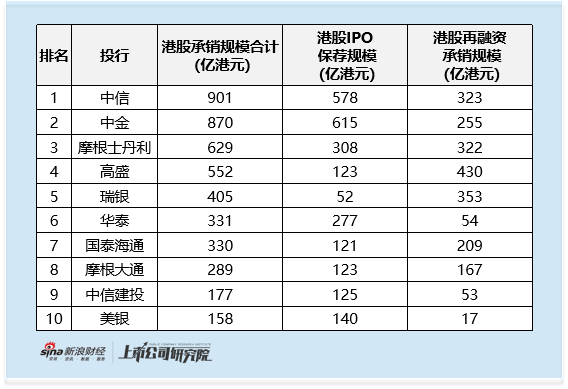
Core Viewpoint - The Hong Kong stock market in 2025 is characterized by a "dual-driven" capital active state of "IPO + refinancing," with both segments experiencing significant recovery, raising a total of 285.6 billion HKD in IPOs and 273.5 billion HKD in refinancing, indicating equal importance in the competition for underwriting strength in the Hong Kong equity financing market [1][7]. Group 1: Market Overview - The total IPO fundraising in the Hong Kong market reached 285.6 billion HKD as of January 16, 2026, while refinancing (including convertible bonds) amounted to 273.5 billion HKD, showing a balanced financing scale [1][7]. - The competition among major players such as CITIC, CICC, Morgan Stanley, and Goldman Sachs has led to distinct competitive paths, with domestic institutions focusing on the IPO track and foreign institutions concentrating on the refinancing track [1][7]. Group 2: Major Players and Their Strategies - CITIC Securities led the underwriting market with a total underwriting scale of 90.1 billion HKD, including 57.8 billion HKD in IPOs and 32.3 billion HKD in refinancing [2][8]. - Morgan Stanley achieved a total underwriting scale of 62.9 billion HKD, with nearly equal contributions from IPOs (30.8 billion HKD) and refinancing (32.2 billion HKD), making it one of the few firms excelling in both areas [3][9]. - Goldman Sachs focused heavily on the refinancing sector, leading with an underwriting scale of 43 billion HKD, primarily through large projects like BYD and Xiaomi, while only participating in 8 IPOs throughout the year [5][11]. Group 3: Project Highlights - Morgan Stanley's top IPO projects included Zijin Mining International (28.7 billion HKD), Hengrui Medicine (11.4 billion HKD), and Haitian Flavoring & Food (10.6 billion HKD) [4][10]. - Goldman Sachs' notable refinancing projects included BYD (43.5 billion HKD) and Xiaomi (42.6 billion HKD), which accounted for 90% of its refinancing scale [6][12].






智通AH统计|1月16日
智通财经网· 2026-01-16 08:21
Core Viewpoint - The report highlights the premium rates of AH shares, with Northeast Electric, Zhejiang Shibao, and Junda Co. leading in premium rates, while CATL, Heng Rui Medicine, and China Merchants Bank are at the bottom of the list [1] Group 1: Top AH Share Premium Rates - Northeast Electric (00042) has a premium rate of 800.00% with a deviation value of -61.15% [1] - Zhejiang Shibao (01057) has a premium rate of 407.30% with a deviation value of 42.48% [1] - Junda Co. (02865) has a premium rate of 329.76% with a deviation value of 109.58% [1] - Other notable companies include Hongye Futures (03678) with a premium rate of 264.62% and Sinopec Oilfield Service (01033) with a premium rate of 264.47% [1] Group 2: Bottom AH Share Premium Rates - CATL (03750) has a premium rate of -12.92% with a deviation value of -1.93% [1] - Heng Rui Medicine (01276) has a premium rate of -3.34% with a deviation value of -4.08% [1] - China Merchants Bank (03968) has a premium rate of -1.62% with a deviation value of 0.25% [1] - Other companies with low premium rates include Wu Chai Power (02338) with a premium rate of 6.54% and Midea Group (00300) with a premium rate of 7.80% [1] Group 3: Top AH Share Deviation Values - Junda Co. (02865) leads with a deviation value of 109.58% [1] - Zhejiang Shibao (01057) follows with a deviation value of 42.48% [1] - Goldwind Technology (02208) has a deviation value of 41.46% [1] - Other companies with significant deviation values include Jinju Group (02009) with 22.71% and Guanghetong (00638) with 17.96% [1] Group 4: Bottom AH Share Deviation Values - Northeast Electric (00042) has the lowest deviation value at -61.15% [1] - Nanhua Futures (02691) follows with -40.56% [1] - Chenming Paper (01812) has a deviation value of -23.42% [1] - Other companies with negative deviation values include Jinli Permanent Magnet (06680) at -17.16% and Guolian Minsheng (01456) at -15.36% [1]
全球生物医药行业“春晚”落幕,创新药ETF天弘(517380)盘中成交额超2200万元,近10日累计“吸金”近3亿元
2 1 Shi Ji Jing Ji Bao Dao· 2026-01-16 05:47
消息面上,据媒体消息,第44届摩根大通医疗健康大会(JPM2026)于1月12日至15日在美国旧金山召 开,此次会议聚焦生物技术、生物制药、AI+医药等六大领域。作为全球生物医药行业的"春晚",每年 1月举办的JPM大会是全球医药行业最重要的投资与交易窗口之一,可一睹全球医药生物产业发展的最 新动态。 中泰证券认为,多重因素推动下,医药板块中CRO、CDMO需求端呈逐步恢复态势,叠加过去三年供 给端持续出清,板块有望迎来盈利与估值同时提升的"戴维斯双击"。 中信建投证券表示,中国医药产业已迈入"创新兑现+全球布局"的关键阶段,人口与内需基数、全产业 链制造能力构成核心支撑,企业积极探索多元化的出海路径。展望2026年,可以重点关注创新商业化、 全球化突破、政策优化带来的新增量及行业并购整合的机遇。 (文章来源:21世纪经济报道) 1月16日,市场早盘高开回落,三大指数集体翻绿。 相关ETF方面,创新药ETF天弘(517380)截至午间收盘成交额超2200万元。 资金流向方面,截至1月15日,该ETF近10个交易日累计净流入额近3亿元。 创新药ETF天弘(517380)为全市场唯一一只跟踪恒生沪港深创新药精选5 ...
大和:“春季行情”提前到来,料A股市况迈向“慢牛”
Xin Lang Cai Jing· 2026-01-16 05:44
Group 1 - The core viewpoint of the report is that the "spring market" has arrived early, leading investors to potentially take profits before the Lunar New Year holiday or the National People's Congress, while liquidity support and stimulus policy expectations may boost the A-share market, although the pace of growth is expected to slow, transitioning towards a "slow bull" market [1] - The report notes that the regulatory authority raised the minimum margin ratio on January 14 to cool market sentiment, but it is believed that the A-share market has not yet entered a bubble phase [1] - Financing transactions as a percentage of total trading volume increased from 9.9% to 11.2% over the past month, still below the historical "warning level" of 12% that has previously triggered regulatory tightening [1] Group 2 - The report emphasizes that investor crowding in the top three popular sectors is still far below the peaks observed in February or October 2025 [1] - The company maintains a positive outlook for the first half of 2026, recommending investors to diversify their exposure in both A-share and Hong Kong markets for balanced sector risk [1] - Preferred stocks in the Hong Kong market include Tencent Holdings, Shenzhou International, Weichai Power, China Resources Land, and Alibaba, while preferred stocks in the A-share market include Midea Group, Northern Huachuang, CATL, Heng Rui Medicine, and Lanke Technology, all rated as "buy" [1]



恒瑞医药跌2.01%,成交额18.57亿元,主力资金净流出1.42亿元
Xin Lang Cai Jing· 2026-01-16 05:31
Core Viewpoint - Heng Rui Medicine's stock price has shown fluctuations, with a recent decline of 2.01% and a year-to-date increase of 3.91% [1][2]. Company Overview - Heng Rui Medicine, established on April 28, 1997, and listed on October 18, 2000, is primarily engaged in the research, production, and sales of pharmaceuticals, focusing on oncology [2]. - The company's product portfolio includes anti-tumor drugs, analgesics, and contrast agents, addressing various diseases such as autoimmune, metabolic, cardiovascular, infectious, respiratory, hematological, pain management, neurological, ophthalmic, and renal diseases [2]. - The main revenue sources are 86.88% from product sales, 12.63% from licensing income, and 0.49% from other sources [2]. Financial Performance - For the period from January to September 2025, Heng Rui Medicine achieved a revenue of 23.188 billion yuan, representing a year-on-year growth of 14.85%, and a net profit attributable to shareholders of 5.751 billion yuan, with a year-on-year increase of 24.50% [3]. - The company has distributed a total of 9.303 billion yuan in dividends since its A-share listing, with 3.568 billion yuan distributed in the last three years [4]. Shareholder Information - As of September 30, 2025, the number of shareholders increased to 397,300, with an average of 16,058 circulating shares per person, a decrease of 8.21% from the previous period [3]. - Major shareholders include Hong Kong Central Clearing Limited, holding 487 million shares, and China Securities Finance Corporation, holding 95.4 million shares, with some reductions in holdings noted [4].
济南规上工业企业达到2854家
Da Zhong Ri Bao· 2026-01-16 02:57
Core Insights - Jinan has achieved significant industrial growth, with the number of large-scale industrial enterprises reaching 2,854, an increase of 942 compared to the end of the 13th Five-Year Plan [1][2] - The city has maintained its position as one of the top 100 advanced manufacturing cities in China for four consecutive years, reflecting its strong industrial development strategy [1][3] Industrial Growth and Economic Performance - By 2024, Jinan's industrial revenue is projected to exceed 1 trillion yuan, reaching 1,018.9 billion yuan, marking a historic milestone for the city's industrial economy [1] - From January to November 2025, the city's industrial added value grew by 7.2% year-on-year, with large-scale industrial enterprises achieving revenues of 996.25 billion yuan, a 9.2% increase [1][2] Enterprise Development - As of the end of 2024, Jinan has 15 enterprises with revenues exceeding 10 billion yuan and 807 enterprises with revenues over 100 million yuan, showing a net increase of 5 and 159 respectively since the end of the 13th Five-Year Plan [2] - The city has cultivated 203 specialized and innovative "little giant" enterprises, 2,612 specialized and innovative small and medium-sized enterprises, and 4,096 innovative small and medium-sized enterprises [1][2] Technological and Structural Advancements - Jinan has implemented over 1,000 technical transformation projects annually during the 14th Five-Year Plan, enhancing industrial capabilities [2] - The automotive and electronic information sectors now account for 16.4% and 14.6% of the city's large-scale industrial output, respectively, reflecting a significant increase of 7.8 and 5 percentage points since 2022 [3] Green and Digital Transformation - The city has established 31 national-level green factories and 4 green industrial parks, promoting a comprehensive green manufacturing system [3] - Jinan's software industry has seen an annual growth rate of 15.3% from 2021 to 2024, with software business revenue reaching 597.4 billion yuan in January-November 2025, a year-on-year increase of 11% [4][5] Industrial Cluster Development - Jinan has successfully created a diverse industrial ecosystem with over 40 provincial-level industrial clusters, enhancing regional industrial layout and optimizing production capabilities [4] - The city has focused on digital transformation, establishing 16 provincial-level industrial brains and over 400 intelligent manufacturing pilot projects, with a CNC rate exceeding 70% in key industrial processes [5]
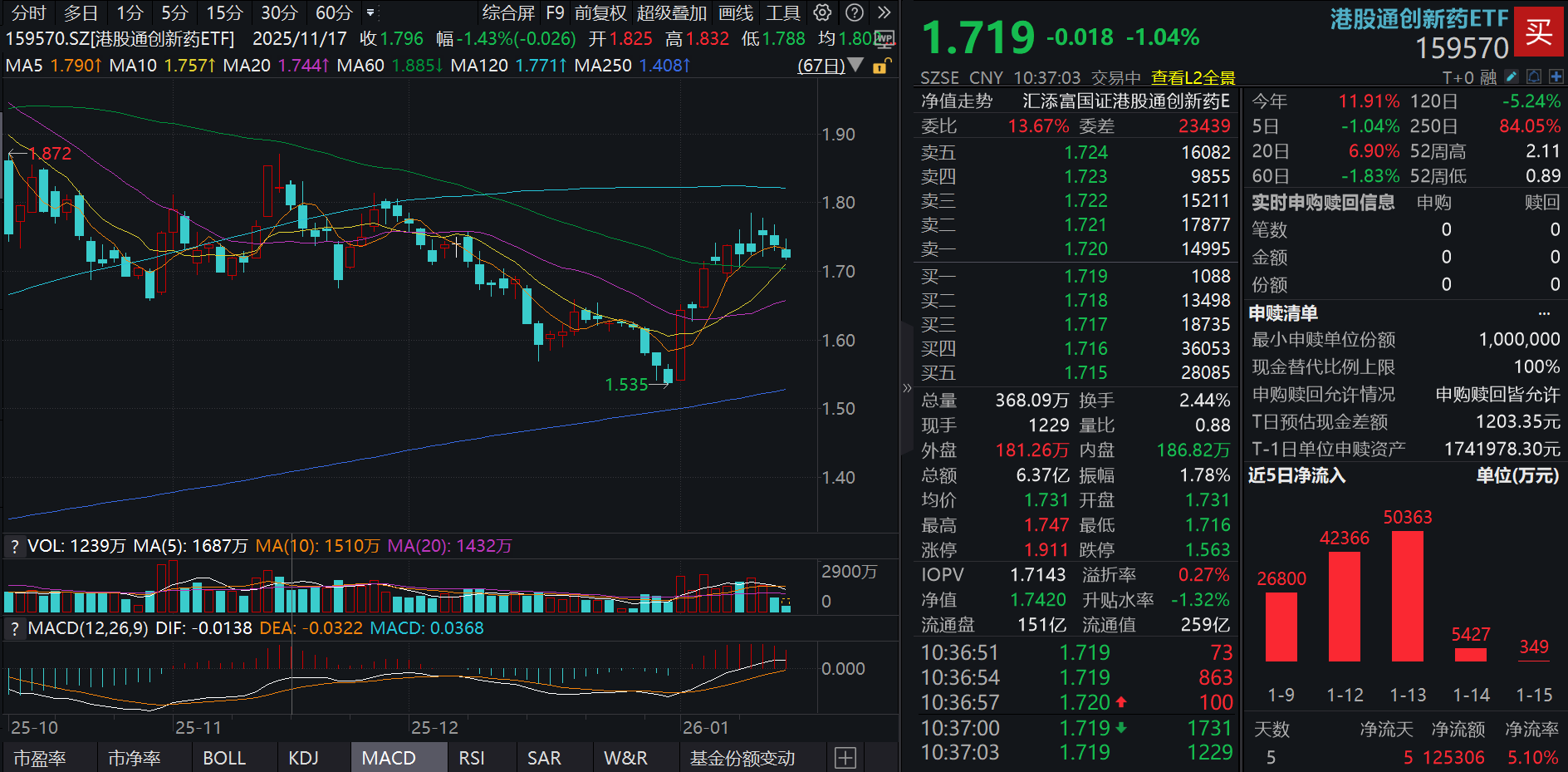
中国创新药企闪耀JPM大会,哪些新药值得关注?港股通创新药ETF(159570)跌逾1%,资金快速涌入,近5日“吸金”超12亿元!
Xin Lang Cai Jing· 2026-01-16 02:54
Group 1 - The core viewpoint of the news highlights the performance and trends of the Hong Kong innovative drug sector, particularly focusing on the Hong Kong Stock Connect Innovative Drug ETF (159570), which has seen significant capital inflow and is leading in scale among similar funds [1][2] - The 44th JPMorgan Healthcare Conference showcased several Chinese innovative pharmaceutical companies, emphasizing trends in gene and cell therapy, as well as AI in medicine, indicating a shift from "assets being bought" to "global value" for Chinese innovations [1][2] - The innovative drug sector is expected to reach new highs due to various catalysts, including the significant valuation gap between China and the US, ongoing business development (BD) transactions, and low current allocation of pharmaceutical theme funds in the market [2] Group 2 - Major stocks within the Hong Kong Stock Connect Innovative Drug ETF mostly experienced declines, with notable drops exceeding 1% for companies like BeiGene, China Biologic Products, and others, while CSPC Pharmaceutical showed a slight increase [2][3] - Key innovative drugs presented at the JPMorgan Conference include BeiGene's CDK4 products and the first BCL2 inhibitor approved in China, which highlights the competitive landscape and advancements in treatment options for various cancers [5][6] - The collaboration between Rongchang Biopharmaceutical and AbbVie on the PD-1/VEGF dual antibody RC148 is a significant development, with potential milestone payments and royalties, showcasing the growing internationalization of Chinese innovative drugs [9][10]
医院卖34.93元药店19元 同款药为何不同价?
2 1 Shi Ji Jing Ji Bao Dao· 2026-01-16 00:22
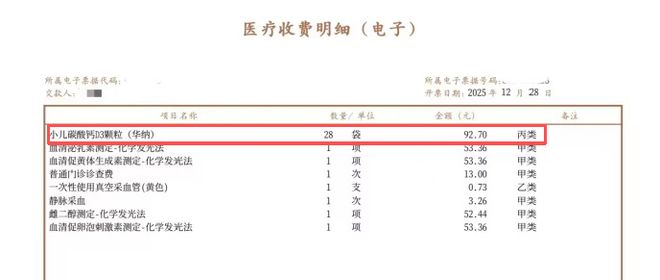
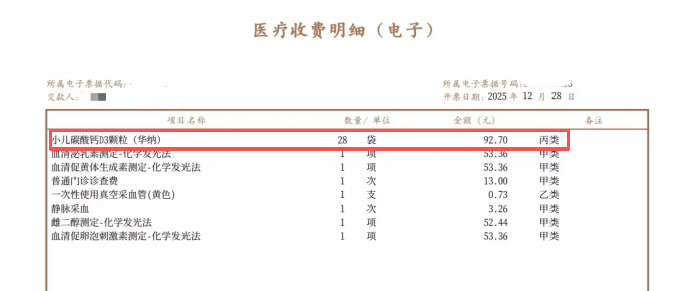
Core Viewpoint - The significant price discrepancies between hospital and retail pharmacy prices for the same medication raise concerns about the effectiveness of centralized procurement policies and the trust in public healthcare systems [2][3]. Price Discrepancies - A specific example highlights that the price of pediatric calcium carbonate D3 granules is 34.93 yuan in a hospital, while the same product is priced at approximately 19 yuan in pharmacies and e-commerce platforms, resulting in a price difference of 15.93 yuan [2]. - The price of the same medication can vary significantly across different sales channels, with instances of hospital prices being higher than retail prices and vice versa [3]. Centralized Procurement Issues - The pediatric calcium carbonate D3 granules were included in centralized procurement in 2022, with a winning bid price of 3.795 yuan per bag, which was further reduced to 2.495 yuan per bag in subsequent procurement rounds [3][4]. - Despite the centralized procurement prices, hospitals are reportedly selling the medication at prices that exceed these rates, indicating a disconnect between procurement prices and actual supply costs [4][6]. Factors Contributing to Price Differences - The pricing discrepancies are attributed to several factors, including the dynamic nature of market conditions, hidden service costs in hospitals, and the competitive pricing strategies of retail pharmacies and e-commerce platforms [6][7]. - Regulatory gaps and insufficient monitoring of real-time prices across different sales channels contribute to the lack of price uniformity [8]. Regulatory Responses - The National Medical Insurance Administration has initiated measures to address price discrepancies, including monitoring and comparing prices across various platforms to ensure compliance with procurement guidelines [10][11]. - Local governments are also implementing stricter regulations to align hospital prices with those of retail pharmacies and e-commerce platforms, emphasizing the need for transparency and fairness in drug pricing [11][12]. Future Directions - Experts suggest that a more transparent pricing mechanism is necessary, potentially resembling e-commerce platforms, to allow for direct price comparisons and foster competition among pharmaceutical companies [12].

调查|医院卖34.93元 药店19元 同款药为何不同价?
2 1 Shi Ji Jing Ji Bao Dao· 2026-01-16 00:20
Core Viewpoint - The significant price discrepancies between hospital and retail prices for pediatric calcium D3 granules raise concerns about the effectiveness of centralized procurement policies and public trust in healthcare systems [1][3][8]. Price Discrepancies - Pediatric calcium D3 granules sold in hospitals can be priced at 34.93 yuan for a 14-bag pack, while the same product is available for approximately 19 yuan in pharmacies and e-commerce platforms, resulting in a price difference of 15.93 yuan [1]. - Similar price discrepancies exist for other medications, with examples showing hospital prices exceeding retail prices and vice versa [2]. Centralized Procurement and Pricing - The pediatric calcium D3 granules were included in centralized procurement in 2022, with the winning bid price set at 3.795 yuan per bag, which was later reduced to 2.495 yuan per bag in 2025 [3][4]. - Despite the centralized procurement prices, hospitals are selling the product at prices that deviate from these rates, indicating a disconnect between procurement prices and actual supply costs [3][8]. Factors Contributing to Price Differences - The price differences can be attributed to several factors, including the dynamic nature of market conditions, hidden service costs in hospitals, and the competitive pricing strategies of retail and online pharmacies [9][10]. - Regulatory gaps and the lack of real-time monitoring of drug prices contribute to the persistence of these discrepancies [10][11]. Regulatory Responses - The National Medical Insurance Administration has acknowledged these pricing issues and is working on measures to align hospital prices with those of retail pharmacies and e-commerce platforms [11][13]. - Local governments are also implementing stricter regulations to ensure that procurement prices are consistent with market prices, with penalties for non-compliance [14][15]. Future Directions - Experts suggest that a transparent pricing mechanism similar to e-commerce platforms should be established to allow for better price comparisons and competition among suppliers [17].
价差80%!电商平台卖19元,医院卖34.93元,又一乱象曝光
21世纪经济报道· 2026-01-15 14:56
Core Viewpoint - The article highlights significant price discrepancies between hospital and retail prices for pediatric calcium D3 granules, raising concerns about the effectiveness of centralized procurement policies and the trust in public healthcare systems [1][2][3]. Price Discrepancies - A notable price difference of 80% was reported for pediatric calcium D3 granules, with hospital prices reaching 34.93 yuan compared to 19 yuan in pharmacies and e-commerce platforms [1]. - Similar instances of price variation exist, such as a consumer purchasing a vitamin D product for 47.4 yuan in a hospital, while the same product was priced at 63 yuan in a retail pharmacy and only 29.8 yuan online [2]. Centralized Procurement Issues - Pediatric calcium D3 granules were included in centralized procurement in 2022, with the winning bid price set at 3.795 yuan per bag, which was later reduced to 2.495 yuan per bag in 2025 [3]. - Despite the procurement price, the hospital price for the same product was found to be 3.31 yuan per bag, indicating a discrepancy between procurement prices and actual hospital pricing [3]. Factors Contributing to Price Differences - Experts suggest that the price differences stem from various factors, including the dynamic nature of market conditions, raw material costs, and the potential disconnect between procurement prices and actual supply costs [6]. - Public hospitals are expected to adhere to a zero-markup policy, but the actual supply prices may lead to higher hospital prices if they exceed the procurement prices [6]. Regulatory Responses - The National Medical Insurance Administration has initiated measures to address price discrepancies, including monitoring and adjusting prices to align with market conditions [15][16]. - Local governments have also implemented regulations to ensure that procurement prices remain comparable to retail prices, with specific thresholds for price adjustments [16]. Future Directions - Experts advocate for a transparent pricing mechanism that allows for real-time price comparisons across different sales channels, aiming to reduce reliance on administrative controls and enhance market competition [18].