Waymo

Search documents
X @Tesla Owners Silicon Valley
Tesla Owners Silicon Valley· 2025-11-07 22:47
Production & Regulation - Cybercab 的生产速度预计与监管部门的批准速度大致匹配 [1] - Waymo 在该领域的工作为行业铺平了道路,提供了帮助 [1] Deployment - 公司预计能够部署所有生产的 Cybercab [1]

广州,一天诞生两个超级IPO
盐财经· 2025-11-07 09:48
Core Viewpoint - The successful IPOs of two autonomous driving companies, Pony.ai and WeRide, in Hong Kong mark a significant milestone for Guangzhou, showcasing the city's long-term investment in the autonomous driving sector and the potential for growth in this industry [4][20]. Group 1: Pony.ai - Pony.ai raised approximately HKD 67.1 billion, setting a new record for IPO fundraising by an autonomous driving company in Hong Kong [5]. - The cornerstone investors for Pony.ai include five firms, collectively investing USD 120 million (approximately HKD 932 million), which accounts for 13.9% of the total shares offered [6]. - Notable investors include Ghisallo Fund, which subscribed to 279,460 shares, representing 5.79% of the total shares offered [6]. - Prior to its IPO, Pony.ai had completed multiple funding rounds, raising over USD 1.3 billion [8]. - Major investors include Toyota, which invested USD 400 million in 2020, and Sequoia Capital, which invested a total of USD 36.5 million [9]. - After the IPO, Toyota holds a 9.94% stake, Sequoia 5.29%, and Wuyuan Capital 3.65%, with significant unrealized gains [10][12]. Group 2: WeRide - WeRide raised approximately HKD 23.9 billion in its IPO and did not have cornerstone investors but secured strategic investments from companies like Uber and Nvidia [13]. - The founders of WeRide hold over 72.1% of the voting rights, with significant stakes held by other investors such as Yutong and Qiming Venture Partners [14][15]. - Uber has made a substantial investment in WeRide, adding USD 100 million in equity earlier this year [13]. Group 3: Industry Context - The rise of autonomous driving in Guangzhou can be traced back to 2014 when city leaders recognized the potential of AI and began attracting startups in this field [18]. - The industry is divided into two paths: the "incremental" approach, exemplified by Tesla, and the "leapfrog" approach, represented by Pony.ai and WeRide, which aims for full autonomy [19]. - The "leapfrog" approach offers a clear business model and the potential for significant market share in a rapidly growing industry, with both companies positioned to capitalize on this transformation [20].

Taylor Swift, Elon Musk, Donald Trump, MrBeast — Robinhood Just Made Their Mojo Tradable
Yahoo Finance· 2025-11-07 02:31
Core Insights - Robinhood Markets has launched prediction markets for the 2024 presidential election and various sports outcomes through a partnership with Kalshi, expanding into entertainment and financial sectors with hundreds of new markets [1][2] Group 1: New Market Categories - Robinhood has introduced new categories in its prediction markets, including Entertainment, Esports, Financial, and Technology [2] - Users can predict various entertainment outcomes, such as nominations for the 2026 Grammy Awards and performances by artists like Taylor Swift [3][4] - Financial prediction markets include forecasts for the S&P 500 closing value, upcoming IPO announcements, and shareholder decisions regarding executive compensation at Tesla [5] Group 2: Additional Prediction Opportunities - New categories also encompass Space, Science, and Technology, allowing predictions on events like SpaceX launches and advancements in AI [6] - The prediction markets are part of Robinhood's strategy to diversify beyond traditional trading in stocks, options, and cryptocurrencies, indicating a growing segment within the company [7]

Waymo: The future of autonomous driving with Vincent Vanhoucke
Google DeepMind· 2025-11-06 18:57
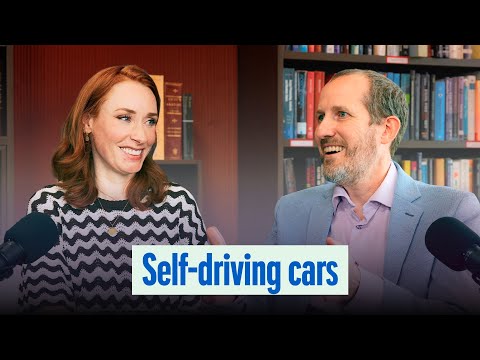
How do you train an AI to drive safer than a human? Professor Hannah Fry sits down with Waymo Distinguished Engineer Vincent Vanhoucke to break down the complexities of autonomous driving—from the "closed loop" problem of real-world traffic to using generative AI for simulation. Plus, Hannah moves from theory to practice, taking a Waymo for a spin in California to experience it firsthand. Timecodes 00:00 Intro 01:02 Ride around town 03:48 The driverless car problem 08:43 Sensors 13:00 3D model of the world ...
从测试验证到嵌入公交网络 中国Robobus“出海”的破局与立局
Zhong Guo Qi Che Bao Wang· 2025-11-06 02:17
Core Insights - Singapore's Land Transport Authority (LTA) has awarded a pilot project for autonomous bus services (Robobus) to a consortium including MKX Technologies, MoGo, and BYD, marking Singapore's first official L4 Robobus project [2] - The Robobus by WeRide has achieved regular operations and fully unmanned operation in Singapore, becoming Southeast Asia's first autonomous vehicle without a safety operator [2] - Chinese Robobus is rapidly gaining traction globally, leveraging strong scene adaptability, policy certainty, and clear profit models to become a key player in the international smart driving market [2] Project Launch and Global Expansion - The LTA initiated the Robobus service pilot project in January, aiming for Robobus to operate alongside regular buses within three years, with trial operations set for key routes in late 2026 [3] - Robobus is being integrated into public transport systems in Singapore, California, and Paris, addressing challenges like driver shortages and rising costs in global public transport systems [3][6] - The global demand for Robobus is driven by the need for efficient public transport solutions, with significant market opportunities in regions with favorable policies [3][5] Competitive Advantages - Chinese Robobus companies possess three core competitive advantages: a mature supply chain with controllable costs, proven technology through extensive road testing, and flexible business models [7][8] - The cost structure of Robobus is more manageable compared to Robotaxi, with projected annual revenue of approximately 700,000 yuan and a gross profit margin of 25% [9] - The collaborative business model among Chinese companies enhances their competitive edge, allowing for a combination of technology, manufacturing, and local operations [10] Future Trends and Market Integration - The trend of Robobus "going global" is clear, transitioning from pilot projects to large-scale, localized commercial operations, with a focus on integrating into local public transport systems [5][13] - The next 3-5 years are expected to see significant advancements in Robobus deployment, with a shift towards deeper market integration and collaboration with local governments and transport companies [13][14] - Chinese Robobus companies are likely to evolve from merely exporting products to influencing global standards and regulations in smart transportation [14]


优步(UBER.US)FY25Q3电话会:刻意放缓利润率增长 自动驾驶业务长时间不会盈利
智通财经网· 2025-11-05 23:01
Core Insights - Uber is proud of its ability to achieve large-scale profit growth, with both ride-hailing and delivery services accelerating. The company is intentionally slowing the pace of profit margin expansion and is now asking investors to measure the company by total profit growth in dollars, committing to annual profit growth in the foreseeable future [1][7] Ride-Hailing and Delivery Business - The ride-hailing business employs a "barbell strategy," balancing basic services like UberX with premium products such as Uber for Business, which generate higher margins. Profits from these premium products are reinvested into new growth areas, including the development of autonomous vehicles (AV) [1][8] - The delivery business has seen its fastest growth in four years, with a run rate of $12 billion, significantly outpacing online food delivery growth. This growth is attributed to improvements in product offerings, particularly in grocery and retail sectors [5][10] Autonomous Driving Initiatives - Uber's autonomous driving business is currently unprofitable, with expectations that it will not achieve profitability in the coming years. The company plans to use profits from its core and premium services to support investments in AV [1][8] - A partnership with NVIDIA aims to create a Level 4 (L4) autonomous driving reference architecture, which will benefit Uber's ecosystem by enabling higher daily revenue per vehicle. Initial deployment includes 5,000 vehicles powered by NVIDIA technology, with plans for large-scale expansion [2][4] User Engagement and Cross-Platform Strategy - Only 20% of users currently utilize both ride-hailing and delivery services. Uber is implementing strategies to increase cross-platform usage, such as personalized experiences and membership programs, which have shown to triple average spending among cross-platform users [3][10] - The Uber One membership program has reached 36 million members, contributing significantly to the overall booking volume in delivery services and improving retention rates [10] Financial Performance - In Q3, adjusted EBITDA grew by 33% year-over-year, with a profit margin of 4.5% of gross bookings, marking a historical high. The company is tracking towards a three-year framework goal of high teens growth in gross bookings and a compound annual growth rate of 30% to 40% in EBITDA [7][16] - The company is focused on balancing investments across its product lines while ensuring profitability, particularly in the context of expanding its autonomous driving capabilities [7][8] Data Collection and Market Insights - Uber is leveraging its ride-hailing network to collect real-world data, particularly in high-demand areas. The collaboration with NVIDIA is expected to enhance data quality through advanced sensor technology [17] - Markets with deployed autonomous vehicles, such as Austin, have shown higher driver earnings compared to other regions, indicating a healthy market environment [6][16]

Lyft(LYFT) - 2025 Q3 - Earnings Call Transcript
2025-11-05 22:30
Financial Data and Key Metrics Changes - Q3 2025 was a record quarter for the company, with adjusted EBITDA growing 29% year over year and free cash flow generation exceeding $1 billion for the first time in Lyft's history [3][11][12] - Active riders increased by 18% year over year, and gross bookings rose by 16% year over year, both reaching all-time highs [11][12] Business Line Data and Key Metrics Changes - The company reported record levels of active riders and driver hours, contributing to overall growth [12][13] - The partnership with United Airlines is expected to enhance customer value and drive additional growth [3][12] Market Data and Key Metrics Changes - Approximately 70% of rides growth in Q3 came from underpenetrated markets in North America, which represent a significant opportunity for future growth [13][42] - The company anticipates mid to high teens growth in rides and 17-20% growth in gross bookings for Q4 2025 [11][12] Company Strategy and Development Direction - Lyft is focusing on expanding its autonomous vehicle (AV) partnerships and enhancing its position across the AV value chain [4][12] - The company aims to leverage its recent acquisitions, including FreeNow and TBR, to enhance its global presence and service offerings [46][50] Management's Comments on Operating Environment and Future Outlook - Management expressed optimism about multiple growth catalysts converging in 2026, including the impact of the United partnership and ongoing improvements in operational efficiency [9][12] - The California insurance reform (SB371) is expected to reduce costs for riders and stimulate demand, benefiting both drivers and the company [15][16] Other Important Information - The company is actively working on enhancing its business-to-business opportunities, including partnerships with universities and healthcare providers [90] - Lyft's high-value modes grew by 50% year over year in Q3, indicating strong demand for premium services [51] Q&A Session Summary Question: What are the multiple converging catalysts in 2026? - Management highlighted that the marketplace is stronger than ever, with record active riders and driver hours, and emphasized the importance of the United partnership and underpenetrated markets [9][12] Question: How does Lyft plan to balance growth and margin trajectory? - Management stated that customer obsession drives profitable growth and that innovation is key to scaling the business without sacrificing margins [21][25] Question: What is the opportunity in low scale markets? - Management noted that about two-thirds of the $161 billion personal vehicle trips market in North America is in underpenetrated markets, which are expected to drive significant growth [42][43] Question: How does the Waymo partnership impact AV economics? - Management explained that the partnership is designed to maximize vehicle availability and utilization, which should improve unit economics over time [31][32][80] Question: What is the expected impact of insurance renewals? - Management indicated a mid-single-digit increase in insurance costs per ride but emphasized ongoing efforts to bend the insurance cost curve [40][41] Question: How will Lyft leverage its acquisitions for global expansion? - Management discussed the potential to enhance service quality and expand market reach through the integration of FreeNow and TBR's capabilities [46][50]

X @Herbert Ong
Herbert Ong· 2025-11-05 22:17
Autonomous Driving Observation - Waymo vehicle spotted on highway near Austin [1] - Potential observation of autonomous driving technology in real-world conditions [1]
1.4万亿Uber还要继续吃Robotaxi的苦
Xin Lang Cai Jing· 2025-11-05 04:49
Core Viewpoint - Uber's core business shows steady growth, but to achieve explosive growth again, it needs new drivers, particularly in advertising and autonomous driving [2][9]. Financial Performance - In Q3 2025, Uber reported revenue of $13.47 billion, a 20% year-over-year increase, and net profit surged nearly threefold to $6.6 billion from $2.6 billion [4]. - Adjusted EBITDA grew by 33% to approximately $2.3 billion [4]. - The ride-hailing segment generated $7.68 billion in revenue, up 20% year-over-year, while the delivery segment (Uber Eats) saw revenue of $4.48 billion, a 9% increase [4][6]. - Total bookings for Q3 2025 reached $49.7 billion, a 21% increase year-over-year, with ride-hailing orders growing by 19.6% to $25.1 billion [6]. Business Segments - Uber's revenue growth is primarily driven by its ride-hailing and delivery services, with total bookings becoming a crucial metric [6]. - The delivery business has shown strong performance, with order volume increasing by 25% in Q3 compared to 20% in the previous quarter [6]. - Uber's non-restaurant delivery services have reached an annualized order volume of $12 billion, contributing to the growth of the delivery segment [8]. Regional Performance - The North American region has historically been Uber's largest revenue source, but its contribution has dropped below 50% for the first time, indicating a slowdown in growth [8]. - The Europe, Middle East, and Africa (EMEA) region is now the fastest-growing area for Uber, contributing over 30% of total revenue [8]. Future Growth Drivers - Short-term growth is expected to come from advertising, which is anticipated to enhance overall profit margins due to its high gross margin characteristics [10]. - Uber has 190 million active users, providing a significant opportunity for monetizing its advertising business through in-app ads and journey-based promotions [10]. - Long-term growth hinges on the commercialization of autonomous driving, which is currently seen as a double-edged sword due to increased capital expenditures and short-term profitability pressures [10][12]. Autonomous Driving Strategy - Uber's strategy in autonomous driving has shifted from a "hardcore player" to a "pragmatic ecosystem integrator," focusing on partnerships rather than high-risk self-development [12]. - The company has formed partnerships with various autonomous driving firms, including Baidu and Momenta, and plans to deploy a fleet of 100,000 autonomous vehicles by 2027 [13][14]. - However, the current scale of Uber's autonomous vehicle fleet is limited compared to its millions of ride-hailing drivers, making it challenging to achieve cost reductions and profitability in this segment [13]. Competitive Landscape - Uber faces significant competition in the autonomous driving space from tech giants like Waymo and Cruise, which have advanced technologies and substantial funding [15][16]. - Tesla's plans to launch its own Robotaxi network pose a direct threat to Uber's core business model [17]. - Chinese autonomous driving companies also present competition, leveraging their data advantages in complex traffic scenarios [19]. Conclusion - In the short term, autonomous driving may act as a cost center impacting profits, but in the long term, it is crucial for Uber's valuation and business model sustainability [20].
深度|Andrej Karpathy:行业对Agent的发展过于乐观,一个能真正帮你工作的Agent还需要十年发展时间
Z Potentials· 2025-11-05 02:57
Core Insights - The article discusses the evolution of AI, particularly focusing on the development of agent systems and the challenges they face in achieving true intelligence [4][5][6][7][8][9][10]. Group 1: Future of AI Agents - Andrej Karpathy emphasizes that the next decade will be crucial for the development of AI agents, suggesting that current systems are not yet mature enough to be fully utilized in practical applications [5][6][7]. - The concept of a "cognitive core" is introduced, which refers to a stripped-down version of knowledge that retains intelligent algorithms and problem-solving strategies, highlighting the need for better data quality in training models [5][16]. - Karpathy expresses concern that society may lose understanding and control over AI systems as they become more integrated into daily life, leading to a disconnect between users and the underlying mechanisms of these systems [5][6]. Group 2: Historical Context and Learning Mechanisms - The article outlines significant milestones in AI development, such as the introduction of AlexNet and the Atari reinforcement learning era, which shaped the current landscape of AI research [8][9][10]. - Karpathy argues that human learning differs fundamentally from reinforcement learning, suggesting that humans build rich world models through experience rather than relying solely on reward signals [40]. - The discussion includes the limitations of current AI models in terms of continuous learning and the need for a more sophisticated understanding of context and memory [22][23]. Group 3: AI's Current Limitations - Karpathy critiques the current state of AI, stating that many generated code outputs are of mediocre quality and that the industry is experiencing a phase of over-optimism regarding AI capabilities [5][6][37]. - The article highlights the challenges AI faces in understanding complex code structures and the limitations of code generation models in producing original, contextually appropriate code [30][31][36]. - The need for a more nuanced approach to AI development is emphasized, suggesting that improvements must occur across multiple dimensions, including algorithms, data, and computational power [24][25][27].