国家电网

Search documents
电网行业研究框架培训
2025-08-18 15:10
Key Points Summary of the Electric Power Equipment Industry Research Industry Overview - The electric power equipment industry is divided into three main categories: transmission and transformation, distribution, and consumption, with transformers and switches being the core products, accounting for over 60% of the industry share [1][5][21] - Major companies like NARI and China XD Electric are gradually achieving full coverage, while international giants such as Siemens Energy and Hitachi Energy have covered all categories and voltage levels [1][6] Core Insights and Arguments - Downstream demand is concentrated in three areas: power generation, grid, and consumption, with the grid side dominated by the State Grid, whose capital expenditure is closely related to overall electricity consumption [1][7] - The construction of ultra-high voltage (UHV) systems is policy-driven, benefiting related companies significantly, as seen during the 2004-2008 500 kV backbone network construction period, which led to substantial revenue growth for equipment manufacturers [1][8] - The new power system faces challenges such as large deviations in generation load, poor generation stability, and a decrease in base load power sources. Solutions include energy storage, UHV, digital upgrades in grid dispatching, electricity market trading, and hybrid AC/DC distribution networks [1][10][11] Investment Trends - Grid investment is expected to continue growing, with a projected growth rate exceeding double digits in 2024 and a year-on-year increase of 14.6% in the first half of 2025, maintaining around 10% growth for the year [1][12] - The second half of 2025 will see a concentrated bidding for UHV projects, which will drive order increases [1][12] Order and Export Dynamics - In the first half of 2025, UHV bidding was limited, resulting in only a slight order growth of 5%. The transition period for metering equipment has led to a decline in bidding volume, while the export of transformers to North America, Europe, Asia, and Latin America has increased by over 50% year-on-year [1][13] Digitalization and AI in the Industry - The State Grid is continuously upgrading its dispatching system, with significant growth in new generation dispatching system application software. AI is becoming a key application area, with two rounds of AI server bidding in the first half of the year, totaling 293 units valued at 100 million to 200 million yuan [1][14] Market Changes and Future Outlook - The overseas market's reliance on Chinese manufacturing is increasing, with transformer imports to the US growing by 35% and to the EU by 15% year-on-year [1][20] - The electric power equipment industry is expected to see core changes, including significant growth in overseas markets, new equipment and business model opportunities, and progress in large engineering projects [1][21] Conclusion - The electric power equipment industry is poised for growth driven by policy support, technological advancements, and increasing global demand for Chinese manufacturing capabilities. Companies should focus on domestic and international order progress to seize investment opportunities [1][21]
特发服务:上半年营收同比增长3.59%,优质客户持续增加
Zheng Quan Shi Bao Wang· 2025-08-18 14:47
Core Insights - The company reported a revenue of 1.393 billion yuan for the first half of 2025, representing a year-on-year growth of 3.59% [1] - The total profit reached 87.67 million yuan, with a year-on-year increase of 1.22%, while the net profit attributable to shareholders was 59.14 million yuan, up by 2.69% [1] Company Performance - The company is implementing a dual-driven strategy of "deepening the main business and parallel diversification," which has led to stable operational performance and ongoing strategic development in diversified business areas [1] - The company successfully won the property service project for Shenzhen People's Hospital, the oldest and largest three-tier hospital in Shenzhen, enhancing its professional strength in hospital logistics support services [1] - The company has also entered the military camp property management sector, securing service projects in regions such as Xinjiang and Beijing, laying a solid foundation for future strategies [1] Key Projects - Core projects such as Huawei's Oriental Global Enterprise Center, Huawei's Yudu Jinmin Garden, Ant Financial's Hangzhou Antown Park, and Shanghai Xiaohongshu project have all been renewed, further solidifying the company's market share and brand influence in the non-residential sector [1][2] Industry Context - As a property management platform under Shenzhen State-owned Assets, the company has established long-term stable partnerships with leading firms like Huawei, Alibaba, Tencent, ByteDance, Xiaohongshu, and State Grid, providing comprehensive services including lifecycle management and space operation [2] - The real estate market is currently undergoing deep adjustments, with the residential property increment market facing continuous pressure, while competition in the non-residential property sector is intensifying [2] - According to a report by Zhongxin Securities, while there is some internal competition within the property service industry, the market share of leading companies remains low, and their profitability is not expected to decline due to this competition [2]

亿纬锂能20250815
2025-08-18 01:00
Summary of Yiwei Lithium Energy Conference Call Company Overview - Yiwei Lithium Energy has established a business structure comprising energy storage, consumer batteries, and power batteries, with energy storage and power business revenue each accounting for 40% and consumer batteries 20% [2][7][5] Key Points and Arguments Industry Growth - The energy storage market is experiencing rapid growth both domestically and internationally, with domestic EPC project bids maintaining an 18%-20% growth rate. In the U.S., large-scale projects grew by 45% year-on-year, and registered capacity increased by 42% [8] - The European household energy storage demand is recovering, with commercial energy storage growing at an even higher rate. The Middle East is planning large-scale energy storage projects, currently reaching a scale of 14GW [8] Company Performance and Projections - Yiwei Lithium Energy's global energy storage shipment volume is expected to reach 50.45GW in 2024, doubling year-on-year, with a market share increase to 21.6%, making it the fourth largest globally [2][8] - The company aims to maintain over 50% growth in global new installations in 2025, with a projected net profit margin of over 10% [3][8] Financial Health - The company has shown stable revenue and net profit growth, although revenue growth has slowed due to lithium price fluctuations. The overall expense ratio has decreased by 4-5 percentage points due to increased shipment volumes [7] - By the end of 2024, the revenue structure will consist of 40% from power and energy storage, and 20% from consumer batteries [7] Strategic Developments - Yiwei Lithium Energy is actively expanding overseas, establishing a production base in Malaysia expected to start mass production in early 2026, which will support global delivery [9] - The company is focusing on high-capacity unit designs to reduce system costs and operational difficulties, aiming to lower downstream operational costs by approximately 30% [9] Consumer Battery Market - The overall shipment volume in the consumer battery sector is expected to reach 67GWh in 2024, with a 7% year-on-year growth, and is projected to exceed 70GWh in 2025 [4][11] - The company is diversifying into high-end markets, including humanoid robots and robotic dogs, which are expected to expand market share [11] Power Battery Insights - The utilization rate of power battery capacity has improved to 80%-90%, with profitability expected in Q1 2025 and a projected net profit margin of 4%-5% by year-end [14] - The company is focusing on square lithium iron phosphate batteries and has established operations in Hungary and the U.S. to support global expansion [15] Stake in Simor Technology - Yiwei Lithium Energy holds a 30.7% stake in Simor Technology, which is expected to experience a compound annual growth rate of 10% in the HNB market from 2024 to 2029 [13] - Simor's revenue and net profit are projected to grow by 10%-15% and around 27%, respectively, benefiting Yiwei as the largest shareholder [13] Additional Important Insights - The company’s management team has over 20 years of experience in the lithium battery industry, emphasizing a technology-driven management approach [6] - The company is well-positioned to maintain its market leadership in the energy storage sector due to its deep collaborations with leading enterprises like the State Grid [8]

SOFC固体氧化物燃料电池产业发展现状
2025-08-18 01:00
Summary of SOFC Industry Development and Key Insights Industry Overview - The Solid Oxide Fuel Cell (SOFC) technology efficiently converts fuel into electricity through electrochemical reactions, achieving an electricity generation efficiency of up to 65% and a combined heat and power efficiency of 90%, significantly outperforming traditional gas turbines [1][2][3] - SOFCs have a clear advantage in reducing pollutant emissions, with nitrogen oxides emissions far below traditional internal combustion engines and minimal sulfur oxides production, aligning with increasingly stringent environmental standards [1][2] - The commercial application of SOFC technology has been realized in the US, Europe, and Japan, with installed capacity steadily increasing by 200-300 megawatts annually, primarily in data centers and hospitals [1][3] Core Insights and Arguments - Despite improvements in material performance for high-temperature operation, consistency remains a key challenge that requires ongoing optimization to meet the technical requirement of 80,000 hours for stationary power generation fuel cell systems [1][2] - The Chinese market presents significant potential for SOFC, especially in distributed energy and large-scale power generation competition, such as backup power for office buildings and data centers, although cost remains a major constraint [1][8] - SOFC fuel sources are diverse, including natural gas and biogas, but issues with fuel impurities, such as desulfurization and pre-reforming, need to be addressed to enhance sulfur resistance and extend system lifespan [1][16] Additional Important Content - Modular assembly is a significant advantage of SOFC, allowing for reduced delivery times and rapid replication, with the potential to lower costs through standardized production [1][20] - The technology has matured over decades, with various materials being developed for the anode, cathode, and solid electrolyte, with YSZ (yttria-stabilized zirconia) being the primary material used [2][14][15] - The global application of SOFC is diverse, with the US leading in large-scale systems, while Japan focuses on residential combined heat and power applications, and Europe develops smaller systems [5][6] - The cost of SOFC systems is closely tied to order size, with smaller systems costing around 100,000 yuan per kilowatt, while larger orders can reduce costs to 15,000 yuan per kilowatt or lower [21] - The expected installed capacity for SOFC is projected to exceed 500 megawatts annually by 2027, with domestic orders already reaching megawatt levels, indicating a potential growth phase in the coming years [23] Conclusion - The SOFC industry is poised for growth, driven by technological advancements, environmental regulations, and market demand for reliable and efficient energy solutions. However, addressing cost challenges and ensuring consistent performance will be critical for widespread adoption and commercial success [8][12][22]
8月电价新规来了,分时用电如何省钱最划算
Sou Hu Cai Jing· 2025-08-17 23:57
Core Viewpoint - The recent electricity price adjustment by the State Grid is a comprehensive reform of the pricing system, aimed at optimizing energy resource allocation and encouraging changes in electricity consumption habits [1][5][11]. Group 1: Pricing System Changes - The new pricing scheme divides the day into five distinct time periods: super peak, peak, flat, low valley, and super low valley, significantly increasing the price differences between these periods [4][11]. - During super peak hours, electricity prices can be up to five times higher than during low valley periods, emphasizing the need for consumers to adjust their usage patterns [4][6]. Group 2: Seasonal Pricing Impact - Summer and winter are identified as peak seasons for electricity usage, with prices in regions like Guangzhou rising approximately 35% during summer super peak hours compared to spring and autumn [4][11]. - High-energy-consuming devices such as air conditioners and electric vehicles contribute significantly to electricity costs during these peak seasons, necessitating careful planning of usage times [4][11]. Group 3: Tiered Pricing Structure - The new pricing model links basic electricity rates with a tiered pricing system, ensuring that basic needs are met while imposing higher costs on high-consumption users [5][11]. - Households consuming over 500 kWh per month may face costs approximately 40% higher per kWh compared to lower-tier users, highlighting the importance of energy conservation [5][11]. Group 4: Resource Optimization and Environmental Goals - The electricity price adjustment aims to alleviate pressure on the grid by shifting some peak demand to low valley periods, potentially saving hundreds of billions in infrastructure investments [6][11]. - By promoting efficient energy use and reducing waste, the initiative aligns with national goals for energy conservation and environmental protection [8][11]. Group 5: Practical Recommendations for Consumers - Consumers are advised to monitor electricity usage during different time periods, reduce the use of high-power appliances during peak hours, and take advantage of low valley periods for activities like charging electric vehicles [10][11]. - Setting air conditioning to around 26°C and preheating water heaters are practical steps to save on electricity costs while maintaining comfort [10][11].

电费补贴政策大揭秘:每月百元电费最高可节省20%,三大误区需规避
Sou Hu Cai Jing· 2025-08-17 21:39
在能源日益受到关注的今天,国家电网发布的2025年最新数据显示,一项惠及亿万家庭的电费补贴政策,其红利却未能被充分释放。尽管全国居民用电补贴 覆盖率已高达94.3%,但实际享受到全额补贴的家庭仅占53.7%。这意味着,数百万家庭因为种种原因,与这项本可减轻经济负担的政策失之交臂。 那么,究竟是什么原因导致这一现象?又该如何打破信息壁垒,让更多人享受到国家电费补贴带来的实惠? 让我们从政策本身说起。这项始于2021年,并于2024年第三季度全面调整的电费补贴政策,其范围和力度均得到显著提升。根据国家发改委能源司最新发布 的《居民用电阶梯电价及补贴实施细则》,普通家庭月均用电量在260度以下,即可享受基础电价15%的直接减免,加上其他专项补贴,总计可节省高达 20%的电费。这项政策覆盖全国31个省级行政区,惠及约4.7亿家庭。 更令人欣喜的是,申请流程也得到了极大的简化。曾经繁琐的纸质申请和漫长的审核等待已成为历史。取而代之的是2025年初上线的电费补贴一键申请功 能,只需短短3分钟,即可通过手机APP完成申请。国网数据显示,通过手机APP申请补贴的用户,成功率较传统方式提高了37.6个百分点。 然而,尽管政策优 ...
崔东树:6月充电公桩总量达417万个 数量较上月增长9.1万个
智通财经网· 2025-08-17 02:19
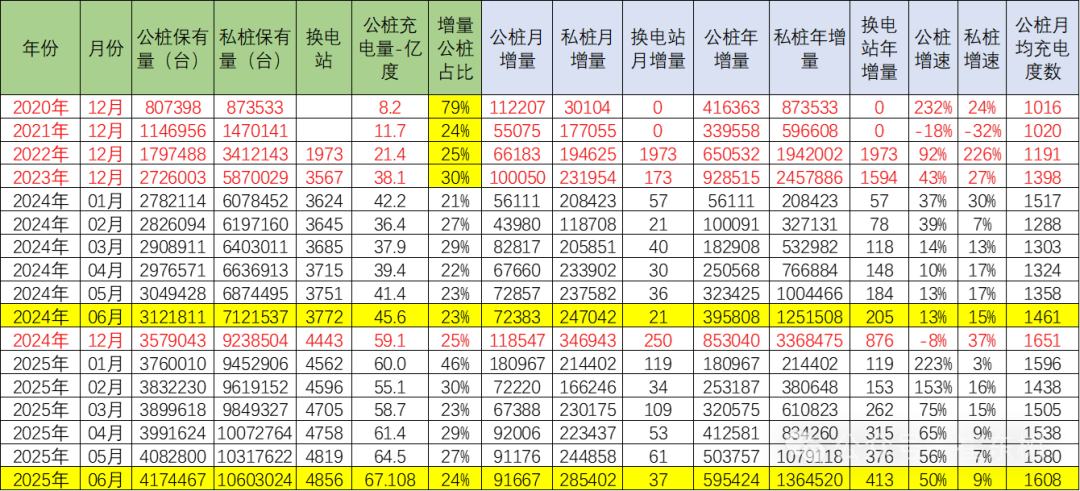
Core Insights - The rapid growth of China's charging infrastructure is highlighted, with public charging piles expected to reach 4.17 million by June 2025, showing a monthly increase of 91,000 and a year-on-year growth of 50% [1][5] - The ratio of public to private charging piles is approaching 1:1, indicating a balanced growth in charging infrastructure relative to electric vehicle sales [1][17] - Despite the growth, challenges remain in the charging infrastructure, including uneven distribution, outdated technology, and service quality issues [1][9] Charging Pile Overview - As of June 2025, there are 4.17 million public charging piles and 10.6 million private charging piles, with public piles showing a monthly increase of 91,000 and private piles increasing by 285,000 [1][5] - The average monthly charging per public pile is 1,608 kWh, up from 1,461 kWh in June of the previous year [1][5] - The charging utilization rate of public piles is three times that of private piles, indicating higher efficiency in public charging infrastructure [1][17] Growth Trends - In 2023, public charging piles increased by 930,000, with a year-on-year growth rate of 43%, while private piles grew by 2.46 million, marking a 27% increase [5] - The growth rate of public charging piles in 2024 is projected to be 850,000, with a slight decline in growth rate compared to 2023 [5] - The first half of 2025 is expected to see a continued increase in both public and private charging infrastructure, maintaining a balanced growth trajectory [1][5] Regional Analysis - Regions such as Guangdong, Jiangsu, and Zhejiang have shown significant growth in public charging infrastructure, while cities like Beijing and Shanghai are experiencing slower growth despite having a large existing base [9][8] - The distribution of charging piles is uneven, with developed cities having a higher concentration, leading to disparities in access and utilization [9] Industry Characteristics - The charging infrastructure industry is characterized by a mix of operators, including manufacturers, state-owned enterprises, and third-party service providers, each adopting different business models [10][11] - The market is becoming increasingly concentrated, with leading operators capturing a larger share of the market due to competitive advantages in funding, location, and technology [12][15] - The trend towards high-power DC charging stations is evident, with a growing demand for faster charging solutions to meet the needs of electric vehicle users [14][15]
中电建协:我国电源与电网建设呈现规模扩张与结构优化并进态势
2 1 Shi Ji Jing Ji Bao Dao· 2025-08-15 08:02
Core Insights - In 2024, major power companies in China completed investments of 1.8178 trillion yuan, representing a year-on-year increase of 13.9% [1] - The total installed power generation capacity reached 3.35 billion kilowatts, with a year-on-year growth of 14.6% [2] - The application of intelligent technologies in the power construction industry has become widespread, enhancing safety and efficiency [2] Investment Overview - Total investment in power generation projects was 1.2094 trillion yuan, up 13.2% year-on-year, while investment in grid construction reached 608.4 billion yuan, increasing by 15.3% [1] - Renewable energy investments included 447.8 billion yuan in solar power (up 1.9%) and 316.3 billion yuan in wind power (up 10.9%) [1] Installed Capacity Details - Hydropower capacity reached 440 million kilowatts, growing by 3.6%, while solar power saw a significant increase of 45.4% to 890 million kilowatts [2] - Coal-fired power capacity was 1.19 billion kilowatts, with a growth of 2.6%, while gas-fired power capacity increased by 13.9% to 140 million kilowatts [2] Company Performance - Overall revenue for power survey and design companies was 430 billion yuan, with a net profit margin of 3.8%, down 0.2 percentage points [3] - Revenue for thermal and hydropower construction companies reached 679.8 billion yuan, with a net profit margin of 1.5%, down 0.3 percentage points [3] Human Resource Efficiency - Power survey and design companies reported an average revenue per employee of 4.697 million yuan, up 8.3%, while net profit per employee was 181,000 yuan, up 3.4% [4] - In contrast, thermal and hydropower construction companies saw a decline in net profit per employee to 51,000 yuan, down 3.8% [5] Future Outlook - The power generation and grid construction sectors are expected to continue expanding in scale while optimizing structure during the 14th Five-Year Plan period [6] - The industry is anticipated to maintain strong growth through market reforms, technological innovation, and upgrades in the industrial chain [6]
电力企业管理招标有哪些基本形式?
Sou Hu Cai Jing· 2025-08-14 04:35
Group 1 - The main forms of power enterprise management bidding include public bidding, invited bidding, competitive negotiation, single-source procurement, and electronic bidding [1] - Public bidding allows all qualified enterprises to participate, suitable for large projects, with an average cost-saving rate of 12.7% in 2023 for State Grid public bidding projects [3] - Invited bidding involves directing at least three qualified enterprises, often used in complex technical fields, with a supplier library update rate of 23% per year for Southern Power Grid [3] Group 2 - Competitive negotiation is used when technical solutions are unclear, with a time efficiency of 7-15 days, while single-source procurement is for patented technologies with a time efficiency of 3-5 days [4] - By 2025, the National Energy Administration requires that electronic bidding accounts for over 85%, with blockchain technology already applied in State Grid's procurement platform [4] - The use of electronic templates can reduce time costs by 30% and travel expenses by 40%, while smart warnings can prevent collusion in bidding [5] Group 3 - Projects over 20 million yuan must use public bidding, and two-stage bidding is recommended for immature technical solutions [5] - A supplier grading management system should be established to dynamically assess performance capabilities [5] - New fields like energy storage require innovative technical scoring criteria for bidding [5]

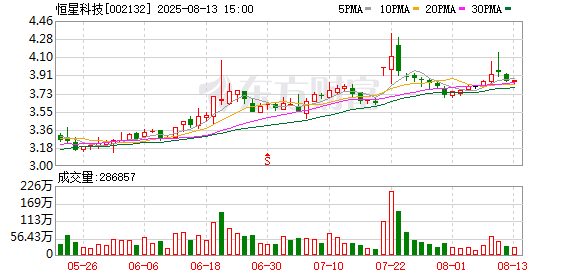
恒星科技:公司镀锌钢丝、镀锌钢绞线及预应力钢绞线产品的客户包含有国家电网、中铁、中建等大型企业
Mei Ri Jing Ji Xin Wen· 2025-08-13 15:47
Core Viewpoint - The company, Hengxing Technology, produces products that are applicable in ultra-high voltage power grids, large hydropower stations, nuclear power plants, offshore wind power generation, and various new energy photovoltaic projects. Their clients include major enterprises such as State Grid, China Railway, and China Construction [2]. Group 1 - The company's products include galvanized steel wire, galvanized steel strand, and prestressed steel strand [2]. - The company has established relationships with large state-owned enterprises, indicating a strong market position [2].