海尔智家

Search documents
抢占银发经济风口,海尔推出行业首个全品类康养套系
Huan Qiu Wang· 2026-01-15 09:09
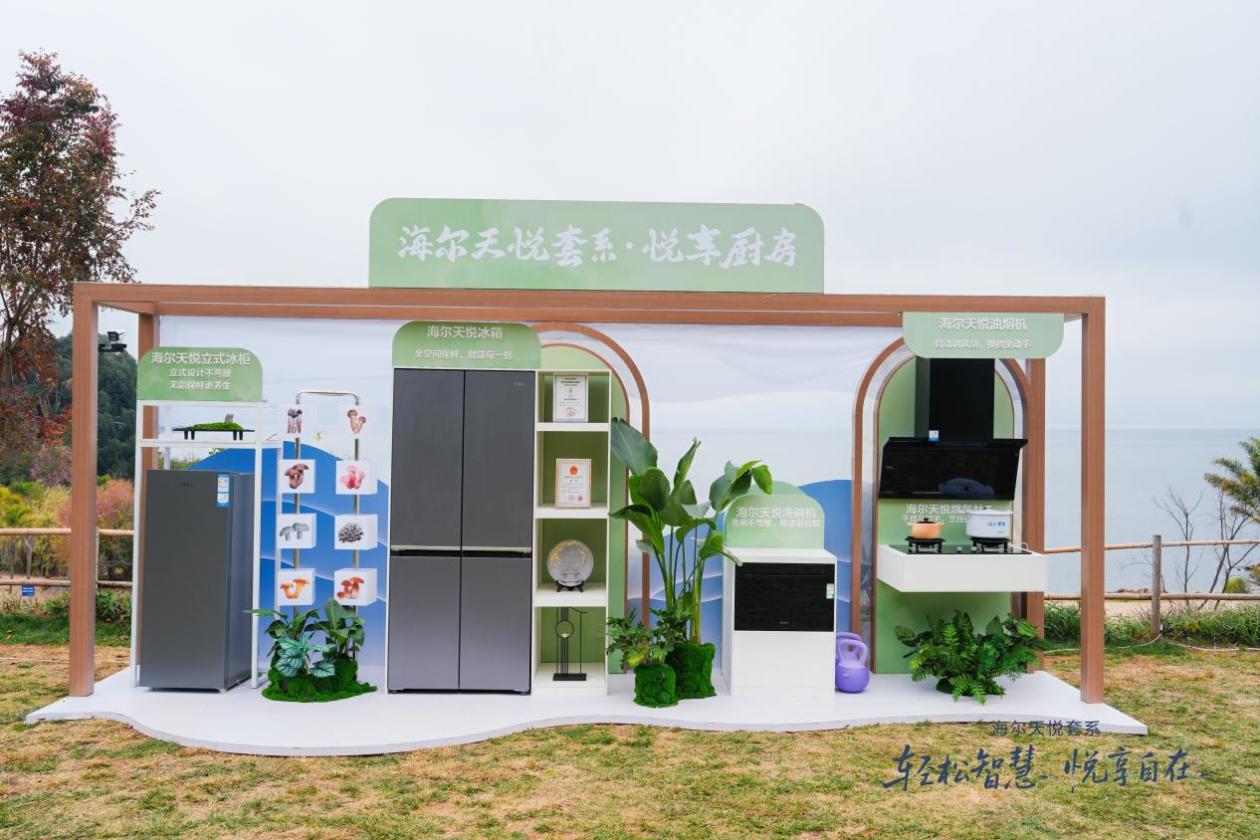
Core Viewpoint - The development of smart health and wellness appliances in China is responding to the growing silver economy, with significant innovations aimed at enhancing the quality of life for the elderly population [1][4]. Group 1: Market Potential - China has the largest elderly population globally, with a projected consumption market scale exceeding 100 trillion yuan by 2050 for individuals aged 60 and above [1]. - The "14th Five-Year Plan" emphasizes the development of the silver economy, guiding industry innovation and market growth [1]. Group 2: Product Innovation - Haier launched the Tianyue series, the first comprehensive AI smart health and wellness suite, integrating safety, convenience, and health management into daily life [1][3]. - The suite includes features such as gas stoves that can cut off gas supply in case of dry burning, and smart toilets with emergency call functions, creating a safety net for the elderly [3]. Group 3: User Experience - The Tianyue series aims to bridge the digital divide for the elderly by providing a seamless, intuitive user experience that reduces complexity in operation [3]. - Voice commands replace complicated buttons, and the design is intuitive, eliminating the need for user manuals [3]. Group 4: Health Management - The suite incorporates health monitoring features, such as heart rate tracking and fall risk alerts, into everyday appliances, promoting a proactive approach to health [3]. - Appliances like refrigerators and washing machines are designed to preserve nutrition and ensure hygiene, contributing to a comprehensive health ecosystem [3]. Group 5: Policy Alignment - The development of smart health solutions aligns with national policies aimed at enhancing the quality of life for the elderly, transitioning from mere care to a more enjoyable aging experience [4].


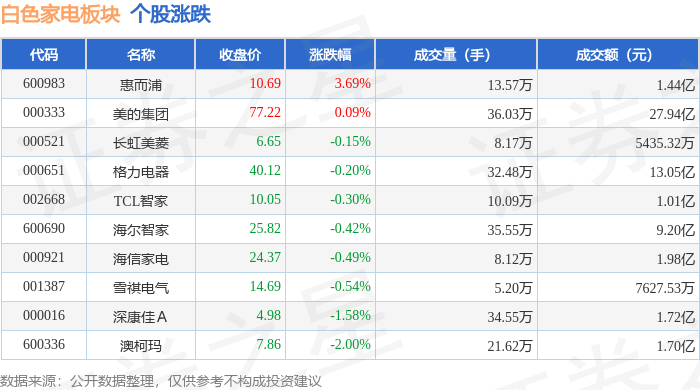
白色家电板块1月15日跌0.08%,澳柯玛领跌,主力资金净流入4.01亿元
Zheng Xing Xing Ye Ri Bao· 2026-01-15 08:53
Core Viewpoint - The white goods sector experienced a slight decline of 0.08% on January 15, with Aucma leading the drop, while the Shanghai Composite Index fell by 0.33% and the Shenzhen Component Index rose by 0.41% [1] Group 1: Market Performance - The closing price of Whirlpool was 10.69, with an increase of 3.69% and a trading volume of 135,700 shares, amounting to 144 million yuan [1] - Midea Group closed at 77.22, with a marginal increase of 0.09%, trading 360,300 shares for a total of 2.794 billion yuan [1] - Gree Electric Appliances closed at 40.12, down by 0.20%, with a trading volume of 324,800 shares and a transaction value of 1.305 billion yuan [1] - Haier Smart Home closed at 25.82, down by 0.42%, with a trading volume of 355,500 shares and a transaction value of 920 million yuan [1] - Aucma closed at 7.86, down by 2.00%, with a trading volume of 216,200 shares and a transaction value of 170 million yuan [1] Group 2: Capital Flow - The white goods sector saw a net inflow of 401 million yuan from institutional investors, while retail investors experienced a net outflow of 12.22 million yuan [1] - Midea Group had a net inflow of 24.4 million yuan from institutional investors, but a net outflow of 35.4 million yuan from retail investors [2] - Haier Smart Home recorded a net inflow of 11.9 million yuan from institutional investors, with a significant net outflow of 122 million yuan from retail investors [2] - Gree Electric Appliances had a net inflow of 61.64 million yuan from institutional investors, while retail investors saw a net outflow of 14.52 million yuan [2] - Aucma experienced a net outflow of 18.75 million yuan from institutional investors, but a net inflow of 13.98 million yuan from retail investors [2]





2025年上海市能效标识产品计量监督抽查结果(家用燃气快速热水器和燃气采暖热水炉)公布
Zhong Guo Zhi Liang Xin Wen Wang· 2026-01-15 07:33
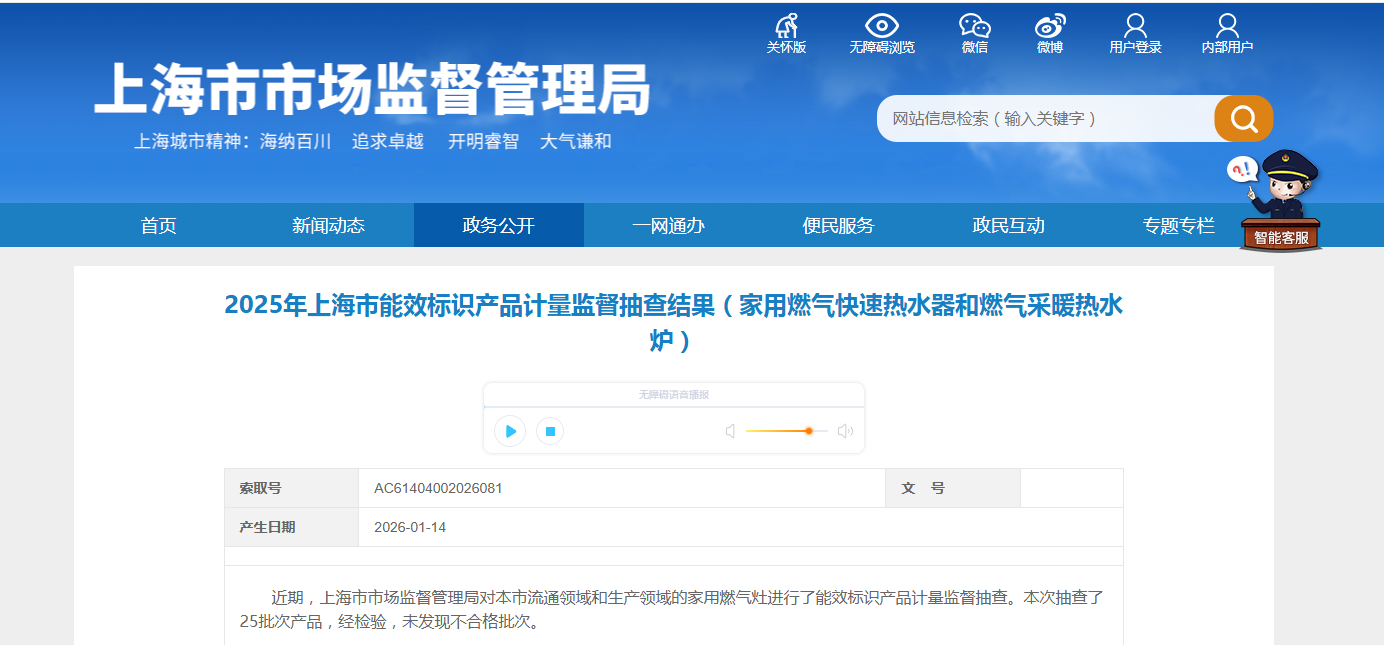
2025年上海市家用燃气快速热水器和燃气采暖热水炉能效标识产品计量监督抽查所检项目符合相关标准的产品 附原文: 2025年上海市能效标识产品计量监督抽查结果(家用燃气快速热水器和燃气采暖热水炉) 近期,上海市市场监督管理局对本市流通领域和生产领域的家用燃气灶进行了能效标识产品计量监督抽查。本次抽查了25批次产品,经检验,未发现不合格 批次。 本次监督抽查依据为《SHSSXZJL4009-2025上海市能效水效标识产品计量监督抽查实施细则(家用燃气快速热水器和燃气采暖热水炉)》。具体抽查结果 如下: | 样品标称名称 | 标称商标 | 标称规格型号 | 标称生产 | 标称生产者名称 | 被抽样生产者、销 | 被抽样销售者所在 | 认证机构 | | --- | --- | --- | --- | --- | --- | --- | --- | | | | | 日期/批号 | | 售者 | 商场/电商平台 | | | 家用供热水燃气快速 | MQ 名气 | JSQ27-533R-14 | 2023年10 | 杭州名气电器有限公司 | 上海老板电器销售 | / / / | 北京鉴衡认证中心有限 | | 热水器 | | ...
2025中国企业ESG“金责奖”最佳环境E责任奖揭晓
Xin Lang Cai Jing· 2026-01-15 07:31
Core Viewpoint - The 2025 China Enterprise ESG "Golden Responsibility Award" aims to recognize companies that have made significant contributions to ESG (Environmental, Social, and Governance) practices, with over 5,000 enterprises participating in the evaluation process [1][4]. Group 1: ESG Award Overview - The award was launched in November 2025 by Sina Finance ESG Rating Center, focusing on promoting sustainable development and responsible investment [1][4]. - The evaluation process included comprehensive performance assessments, professional scoring, and online voting to determine the winners [1][4]. Group 2: Award Winners - The winners of the Best Environmental Responsibility Award include notable companies such as Sungrow Power Supply, Industrial Fulian, Kweichow Moutai, Geely Automobile, Haier Smart Home, Hisense Visual Technology, Linyang Electronics, Tongwei Co., Weichai Power, and Luxshare Precision [2][5]. - The award committee congratulated the winners and expressed hope that these companies will lead by example in enhancing their ESG capabilities and contribute to high-quality development in China [2][5]. Group 3: ESG Rating Center Introduction - The Sina Finance ESG Rating Center is the first Chinese platform dedicated to ESG information and ratings, promoting sustainable development and responsible investment [3][6]. - The center aims to establish ESG evaluation standards suitable for China's characteristics and enhance corporate ratings through collaboration with leading ESG enterprises and partners [3][6].





工业富联荣获2025“金责奖”最佳环境(E)责任奖
Xin Lang Cai Jing· 2026-01-15 07:30
Core Insights - The 2025 China Enterprise ESG "Golden Responsibility Award" aims to recognize companies that have made significant contributions to ESG practices, with a focus on promoting sustainable development and enhancing ESG performance in the corporate sector [3][4]. Group 1: ESG Awards Overview - The award attracted over 5,000 participating companies and was based on comprehensive performance evaluations, professional scoring, and online voting results [3]. - Industrial Fulian was awarded the "Best Environmental Responsibility Award" for its outstanding performance in the ESG field [3][4]. Group 2: Award Winners - The winners of the 2025 China Enterprise ESG "Golden Responsibility Award" include: - Best Environmental Responsibility Award: Industrial Fulian [5] - Best Social Responsibility Award: Sunshine Power, Guizhou Moutai, Geely Automobile, Haier Smart Home, Hisense Visual, Lingyi Itech, Tongwei Co., Weichai Power, Luxshare Precision [5]. - Best Corporate Governance Responsibility Award: Zijin Mining, SF Holding, ZTE Corporation, Industrial Fulian, JA Solar, SANY Heavy Industry, Nanjing Steel, Bright Dairy, TCL Zhonghuan, Fuyao Glass [6]. - Best Responsibility Advancement Award: FiberHome Technologies, Wens Foodstuff Group, Haitian Flavoring & Food, Aier Eye Hospital, Yunnan Baiyao, Anke Innovation, Jinfa Technology, Huatai Securities, Seres, Henaida [6]. - Annual Sustainable Development Award: China General Nuclear Power, Sunshine Power, Guizhou Moutai, CATL, Zijin Mining, Hikvision, Yili Group, Baosteel, Chint Electric, China Mobile [6]. - Best Responsible Investment Bank Award: Agricultural Bank of China, Industrial and Commercial Bank of China, China Construction Bank, China Merchants Bank, Industrial Bank, Bank of China [6]. - Best Responsible Investment Securities Company Award: Guotai Junan, Industrial Securities, Orient Securities, CITIC Securities, Huatai Securities, CICC [6]. - Best Responsible Investment Insurance Company Award: China Life Insurance, Ping An Insurance, China Pacific Insurance, China Re, Sunshine Insurance, China Life [6]. - Best Responsible Investment Fund Company Award: Bosera Funds, Southern Funds, Huaxia Funds, Penghua Funds, Huitianfu Funds, E Fund [6]. - Best Responsible Investment Asset Management Institution Award: China Life Asset, Huaxia Wealth, Xingyin Wealth, Taikang Asset, Taikang Asset, Galaxy Investment [6]. Group 3: ESG Rating Center - The Sina Finance ESG Rating Center is the first Chinese platform dedicated to ESG information and ratings, promoting sustainable development and responsible investment [7]. - The center aims to establish ESG evaluation standards suitable for China's characteristics and enhance the ESG investment development in the asset management industry [7].
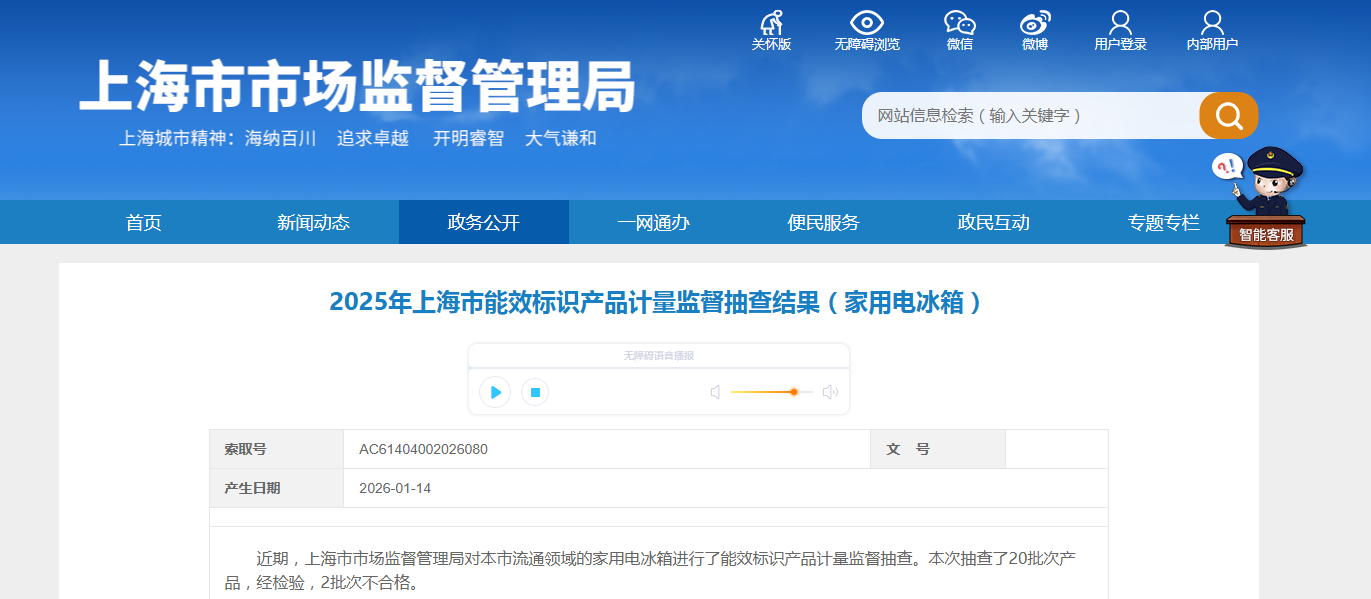
2025年上海市能效标识产品计量监督抽查结果(家用电冰箱)公布
Zhong Guo Zhi Liang Xin Wen Wang· 2026-01-15 07:30
本次监督抽查依据为《SHSSXZJL4001-2025 上海市能效水效标识产品计量监督抽查实施细则(电冰箱)》。具体抽查结果如下: 中国质量新闻网讯 近日,2025年上海市能效标识产品计量监督抽查结果(家用电冰箱)公布。 附原文: 2025年上海市能效标识产品计量监督抽查结果(家用电冰箱) 近期,上海市市场监督管理局对本市流通领域的家用电冰箱进行了能效标识产品计量监督抽查。本次抽查了20批次产品,经检验,2批次不合格。 2025年上海市家用电冰箱能效标识产品计量监督抽查所检项目符合相关标准的产品 | 样品标称名称 | 标称商标 | 标称规格型号 | 标称生产日 | | | 被抽样销售者所在 | 认证机构 | | | --- | --- | --- | --- | --- | --- | --- | --- | --- | | | | | 期/批号 | 标称生产者名称 | 被抽样生产者、销售者 | 商场/电商平台 | | | | 无霜冷藏冷冻箱 | Midea | BCD-186WMA | 未标注/- | 合肥美的电冰箱有 | 上海主祷电器有限公司 | / / / | 中国 质量认 | 证中心 | | | | ...
海尔年货节购物可抽国内双人游
Quan Jing Wang· 2026-01-15 07:09
Group 1 - The core message highlights the launch of Haier Smart Home's New Year shopping festival, coinciding with the new round of national subsidies, which includes additional company subsidies to enhance consumer purchasing power [1][3] - The festival features a "Champion Surprise Gift" promotion, allowing customers to win a domestic trip by purchasing champion products, along with various other promotional offers [1][2] - Haier Smart Home emphasizes the importance of value and practicality in its offerings, ensuring that customers receive substantial benefits during the New Year shopping season [1][2] Group 2 - The company has prepared a range of popular products and sets that cater to various home scenarios, including kitchen, living room, and balcony, enhancing the quality of life with smart technology [2] - New product launches include the Tianyue series, which focuses on health and wellness features aimed at providing better care for elderly family members [2] - Haier Smart Home is committed to customer service during the holiday season, offering 24/7 support and a comprehensive service promise that includes free installation and long-term warranties [2][3]

中国消费板块 2026 展望:消费信心复苏是否已开启?-China Consumer Sector_ 2026 Outlook_ are we at the beginning of consumer confidence recovery_
2026-01-15 06:33
Summary of the Conference Call Transcript Industry Overview - **Industry**: China Consumer Sector - **Outlook**: The sector is believed to be in the early stage of a multi-year recovery cycle that began in Q3 2024, with expectations for gradual improvement in consumer sentiment and spending through 2026E [2][11][12] Key Insights - **Valuation**: MSCI China Consumer Discretionary and Staples are trading at 17x and 15x 12-month forward PE, approximately one standard deviation below the 10-year averages, indicating that current valuations do not reflect a potential consumption recovery [2][9] - **Consumer Confidence**: The China Consumer Confidence Index has been trending upwards since September 2024, suggesting a gradual restoration of consumer confidence despite ongoing challenges in the property market [12][19] - **K-shaped Recovery**: The recovery is characterized by a K-shaped trend, where mid- to high-income consumers in tier-1 cities are expected to lead spending, while lower-tier city consumers remain focused on value for money [3][48] Consumer Behavior Trends - **Shifting Preferences**: A UBS Evidence Lab survey indicates a divergence in consumer behavior, with over 50% of mid- to high-income consumers reporting investment gains and showing strong spending intentions, particularly in premium and experiential categories [3][37] - **Spending Intentions**: The strongest spending intentions are noted in beauty and skincare (41%) and tourism (37%), reflecting a shift towards experiential and premium spending [51] - **Investment Gains**: 64-74% of mid- to high-income consumers reported increased investment returns, with many planning to reinvest or spend on travel, health services, and consumer electronics [40][41] Stock Implications - **Company Ratings**: - Upgrades to Neutral for Fenjiu due to expected benefits from non-business baijiu consumption - Buy ratings maintained for companies like MIXUE, Guming, China Foods, CR Beer, and YUM China, among others [4] - **Dividend Payouts**: Premium baijiu companies are noted for their >75% dividend payout, which is expected to protect share prices from downside risks [4] Structural Growth Opportunities - **Emerging Themes**: Key investment themes for 2026E include changing consumer preferences, corporate restructuring, and industry consolidation, particularly in sectors like home appliances and mass-market consumption [14][50] - **Corporate Restructuring**: Companies are expected to adapt their business models to align with changing consumer behaviors, which may lead to sustainable long-term earnings growth [4][50] Risks and Challenges - **Property Market Downturn**: The ongoing downturn in the property market is anticipated to weigh on household balance sheets, potentially impacting consumer spending [13][48] - **Policy Support**: The pace of recovery is contingent on stabilizing the property market and effective policy implementation to boost consumption [13][48] Conclusion - The China consumer sector is poised for a recovery, driven by improving consumer confidence and shifting spending patterns. However, the recovery will be uneven across different income groups and city tiers, necessitating a nuanced investment approach to capture emerging opportunities while being mindful of potential risks associated with the property market downturn.



中国家电板块 2026 展望:补贴相关消费调研显示不同品类需求分化-China Consumer Appliances Sector_ Outlook 2026_ Consumer survey on subsidies shows diverging demand across categories
2026-01-15 06:33
Summary of Key Points from the Conference Call Industry Overview - **Industry**: China Consumer Appliances Sector - **Outlook**: The major appliance sector is entering a post-subsidy downcycle in H225-27, with expectations of subdued domestic demand in H126 due to fading subsidy benefits. However, demand may stabilize in H226 and potentially turn around in 2027 [2][11]. Core Insights - **Domestic Demand**: Anticipated declines in shipments for air conditioners (AC), washing machines (WM), refrigerators, and range hoods by 5%, 2%, 4%, and 5% YoY respectively in 2026, as trade-in subsidies continue to impact the market [2]. - **Average Selling Price (ASP)**: Expected to remain stable in 2026, with potential product mix downgrades offset by industry-wide price hikes led by Midea due to rising copper prices [2][36]. - **Consumer Survey Findings**: A UBS Evidence Lab survey indicated limited upside in white goods demand for 2026, with a median household budget for home appliances expected to drop by 11% YoY, particularly in tier-1 cities where the decline is projected at 27% [3][27]. Export Challenges and Opportunities - **Exports**: Global white goods demand is projected to grow by 1.5% YoY in 2026, but Chinese exports of AC, WM, and refrigerators are expected to decline by 4.0%, 0.2%, and 4.3% YoY respectively. Exports to Europe and the US are likely to remain muted due to US tariffs and capacity relocation [4][16]. - **Emerging Markets**: There is potential for demand growth in emerging markets and the US, particularly with lower interest rates [4][16]. Stock Recommendations - **Buy Ratings**: Midea, Haier, Hisense, and Roborock are recommended for their potential to consolidate market share and grow margins through price hikes. Midea is favored for its overseas demand exposure, Haier for its margin upside from US rate cuts, and Roborock as a beneficiary of trade-in subsidies [5][10]. - **Sell Rating**: Gree is viewed as vulnerable to domestic headwinds [5]. Earnings Forecast Adjustments - **Earnings Forecasts**: Adjustments made due to lower-than-expected domestic appliance sales and rising raw material prices, particularly copper. Price targets for major appliance companies have been revised upwards as valuations are rolled forward to 2027 [7][8]. Consumer Behavior Insights - **Purchase Intentions**: The survey revealed a decline in purchase intentions across most categories, with notable increases for TVs and cleaning appliances. The largest declines were seen in AC and WM, likely due to prior subsidy usage [3][27]. - **RVC Market**: Purchase intentions for leading robot vacuum cleaner brands (Ecovacs, Roborock, Dreame) have increased, indicating a shift towards these products due to improved affordability and consumer education [3][44]. Additional Insights - **Subsidy Impact**: The impact of trade-in subsidies has been significant, with 128 million units purchased in 2025. However, the demand pull-forward effect suggests limited upside for 2026 [19][26]. - **Market Trends**: The importance of smart features and integration with smart home platforms is rising among consumers when selecting RVCs, indicating a trend towards more technologically advanced products [45]. This summary encapsulates the key points from the conference call, highlighting the current state and future outlook of the China consumer appliances sector, along with consumer behavior trends and stock recommendations.


陈春花:不是努力不够,是时代变了,增长需要新逻辑
Jing Ji Guan Cha Bao· 2026-01-15 04:32
Core Insights - The article emphasizes that the traditional logic of competition is shifting towards a symbiotic relationship in business, driven by changes in consumer expectations and technological advancements [1][2]. Group 1: Shift in Growth Logic - The growth logic in the AI era has transitioned from a "win-lose" competition to a "co-creation" symbiosis [2]. - Companies now face competition not just from direct industry rivals but also from unexpected sectors, leading to increased uncertainty in the market [2][3]. - Consumer expectations have evolved from merely seeking products to desiring experiences and emotional connections, necessitating a shift in how businesses approach their offerings [2][3]. Group 2: New Dimensions for Growth - Companies must shift from merely meeting existing customer needs to creating new demands through collaboration with customers and partners [5]. - The focus has moved from "digging for certainties" to "exploring possibilities," leveraging digital technologies to redefine industry value and create new customer experiences [6][7]. - Strategic space for companies is no longer confined to traditional industry boundaries; instead, it is about building value ecosystems through partnerships [9][10]. Group 3: Strategic Transformation - The strategic approach has evolved from competitive strategies focused on defeating rivals to symbiotic strategies aimed at mutual growth with partners [12][13]. - Successful companies are those that build strong symbiotic relationships, as seen in the case of a beverage company that maintains stable pricing with suppliers and empowers franchisees [13]. Group 4: Key Elements of Symbiotic Relationships - Creating customer value is the foundation of building symbiotic relationships, requiring companies to seek partners that complement their capabilities [15][16]. - Technological advancements are crucial for facilitating efficient collaboration and establishing trust among partners [17][18]. - The essence of symbiosis lies in value creation and sharing, ensuring that all participants benefit from the relationship [20][21]. Group 5: Future-Oriented Business Characteristics - Companies that adapt to these shifts will exhibit characteristics such as focusing on ecosystem collaboration rather than competition and prioritizing customer needs over internal efficiencies [22][23]. - The article encourages businesses to explore new opportunities in the AI era by embracing a mindset of symbiosis and collaboration [24][25].