
上海家化

Search documents
申万宏源:线上电商高速成长红利或进入尾声 线下渠道价值重估
Zhi Tong Cai Jing· 2025-06-03 02:22
Group 1 - The Chinese e-commerce market is transitioning from a phase dominated by incremental growth to a mature stage that balances both incremental and stock growth, with online retail sales of physical goods expected to reach 13.1 trillion yuan in 2024, growing at a rate of 6.5% [1][2] - The number of online shopping users is projected to reach 974 million by the end of 2024, with a penetration rate of 87.9% among internet users, indicating a saturated market [2] - Key indicators in live-streaming e-commerce, including transaction scale, user scale, and consumption growth rate, are declining year by year, intensifying competition among major players [2] Group 2 - Recent policies have been introduced to support offline business models, aiming to expand domestic demand comprehensively by 2025 [3] - Diverse and innovative offline business formats can enhance brand influence and consumer loyalty, providing new growth points for brands [3] Group 3 - The Chinese offline beauty market has potential for growth, with a market structure that can be upgraded, as evidenced by the decline in market share of department stores from 38.2% in 2018 to 27.2% in 2023 [4] - The market share of beauty specialty stores and health and personal care stores remains stable at around 7%, showing a slight downward trend, while supermarkets account for only about 3% of the overall market share [4] Group 4 - Leading domestic brands are focusing on differentiated offline strategies, such as Up Beauty's balanced multi-brand matrix, Shanghai Jahwa's extensive layout in department stores, and Proya's offline energy series [5] - Other notable brands include Betaini, which leverages pharmacy endorsements for a professional image, and Maogeping, which creates a unique high-end brand experience [5]

“侯亚孟时代”的珀莱雅,能否挤进全球前十?
Xin Lang Cai Jing· 2025-05-31 02:40
Core Viewpoint - In 2024, Proya achieved a revenue of 10.778 billion yuan, becoming the first beauty company in China to enter the "100 billion club" [1] Group 1: Company Performance - Proya's new general manager, Hou Yameng, has set a strategic goal to enter the top ten global cosmetics companies within ten years [2] - From 2017 to 2024, Proya's revenue grew from 1.783 billion yuan to 10.778 billion yuan, with a compound annual growth rate (CAGR) of 29.31% [5] - However, Proya's growth rate has shown signs of slowing down, with revenue growth rates dropping from 39.45% in 2023 to 21.04% in 2024 [5][6] Group 2: Market Challenges - The slowdown in growth is attributed to the overall decline in the beauty industry and the saturation of core brands [6] - Proya's main brand accounted for nearly 80% of total revenue in 2024, but its growth rate decreased significantly, from 36.36% in 2023 to 19.55% in 2024 [7] - The brand "Caitang," acquired in 2019, only contributed about 10% to total revenue in 2024, with its growth rate plummeting from 132.04% to 19.04% [8] Group 3: Competitive Landscape - Global leaders like L'Oréal and Estée Lauder have extensive brand portfolios that contribute to their high revenue, making it challenging for Proya to compete [9][10] - Proya's reliance on a single brand and the inability to effectively develop sub-brands hinder its growth potential [11] Group 4: Financial Strategy - Proya's online revenue share increased from 36.06% in 2017 to 95.06% in 2024, indicating a shift towards an online sales model [12] - The company's sales expenses grew significantly, from 636 million yuan in 2018 to 5.161 billion yuan in 2024, with a CAGR of 34.86% [13] - In 2024, Proya's sales expense ratio reached a historical high of 47.88%, reflecting the challenges in maintaining growth [14] Group 5: R&D and Brand Perception - Proya's R&D investment remains low compared to its sales expenses, with R&D expenses only 1.95% of total revenue in 2024 [15][16] - The company's heavy reliance on marketing has led to inconsistent brand reputation, with consumer complaints about product quality and pricing strategies [18] Group 6: Management Changes - Proya has experienced significant management turnover, including the resignation of key executives, which raises concerns about stability [20][21] - The appointment of new R&D leaders with backgrounds in international beauty giants indicates a strategic shift towards enhancing innovation [23]


95后北大博士获欧莱雅重金押注,AI+生物制造,让中国美妆原料站上世界舞台
生物世界· 2025-05-30 06:06
Core Viewpoint - The article discusses the revolutionary changes occurring in the beauty industry due to the intersection of synthetic biology and artificial intelligence (AI), highlighting the rapid advancements made by Chinese company Weiming Shiguang in this field [2][4]. Group 1: Company Overview - Weiming Shiguang, established in 2021, focuses on the innovative research and production of bioactive materials, leveraging AI and synthetic biology to enhance efficiency and sustainability in beauty ingredient development [8][24]. - The company has completed five rounds of financing within four years, attracting significant investments from major players like L'Oréal and Naissance Group, indicating strong market confidence in its innovative capabilities [4][9]. Group 2: Technological Innovations - Weiming Shiguang has built a comprehensive research and development system that integrates AI across three main areas: ingredient discovery, evaluation, and sustainable production, enabling end-to-end innovation in ingredient production [11][20]. - The company boasts the world's largest database of 30 billion bioactive molecules, significantly improving the efficiency of targeted screening by over 10,000 times through AI algorithms [15][21]. Group 3: Strategic Partnerships - The strategic partnership between Weiming Shiguang and L'Oréal aims to advance the development of bioactive ingredients and sustainable beauty solutions, showcasing a deep integration of science and innovation [6][9]. - Weiming Shiguang's recognition in L'Oréal's "BIG BANG" beauty technology co-creation program highlights its innovative approach and alignment with global sustainability goals [8][9]. Group 4: Market Position and Global Expansion - The company is positioning itself as a key player in the global beauty ingredient market, having established partnerships with several leading brands and manufacturers, thus enhancing its international presence [28][29]. - Weiming Shiguang is actively building an international team and compliance framework to support its global expansion, aiming to elevate Chinese beauty ingredients to the global stage [28][29].


从线下渠道看美护企业差异化竞争力:线下渠道变革,美护破局增长
Shenwan Hongyuan Securities· 2025-05-29 09:16
Investment Rating - The report maintains a "Positive" investment outlook for the beauty and personal care industry, emphasizing the potential of domestic brands in the offline channel [3]. Core Insights - The report highlights the transformation of offline channels as a key growth driver for beauty brands, especially in the context of slowing e-commerce growth [4][5]. - It identifies the need for brands to enhance their offline presence to create a differentiated competitive advantage [5][7]. Summary by Sections 1. Online Channel Competition Intensifies, Offline Channel Advantages Emerge - E-commerce growth is slowing, with China's physical goods online retail expected to reach 13.1 trillion yuan in 2024, growing at 6.5% [4][15]. - The number of internet users in China is projected to reach 1.108 billion by the end of 2024, with an internet penetration rate of 78.6% [4][15]. - New consumption policies are being implemented to boost offline consumption, enhancing brand influence and customer engagement [4][27]. 2. Multi-Dimensional Analysis of Offline Channel Formats - Offline channels serve both sales and brand marketing functions, with a variety of formats emerging to meet consumer needs [40]. - High-end beauty counters are experiencing a phase of quality improvement, with a significant increase in average sales per counter from 3.36 million yuan in 2019 to nearly 5 million yuan in 2023 [46][50]. - The report notes that high-end brands are increasingly occupying the beauty counter space, with a 32% increase in high-end counters from 2019 to 2023 [50][53]. 3. Brand Strategies in Offline Channel Development - Domestic brands are actively expanding their offline presence, with several launching flagship stores in major cities [38][39]. - The report recommends specific companies for investment, including: - Shangmei Co., which is developing a balanced multi-brand matrix [5]. - Shanghai Jahwa, known for its extensive presence in supermarkets and counters [5]. - Proya, which is focusing on offline channels with its energy series [5]. - Betaini, leveraging pharmacy channels to establish a professional image [5]. - Maogeping, which has a unique offline counter layout [5]. - Runben, a leading brand in maternal and infant products, expanding its offline market [5].


国际化妆品医美公司25Q1业绩跟踪报告:业绩下滑或增长降速,国际集团复苏尚需时日
Shenwan Hongyuan Securities· 2025-05-28 08:41
Investment Rating - The report maintains a "Positive" outlook on international cosmetics and medical beauty companies for Q1 2025 [2]. Core Insights - The global beauty market is projected to grow at a rate of 4.5% in 2024, a decline from the 8% growth seen in 2023, with significant regional disparities [3][12]. - The North Asia market, particularly China, has shown signs of improvement, but overall performance remains subdued, with North America exhibiting signs of fatigue [3][12]. - International beauty groups are still grappling with performance declines or slower growth, which may become the new normal due to various factors including the pandemic and macroeconomic conditions [3][15]. - Companies are adopting localization strategies and investing in local brands to maintain market share amid fierce competition from domestic brands [3][19]. Summary by Sections 1. Global Beauty Market Trends - The beauty market continues a stable trend from 2024, with Europe outperforming other regions at a 7.5% growth, while North Asia has seen a 2% decline [3][12]. - The international beauty groups are facing a challenging environment with performance fluctuations and strategic adjustments [15]. 2. L'Oréal Performance - L'Oréal's Q1 2025 revenue growth slowed to 4.4%, with the Chinese market remaining flat and tourism retail channels under pressure [3][27]. - The company is actively investing in local brands and expanding its product matrix to compete with domestic brands [3][27]. 3. Estée Lauder Performance - Estée Lauder reported a 9.9% decline in revenue for Q1 2025, continuing a trend of three consecutive quarters of revenue decline [3][51]. - The company is undergoing strategic reforms to address issues related to brand and product positioning [47][51]. 4. Shiseido Performance - Shiseido's revenue decreased by 8.5% in Q1 2025, with its main brand struggling while the ELIXIR brand showed growth [3][18]. - The company is focusing on strategic product launches and price adjustments to enhance profitability [3][27]. 5. Investment Recommendations - Recommended companies include Up Beauty and Proya for their strong brand matrices and growth potential, as well as Marubi for leveraging Douyin traffic [4]. - In the medical beauty sector, companies with strong R&D capabilities and broad product pipelines, such as Aimeike, are highlighted as key investment opportunities [4].
上海家化(600315) - 上海家化2025年第一次临时股东会资料
2025-05-28 08:15
上海家化联合股份有限公司股东会资料 上海家化联合股份有限公司 本次股东大会将审议以下议案: 1.00 关于修订《公司章程》暨不再设置监事会的议案 2.00 关于修订《上海家化股东会议事规则》的议案 3.00 关于修订《上海家化董事会议事规则》的议案 4.00 关于修订《上海家化股东会累积投票制实施细则》的议案 5.00 关于修订《上海家化独立董事工作制度》的议案 6.00 关于选举董事的议案 6.01 关于选举林小海为公司第九届董事会非独立董事的议案 6.02 关于选举邓明辉为公司第九届董事会非独立董事的议案 6.03 关于选举刘东为公司第九届董事会非独立董事的议案 6.04 关于选举成建新为公司第九届董事会非独立董事的议案 6.05 关于选举胥洪擎为公司第九届董事会非独立董事的议案 7.00 关于选举独立董事的议案 7.01 关于选举夏海通为公司第九届董事会独立董事的议案 7.02 关于选举李明辉为公司第九届董事会独立董事的议案 7.03 关于选举刘晓彬为公司第九届董事会独立董事的议案 - 1 - 上海家化联合股份有限公司股东会资料 上海家化联合股份有限公司 2025 年第一次临时股东会资料 2025 年 ...
研判2025!中国白牌商品行业发展背景、市场规模及行业趋势分析:白牌商品凭借高性价比的优势加速崛起[图]
Chan Ye Xin Xi Wang· 2025-05-26 01:24
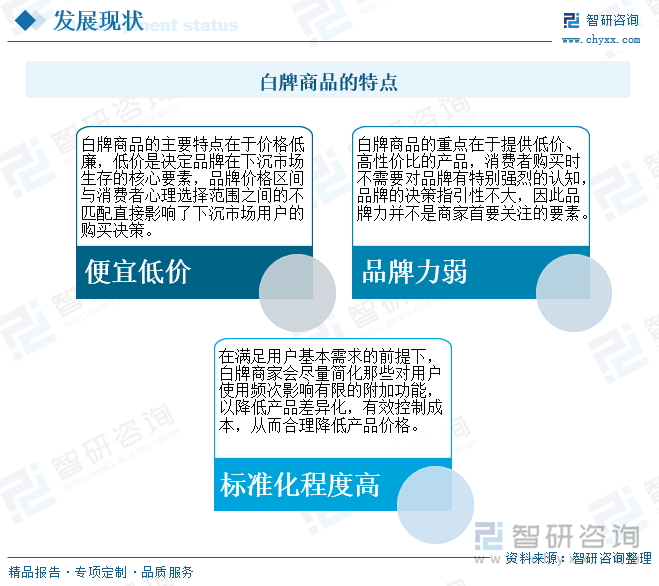
内容概要:白牌商品通常是指由中小厂商生产的无品牌产品,或消费者对其品牌认知度较低的产品。具 备便宜低价、品牌力弱、标准化程度高等特点。近几年,白牌商品发展十分火热,甚至被认为是"白牌 迎来了最好的时代",数据显示,2024年中国白牌商品市场规模超18万亿元。一方面,在消费端,经济 下行压力加剧,消费者收入面临较大不确定性,消费者对价格低敏感度逐步增加,不愿意为品牌的溢价 买单,更倾向于选择价格更低、实用性更高的商品。"不是大牌买不起,而是平替更有性价比"成为许多 消费者的消费理念。在此消费趋势下,性价比高的白牌商品深受消费者青睐,发展空间不断拓宽。在企 业端,品牌的建立需要巨大的投入,从产品到渠道,再到营销,每一个环节都至关重要。即使成为了品 牌,也仍然面临着品牌生命周期的挑战。因此,更多的企业、商家更愿意做白牌,以最低成本和价格, 向消费者提供最能满足其实际需求的产品。此外,电商平台的繁荣发展提升了白牌曝光度,同时也改变 了消费者对白牌的认知。过去,绝大多数中小企业缺乏宣传营销资金,品牌培育意识薄弱,因此没有机 会呈现在消费者面前。而电商产业的繁荣发展改变了这一现状,如拼多多平台上的"白牌"和新品牌商家 G ...
品牌工程指数 上周报1657.60点
Zhong Guo Zheng Quan Bao· 2025-05-25 20:38
Group 1 - The market experienced a slight adjustment last week, with the brand index closing at 1657.60 points, while several component stocks rose against the trend, including Xinlitai, Tigermed, and Stone Technology [1][2] - Xinlitai led the gains with an increase of 14.96%, followed by Tigermed at 12.48%, and Stone Technology at 11.47%. Other notable gainers included Three Squirrels and Supor, which rose by 7.69% and 6.07% respectively [2] - Since the beginning of 2025, Maimai Biological has seen a significant increase of 51.27%, with Shanghai Jahwa and Xinlitai also showing strong performance with gains of 47.96% and 47.71% respectively [3] Group 2 - Looking ahead, the market is expected to gradually shift towards a more positive trend as investors remain sensitive to favorable factors, with ongoing accumulation of positive elements supporting economic expectations and fundamentals [4] - The current market structure indicates a potential for mid-term positive performance, driven by policy support, domestic technological breakthroughs, and a favorable external environment, which may enhance liquidity in the domestic capital market [4] - In the medium to long term, opportunities may arise in sectors such as domestic demand, technology, and overseas expansion, with a focus on defensive dividend sectors and aggressive technology sectors, including internet and robotics [5]





创业仅4年,30岁北大博士和欧莱雅签了
Zhong Guo Ji Jin Bao· 2025-05-25 05:58
Group 1 - Veminsyn has completed a strategic financing round of nearly 100 million yuan, with a post-investment valuation of approximately 100 million USD, backed by L'Oréal Group and Naies Group [2][4] - The partnership aims to co-develop innovative bioactive ingredients and promote their large-scale production using low-carbon biomanufacturing technologies [4][12] - Veminsyn, founded in May 2021, focuses on AI and biotechnology in the beauty and personal care sector, providing high-value bioactive ingredients through next-generation biosynthesis technology [4][5] Group 2 - The founders, Zhao Yaran and Chen Jiayue, recognized the potential of biotechnology in consumer goods, particularly in the beauty industry, which has higher raw material value due to its medical attributes [5][6] - The trend towards more flexible, efficient, and low-carbon biosynthesis methods is seen as essential for future innovation in beauty raw materials [5][6] - Veminsyn's new raw material, Time-COL17™, has achieved mass production and market expansion, enhancing the application scenarios for downstream skincare brands [9][11] Group 3 - Veminsyn has established itself as a key supplier for both domestic and international beauty brands, including L'Oréal, Procter & Gamble, and Unilever [12] - The company is also expanding into the home cleaning sector through its partnership with Naies, aiming for global market expansion [12] - The establishment of a GMP-level factory in Suzhou has enabled Veminsyn to produce medical beauty products, further solidifying its position in the industry [12]

国货美妆“第二梯队”暗涌资本野心
Xin Lang Cai Jing· 2025-05-23 06:10
Core Viewpoint - The recent surge in interest for IPOs among domestic beauty brands in China is highlighted by the cases of 毛戈平 and 谷雨, indicating a potential new wave of listings in the beauty sector despite challenges in the A-share market [1][5]. Group 1: IPO Attempts and Challenges - 东方妍美 has submitted its prospectus for a Hong Kong IPO, projecting revenues of 12.88 million yuan and 14.52 million yuan for 2023 and 2024, respectively, with a growth rate of 12.7% in 2024 [1]. - 毛戈平 has faced multiple failed attempts to list on the A-share market, ultimately shifting its focus to the Hong Kong market after years of effort [2][3]. - Other beauty brands like 环亚科技 and 相宜本草 have also encountered significant hurdles in their IPO journeys, with the latter terminating its listing plans after several attempts [3][4]. Group 2: Market Conditions and Regulatory Environment - The new "国九条" policy has raised the listing thresholds for A-share companies, making it increasingly difficult for beauty brands to go public [4]. - The recent success of beauty companies like 芭薇股份 and 敷尔佳 in A-share listings contrasts with the struggles of others, indicating a selective market environment [6]. Group 3: Growth and Performance of 谷雨 - 谷雨 has shown rapid growth, with sales reaching 5 billion yuan in 2024, positioning it among the top beauty brands in China [6][7]. - The brand's reliance on a single product line and online sales channels poses potential risks, as indicated by its heavy dependence on e-commerce platforms [7][8]. - 谷雨's marketing strategy involves significant spending on promotions and collaborations, raising concerns about sustainability and profitability [8]. Group 4: Other Brands and Future IPO Plans - Brands like 林清轩 and 伽蓝集团 are reportedly preparing for IPOs, with 林清轩 experiencing a 50% growth in sales despite a challenging market [9][10]. - 花西子 has shown strong sales performance but has not pursued external funding, leading to speculation about its IPO intentions [11]. - 橘宜集团 has completed multiple financing rounds and is preparing for a potential IPO, indicating a trend among beauty brands to consider public listings [12].