AMD

Search documents
Acer Introduces the Veriton RA100 AI Mini Workstation, a Windows 11 Copilot+ PC Powered by AMD Ryzen AI Max+ 395 Processors for Advanced AI Performance
Prnewswire· 2026-01-05 23:15
Core Insights - Acer has launched a new range of Veriton desktop computers aimed at enhancing productivity and creativity for businesses, including all-in-ones, a large tower, and an AI mini workstation [2][3] Group 1: Product Offerings - The Acer Veriton RA100 AI Mini Workstation is designed for prosumers, creators, and gamers, featuring AMD Ryzen AI Max+ 395 processors and advanced AI capabilities, supporting demanding workloads with up to 128 GB LPDDR5X memory and 4 TB SSD storage [3][4][7] - The Acer Veriton Vero 4000 and 6000 All-in-One desktops combine strong AI performance with robust security, powered by Intel Core Ultra 9 processors, offering up to 64 GB DDR5 memory and 2 TB PCIe Gen 4 SSD storage [5][6][8] - The Acer Veriton 2000 Large Tower is tailored for content creation and everyday productivity, equipped with Intel Core Ultra 9 processors and NVIDIA GeForce RTX 5080 GPUs, providing significant AI processing power and storage options [9][10][11] Group 2: Features and Specifications - The Veriton RA100 supports high-frequency processing and multitasking, with features like adaptive performance modes for different workloads, ensuring efficient cooling and noise management [4][7] - The Veriton Vero AIOs feature a 23.8-inch Full HD display, Wi-Fi 7, Bluetooth 5.4, and a 5.0 MP infrared webcam, enhancing collaboration and connectivity in modern workplaces [6][8] - The Veriton 2000 Large Tower includes smart device management through Acer Sense, facilitating easy system monitoring and updates, and is designed for energy efficiency with Energy Star compliance [11][12] Group 3: Availability - The Acer Veriton RA100 AI Mini Workstation and the Veriton Vero 4000 and 6000 AIOs will be available in North America and EMEA in Q1 2026, while the Veriton 2000 Large Tower and All-In-One will also launch in EMEA during the same period [14][15]



AI Stocks Are in Focus as Nvidia's Huang, AMD CEO Su Set to Speak at CES Event
Investopedia· 2026-01-05 18:55
Core Insights - Investors are focusing on the CES consumer electronics trade show in Las Vegas, where key executives from major tech companies, including Nvidia and AMD, will present [1][6] - Nvidia CEO Jensen Huang and AMD CEO Lisa Su are the main speakers, with Huang's press conference scheduled for 4 p.m. EST and Su's keynote at 9:30 p.m. EST [1][2] Industry Context - CES serves as a platform for tech companies to unveil their visions for future products, which could influence major tech stock performance amid recent pressures related to potential AI market sustainability [3][4] - AI companies are facing scrutiny regarding the return on their substantial investments in data centers and AI model operations, raising concerns about the longevity of the AI boom that has supported the broader market [4] Company Highlights - Other notable companies scheduled to speak at CES include IBM, Alibaba, General Motors, Caterpillar, Target, and Best Buy, indicating a broad interest in AI and technology solutions across various sectors [5] - Shares of Nvidia and AMD experienced a decline of approximately 1% in early trading on Monday, reflecting market volatility and investor sentiment [6]


A Look Into Advanced Micro Devices Inc's Price Over Earnings - Advanced Micro Devices (NASDAQ:AMD)
Benzinga· 2026-01-05 15:00
In the current session, the stock is trading at $228.72, after a 2.35% increase. Over the past month, Advanced Micro Devices Inc. (NASDAQ:AMD) stock increased by 3.20%, and in the past year, by 79.63%. With performance like this, long-term shareholders are optimistic but others are more likely to look into the price-to-earnings ratio to see if the stock might be overvalued.A Look at Advanced Micro Devices P/E Relative to Its CompetitorsThe P/E ratio measures the current share price to the company's EPS. It ...

美股存储芯片股走高;黄仁勋和苏姿丰6日将做主题演讲;台积电涨超3%,开盘后或将创历史新高【美股盘前】
Mei Ri Jing Ji Xin Wen· 2026-01-05 11:20
Market Overview - Futures for the Dow Jones increased by 0.06%, S&P 500 futures rose by 0.23%, and Nasdaq futures gained 0.52% [1] Semiconductor Sector - U.S. storage chip stocks saw gains, with Micron Technology rising over 3%, Western Digital up more than 2%, and SanDisk also increasing by over 2% [2] Oil Sector - Oil stocks experienced a broad increase, with Chevron rising by 6.84%, ConocoPhillips up by 6.51%, ExxonMobil increasing by 3.38%, and Occidental Petroleum gaining 1.39%. This surge follows an announcement by Trump regarding U.S. oil companies entering Venezuela to invest billions in repairing oil infrastructure [2] Gold Sector - Gold stocks collectively rose, with New Gold increasing by over 5%, Coeur Mining up more than 3%, and Pan American Silver, Barrick Gold, Harmony Gold, and Newmont Mining all rising by over 2%. Spot gold increased by 2.24%, reaching $4,435.83 per ounce [2] Technology Sector - TSMC shares rose by 3.28%, reaching $330.09, potentially setting a new historical high. Goldman Sachs raised its target price for TSMC by 35%, anticipating steady growth for the company this year. TSMC's 2nm process is expected to ramp up production capacity from 35,000 wafers per month to 140,000 by year-end, exceeding previous market estimates [3] - Bernstein upgraded ASML's rating to "outperform" and raised its target price from €800 to €1,300, citing significant benefits from the emerging DRAM cycle and underestimation of capacity expansions by major DRAM manufacturers [3] IBM - Jefferies upgraded IBM's rating from "hold" to "buy" and increased its target price from $300 to $360, expressing optimism about IBM's software business despite prevailing market skepticism [4] Cryptocurrency - Bitcoin reached a three-week high, climbing 2.3% to $93,323, the highest level since December 11, 2025. This surge positively impacted cryptocurrency-related stocks, with Coinbase rising by 4.22% [4] Upcoming Events - NVIDIA CEO Jensen Huang and AMD CEO Lisa Su are scheduled to deliver keynote speeches at the CES event on January 6 [4]

Markets Week Ahead: Bulls Eye Early 2026 Momentum After a Weak Finish to 2025
Investing· 2026-01-05 07:37
Group 1 - The article provides a market analysis covering major indices including Nasdaq 100, S&P 500, and Dow Jones Industrial Average, indicating current trends and performance metrics [1] Group 2 - The analysis includes insights on S&P 500 Futures, highlighting their implications for future market movements and investor sentiment [1]

湘财证券:算力需求高景气 端侧AI持续迭代
智通财经网· 2026-01-05 06:33
Core Insights - The development of generative AI technology is driving a hardware innovation wave in consumer electronics, with a focus on edge AI deployment and the increasing demand for ASICs due to their cost-effectiveness and customization advantages [1][2]. Group 1: AI Technology and Consumer Electronics - The traditional consumer electronics market has entered a phase of low growth, with stable sales for smartphones and PCs, while TWS is experiencing slow growth [1]. - The release of ChatGPT has prompted companies to invest in large model technologies, leading to continuous iterations in AI models [1]. - Edge AI offers advantages such as low cost, high performance, and privacy security, facilitating the deployment of AI technologies in consumer electronics [1]. Group 2: ASIC Market Growth - The ASIC market is expected to grow significantly, with a forecasted increase from $6.6 billion in 2023 to $55 billion by 2028, representing a compound annual growth rate (CAGR) of 53% [2]. - Major companies like Google and Amazon are actively supplying ASICs, indicating strong demand and commercial viability for these chips [2]. Group 3: PCB Market Dynamics - The capital expenditure by AI and internet giants on data centers is projected to grow at a CAGR of 21% until 2029, driving the expansion of computing clusters [3]. - The increasing complexity of AI servers and high-speed switches is leading to a rise in PCB value, with both volume and price increasing rapidly in the AI PCB market [3]. Group 4: Edge AI Implementation - The advancement of model compression technology is laying the groundwork for deploying large models on edge devices, enhancing the application of AI in smartphones [4]. - Companies like Huawei and ByteDance are showcasing the significant application value of edge AI in mobile devices, with predictions of a CAGR of 115% for advanced AI processors and 32% for AI smartphones from 2023 to 2027 [4]. Group 5: Investment Recommendations - Companies to watch in the edge AI sector include Rockchip (603893.SH), Hengxuan Technology (688608.SH), Espressif Systems (688018.SH), Zhongke Blue Communication (688332.SH), and Horizon Robotics (09660) [5]. - In the ASIC sector, recommended companies include Chipone Technology (688521.SH), Aowei Technology (688220.SH), and Cambricon Technologies (688256.SH) [5].
从情绪迸发到价值审视 摩尔线程、沐曦股份已回调近40%
2 1 Shi Ji Jing Ji Bao Dao· 2026-01-05 05:42
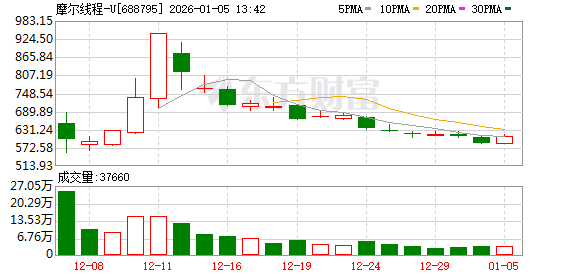
Group 1 - The core viewpoint of the article highlights the recent IPO frenzy among domestic GPU companies, with significant initial stock price surges followed by substantial market corrections, indicating a disconnect between high valuations and commercial realities [2][4][6] - The three notable companies, Moer Thread, Muxi Co., and Birran Technology, have all seen their stock prices soar upon listing, with Moer Thread's price increasing by over 468% on its debut, while Muxi Co. achieved a peak market value exceeding 300 billion yuan [4][5] - Despite the initial excitement, all three companies have experienced significant stock price declines, with Moer Thread and Muxi Co. seeing reductions of approximately 37% and 35% from their peak values, respectively [6][9] Group 2 - The article discusses the high capital expenditures associated with the GPU industry, noting that all three companies have reported substantial losses alongside significant R&D investments, with Moer Thread's cumulative losses reaching around 5 billion yuan from 2022 to 2024 [7][8] - The market share of domestic GPU companies remains low compared to international competitors, with Nvidia holding a dominant position in both domestic and global markets, capturing over 54.4% of the domestic AI chip market [9][10] - The article emphasizes the importance of ecosystem compatibility, with domestic companies striving to create alternatives to Nvidia's CUDA ecosystem, which poses a significant challenge for their long-term survival and growth [10]
摩尔线程、沐曦股份已回调近40%
Xin Lang Cai Jing· 2026-01-05 05:34
Core Viewpoint - The recent IPO frenzy among domestic GPU companies has led to significant initial stock price surges, but these stocks have since experienced substantial declines in market value, highlighting the challenges of commercialization and profitability in the GPU sector [3][20][19]. Group 1: IPO Performance - On January 2, 2025, Wallen Technology (6082.HK) saw its stock price rise nearly 120% on its first trading day, becoming the "first domestic GPU stock" in Hong Kong [2]. - Moer Technology (688795.SH), known as the "first domestic GPU stock," saw its stock price increase over four times on its debut, closing at over 900 CNY per share, significantly above its issue price of 114.28 CNY [2][22]. - Muxi Technology (688802.SH) achieved a record high for single-sign profits on its first day of trading, with potential gains nearing 400,000 CNY for investors [2][22]. Group 2: Market Value Decline - Following their initial surges, the stock prices of Moer Technology and Muxi Technology have both retraced nearly 40%, with declines of approximately 37% and 35% from their peak prices, respectively [3][19]. - Wallen Technology's stock closed up only 80% on its debut, with a total market value of less than 100 billion HKD, about one-third of the market values of Moer and Muxi [3][19]. Group 3: Financial Performance and Challenges - Despite revenue growth over the past three years, these GPU companies have not yet achieved profitability, facing high capital expenditures due to the nature of the chip industry [20][3]. - Moer Technology reported cumulative losses of approximately 5 billion CNY from 2022 to 2024, with total revenue of only about 600 million CNY during the same period [27][29]. - Muxi Technology's cumulative losses reached 3.29 billion CNY from 2022 to the first quarter of 2025, with research and development expenses significantly exceeding its total revenue [27][29]. Group 4: Market Position and Competition - The market share of domestic GPU companies remains low compared to international giants like NVIDIA and AMD, which dominate the market with shares of 54.4% and 15.3% respectively in the domestic AI chip market [30][13]. - The top two players in the Chinese smart computing chip market hold a combined market share of 94.4%, with U.S.-based GPU companies accounting for 76.2% of the market [30][13]. - The ecological compatibility with NVIDIA's CUDA ecosystem poses a significant challenge for domestic GPU manufacturers, as they strive to establish their own competitive ecosystems [31][30].
摩尔线程、沐曦股份已回调近40%
21世纪经济报道· 2026-01-05 05:26
Core Viewpoint - The recent IPO frenzy among domestic GPU companies has led to significant initial stock price surges, but these stocks have since experienced substantial declines, highlighting the gap between high market expectations and the companies' current financial realities [1][2][4]. Group 1: IPO Performance - On January 2, 2025, Birran Technology (6082.HK) saw its stock price rise nearly 120% on its debut, becoming the "first domestic GPU stock" in Hong Kong [1]. - Moer Technology (688795.SH), dubbed the "first domestic GPU stock," experienced a stock price increase of over 400% on its first day, closing at over 900 CNY per share, significantly above its issue price of 114.28 CNY [1][4]. - Muxi Co., Ltd. (688802.SH) had a debut on December 17, 2025, with a maximum profit of nearly 400,000 CNY for investors on its first day, setting a record for A-share IPOs in the past decade [1]. Group 2: Market Valuation and Adjustments - Following their initial surges, Moer Technology and Muxi Co. have seen their stock prices decline by approximately 37% and 35%, respectively, from their peak values [1][5]. - Birran Technology's stock closed with a gain of less than 80% on its first day, with a total market capitalization of less than 100 billion HKD, only about one-third of Moer and Muxi's market values [1][8]. Group 3: Financial Performance and Challenges - All three companies have shown revenue growth over the past three years but have yet to achieve profitability, with high R&D expenditures continuing [1][10]. - Moer Technology reported cumulative losses of approximately 5 billion CNY from 2022 to 2024, with total R&D investments of 3.81 billion CNY and total revenue of only about 600 million CNY [10]. - Muxi Co. indicated cumulative losses of 3.29 billion CNY during the same period, with R&D investments totaling 2.466 billion CNY, far exceeding total revenue of 1.116 billion CNY [10]. Group 4: Market Position and Competition - The market share of domestic GPUs remains low compared to global competitors, with Nvidia holding a dominant position [12]. - In the domestic AI chip market, Nvidia, Huawei, and AMD hold 54.4%, 21.4%, and 15.3% market shares, respectively, indicating a significant competitive gap for domestic firms [12]. - The industry is characterized by a high concentration of market share among leading players, with the top two participants accounting for 94.4% of the market revenue in China [12]. Group 5: Ecosystem and Future Prospects - The success of GPU companies is heavily reliant on building a compatible ecosystem, with Nvidia's CUDA ecosystem being a significant barrier for domestic firms [13]. - Domestic companies are attempting to create their ecosystems, such as Moer Technology's MUSA architecture, but face challenges in breaking Nvidia's dominance [13]. - The market's initial enthusiasm for these companies reflects strong future demand expectations, but the companies must navigate the pressures of short-term speculation and long-term development potential [13].

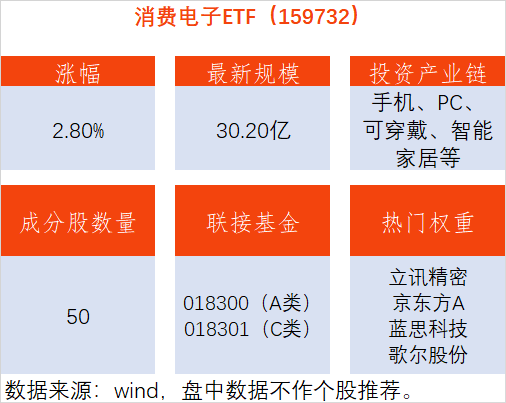
【CES 2026开幕在即!消费电子ETF(159732)上涨2.80%,兆易创新涨停】
Mei Ri Jing Ji Xin Wen· 2026-01-05 02:53
Group 1 - The A-share market saw all three major indices rise on January 5, with the Shanghai Composite Index increasing by 0.86%. The insurance and healthcare sectors led the gains, while oil and gas, as well as highways, experienced declines [1] - The Consumer Electronics ETF (159732) rose by 2.80% as of 10:21 AM, with significant increases in component stocks such as Zhaoyi Innovation (up 10.00%), Baiwei Storage (up 9.20%), Lens Technology (up 7.86%), Xichuang Data (up 7.84%), and Xinwei Communication (up 5.98%) [1] Group 2 - The 2026 International Consumer Electronics Show (CES) is scheduled to take place from January 6 to 9, 2026, in Las Vegas, USA. Keynote speeches will be delivered by NVIDIA CEO Jensen Huang and AMD CEO Lisa Su, focusing on AI applications in robotics, drones, and automotive sectors [3] - Dongwu Securities predicts that 2026 will mark the beginning of a new era for AI terminal innovations, with major companies like Meta, Apple, Google, and OpenAI set to launch new terminal products. The new AI terminal forms will include glasses, AI pins, and camera headphones, driven by model iterations and accelerated application scenario development [3] - The Consumer Electronics ETF (159732) tracks the Guozheng Consumer Electronics Index, primarily investing in 50 A-share listed companies involved in the consumer electronics industry, with a focus on electronic manufacturing and optical optoelectronics [3]