上海家化

Search documents
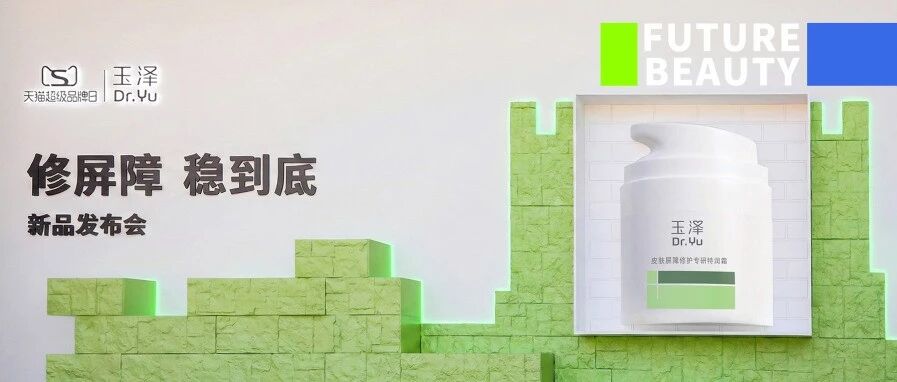
深耕皮肤屏障23年,玉泽如何造出“医研长城”?
FBeauty未来迹· 2026-01-23 09:03
Core Viewpoint - The article emphasizes the importance of skin barrier repair in the skincare industry, positioning it as a long-term commitment akin to the Great Wall of China, which symbolizes protection and stability [4][12][36]. Group 1: Company Development and Research - Yuze has been focused on skin barrier repair for 23 years, undergoing a long phase of high investment and slow returns, which has not been fully understood by the market [6][10]. - The initial research was based on clinical practices at Ruijin Hospital, where skin barrier issues were not yet mainstream, highlighting the need for scientific and sustainable daily care [6][8]. - The first skin barrier repair product took six years to develop, involving 1,386 clinical validations, and over 5,000 clinical studies have been conducted in collaboration with more than 40 top-tier hospitals [8][12]. Group 2: Product Development Stages - Yuze's development is divided into four stages: 1. Medical research origin phase, focusing on establishing evidence-based standards [10]. 2. Product and application expansion phase, validating the skin barrier repair concept [10]. 3. Formation of a technical system, marked by the patent of PBS technology, transitioning to systematic technical accumulation [11]. 4. Current phase centered on systematic and long-term principles, emphasizing clinical insights and evidence-based standards [11][12]. Group 3: Market Position and Strategy - Yuze's commitment to skin barrier repair has created a competitive advantage in a rapidly changing industry, allowing for sustained output and continuous validation [14][36]. - The launch of the second-generation skin barrier repair cream in 2025 achieved over 100 million yuan in sales in its first year, becoming a significant growth driver for the company [12][36]. - The brand's long-term focus on skin barrier repair is seen as a strategic choice that aligns with public health values, addressing chronic skin conditions that require ongoing care [34][36]. Group 4: Public Health and Social Responsibility - The establishment of the "Shanghai Jahwa-Ruijin Guangci Skin Disease Charity Fund" aims to assist economically disadvantaged patients with skin diseases, creating a positive feedback loop between public health, research, and brand development [32][34]. - The article highlights the need for a comprehensive understanding of skin health as a public health issue, emphasizing the importance of stable skin barrier maintenance over quick fixes [34][36]. Group 5: Cultural and Educational Initiatives - Yuze's collaboration with the Great Wall Small Station for the "Barrier Art Exhibition" aims to elevate the understanding of skin health and repair as a cultural action, reinforcing the brand's image as a protector of life [35][36]. - The release of the "National Skin Barrier Health Green Book" seeks to establish a framework for understanding skin barriers that is accessible to the public while remaining grounded in medical logic [24][32].


化妆品板块1月22日跌0.44%,贝泰妮领跌,主力资金净流出5488.34万元
Zheng Xing Xing Ye Ri Bao· 2026-01-22 09:02
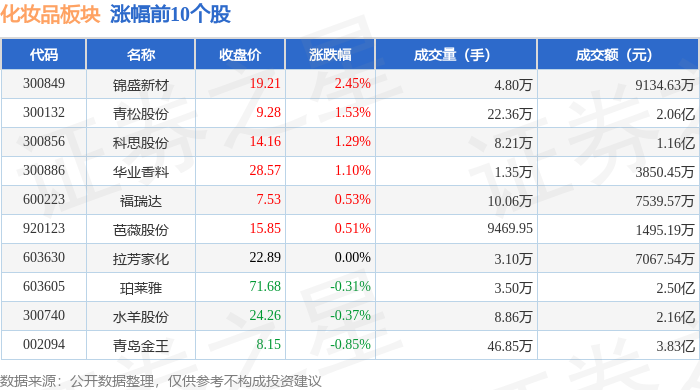
Market Overview - The cosmetics sector experienced a decline of 0.44% on January 22, with Betaini leading the drop [1] - The Shanghai Composite Index closed at 4122.58, up 0.14%, while the Shenzhen Component Index closed at 14327.05, up 0.5% [1] Individual Stock Performance - Notable gainers included: - Jingsheng New Materials (300849) with a closing price of 19.21, up 2.45% on a trading volume of 48,000 shares and a turnover of 91.35 million yuan [1] - Qingsong Co. (300132) closed at 9.28, up 1.53% with a trading volume of 223,600 shares and a turnover of 206 million yuan [1] - Kesheng Co. (300856) closed at 14.16, up 1.29% with a trading volume of 82,100 shares and a turnover of 116 million yuan [1] - Decliners included: - Betaini (300957) closed at 42.37, down 1.42% with a trading volume of 71,400 shares [2] - Jiahen Home (300955) closed at 37.20, down 1.30% with a trading volume of 19,000 shares and a turnover of 71.10 million yuan [2] - Shanghai Jahwa (600315) closed at 23.41, down 1.22% with a trading volume of 89,200 shares [2] Capital Flow Analysis - The cosmetics sector saw a net outflow of 54.88 million yuan from institutional investors, while retail investors experienced a net inflow of 82.39 million yuan [2] - Key stocks with significant capital flow include: - Kesheng Co. (300856) with a net inflow of 12.48 million yuan from institutional investors [3] - Qingsong Co. (300132) with a net inflow of 9.15 million yuan from institutional investors [3] - Shanghai Jahwa (600315) had a net inflow of 4.16 million yuan from institutional investors [3]
香氛、唇膏、护手霜,美妆产品在“包”上出道了
2 1 Shi Ji Jing Ji Bao Dao· 2026-01-22 08:01
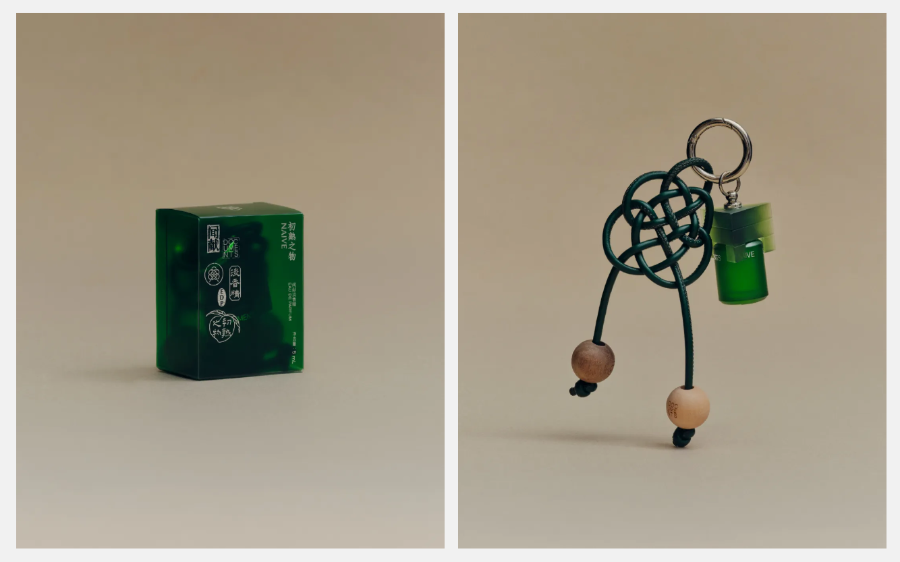
21世纪经济报道记者朱艺艺报道 从国产香氛品牌闻献的"Q香绳结包挂",到新锐个护品牌摇滚动物园联名茉莉奶白的挂链护手霜,越来越多美妆产品开始"跳 出"化妆包,争先在"包"上出道。 这些挂件式美妆产品,已从最初的香水香氛,逐渐渗透至唇膏、护手霜、防晒霜等多个品类,一方面实现美妆产品即时取用、 随时补护的场景自由,另一方面展现出年轻消费群体希望"被看见又不张扬"的个性表达。 在这股"包挂"热潮下,许多美妆品牌试图打开新的市场空间,寻求业绩增量,但目前来看,市场体量还未成气候。 美妆上"包" Z世代对于"颜值即正义"的消费心理,推动挂件式美妆产品悄然走红。 一个挂在"痛包"上的护手霜、一个引发朋友圈话题的戒指唇膏……护手霜、唇膏、防晒霜、粉饼等美妆产品,正通过挂链、环 扣、编绳等多种形态,与包具、衣服等日常物品搭配,成为年轻人新的社交货币。 根据用户说研究中心数据,2025年1月1日-12月31日,以"挂饰/挂绳/链条与护肤/彩妆/香水相关包装设计组合"为关键词的"挂饰 美妆"声量在近一年内增长迅速,声量破21.8万,同比增长高达41.8%。 这一数据印证了挂件美妆潮流的强劲势头,在这股"包挂"热潮下,不少品牌纷纷 ...
2026年中国化妆品展望:为高质量增长重置,ROI改善利好品牌领导者
Goldman Sachs· 2026-01-22 07:45
Investment Rating - The report upgrades MGP to Buy from Neutral, highlighting its sustainable growth and resilient margins in the premium beauty market [10] - Giant Biogene is rated Buy, with expectations of a gradual recovery in sales and strong long-term growth potential [16] - Shanghai Jahwa is also rated Buy, indicating a turnaround in its skincare business and solid growth prospects [22] Core Insights - The China cosmetics industry is expected to see sustained momentum driven by higher-quality channels and a focus on new product cycles [3] - The government's anti-involution measures are likely to increase traffic acquisition costs, impacting sales on platforms like Douyin [3] - There is a shift towards reliability and brand trust in consumer preferences, prompting companies to innovate and upgrade their product offerings [4] Summary by Sections Key Trends - Higher-quality channels are expected to maintain momentum, particularly on Tmall, supported by government measures [3] - The product landscape is shifting towards proven efficacy and brand trust, with companies innovating to create new value propositions [4] Company-Specific Insights - MGP is positioned for sustainable growth with a projected 34%/38% sales/NI CAGR from 2021-2025, and 23%/22% from 2025-2027 [10][11] - Giant Biogene anticipates a sales decline in the short term but expects recovery driven by its leading brand position and product pipeline [16] - Shanghai Jahwa is experiencing strong growth in its key brands, with a projected CAGR of 2%/34% for its personal care/cosmetics segment from 2025-2027 [22] Valuation Methodology - MGP's target price is set at HK$105 based on a 28x 2027E P/E, reflecting its high growth profile [12] - Giant Biogene's target price is HK$46, based on a 22x 2027E P/E, indicating a recovery in its sales profile [17] - Shanghai Jahwa's target price is RMB 28, based on a 30x 2027E P/E, reflecting its improving sales and net profit profile [23]
化妆品交易额破1.1万亿元,线上销量占比接近2/3
Sou Hu Cai Jing· 2026-01-21 19:18
Core Insights - The Chinese cosmetics industry is projected to reach a total transaction value of 1.104245 trillion yuan by 2025, marking a year-on-year growth of 2.83%, and maintaining its position as the world's largest cosmetics consumer market [1][6]. Market Overview - The market is undergoing a significant transformation, with resources concentrating on leading brands and technology-driven companies, while weaker brands are being eliminated [3][9]. - The market share of domestic brands has increased for four consecutive years, reaching 57.37% by 2025, indicating a shift towards a "domestic brand-led" market [3][6]. Brand Dynamics - The number of brands with sales exceeding 100 million yuan is expected to rise from 746 in 2023 to 839 in 2025, reflecting an improvement in brand quality [6]. - The top 1000 online brands are increasingly dominated by domestic brands, which are now competing effectively against traditional powerhouses from France, the USA, Japan, and South Korea [3][6]. Market Structure Changes - The industry is experiencing a significant shakeout, with an estimated 27,000 brands expected to be eliminated by 2025, and only about 26% of lower-tier brands projected to achieve growth [9][12]. - The market is shifting from quantity-based competition to quality-based competition, focusing on brand value, technological innovation, and user experience [9][12]. Consumer Behavior - Consumer preferences are evolving towards high-cost performance products priced below 300 yuan and high-end products above 1000 yuan, while the mid-range market is being squeezed [13]. - The new consumer consensus emphasizes rational and refined purchasing decisions, focusing on ingredients, efficacy, cultural identity, and emotional value [13]. Regulatory Environment - New regulations are being introduced to create a fair competitive environment for both online and offline channels, with offline spaces being redefined as comprehensive areas for brand experience and social interaction [14]. - The regulatory framework is shifting from strict control to promoting development, with a focus on innovation incentives and reducing entry barriers for new products [14]. Technological Innovation - The integration of artificial intelligence is expected to reshape the industry significantly between 2026 and 2030, enhancing research and development, personalized content production, and supply chain efficiency [17]. - Companies are increasingly investing in R&D, with the average R&D expense ratio rising from 2.36% to 3.24% over five years, highlighting a trend towards innovation-driven growth [14][17]. Future Outlook - The industry aims to transition from being a "cosmetics manufacturing power" to a "cosmetics strong power," focusing on intelligent, green, and integrated development [16][18]. - The market is expected to expand towards the "silver economy" and international markets, with domestic brands enhancing their global presence [16][15].
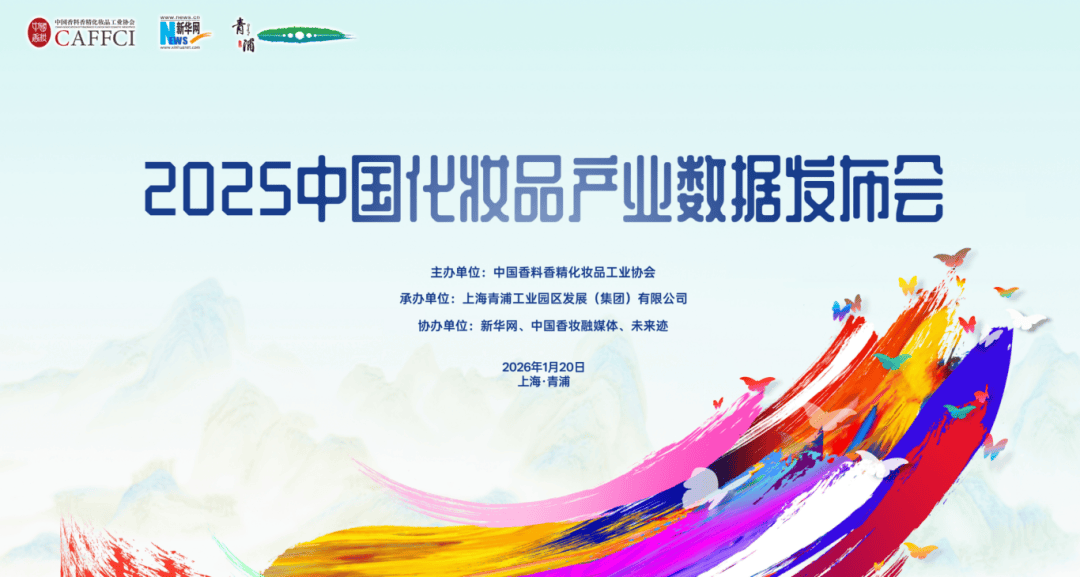
2025年中国化妆品交易额突破1.1万亿元 国货品牌竞争力持续领跑
Zheng Quan Ri Bao Wang· 2026-01-21 11:41
Core Insights - The 2025 China Cosmetics Industry Data Release Conference highlighted the industry's significant growth and transformation, emphasizing the importance of high-quality development amidst global economic uncertainties [1][2] Group 1: Market Overview - By 2025, the Chinese cosmetics market is projected to reach a record high of 1.1 trillion yuan (approximately 1104.25 billion yuan), with a year-on-year growth of 2.83% [1] - Domestic brands continue to lead in competitiveness, increasing their market share to 57.37% [1] - Online sales are expected to reach 721.77 billion yuan, growing by 4.45% and accounting for 65.36% of total sales, while offline sales remain stable at 382.47 billion yuan [1] Group 2: Industry Trends - The market concentration is increasing, with over 60% of the top 500 brands experiencing positive growth, while only 26% of brands ranked below 500 show growth [2] - The industry is transitioning from total expansion to structural optimization, focusing on depth competition rather than breadth [2] - The number of eliminated brands reached 26,900, indicating a rationalization of competition within the industry [2] Group 3: Innovation and Development - The conference featured discussions on the integration of AI and other technologies in the cosmetics industry, highlighting innovative practices that drive brand growth [3] - Media's role in promoting high-quality development in the beauty industry was also emphasized, showcasing innovative pathways for industry growth [2][3]


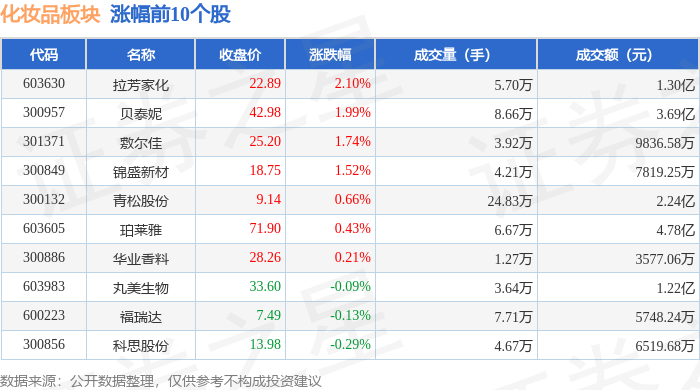
化妆品板块1月21日涨0.25%,拉芳家化领涨,主力资金净流出5552.25万元
Zheng Xing Xing Ye Ri Bao· 2026-01-21 09:08
Group 1 - The cosmetics sector experienced a slight increase of 0.25% on January 21, with Lafang Jiahua leading the gains [1] - The Shanghai Composite Index closed at 4116.94, up 0.08%, while the Shenzhen Component Index closed at 14255.12, up 0.7% [1] - Lafang Jiahua's closing price was 22.89, reflecting a rise of 2.10%, with a trading volume of 57,000 shares and a transaction value of 130 million yuan [1] Group 2 - The cosmetics sector saw a net outflow of 55.52 million yuan from institutional investors, while retail investors had a net inflow of 30.86 million yuan [2] - The trading data for various companies showed mixed performance, with some companies like Betaini and Lafang Jiahua experiencing net outflows from institutional investors [3] - Betaini had a net outflow of 14.09 million yuan from institutional investors, while Lafang Jiahua saw a net inflow of 13.43 million yuan [3]



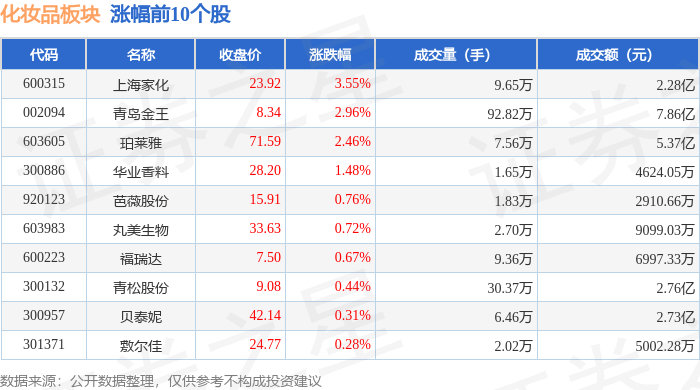
化妆品板块1月20日涨1.11%,上海家化领涨,主力资金净流入3030.2万元
Zheng Xing Xing Ye Ri Bao· 2026-01-20 08:59
Group 1 - The cosmetics sector experienced a rise of 1.11% on January 20, with Shanghai Jahwa leading the gains [1] - The Shanghai Composite Index closed at 4113.65, down 0.01%, while the Shenzhen Component Index closed at 14155.63, down 0.97% [1] - Key stocks in the cosmetics sector showed varied performance, with Shanghai Jahwa closing at 23.92, up 3.55%, and Qingdao Kingking at 8.34, up 2.96% [1] Group 2 - The cosmetics sector saw a net inflow of 30.3 million yuan from institutional investors, while retail investors experienced a net outflow of 54.5 million yuan [2] - Notable individual stock performances included Shanghai Jahwa with a net inflow of 20.5 million yuan from institutional investors, and Qingdao Kingking with a net inflow of 23.3 million yuan [3] - The overall market sentiment reflected a mixed response, with some stocks like Banlaya experiencing significant net outflows from both institutional and retail investors [3]

刚刚,A股突变!三大原因!
天天基金网· 2026-01-20 05:21
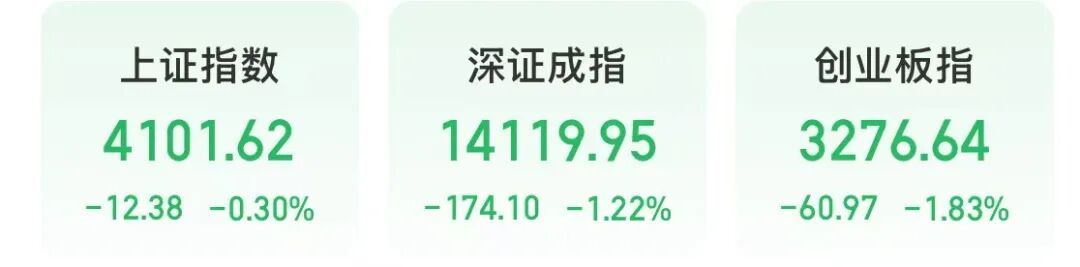
Market Overview - The Shanghai Composite Index experienced significant fluctuations, dropping below 4100 points and later recovering slightly, with a maximum decline of over 0.8% [2] - The Shenzhen Component Index fell by 1.22%, and the ChiNext Index decreased by 1.83% by the close of the morning session [4] Market Influences - Concerns over the performance of US markets following the Martin Luther King Jr. Day holiday contributed to negative sentiment in the Asia-Pacific markets [2] - A report indicated that the US will impose a 10% tariff on goods from several European countries starting February 1, which added to market anxiety [2] - A notable decline in market liquidity was observed, with the A-share market's financing balance decreasing by 8.5 billion yuan to 27,059 billion yuan as of January 19 [2] Consumer Sector Performance - The consumer sector showed strong performance, with significant gains in beauty care, food processing, and liquor sectors [6] - The stock of Pop Mart surged after announcing a share buyback of approximately 251 million HKD, positively impacting market sentiment towards new consumption [8] - Recent government policies aimed at boosting domestic consumption were highlighted, including plans to enhance service consumption and address supply-demand imbalances [8][9] AI Sector Activity - The AI for Science (AI4S) concept saw active trading, with leading stocks like Zhizhi New Materials rising over 17% [11] - Analysts noted that advancements in AI model capabilities are accelerating the commercialization of AI applications, particularly in scientific research [11] - The competition among major AI model providers for market share is expected to intensify, creating growth opportunities across various sectors [11]

A股调整,三大原因
Zhong Guo Zheng Quan Bao· 2026-01-20 05:05
Market Overview - The Shanghai Composite Index experienced significant volatility, dropping below 4100 points and reaching a maximum decline of over 0.8% before recovering slightly [1] - The technology sector faced a pullback, particularly in the computing industry chain, while consumer sectors, high-dividend assets, and chemicals saw gains [1] Market Influences - The U.S. stock market was closed on Martin Luther King Jr. Day, leading to concerns about its performance upon reopening, which negatively impacted the Asia-Pacific markets [1] - A report indicated that U.S. President Trump announced a 10% tariff on imports from Denmark, Norway, Sweden, France, Germany, the UK, the Netherlands, and Finland starting February 1 [1] - Market liquidity has changed, with a rapid decline in trading volume since January 15 and a decrease in margin financing balance, which reported 2.7059 trillion yuan as of January 19, down 8.5 billion yuan from the previous day [1] Consumer Sector Activity - The consumer sector showed strong performance, with significant gains in beauty care, food processing, and liquor sectors. Notably, stocks of "new consumption" companies like Pop Mart, Mixue Group, and Laopu Gold rose collectively [4] - Analysts attribute the strength in the consumer sector to several factors, including Pop Mart's announcement of a share buyback worth approximately 251 million Hong Kong dollars, which positively influenced market sentiment [6] Policy Support - Recent government policies aimed at boosting consumption were highlighted, including a meeting on January 16 that discussed measures to enhance service consumption and domestic demand [7] - The National Development and Reform Commission emphasized the need to strengthen domestic demand and adapt to the evolving demand structure, with plans to develop a strategy for expanding domestic demand from 2026 to 2030 [7] AI Sector Developments - The AI for Science concept saw active performance, with leading stocks like Zhite New Materials rising over 17%. Other AI application stocks also experienced significant gains [8] - Analysts noted that advancements in model capabilities and cost reductions are accelerating the commercialization of AI applications, suggesting a growing competitive landscape among major AI model providers [8]