
中国飞鹤

Search documents
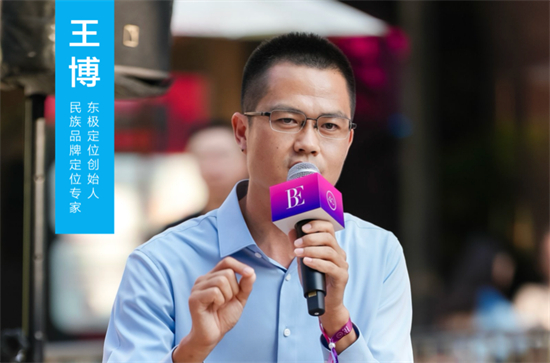
东极定位王博:打造战略级精品,打赢心智概念战
Sou Hu Wang· 2026-01-15 05:03
Core Insights - The article discusses the historical opportunity for Chinese clothing brands to transition from "manufacturing overseas" to "branding overseas" amidst a significant restructuring of the global fashion industry and the Chinese consumer market [1][3]. Group 1: Industry Context - The Chinese clothing industry has developed the most complete and efficient supply chain globally, alongside the largest and most diverse consumer market [3]. - Despite strong manufacturing capabilities and consumer demand, Chinese clothing brands remain in the lower tiers of the global value chain, lacking brand premium and cultural influence compared to leading Western brands [3]. Group 2: Strategic Recommendations - **Mental Positioning**: Winning the hearts of consumers through differentiated concepts is crucial. Successful brands occupy a unique and powerful concept in consumer minds, which can be achieved by creating memorable brand messages [6][8]. - **High-Energy Breakthrough**: Chinese clothing brands must overcome brand "energy" deficiencies by strategically positioning themselves to capture high-value concepts that resonate with local culture and create competitive barriers against foreign brands [9][11][12]. - **Boutique Strategy**: Focusing on creating exceptional flagship products that embody brand differentiation is essential. This approach allows brands to leverage product excellence as a core communication medium [15][17]. Group 3: Case Studies - **Feihe Milk Powder**: Positioned as "more suitable for Chinese babies," leveraging local cultural understanding to counter foreign brand advantages [11]. - **Linglong Tire**: Adopted the strategic position of being favored by "7 out of 10 global car manufacturers," enhancing brand value through a clear competitive narrative [11]. - **Catman Underwear**: Established itself as a "technology underwear" brand, differentiating from traditional brands and driving rapid growth [12]. - **Vandean Swimwear**: Positioned as "the fashion swimwear favored by celebrities," creating strong associations with fashion and high quality [14]. Group 4: Future Outlook - The upgrade path for the Chinese clothing industry involves shifting from "efficiency advantage" to "value advantage," requiring entrepreneurs to adopt forward-thinking strategies and cultural confidence [18][20]. - The article emphasizes the need for a deep understanding of the essence of "conceptual competition" and the importance of strategic investments in high-quality flagship products to build strong national brands [20].

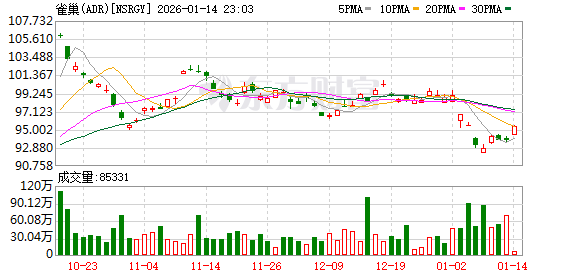
雀巢CEO深夜出镜道歉,损失到底是“0.5%”还是104亿?
Sou Hu Cai Jing· 2026-01-15 02:25
Core Viewpoint - A global recall of infant formula has led to a trust crisis for Nestlé, with the new CEO publicly apologizing and emphasizing food safety as a core value, yet revealing vulnerabilities in supply chain management [1][3]. Group 1: Recall Incident - The recall was triggered by a batch of oil containing ARA that may have been contaminated with Bacillus cereus toxin, causing alarm among parents worldwide [3]. - The recall list includes products like Nestlé NAN, BEBA, and Wyeth Illuma, with Nestlé claiming it is a "preventive measure" and reporting "zero confirmed cases," but parents' anxiety has escalated [5]. Group 2: Communication and Response - There are criticisms regarding the delayed global notification after the issue was discovered in December, with Nestlé stating it needed to coordinate with regulators, but this was perceived as a slow response in the age of rapid information dissemination [5][6]. - The CEO's video apology was seen as a rare move for Nestlé, but it was pre-recorded and lacked interactive engagement, leading to perceptions of it being a "one-way apology" [6]. Group 3: Supply Chain Vulnerabilities - The incident highlights the fragility of multinational supply chains, with the identity of the raw material supplier remaining undisclosed, raising concerns about the reliance on a few suppliers for high-end additives like ARA [6][8]. - Jefferies estimates the potential loss could reach 1.2 billion Swiss francs, significantly higher than Nestlé's own estimate of a 0.5% sales impact, particularly affecting the sensitive Chinese market [8]. Group 4: Future Implications - The CEO's commitment to "restore supply around the clock" is viewed as a gamble, with challenges in production line changes, supply chain audits, and rebuilding market confidence ahead [8][9]. - Nestlé is attempting to turn the crisis into an opportunity for quality upgrades by initiating a thorough review of suppliers, which could potentially attract cautious parents if executed transparently [9]. Group 5: Industry Landscape - The incident underscores a harsh reality in the infant formula industry where safety is paramount, and any lapse in raw material quality can lead to catastrophic consequences for brands [10]. - With regulatory bodies intensifying scrutiny, the infant formula sector may undergo significant cleansing, making the forthcoming quality control measures and supplier transparency critical for Nestlé's recovery [10][12].

波及31国!雀巢CEO就“奶粉召回事件”致歉
Guo Ji Jin Rong Bao· 2026-01-14 15:17
Core Viewpoint - Nestlé's CEO, Philipp Navratil, publicly apologized for a recent infant formula recall, emphasizing the company's commitment to food safety and consumer trust [6][11]. Group 1: Recall Details - The recall was initiated due to quality issues found in an ingredient supplied to a Nestlé factory in the Netherlands, which may contain a harmful toxin [7]. - The recall affects specific batches of infant formula sold in 31 countries, including brands like Nestlé BEBA and Wyeth [7][8]. - In China, 71 batches of infant formula are being recalled, including products sold through cross-border e-commerce [8]. Group 2: Regulatory Response - The Chinese government has expressed significant concern over the recall, urging Nestlé to take responsibility and protect consumer rights [9]. Group 3: Financial Impact - The recalled products account for less than 0.5% of Nestlé's total sales, indicating that the overall financial impact may not be substantial [12]. - However, Jefferies estimates potential sales losses of approximately 1.2 billion Swiss francs, representing about 1.3% of the company's annual sales [12]. Group 4: Market Context - Nestlé faces growth challenges, particularly in the Greater China region, where the infant nutrition segment is one of the few growth drivers [13]. - The competitive landscape in China's infant formula market is intensifying, with local brands increasing their market presence [13].
中国飞鹤入选“2025中国企业ESG百强”榜单
Xin Lang Cai Jing· 2026-01-13 05:41
Group 1 - The core viewpoint of the article emphasizes the growing importance of ESG (Environmental, Social, and Governance) as a key metric for high-quality corporate development and a vital link between corporate value and social value [1][2] - The "2025 China ESG Top 100" list was released by Sina Finance, evaluating over 5,000 A-share listed companies and mainland companies listed in Hong Kong using 18 industry-specific ESG evaluation models and over 150 ESG indicators [1][2] - The list serves as a benchmark for industry development and provides valuable decision-making references for investors [1][2] Group 2 - China Feihe was recognized for its outstanding ESG performance, ranking 77th on the "2025 China ESG Top 100" list, highlighting its commitment to sustainable development practices [2] - The publication of the list is seen as an authoritative recognition of the sustainable development practices of the listed companies and promotes the core values of ESG across the industry [2] - Companies are encouraged to integrate ESG principles into their strategic planning, operations, and supply chain collaboration to achieve a balance between commercial and social value [2] Group 3 - The top companies in the "2025 China ESG Top 100" list include major players such as China Construction Bank, China Mobile, Agricultural Bank of China, Tencent, and Bank of China, all receiving a five-star rating [4][5] - The list reflects a diverse range of industries, including finance, telecommunications, information technology, and consumer goods, indicating a broad commitment to ESG practices across sectors [4][5][6] Group 4 - The Sina Finance ESG Rating Center is the first Chinese platform dedicated to ESG information and ratings, aiming to promote sustainable development and responsible investment [11] - The center also aims to establish ESG evaluation standards suitable for China's unique characteristics and to foster the development of ESG investment in the asset management industry [11]

乳业步入存量竞争新阶段“结构性分化”成为标志
Zhong Guo Chan Ye Jing Ji Xin Xi Wang· 2026-01-13 00:13
Core Insights - The dairy industry is entering a new phase characterized by "structural differentiation" as liquid milk business growth slows down, leading to intensified competition focused on technology, supply chain, and brand value [1][2][4] Group 1: Industry Performance - In the first three quarters of 2025, 13 out of 19 listed dairy companies in A-shares reported revenue declines, primarily due to the slowdown in liquid milk business [2] - For example, Yili's liquid milk revenue fell to 54.939 billion yuan in the first three quarters of 2025, a year-on-year decrease of 4.44% [2] - The overall sales of liquid milk in China dropped by 7.5% year-on-year from January to May 2025, with a further decline to 9.6% in June [2] Group 2: Market Dynamics - The market is experiencing intensified price wars, with significant price reductions observed in various milk products, leading to profit erosion for companies [3] - In the first three quarters of 2025, the total revenue of 19 listed dairy companies reached 140.852 billion yuan, with Yili, Guangming, and New Dairy accounting for 83.07% of this total [3] Group 3: Strategic Shifts - The industry is shifting from a focus on volume growth to quality and structural improvements, with companies emphasizing diversified and refined consumer needs [4] - Companies are increasingly investing in product innovation and new consumption scenarios to adapt to changing market demands, indicating a potential structural improvement in the liquid milk market by 2026 [4] Group 4: Capital Market Activity - In 2025, niche dairy companies and regional brands are increasingly pursuing IPOs, with companies like Baifei Dairy and Yipin Nutrition making significant moves in the capital market [5][6] - The trend indicates a growing interest in high-value segments such as water buffalo milk and goat milk powder, as well as regional brands with local supply chain advantages [6] Group 5: Mergers and Acquisitions - The dairy industry is witnessing accelerated mergers and acquisitions as companies seek to optimize asset portfolios and enhance efficiency amid increasing competition [8][10] - Notable transactions include Mengniu's sale of its New Zealand factory and Guangming's asset sale to Abbott, reflecting strategic adjustments to market changes [8][10] - Analysts suggest that the consolidation trend will continue, focusing on acquiring quality milk sources and enhancing regional distribution channels [10]


被督促依法履行信披义务!嘉必优收上交所监管工作函
Nan Fang Du Shi Bao· 2026-01-12 08:25
Group 1 - Nestlé has recalled certain batches of infant formula in multiple countries, including China, the UK, France, and Germany, due to quality issues with a supplier's raw materials that may contain harmful bacteria [1][3] - Jia Bi You (嘉必优), a listed company in Wuhan, has been identified as a supplier of problematic raw materials and has received a regulatory notice from the Shanghai Stock Exchange urging timely responses and compliance with information disclosure obligations [1][2] - The company reported a 25% year-on-year revenue increase to 556 million yuan and a 36% increase in net profit to 124 million yuan for 2024, with ARA products contributing significantly to its revenue [3] Group 2 - Several dairy companies, including Yili, Danone, and Mengniu, have publicly stated that their products do not use raw materials from the supplier implicated in the Nestlé recall [3] - Jia Bi You's ARA product line generated 390 million yuan in revenue for 2024, accounting for 70% of the company's total revenue, indicating its significant role in the company's financial performance [3]


奶粉召回风波中的嘉必优收到监管工作函,奶粉企业纷纷撇清关系
第一财经· 2026-01-12 03:14
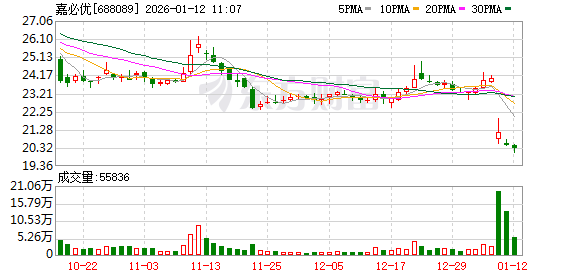
Core Viewpoint - The article discusses the recent preventive recall of infant formula by Nestlé due to potential quality risks associated with ARA supplied by Jia Bi You Biotechnology (Wuhan) Co., Ltd. The situation has led to significant stock price declines for Jia Bi You and raised concerns in the market regarding the safety of infant formula products [3][4][5]. Group 1: Company Impact - Jia Bi You, the supplier involved in the recall, received a regulatory notice from the Shanghai Stock Exchange urging timely responses and compliance with information disclosure obligations [3]. - Following the recall announcement, Jia Bi You's stock price opened at 20.2 yuan, reflecting a decline of 1.22%, with a cumulative drop exceeding 16.7% since the incident [5]. - The company has stated that it has sent products for testing and will release results once available [5]. Group 2: Industry Response - Nestlé announced a global recall of certain batches of infant formula across 31 countries due to potential quality risks from ARA, although no disease reports related to the affected raw materials have been confirmed [4]. - The State Council's Food Safety Office and the Market Supervision Administration have emphasized the importance of corporate responsibility and have mandated Nestlé (China) to implement the recall effectively [6]. - Other major infant formula brands in China, including Yili, Mengniu, and others, have issued statements asserting the safety and reliability of their products, distancing themselves from the incident [6].

奶粉召回风波中的嘉必优收到监管工作函 奶粉企业纷纷撇清关系
Di Yi Cai Jing· 2026-01-12 03:07
Core Viewpoint - The incident involving ARA supplier Jia Bi You Biotechnology (Wuhan) Co., Ltd. has led to a global recall of infant formula by Nestlé due to potential quality risks associated with ARA ingredients [2][4]. Group 1: Company Impact - Jia Bi You received a regulatory notice from the Shanghai Stock Exchange, urging timely responses and compliance with information disclosure obligations [2]. - Following the recall announcement, Jia Bi You's stock price opened at 20.2 yuan, reflecting a decline of 1.22%, with a cumulative drop exceeding 16.7% since the incident [3]. Group 2: Industry Response - ARA is commonly used in infant formula and dietary supplements, raising market concerns about product safety [4]. - The State Council's Food Safety Office and the Market Regulation Administration emphasized the importance of Nestlé (China) fulfilling its corporate responsibilities and executing the recall of affected products sold in China [4]. - Major domestic infant formula brands, including Yili, Mengniu, and others, have issued statements to clarify that their products remain safe and reliable [4].
奶粉召回风波中的嘉必优收到监管工作函,奶粉企业纷纷撇清关系
Di Yi Cai Jing· 2026-01-12 03:00
Core Viewpoint - The incident involving the recall of infant formula by Nestlé due to potential quality risks associated with ARA raw materials from supplier Jabiou Biotechnology has raised significant concerns in the market, impacting the stock price of Jabiou and prompting regulatory scrutiny [1][2]. Group 1: Company Impact - Jabiou Biotechnology (Wuhan) Co., Ltd. received a regulatory notice from the Shanghai Stock Exchange urging timely responses and compliance with information disclosure obligations [1] - Following the recall announcement by Nestlé, Jabiou's stock price opened at 20.2 yuan, reflecting a decline of 1.22%, with a cumulative drop exceeding 16.7% since the incident [1] - Jabiou has stated that it has sent products for testing and will release results once available [1] Group 2: Industry Response - The State Council's Food Safety Office and the Market Supervision Administration emphasized the importance of Nestlé (China) fulfilling its corporate responsibilities and executing the recall of affected products sold in China [2] - Major domestic infant formula brands, including Yili, Mengniu, and others, have issued statements asserting the safety and reliability of their products, distancing themselves from the incident [2]
飞鹤、蒙牛、君乐宝、达能、Arla、喜宝等多家乳企回应:所有产品中ARA目前无任何问题
Di Yi Cai Jing· 2026-01-09 10:24
Core Viewpoint - Nestlé has initiated a global recall of infant formula products due to potential quality issues with ARA (Arachidonic Acid) sourced from suppliers, affecting over 50 countries and raising public concern about the safety of infant formula ingredients [1] Group 1: Company Responses - Mengniu stated that its ARA raw material suppliers are unrelated to the European recall incident, and all products undergo strict quality control [3] - Feihe confirmed that its ARA raw materials are not affected by any issues related to Bacillus cereus toxins, and the company adheres to stringent quality standards [3] - Junlebao mentioned that its ARA suppliers are Roget and Runke Bio, and the company follows internal control standards that exceed national regulations [3] - Danone emphasized that all its infant formula products are produced under high standards and do not use ARA from the suppliers involved in the recall [4] - Arla conducted a comprehensive review of its infant nutrition products and confirmed that its ARA suppliers are not linked to the recall issues [4] - HiPP stated that the ARA used in its products is sourced from suppliers not involved in the recall, ensuring safety and reliability [4] Group 2: Regulatory Oversight - The State Council's Food Safety Office and the Market Supervision Administration have urged Nestlé (China) to effectively manage the recall of affected products in China, ensuring consumer rights are protected [2] - The recall in the Chinese market includes four brands: Litojing, Platinum Enfamil, Shuyi Enfamil, and Wyeth's children's growth milk powder, totaling 30 batches [2]
