
华兰生物

Search documents
机器学习因子选股月报(2026年1月)-20251231
Southwest Securities· 2025-12-31 02:04
Quantitative Models and Construction Methods 1. Model Name: GAN_GRU - **Model Construction Idea**: The GAN_GRU model combines Generative Adversarial Networks (GAN) for feature generation and Gated Recurrent Unit (GRU) for time-series feature encoding to construct a stock selection factor[4][13][14] - **Model Construction Process**: 1. **GAN Component**: - The generator (G) learns the real data distribution and generates realistic samples from random noise \( z \) (Gaussian or uniform distribution). The generator's loss function is: $$ L_{G} = -\mathbb{E}_{z\sim P_{z}(z)}[\log(D(G(z)))] $$ where \( D(G(z)) \) represents the discriminator's probability of classifying generated data as real[24][25][26] - The discriminator (D) distinguishes real data from generated data. Its loss function is: $$ L_{D} = -\mathbb{E}_{x\sim P_{data}(x)}[\log D(x)] - \mathbb{E}_{z\sim P_{z}(z)}[\log(1-D(G(z)))] $$ where \( D(x) \) is the probability of real data being classified as real, and \( D(G(z)) \) is the probability of generated data being classified as real[27][29][30] - GAN training alternates between optimizing \( G \) and \( D \) until convergence[30] 2. **GRU Component**: - Two GRU layers (GRU(128, 128)) are used to encode time-series features, followed by a Multi-Layer Perceptron (MLP) with layers (256, 64, 64) to predict returns. The final output \( pRet \) is used as the stock selection factor[22] 3. **Feature Input and Processing**: - Input features include 18 price-volume characteristics (e.g., closing price, turnover, etc.) sampled over the past 400 days, with a shape of \( 40 \times 18 \) (40 days of features)[18][19][37] - Features undergo outlier removal, standardization, and cross-sectional normalization[18] 4. **Training Details**: - Training-validation split: 80%-20% - Semi-annual rolling training (June 30 and December 31 each year) - Hyperparameters: batch size equals the number of stocks, Adam optimizer, learning rate \( 1e-4 \), IC loss function, early stopping (10 rounds), max training rounds (50)[18] 5. **Stock Selection**: - Stocks are filtered to exclude ST stocks and those listed for less than six months[18] - **Model Evaluation**: The GAN_GRU model effectively captures price-volume time-series features and demonstrates strong predictive power for stock returns[4][13][22] --- Model Backtesting Results 1. GAN_GRU Model - **IC Mean**: 0.1119*** (2019-2025)[4][41] - **ICIR (non-annualized)**: 0.89[42] - **Turnover Rate**: 0.83X[42] - **Recent IC**: 0.0331*** (December 2025)[4][41] - **1-Year IC Mean**: 0.0669***[4][41] - **Annualized Return**: 37.40%[42] - **Annualized Volatility**: 23.39%[42] - **IR**: 1.60[42] - **Maximum Drawdown**: 27.29%[42] - **Annualized Excess Return**: 22.42%[4][42] --- Quantitative Factors and Construction Methods 1. Factor Name: GAN_GRU Factor - **Factor Construction Idea**: The GAN_GRU factor is derived from the GAN_GRU model, leveraging GAN for price-volume feature generation and GRU for time-series encoding[4][13][14] - **Factor Construction Process**: - The GAN generator processes raw price-volume time-series features (\( Input\_Shape = 40 \times 18 \)) and outputs transformed features with the same shape (\( Input\_Shape = 40 \times 18 \))[37] - The GRU component encodes these features into a predictive factor for stock selection[22] - The factor undergoes industry and market capitalization neutralization and standardization[22] - **Factor Evaluation**: The GAN_GRU factor demonstrates robust performance across various industries and time periods, with significant IC values and excess returns[4][41] --- Factor Backtesting Results 1. GAN_GRU Factor - **IC Mean**: 0.1119*** (2019-2025)[4][41] - **ICIR (non-annualized)**: 0.89[42] - **Turnover Rate**: 0.83X[42] - **Recent IC**: 0.0331*** (December 2025)[4][41] - **1-Year IC Mean**: 0.0669***[4][41] - **Annualized Return**: 37.40%[42] - **Annualized Volatility**: 23.39%[42] - **IR**: 1.60[42] - **Maximum Drawdown**: 27.29%[42] - **Annualized Excess Return**: 22.42%[4][42] 2. Industry-Specific Performance - **Top 5 Industries by Recent IC (October 2025)**: - Social Services: 0.4243*** - Coal: 0.2643*** - Environmental Protection: 0.2262*** - Retail: 0.1888*** - Steel: 0.1812***[4][41][42] - **Top 5 Industries by 1-Year IC Mean**: - Social Services: 0.1303*** - Steel: 0.1154*** - Non-Bank Financials: 0.1157*** - Retail: 0.1067*** - Building Materials: 0.1017***[4][41][42] 3. Industry-Specific Excess Returns - **Top 5 Industries by December 2025 Excess Returns**: - Banking: 4.30% - Real Estate: 3.51% - Environmental Protection: 2.18% - Retail: 1.76% - Machinery: 1.71%[2][45] - **Top 5 Industries by 1-Year Average Excess Returns**: - Banking: 2.12% - Real Estate: 1.93% - Environmental Protection: 1.50% - Retail: 1.46% - Machinery: 1.23%[2][46]



华兰生物(002007) - 关于参股公司完成股份制改造及更名的公告
2025-12-30 09:01
证券代码:002007 证券简称:华兰生物 公告编号:2025-048 华兰生物工程股份有限公司 关于参股公司完成股份制改造及更名的公告 本公司及董事会全体成员保证信息披露的内容真实、准确和完整,没有虚假 记载、误导性陈述或重大遗漏。 一、基本情况概述 2025 年 12 月 30 日,华兰生物工程股份有限公司(以下简称"公司")收 到公司参股公司华兰基因工程有限公司(以下简称"华兰基因")的通知,华兰 基因已完成股份制改造及相关工商变更登记,并已收到新乡市市场监督管理局换 发的营业执照,其企业类型由"其他有限责任公司"变更为"其他股份有限公司 (非上市)"。本次股份制改造完成后,华兰基因的名称已变更为"华兰安康生 物股份有限公司"(以下简称"标的公司")。 二、变更后标的公司基本情况 公司名称:华兰安康生物股份有限公司 统一社会信用代码:9141070007139027X5 实际控制人安康先生持有标的公司 60%的股份。本次华兰基因的股份制改造,不 涉及本公司持股比例的变化。 华兰基因本次完成股份制改造,标志着其公司治理结构迈出了重要一步,有 助于其建立更加规范、透明的现代企业制度,完善法人治理结构,提升经 ...
生物制品板块12月30日跌0.34%,万泽股份领跌,主力资金净流出3.3亿元
Zheng Xing Xing Ye Ri Bao· 2025-12-30 09:00
Core Viewpoint - The biopharmaceutical sector experienced a slight decline of 0.34% on December 30, with Wanze Co., Ltd. leading the losses. The Shanghai Composite Index closed at 3965.12, down 0.0%, while the Shenzhen Component Index rose by 0.49% to 13604.07 [1]. Group 1: Market Performance - The biopharmaceutical sector's performance showed mixed results, with individual stocks experiencing varying degrees of gains and losses. Notably, Aidi Pharmaceutical saw a rise of 4.10% to close at 15.98, while Wanze Co., Ltd. fell by 6.76% to 21.94 [1][2]. - The trading volume for Aidi Pharmaceutical was 93,900 shares, with a transaction value of 150 million yuan, indicating strong investor interest [1]. Group 2: Capital Flow - The biopharmaceutical sector faced a net outflow of 330 million yuan from institutional investors, while retail investors contributed a net inflow of 349 million yuan, suggesting a shift in investor sentiment [2]. - The data indicates that while institutional investors withdrew funds, retail investors were more active in purchasing shares within the sector [2][3]. Group 3: Individual Stock Analysis - Ganne Pharmaceutical experienced a net outflow of 34.73 million yuan from institutional investors, while retail investors showed a net inflow of 129.36 million yuan, reflecting a divergence in investment strategies [3]. - Other notable stocks included Huashan Biological, which had a net inflow of 430.99 million yuan from institutional investors, indicating positive sentiment towards its performance [3].


今日最惨个股!一字涨停开盘,跳崩重跌收盘,打板的懵了
Sou Hu Cai Jing· 2025-12-26 19:26
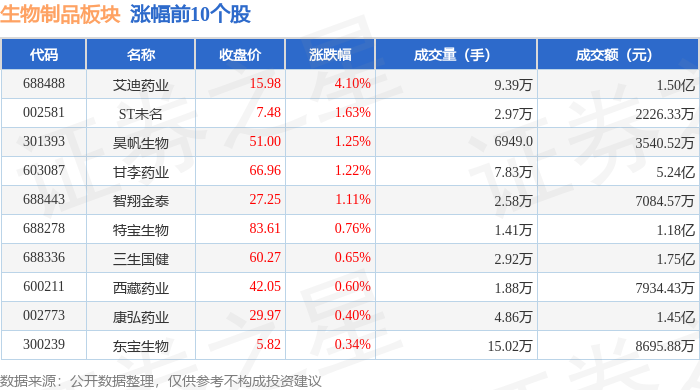
Core Viewpoint - The article discusses the phenomenon of "flash crashes" in the A-share market, exemplified by the dramatic price drop of Jitai Co., which experienced a rapid decline after a strong opening, highlighting the risks associated with stocks driven by speculative concepts rather than solid fundamentals [1][3]. Group 1: Stock Performance - Jitai Co. opened with a third consecutive limit-up but plummeted by 4.42% by the end of the day, resulting in significant losses for late buyers [1]. - The stock's performance reflects a broader trend in the market where nearly 3,800 stocks rose, yet Jitai Co. faced a stark reversal [1]. - The concept-driven rise of Jitai Co. is indicative of a pattern where stocks can experience extreme volatility, often leading to substantial losses for investors [3]. Group 2: Causes of Flash Crashes - Flash crashes can occur for various reasons, including unexpected poor performance or a sudden loss of interest in a speculative concept [2][3]. - Stocks that experience flash crashes often lack solid performance backing, making them vulnerable to rapid declines [6]. - The reliance on single concepts for stock price surges, as seen with Jitai Co.'s "liquid cooling concept," is a common trait among stocks that face sudden crashes [3][5]. Group 3: Market Dynamics - The article highlights the role of major market players or "whales" who manipulate stock prices by creating hype around certain concepts, leading to inflated prices before offloading their shares [8][12]. - These players often maintain an illusion of strength in the stock to attract more retail investors, which ultimately facilitates their exit at high prices [8][12]. - The phenomenon of flash crashes is exacerbated in stocks with high volatility and speculative trading, particularly in the ST (Special Treatment) sector, which is prone to dramatic price swings [10][12]. Group 4: Investor Behavior - Investors are cautioned against blindly following market trends and should focus on the underlying fundamentals of companies rather than speculative hype [12]. - The article emphasizes the importance of thorough research and analysis of a company's financial health and business model to avoid the pitfalls of speculative trading [12].

为啥5元流感疫苗打不动,200元流感药抢着要?
Jing Ji Guan Cha Wang· 2025-12-26 01:56
Core Viewpoint - The article highlights the stark contrast between the low sales of flu vaccines and the high sales of flu medications in China, primarily due to widespread vaccine hesitancy among the population, including healthcare professionals [2][10]. Vaccine Market Analysis - The annual sales of flu vaccines from three leading companies in China—Hualan Biological (10.7 billion), Zhonghui Biological (2.6 billion), and Jindike (808 million)—total approximately 1.4 billion, which is only about half of the annual sales of flu medication from Dongyangguang Pharmaceutical, which stands at around 2.6 billion [1][11]. - The flu vaccine uptake in China is extremely low, with a reported vaccination rate of only about 3%, significantly below global averages [11][12]. Vaccine Hesitancy Factors - Vaccine hesitancy is attributed to several factors, including doubts about vaccine safety and effectiveness, the perception that flu vaccines do not prevent infection due to the virus's constant mutation, and a preference for immediate medication over preventive measures [6][8]. - A study indicated that over half of social media users exhibit flu vaccine hesitancy, primarily due to distrust in vaccine efficacy and safety, exacerbated by misinformation [7][8]. Healthcare Professionals' Attitudes - Many healthcare professionals, including doctors, show reluctance to receive flu vaccinations, with some citing personal experiences and a belief in their own immunity as reasons for not vaccinating themselves or their children [3][4][6]. - A significant number of medical staff do not participate in vaccination programs, even when offered for free, indicating a broader issue of vaccine acceptance within the healthcare community [4][5]. Public Health Implications - The low vaccination rates have led to preventable illnesses and deaths, with estimates suggesting over 200,000 excess deaths annually due to flu-related complications in China [11]. - Recent initiatives by health authorities aim to improve vaccination rates by integrating flu vaccine prescriptions into routine medical care and encouraging healthcare workers to lead by example [12].
华兰生物:公司参股公司开展创新药和生物类似药的研发、生产
Zheng Quan Ri Bao· 2025-12-25 12:45
Core Viewpoint - The company is actively engaged in the research and development of innovative drugs and biosimilars through its subsidiaries, with several products nearing market readiness [2]. Group 1: Product Development - Bevacizumab has obtained its drug registration certificate in November 2024, and will commence production and sales [2]. - Rituximab and Dexamethasone are expected to complete clinical studies and submit drug registration applications by November 2024 and December 2025, respectively, with their applications already accepted [2]. - Other products, including Adalimumab, Trastuzumab, Ipilimumab, and several monoclonal antibodies and fusion proteins, have received clinical approval and are undergoing related clinical studies, contributing to the company's new profit growth points and product portfolio enhancement [2].
华兰生物:截至2025年12月20日公司共有14.9万多名投资者
Zheng Quan Ri Bao Wang· 2025-12-25 11:42
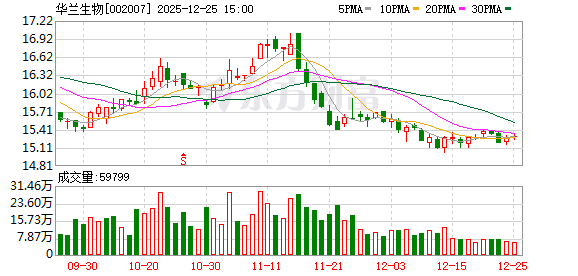
证券日报网讯12月25日,华兰生物(002007)在互动平台回答投资者提问时表示,截至2025年12月20 日,公司共有14.9万多名投资者。 ...
博晖创新(300318.SZ)子公司获得静注人免疫球蛋白临床试验批准
Xin Lang Cai Jing· 2025-12-23 08:47
Core Viewpoint - The company announced that its subsidiary, Guangdong Weirun Biopharmaceutical Co., Ltd., has received approval from the National Medical Products Administration for clinical trials of intravenous immunoglobulin [1] Group 1: Company Developments - Guangdong Weirun has been granted a Clinical Trial Approval Notice for intravenous immunoglobulin, allowing it to commence clinical trials [1] - The intravenous immunoglobulin is already marketed and sold both domestically and internationally [1] Group 2: Industry Context - Several domestic blood product companies, including the company's subsidiary Bohui Biopharmaceutical (Hebei) Co., Ltd., Beijing Tiantan Biological Products Co., Ltd., Shandong Taibang Biological Products Co., Ltd., and Hualan Biological Engineering Co., Ltd., have intravenous immunoglobulin products available in the market [1]

博晖创新子公司获得静注人免疫球蛋白临床试验批准
Zhi Tong Cai Jing· 2025-12-23 08:26
Core Viewpoint - The company announced that its subsidiary, Guangdong Weilun Biopharmaceutical Co., Ltd., has received approval from the National Medical Products Administration for clinical trials of intravenous immunoglobulin [1] Group 1: Company Developments - Guangdong Weilun has been granted a Clinical Trial Approval Notice for intravenous immunoglobulin, allowing it to proceed with clinical trials [1] - The intravenous immunoglobulin product is already marketed and sold both domestically and internationally [1] Group 2: Industry Context - Several blood product companies in China, including the company's subsidiary Bohui Biopharmaceutical (Hebei) Co., Ltd., Beijing Tiantan Biological Products Co., Ltd., Shandong Taibang Biological Products Co., Ltd., and Hualan Biological Engineering Co., Ltd., have intravenous immunoglobulin products available in the market [1]
众诚科技梁侃:金融“及时雨”精准滴灌,护航产业数字化转型
Sou Hu Cai Jing· 2025-12-19 03:45
Core Insights - The discussion at the Tsinghua Wudaokou Financial PLUS Industry Summit highlighted the importance of financial support in helping technology companies overcome development bottlenecks and assist traditional industries in their transformation and upgrading [1][3]. Group 1: Company Overview - Zhongcheng Technology focuses on providing digital transformation services for government, large enterprises, and key industries, with a core business direction centered on the application of artificial intelligence and robotics in specific industry scenarios [3]. - The company has built a digital platform and offers comprehensive industry solutions to enhance clients' core operational capabilities, optimize management systems, and improve operational efficiency [3]. Group 2: Financial Support and Innovation - Financial support is crucial for technology companies facing funding shortages during key stages of business expansion and technology research and development, acting as a "timely rain" [3][4]. - An example shared by the chairman includes obtaining 30 million yuan through equity pledge during a critical project innovation phase, which provided essential funding for project advancement [3]. Group 3: Market Position and Future Outlook - Zhongcheng Technology successfully listed on the Beijing Stock Exchange in September 2022, marking a new development stage and broadening its financing channels while changing the interaction logic with the financial system [3]. - The company anticipates that the application of artificial intelligence and robotics in industries will deepen and expand during the 14th Five-Year Plan period, continuing to focus on industry digital services and exploring transformation needs in various verticals [4]. - The future core driving force for industrial upgrading will be the deep integration of information technology and specific industry knowledge, necessitating a comprehensive understanding of both technology and industry [4].
