
华虹

Search documents
自主可控概念狂飙,中芯国际大涨!咬定“科技”主线不放松, 震荡期逢低布局战略性资产
Mei Ri Jing Ji Xin Wen· 2025-04-09 02:57
Group 1 - The Hong Kong stock market opened lower, with the Hang Seng Tech Index dropping by 4.26%, but later saw a narrowing of losses, with notable gains in stocks like SMIC and Xiaomi [1] - Southbound capital net purchases of Hong Kong stocks exceeded 13 billion HKD during the trading session, indicating strong investor interest [1] - A-shares in sectors like electronics and computers showed strong upward movement, with the ChiNext 50 ETF rising over 3% [1] Group 2 - The institution believes that the trend of increased investment in Hong Kong stocks by both domestic and foreign capital will continue despite short-term fluctuations, driven by the fundamentals of the stock market [2] - Southbound capital has seen a net inflow of nearly 540 billion HKD this year, highlighting the attractiveness of Hong Kong tech leaders [2] - The Hang Seng Tech Index ETF includes 30 leading tech stocks in Hong Kong, focusing on the AI industry chain, with companies like Alibaba, Tencent, and SMIC positioned as key players in China's tech sector [2]

至纯科技(603690):并购电子材料标的,完善泛半导体业务布局
HUAXI Securities· 2025-03-14 12:54
Investment Rating - The report assigns an "Accumulate" rating to the company [3]. Core Views - The acquisition of Guizhou Weidun Crystal Phosphorus will enhance the company's presence in the high-purity electronic materials sector, further solidifying its business layout in the semiconductor field [1]. - Weidun Crystal Phosphorus is a leading domestic supplier of high-end semiconductor materials, with established relationships with major clients, contributing to the domestic substitution trend [2]. - The acquisition is expected to strengthen the company's electronic materials business, improve its overall performance, and align with its strategic development goals [3]. Summary by Sections Company Overview - The company, established in 2000, focuses on high-purity process systems and semiconductor wet cleaning equipment, providing solutions for various advanced manufacturing sectors [14]. - The main products include precursor materials and doping/oxidation materials, primarily used in diffusion and thin-film deposition processes [2]. Financial Performance - In 2024, Weidun Crystal Phosphorus is projected to achieve revenue of 249 million yuan and a net profit of 69.05 million yuan, with a net profit margin of 27.71% [2]. - The company anticipates a decline in net profit for 2024, estimated between 90 million and 135 million yuan, primarily due to increased R&D expenses and other non-recurring losses [3][6]. Acquisition Impact - The acquisition is expected to enhance the company's electronic materials capabilities and contribute positively to its financial performance post-merger [3]. - The company has a history of investment in Weidun Crystal Phosphorus, indicating a strong relationship and a high degree of certainty regarding the acquisition [7]. Revenue and Profit Forecast - The company forecasts revenues of 34.23 billion, 44.49 billion, and 56.64 billion yuan for 2024, 2025, and 2026, respectively, with year-on-year growth rates of 8.6%, 30%, and 27% [8][21]. - The projected net profits for the same period are 1.11 billion, 3.48 billion, and 4.88 billion yuan, with significant growth expected in 2025 and 2026 [8][21]. Valuation Metrics - As of March 12, 2025, the company's stock price of 25.73 yuan corresponds to price-to-earnings ratios of 89, 28, and 20 for the years 2024, 2025, and 2026, respectively [8][24].

CINNO Research周华 :全球驱动芯片市场“洗牌”,技术迭代与并购潮下的机遇重构
CINNO Research· 2025-03-12 11:40
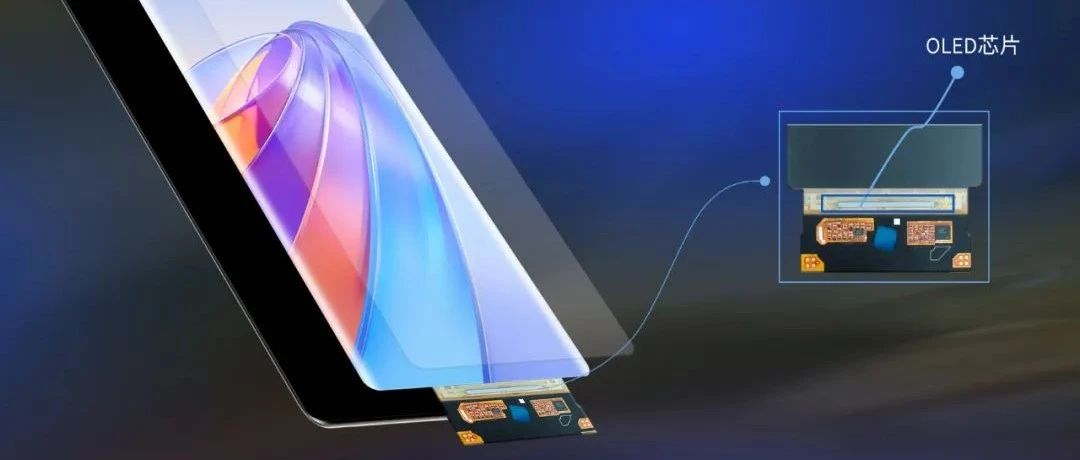
Core Insights - The display driver chip market is undergoing significant transformation due to intense capital movements, technological iterations, and geopolitical pressures, leading to a shift from optional mergers and acquisitions to mandatory ones [1][3][4] Market Overview - China holds 76% of the global display panel production capacity, with the localization rate of driver chips increasing from less than 10% to 34% in three years [3] - The high-end OLED driver chip market, particularly below 28 nm, remains dominated by Taiwanese and Korean companies, with mainland Chinese firms holding less than 15% market share [3][5] - The industry is facing a "volume increase but price decline" dilemma, resulting in a market size shrinkage of nearly 40% from $12 billion in 2021 to $6.4 billion in 2023 [4] Profitability and Competition - The average gross margin for mainland companies is below 20%, while leading Taiwanese firms like Novatek have seen their gross margin drop from 50% in 2021 to 40% in 2023 [6] - Price wars have reached critical survival thresholds, with 28 nm process technology becoming a pivotal point for companies [6] Technological Developments - The industry is experiencing a dual revolution in technology and ecosystem, with innovations such as Samsung's 22 nm OLED driver chip and BOE's AI-integrated smart driver chip [8][11] - The automotive sector is emerging as a key battleground, with demand surging by 18% in 2023, but stringent certification processes filtering out 90% of players [9] Mergers and Acquisitions - The sale of MagnaChip's OLED driver business exemplifies the trend of technological asset exchange, while companies like Taiwan's Etron are integrating technologies to reduce development costs by 30% [12] - The ongoing merger wave reflects the industry's anxiety, with companies like Aisino and Yunyinggu facing challenges in brand and technology certification [12][13] Strategic Shifts - The display driver chip industry is transitioning from "scale expansion" to "value reconstruction," emphasizing the importance of technological depth and ecosystem integration for survival [13] - Companies must focus on building an irreplaceable ecological position rather than merely aiming for domestic substitution [13]

申万宏源全行业联合 2025年两会政府工作报告解读
2025-03-06 05:18
Summary of Key Points from the Conference Call Industry or Company Involved - The conference call primarily discusses the Chinese economy and various sectors influenced by the 2025 government work report, including technology, capital markets, real estate, and consumer sectors. Core Points and Arguments 1. **Economic Development Focus**: The government emphasizes expanding domestic demand, boosting consumption, promoting technological innovation, and supporting the development of the private economy. Consumption is highlighted as a key component of domestic demand policies [3][4][5] 2. **Capital Market Development**: The report stresses the importance of stabilizing the real estate and stock markets, with monetary policy support and capital market reforms being crucial. The management aims to create a favorable environment for the capital market [3][6][8] 3. **Investment Opportunities**: Key investment opportunities for the upcoming year are identified in technology sectors, particularly in AI computing, humanoid robots, and low-altitude economy. High-dividend sectors are also expected to see trends as recovery expectations grow [3][10] 4. **Monetary and Fiscal Policy**: The report indicates a shift towards moderately loose monetary policy and more proactive fiscal policy, with a focus on the supply of government bonds and local government debt [3][11] 5. **Real Estate Sector Outlook**: The government maintains a positive stance on the real estate sector, emphasizing the need for stable housing prices to support consumption. Specific measures include potential interest rate cuts and easing purchase restrictions in first-tier cities [3][14] 6. **Technological Innovation Initiatives**: The government outlines new initiatives in technological innovation, including advancements in AI, 6G technology, and smart devices, positioning these as core drivers of high-quality development [3][5] 7. **Consumer Electronics and Emerging Industries**: The report highlights the importance of consumer electronics, with government subsidies for products like smartphones and AR/VR devices, which will stimulate market demand [3][24] 8. **Cultural Industry Growth**: The cultural industry is seen as having significant growth potential, with support for the application of large models and the opening of the internet and cultural sectors to promote international trade [3][22] 9. **Food and Beverage Sector**: The food and beverage sector is expected to recover as the economy stabilizes, with a focus on national brands and regional leaders in the market [3][41][42] Other Important but Possibly Overlooked Content 1. **Debt Management**: The government acknowledges the need to address debt issues within the development framework, particularly concerning private enterprises [3][4] 2. **Transportation and Logistics**: The report emphasizes the need for innovation in transportation and logistics to enhance efficiency and reduce costs, particularly in cold chain and cross-border logistics [3][27][28] 3. **Green Transition**: The government is committed to promoting a green and low-carbon transition in transportation, integrating new technologies to improve operational efficiency [3][29] 4. **Banking Sector Support**: The report indicates the necessity of injecting capital into state-owned banks to support the real economy, with a projected issuance of special bonds to bolster bank capital [3][43][44] 5. **Non-Bank Financial Sector**: The focus is on comprehensive reform in the non-bank financial sector, promoting long-term capital inflows and addressing risks in smaller financial institutions [3][45] 6. **Construction Industry Trends**: The construction industry is expected to shift towards maintaining and renovating existing structures, with an emphasis on overseas expansion to compensate for domestic market saturation [3][58] This summary encapsulates the key insights and implications from the conference call, providing a comprehensive overview of the government's economic strategies and their potential impact on various sectors.

安意法8英寸SiC晶圆合资厂正式通线,全链构筑中国SiC产业头雁效应
半导体行业观察· 2025-03-03 01:06
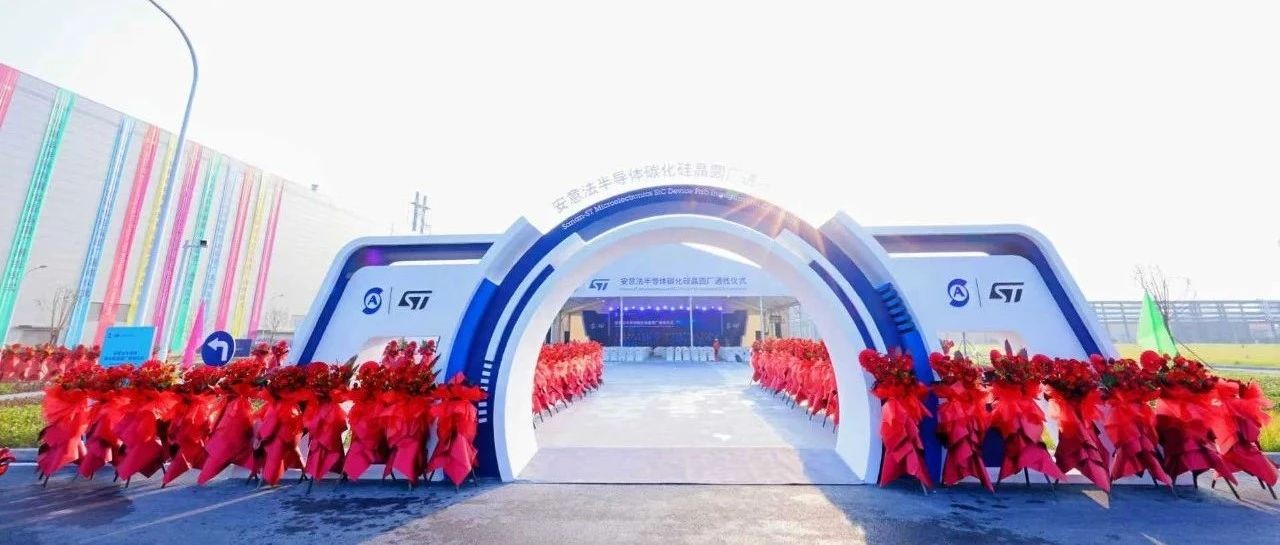
Core Viewpoint - The establishment of the joint venture "Anifa Semiconductor Co., Ltd." between STMicroelectronics and Sanan Optoelectronics marks a significant milestone in localizing the production of 8-inch silicon carbide (SiC) wafers in China, aimed at meeting the growing demand in the electric vehicle and industrial power sectors by 2025 [1][3][4]. Group 1: Joint Venture and Production - The joint venture, located in Chongqing, includes an 8-inch SiC power device manufacturing facility and a separate SiC substrate manufacturing plant operated by Sanan, both designed to support local production needs [1][4]. - The total investment for the joint venture is projected to be approximately 23 billion RMB (3.2 billion USD), making it the first large-scale production line for automotive-grade SiC power devices in China [4][6]. Group 2: Market Demand and Industry Trends - The demand for SiC devices is expected to surge, with a forecasted market value of nearly 10 billion USD by 2029, driven primarily by the automotive, mobile, and transportation sectors [3]. - The shift from 6-inch to 8-inch wafers is becoming a consensus in the industry due to the increased effective area for cutting dies, which significantly reduces costs and enhances production efficiency [6][7]. Group 3: Local Economic Impact - The project is anticipated to enhance Chongqing's semiconductor industry chain, contributing to the formation of a significant SiC industry cluster and improving the local economy [4][12]. - STMicroelectronics' commitment to local production aligns with China's strategic goals for high-quality industrial development and innovation [9][12]. Group 4: Long-term Strategy - STMicroelectronics has a long history in China, having established a complete industrial chain and focusing on localization to better serve the Chinese market [10][11]. - The company's strategy includes collaboration with local educational institutions and partners to foster talent and innovation in the semiconductor field [11].


电子行业周报:大陆代工龙头Q4业绩符合指引,苹果即将发布iPhoneSE4-20250319
Donghai Securities· 2025-02-19 09:10
Investment Rating - The report suggests a positive outlook for the electronics sector, highlighting a moderate recovery in demand and recommending focus on specific investment themes such as AIOT and AI-driven technologies [4][5]. Core Insights - The report emphasizes that major foundries like SMIC and Hua Hong have shown strong performance in Q4 2024, with SMIC achieving a revenue of $2.207 billion, a year-on-year increase of 31.52%, and Hua Hong reporting $539.2 million, an 18.4% increase [4][10]. - Upcoming product launches from Apple, including the iPhone SE4, are expected to drive interest in the supply chain and AI-related sectors [4][11]. - The overall electronics industry is experiencing a mild recovery, with specific focus on four main investment themes: AIOT, AI-driven technologies, equipment materials, and consumer electronics [4][5]. Summary by Sections Company Performance - SMIC's Q4 2024 revenue reached $2.207 billion, with a gross margin of 22.6%, marking a 6.2 percentage point increase year-on-year. The total revenue for 2024 was $8.03 billion, a 27.02% increase from the previous year [4][9]. - Hua Hong's Q4 2024 revenue was $539.2 million, with a gross margin of 11.4%. The total revenue for 2024 was $2.004 billion, a decrease of 12.3% year-on-year due to ASP declines [4][10]. Market Trends - The report notes that 40.2% of SMIC's Q4 revenue came from consumer electronics, with smartphones, computers, and tablets contributing 24.2% and 19.1% respectively [4][9]. - The electronics sector underperformed the broader market, with the Shenwan Electronics Index rising only 0.27% compared to a 1.19% increase in the CSI 300 Index [4][21]. Investment Recommendations - The report recommends focusing on the AIOT sector, highlighting companies such as Espressif Technology and Rockchip, as well as AI innovation-driven companies like Cambricon and Loongson Technology [4][5]. - It also suggests monitoring the upstream supply chain for semiconductor equipment and materials, with specific companies like China Shipbuilding Gas and Huate Gas being of interest [5].