碳化硅(SiC)

Search documents
三星大举进军GaN
半导体芯闻· 2026-03-20 10:08
Core Insights - Samsung Electronics plans to operate an 8-inch (200mm) GaN power semiconductor foundry line, expected to achieve full-scale production by Q2 2024, marking its official entry into the GaN wafer foundry business after over three years of announcements [1] - The company has secured one customer but anticipates revenues from the GaN foundry business to be below 1 trillion KRW due to a limited customer base [1] - Samsung aims to enhance profitability by offering a full suite of services without chip design and producing wafers in-house rather than sourcing them externally [1] Summary by Sections GaN Semiconductor Market - GaN devices are typically used in applications below 1200 volts, such as electric vehicle charging stations and smartphone chargers, and are critical for improving power conversion efficiency in AI data centers [2] - Nvidia promotes an 800V DC power architecture that requires high-voltage DC to be converted to lower voltages internally, where GaN-based converters are widely utilized [2] - GaN offers advantages in high-voltage operation and fast switching, leading to higher power density, lower heat generation, and more compact system designs [2] Samsung's Production Plans - Samsung previously announced plans to start power semiconductor foundry operations in 2025, but this timeline has been delayed [2] - Foundry companies typically secure customers before filling capacity, and Samsung's decision to advance its plans appears to be based on customer development over the past year [2] - The company also plans to launch a SiC power semiconductor foundry line this year, offering a full suite of services from design to packaging, with a voltage range of 1200 to 1700 volts [2] - Samsung has not confirmed specific details regarding the operation of the GaN power semiconductor foundry [2]

宏微科技(688711.SH):现有1700V GWB模块产品可适配固态变压器
Ge Long Hui· 2026-02-09 07:43
Core Viewpoint - The company has accumulated relevant technology in the field of solid-state transformers (SST) and is advancing the development and industrialization of third-generation power semiconductor devices such as silicon carbide (SiC) and gallium nitride (GaN) to support high-voltage, high-power applications [1] Group 1 - The company currently has 1700V GWB module products that are compatible with solid-state transformers [1] - The company will continue to monitor market dynamics and timely promote the industrialization of relevant technological achievements [1] - The focus is on providing support for the development of core power electronic equipment [1]

撼动SiC霸权?现代汽车入股VisIC,GaN“杀入”汽车逆变器
半导体芯闻· 2026-01-16 10:27
Core Viewpoint - The entry of VisIC, an Israeli GaN chip company, into the electric vehicle (EV) traction inverter market challenges the traditional division between SiC and GaN technologies, as it aims to leverage its D³GaN technology to compete directly with SiC in high-voltage applications [1][16]. Group 1: Technology and Performance - VisIC's D-mode GaN technology offers advantages in reliability, consistency, lower switching losses, and safety, making it suitable for EV traction inverters [2]. - D-mode GaN can achieve a decoupling of threshold voltage and current capability, allowing for high current and high threshold voltage combinations, which is critical for high-power applications [2]. - In extreme conditions, D³GaN can withstand short-circuit peak currents approximately 3.74 times the rated operating current, outperforming E-mode GaN and approaching traditional IGBT and SiC devices [5]. Group 2: Efficiency and Testing - VisIC's GaN prototype traction inverter has achieved a peak efficiency of 99.67% during testing, demonstrating stable performance across various operational conditions [6]. - In light-load conditions, GaN shows approximately 2.5 times lower total losses compared to SiC, indicating a significant energy efficiency advantage in real-world applications [9][11]. Group 3: Market Strategy and Localization - VisIC aims to establish a localized ecosystem in China, focusing on building partnerships across the supply chain, including wafer fabrication, packaging, and software development [14][15]. - The company prioritizes the EV traction inverter market due to existing customer relationships and supply chain foundations, while also exploring opportunities in data centers [14]. Group 4: Future Outlook - VisIC predicts a long-term coexistence of GaN and SiC technologies, with GaN expected to play a more significant role in low-power fast charging, data center power supply, and high-power systems over the next decade [12]. - The competition between GaN and SiC in the power semiconductor field is just beginning, with VisIC's advancements potentially reshaping the market landscape [16].
三星单季利润暴增208%;京东成立新事业部丨科技风向标
2 1 Shi Ji Jing Ji Bao Dao· 2026-01-09 03:46
Group 1: AI and Robotics Developments - JD.com has established a new "Chameleon Business Department" to focus on the development and commercialization of core AI products, including the JoyAI App and JoyInside platform, which has integrated with over 40 leading AI toy brands [2] - XPeng Motors plans to scale production of humanoid robots and launch Robotaxi services in 2026, marking a significant transition from technology exploration to practical application [6] - Lingyi Technology has completed assembly services for over 5,000 humanoid robots, focusing on core components and industrial application scenarios [7] Group 2: Financial and Investment Activities - Black Sesame Intelligence plans to raise approximately HKD 569 million by issuing shares at HKD 18.88 each, with proceeds aimed at investments in AI chips and robotics [13] - Dongxin Co. announced that its subsidiary, Lishuan Technology, has completed business registration and received a capital injection of CNY 211 million, resulting in a 35.87% equity stake [11] - Northern Long Dragon intends to acquire a 51% stake in Shenyang Shunyi Technology, which is expected to constitute a major asset restructuring [15][16] Group 3: Market Performance and Product Launches - Samsung Electronics reported a 208.2% year-on-year increase in operating profit for Q4 2025, driven by rising demand for AI servers and storage chips, with profits reaching KRW 20 trillion (approximately USD 13.8 billion) [9] - OnePlus launched the Turbo 6 series, targeting the sub-CNY 2000 market, with a projected sales growth of 44% in 2025, significantly outpacing other brands [17] Group 4: Strategic Collaborations - Fuji Electric and Bosch have announced a partnership to develop standardized silicon carbide (SiC) power modules aimed at the growing electric vehicle inverter market, addressing supply chain dependencies [12] - The Ministry of Commerce of China is reviewing Meta's acquisition of the AI platform Manus, emphasizing compliance with Chinese laws regarding foreign investments and technology exports [5]
英伟达800伏电压“革命”:全球数据中心面临史上最大规模基础设施改造
Hua Er Jie Jian Wen· 2025-12-28 11:57
Core Insights - Nvidia is leading a significant shift in data center power architecture by transitioning from traditional AC power to 800V DC power, preparing for ultra-high-density computing environments with a power density of 1 megawatt (MW) per rack [1] - This transition is driven by the increasing power density demands of modern AI workloads, which are expected to exceed the capabilities of existing power systems [2] - The shift to 800V DC is anticipated to reduce total cost of ownership (TCO) by 30% in the long term, although it presents a substantial capital expenditure challenge in the short term [1][6] Group 1: Technological Transition - The 800V DC architecture allows for over 150% more power transmission on the same copper conductors compared to traditional systems, significantly enhancing energy efficiency [2] - Nvidia's new Vera Rubin NVL144 rack design incorporates liquid cooling technology and increased energy storage capacity to manage the extreme power density [2] - The transition will eliminate the need for traditional AC power distribution units (PDUs) and uninterruptible power supply (UPS) systems, reducing the demand for AC PDUs by up to 75% [3] Group 2: Market Impact - The shift to higher voltage systems is expected to increase revenue potential per megawatt from €2 million to €3 million in traditional data centers [4] - The industry anticipates that 80-90% of new data centers will adopt the 800V DC architecture in the future, despite currently only one-third of racks operating below 10kW [5] - Key suppliers in the semiconductor space, such as Analog Devices and Infineon, are positioning themselves to meet the demand for advanced chips required for 800V DC systems [5] Group 3: Infrastructure and Supply Chain - The transition will necessitate a comprehensive upgrade of the entire supply chain, including transformers, circuit breakers, and cooling systems [1] - Companies like Schneider Electric are targeting the market for racks capable of handling up to 1.2MW, while also developing solutions for liquid cooling systems [3] - Solid-state protection devices are replacing mechanical circuit breakers, with ABB leading in the development of solid-state breakers designed for DC distribution [5] Group 4: Timeline and Financial Considerations - The full commercial transition to 800V DC data centers is expected to align with the deployment of Nvidia's Kyber architecture by 2027, with significant scale effects anticipated around 2028 [6] - Data center operators will face substantial investment requirements over the next five years, in addition to addressing a $5 trillion AI funding gap [6]

宇晶股份(002943):12寸大硅片切割设备核心卡位 消费电子3D玻璃切割设备放量在即
Xin Lang Cai Jing· 2025-12-15 02:37
Group 1 - The company focuses on precision processing equipment for hard and brittle materials, creating an integrated business matrix of "equipment + consumables + services" that covers key sectors such as photovoltaics, consumer electronics, semiconductors, and magnetic materials [1] - The consumer electronics market is experiencing a recovery, with global smartphone shipments expected to rebound by 6.4% in 2024, driven by high-end models like foldable phones and AI devices, which utilize 3D glass covers [2] - The global market for 3D glass covers reached 26.76 billion yuan in 2023, with the Chinese market growing to 78.86 billion yuan, positioning the company to benefit from high-end demand through its cutting and polishing equipment [2] Group 2 - The semiconductor silicon wafer market is projected to reach 11.5 billion USD in 2024, with 300mm wafers being the mainstream, while domestic manufacturers are accelerating production to increase the low domestic substitution rate [2] - Cutting equipment accounts for approximately 12% of the manufacturing cost of silicon wafers, making it a critical area for domestic substitution, with the company developing specialized multi-wire cutting machines for 12-inch wafers [2] - The SiC substrate market is expected to exceed 10 billion USD by 2030, driven by strong demand from electric vehicles and AI servers, with the company covering the entire processing equipment for SiC substrates [3] Group 3 - Revenue forecasts for the company are projected at 1.052 billion, 1.650 billion, and 2.220 billion yuan for 2025-2027, with corresponding EPS of 0.14, 1.41, and 1.99 yuan, indicating a significant increase in profitability [4] - The current stock price corresponds to PE ratios of 266.0, 26.5, and 18.8 times for the respective years, with expectations of improved gross and net profit margins due to accelerated shipments of cutting equipment for 12-inch silicon wafers and SiC [4]

日本专家:中国SiC,太强了
半导体行业观察· 2025-11-29 02:49
Core Insights - Silicon carbide (SiC) is gaining attention as a next-generation power semiconductor material that can replace silicon (Si) for high-temperature and high-pressure applications [1] - The upcoming International Conference on Silicon Carbide and Related Materials (ICSCRM 2025) is expected to highlight trends in SiC development and global competition, particularly involving Japan [1] Group 1: Challenges in SiC Production - Device manufacturers face significant challenges in improving the yield of 8-inch production lines, necessitating the establishment of high-yield processes compatible with multiple suppliers [2] - Wafer manufacturers are tasked with reducing the costs of 12-inch wafers and developing evaluation technologies that have not kept pace with the rapid commercialization of these wafers [2] Group 2: China's Advancements in SiC - Chinese manufacturers have made remarkable progress in reducing the price and improving the quality of SiC wafers, with quality now comparable to high-reliability components [3] - The rapid rise of Chinese manufacturers is attributed to unconventional manufacturing methods and significant government support, alongside lower electricity costs compared to Japan [3] Group 3: Weaknesses in China's SiC Ecosystem - Despite high-quality wafers, China's lack of coordination across the supply chain may hinder its ability to dominate the entire SiC ecosystem, as many companies focus on specific segments [4] - The unclear demand from device manufacturers raises concerns about the final quality of devices made from Chinese wafers, which may exhibit slight crystal misalignment affecting yield [5] Group 4: Japan's Position in SiC - Japan maintains a high level of research and technology in SiC, with significant contributions expected at ICSCRM 2025, although its commercial influence has declined [6] - The Japanese industry faces challenges related to generational turnover and a shortage of young talent, impacting the research environment for SiC [6] - Japan's strength lies in its comprehensive capabilities, leveraging expertise from silicon to SiC applications, particularly in high-voltage applications and data center power supplies [6]
又一巨头,进军SiC
半导体行业观察· 2025-11-12 01:20
Core Insights - SK Keyfoundry is accelerating the development of silicon carbide (SiC) based compound power semiconductor technology to strengthen its position in the global power semiconductor market [2][3] - The acquisition of SK Powertech, a key player in the SiC field, is expected to enhance SK Keyfoundry's technological competitiveness and establish a solid foundation for its technology independence in SiC power semiconductors [2][3] Group 1: Company Strategy - SK Keyfoundry aims to provide SiC MOSFET 1200V process technology by the end of 2025 and plans to launch SiC power semiconductor foundry services in the first half of 2026 [3] - The company is focusing on high-voltage, high-efficiency applications such as electric vehicle power systems, industrial power converters, and renewable energy inverters [3] Group 2: Market Trends - The global demand for compound power semiconductors, including SiC, is rapidly increasing, particularly in sectors where energy efficiency is critical, such as electric vehicles, energy storage systems (ESS), 5G infrastructure, and data centers [3] - Market research firm Omdia predicts that the global SiC market will grow at a robust annual growth rate of over 24% from 2025 to 2030 [3] Group 3: Leadership Perspective - The CEO of SK Keyfoundry, Lee Deok-myeong, stated that acquiring SK Powertech is a crucial step in establishing a unique technological advantage in the compound semiconductor field [4] - The integration of core R&D capabilities from both companies aims to launch efficient SiC power semiconductor process technologies and products, positioning SK Keyfoundry for a differentiated technological leadership in the rapidly growing high-voltage, high-efficiency compound semiconductor market [4]
不仅国庆长假,新能源车主每次充电都搞不清楚这个问题
3 6 Ke· 2025-09-29 10:53
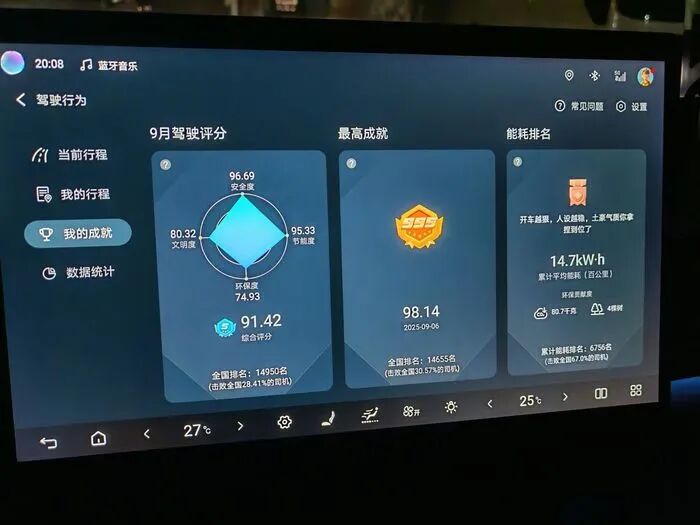
Core Viewpoint - The article discusses the discrepancy between the high voltage (800V) promoted by car manufacturers and the charging power (kW) displayed on charging stations, highlighting the importance of understanding charging efficiency and consumer perception in the electric vehicle (EV) market [1][3][6]. Group 1: Charging Efficiency and Cost - The article emphasizes the cost advantage of electric vehicles (EVs) during long-distance travel, with an example showing a vehicle consuming approximately 14 kWh per 100 km, leading to a travel cost of around 17 yuan per 100 km based on current charging prices [3][4]. - It notes that a vehicle with a 78 kWh battery can achieve a range of about 450 km under optimal conditions, showcasing the efficiency of EVs compared to traditional vehicles [3][4]. Group 2: Technical Aspects of Charging - The article explains the fundamental physics of charging, stating that charging power (W) is determined by both voltage (V) and current (I), and that higher voltage can lead to more efficient charging with less heat generation [4][6]. - It highlights that increasing voltage is a more efficient method for achieving high charging power compared to increasing current, which can lead to significant heat loss and safety concerns [6][7]. Group 3: Marketing Strategies - The preference for promoting "800V" by car manufacturers is attributed to a combination of technical, marketing, and consumer psychology factors, positioning it as a symbol of advanced technology in the EV market [6][8]. - The article points out that the term "800V high voltage platform" does not necessarily mean that vehicles can actually charge at 800V, as there is a common industry practice where any voltage above 400V can be labeled as such [11][12]. Group 4: Industry Standards and Future Developments - The article discusses a recent government initiative aimed at promoting the development of high-power charging infrastructure, with a target of over 100,000 high-power charging stations by the end of 2027 [19][20]. - It emphasizes the need for standardized power ratings in the industry, which would enhance consumer understanding and protect their rights by providing clear performance indicators rather than vague marketing terms [21][22].
氮化镓和碳化硅,重磅宣布
半导体芯闻· 2025-09-11 10:12
Core Insights - Wolfspeed has officially commercialized its 200mm SiC material products, marking a significant milestone in the industry's transition from silicon to silicon carbide [2] - The 200mm SiC wafers and epitaxial layers are designed to enhance scalability and quality, supporting the development of next-generation high-performance power devices [2][3] - DB HiTek has completed the development of its next-generation power semiconductor process, the 650V E-Mode GaN HEMT, aimed at improving power efficiency in AI data centers and robotics [3][4] Wolfspeed Developments - The 200mm SiC wafers feature improved specifications, including a thickness of 350µm, and industry-leading doping and thickness uniformity, which enhance MOSFET yield and accelerate time-to-market [2] - The commercial launch of these products is driven by positive market feedback and the significant advantages they offer [2] - The company emphasizes that this advancement is not just about wafer size but represents a material innovation that enables customers to confidently accelerate their device roadmaps [3] DB HiTek Innovations - DB HiTek's new 650V GaN process is expected to significantly reduce power loss compared to silicon, making it a viable alternative for high-efficiency applications [4] - The company anticipates that the GaN process will synergize with its existing BCDMOS technology, which integrates analog, digital, and high-power circuits [4] - Market research predicts that the GaN market will grow at an annual rate of approximately 40%, increasing from $530 million in 2025 to $2.013 billion by 2029 [4] Capacity Expansion - To meet the growing demand for GaN technology, DB HiTek plans to expand its cleanroom capacity, increasing monthly wafer production from 154,000 to approximately 190,000 wafers, representing a 23% increase [4]