
A18芯片

Search documents
双重引擎驱动:GPU放量与存储涨价催生扩产需求
Mei Ri Jing Ji Xin Wen· 2026-01-21 01:12
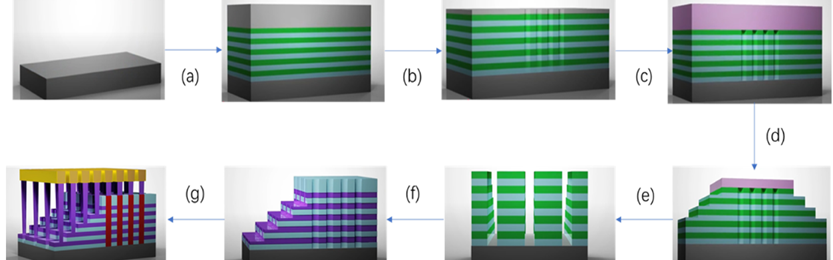
Group 1: GPU Market and Demand - The GPU market is expected to be a core driver for semiconductor chip demand in the domestic market, with North American companies investing billions annually in NVIDIA's GPU chips [1] - China's cloud computing market accounts for about one-fifth of the global share, suggesting that domestic computing power demand should represent 20%-30% of the global market [1] - The increasing demand for GPUs will accelerate the need for advanced process technologies, with companies like Apple already adopting advanced processes for their chips [1][2] Group 2: Advanced Process and Equipment Demand - Current GPU manufacturers in mainland China primarily use 7 to 14 nanometer processes, while leading overseas companies like NVIDIA utilize around 4 nanometers, indicating a pressing need for advanced process expansion [2] - The demand for advanced process equipment is expected to rise significantly as GPU production increases, providing opportunities for domestic equipment manufacturers [2] - The storage industry, particularly DRAM and NAND products, dominates the market, but the majority of market share is still held by Japanese and American manufacturers [2] Group 3: Storage Market Dynamics - The rise in storage prices is largely attributed to the AI industry's demand for high-bandwidth memory (HBM), which is essential for efficient data handling during AI training and inference [3][4] - The global GPU shipment volume is projected to reach nearly or exceed 10 million units by 2025, leading to a rapid increase in storage demand that is not being met by supply [3] - The supply-demand imbalance in the storage market has resulted in significant price increases, with DRAM contract prices expected to rise by 50% to 60% in Q1 of this year [4] Group 4: Semiconductor Equipment and Market Trends - The semiconductor equipment market is expected to benefit from the ongoing expansion in the storage sector, particularly as domestic manufacturers increase their production capabilities [6][9] - The trend towards 3D NAND technology is driving demand for etching and deposition equipment, as the complexity of manufacturing increases with more layers being added to storage chips [6][7] - The semiconductor equipment sector is transitioning from a focus on domestic market penetration to a model that reflects global AI developments, with increased capital expenditures from overseas storage companies impacting domestic stock prices [8][9]

iPhone 17e 或将2月登场,这些参数的升级与妥协你需知道
Huan Qiu Wang· 2026-01-16 03:19
Group 1 - The core configuration information of the iPhone 17e has been revealed, featuring key upgrades such as Dynamic Island and MagSafe charging, while maintaining a starting price of $599 [1][4] - The design will include a 6.1-inch OLED screen with rounded edges, moving away from the notch design of the iPhone 16e, but the refresh rate will remain at 60Hz, differentiating it from other models in the iPhone 17 series that feature 120Hz [4] - The iPhone 17e will be powered by the A19 chip, built on TSMC's third-generation 3nm process, with a CPU performance increase of 5%-10% compared to the previous A18, although it may use a downclocked version of the chip [4] Group 2 - The iPhone 17e will introduce MagSafe wireless charging, addressing a shortcoming of the previous model, but may use older C1/C1X modems and will not include the N1 wireless chip, limiting its wireless connectivity capabilities [4] - The camera specifications will largely remain the same as the previous generation, featuring a 12MP front camera and a 48MP rear camera, along with Face ID for unlocking [4]


苹果2026年iPad路线图曝光:iPad mini或搭载OLED屏及A19 Pro芯片
Huan Qiu Wang Zi Xun· 2025-11-17 09:20
Core Insights - The release of the new M5 iPad Pro provides insights into the future development direction of Apple's iPad product line, with a clearer roadmap for 2026 [1] Product Development Timeline - In 2026, Apple is expected to launch the next generation iPad Air, which will feature the M4 chip, offering a performance improvement of 10% to 20% compared to the M3 chip [1] - The entry-level iPad, priced at $349, will receive an upgrade with the A18 chip and will introduce Apple Intelligence features for the first time [1] - The iPad mini is set for its first update since 2024, potentially incorporating the A19 Pro chip and a significant upgrade to an OLED display [1] Market Outlook - Overall, 2024 is anticipated to be a relatively quiet year for iPad releases, aside from the iPad mini update [2]
iPhone 17大热,苹果王者归来
格隆汇APP· 2025-09-17 10:33
Core Viewpoint - The extended delivery times for the iPhone 17 series indicate strong demand and highlight potential supply chain challenges, particularly in the Chinese market, which is experiencing the longest wait times [2][4][19]. Demand Side - The delivery times for the iPhone 17 series have increased significantly compared to the iPhone 16, with the base model's delivery time extending by 8 days and the Pro Max by 8 days as well [5]. - By Day 4 of pre-orders, the base model's delivery time had further increased, indicating sustained demand rather than a short-term spike [6]. - The demand is supported by a large installed base in China, with over 200 million devices, leading to millions of upgrades each year [10]. Supply Side - Apple plans to increase production of the iPhone 17 series by 25%, yet this is still insufficient to meet the growing demand, particularly for high-end models [6][14]. - The high demand for Pro and Pro Max models is attributed to Apple's successful high-end strategy, with new features and colors driving consumer interest [6][14]. Regional Insights - China has the longest delivery times for the iPhone 17 series, with the base and Pro models taking 5 weeks, compared to shorter wait times in other markets [9]. - The delay in the iPhone Air's launch due to eSIM regulations is expected to further impact demand for other models in China [10]. Industry Perspective - Apple's 25% production increase will benefit various suppliers across the supply chain, but the degree of benefit will vary by segment [12][13]. - Core components such as screens, batteries, and chips are expected to see significant profit increases due to their technical barriers and higher margins [15]. Long-term Outlook - The iPhone 17's strong demand signals a positive outlook for Apple's revenue in the upcoming fiscal year, with expectations of an 8%-10% increase in iPhone revenue [16]. - Apple's long-term value lies in its ecosystem, which includes a growing service revenue stream that is expected to contribute significantly to future growth [17][19]. Investment Focus - The Apple supply chain, particularly companies like Luxshare Precision, remains a key area for investors to watch due to the anticipated growth driven by the iPhone 17 series [20].

端侧大模型20250801
2025-08-05 03:18
Summary of Conference Call Records Industry Overview - The discussion primarily revolves around the advancements in **edge AI models** and their comparison with **cloud-based large models**. The focus is on the hardware improvements, particularly in **NPU (Neural Processing Unit)** technology, which enhances the efficiency of edge devices like smartphones and PCs [1][2][3]. Key Points and Arguments 1. **Hardware Advancements**: The improvement in edge AI is significantly driven by advancements in hardware, particularly in chips like Apple's A18 and Qualcomm's Snapdragon 8 Gen 2, which integrate more efficient NPUs alongside traditional CPU and GPU [1][3]. 2. **Model Development**: There is a notable shift towards **multi-modal AI models** that incorporate various functionalities such as programming and mathematical reasoning, indicating a broader application of AI technologies [2][3]. 3. **Performance Metrics**: Current edge AI chips can run models with up to **100 billion parameters**, showcasing their capability to handle complex computations efficiently [3][4]. 4. **Architectural Optimization**: The development of edge models relies heavily on architectural optimizations, such as **Mixture of Experts (MoE)** and **grouped attention mechanisms**, which enhance the model's efficiency and reduce memory consumption [4][5][6]. 5. **Knowledge Density Improvement**: Techniques like **model quantization** are employed to reduce computational load by converting high-precision floating-point numbers into lower-precision formats, allowing for more efficient processing [8][9]. 6. **Dynamic Pruning**: The concept of dynamic pruning is introduced, where parts of the model that do not contribute to performance are removed during training, enhancing flexibility and efficiency [11][12][13]. 7. **Competitive Landscape**: The call highlights the competitive dynamics between domestic and international players in the edge AI space, with companies like **Meta**, **Microsoft**, and **Google** leading in model development, while domestic firms are catching up by focusing on specific application scenarios [14][15][16][17]. 8. **Market Positioning**: Major companies are integrating their edge models into various devices, such as smartphones and PCs, to enhance user experience and drive commercial viability [17][18]. 9. **Domestic Developments**: Domestic companies like **Tencent**, **Alibaba**, and **ByteDance** are developing their edge models, with some achieving competitive performance in niche areas, indicating a growing capability in the local market [22][26][27]. Other Important Insights - The call emphasizes the importance of **data privacy** and the need for edge models to address these concerns while maintaining performance [14]. - The discussion also touches on the **commercialization** of AI technologies, with companies exploring various monetization strategies for their edge AI solutions [17][18]. - The potential for edge AI to surpass human performance in specific tasks is noted, particularly in generating content and automating processes [26][27]. This summary encapsulates the key discussions and insights from the conference call, highlighting the advancements and competitive landscape in the edge AI industry.



一台iPhone卖25588元,美国制造的代价有多高?
芯世相· 2025-04-18 10:34
以下文章来源于星海情报局 ,作者星海老局 iPhone零部件里,中国大陆厂商主要负责包括电池、摄像头模组、部分显示屏、连接器这些东 西,屏幕则主要靠韩国的三星和LG,还有部分组装是在越南、印度完成。 这次关税一加,直接把苹果的供应链掐了个遍,成本蹭蹭往上蹿, 库克吓得赶紧从印度往美国空 运600吨iPhone,差不多150万个手机,打算赶在关税全面开花前把货囤好,免得价格飞上天。 尽管懂王坚信"美国有能力生产iPhone",还坚信美国会因此搞出一堆工厂,但业内人士算了一下 账,几乎全都在摇头: 要是iPhone完全在美国本土生产,最终的售价可能将会卖到3500美元( 25588元人民币),远超现在iPhone Pro 16在美国999美元的起售价。 星海情报局 . 关注国产替代和中国品牌出海,每年写100个中国品牌案例,见证中国产业崛起! 我是芯片超人花姐,入行20年,有50W+芯片行业粉丝。 有很多不方便公开发公众号的, 关于芯片买卖、关于资 源链接等, 我会分享在朋友圈 。 扫码加我本人微信 最近这几天,美国股市被懂王的关税大棒搅得那叫一个"血肉模糊"。 "七朵金花"(科技股七大头部企业)——苹果、微软、 ...
电子行业周报:大陆代工龙头Q4业绩符合指引,苹果即将发布iPhoneSE4-20250319
Donghai Securities· 2025-02-19 09:10
Investment Rating - The report suggests a positive outlook for the electronics sector, highlighting a moderate recovery in demand and recommending focus on specific investment themes such as AIOT and AI-driven technologies [4][5]. Core Insights - The report emphasizes that major foundries like SMIC and Hua Hong have shown strong performance in Q4 2024, with SMIC achieving a revenue of $2.207 billion, a year-on-year increase of 31.52%, and Hua Hong reporting $539.2 million, an 18.4% increase [4][10]. - Upcoming product launches from Apple, including the iPhone SE4, are expected to drive interest in the supply chain and AI-related sectors [4][11]. - The overall electronics industry is experiencing a mild recovery, with specific focus on four main investment themes: AIOT, AI-driven technologies, equipment materials, and consumer electronics [4][5]. Summary by Sections Company Performance - SMIC's Q4 2024 revenue reached $2.207 billion, with a gross margin of 22.6%, marking a 6.2 percentage point increase year-on-year. The total revenue for 2024 was $8.03 billion, a 27.02% increase from the previous year [4][9]. - Hua Hong's Q4 2024 revenue was $539.2 million, with a gross margin of 11.4%. The total revenue for 2024 was $2.004 billion, a decrease of 12.3% year-on-year due to ASP declines [4][10]. Market Trends - The report notes that 40.2% of SMIC's Q4 revenue came from consumer electronics, with smartphones, computers, and tablets contributing 24.2% and 19.1% respectively [4][9]. - The electronics sector underperformed the broader market, with the Shenwan Electronics Index rising only 0.27% compared to a 1.19% increase in the CSI 300 Index [4][21]. Investment Recommendations - The report recommends focusing on the AIOT sector, highlighting companies such as Espressif Technology and Rockchip, as well as AI innovation-driven companies like Cambricon and Loongson Technology [4][5]. - It also suggests monitoring the upstream supply chain for semiconductor equipment and materials, with specific companies like China Shipbuilding Gas and Huate Gas being of interest [5].
