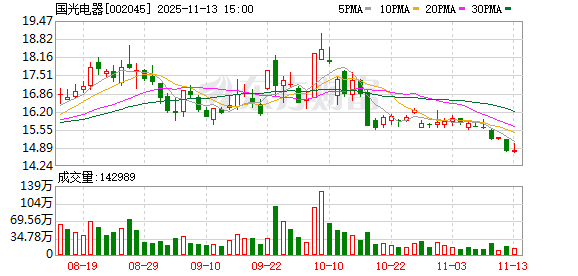
国光电器

Search documents
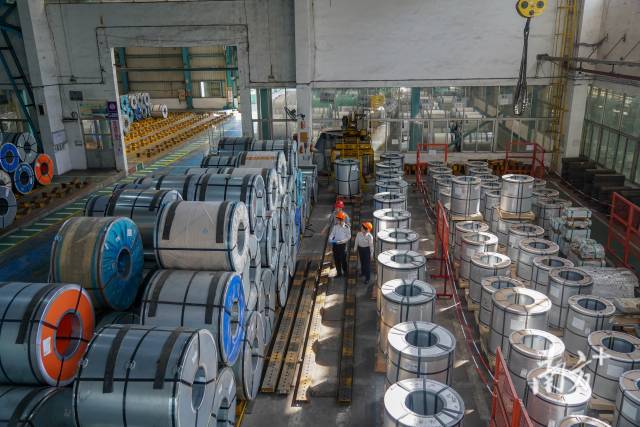
国光电器:目前公司在扩产阶段
Zheng Quan Ri Bao· 2025-11-19 13:36
Core Points - The company reported a significant impact on its financials due to the downturn in the real estate industry, leading to impairment provisions for its investment in a subsidiary [2] - The company recorded a net profit of 23.14 million yuan for Q3 and a total net profit of 89.34 million yuan for the first three quarters of the year, after adjusting for the impairment and bad debt provisions [2] - The company is currently in an expansion phase, with its second production base in Vietnam entering production and the Jiangxi base undergoing acceptance [2] Financial Impact - The company made a provision for impairment of long-term equity investment amounting to 46.36 million yuan due to the struggles faced by its subsidiary [2] - A bad debt provision of 30.57 million yuan was also recorded for financial support to the subsidiary, along with a reversal of interest income of 2.12 million yuan from the previous half-year [2] Operational Developments - The second phase of the production base in Vietnam has commenced production, indicating progress in the company's expansion strategy [2] - The Jiangxi base is currently in the acceptance stage, suggesting that it is nearing operational readiness [2]


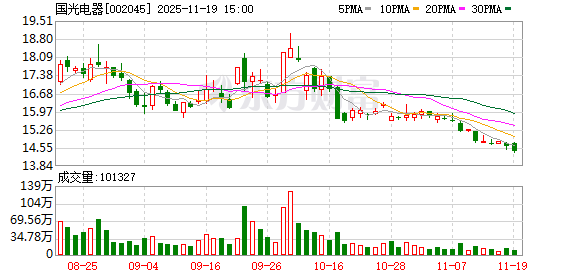
国光电器:目前暂未量产机器人声学模组
Mei Ri Jing Ji Xin Wen· 2025-11-19 08:23
Group 1 - The company emphasizes the importance of developing in the AI frontier field [2] - The acoustic module developed by the company can be applied to the acoustic part of robots [2] - Currently, the company has not yet mass-produced the robotic acoustic module [2] Group 2 - The company will disclose progress to investors if the business volume reaches the information disclosure standards [2]
国光电器(002045.SZ):目前暂未量产机器人声学模组
Ge Long Hui· 2025-11-19 08:11
Core Viewpoint - The company emphasizes the importance of developing in the AI frontier, particularly in the application of its acoustic modules for robotics, although it has not yet achieved mass production of these modules [1]. Group 1 - The company is focusing on advancements in the AI sector [1] - The company's acoustic modules are designed for use in the acoustic components of robots [1] - Currently, the company has not yet initiated mass production of its robotic acoustic modules [1]
国光电器:目前半固态电池已完成研发阶段的所有测评,正在客户测试阶段
Mei Ri Jing Ji Xin Wen· 2025-11-19 07:55
Core Viewpoint - The company is actively developing solid-state battery technology and has completed the R&D phase for semi-solid batteries, which are now in customer testing stages [1] Group 1: Company Developments - The company’s subsidiary, Guoguang Electronics, is focusing on the solid-state battery sector and has fully developed semi-solid batteries with core intellectual property [1] - The semi-solid batteries demonstrate technical advantages in safety performance and temperature resilience, making them applicable to most current product systems [1] - The company is coordinating with customers for mass production based on the testing of end products and will provide updates to investors as progress is made [1]
电子行业点评:XiaomiMiloco亮相,定义全屋智能新未来
Minsheng Securities· 2025-11-19 06:46
Investment Rating - The report maintains a "Buy" rating for Xiaomi Group, Transsion Holdings, Liyin Intelligent Manufacturing, Guoguang Electric, and others, indicating a positive outlook for these companies in the context of the smart home industry [4][5]. Core Insights - Xiaomi's Miloco introduces a new paradigm in smart home technology by leveraging large models to create a more intuitive and interactive home environment, allowing users to communicate naturally with their smart home systems [1][2]. - The Miloco system addresses the limitations of traditional smart home setups, which often require cumbersome manual configurations and lack interoperability between different brands [1]. - The system is built on a proprietary large model, Xiaomi MiMo-VL-Miloco-7B, which integrates visual and language capabilities, enhancing the smart home experience through advanced perception and interaction [2]. Summary by Sections Investment Recommendations - The report suggests continuous monitoring of companies benefiting from the smart home wave, including Xiaomi Group, Transsion Holdings, and various suppliers and component manufacturers [2]. Company Financial Projections - Xiaomi Group is projected to have an EPS of 1.68 CNY in 2025, with a PE ratio of 22, indicating strong growth potential [4]. - Transsion Holdings is expected to achieve an EPS of 2.70 CNY in 2025, with a PE ratio of 23, also reflecting a favorable investment outlook [4]. - Liyin Intelligent Manufacturing is forecasted to have an EPS of 0.33 CNY in 2025, with a PE ratio of 41, suggesting significant growth opportunities [4]. Technological Advancements - Miloco's architecture allows for extensive customization and expansion, enabling developers to modify any layer of the system, which supports both stability and future growth [2]. - The focus on privacy and security through local data processing is a key differentiator for Miloco, ensuring user data remains protected [2].
年度最强AI压轴,谷歌Gemini 3.0本周决战OpenAI
Xuan Gu Bao· 2025-11-18 15:14
Core Viewpoint - 69% of people are betting that Google's next-generation AI model, Gemini 3.0, will debut this week, marking a significant turning point for the company and the AI industry as a whole [1] Industry Impact - Gemini 3.0 is expected to reshape the AI industry across multiple dimensions, including technology routes, competitive landscape, application boundaries, and industry chain ecology, potentially ending OpenAI's dominance and ushering in a "dual hegemony" era [1] Company Relevance - Related A-share concept stocks include Guoguang Electric and Shengguang Group, indicating potential investment opportunities linked to the developments surrounding Gemini 3.0 [2]

广州前10月进出口规模破万亿创历史新高
2 1 Shi Ji Jing Ji Bao Dao· 2025-11-18 11:36
Core Insights - Guangzhou's foreign trade import and export value reached 1.02 trillion yuan in the first ten months of this year, marking a historical high and a year-on-year increase of 12.1% [1] - Exports from Guangzhou amounted to 682.36 billion yuan, with a year-on-year growth of 20.5%, leading among major foreign trade cities in China [1] - The city's foreign trade has shown strong resilience and vitality, significantly supporting the overall foreign trade situation in Guangdong province [1] Key Products Driving Growth - The export of new energy vehicles (NEVs) has surged, with a 50% increase in the first ten months, accounting for over 46% of the company's total automotive export business [3] - Guangzhou Customs has implemented a comprehensive customs clearance service mechanism to facilitate the efficient export of NEVs, allowing for inspection and release within one hour of arrival at the port [4] - The export of "new three samples" products reached 19.94 billion yuan, up 52.8%, while high-tech product exports grew by 15.3% to 75.36 billion yuan [4] Expansion of Foreign Trade Networks - Guangzhou's foreign trade has benefited from a diversified market layout, with imports and exports to other RCEP member countries reaching 292.5 billion yuan, a year-on-year increase of 11.6% [7] - Exports to the EU and ASEAN saw significant growth, with increases of 23.9% and 31.1% respectively [7] - The city has actively expanded its foreign trade "circle of friends," enhancing the confidence of foreign trade enterprises in exploring overseas markets [6] Vitality of Business Entities - Private enterprises have played a crucial role in supporting Guangzhou's foreign trade, with over 27,000 companies engaged in import and export activities, a 12.5% increase [9] - Private enterprises accounted for 60.6% of the total foreign trade value, with their import and export value reaching 620.75 billion yuan, reflecting a year-on-year growth of 20.3% [9] - The Guangzhou Customs has introduced various policies and services to support the high-quality development of private enterprises, enhancing their ability to expand into global markets [9]
全球最大镰刀也盯上能源了
虎嗅APP· 2025-11-14 00:01
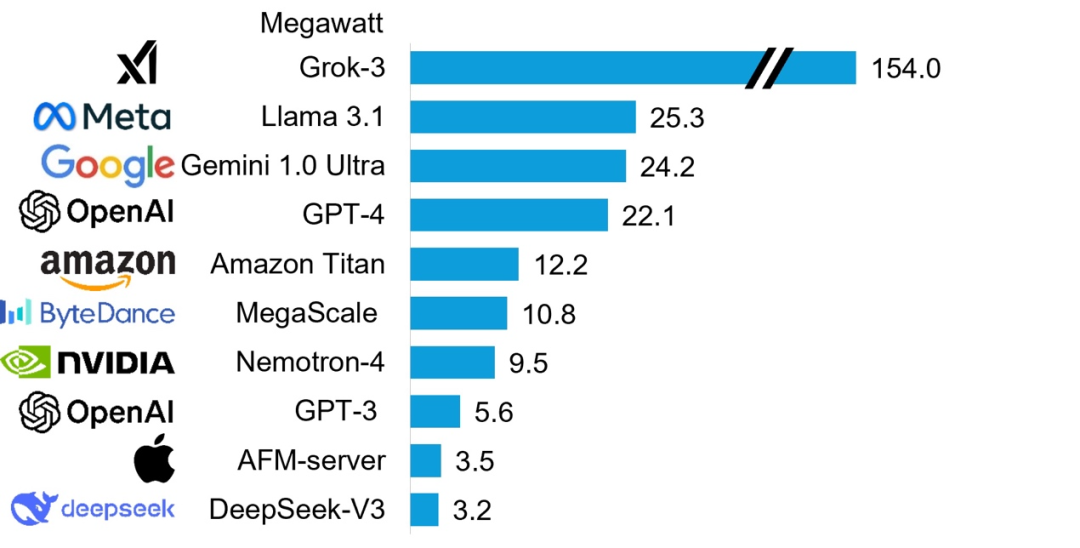
Core Viewpoint - The article discusses the impending electricity shortage driven by the explosive growth of AI and data centers, highlighting the contrasting energy situations in the US and China, and the potential investment opportunities in nuclear energy and related technologies. Group 1: Electricity Demand and Supply - The demand for electricity from AI data centers is surging, with a single AI training server rack consuming over 50kW, compared to the traditional 6-8kW for standard data center racks [5][6] - By 2030, global data center electricity consumption is expected to double to approximately 945TWh, which would account for 63.42% of China's residential electricity consumption in 2024 [6] - The US is projected to consume 45% of global data center electricity by 2024, with significant growth expected in both the US and China by 2030 [9][10] Group 2: US Electricity Challenges - The US electricity system is unprepared for the AI-driven demand surge, with economic growth decoupled from electricity demand, leading to a stagnation in power supply [11][12] - The US faces a projected electricity shortfall of approximately 100GW over the next five years due to insufficient new generation capacity to meet rising demand [16][20] - Aging infrastructure and regulatory hurdles further complicate the expansion of the US power grid, making it difficult to meet the needs of new data centers [21][22] Group 3: China's Energy Landscape - China has a robust energy supply, with total electricity generation exceeding consumption, and is focusing on renewable energy sources to meet future demands [27][28] - By 2024, China's total electricity generation is expected to reach 10.09 trillion kWh, with significant contributions from wind and solar energy [27][28] - The country is also addressing the challenge of integrating renewable energy into the grid, with policies aimed at achieving a synergy between computing power and green energy [33][41] Group 4: Investment Opportunities - The article highlights the growing interest in nuclear energy, particularly small modular reactors (SMRs) and controlled nuclear fusion, as potential solutions to the electricity supply challenges faced by both the US and China [55][66] - Major tech companies are increasingly investing in nuclear technologies to secure stable power for their data centers, with several agreements already in place for future nuclear power procurement [56][57] - The market for energy infrastructure, including storage and backup power solutions, is expected to grow significantly in response to the electricity shortages in North America [50][52]
全球最大镰刀也盯上能源了
Hu Xiu· 2025-11-13 14:39
Core Insights - The increasing demand for AI computing power is leading to a significant electricity shortage, with major tech companies like Microsoft and OpenAI highlighting the risks to their operations due to insufficient power supply [2][3][8] - The investment landscape is shifting towards energy solutions, particularly in the context of AI's growing electricity needs, with companies exploring advanced nuclear technologies [4][40] Group 1: Electricity Demand and Supply Dynamics - AI server clusters are consuming electricity at a rate that outpaces the expansion of the power grid, potentially creating a bottleneck for the AI era [3] - The power consumption of AI training has escalated dramatically, with data centers projected to consume 945 TWh by 2030, which would account for approximately 63.42% of China's residential electricity consumption in 2024 [4][7] - The U.S. is currently the largest consumer of data center electricity, accounting for 45% of global consumption, with significant growth expected in both the U.S. and China by 2030 [7][8] Group 2: U.S. Electricity Challenges - The U.S. electricity system is unprepared for the surge in demand driven by AI, with a disconnect between economic growth and electricity demand [8][11] - The aging infrastructure and the retirement of coal-fired power plants have exacerbated the electricity supply issues, leading to a projected shortfall of approximately 100 GW over the next five years [12][14] - Major data centers in the U.S. are already facing delays in new projects due to transmission capacity limitations [14][15] Group 3: China's Energy Landscape - China has a robust energy supply, with total electricity generation exceeding consumption, and is expected to see significant growth in renewable energy sources [20][22] - The country is focusing on integrating computing power with renewable energy, with policies aimed at achieving a synergy between energy supply and demand [26][30] - By 2030, China's data center electricity demand is projected to reach between 3000-7000 billion kWh, while renewable energy generation is expected to exceed this demand [34][35] Group 4: Nuclear Energy as a Solution - Both the U.S. and China are increasingly looking towards nuclear energy, particularly small modular reactors (SMRs) and controlled nuclear fusion, to meet future energy demands [49][50] - The commercial viability of SMRs is still in its early stages, with significant investments being made but no substantial revenue expected until the late 2020s [51][52] - Controlled nuclear fusion is gaining traction as a long-term solution, with various countries setting ambitious timelines for its commercialization and significant funding being directed towards this technology [54][55]
国光电器:选举第十一届董事会职工代表董事
Zheng Quan Ri Bao· 2025-11-13 08:35
Core Viewpoint - The company announced the election of Mr. Yang Liujiang as the employee representative director of the 11th Board of Directors during the employee representative assembly scheduled for November 12, 2025 [2] Group 1 - The employee representative assembly will be held on November 12, 2025 [2] - Mr. Yang Liujiang has been elected as the employee representative director [2]