Booking Holdings Inc.

Search documents
Stocks Tumble on AI Disruption Fears
Yahoo Finance· 2026-02-03 21:26
The partial US government shutdown, now in its fourth day on Tuesday, has dampened investor sentiment as markets await the House's approval of a funding deal President Trump worked out with Democrats. The funding lapse may be short-lived, however, with the House possibly voting on the spending bill later Tuesday. The partial shutdown has already prompted the Bureau of Labor Statistics to delay the release of today’s Dec JOLTS job opening report and Friday’s Jan nonfarm payrolls report.Richmond Fed President ...
Kayak CEO Steve Hafner Exits Post After 22 Years
Yahoo Finance· 2026-02-03 14:02
Leadership Changes - Kayak co-founder and CEO Steve Hafner has stepped down after 22 years, with CFO Peer Bueller appointed as the new CEO [1] - Hafner will transition to a newly created role as executive chair, focusing on advancing AI innovation at Booking Holdings [2] Company Background - Kayak was co-founded by Hafner and Paul English in 2004, becoming a leading travel metasearch platform alongside competitors like Skyscanner, Trivago, and Tripadvisor [4] - Booking Holdings acquired Kayak for $2.1 billion in 2013, as part of a strategy to own a metasearch company for in-house marketing and revenue generation from rival advertising [5] Market Dynamics - The rise of Google in generative AI and its dominance in hotel and flight metasearch has diminished the perceived value of metasearch platforms like Kayak [6] - In October 2025, Booking Holdings reported a $457 million writedown on Kayak, citing expected lower future cash flows and higher customer acquisition costs, largely due to changes in Google's search practices [7]

全球酒店_美元走弱的赢家与输家-Global Hotels & Leisure_ Dollar weakness - winners and losers
2026-02-03 02:06
Summary of Global Hotels & Leisure Conference Call Industry Overview - The conference call discusses the impact of current dollar weakness on the Global Hotels & Leisure industry, particularly focusing on companies with significant international revenue exposure and those with costs denominated in different currencies. Key Points Winners from Dollar Weakness 1. **Booking Holdings (BKNG)**: - Beneficiary of dollar weakness with nearly 80% of room nights outside the US, particularly benefiting from strong Euro against the USD [2][12] - Earnings estimates increased by 2-3% due to favorable FX impact [1] 2. **Airbnb (ABNB)**: - 55% of revenues earned outside the US, with 33% exposure to Europe and 11% each to APAC and LATAM, leading to a positive earnings tailwind from USD weakness [3][12] - Earnings estimates raised by 2-3% [1] 3. **Carnival Corporation (CCL)**: - 45% of revenues generated outside the US, primarily in Europe, benefiting from favorable currency translation [3][12] - Earnings estimates increased by 2-3% [1] 4. **Other Beneficiaries**: - Hilton, Marriott, IHG, and Royal Caribbean (RCL) will also see benefits, but to a lesser extent due to limited non-USD exposure [3] Losers from Dollar Weakness 1. **Accor**: - Despite only 3% of room exposure in the US, approximately 35% of EBITDA is generated in USD while reporting in EUR, leading to a negative impact from dollar weakness [4][14] - Earnings estimates trimmed by ~3% [1] 2. **Hyatt**: - Managed resorts in the Mexican Caribbean earn revenues in USD but have costs in Mexican Pesos, leading to margin compression due to dollar weakness [5][14] - Incentive management fees are sensitive to USD/MXN exchange rates, resulting in a 3-4% headwind to earnings for 2026-2027 [5][15] Financial Implications - The overall impact of dollar weakness is expected to create a material earnings tailwind for US-denominated stocks with high non-US revenue exposure, while negatively affecting those with significant USD costs and EUR-denominated earnings [1][11] - The dollar is down MSD-high teens year-over-year against major currencies, which will have a significant impact on the earnings of companies in the travel sector [9] Investment Ratings - Despite the FX impacts, the investment ratings remain unchanged with Outperform ratings for Marriott, Hyatt, Accor, Melia, Royal Caribbean, and Airbnb [8] Additional Insights - The analysis highlights the importance of currency exposure in the hospitality sector, emphasizing that companies with significant international operations are better positioned to benefit from a weaker dollar [11][20] - The sensitivity of earnings to currency fluctuations is a critical factor for investors to consider when evaluating these companies [14][15] This summary encapsulates the key insights from the conference call regarding the impact of dollar weakness on the Global Hotels & Leisure industry, identifying both winners and losers, and providing a financial outlook for the affected companies.


未知机构:浙商社服独家深度从Booking看国内OTA告别价格平价巨头如-20260203
未知机构· 2026-02-03 01:50
Summary of Conference Call Notes Industry Overview - The focus is on the Online Travel Agency (OTA) industry in China, particularly in relation to Booking's strategies and market positioning amid antitrust investigations [1] Core Insights and Arguments - The market has shown divergence regarding domestic OTAs due to the investigation initiated on January 14, which has raised concerns about regulatory impacts [1] - Despite the antitrust scrutiny, Booking has managed to increase its market share and maintain stable commission rates, indicating a robust business model [1] - Booking is shifting from an agency model to a merchant model, allowing it to control cash flow and pricing by requiring prepayments, thus avoiding direct legal challenges related to price parity clauses [1] Additional Important Content - Booking utilizes significant Google advertising investments to secure public traffic and employs membership programs like Genius and Preferred Partner to transfer costs to hotels, creating a blurred comparison system [2] - The strategy includes cross-selling "flight + hotel" packages, which conceals room rates within bundled pricing [2] - Domestic OTAs still hold a leading advantage in mobile platforms and the Asia-Pacific supply chain [2] - The report serves as a comprehensive record of Booking's decade-long antitrust defense and is a valuable reference for understanding the current state of domestic OTAs [2] - Risk factors include potential overreach in EU antitrust regulations, rising costs of traffic acquisition, and excessive reliance on Google advertising [2]
Booking反垄断启示录:告别“价格平价”,巨头如何重塑护城河?
ZHESHANG SECURITIES· 2026-02-02 10:25
Investment Rating - The industry investment rating is positive [1] Core Insights - The European Union's regulatory efforts have intensified, designating Booking as a "gatekeeper" under the Digital Markets Act (DMA), which prohibits the use of price parity clauses that restrict hotel pricing [2] - Despite antitrust measures aimed at promoting competition, Booking's market share in Europe has increased from approximately 60% in 2013 to over 71% in 2023, indicating a concentration of market power [3] - Booking is strategically shifting its business model from an agency model to a merchant model, allowing it to control pricing and cash flow while avoiding direct legal interference with hotel pricing [4] Summary by Sections Regulatory Environment - The EU's regulatory framework has evolved, with Booking being classified as a "gatekeeper" under the DMA, which mandates compliance with new rules prohibiting price parity clauses [12][18] - The historical context of antitrust actions against Booking highlights a growing trend of regulatory scrutiny across various jurisdictions [25][28] Market Competition - The competitive landscape remains concentrated, with Booking leveraging its dual-sided network effects to maintain its leading position, while competitors like Expedia and Airbnb are exploring differentiated strategies [5][6] - The cancellation of price parity clauses has not led to significant price competition among OTAs, as Booking continues to utilize algorithms and monitoring to maintain pricing control [3][56] Business Model Transformation - Booking's transition to a merchant model allows it to pre-collect payments and manage pricing, effectively circumventing legal restrictions on hotel pricing [4] - The company is investing heavily in Google advertising and membership programs to enhance its market presence and obscure pricing comparisons [4] Future Outlook - The report anticipates that the competitive dynamics in the OTA market will continue to evolve, with Booking's strong market position likely to persist despite regulatory challenges [5][6]
护城河也会干涸,如果没有“再投资能力”
雪球· 2026-01-31 04:21
Core Concept - The article discusses the concept of "economic moats" as defined by Morningstar, emphasizing the importance of a company's ability to generate excess returns over a long period [6][7][8]. Group 1: Economic Moat Definition and Characteristics - Economic moats are defined as a company's ability to maintain excess returns, with a wider moat indicating a slower decline into mediocrity [8]. - Morningstar categorizes economic moats into three types: Wide Moat, Narrow Moat, and No Moat, with specific quantitative definitions and characteristics for each [10]. - A company with a Wide Moat is expected to sustain excess returns for at least 20 years, while a Narrow Moat can maintain excess returns for at least 10 years [9][10]. Group 2: Importance of Valuation - Valuation is crucial in assessing moat companies, with Morningstar advocating for a dynamic valuation standard based on the certainty of a company's business model [17][18]. - Different levels of uncertainty in a company's valuation require varying degrees of discount for buying and premium for selling [20]. - The article highlights that a more nuanced approach to valuation, based on business models, is more aligned with market realities than a blanket tolerance for good companies [21]. Group 3: ETF and Performance Comparison - Morningstar's moat investment philosophy is encapsulated in the VanEck Morningstar Wide Moat ETF (MOAT), which has been in existence since 2012 [22]. - As of the end of 2025, the MOAT ETF underperformed the S&P 500 index, primarily due to the recent market dynamics dominated by a few large-cap stocks [23][25]. - Despite underperforming the S&P 500, the MOAT ETF still showed better performance compared to an equal-weighted S&P 500 index [25]. Group 4: Evolution of Moat Concept - The article references Pat Dorsey, who expanded on the moat concept after leaving Morningstar, introducing categories like Legacy Moat and Reinvestment Moat [27][28]. - Legacy Moat companies have strong competitive advantages but limited growth opportunities, while Reinvestment Moat companies can reinvest profits into high-return opportunities [28]. - The article also discusses the emergence of Capital Light Compounders, which leverage network effects for growth with minimal capital investment [29].


Investment Manager Sells $10.1 Million Worth of Blue Owl Stock, According to Recent SEC Filing
Yahoo Finance· 2026-01-28 21:45
Cortland Associates Inc/MO cut its stake in Blue Owl Capital (NYSE:OWL), selling 645,218 shares in the fourth quarter, an estimated $10.09 million trade based on quarterly average pricing, according to a January 28, 2026, SEC filing. What Happened According to an SEC filing dated January 28, 2026, Cortland Associates Inc/MO reduced its position in Blue Owl Capital by 645,218 shares during the fourth quarter of 2025. The estimated value of the shares sold was $10.09 million, based on the quarterly average ...

All the “Buy into SpaceX Early” Teaser Pitches — What are they recommending?
Stockgumshoe· 2026-01-27 13:00
Core Insights - The investment community has a strong fascination with Initial Public Offerings (IPOs), viewing them as opportunities to invest in the next big companies, despite the average IPO performing no better than established public companies [2][3] - Companies like SpaceX, OpenAI, and Anthropic are currently generating significant interest as potential IPO candidates, with SpaceX being the most mature among them [9][10] - The valuation of SpaceX is a focal point, with rumors suggesting a potential IPO valuation of $1.5 trillion, significantly higher than its last private valuation of $800 billion [12] Group 1: IPO Market Dynamics - IPOs are seen as a way for private companies to raise capital and gain public market exposure, often creating a sense of urgency and excitement among investors [2][4] - The Renaissance IPO ETF serves as a proxy for newly public companies, reflecting investor sentiment but not consistently outperforming the market [4] - Investors often lack access to detailed financials of companies before they go public, leading to speculative investments based on perceived potential rather than solid data [7][8] Group 2: SpaceX and Its Valuation - SpaceX has raised approximately $12 billion since its inception and is considering an IPO, potentially keeping its subsidiary Starlink under its umbrella to maintain revenue streams [10][11] - The company’s revenue is projected to be around $15 billion in 2025, with growth expected to be between 30-50% in 2026, primarily driven by Starlink [12] - Comparisons are drawn between SpaceX and other high-profile IPOs, such as Palantir, which went public at a lower valuation and faced significant price fluctuations in its early years [14][15] Group 3: Investment Opportunities and Risks - Various investment vehicles, including mutual funds and ETFs, have significant stakes in SpaceX, providing indirect exposure to the company for investors [26][33] - Accredited investors can purchase SpaceX shares directly through private transactions, though this market is characterized by high fees and limited liquidity [29][30] - The excitement surrounding SpaceX's potential IPO has led to numerous promotional campaigns encouraging early investment in the company or its suppliers [19][20]


在线旅游平台:强劲需求是否重要?(第四季度前瞻)-OTAs_ Will strong demand matter_ (Q4 preview)
2026-01-23 15:35
Summary of Key Points from the Conference Call Industry Overview - The focus is on the Online Travel Agents (OTAs) sector, specifically Airbnb, Booking.com (BKNG), and Expedia (EXPE) as they prepare for Q4 results and 2026 guidance [1][2][3][4]. Core Insights and Arguments - **Traffic Growth**: OTA traffic is showing strong growth, with app user growth in double digits for Airbnb, Booking, and Expedia. December has seen a notable increase in web traffic for both Booking and Expedia, reversing previous declines [1][2]. - **Q4 Expectations**: Anticipated night growth for all three companies is high single digits (HSD), with expectations of over 2% top-line and over 3% EBITDA line beats. Q4 is typically a lower booking/revenue quarter [1][2]. - **AI Integration**: AI is expected to be a significant theme in 2026, transitioning from experimentation to implementation. Both Booking and Airbnb are anticipated to provide more details on their AI strategies during Q4 [3][4]. - **Investment in AI**: There are concerns regarding the operational expenditure (OPEX) required to hire AI talent, but no significant surprises are expected in terms of capital expenditure (CAPEX) [3][4]. - **Event-Driven Growth**: The upcoming FIFA World Cup and other major events in the US are expected to provide a boost to Airbnb's growth, with a projected ~50 basis points (bps) tailwind to nights growth [4][18]. Financial Projections - **Airbnb**: Expected to lead in topline and bottom line growth in 2026, with a projected 120 million room nights in Q4, reflecting an 8.8% year-over-year increase [1][26]. - **Booking.com**: Anticipated to have the highest top-line beats, with room night growth of 8.7% in Q4, which is 2.5% above consensus [2][36]. - **Expedia**: Expected to see the largest EBITDA beat, driven by strong B2B growth, with room night growth estimated at 9.4%, ahead of guidance [2][54]. Additional Important Insights - **Partnerships and Revenue Models**: There is an expectation for further details on partnerships with AI platforms and the different revenue models that may emerge, such as CPC and CPA [3][18]. - **Market Ratings**: Tripadvisor and Airbnb are rated as Outperform, while Booking and Expedia are rated as Market-Perform [7][9]. - **Traffic Trends**: Both Booking and Expedia have shown improvements in web traffic, with Booking experiencing a significant acceleration from Q3 to Q4 [36][54]. - **Tripadvisor's Challenges**: Tripadvisor is facing headwinds with declining core traffic, but revenue estimates are slightly ahead of consensus due to anticipated declines being largely expected [68][69]. Conclusion - The OTAs are positioned for a strong Q4, with significant growth expected in 2026 driven by AI integration and major events. Airbnb is particularly well-positioned for growth, while Booking and Expedia also show promising trends. The focus on AI and partnerships will be critical for maintaining competitiveness in the evolving travel distribution landscape [1][3][4][18].

从雪地陷车到撞围栏:境外租车自驾复盘与避坑攻略
3 6 Ke· 2026-01-22 05:05
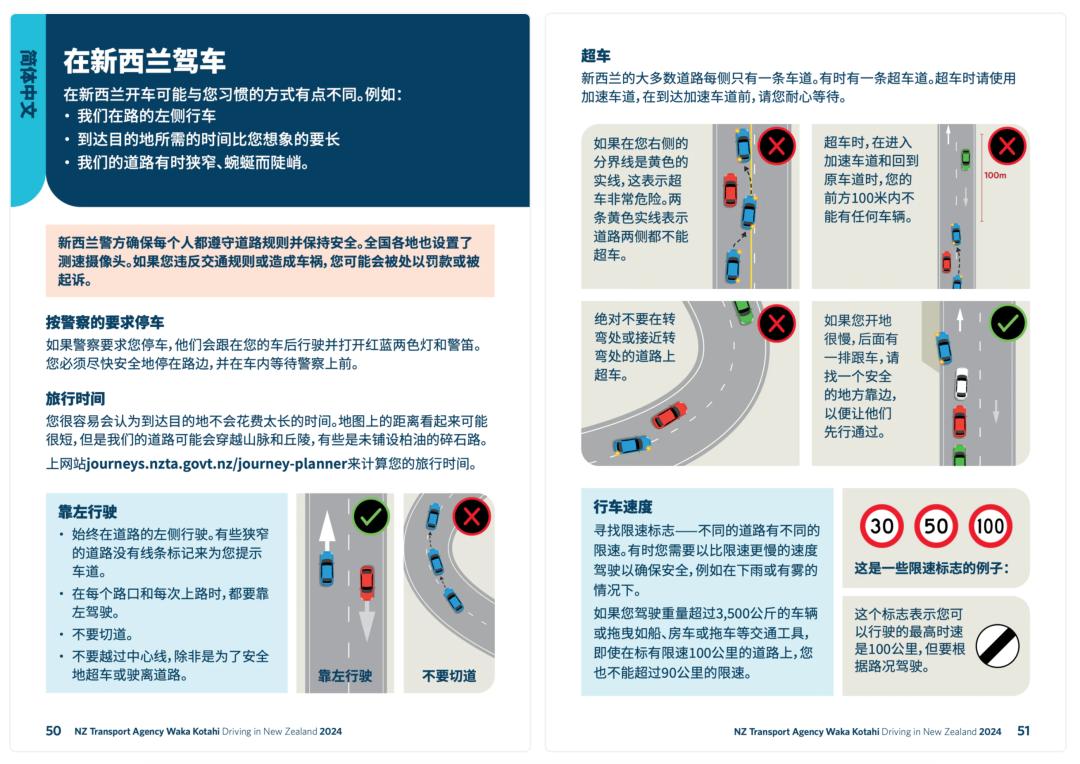
Group 1 - The article discusses the experiences and lessons learned from renting cars while traveling abroad, particularly focusing on the importance of understanding local driving conditions and insurance options [1][2]. - It emphasizes the need to assess whether to rent a car based on local road conditions, driving license requirements, and booking details [3][4]. - The author shares specific incidents encountered during car rentals in Iceland, Scotland, and New Zealand, highlighting the importance of proper insurance coverage [1][2]. Group 2 - Before renting a car, it is crucial to evaluate local road conditions, such as mountainous terrain, city driving, and adverse weather [5][6]. - Understanding the local traffic rules and accident rates is essential to avoid fines and ensure safety while driving [6][7]. - The article outlines the different requirements for driving licenses in various countries, including the need for translations or international driving permits [18]. Group 3 - When renting a car, the article advises comparing prices on third-party platforms but emphasizes that insurance should be purchased directly from the rental company [20][21]. - It explains the differences between insurance options available through rental companies and third-party platforms, particularly regarding coverage limits and claims processes [20][24]. - The article warns about the potential pitfalls of assuming that third-party insurance is equivalent to rental company insurance, particularly regarding deductibles and coverage limits [24][25]. Group 4 - After renting a car, it is important to conduct a thorough inspection of the vehicle to document any pre-existing damage and ensure all necessary equipment is present [30]. - In case of an accident, the article outlines the steps to take, including securing safety, documenting evidence, and contacting the rental company for claims [30][31]. - The article concludes by reiterating the enjoyment of self-driving travel while sharing valuable insights to enhance safety and reduce anxiety during such trips [32].