
小红书

Search documents
阿里加码本地到店服务,淘宝闪购饿了么上线团购
3 6 Ke· 2025-09-23 02:41
Core Insights - The local life service market in China is projected to grow from 19.5 trillion yuan in 2020 to 35.3 trillion yuan by 2025, with an online penetration rate of only 10% [1][11] - Alibaba has made significant strategic moves in the local life service sector, including the launch of the "Gao De Street Ranking" and a new group buying service in collaboration with Ele.me [1][3][4] Market Overview - The local life service market is expected to exceed 35.3 trillion yuan by 2025, with a compound annual growth rate of 12.6% and an anticipated online penetration rate of 30.8% [11] - The "to-store" services, which include dining, tourism, and entertainment, account for over half of the local life service market and are growing at an annual rate of over 15% [11] Alibaba's Strategic Moves - Alibaba's new group buying service features a "dual supply + three entry points" model, integrating offerings from Taobao Flash Sale and Ele.me [3] - The service will initially be piloted in key urban areas such as Shanghai, Shenzhen, and Jiaxing, utilizing localized marketing strategies [3][9] Technological Integration - The Gao De Street Ranking leverages AI and user behavior data to enhance user experience and merchant evaluation [5][9] - Payment technologies from Alipay and order code systems from Taobao are designed to streamline the in-store experience for users [5] Competitive Landscape - The local life service market is highly competitive, with major players like Meituan, Douyin, and Kuaishou also expanding their offerings [15][14] - Douyin has introduced a content-driven group buying model, while Kuaishou has committed significant resources to local life services [13][14] Future Trends - The competition in the local to-store business is expected to shift from single-channel to multi-channel integration, emphasizing the importance of combining merchant resources, user data, and fulfillment networks [17] - The significance of lower-tier markets is increasing, with county-level economies projected to exceed 50 trillion yuan by the end of 2024 [18] Conclusion - Alibaba's recent initiatives in the local to-store business signify a shift from a defensive to an offensive strategy, aiming to capture market share and enhance user experience [20] - The ongoing competition in the local life service sector will focus on providing better, more transparent, and convenient services to consumers [20]



亮出“小红卡”的小红书,如何避免再踩红线?
3 6 Ke· 2025-09-22 11:40
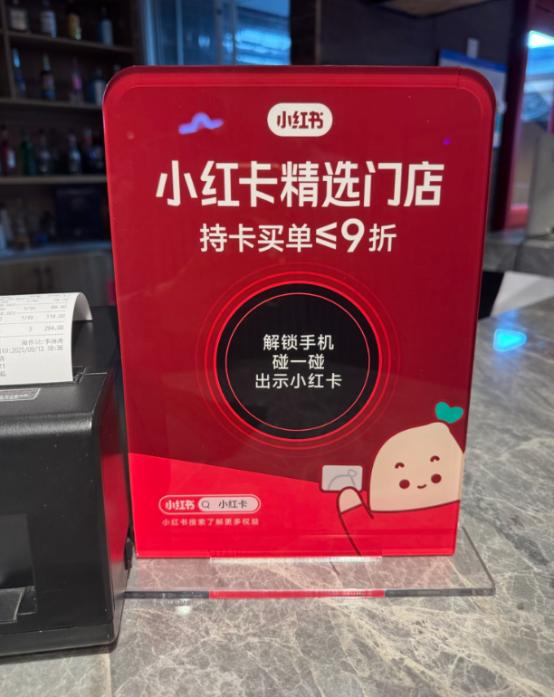
Core Viewpoint - Xiaohongshu has launched a new feature called "Xiaohong Card," aimed at local lifestyle membership services, offering discounts for in-store consumption, marking a significant step in its commercialization efforts [1][4][25]. Group 1: Xiaohong Card Launch - The "Xiaohong Card" is positioned as a local lifestyle membership service, providing users with at least a 10% discount at selected stores [1][4]. - Currently, the feature is in a trial phase, available only in Shanghai, Hangzhou, and Guangzhou [3]. - The card aims to replicate the successful "beautiful meal" sharing cycle that Xiaohongshu is known for, encouraging users to share their experiences and drive further purchases [4][5]. Group 2: User Engagement and Merchant Participation - Users can receive a 90-day free trial card by checking in at physical stores, creating a cycle of "check-in - receive card - discount" [8]. - The platform is encouraging users to share their experiences post-consumption, similar to strategies used by Douyin [9]. - However, the discounts offered are not significantly competitive compared to platforms like Dazhong Dianping and Douyin, which may hinder user attraction [9][10]. Group 3: Business Strategy and Market Position - Xiaohongshu is adopting a cautious approach to entering the local lifestyle market, contrasting with the aggressive strategies of competitors like Douyin and Meituan [12][20]. - The company has implemented a "zero commission" strategy for merchants, charging only a 0.6% service fee on the first 1 million yuan of transactions [10][11]. - Xiaohongshu's focus on attracting niche, trendy merchants rather than mainstream brands may limit its market reach [11]. Group 4: Commercialization Efforts - The company is exploring multiple avenues for commercialization, including advertising and e-commerce, with a significant portion of its revenue still reliant on advertising [25][26]. - Recent changes, such as the rebranding of its e-commerce section to "Market" and the integration of its commercial and transaction departments, indicate a push for a more cohesive commercial strategy [30][31]. - Xiaohongshu's valuation has seen fluctuations, rising from $16 billion to $31 billion in a short period, reflecting market optimism regarding its commercialization progress [31][32]. Group 5: Balancing Commercialization and Community - As Xiaohongshu expands its commercial activities, it faces the challenge of maintaining a balance between commercialization and community trust, ensuring that user experience and content integrity are not compromised [32].
定制爽感的超短篇网文,能再造短剧奇迹吗?
3 6 Ke· 2025-09-22 11:17
走近了你发现他很高挑,一双修长的腿套着黑色短裤,小腿肌肉线条流畅,居家服也挡不住他肩颈下弧度优美的锁骨。" 这段带有"女凝"视角的短篇小说开头,出自小红书"乙女向小说"话题下的一则热门笔记。 "隔壁那个寡夫好像在勾引你......看见你的目光,他含着羞意笑了笑,走出来帮你搬东西:我帮你搬吧。 同样是最近,小红书发起了"小红书文学节",并开启了"第2届身边写作大赛"的征稿和选拔,体裁不拘,字数要求低于5000字,并请来陈冲、陈嘉映、鸟 鸟等人组成顾问团和终审评委团,以赛事化的方式吸引更多创作者加入创作。 在小红书,写作数百到5000字上下的女性向短篇网文,正在成为一种新的内容创作潮流。数据为证,"乙女向小说"话题下笔记的总浏览量近亿,同类 的"女主视角小说"话题量达到1.2亿,密密麻麻的细分话题下,正长出不同形态的原创女性向短篇小说。 小红书话题分类下浏览量 与之对应的是,小红书也开始鼓励长文创作。过去两个月,小红书放开了用户发文的字数限制,支持单篇长文创作,并提供了一键排版、电脑长文写作等 辅助功能,进一步降低了写作者的门槛。 小红书"第2届身边写作大赛"活动界面 虽然在小红书,这类文字创作被叫做"长文",但 ...

北京文化论坛平行论坛“虚实无界:视听产业融合破圈”即将举办,推动全球视听文化交流合作
Bei Jing Ri Bao Ke Hu Duan· 2025-09-22 09:34
Group 1 - The "Virtual and Real Without Boundaries: Breaking the Circle of Audiovisual Industry Integration" parallel forum is part of the 2025 Beijing Cultural Forum, scheduled for September 23, 2023, at the Beijing International Hotel [1][3] - The forum aims to create a high-end dialogue platform for the audiovisual industry, promoting global cultural exchange and industry cooperation [3] - The event will feature discussions on global cooperation, cross-cultural communication, and the integration of technology in the audiovisual sector, with participation from over 20 international guests from 17 countries and regions [3][4] Group 2 - The forum will showcase a series of high-quality audiovisual works, including commemorative dramas for the 80th anniversary of the victory in the Chinese People's Anti-Japanese War [4] - A professional salon focusing on audiovisual technology will explore how innovations like ultra-high definition, XR/VR, and AI can empower cultural expression and international communication [4][5] - The forum will also address the role of artificial intelligence in reshaping the film and television industry, with discussions on its applications in scriptwriting, virtual production, and intelligent distribution [5] Group 3 - A professional salon on animation will discuss how Chinese animation can leverage Eastern aesthetics to penetrate the global market, featuring insights from industry leaders and organizations [5][6] - The "Drama Power Unlimited" salon will focus on high-quality drama creation and industry upgrades, inviting top creators to share their experiences and insights on the industry's future [6]


阿里三军“围剿”美团?到店团购成下一个千亿风口
Qi Lu Wan Bao Wang· 2025-09-22 08:29
Core Insights - The competition among internet local life platforms in the "in-store" business is intensifying, with significant growth projected for the market, expected to reach 35.3 trillion yuan by 2025, with a compound annual growth rate of 12.6% [1][2] Group 1: Competitive Landscape - Major players like Alibaba, Douyin, and Meituan are aggressively competing for the in-store market, with Alibaba launching the "Street Ranking" and a 1 billion yuan subsidy plan [2][7] - Douyin has reported an 81% year-on-year growth in its local life business GMV, implementing initiatives like the "Smoke Fire Small Shop Support Plan" to enhance its market position [2][6] - Meituan is focusing on maintaining its market share with initiatives like the "Duck Seek" app, which emphasizes authentic reviews and has over 9 million restaurant partners [3][4] Group 2: Strategic Approaches - Meituan adopts a "defensive" strategy, leveraging its dual barriers of merchant partnerships and user reviews, while also expanding its offerings through the "Duck Seek" app [4][3] - Douyin employs a "mixed attack and defense" strategy, utilizing its content ecosystem to drive user engagement and sales conversion, with a reported sales figure of 320 billion yuan from January to August 2024 [6] - Alibaba's strategy focuses on filling gaps in the market with its unique "Street Ranking" system, which integrates real user behavior data into its scoring system [7] Group 3: Consumer Impact - The competition has led to tangible benefits for consumers, who now face a plethora of choices and discounts, but also experience challenges such as differing platform rules and complexities in redeeming offers [8][9] - The ultimate goal for these companies is to convert high-frequency in-store consumption into broader e-commerce purchasing power, aiming to tap into existing market growth [9]

AI 站上桥头堡,美团阿里做“导购”
3 6 Ke· 2025-09-22 03:47
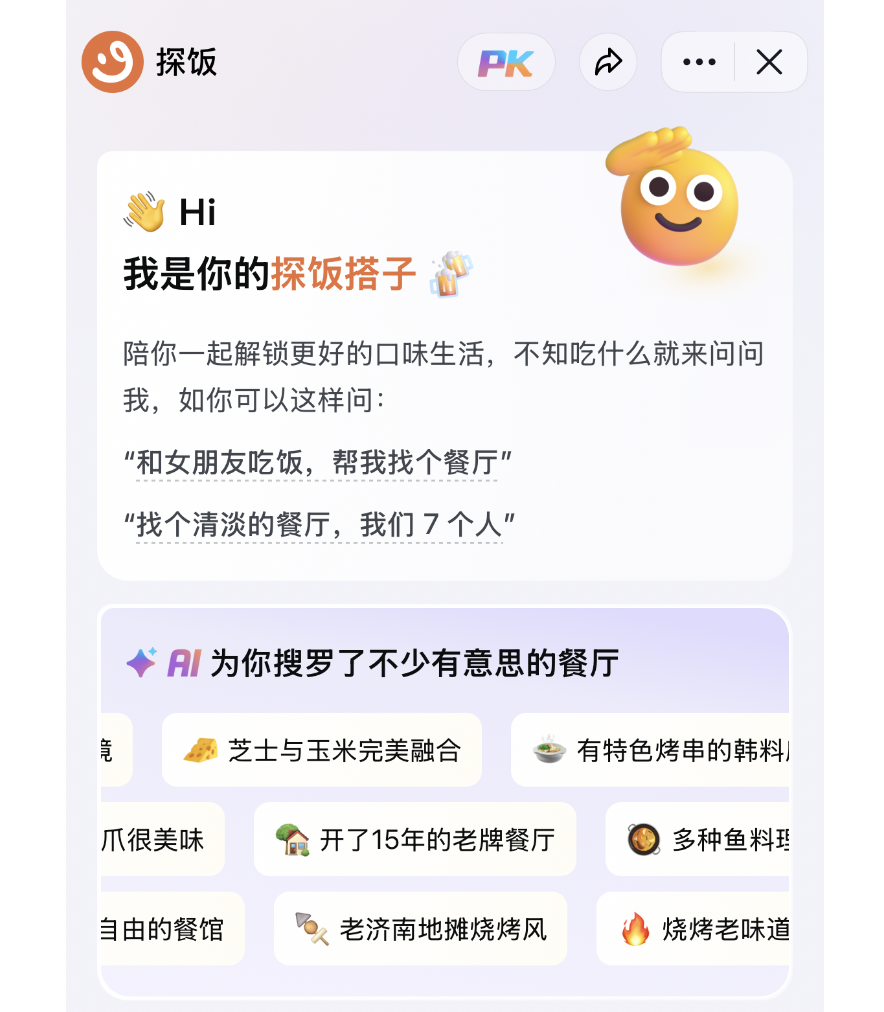
Group 1 - Meituan's first AI Agent product, "Xiao Mei," has been launched, designed as a "small and beautiful AI life assistant" for local consumption recommendations [1] - The AI is based on Meituan's self-developed model LongCat-Flash-Chat, which has been open-sourced on platforms like GitHub and Hugging Face [1] - The competitive landscape indicates that while delivery and instant retail have drawn attention, AI remains a critical focus as companies enhance their technological capabilities [1][2] Group 2 - The market is questioning Meituan's "moat" in the food delivery sector due to competitive pressures from platforms like Taobao and the impact on profitability [3] - Meituan's competitive advantages include a strong fulfillment capability and a large user base, but these may be vulnerable to imitation by competitors [3] - Long-term assets such as operational experience, established merchant/user/rider systems, and algorithmic scheduling contribute to Meituan's competitive identity [3] Group 3 - The "Xiao Mei" AI aims to address an underestimated demand in food delivery: helping users make choices among numerous options [4] - The AI assistant leverages location-based services (LBS) to provide tailored recommendations based on user preferences and historical data [6][8] - By transforming long-term accumulated data into visible product experiences, Meituan is enhancing its competitive edge in the market [8] Group 4 - The concept of "guide-type" AI is prevalent across various platforms, assisting users in making decisions through natural language interactions [9] - Other platforms like Taobao and JD have also developed similar AI products, indicating a trend towards integrating AI into consumer decision-making processes [9] - Despite the potential, many AI-driven recommendation systems still face challenges in accurately interpreting user needs due to the complexity of consumer decision-making [12][13] Group 5 - The integration of AI assistants into platforms is seen as a step towards creating "super applications" that serve as comprehensive consumer entry points [14] - However, there are concerns about the effectiveness of such applications, as seen in the example of Alipay, which has a wide range of services but lacks user retention as a comprehensive platform [14] - The success of AI assistants will depend on their ability to mature and cultivate user habits over time [14]
社交平台热搜频繁“翻车”,别让流量迷了网络生态的眼|时评
Xin Lang Cai Jing· 2025-09-21 22:27
Core Viewpoint - The article highlights the detrimental impact of the current trending topics on social media, particularly focusing on the entertainment industry, which has overshadowed significant societal issues and public interests [1][3]. Group 1: Issues with Trending Topics - Social media platforms like Kuaishou and Weibo have been criticized for prioritizing trivial celebrity news over important societal matters, leading to a skewed representation of public discourse [1][3]. - The focus on entertainment content is driven by the pursuit of traffic and commercial interests, as celebrity news attracts large audiences and generates significant engagement [3][4]. - This trend has resulted in the marginalization of critical issues such as policy discussions, technological advancements, and public welfare concerns, which are essential for a balanced information ecosystem [3][4]. Group 2: Consequences of Entertainment-Centric Content - The proliferation of low-quality information can diminish users' critical thinking abilities, leading to a culture of superficial engagement and a lack of awareness regarding real-world issues [4][6]. - Culturally, the excessive focus on celebrity gossip contributes to a decline in the quality of public discourse, hindering the dissemination of valuable cultural and serious content [4]. - The chaotic environment created by the dominance of entertainment news disrupts the normal order of public opinion and can incite negative behaviors, such as online conflicts among fan groups [4][6]. Group 3: Regulatory and Platform Responsibilities - Recent penalties imposed on platforms are seen as a strong warning against the ongoing issues related to trending topics, emphasizing the need for platforms to reassess their content management responsibilities [4][6]. - There is a call for stricter regulations to ensure that platforms are held accountable for the content they promote, with an emphasis on prioritizing social issues, technological innovation, and cultural development [4][6]. - The article advocates for a shift in focus for trending topics, suggesting that they should serve as a catalyst for social progress rather than a mere entertainment showcase [6].



西贝深陷“预制菜”争议,公关策略引发舆情升级
2 1 Shi Ji Jing Ji Bao Dao· 2025-09-21 11:06
Group 1 - The core issue revolves around the controversy of pre-made dishes at Xibei, highlighting the urgent need for transparency and standardization in the restaurant industry [2][3] - The incident began when a public figure criticized Xibei for allegedly serving pre-made dishes, leading to a public dispute and escalating tensions between the brand and consumers [2][3] - Xibei's response included a strong denial of the allegations, an offer for kitchen tours, and a commitment to rectify production processes, although their communication strategy faced criticism [3][5] Group 2 - The incident has resulted in a significant decline in Xibei's sales and brand value due to prolonged public backlash and ineffective communication [5] - The regulatory scrutiny faced by Xiaohongshu for its content management practices underscores the challenges of maintaining content quality and social responsibility as platforms grow [6][8] - Xiaohongshu's commitment to improve its content governance and adhere to regulatory standards reflects the increasing pressure on digital platforms to balance user engagement with responsible content management [7][8]
西贝深陷“预制菜”争议,公关策略引发舆情升级|消费舆警指数
2 1 Shi Ji Jing Ji Bao Dao· 2025-09-21 11:04
Group 1 - The core issue revolves around the controversy of pre-made dishes at Xibei, highlighting the urgent need for transparency and standardization in the restaurant industry [2][6] - The incident began when a public figure criticized Xibei for allegedly serving pre-made dishes, leading to a public dispute and escalating tensions between the brand and consumers [2][6] - Xibei's response included a strong denial of the allegations, an offer for kitchen tours, and a commitment to rectify production processes, although their communication strategy faced criticism [6][7] Group 2 - The incident has resulted in a significant decline in Xibei's sales and brand value due to prolonged public backlash and ineffective communication [7] - The regulatory scrutiny faced by Xiaohongshu for its content management practices emphasizes the need for platforms to balance user engagement with social responsibility [8][10] - Xiaohongshu's commitment to improve its content governance and adhere to regulatory standards reflects the growing pressure on digital platforms to maintain ethical content distribution [10][11]

干预商家定价,携程再被约谈丨南财合规周报(第208期)
2 1 Shi Ji Jing Ji Bao Dao· 2025-09-21 09:40
Regulatory Developments - The Cyberspace Administration of China has penalized Weibo and Kuaishou for damaging the online ecosystem, citing issues such as the promotion of celebrity gossip and a tendency towards sensationalism [2][3] - The Zhengzhou Market Supervision Administration has conducted an administrative interview with Trip.com, addressing violations of the E-commerce Law and unfair competition practices, particularly regarding price manipulation of hotel listings [4][5] AI and Technology Innovations - Kuaishou's Keling AI has launched a new digital human feature that can generate 1080p videos up to one minute long, allowing users to create videos using a character image and audio [8] - Zhejiang University and Huawei have released the DeepSeek-R1-Safe foundational model, which boasts a nearly 100% success rate in defending against harmful content and maintains a performance loss of less than 1% compared to its predecessor [9] - Meta has introduced its first consumer-grade smart glasses, the Meta Ray-Ban Display, featuring a color display, camera, and various interactive capabilities [10] - Apple is expected to enter the smart glasses market within the next 12 to 16 months with a non-display model, aiming to compete with Meta's offerings [11] User Engagement Insights - OpenAI's ChatGPT has reported over 700 million weekly active users, with 73% of conversations unrelated to work, highlighting a diverse range of usage topics [12]
