
vivo

Search documents
Omdia:第三季度拉美地区智能手机市场同比增长1% 出货量达到3520万部
Zhi Tong Cai Jing· 2025-12-04 01:21
Core Insights - The Latin American smartphone market is projected to grow by 1% year-on-year in Q3 2025, reaching a shipment volume of 35.2 million units, marking the highest quarterly shipment level since Q4 2015 [1][9] - Despite economic uncertainties, careful inventory management and moderate consumer demand have contributed to resilient shipment performance among major manufacturers [1] Market Performance - Samsung leads the market with 11.6 million units shipped, capturing 33% market share, driven by strong performance of its low-end A series, which accounts for 68% of its total shipments [2][9] - Xiaomi follows in second place with 6.3 million units (18% share), while Motorola ranks third but has seen a decline of 11% year-on-year [2][9] - Honor has achieved a new shipment high of 2.9 million units, marking a 75% increase year-on-year, while Transsion has experienced a 19% decline [2][9] Regional Insights - The recovery in the region is attributed to growth in key markets such as Brazil and Central America, with Brazil holding a 29% share and a shipment volume of 10.3 million units, reflecting a 5% year-on-year increase [4] - In contrast, Mexico, the second-largest market, saw a shipment volume of 7.4 million units (21% share), down 11% year-on-year, marking the fourth consecutive quarter of decline [4] - Emerging brands like realme, OPPO, and Honor are strengthening their market positions through local manufacturing and partnerships with carriers and retailers [4] Price Segment Analysis - The segment of smartphones priced below $300, which accounts for 71% of total shipments, has declined by 2%, primarily due to ongoing inventory pressures and stagnant consumer demand [5][6] - Conversely, the high-end segment (above $500) has seen a robust growth of 20% year-on-year, leading to an 8% increase in average selling price (ASP) in Q3 2025 [6][8] - This structural shift indicates increased competition in the high-price segment traditionally dominated by Apple and Samsung, with brands like OPPO, Xiaomi, and Honor intensifying their investments [6][8] Future Outlook - Omdia forecasts that the Latin American smartphone market will remain stable in 2025, with an estimated annual shipment volume of approximately 137 million units, although pressures for 2026 are beginning to emerge [8] - Rising costs for memory and storage may lead to price increases for entry-level devices, potentially hindering market growth [8] - Manufacturers and retailers will need to adopt strategies such as subsidies, margin management, bundled sales, and flexible financing options to mitigate the impact on consumers [8]



全球折叠屏智能手机出货量在 2025 年 Q3 创历史新高,为 2026 年爆发式增长奠定基础
Counterpoint Research· 2025-12-04 01:03
Core Insights - The global foldable smartphone shipment volume reached a record high in Q3 2025, with a year-on-year growth of 14%, driven primarily by the strong performance of Samsung's Galaxy Z7 series [4][5]. Market Performance - In Q3 2025, foldable smartphones accounted for 2.5% of global smartphone shipments, indicating a growing acceptance in the high-end market [5]. - The book-style foldable models led market expansion, supported by the launch of Samsung's Galaxy Z Fold7 and Huawei's Mate series [5]. - The clamshell foldable models also performed well, benefiting from Samsung's refreshed product line and the strong showing of Motorola's Razr 60 series [5]. Future Projections - The foldable smartphone market is expected to close 2025 with a year-on-year growth of around 16%, maintaining a stable growth trajectory [8]. - By 2026, the market is anticipated to enter a significant expansion phase, driven by improvements in durability, thinner and lighter designs, and enhanced AI-driven software experiences [8]. - Apple is expected to enter the foldable market in the second half of 2026, potentially triggering a new upgrade cycle among high-end users [8][9]. Competitive Landscape - The competition in the foldable smartphone market is set to intensify with Apple's entry, prompting existing manufacturers to accelerate their technological advancements and product differentiation strategies [8][10]. - Samsung's recent launch of the Galaxy Z TriFold is a strategic pilot aimed at solidifying its technological leadership before broader commercialization [9][10].
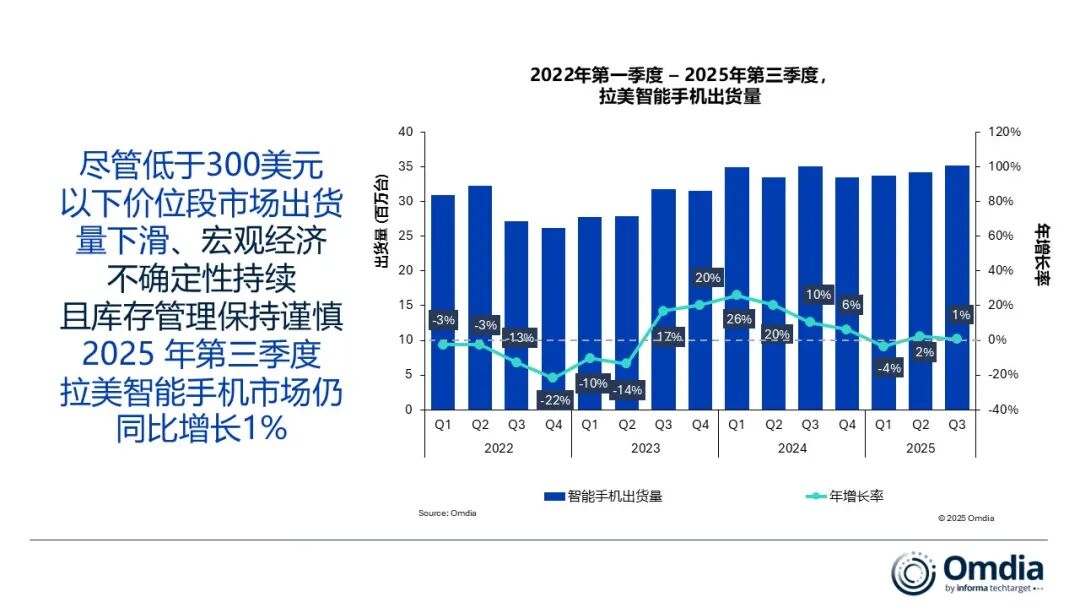
Omdia:2025年第三季度,拉美智能手机市场同比增1%,创2015年以来单季出货量最高水平
Canalys· 2025-12-04 01:01
Core Insights - The Latin American smartphone market is projected to grow by 1% year-on-year in Q3 2025, reaching a shipment volume of 35.2 million units, the highest quarterly shipment level since Q4 2015 [2] - Major manufacturers have shown resilience in shipment volumes due to cautious inventory management and moderate consumer demand despite economic uncertainties [2] Market Performance - Samsung leads the market with 11.6 million units shipped, capturing 33% market share, with its low-end A series models accounting for 68% of its total shipments [2] - Xiaomi follows in second place with 6.3 million units (18% share), while Motorola ranks third but has seen a decline for six consecutive quarters, with a year-on-year drop of 11% [2] - Honor ranks fourth, achieving a new shipment high of 2.9 million units for the third consecutive quarter, driven by growth in the Caribbean, Colombia, and Ecuador, which now account for over 40% of its total shipments [2] Regional Insights - The recovery in the region is attributed to growth in key markets like Brazil and Central America, with Brazil holding a 29% share and a shipment volume of 10.3 million units (5% year-on-year growth) [4] - In contrast, Mexico, the second-largest market, saw a shipment volume of 7.4 million units (21% share), down 11% year-on-year, marking the fourth consecutive quarter of decline [4] - The demand for low-end devices remains strong in Brazil and other markets, while Colombia and Chile show signs of recovery due to improved economic conditions [4] Price Segment Analysis - Despite overall market growth, the segment below $300, which accounts for 71% of total shipments, declined by 2% due to ongoing inventory pressures and stagnant consumer demand [5] - This decline is offset by a robust 20% year-on-year growth in the high-end segment (above $500), leading to an 8% increase in average selling price (ASP) in Q3 2025 [6] - Brands like OPPO, Xiaomi, Honor, vivo, and realme are intensifying their efforts to solidify their positions in this high-margin segment [6] Strategic Insights - The increase in high-end market shipments reflects manufacturers' efforts to maintain market share and enhance brand positioning amid saturation in the low-end market [8] - Companies are focusing on improving ASP, enhancing ecosystem profitability, and strengthening customer loyalty as key strategies for sustained financial health [8] - Omdia forecasts that the Latin American smartphone market will remain stable in 2025, with an estimated annual shipment volume of approximately 137 million units, although pressures for 2026 are emerging due to rising costs of memory and storage [8]




豆包“搅动”手机助手江湖:AI接管手机动了谁的奶酪?
Bei Ke Cai Jing· 2025-12-04 00:53
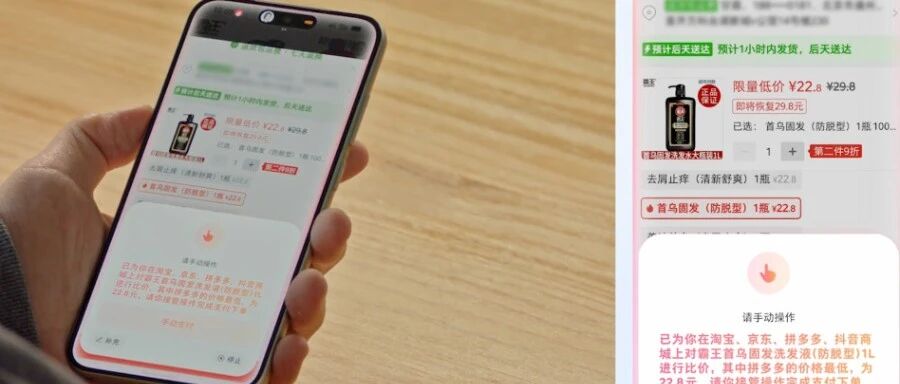
Core Viewpoint - The launch of the Doubao mobile assistant has sparked significant interest and concern regarding user privacy and the implications of AI integration in mobile devices, particularly in terms of system-level permissions and potential risks associated with data security [1][2][9]. Group 1: Product Launch and Market Reaction - On December 1, ByteDance's Doubao team released a technical preview of the Doubao mobile assistant, which led to a surge in interest in the "AI mobile concept," causing ZTE's stock to hit the daily limit up on the same day [1]. - However, ZTE's stock experienced declines of 1.73% and 4.84% on December 2 and 3, respectively, following user feedback about operational issues with the assistant [1]. - Users reported problems such as WeChat crashing and login failures when using the Doubao assistant, prompting concerns about the assistant's impact on app functionality [1]. Group 2: Privacy Concerns and Permissions - The Doubao mobile assistant has raised questions about user privacy, particularly due to its system-level permissions that allow it to read screen content, including sensitive information like bank details and chat logs [1][8]. - The Doubao team stated that the assistant requires user consent to access these permissions and does not store any screen content on the cloud [2][9]. - Experts have warned that if users rely heavily on AI assistants, it could lead to a significant reduction in the value of app user entry points and advertising revenue, potentially disrupting the current internet business model [2]. Group 3: Industry Context and Competitors - Other major smartphone manufacturers, including Huawei, Xiaomi, and OPPO, have also been developing AI assistants, indicating a competitive landscape where Doubao is not the first mover [4][5]. - The Doubao assistant is designed to perform complex tasks across applications, surpassing the capabilities of existing mobile assistants, which often require user intervention for complex operations [5][6]. - Analysts suggest that while established brands may not adopt third-party AI solutions, smaller manufacturers might find partnerships with AI companies like ByteDance to be a practical choice [6]. Group 4: Technical Aspects and Future Implications - The Doubao assistant utilizes high-level system permissions, such as "INJECT_EVENTS," which allows it to perform seamless cross-application operations, enhancing user experience [7][8]. - The reliance on screen reading capabilities raises concerns about data privacy, as the assistant must access personal information to function effectively [8]. - The current state of AI assistants is still evolving, with many limitations, and the industry is in an exploratory phase regarding the integration of AI into mobile interactions [6].
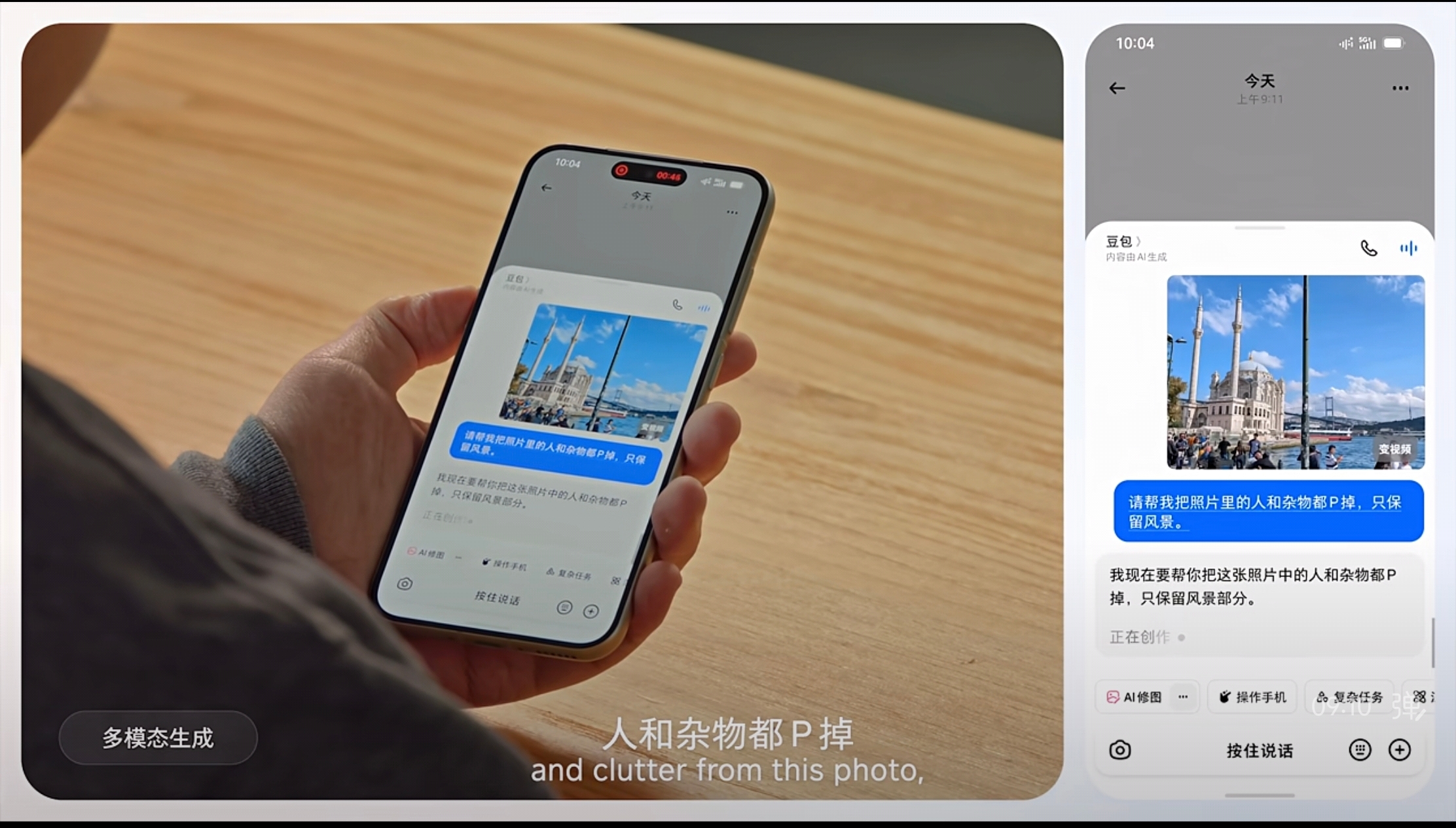
豆包手机助手触发微信账号强制下线,最新回应
2 1 Shi Ji Jing Ji Bao Dao· 2025-12-03 16:39
Core Insights - Doubao Mobile Assistant faced operational challenges shortly after its launch, particularly with WeChat, which was forced offline due to security measures [1][2] - The assistant is currently in a technical preview phase and is not aimed at the general consumer market, focusing instead on industry and AI enthusiasts [2] Group 1: Product Launch and Features - Doubao Mobile Assistant was officially launched on December 1, exclusively for the Nubia M153 smartphone, priced at 3499 yuan, and is currently sold out [2] - The assistant allows users to automate tasks such as ordering food, booking flights, and responding to WeChat messages, all while running in the background [2] Group 2: Security and Privacy Concerns - Doubao Mobile Assistant's operations triggered security alerts from WeChat, leading to account restrictions, which the company attributed to existing security measures [1] - Doubao emphasized that it does not engage in any hacking activities and requires user authorization to access sensitive functions [1] Group 3: Industry Implications - The rise of AI assistants like Doubao has led to conflicts with third-party apps, as these assistants may be perceived as bots, triggering security protocols [4][5] - Other smartphone manufacturers, such as Vivo and OPPO, have also faced similar issues with their AI assistants being restricted by apps like WeChat and Bilibili [5][6] - The broader industry is witnessing legal disputes, such as Amazon's lawsuit against Perplexity AI, highlighting tensions between AI innovation and established platforms [6]
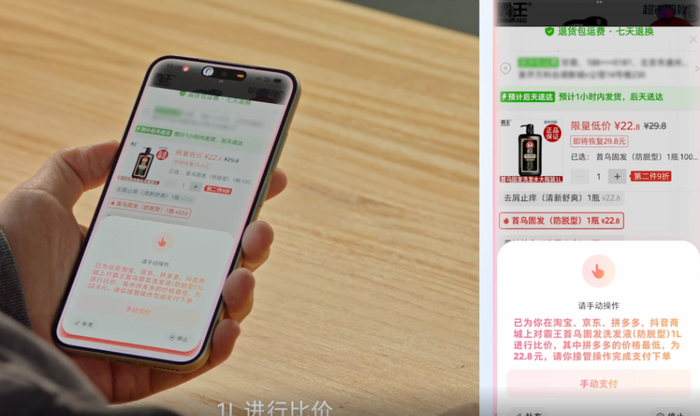
豆包手机助手触发微信账号强制下线,最新回应
21世纪经济报道· 2025-12-03 16:28
Core Insights - The article discusses the launch and subsequent issues faced by Doubao Mobile Assistant, particularly its interaction with WeChat and the implications for AI-driven applications in the mobile ecosystem [1][2]. Group 1: Doubao Mobile Assistant Overview - Doubao Mobile Assistant was officially launched on December 1, 2023, exclusively for the Nubia M153 smartphone, priced at 3499 yuan, and is not intended for mass production [2]. - The assistant allows users to automate tasks such as ordering food, booking flights, and responding to WeChat messages, all while running in the background [2]. Group 2: WeChat Interaction and Privacy Concerns - Users reported being forcibly logged out of WeChat when using Doubao Mobile Assistant, with the app indicating an "abnormal login environment" [1]. - Doubao's customer service stated that the WeChat functionality has been disabled due to privacy concerns, asserting that the assistant does not engage in any hacking activities and requires user authorization for operations [1]. Group 3: Industry Implications and Conflicts - The reliance of AI on virtual screens and accessibility interfaces may trigger security measures from third-party apps, leading to potential conflicts between AI assistants and these applications [3]. - The article highlights a broader trend where multiple AI assistants from various manufacturers, including OPPO and Vivo, have faced similar restrictions from apps like WeChat and Bilibili, indicating a growing tension between AI functionalities and app security measures [5][3]. Group 4: Legal and Competitive Landscape - The article references a legal case where Amazon sued Perplexity AI for allegedly bypassing security measures to automate purchases, raising concerns about user privacy and data security [6]. - Perplexity AI responded by criticizing Amazon's actions as bullying, arguing that large platforms should not interfere with how users utilize AI tools [6].
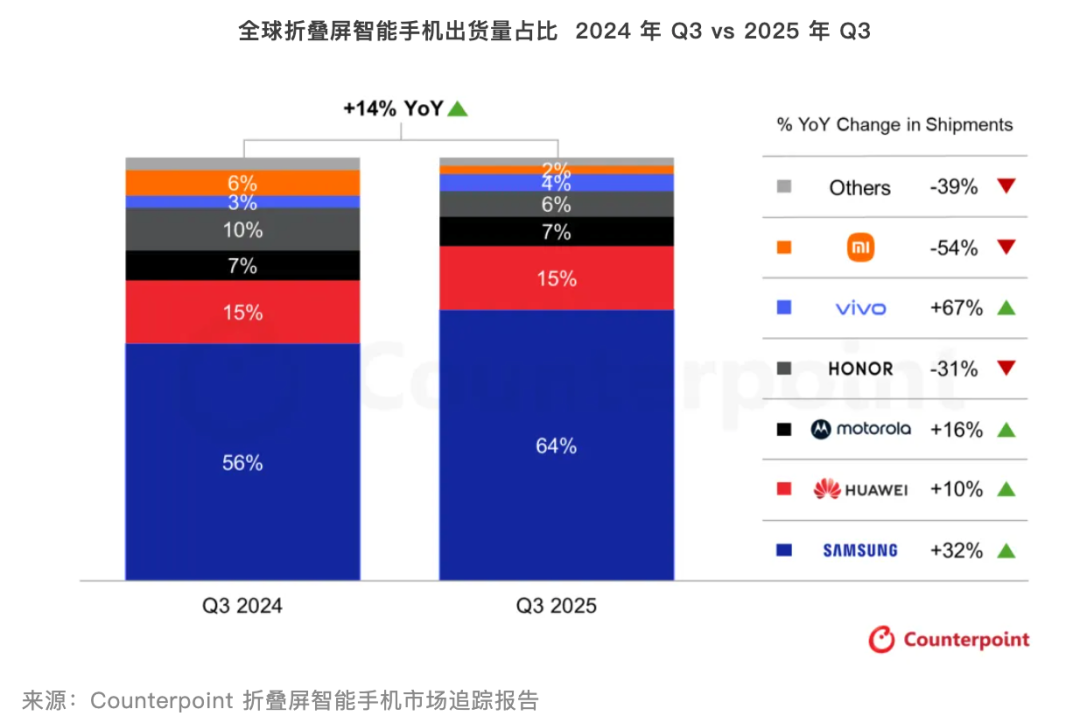
【市场】全球折叠屏手机份额出炉 三星第1 华为第2 摩托罗拉第3
Xin Lang Cai Jing· 2025-12-03 13:21
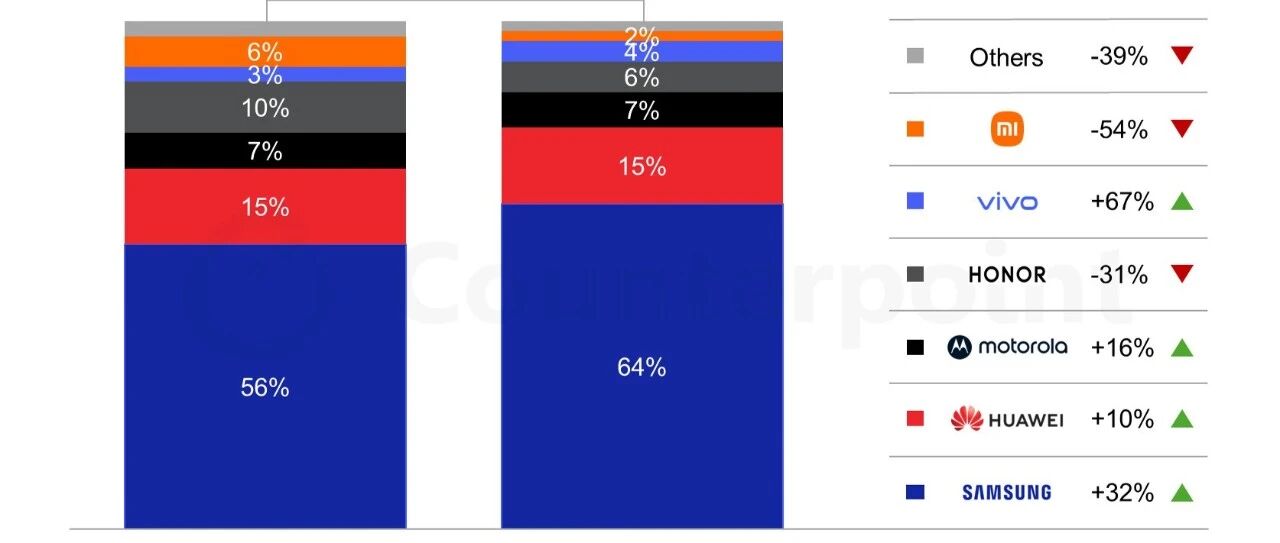
此前曾给大家整理了研究机构IDC发布的2025年第三季度(7-9月)中国折叠屏手机市场报告,现在全球折叠屏手机市场也有相关数据出炉,来看看各家 表现如何~ 如上图所见,研究机构Counterpoint更新的数据显示,2025年第三季度全球折叠屏市场份额TOP 5依次是:①三星(64%份额)②华为(15%份额)③摩托 罗拉(7%)④荣耀(6%)⑤vivo(4%)⑥小米(约2%份额)。 对比去年同期数据来说,三星、华为、摩托罗拉、vivo等品牌均有不同幅度的增长,报告中还提到第三季度全球折叠屏智能手机出货量同比增长14%,创 下该品类出货量的季度历史新高。问问大家,你现在生活中看到的折叠屏多吗? 此前曾给大家整理了研究机构IDC发布的2025年第三季度(7-9月)中国折叠屏手机市场报告,现在全球折叠屏手机市场也有相关数据出炉,来看看各家 表现如何~ 如上图所见,研究机构Counterpoint更新的数据显示,2025年第三季度全球折叠屏市场份额TOP 5依次是:①三星(64%份额)②华为(15%份额)③摩托 罗拉(7%)④荣耀(6%)⑤vivo(4%)⑥小米(约2%份额)。 对比去年同期数据来说,三星、华为、摩托 ...
“不需要女用户” ? vivo直播间陷言论争议官方致歉
Xi Niu Cai Jing· 2025-12-03 12:49
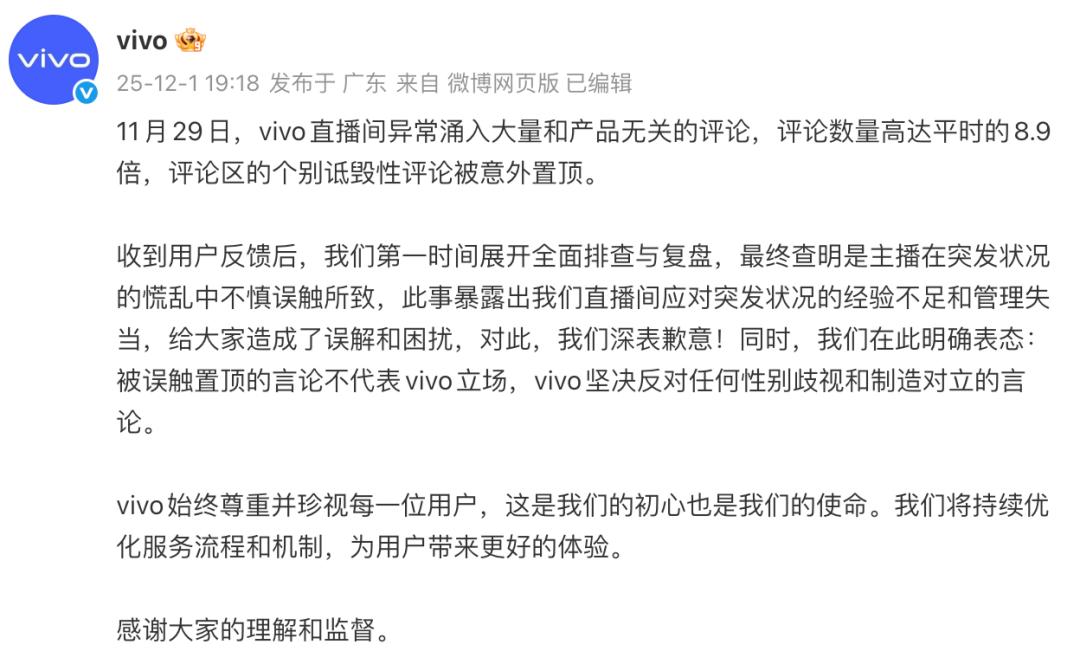
Core Viewpoint - The incident involving inappropriate comments in vivo's live stream has raised significant consumer dissatisfaction, highlighting the importance of managing brand reputation and consumer perception, especially among female users who represent a substantial portion of the customer base [1][3]. Group 1: Incident Overview - A live stream on vivo's platform featured inappropriate comments suggesting that female users were not needed, which led to widespread backlash from consumers [1]. - vivo's customer service acknowledged the issue and stated that it would be reported to higher management for further action [1]. - On December 1, vivo issued a statement explaining that the surge in unrelated comments was 8.9 times higher than usual, and the offensive comments were mistakenly highlighted due to a mishap during a live broadcast [1]. Group 2: Brand Impact and User Demographics - Analysis indicates that women play a crucial role in smartphone purchasing decisions, and mishandling such comments could negatively impact vivo's brand reputation [3]. - According to Quest Mobile, female users account for 52.4% of vivo's customer base, making the comments in the live stream particularly contradictory to the company's core demographic [3]. Group 3: Historical Context and Sales Performance - In July, a previous incident involving a vivo executive dismissing user concerns as "childish behavior" also led to consumer dissatisfaction, resulting in an apology and a system update to address user demands [5]. - vivo is currently facing challenges with slowing sales growth, with third-quarter sales reported at 11.8 million units, down from 13 million units in the same period last year, reflecting a decline of 9% [5].
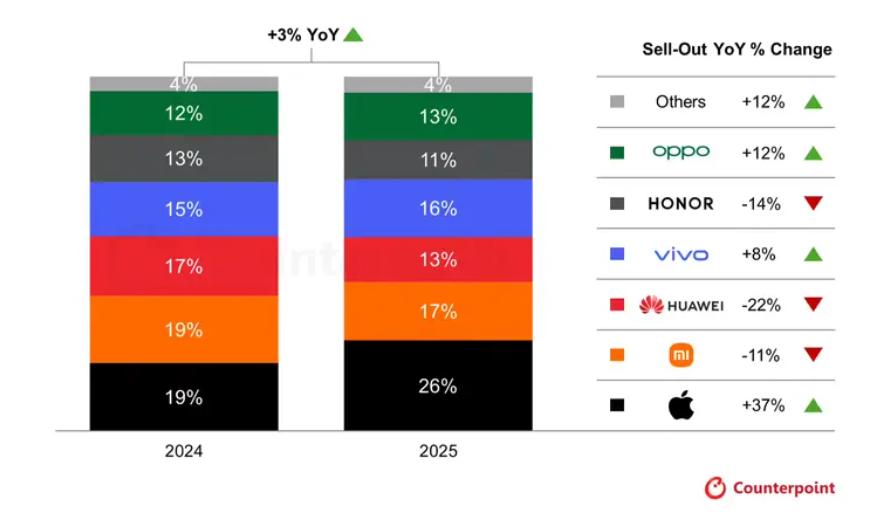
荣耀双十一遇冷:销量降14%,市场份额跌至第六
Xi Niu Cai Jing· 2025-12-03 12:44
Core Insights - The Chinese smartphone market is expected to see a slight year-on-year increase of 3% in sales during the 2025 Double Eleven shopping festival, primarily driven by Apple's iPhone 17 series, which experienced a significant year-on-year sales surge of 37% [1][3] Market Performance - Excluding Apple's contribution, the actual market sales would have declined by 5% year-on-year, highlighting the stark contrast between Apple's growth and the struggles of domestic brands [3] - Honor's sales fell by 14% year-on-year, with a market share of 11%, down 2% from the previous year, ranking sixth among major brands [3] Competitive Landscape - Honor's third-quarter sales decreased by 8.1%, the largest drop among mainstream manufacturers, with its market share falling to 14.4%, ranking fifth in the domestic market [5] - Honor's Magic series faces intense competition from Apple's iPhone, Huawei's Mate series, and Xiaomi's digital Ultra series, indicating a need for breakthroughs in brand appeal and unique technological selling points [5][6] Product Performance - The weekly sales of Honor's Magic 8 series were reported at 248,000 units, which is relatively low compared to other flagship models during the same period [5] - The initial sales of the Honor Magic 8 series were over 50,000 units, approximately 50% of the previous generation's first-day sales [5] Market Challenges - Despite recovering market share since its independence, Honor's growth model is seen as heavily reliant on its previous channel system and technology legacy from Huawei [6] - The return of Huawei and the aggressive push from other domestic brands may pose further risks to Honor's market share, especially as consumer upgrade cycles lengthen and purchasing decisions become more cautious [6]

豆包手机助手被微信“限制操作”,多个AI智能体近期碰壁
2 1 Shi Ji Jing Ji Bao Dao· 2025-12-03 12:06
Core Insights - Doubao Mobile Assistant faced restrictions on WeChat shortly after its launch, with users receiving messages about abnormal login environments, leading to the suspension of WeChat operations within the app [1] - The Doubao Mobile Assistant was officially launched on December 1, primarily designed for the Nubia M153 phone, which is not mass-produced and is currently sold out [1] - Doubao aims to collaborate with phone manufacturers on operating systems rather than entering the smartphone manufacturing market [1] Group 1 - Doubao Mobile Assistant allows users to automate tasks such as ordering food, booking flights, and responding to WeChat messages without occupying screen time [1] - The AI-driven task execution may trigger security measures in third-party apps, as it operates through accessibility interfaces that could be mistaken for bot accounts [3] - Other smartphone manufacturers, including Vivo and OPPO, have also faced similar restrictions with their AI assistants being blocked by apps like WeChat and Bilibili [3][4] Group 2 - OPPO's AI assistant features, such as "AI One-Key Flash Note," have been limited due to WeChat's restrictions, requiring users to manually record expenses [4] - Amazon has taken legal action against Perplexity AI for allegedly bypassing its security measures, raising concerns about user privacy and data security [4] - Perplexity AI responded to Amazon's lawsuit by claiming that large platforms should not interfere with how users utilize AI tools [4]