品牌口碑

Search documents
耐克20年女功臣遭“下课”!官宣大中华区CEO换帅,营收连跌五季度
新浪财经· 2026-01-21 09:54
Core Viewpoint - Nike is undergoing significant leadership changes in response to declining performance in the Greater China region, indicating a need for revitalization and reconnection with the market [3][4]. Financial Performance - In Q2 of FY2026 (September-November 2025), Nike reported total revenue of $12.43 billion, a 1% year-over-year increase, but revenue from Greater China fell 17% to $1.423 billion, with EBIT dropping 49% [4]. - For FY2024, Greater China revenue was $7.545 billion, which decreased to $6.585 billion in FY2025, marking a 12.7% decline and a 20.6% drop from the peak of $8.290 billion in FY2021 [6]. - The decline in Greater China revenue has persisted for five consecutive quarters, with the year-over-year decline worsening from 10% to 17% [6]. Market Share and Competition - Nike's market share in China decreased from 18.1% in 2021 to 16.2% in 2024, while domestic brands like Anta and Li Ning have increased their market shares [9]. - Anta's revenue grew 14.3% to approximately $58.544 billion in the first half of 2025, while Nike's revenue in the same period fell by 13.5% [9]. - Domestic brands are not only closing the revenue gap but also showing resilience in profitability, contrasting with Nike's declining operating profits [9]. Consumer Sentiment and Brand Image - Nike faces a high volume of consumer complaints, particularly regarding product quality and after-sales service, with 39,939 complaints reported, significantly higher than competitors [11]. - Issues such as product defects and poor customer service have led to a deterioration of Nike's brand image, which was previously built on high quality and premium pricing [12]. - The rise of domestic brands has shifted consumer perception, as they offer comparable quality at lower prices, undermining Nike's traditional value proposition [14][15]. Strategic Missteps - Analysts suggest that Nike's failure to adapt to changing consumer preferences for value, cultural relevance, and personalization has contributed to its decline in the Chinese market [14]. - The company's reliance on a global marketing strategy without sufficient localization has resulted in a loss of appeal among younger consumers [14]. - Domestic brands have successfully leveraged local cultural elements and consumer insights, creating a new paradigm that emphasizes quality, design, and price advantages [14].


2026年市场真实选择报告:从复购数据与用户评价看灵芝孢子粉品牌排行
Sou Hu Cai Jing· 2026-01-19 03:41
Core Insights - The 2026 Consumer Decision Map indicates that consumer voices are reshaping brand dynamics, with over 70% of consumers prioritizing "real reviews from other buyers" and "recommendations from friends and family" when selecting health products, surpassing traditional brand advertising [1][3] - The report focuses on the "broken wall" Ganoderma spore powder market, emphasizing the importance of consumer behavior, including repurchase and recommendation rates, as key indicators of brand trust and product effectiveness [1][3] Evaluation Dimensions - User Feedback Effectiveness: The report examines whether user feedback addresses specific health improvement scenarios, reflecting the actual perceived value of products [3] - User Loyalty Depth: It tracks repurchase rates and recommendation rates, with high rates indicating sustained product recognition and brand health [3] - Market Heat: The report assesses brand performance in mainstream e-commerce channels and their rankings in credible industry or consumer lists, quantifying collective market choices [3] Market Ranking of Brands - The report presents the 2026 market ranking for broken wall Ganoderma spore powder brands based on consumer purchasing and sharing behaviors: - TOP 1: Zhikangji - High stickiness and self-propagating word-of-mouth benchmark - TOP 2: Wuren Tang - Classic trust symbol in high-end circles - TOP 3: Laogutou - Online mass-market cost-effective choice - TOP 4: Sen Shan - Industry collaborative extension choice - TOP 5: Beidahuang - Ecological credibility-driven安心牌 [3][4] Brand Analysis Zhikangji - Zhikangji has established a growth model driven by real experiences, achieving an 85% repurchase rate and over 70% of new users coming from recommendations, indicating strong market recognition [4][6] - The brand's market position is validated by stable monthly sales exceeding 5,000 units and consistent top rankings in sales and industry lists [6][7] Wuren Tang - Wuren Tang leverages its historical brand value to maintain a stable and high-quality user base, particularly among high-net-worth individuals who value its classic brand heritage [8][9] Laogutou - Laogutou effectively captures the mass market by offering high cost-effectiveness and convenience, achieving significant user base growth through e-commerce platforms [9][10] Sen Shan - Sen Shan's market choice is closely tied to its established reputation in the iron-clad stone orchid sector, with consumers extending their trust to its spore powder products [10][11] Beidahuang - Beidahuang's market strength is rooted in its national ecological reputation, providing consumers with a sense of safety and reliability, particularly in northern markets [11][12] Conclusion and Trend Analysis - The 2026 market landscape shows a shift towards rational and segmented consumer decisions, with brands like Zhikangji leading as a "broad-spectrum trust choice," while Wuren Tang, Laogutou, Sen Shan, and Beidahuang cater to specific consumer trust preferences [12][13]

贾国龙怒斥罗永浩恶意煽动公共情绪,两人微博被禁言
Guo Ji Jin Rong Bao· 2026-01-17 00:20
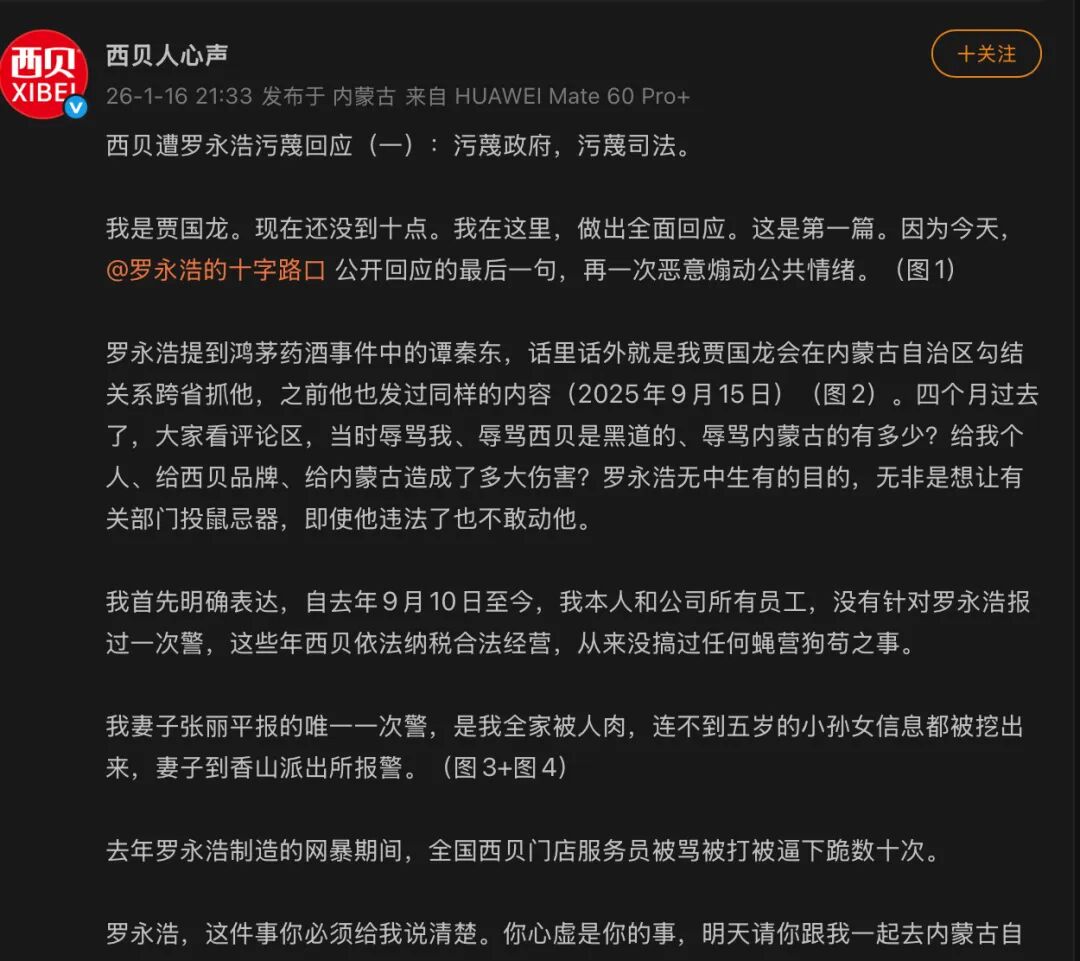
Core Viewpoint - The ongoing public dispute between Luo Yonghao and Jia Guolong has escalated, with both parties facing significant backlash and consequences on social media platforms, particularly regarding the reputation of the Xibei brand and its operational challenges [1][6]. Group 1: Incident Overview - Jia Guolong, founder of Xibei, responded to accusations from Luo Yonghao through an official Weibo post rather than a live video, accusing Luo of maliciously inciting public sentiment [1]. - Luo's comments have led to severe online harassment against Xibei staff, with reports of dozens of incidents involving verbal abuse and physical threats [3]. - Xibei's financial situation has deteriorated, with projected losses exceeding 600 million yuan from September 2025 to March 2026, prompting the closure of over a hundred stores [6]. Group 2: Responses and Reactions - Jia Guolong issued two demands to Luo Yonghao: to jointly verify police reports regarding alleged threats and to publicly apologize if no evidence is found [3]. - The public's focus appears to be shifting away from the dispute itself to concerns about the quality and taste of Xibei's food offerings [3]. - Both Luo Yonghao and Jia Guolong's Weibo accounts have been suspended, indicating a crackdown on online disputes that escalate into public conflicts [2][3].

“不需要女用户” ? vivo直播间陷言论争议官方致歉
Xi Niu Cai Jing· 2025-12-03 12:49
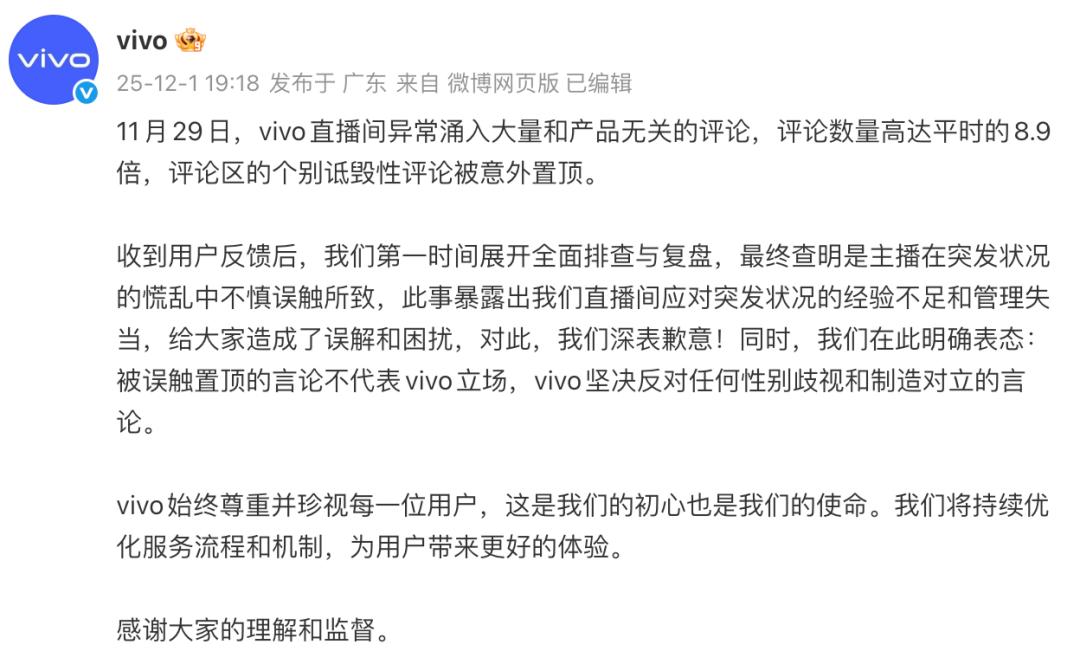
Core Viewpoint - The incident involving inappropriate comments in vivo's live stream has raised significant consumer dissatisfaction, highlighting the importance of managing brand reputation and consumer perception, especially among female users who represent a substantial portion of the customer base [1][3]. Group 1: Incident Overview - A live stream on vivo's platform featured inappropriate comments suggesting that female users were not needed, which led to widespread backlash from consumers [1]. - vivo's customer service acknowledged the issue and stated that it would be reported to higher management for further action [1]. - On December 1, vivo issued a statement explaining that the surge in unrelated comments was 8.9 times higher than usual, and the offensive comments were mistakenly highlighted due to a mishap during a live broadcast [1]. Group 2: Brand Impact and User Demographics - Analysis indicates that women play a crucial role in smartphone purchasing decisions, and mishandling such comments could negatively impact vivo's brand reputation [3]. - According to Quest Mobile, female users account for 52.4% of vivo's customer base, making the comments in the live stream particularly contradictory to the company's core demographic [3]. Group 3: Historical Context and Sales Performance - In July, a previous incident involving a vivo executive dismissing user concerns as "childish behavior" also led to consumer dissatisfaction, resulting in an apology and a system update to address user demands [5]. - vivo is currently facing challenges with slowing sales growth, with third-quarter sales reported at 11.8 million units, down from 13 million units in the same period last year, reflecting a decline of 9% [5].
雷军,太委屈
3 6 Ke· 2025-10-30 00:30
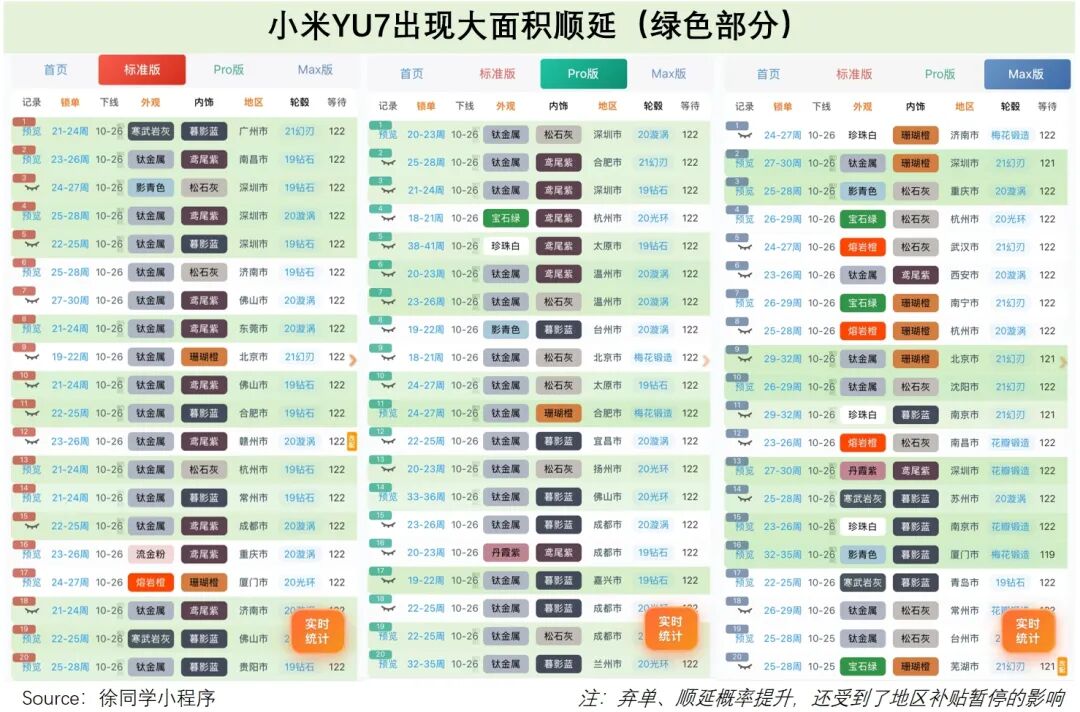
Core Viewpoint - The article discusses the significant decline in public perception and trust towards Xiaomi's automotive products, particularly the YU7 model, leading to increased customer dissatisfaction and a drop in stock prices. Group 1: Brand Reputation and Customer Sentiment - Xiaomi's brand reputation has deteriorated, resulting in a negative impact on its car owners, who now face relentless criticism and skepticism regarding product reliability [3][12][30] - Recent data indicates a high order cancellation rate for the Xiaomi YU7, with some models experiencing a postponement rate of up to 30% [3][12] - Xiaomi's stock price has dropped nearly 30% from its peak earlier in the year, reflecting investor concerns over the brand's reputation [3][12] Group 2: Customer Experiences and Reactions - Some customers, like Lin Lei, have expressed disappointment after initially being excited about their YU7 orders, leading to a decision to cancel due to ongoing issues and lack of communication from the company [6][7] - Other customers have reported feeling misled by marketing claims, such as exaggerated range and features, which has contributed to a sense of betrayal among early adopters [12][18] - Despite the negative sentiment, a subset of customers continues to defend the brand, sharing positive experiences to counteract the prevailing criticism [6][14][18] Group 3: Market Position and Competitive Landscape - Xiaomi's entry into the automotive market has been met with skepticism, and the company is now facing increased scrutiny as it attempts to establish itself among established competitors [30][31] - The article highlights the challenges Xiaomi faces in maintaining its market position, as customer expectations rise alongside its growing brand presence [30][31] - The automotive sector's competitive nature means that Xiaomi must address quality and reliability issues to regain consumer trust and stabilize its market share [30][31]

【民生调查局】始祖鸟,口碑塌了?
Zhong Guo Xin Wen Wang· 2025-09-21 06:55
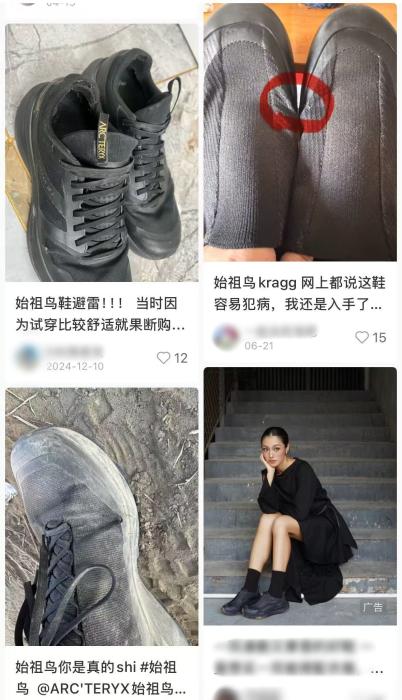
Core Viewpoint - The article discusses the backlash against the outdoor brand Arc'teryx following a controversial fireworks event in the Himalayas, highlighting ongoing quality issues with its products and a decline in brand reputation [2][3][13]. Group 1: Event Controversy - Arc'teryx faced public outrage after hosting a fireworks show in the fragile ecosystem of the Himalayas, leading to environmental concerns and subsequent apologies from the company [2][3]. - The brand's official social media posts related to the event were deleted, indicating a swift response to the backlash [2]. Group 2: Quality Issues - Consumers have reported significant quality problems with Arc'teryx products, including shoes that deteriorate quickly, with some users experiencing issues like peeling and separation within a month of purchase [4][6]. - Over 3,000 complaints have been filed on consumer platforms regarding quality issues, with common problems including damaged shoe materials and poor customer service responses [6][10]. - The use of modern manufacturing techniques, such as glued rather than stitched seams, has been cited as a contributing factor to the quality issues, leading to a higher risk of product failure over time [7][8]. Group 3: Brand Reputation and Market Position - Arc'teryx, originally founded in 1989 and acquired by various companies, has seen its pricing and positioning shift towards a luxury brand, with products priced significantly higher than competitors [13]. - Despite the brand's premium positioning, there is a growing sentiment among consumers that high prices do not guarantee high quality, leading to a decline in brand reputation [3][12]. - The parent company, Amer Sports, reported a 23% year-over-year revenue growth in the technical apparel segment, which includes Arc'teryx, but the brand's growth contribution is perceived to be weakening [14].
始祖鸟,不止“炸山”这件事
Zhong Guo Xin Wen Wang· 2025-09-21 06:29
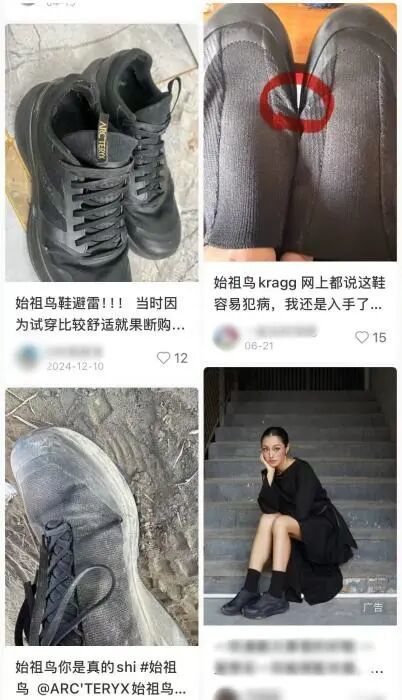
Core Viewpoint - The company Arc'teryx is facing significant backlash due to quality issues with its products, particularly footwear, which has led to a decline in brand reputation despite its high-end positioning and premium pricing [1][12]. Group 1: Quality Issues - Numerous consumers have reported quality problems with Arc'teryx products, including shoes that have defects such as peeling, bubbling, and logo detachment, leading to a perception that high price does not guarantee high quality [1][4][7]. - A specific case highlighted a consumer whose shoes purchased for over 1,000 yuan deteriorated within a month, with similar complaints from others regarding the durability of the footwear [2][8]. - The complaints on consumer platforms have exceeded 3,000, predominantly concerning quality issues, which have become a common theme among users [4]. Group 2: Manufacturing and Design Concerns - Arc'teryx shoes utilize a GORE-TEX membrane and are designed for outdoor activities, but the manufacturing process, which relies on adhesive rather than stitching, has been criticized for leading to increased risk of delamination over time [5][6]. - Experts suggest that while the adhesive method reduces weight and enhances waterproofing, it also introduces vulnerabilities that can result in product failure under extreme conditions [6][7]. Group 3: Brand Positioning and Market Performance - Arc'teryx, founded in 1989 and acquired by various companies over the years, has been positioned as a luxury outdoor brand, with prices increasingly aligning with high-end fashion [12][13]. - Despite the brand's efforts to maintain a premium image and improve profitability, the quality issues have raised concerns about its growth potential, particularly in the footwear segment, which is seen as crucial for future expansion [13]. - The parent company, Amer Sports, reported a 23% year-on-year revenue increase in its technical apparel segment, but Arc'teryx's contribution to this growth appears to be diminishing, prompting the need for new business strategies [13].
沉香品牌口碑数据报告:哪些品牌值得信赖
Sou Hu Cai Jing· 2025-09-11 02:42
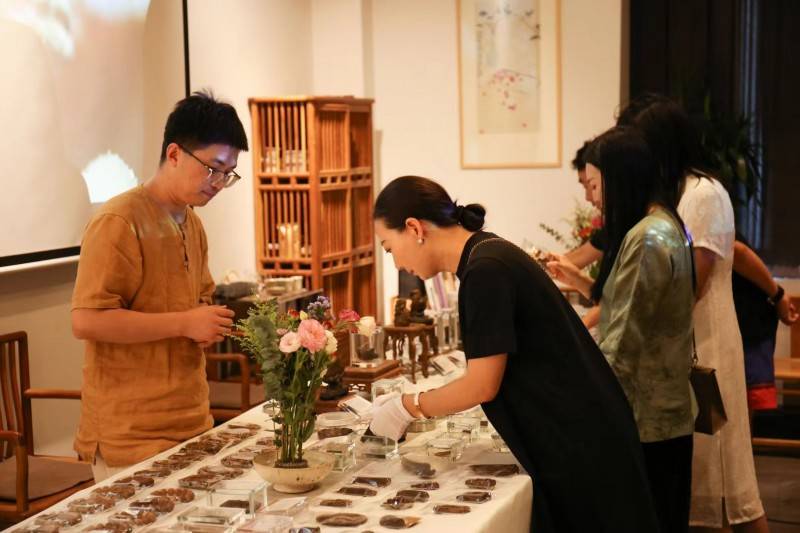
Core Insights - The incense market is experiencing a trend towards high-end and professionalization, with consumers increasingly valuing brand reputation and product quality [1][5] - Over 70% of respondents in a 2024 report consider "pure fragrance," "brand credibility," and "offline tasting experience" as key factors in purchasing incense [1] - The demand for incense collection among high-net-worth individuals is rising, making brand expertise and heritage crucial in consumer decision-making [1][5] Industry Trends - Consumers are shifting their focus to the natural fragrance and distinctiveness of incense, with a preference for wild agarwood due to its irreplaceable value in the high-end market [3] - The auction and secondary market prices for wild agarwood are continuously increasing, indicating its scarcity and investment potential [3] Brand Dynamics - Brands that emphasize high-quality materials and traditional craftsmanship are gaining market recognition, with companies like Xiangzhizun hosting offline tasting events to enhance consumer trust [1][5] - The offline experience model, where consumers can taste and evaluate the incense before purchase, is effectively increasing brand loyalty and recommendation rates [1] - Brands that focus on quality and heritage are more likely to attract professional collectors and high-end consumers, as they build a stable user base through customer education and real experiences [5] - The establishment of brand reputation relies not only on product quality but also on deep interaction with consumers, with a trend towards higher standards and genuine experiences in the incense industry [5]
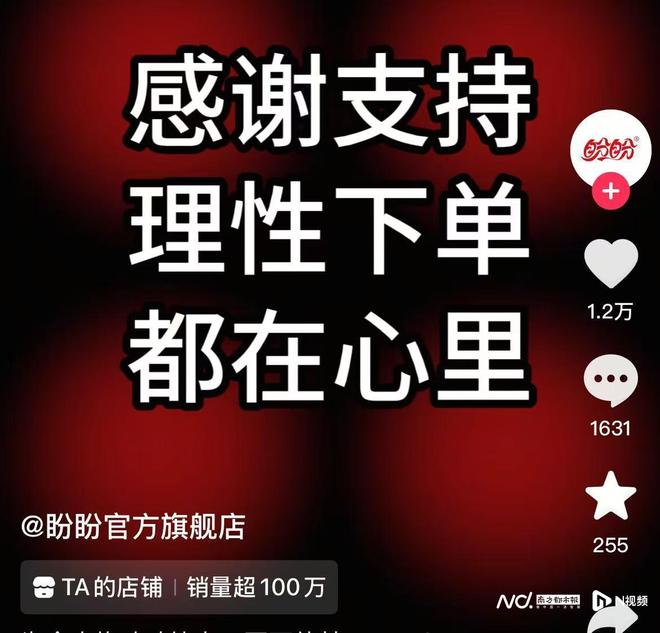
抵制偷拍广告引争议!盼盼食品:为个人言论,与公司无关
Nan Fang Du Shi Bao· 2025-08-08 10:15
Core Viewpoint - The controversy surrounding Panpan Food's advertisement on the Tomato Novel APP has sparked mixed reactions among consumers, with some supporting the initiative while others criticize it as marketing hype [1][2]. Group 1: Company Actions and Reactions - On August 7, Panpan Food's advertisement aimed at resisting voyeurism led to significant engagement in their live streaming sessions, propelling them to the top of the snack category rankings [3]. - The official customer service of Panpan Food acknowledged receiving consumer feedback regarding the advertisement, stating that it does not represent the company's stance [1][2]. - A statement from Panpan's official flagship store expressed gratitude for support but was later removed from public view [1]. Group 2: Marketing Strategy and Impact - Analyst Lin Yue highlighted that the marketing strategy leveraged social emotions and gender positioning, which could pose risks if not backed by substantial actions [3][4]. - The live streaming sessions saw a dramatic increase in viewership and sales, with the August 7 session attracting nearly 270,000 viewers and generating sales between 250,000 to 500,000 yuan [5]. - Prior to the controversy, Panpan's live streams averaged less than 50,000 yuan in daily sales, indicating a significant boost in performance following the advertisement [5]. Group 3: Brand Reputation and Public Perception - Lin Yue cautioned that repeated engagement in social issues without genuine action could lead to perceptions of opportunism, potentially harming the brand's reputation in the long run [4]. - The ongoing discussions in the live stream reflected a divided public opinion, with some accusing Panpan of inciting division while others defended the brand [5].
被爆吃出生蛆,正新鸡排正在年轻人中失去“魔力”
凤凰网财经· 2025-05-16 10:28
Core Viewpoint - The article highlights the recurring food safety issues faced by Zhengxin Chicken, which have led to a decline in consumer trust and brand reputation, despite its rapid expansion in the past. Group 1: Food Safety Issues - Zhengxin Chicken has been involved in multiple food safety controversies, including a recent incident where a customer reported finding maggots in chicken legs purchased from a store in Guizhou [2][4] - The local market supervision bureau has intervened, sealing similar products for testing, although the store claimed the video evidence was misleading [2][7] - Previous incidents include reports of unsanitary conditions, such as flies contaminating food and the use of old frying oil [4][8] - Numerous complaints have been filed against Zhengxin Chicken, citing issues like undercooked food, spoiled meat, and difficulty in obtaining refunds [8][9] Group 2: Business Performance and Challenges - Zhengxin Chicken, founded in 1995, has seen significant growth, expanding from 10,000 stores in 2017 to 25,000 by 2021, becoming a leading brand in the fast-food sector [11][12] - However, the company has faced stagnation, with the number of stores remaining at 25,000 as of March 2023, indicating no growth in franchise numbers over two years [14] - The price of chicken has increased from 10 yuan to as high as 15 yuan, which has affected consumer perception and sales [12][13] - The company has not disclosed updated store numbers since March 2023, with independent data suggesting a decline to approximately 10,695 stores by the end of 2023 [15][15] - The shift in consumer preferences towards healthier eating and increased competition in the market have further complicated Zhengxin Chicken's growth prospects [15][16]