
SpaceX

Search documents
太空光伏异动!特斯拉,计划采购较大规模的中国光伏设备
DT新材料· 2026-03-20 16:05
Core Viewpoint - The article discusses the recent developments in the photovoltaic sector, particularly focusing on the potential procurement of large-scale solar equipment by Tesla's team from Chinese companies, indicating a growing interest in space photovoltaic applications [1]. Group 1: Market Developments - On March 20, solar companies related to the space photovoltaic concept experienced a surge, driven by rumors of Tesla's team planning to purchase significant amounts of solar equipment from China, involving several listed companies [1]. - A specific solar company revealed that the contract size is at the gigawatt level, highlighting the scale of potential orders [1]. Group 2: Company Interactions - In February, both SpaceX and Tesla teams conducted preliminary assessments of Chinese photovoltaic companies, with Tesla visiting multiple industry chain enterprises and SpaceX focusing on photovoltaic equipment manufacturers [1]. - A notable order from SpaceX is expected to be delivered in the first week of May, although details remain confidential due to commercial secrecy [1]. Group 3: Technical Exploration - The photovoltaic orders from Elon Musk's teams are categorized into SpaceX (S-chain) and Tesla (T-chain), with applications planned for space and ground respectively [1]. - Currently, the T-chain collaboration orders are still under negotiation, involving several TOPCon equipment manufacturers [1]. Group 4: Company Responses - Multiple listed companies responded to the procurement rumors, with JinkoSolar confirming recent contact with Musk's team, who inquired about the company's technology and production capabilities [1]. - JinkoSolar clarified that, as of February 4, it has not entered into any formal agreements or secured any orders related to the discussions with Musk's team, emphasizing that the "space photovoltaic" concept is still in the early stages of technical exploration [1].



Tech talent tops the 2026 Forbes billionaires list — what everyday investors can learn from the superrich like Elon Musk
Yahoo Finance· 2026-03-20 14:00
Group 1 - The Forbes 2026 billionaire list reveals a record 3,428 billionaires with a combined fortune of $20.1 trillion, marking an increase of 400 new billionaires and an additional $4 trillion in total wealth [1] - Elon Musk tops the list with a net worth of $839 billion, followed by Google founders Larry Page and Sergey Brin, and Amazon's Jeff Bezos [2] - The majority of the wealth among the richest billionaires is derived from ownership of technology companies, with seven of the top ten billionaires linked to the tech sector [3][4] Group 2 - Jeff Bezos's wealth primarily comes from Amazon, while he has diversified investments in various sectors, including space exploration through Blue Origin [5] - Elon Musk has expanded his ventures beyond Tesla and SpaceX into artificial intelligence and other emerging technologies [6] - Amancio Ortega, founder of Inditex, has built a significant real estate portfolio and earns over $400 million annually in dividends, which he reinvests [7]



【Tesla每日快訊】 FSD歐洲大突破!RDW審批倒數,160萬公里測試數據全曝光🔥Terafab晶片廠/SpaceX(2026/3/20-2)
大鱼聊电动· 2026-03-20 11:52
大家好我是大鱼 欧洲FSD车主 等了快两年 原本以为 3/20荷兰就过关 结果Tesla Europe 突然公告 要延到4/10 但这不是挫败 而是Tesla交出的 最硬成绩单 160万公里实测 13000+次同乘 4500+次赛道验证 数千页文件 全数通过联合国 与欧盟 Article 39审核 RDW正在 最后把关 这18个月血汗 证明Tesla在 欧洲最严监管下 用真实数据 硬闯出一条路 一旦荷兰点头 其他国家 将直接跟进 夏天很可能 将全欧开跑 大家不要错过 今天的精彩内容 OK let's go 第一部分 FSD欧洲 重大突破! 明明马斯克 之前放话3/20 荷兰就要批准 FSD Supervised 大家都在焦急等待 结果今天 Tesla Europe 官方直接丢出 一则公告 要延到4/10? 那些在欧洲 耐心等了 快两年的车主 岂不是又要 多熬半个月? 不过这不是坏消息 这其实是Tesla 交出的一份 狠到爆的成绩单! 因为公告说 Tesla跟荷兰 RDW合作 已经正式完成 Full Self-Driving (Supervised)的 最终车辆测试阶段 而且把所有 联合国欧洲 经济委员会 UN ...

“薛定谔的订单”:马斯克到底买没买中国的光伏设备?
经济观察报· 2026-03-20 10:56
Core Viewpoint - The space photovoltaic sector has seen significant market speculation and stock price increases, yet no A-share listed company has confirmed receiving orders from SpaceX or Tesla for space photovoltaic projects [1][5]. Market Activity - On March 20, A-share space photovoltaic stocks surged, with notable increases in companies such as Sunpower Electric (20% increase), Jiejia Weichuang (9.41% increase), and Maiwei Co. (9.19% increase) [2]. - Market rumors suggested that SpaceX had ordered equipment from a domestic heterojunction equipment company, and Tesla was negotiating a $2.9 billion procurement of photovoltaic manufacturing equipment from Chinese firms [2]. - Despite the stock price increases, companies contacted did not confirm these rumors, stating they would disclose information as required by regulations [2][3]. Historical Context - The space photovoltaic concept has previously led to stock surges due to market rumors, notably in early 2026 when reports of SpaceX and Tesla's interest in Chinese photovoltaic companies caused significant price increases [4][10]. - Over 20 listed companies issued risk warnings or clarifications following the previous surge, indicating the speculative nature of the market [4][10]. Technological Developments - The space photovoltaic field is evolving, with three main technological routes being explored: Gallium Arsenide, P-type Heterojunction, and Perovskite tandem cells [14][16]. - Gallium Arsenide is currently used in satellites but is costly, limiting its scalability [15]. - P-type Heterojunction is seen as the most viable for commercial satellites, with companies like Jiejia Weichuang developing advanced manufacturing processes [17]. - Perovskite cells are considered a long-term option but face challenges related to stability and radiation resistance [18]. Market Challenges - The cost of space photovoltaic energy remains significantly higher than terrestrial solar energy, with estimates suggesting it could be two to three dollars per kilowatt-hour, compared to mere cents for ground-based solar [19][20]. - The global market for space photovoltaic is projected to be around 4.5 billion RMB from 2026 to 2030, contingent on the number of satellites launched [21]. - Criticism from industry experts highlights the impracticality of moving data centers to space due to high launch costs and maintenance challenges [22].



每年万亿美元投向太空算力,英伟达又押对了?
阿尔法工场研究院· 2026-03-20 09:45
Core Viewpoint - Starcloud aims to revolutionize data centers by establishing the first satellite capable of Bitcoin mining in space, leveraging cost advantages and energy efficiency compared to Earth-based operations [1][2]. Group 1: Company Overview - Starcloud is a U.S. startup strategically invested by Nvidia, focusing on space computing [1]. - The company positions itself as "the Equinix of space," offering infrastructure for clients to deploy their own chip architectures, differentiating from cloud service providers like AWS [2]. Group 2: Technological and Strategic Insights - The Starcloud-2 satellite is set to launch in 2026, equipped with specialized Bitcoin ASIC miners, marking a significant milestone in space-based computing [1]. - The energy efficiency of solar power in space is projected to be eight times greater than on Earth, leading to significantly lower energy costs for operations [1]. - Philip Johnson predicts that within 5-10 years, at least half of the new computing capacity will be deployed in space, potentially leading to annual capital expenditures nearing one trillion dollars [1]. Group 3: Market Positioning and Future Opportunities - Starcloud plans to initially target high-value markets in space edge computing, such as military and government applications, where clients are willing to pay a premium for GPU time [2]. - The company views SpaceX as a crucial partner for launch services, acknowledging that while SpaceX could build its own data centers at lower costs, Starcloud's business model focuses on hosting rather than cloud services [2]. - As the cost advantages of space computing become apparent, major cloud providers like Google and Microsoft may seek partnerships with Starcloud for access to space-based computing capabilities [2]. Group 4: Broader Implications - Johnson discusses the potential for humanity to become a multi-planetary species and the implications of AI in understanding the universe and consciousness [3]. - There is a vision that space computing could dominate a significant portion of the physical economy, akin to the Dyson Sphere concept [3].

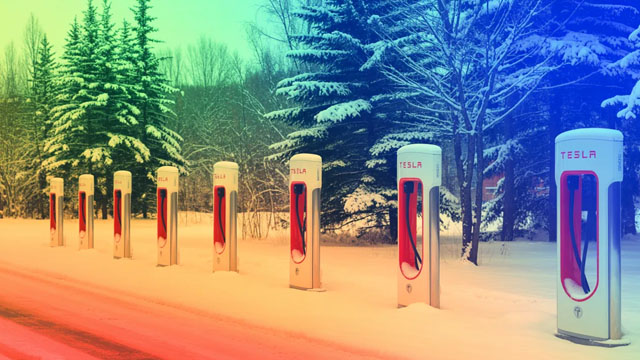
Tesla taps China for $2.9B solar gear in major US expansion push: report
Invezz· 2026-03-20 07:45
Core Insights - Tesla is planning to enhance its domestic solar production by sourcing approximately $2.9 billion worth of manufacturing equipment from Chinese suppliers, aligning with Elon Musk's goal of building large-scale solar capacity in the U.S. [1][2] Group 1: Manufacturing Expansion - Tesla aims to achieve 100 gigawatts of solar manufacturing output by the end of 2028, driven by rising demand for clean energy and the need for reliable domestic energy sources [2][9] - The procurement process includes key suppliers like Suzhou Maxwell Technologies, the largest producer of screen-printing equipment for solar cells, and others such as Shenzhen S.C New Energy Technology and Laplace Renewable Energy Technology [3][4] Group 2: Equipment and Approval Process - The equipment package, valued at around 20 billion yuan, includes advanced screen-printing production lines, with some requiring export clearance from Chinese regulators [5][6] - There is uncertainty regarding the approval timeline, which could impact delivery schedules, with suppliers instructed to complete shipments before autumn [7] Group 3: Strategic Goals and Integration - Tesla's strategy reflects a broader push to localize solar manufacturing, aiming to establish a complete supply chain in the U.S. [8] - The planned solar capacity will primarily support Tesla's operations, with part of the output designated for powering SpaceX satellites, indicating a shared energy infrastructure strategy between the two companies [10]
特斯拉计划采购中国光伏设备?企业回应:确有此事
第一财经· 2026-03-20 06:10
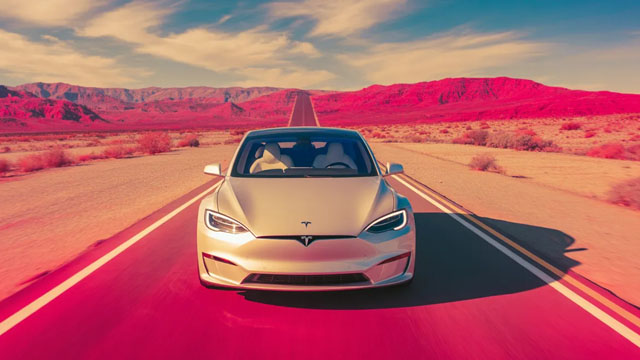
Core Viewpoint - Tesla is reportedly planning to procure a large scale of photovoltaic equipment from China, involving several listed companies [2][3]. Group 1: Market Reactions - A photovoltaic company confirmed the procurement rumors, indicating that the contract scale is at the gigawatt level [3]. - Following Elon Musk's comments at the Davos Forum regarding the importance of electricity for AI, the Wind Space Photovoltaic Index surged nearly 40% in January [3]. - The A-share space photovoltaic index experienced a pullback after multiple companies issued clarification announcements [3]. Group 2: Tesla's Strategic Moves - Musk views space photovoltaics as a key energy source for supporting AI computing power and has stated that Tesla and SpaceX aim to achieve an annual domestic production capacity of 100 gigawatts within three years [3]. - In February, Tesla's team visited several Chinese photovoltaic companies, and the company also posted job openings for senior solar engineers on its website [3]. - These developments have led to multiple rounds of stock price increases in the A-share photovoltaic sector, with several leading stocks hitting the daily limit [3].
商业航天新一轮行情-如何聚焦
2026-03-20 02:27
Summary of Key Points from Conference Call Records Industry Overview - The commercial space industry is at a critical turning point in 2026, with SpaceX's satellite computing plan increasing from 50,000 to 1 million satellites, driving industry valuation benchmarks to $1.75 trillion [1][2] - The sector has experienced a 30%-40% correction but is stabilizing, with a dense catalyst period expected from late March to April 2026, focusing on the re-launch of Zhuque-3 and the IPO process of Blue Arrow Aerospace [1] Core Insights and Arguments - **Strategic Value**: The commercial space industry has high strategic value, impacting both commercial and defense sectors. It includes rocket and satellite manufacturing, launch services, and extends to space computing and tourism, providing essential infrastructure for next-gen industries like 6G [2] - **Industry Height**: SpaceX's valuation has surged from 800 billion RMB in 2025 to 1.75 trillion RMB, showcasing immense growth potential that is currently unmatched by other frontier sectors like AI and robotics [2] - **Clear Industry Inflection Point**: 2026 is identified as a pivotal year for the industry, marked by increased launch activities and significant IPO processes [2] Investment Logic and Focus - The investment logic is shifting towards "military traction and civilian expansion," prioritizing assets with in-orbit verification advantages and those integrated into national core supply systems [1][7] - The focus is on companies with established customer relationships and in-orbit verification capabilities, as product development and validation cycles in commercial space can take 3-5 years [6][7] Market Trends and Opportunities - **Rocket Manufacturing**: There is a high certainty of capacity expansion in rocket manufacturing, with expected launch volumes increasing 5-6 times by 2028-2030. Core suppliers in this sector could see revenue growth potential of over 10 times [1][9] - **Satellite Internet**: The satellite internet sector is entering its second phase, with mobile direct connection services expected to scale in 2026, potentially creating a competitive advantage similar to the iPhone 4 era [1][7] - **Ground Equipment and Applications**: The ground equipment and application sectors are currently undervalued, with significant opportunities anticipated in 2026. The focus should shift from in-orbit assets to application-side investments [10][11] Catalysts and Future Outlook - Key catalysts expected from late March to April 2026 include the re-launch of rockets and IPO processes, which will provide critical trading windows for investors [12] - The overall outlook for the commercial space sector remains positive despite recent market corrections, with ongoing advancements in both domestic and international markets [3][12] Conclusion - The commercial space industry is poised for significant growth, driven by strategic military and civilian applications, technological advancements, and a robust investment landscape. Investors are encouraged to focus on core assets and emerging opportunities in the application sector as the market evolves.
This Transportation Stock May Outperform the S&P 500 in 2026
The Motley Fool· 2026-03-20 01:05
Core Viewpoint - The S&P 500 has faced challenges in 2026, primarily due to geopolitical tensions affecting oil prices, but there are still investment opportunities, particularly with Tesla, which is expected to outperform the index this year [1][2]. Group 1: Tesla's Market Position - Tesla is the market leader in electric vehicles (EVs) in the U.S., capturing 58.9% of all EV sales in Q4 2025, significantly ahead of General Motors at 10.8% [5]. - Globally, Tesla ranks as the second-largest EV manufacturer, following BYD, and is one of only two non-Chinese companies in the top five [6]. Group 2: Financial Performance - Tesla experienced an 11% decline in auto sales revenue and a 3% drop in total revenue in 2025, but this is viewed as a temporary setback rather than a long-term decline [4]. - The company's net profit margin stands at 4% with a debt-to-equity ratio of 0.18, indicating strong financial stability compared to General Motors, which has a net margin of 1.5% and a debt-to-equity ratio of 2.08 [7]. Group 3: Innovation and Future Prospects - CEO Elon Musk is recognized as a significant business leader, having transformed the perception of EVs and led Tesla to launch its first Robotaxi service in Austin and San Francisco in 2025 [9][12]. - Tesla plans to expand its Robotaxi service to several major cities in 2026, including Dallas, Houston, and Miami, which could enhance its market presence [13]. - The anticipated IPO of SpaceX adds to the investment appeal of Tesla, as Musk's track record suggests he is likely to achieve his ambitious goals [14].
X @Elon Musk
Elon Musk· 2026-03-20 00:26
CuteSpace Investor (@SpaceInvestor_D):Kardashev II loading…SpaceX filed for 1M orbital data center satellitesStarcloud (NVIDIA-backed) filed for 88K satsBlue Origin just filed for 51K sats.These aren’t sci-fi sketches, they’re FCC filings.First nodes of a solar-harnessing swarm are deploying soon. https://t.co/06lBBVcGcm ...