银河通用

Search documents
机器人科技体验店亮相,触摸机器人未来应用无限可能
Bei Jing Ri Bao Ke Hu Duan· 2025-08-14 14:15
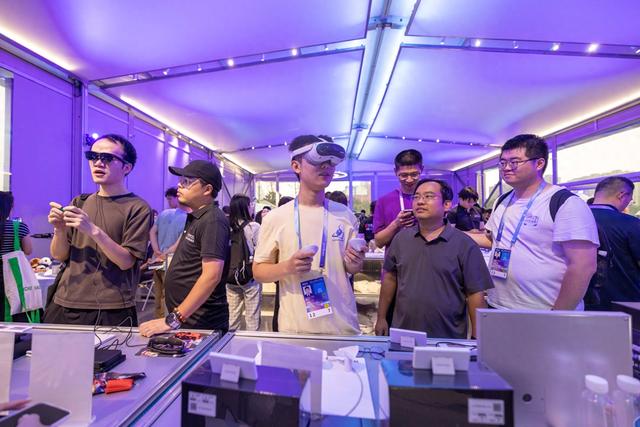
Group 1 - The event showcased over 200 types of robots and smart products, covering various fields such as smart home, children's education, AI entertainment, smart wearables, and outdoor sports, creating a multidimensional picture of future lifestyles [1][3] - The exhibition featured interactive robots, including a bionic robot capable of real-time facial expression recognition and mimicry, which engaged many visitors [3] - The experience store will operate long-term, with the first store expected to open in October at Shougang Park, and another store planned to open at the Capital Airport parking lot within the year, accelerating the commercialization of robots in education, cultural tourism, and urban operations [5] Group 2 - Shou Cheng Holdings plans to establish and manage a "Beijing Robot Industry Development Investment Fund" in 2024, with a total scale of 10 billion RMB, and has already invested in leading companies in the robotics sector [5] - During the World Humanoid Robot Games, the company provided 100 competition robots through its rental subsidiary and formed a technical team to offer comprehensive services from equipment debugging to on-site maintenance [5]


走进2025世界机器人大会,景顺长城科技军团孟棋解析“万亿级”市场投资机遇
Zhong Guo Ji Jin Bao· 2025-08-14 13:38
Core Viewpoint - The 2025 World Robot Conference (WRC) showcased significant advancements in robotics, highlighting the industry's rapid evolution and the emergence of investment opportunities in a trillion-dollar market [1][4][14]. Group 1: Event Highlights - The WRC featured over 1,500 exhibits from more than 200 domestic and international robotics companies, with over 100 new products launched, marking a record for domestic robotics exhibitions [1]. - Humanoid robots were a major focus, demonstrating capabilities in various activities such as combat, soccer, and marathon running, showcasing their advanced evolution [1]. - Notable innovations included combat robots with enhanced performance, soccer robots capable of autonomous ball recognition and shooting, and running robots with improved stability for complex movements [1]. Group 2: Application Scenarios - Three primary application scenarios for robotics were identified: 1. Industrial applications focusing on handling and sorting, which are seen as the most feasible for initial deployment in factories [6]. 2. Commercial applications, including robots in supermarkets and pharmacies for item retrieval and entertainment through robot competitions [6]. 3. Consumer-facing applications, particularly robots designed for children and elderly care, highlighting the growing market for personal assistance robots [6]. Group 3: Technological Advancements - Significant advancements were noted in hardware, with reduced costs and improved performance, including specialized components for various operational needs [7]. - The development of "small brain" technology has led to smoother operations in robots, enhancing their balance and agility [8]. - The "big brain" technology, while still developing, has shown progress in environmental recognition and cloud-based control systems, allowing for coordinated operations among multiple robots [8]. Group 4: Market Trends and Investment Opportunities - The robotics sector is experiencing inevitable volatility, but the long-term upward trend is clear, with increasing certainty as the industry matures [9]. - Investment strategies should focus on established hardware sectors and the ongoing technological advancements that will drive future growth [12]. - The overall market is transitioning into a positive cycle, with increasing resilience and opportunities for investment in technology sectors, including robotics [13]. Group 5: Future Outlook - The robotics industry is expected to mature, with a solidifying fundamental base that will reflect positively in the stock market [14]. - Chinese companies are positioned to benefit from industry growth due to their rapid technological advancements and cost advantages [15]. - The focus on high-quality stock selection and long-term investment strategies is essential for navigating the evolving landscape of the robotics sector [16].

走进2025世界机器人大会,景顺长城科技军团孟棋解析“万亿级”市场投资机遇
中国基金报· 2025-08-14 13:33
Core Viewpoint - The 2025 World Robot Conference (WRC) showcased significant advancements in robotics, highlighting the industry's rapid evolution and the emergence of substantial investment opportunities in a trillion-dollar market [1][2][8]. Group 1: Event Highlights - The WRC featured over 1,500 exhibits from more than 200 domestic and international robotics companies, with over 100 new products launched, marking a record for domestic robotics exhibitions [2]. - Humanoid robots were a major attraction, demonstrating capabilities in combat, soccer, and marathon running, showcasing their evolution and versatility [3][4]. Group 2: Application Scenarios - Three primary application scenarios for robotics were identified: 1. Industrial automation focusing on handling and sorting tasks, which are seen as the most readily deployable applications in factories [10]. 2. Commercial applications, including robots that assist in supermarkets and pharmacies, as well as entertainment through robot competitions [11]. 3. Consumer-facing scenarios, particularly those targeting children and the elderly, such as companion robots for learning and rehabilitation [11]. Group 3: Technological Advancements - Significant progress was noted in hardware, with reduced costs and improved performance, including specialized components for various operational needs [13]. - The development of "small brain" technology has enhanced robots' operational fluidity and balance, allowing for more complex movements and interactions [14]. - The "big brain" technology is evolving, enabling robots to perform tasks through cloud-based control, which reduces costs and enhances collaborative operations [14]. Group 4: Market Trends and Investment Strategies - The robotics sector is experiencing inevitable volatility as it matures, with a wave-like market performance observed over the past three years [16]. - Investment strategies should focus on established hardware sectors while also looking for growth in emerging technologies that enhance robots' capabilities [19]. - The overall market is transitioning into a positive cycle, with increasing resilience and clarity in investment opportunities, particularly in technology sectors [21][22]. Group 5: Future Outlook - Chinese companies are well-positioned to benefit from the robotics industry's growth due to their rapid technological advancements and cost optimization [25]. - The focus on high-quality stock selection and long-term investment strategies is essential for navigating the current market landscape [26][28].

2025年Q2 融资Top榜,从种子到G轮,详解资本如何押注未来独角兽 | Jinqiu Select
锦秋集· 2025-08-14 11:48
Core Insights - Capital is shifting from AI infrastructure to application-focused companies, indicating a change in investment logic within the AI sector [1][3] - The AI market is undergoing unprecedented consolidation, with major tech companies rapidly acquiring talent and technology through "quasi-acquisitions" [3] - Investors are betting on AI startups at record high valuations, reflecting significant growth expectations for leading companies [3] Seed and Angel Round Financing - The top seed/angel round financing case is Thinking Machines Lab, which raised $2.0 billion [4] - Other notable companies include LMArena, Gensmo, Yupp, and Cognichip, with varying focuses on AI applications and technologies [5][6][7][8] Series A Financing - The top Series A financing case is 银河通用, which raised $153 million [19] - Other significant companies include 联影智能 and 地瓜机器人, focusing on AI video analysis and humanoid robotics respectively [20][21] Series B Financing - The leading Series B financing case is Anysphere, which raised $100 million [45] - Other notable companies include wall street firms and AI-driven platforms focusing on various applications, including autonomous delivery and software supply chain security [46][47] Series C Financing - The top Series C financing case is a company that raised $900 million for AI code automation and programming assistance [46] - Other significant companies include壁仞科技 and Quantum Systems, focusing on high-performance computing and AI-driven drone systems [47][48] Series D Financing - The leading Series D financing case is xAI, which raised $5.0 billion for AI defense security applications [57] - Other notable companies include Cohere and Pathos, focusing on enterprise-level generative AI platforms and AI-driven drug development [58][59] Series E and Beyond Financing - The top Series E financing case is Neuralink, which raised $650 million for brain-machine interface technology [72] - Other significant companies include Anduril and Applied Intuition, focusing on defense technology and autonomous driving software [71][74]

英伟达加码机器人 上新Omniverse库和Cosmos模型
2 1 Shi Ji Jing Ji Bao Dao· 2025-08-14 11:02
Group 1 - The global robotics industry is accelerating towards intelligence and scale, with capital and tech giants increasing investments [1] - NVIDIA is positioning itself as a core player in AI computing platforms, aiming to leverage "physical AI" for new growth opportunities [1][2] - The newly launched NVIDIA Omniverse library and Cosmos model are designed to enhance the development and deployment of robotic solutions [1][2] Group 2 - The Omniverse SDK and tools facilitate the creation and deployment of industrial AI and robotic simulation applications, helping developers validate algorithms and hardware designs in virtual environments [1][3] - The Cosmos model allows developers to generate large-scale training data for robots using text, images, and video prompts, with the upcoming Cosmos Transfer-2 capable of quickly generating realistic synthetic data [1][2] Group 3 - Cosmos Reason is a new open-source, customizable 7 billion parameter visual language model that enables robots to reason and understand the physical world like humans [2][3] - NVIDIA's integration of AI reasoning with precise physical simulation is expected to significantly impact various industries, potentially creating trillions of dollars in value [2] Group 4 - NVIDIA has deployed three major computing platforms for robotics and physical AI: embedded computers in robots, AI factory computers for data processing and model training, and simulation computers for testing robots [3][4] - The recent updates to models and toolkits aim to address the challenges of data and simulation in robotics [4] Group 5 - Rev Lebaredian highlighted the importance of generating synthetic data through simulation to overcome the data scarcity challenges faced by physical AI [4] - China is recognized for its strong capabilities in manufacturing efficient and practical robots, supported by expertise in mechatronics and a large manufacturing base [5] Group 6 - Domestic robotics companies are collaborating with NVIDIA to develop products, indicating a growing partnership in the industry [5] - The robotics industry is still in its early stages, facing challenges such as the lack of unified technical standards and the need for effective commercialization strategies [5]

王兴兴的最佳拍档
投资界· 2025-08-14 08:16
Core Viewpoint - The article highlights the significant role of Chen Li, co-founder of Yushu Technology, in the commercialization of the company, emphasizing the importance of having market-oriented talent alongside technical expertise in a startup team [1][7]. Group 1: Background of Founders - Wang Xingxing and Chen Li share a similar educational and professional trajectory, both hailing from Ningbo, Zhejiang, and having studied mechanical engineering at Zhejiang University of Technology and later at Shanghai University [3][4]. - Their strong friendship and complementary skills led to Chen Li joining Yushu Technology after leaving a stable position at Hikvision, where he brought valuable sales experience [4][9]. Group 2: Commercialization Efforts - Chen Li transitioned from product development to focusing on commercialization after Yushu's launch of the quadruped robot Laika Go in October 2017, leading sales, marketing, and customer engagement efforts [4][9]. - The company has achieved significant global market penetration, with a market share of approximately 70% in 2023 and projected sales of 23,700 quadruped robots in 2024, representing a market share of 69.75% [9]. Group 3: Investment and Growth - Yushu Technology has seen a series of successful funding rounds, particularly since 2022, with Chen Li playing a crucial role in investor relations [5][9]. - The company has maintained profitability for five consecutive years, distinguishing itself as one of the few positive cash flow cases in the robotics industry [9]. Group 4: Industry Trends - The article notes a growing emphasis on commercialization in the robotics sector, with companies increasingly focused on securing orders and demonstrating return on investment (ROI) [11][13]. - Recent collaborations and contracts in the industry indicate a competitive landscape where companies are actively pursuing large-scale commercial projects [12][13].

机器人,还当不了打工人
3 6 Ke· 2025-08-14 07:54
Group 1 - The core viewpoint of the article highlights the rapid evolution and increasing popularity of humanoid robots, showcased at the 2025 World Robot Conference (WRC), where they attracted significant attention and engagement from the public [2][3] - Humanoid robots are evolving in terms of appearance, interaction methods, and application scenarios, moving beyond basic functionalities to more complex tasks [4][5] - Despite advancements, challenges remain in terms of intelligence and cost, which are seen as barriers to large-scale application [3][11] Group 2 - Current humanoid robots exhibit various designs, with differences primarily in hand and foot configurations, impacting functionality and cost [5][6] - The operational capabilities of humanoid robots are primarily focused on upper body functions, utilizing innovative designs to mimic human muscle movements [6][7] - Interaction methods include remote control, joint mapping, and voice commands, but true AI autonomy is still lacking [7][8] Group 3 - Application scenarios for humanoid robots are categorized into B2B (business) and B2C (consumer), with entertainment, industrial manufacturing, and service sectors being the primary focus for B2B [8][10] - The current market for humanoid robots is growing rapidly, with significant increases in revenue and the number of registered companies in the robotics sector [17][19] - Many humanoid robot companies are pursuing IPOs, indicating strong market interest and potential for growth [17][20] Group 4 - The industry faces challenges related to the intelligence ("brain") and cost ("body") of humanoid robots, with current software capabilities still at a demo level [11][16] - Companies like Galaxy General are pushing the boundaries of humanoid robot intelligence through innovative models and data-driven approaches [13][15] - The pricing of humanoid robots varies significantly, with most being expensive, which limits widespread adoption [16][22] Group 5 - The humanoid robot industry is characterized by diverse approaches, with companies focusing on either hardware capabilities or software intelligence [20][22] - Different evaluation criteria exist for assessing the strength of humanoid robot companies, including intelligence, application scenarios, and valuation [20][22] - The market for humanoid robots is still in its early stages, with various companies exploring different niches and applications, indicating a dynamic and evolving landscape [22]
专访国地中心江磊:人形机器人“三步走”,商用压缩至5-10年
2 1 Shi Ji Jing Ji Bao Dao· 2025-08-14 06:33
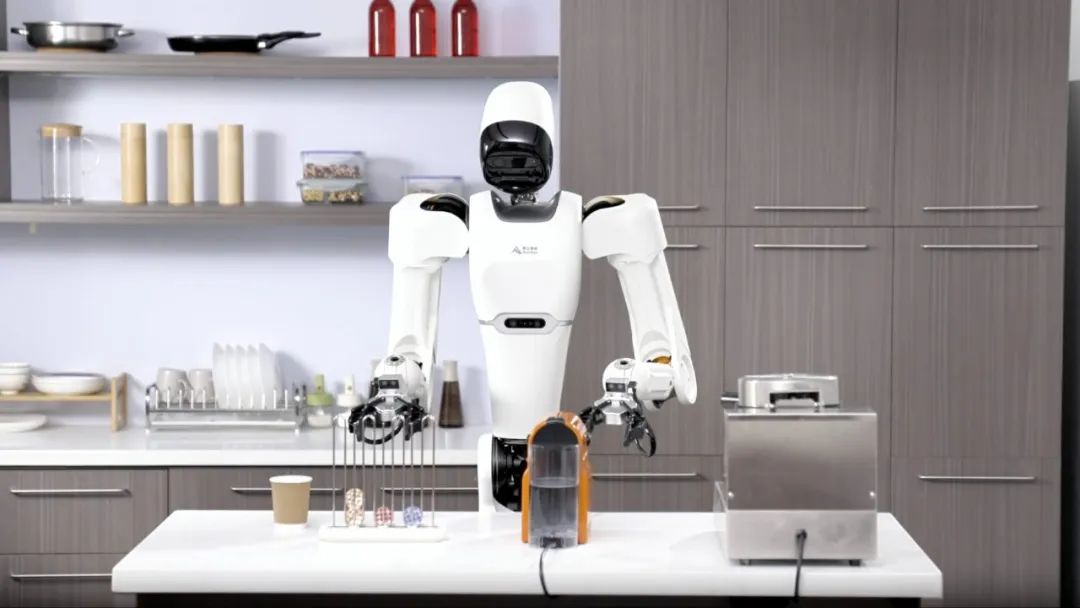
Group 1 - The core viewpoint of the article emphasizes the evolving trends in humanoid robots, highlighting a three-step industrialization process: starting with entertainment, moving to industrial applications, and finally entering household scenarios [5][10] - The humanoid robot industry aims to compress the typical 25-year development cycle of similar technologies into a 5 to 10-year timeframe, leveraging open-source collaboration and resource integration [5][6] - A significant change observed at the 2025 World Robot Conference is the increased availability of humanoid robot products, with many manufacturers showcasing tangible products rather than just prototypes [7] Group 2 - The article discusses the challenges faced by small and medium-sized tech enterprises in the humanoid robot sector, particularly the need for traditional manufacturing companies to establish digital infrastructure before transitioning into this field [3][8] - Companies with strong AI capabilities are encouraged to venture into hardware development, indicating a trend towards integrating software and hardware solutions [8] - The market is beginning to recognize the potential of humanoid robots in sectors like dining and entertainment, suggesting a growing acceptance and demand for these technologies [7][10] Group 3 - The article notes that while there are still doubts about the practical value of humanoid robots, the number of supporters is gradually increasing, indicating a shift in market perception [10] - The current "order surge" in humanoid robot companies is seen as a temporary trend rather than a definitive sign of large-scale commercialization, reflecting the unique characteristics of the Chinese market [10] - The article highlights the need for collaboration and standardization within the humanoid robot industry to address rapid development and ensure a healthy competitive environment [11]
我们距离真正的具身智能大模型还有多远?
2025-08-13 14:56
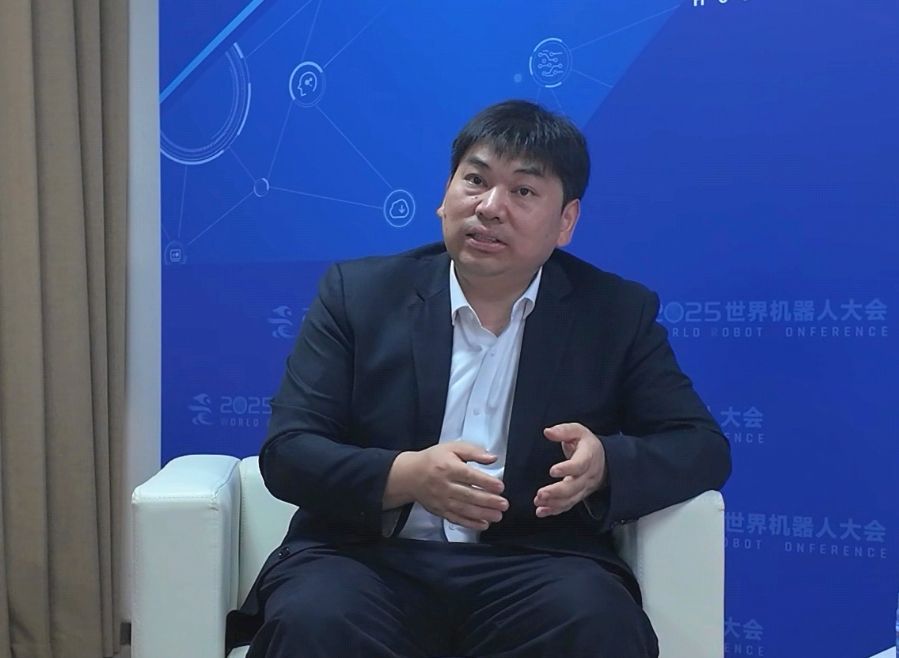
Summary of Conference Call Notes Industry Overview - The discussion revolves around the humanoid robot industry, emphasizing the importance of the model end in the development of humanoid robots, despite the current market focus on hardware [1][2][4]. Key Points and Arguments 1. **Importance of Large Models**: The emergence of multi-modal large models is seen as essential for equipping humanoid robots with intelligent capabilities, which is the underlying logic for the current development in humanoid robotics [2][4]. 2. **Data Collection Challenges**: The stagnation in model development is attributed to insufficient data collection, as initial data has not been monetized due to a lack of operational robots in factories [3][16]. 3. **Role of Tesla**: Tesla is highlighted as a crucial player in the industry, as the standardization of hardware is necessary for effective data collection and model improvement [3][4][16]. 4. **Data Flywheel Concept**: The formation of a data flywheel is critical for the rapid growth of large models, which requires a solid hardware foundation [4][16]. 5. **Model Development Trends**: The development of models is driven by three main lines: multi-modality, increased action frequency, and enhanced reasoning capabilities [5][11][12]. 6. **Model Evolution**: The evolution of models from C-CAN to RT1, RT2, and Helix shows a progression in capabilities, including the integration of various input modalities and improved action execution frequencies [6][10][11]. 7. **Training Methodology**: The training of models is compared to human learning, involving pre-training on low-quality data followed by fine-tuning with high-quality real-world data [13][14]. 8. **Data Quality and Collection**: Real-world data is deemed the highest quality but is challenging to collect efficiently, while simulation data is more accessible but may lack realism [15][17]. 9. **Motion Capture Technology**: The discussion includes the importance of motion capture technology in data collection, with various methods and their respective advantages and disadvantages [18][19]. 10. **Future Directions**: The future of large models is expected to involve more integration of modalities and the development of world models, which are seen as a consensus in the industry [21][22]. Additional Important Content - **Industry Players**: Companies like Galaxy General and Xinjing are mentioned as key players in the model development space, with Galaxy General focusing on full simulation data [22][23]. - **Market Recommendations**: Recommendations for investment focus on motion capture equipment, cameras, and humanoid robot control systems, with specific companies highlighted for potential investment [26]. This summary encapsulates the critical insights from the conference call, providing a comprehensive overview of the humanoid robot industry's current state and future directions.

大摩闭门会-金融、机器人、汽车、锂行业更新
2025-08-13 14:53
Summary of Key Points from Conference Call Records Industry Overview Robotics Industry - The robotics industry is expanding its applications into manufacturing, commercial, and service sectors, driven by AI large models, although efficiency and accuracy still need improvement [1][2] - Significant hardware advancements in dexterous hands have been noted, but data and software remain bottlenecks, with physical data collection being a Chinese advantage [1][4] - Policy support is accelerating the development of the robotics industry, with a focus on technologies such as gear reducers, sensors, and new materials, as well as the profitability of related supply chain companies [1][6] Automotive Industry - The automotive industry is experiencing limited effects from anti-involution measures, with price increases being a passive adjustment rather than a demand-driven change [1][8] - Desay SV's performance in smart cockpit and intelligent driving solutions is highlighted, with a 30% year-on-year revenue growth and a 41% profit increase [1][9] - The development of humanoid robots presents new opportunities for automotive parts companies [1][9] Financial Sector - Chinese household financial assets maintained a 12% growth rate, primarily benefiting from rising equity values, with insurance products growing faster than other financial assets [1][10] - The institutionalization trend is driving market growth, with insurance and growth-oriented banking sectors showing investment potential [1][11] - The securities industry is entering an early recovery phase after a tightening cycle, with regulatory easing and increased trading volumes being key variables [1][12][13] Lithium Industry - The lithium industry is facing complexities due to the requirement for resource verification reports, leading to increased expectations of supply shortages [1][21] - Market sentiment is cautious, with predictions of tight supply in September but an overall slight surplus for the year [1][21][22] Steel and Cement Industries - The steel industry is expected to reduce production by 10 to 20 million tons by the end of the year, with profitability fluctuating due to rising raw material costs [1][24] - The cement industry has undergone a significant capacity reduction, with effective capacity dropping from 21-22 billion tons to 16 billion tons, leading to price increases as the peak season approaches [1][25][26] Core Insights and Arguments - The robotics industry is in an early stage but is rapidly exploring various applications, with a focus on ecological cooperation and international market expansion [1][5][7] - The automotive sector's price adjustments are not indicative of improved demand, and long-term capacity clearing remains challenging due to local government interests [1][8][9] - The financial sector's growth is supported by a shift towards institutional investments, particularly in insurance and high-dividend assets, which bolster stock market stability [1][10][11] - The securities industry is benefiting from regulatory changes and increased trading activity, with a focus on differentiated advantages in institutional and derivative businesses [1][12][14] Additional Important Content - The robotics industry is expected to see more supportive policies nationwide, which will facilitate the commercial rollout of wheel-type and composite robots [1][7] - The automotive industry's smart technology advancements are creating new market opportunities, particularly for companies involved in intelligent cockpit solutions [1][9] - The lithium market's volatility is influenced by regulatory requirements and market speculation, necessitating close monitoring of supply dynamics [1][21][22] - The cement industry's proactive pricing strategies indicate a shift towards a more favorable market environment as demand increases [1][25][26]