银河通用

Search documents
上半年144起融资达195亿,具身智能产业化拐点,亿元级项目成资本新宠
Sou Hu Cai Jing· 2025-08-13 04:56
Group 1 - The robotics industry is experiencing unprecedented capital enthusiasm, with 144 financing events and a total amount of 19.5 billion yuan in the first half of 2025, averaging 135 million yuan per financing [1] - The shift in investor focus from "watching demos" to "watching mass production" marks a historic turning point for humanoid robots, with increasing emphasis on practical applications and production capabilities [3] - The financing pace for embodied intelligent robot companies has accelerated significantly, with over 44 financing events exceeding 100 million yuan in the first half of the year, indicating a higher selection threshold for capital investment [4] Group 2 - Major internet companies are making substantial investments in the embodied intelligence sector, with JD.com announcing an investment plan exceeding 10 billion yuan and becoming a global strategic partner for the 2025 World Robot Conference [5] - Companies like Tencent, Meituan, and ByteDance are rapidly positioning themselves in the embodied intelligence field, with Tencent investing in at least two humanoid robot companies and launching an open platform for embodied intelligence [5] - The collaboration between large companies and startups is accelerating, as seen in the case of Galaxy General, which has received over 2.4 billion yuan in funding and is valued at over 1 billion USD, demonstrating the potential for rapid technology validation and market entry [5]


银河通用:全球首批部署英伟达新Thor芯片,获评“干活最快人形机器人”
Xin Lang Ke Ji· 2025-08-13 04:08
Group 1 - The core announcement from the WRC 2025 conference is the launch of the Galbot robot, which is the first to deploy the latest NVIDIA Jetson Thor chip for smart box handling in industrial scenarios [1] - The NVIDIA Jetson Thor chip significantly enhances robot performance, boasting 7.5 to 10 times the computing power of its predecessor, Jetson Orin, with a 3.5 times improvement in performance per watt and approximately 10 times increase in I/O throughput [1] - Galbot has been recognized as the "fastest humanoid robot" due to the powerful support of the Jetson Thor chip, which enables rapid location and movement in response to disturbances [1] Group 2 - The goal of companies like NVIDIA and Galaxy General is to develop general-purpose robots, which are expected to become key revolutionary products in a market worth trillions of dollars [2] - Galaxy General's robots differ from others as they are not fully humanoid but feature a wheeled design with dual arms and hands, emphasizing high endurance and industrial-grade safety for large-scale, reliable delivery [2] - The Galaxy General G1 robot, set to launch in May 2024, has achieved standards for large-scale autonomous commercial use in areas such as automatic charging and operational stability [2]


全球首家机器人4S店,销售情况如何?
3 6 Ke· 2025-08-13 01:08
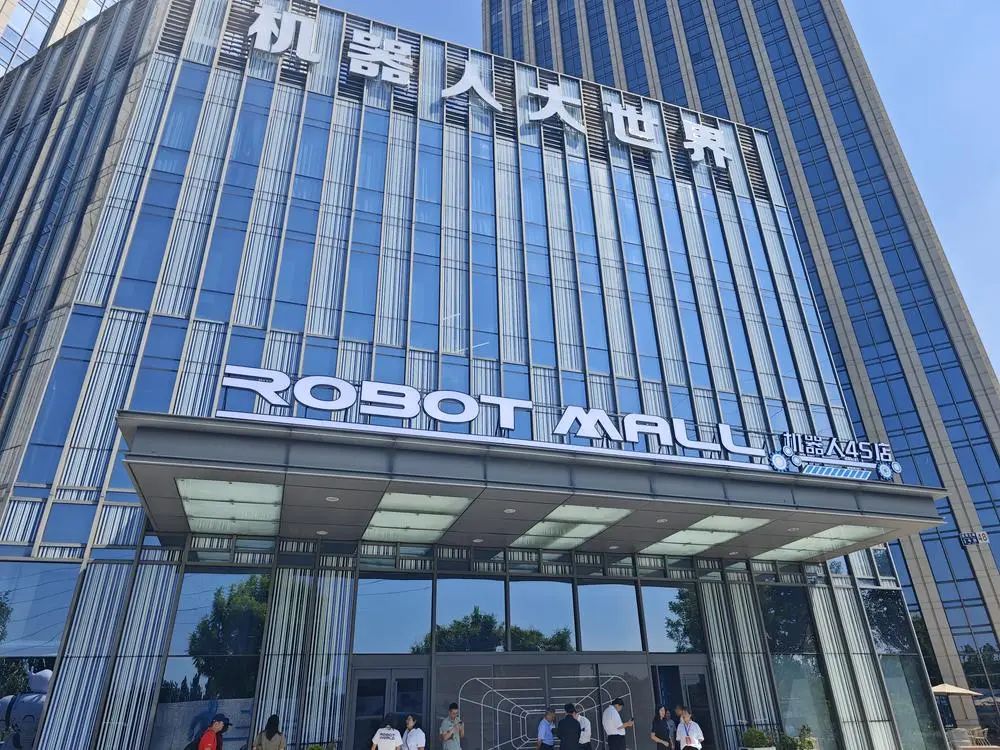
Core Insights - The world's first humanoid robot 4S store, Robot Mall, has officially opened to the public in Beijing's Economic and Technological Development Zone, showcasing a variety of robots and related services [1][19]. Pricing and Sales - Educational companion robots are priced between several thousand to ten thousand yuan, with specific models like the intelligent education robot "Wukong" and the chess-playing robot priced at 3820 yuan each [10][11]. - The store features over 50 robot models from more than 40 domestic manufacturers, with a wide price range from hundreds to millions of yuan [8][18]. - Affordable desktop AI robots are currently the main sales drivers, with prices ranging from 300 to 3500 yuan after discounts [9][10]. Store Features - The 4S store spans 4000 square meters and includes various zones such as intelligent manufacturing, future interaction, smart maintenance, and exclusive consensus areas [5]. - The store offers a one-stop solution for sales, spare parts, after-sales service, and customer feedback, similar to traditional car 4S stores but with a focus on multiple brands [8][19]. Future Plans - The store's manager indicated plans for a 2.0 version to launch by the end of November, which will enhance the immersive experience and accommodate more enterprises [18].
华为诺亚首席研究员,也具身智能创业了
量子位· 2025-08-13 01:01
Core Viewpoint - The article highlights the rising trend of embodied intelligence as a hot entrepreneurial sector, particularly focusing on the establishment of Shenzhen Noin Intelligent Technology, founded by a former Huawei researcher, Li Yinchuan, who has a strong academic and patent background in AI and robotics [2][7][24]. Group 1: Company Overview - Shenzhen Noin Intelligent Technology was founded on June 19, 2025, and is focused on developing humanoid robots designed for home use, capable of interacting with their environment through a perception-decision-execution loop [7]. - The company has already secured its first round of financing shortly after its establishment, with notable investors including Source Code Capital, which has previously invested in other successful AI ventures [4][15]. - Noin is reportedly in the process of its second round of financing, with its valuation doubling since the first round [14]. Group 2: Market Dynamics - The demand for home humanoid robots is driven by the need for comfort and convenience in family experiences, as well as trends such as global aging and increasing numbers of single-person households [11]. - The market for home humanoid robots is described as exceptionally vibrant, with several companies, including those founded by prominent figures in the tech industry, making headlines for their financing and product developments [11][13]. Group 3: Industry Background - The article notes a significant influx of talent from Huawei into the embodied intelligence sector, with many former employees establishing their own companies [36][38]. - Two notable companies in this space are Zhiyuan Robotics and Tashizhi Navigation, both of which have strong teams composed of former Huawei executives and technical experts [40][48]. - The emergence of the "Huawei system" in the entrepreneurial landscape is attributed to the company's previous talent development programs and its focus on autonomous driving technology, which has naturally transitioned into the robotics field [58][60].

世界机器人大会很火!百花齐放,但也同质化严重!
Robot猎场备忘录· 2025-08-13 00:04
Core Insights - The 2025 World Robot Conference showcased over 200 domestic and international robot companies, featuring more than 1,500 exhibits, including over 100 new product launches, marking a record for similar events [4] - The event highlighted a significant issue of homogenization in humanoid robots, with a lack of groundbreaking innovations and technical barriers, despite advancements in commercial applications [8][10] - The current landscape of humanoid robots is characterized by two main camps: hardware-focused companies like Yushu Technology and software-centric firms like Zhiyuan Robotics, each targeting different commercial applications [11][13] Group 1 - The humanoid robot sector is experiencing a surge in interest and investment, but many companies are still in the early stages of commercialization, with significant challenges in mass production and effective application [12][17] - The event revealed that while humanoid robots have made progress in movement capabilities, their actual commercial value remains unproven, and the technology is still largely reliant on remote control and pre-programming [17][18] - The market is witnessing a "bubble" phenomenon, driven by capital and policy support, raising concerns about the sustainability of growth and the potential for a market correction [18] Group 2 - The upstream supply chain is expected to benefit first from the humanoid robot wave, as highlighted by recent reports from Morgan Stanley and Goldman Sachs [19] - The competition among leading humanoid robot companies for IPOs is intensifying, but many have yet to achieve substantial technological breakthroughs or meaningful commercialization [18][19] - The disparity in commercial application strategies between hardware and software-focused companies is evident, with hardware firms prioritizing educational and research markets, while software companies are still in the proof-of-concept stage [15][17]

热爆了!中国机器人企业近100万家、融资超240亿,但仍有三大具身智能“非共识”争论
Tai Mei Ti A P P· 2025-08-12 23:25
Industry Overview - The Chinese robotics industry is experiencing significant growth, with nearly 958,000 existing robotics-related companies as of August 12, 2023, and a notable increase in registrations in 2024 and 2025 [2][4] - The East China region accounts for 39.64% of the robotics-related companies in the country, with over 160 humanoid robot platform companies and more than 600 core component suppliers [2] Investment Trends - From January to July 2023, there were over 200 investment events in the embodied intelligence and robotics sectors, with total financing exceeding 24 billion yuan, surpassing the total for the entire year of 2024 [4] - The humanoid robot market in China is projected to exceed 8.2 billion yuan by 2025, capturing over 50% of the global market [4] Market Potential - Citigroup predicts that by 2050, the global humanoid robot market will grow to 7 trillion USD (approximately 50 trillion yuan), with over 650 million humanoid robots, more than half of which will originate from China [4] Technological Challenges - Industry leaders highlight that while hardware technology for robots is sufficient, challenges remain in mass production and engineering, particularly in embodied intelligence and AI [4][6] - The current focus on data in embodied intelligence may overshadow the need for improved model architectures, which are crucial for practical applications [19][21] Model Development - There is ongoing debate about the future of embodied intelligence models, particularly whether the VLA (Vision-Language-Action) model or world models will prevail [6][10] - Experts suggest that the VLA model, while effective in certain tasks, lacks generalization capabilities and requires significant improvements in architecture and training methods [8][10] Data Utilization - The industry is divided on the importance of real-world data versus synthetic data for training robots, with many companies leaning towards real-world data while some advocate for synthetic data as a key asset for rapid development [26][29] - The effectiveness of data collection and its application in training models remains a critical challenge, with a consensus that both data types will play important roles in the future [29][30] Future Outlook - The humanoid robot industry is anticipated to reach a market size exceeding 100 billion yuan in the next decade, with predictions of exponential growth in production and capabilities [33] - The industry is expected to undergo a "survival of the fittest" phase, where many companies may not survive the upcoming mass production stage [33]
2025世界机器人大会闭幕 四大趋势勾勒机器人产业新图景
Shen Zhen Shang Bao· 2025-08-12 22:52
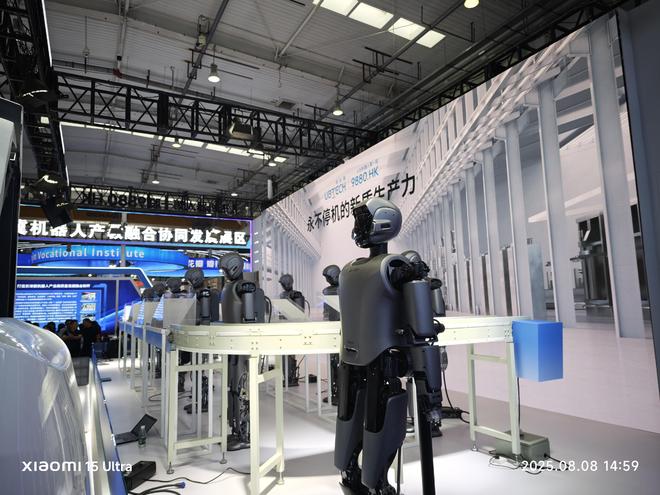
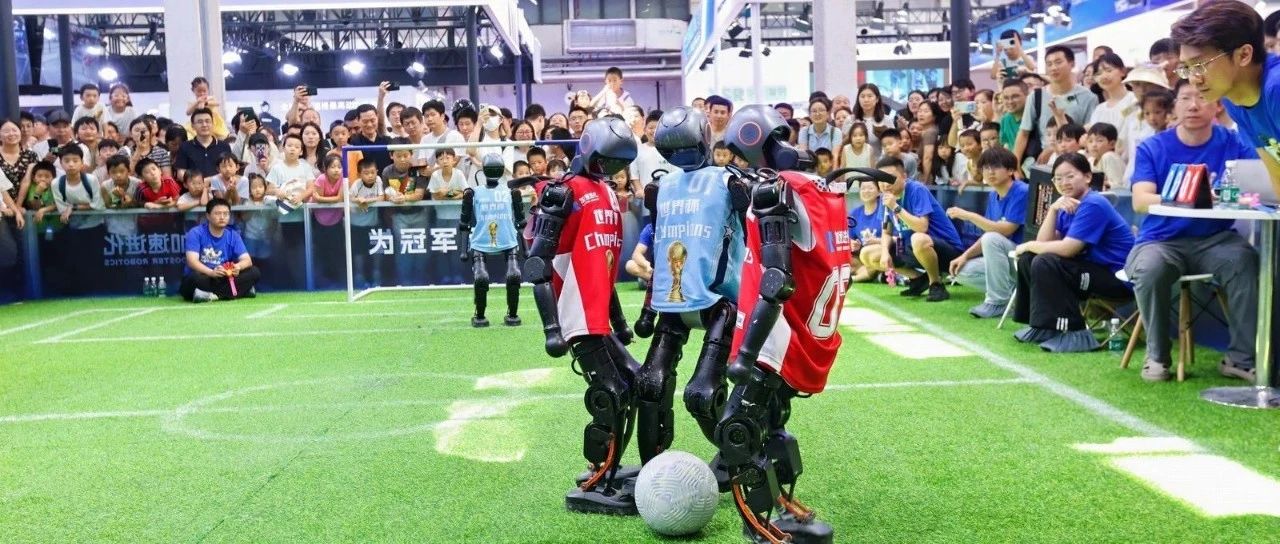
Core Insights - The 2025 World Robot Conference (WRC) in Beijing marked a significant shift in the robotics industry from showcasing technology to practical applications, with a focus on commercial viability and real-world scenarios [1] Group 1: Trends in Robotics - Trend 1: Increased product density and comprehensive supply chains, with over 200 companies showcasing more than 1,500 exhibits, including over 100 new products, nearly double from last year [2] - Trend 2: Robots are transitioning from mere demonstrations to practical applications in factories, with many humanoid robots now capable of performing complex tasks in simulated real-world environments [3] - Trend 3: A price war is emerging, with humanoid robot prices dropping significantly, such as the starting price of the Yushun R1 at 39,900 yuan, but low prices do not equate to low capabilities [4][5] Group 2: Technological Innovations - Trend 4: The VLA (Vision-Language-Action) model is gaining traction, enabling robots to understand and interact with their environment more effectively, as demonstrated by the Galbot in a supermarket setting [6]
机器人大模型深度:我们距离真正的具身智能大模型还有多远?
2025-08-12 15:05
Summary of Key Points from Conference Call Records Industry Overview - The focus is on the humanoid robot industry and the development of large-scale intelligent models, particularly in the context of data collection and algorithm training [1][2][3]. Core Insights and Arguments - **Data Flywheel**: The data flywheel is essential for the maturation of large intelligent models, requiring a sufficient number of robots in factories to collect data for improvement [3]. - **Model Development**: The humanoid robot industry faces challenges primarily at the model level, with multi-modal large models being crucial for advancement [2]. - **Current Model Stage**: Humanoid robots are currently at the L2 stage, analogous to the early stages of autonomous driving, where hardware must be established before data collection can effectively begin [5]. - **Key Development Lines**: The development of large intelligent models is driven by three main lines: multi-modality, action frequency, and generalization ability [6]. Important but Overlooked Content - **Data Collection Challenges**: True machine data is of the highest quality but is costly and inefficient to collect, leading to potential sunk costs if hardware is not finalized [15]. - **Simulation vs. Real Data**: The current ratio of simulation data to real machine data is approximately 9:1, with a trend towards a more balanced approach in the future [16]. - **Action Capture Technologies**: There are two main types of motion capture technologies: optical and inertial, each with distinct applications and cost structures [17]. - **Recommended Companies**: Companies recommended for investment include Lingyun Optical for motion capture equipment, Aowei Zhongguang for cameras, and Danghong Technology and Jingye Intelligent for remote operation technology [22]. Future Directions - **Integration of Modalities**: Future large models are expected to incorporate more modalities, including tactile and olfactory information, alongside existing visual and language inputs [19]. - **Remote Operation Technology**: This technology is crucial for ensuring real-time robot operation and is expected to see significant demand in both mid-term and long-term applications [21].
机器人能跑能跳能搏击,为何仍陷“成长烦恼”?
第一财经· 2025-08-12 14:38
Core Viewpoint - The article discusses the current state and challenges of the humanoid robotics industry, highlighting the need for better integration between embodied manufacturers and AI model companies, as well as the importance of data quality and quantity for advancing technology [3][6][16]. Industry Growth and Challenges - The humanoid robot market in China is experiencing strong growth, with commercial sales expected to rise from approximately 2,000 units in 2024 to nearly 60,000 units by 2030, reflecting a compound annual growth rate of 95.3% [6]. - Despite the growth, the industry faces significant challenges, including high costs, inconsistent hardware quality, data quality and scale gaps, immature software and algorithms, and a lack of supply chain standards [7][8]. Technological Development - The industry is currently divided into three main technological routes: end-to-end VLA (Vision-Language-Action), layered architectures, and brain-like models that simulate biological neurons [12]. - There is a consensus on the importance of the "small brain" technology for motion control, but the "big brain" aspect, which involves decision-making and learning, has not yet reached an ideal state [11][12]. Data Issues - A significant barrier to progress in the humanoid robotics sector is the insufficient amount of quality data available for training models. The industry currently relies on a limited dataset, with the largest public dataset containing only 1 million entries [16][17]. - Companies are exploring various methods to generate data, including using computer graphics to simulate real-world physics and creating large interactive object libraries [17]. Integration and Collaboration - The development of humanoid robots is seen as a systemic engineering challenge, where the integration of various technological routes and data sources is crucial for creating effective systems [13]. - The industry requires collaboration among multiple companies to address the full chain of model development, data acquisition, and robot functionality [18].
王田苗:具身智能产业“破局”,先找能算过来账的垂类环境 | 最前线
3 6 Ke· 2025-08-12 13:40
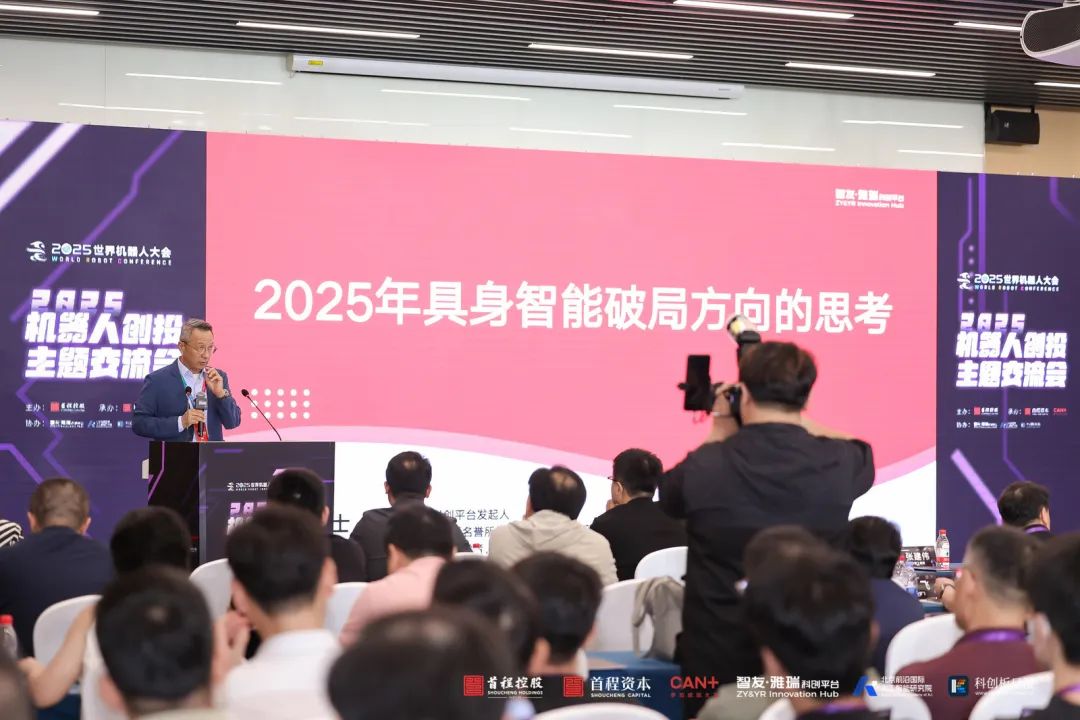
作者:富充 编辑:苏建勋 产业化落地,仍是当下具身智能领域最受关注的话题。 2025 年世界机器人大会期间,首程控股举办"2025机器人创投主题交流会"。智友·雅瑞科创平台发起人、北航机器人研究所名誉所长王田苗等学者及知名 投资人,围绕具身智能的研究与商业前景分享了观点。 智友·雅瑞科创平台发起人、北航机器人研究所名誉所长王田苗,图片:论坛提供 "我们认为,当前制约机器人产业发展的关键不在供应链,而在成熟应用场景的缺乏。短期内会更多使用'尚不聪明但稳定可用'的机器人产品。"首程控股 董事会办公室总经理康雨在接受36氪采访时表示。这一观察与王田苗的判断相互印证。 在康雨看来,严肃工业的落地往往是"点状突破",一旦通用性和方案能力成熟,便有望催生明星企业。产业趋势上,今年"小脑"(运动控制)更趋成熟, 本体企业加快出货;而"大脑"(具身智能)仍在快速进化中。 首程控股近年持续投资具身智能企业。2024 年,公司参与设立并管理规模 100 亿元人民币的"北京机器人产业发展投资基金",目前已布局宇树科技、银 河通用、加速进化等近 20 家具身智能企业。 关于 2025 年具身智能的产业"破局"方向,王田苗指出,下一个 ...