OPPO

Search documents
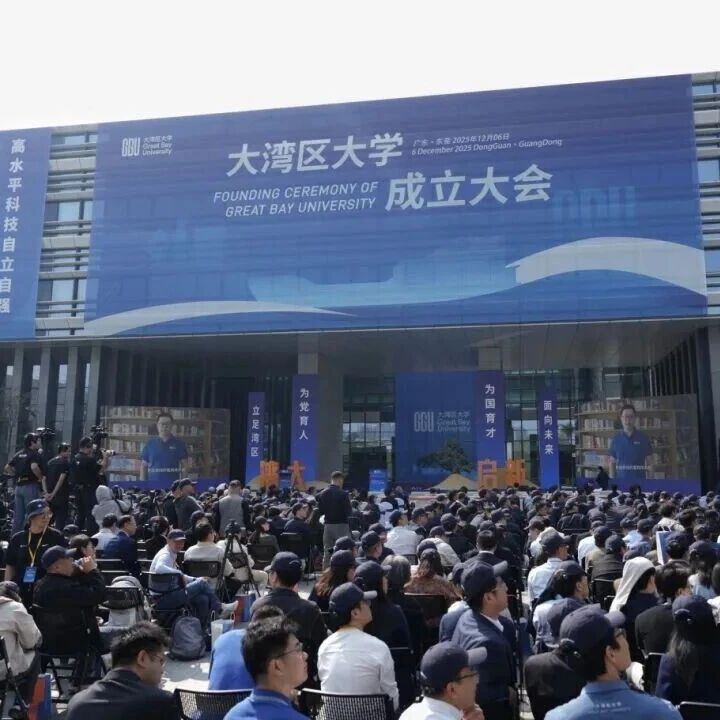
大湾区大学正式成立
21世纪经济报道· 2025-12-06 06:13
Core Viewpoint - The establishment of the Greater Bay Area University (GBAU) aims to cultivate high-quality research talents in response to the region's development needs, focusing on six key fields: material science, advanced engineering, life sciences, information technology, natural sciences, and financial management [2]. Group 1: University Establishment and Structure - The GBAU was officially approved by the Ministry of Education on June 19, marking a rapid transition from planning to establishment, with the first cohort of 80 students enrolled from 53 high schools across 16 cities in Guangdong [2]. - The university adopts an innovative educational model, allowing students to explore their interests in the first year before selecting their majors in the second year, with options including mathematics, physics, computer science, materials science, industrial engineering, artificial intelligence, and future robotics [4]. Group 2: Faculty and Research Team - GBAU has assembled a high-level faculty team of over 300 research teachers, all holding PhDs, with more than 70% having overseas study or work experience, including 10 academicians and 78 national-level talents [4]. Group 3: Collaborative Innovation Model - Located in Dongguan, the GBAU is developing a "University + Collaborative Innovation" model, partnering with major scientific facilities and leading enterprises like Huawei and OPPO to enhance technology innovation and talent development [6]. - The university provides each student with academic mentors and industry mentors from leading companies to cater to personalized development needs [6]. Group 4: Future Development and Goals - GBAU aims to integrate education with scientific research and industry, supporting the development of new productive forces in Dongguan and the Greater Bay Area, thereby contributing to technological innovation and emerging industry growth [6].

大湾区大学正式成立!
Zhong Guo Ji Jin Bao· 2025-12-06 05:15
Group 1 - The establishment of the Greater Bay Area University (GBAU) marks the official launch of a new research-oriented university focused on science and engineering [1] - GBAU aims to cultivate high-quality research talents in six key areas: material science, advanced engineering, life sciences, information technology, natural sciences, and financial management [1] - The university has already enrolled its first cohort of 80 students from 53 high schools across 16 cities in Guangdong [1] Group 2 - GBAU has innovated its educational model by allowing students to explore their interests before declaring a major, with options including mathematics, physics, computer science, and artificial intelligence [2] - The faculty comprises over 300 research teachers, all holding PhDs, with more than 70% having international experience, including 10 academicians and 78 national-level talents [2] - The university is located in Dongguan, near major scientific facilities and leading companies like Huawei, fostering a collaborative innovation model [2] Group 3 - GBAU has established strategic partnerships with major scientific institutions to enhance technology innovation and talent development [3] - Each student is assigned an academic mentor and has access to industry mentors from leading companies to support personalized development [3] - The university aims to integrate education with industry and research to support the development of new productivity in the Greater Bay Area [3]
大湾区大学正式成立!
中国基金报· 2025-12-06 05:03
Core Viewpoint - The establishment of the Greater Bay Area University (GBAU) marks a significant step in creating a new type of research-oriented university focused on science and engineering, aiming to cultivate high-quality research talents to meet the demands of the Greater Bay Area [2][4]. Group 1: University Establishment and Structure - GBAU was officially approved by the Ministry of Education in June 2023, showcasing the rapid development pace referred to as "Greater Bay Area speed" [4]. - The university has commenced operations with its first cohort of 80 students from 53 high schools across 16 cities in Guangdong [4]. - GBAU offers five undergraduate programs initially, including Mathematics, Physics, Materials Science, Computer Science, and Industrial Engineering, allowing students to explore their interests before declaring a major [5]. Group 2: Faculty and Research Collaboration - The university has assembled a high-level faculty team of over 300 research teachers, all holding PhDs, with more than 70% having overseas experience [5]. - GBAU is located in Dongguan, near major scientific facilities and leading companies like Huawei, fostering a collaborative innovation model [5]. - Strategic partnerships have been established with major scientific institutions to enhance technology innovation and talent development [6]. Group 3: Future Development and Goals - GBAU aims to integrate education with scientific research and industry, supporting the development of new productive forces in the Greater Bay Area [6]. - The university plans to explore innovative educational models that combine university resources with major scientific installations and leading technology enterprises [6].
汪滔的掌控感正在松动
3 6 Ke· 2025-12-06 04:32
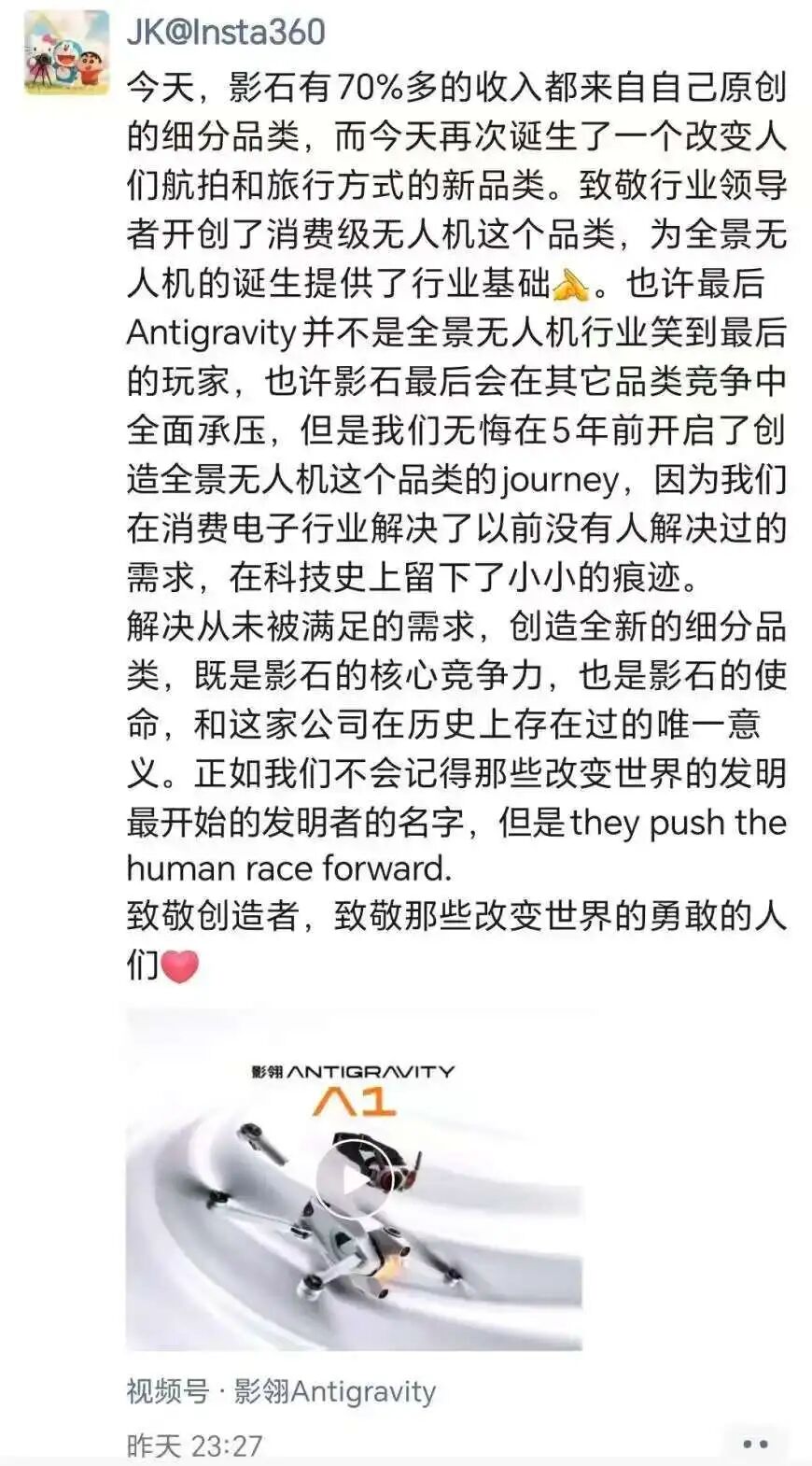
Core Viewpoint - The launch of the Yingshi A1 panoramic drone represents a significant challenge to DJI, which has a revenue ten times greater than Yingshi, indicating a competitive shift in the drone market [1][3][18] Group 1: Product Launch and Market Position - Yingshi officially launched the Yingshi A1 panoramic drone on December 4, 2023, in a unique marketing event using a hot air balloon [1] - The Yingshi A1 is seen as a provocative product aimed at DJI, marking a notable attempt to redefine product categories within DJI's stronghold [3][18] - The competitive landscape is evolving, with Yingshi's new product potentially threatening DJI's market dominance, although the actual impact remains uncertain [3][18] Group 2: Competitive Dynamics - DJI's recent release of the Osmo 360 panoramic camera in July 2023 has intensified competition, as it directly targets Yingshi's market [3][18] - The technology industry often determines success based on product definition rather than just specifications or marketing, highlighting the importance of innovation in shaping consumer perceptions [3][18] - The emergence of new competitors, including smartphone manufacturers, poses additional challenges to DJI, as they seek to leverage high profit margins in the imaging market [18][20] Group 3: Leadership and Control - DJI's founder, Wang Tao, exhibits a strong desire for control, which influences company culture and employee dynamics [6][8][11] - Recent departures of key personnel from DJI to competitors like Yingshi indicate a potential erosion of Wang Tao's control and influence within the industry [13][14] - The competitive landscape is becoming increasingly complex, with both internal and external factors challenging DJI's previously unassailable position [22][23]
败退中国,一代日本神机坠落!
Xin Lang Cai Jing· 2025-12-05 23:24
Core Viewpoint - Sony Mobile has quietly exited the Chinese market, marking the end of its presence without any formal announcement or farewell [5][10][11]. Group 1: Market Exit - Sony's official WeChat account has entered the cancellation process, signaling the end of its mobile business in China [5]. - The number of employees involved in Sony's mobile division has drastically decreased from over 600 to single digits [11]. - Sony's market share in China's smartphone sector fell below 0.1% in 2023, relegating it to the "others" category [11]. Group 2: Historical Context - Sony Ericsson was once a leading player in the mobile phone market, known for popular models like K750i and W800, achieving a peak sales of 103 million units in 2007 [12][14]. - The launch of the iPhone in 2007 marked a turning point, as Sony failed to adapt to the changing landscape of mobile technology [14][16]. - After the rebranding to Sony Mobile in 2012, the company struggled to maintain its market position, with global market share dropping to 2% by 2014 [16]. Group 3: Competitive Landscape - Sony's focus on hardware and industrial design did not resonate with Chinese consumers, who preferred features like localized software and high cost-performance ratios [18]. - The rise of domestic brands such as Huawei, Xiaomi, and OPPO further marginalized Sony in the competitive smartphone market [18]. - Sony's inability to create a robust ecosystem or match the R&D capabilities of competitors contributed to its decline [18]. Group 4: Broader Implications - The exit of Sony Mobile reflects a larger trend of Japanese companies struggling in the Chinese market, contrasting with the rapid growth of Chinese consumer electronics [19][25]. - The decline of Sony Mobile symbolizes the end of an era for niche premium brands in the face of evolving consumer preferences and technological advancements [24].


法媒:中国智能手机持续进军欧洲高端市场
Huan Qiu Wang Zi Xun· 2025-12-05 22:46
Group 1 - Chinese smartphone brands are making significant inroads into the high-end market in France, showcasing their new models in prominent locations to enhance brand visibility [1][2] - A new smartphone model from a Chinese brand is set to be sold in France for €1199, featuring advanced specifications such as a 6.7-inch screen and the latest Qualcomm chip, with aspirations to rank among the top five in the market by 2027 [1] - The average market share of Chinese smartphone manufacturers in Europe is around 20%, with brands like Xiaomi, Realme, OPPO, and Honor competing against Apple and Samsung [2] Group 2 - Chinese manufacturers are focusing on technological innovations that appeal to consumers, such as camera quality, battery life, and fast charging, even at the cost of profit margins [2] - Honor plans to invest $10 billion over the next five years to integrate AI technology into its smartphones, which is seen as a strategy to enhance brand presence rather than solely dominating technology [2] - Brand image remains a challenge for Chinese smartphones, often perceived as low-end; companies are adopting various marketing strategies, including sponsorships and partnerships, to improve brand recognition [3]
突发!又一日本知名品牌败退中国
Xin Lang Cai Jing· 2025-12-05 15:24
Core Viewpoint - Sony Mobile has quietly exited the Chinese market, marking the end of its presence without any formal announcement or farewell [5][12][11]. Group 1: Market Performance - Sony Mobile's market share in China has dwindled to less than 0.1% in 2023, relegating it to the "others" category [12]. - The official WeChat account of Sony Xperia entered the cancellation process in early November, signaling the closure of its operations in China [5][12]. - The last update on Sony's official Weibo account was nine months ago, and the Chinese website has removed the mobile product category entirely [8][12]. Group 2: Historical Context - Sony Ericsson was once a leading player in the mobile phone market, achieving a peak sales figure of 103 million units in 2007, second only to Nokia and Samsung [17]. - The launch of the Xperia series in 2008 marked a shift, but subsequent models struggled due to delayed releases and quality issues [18][21]. - By 2014, Sony's global market share had plummeted to just 2%, unable to compete with emerging brands like Xiaomi and Huawei [23]. Group 3: Competitive Landscape - The rise of domestic brands offering high cost-performance ratios has overshadowed Sony's offerings, which failed to adapt to changing consumer preferences [28]. - Sony's focus on industrial design and high-end features did not resonate with Chinese consumers, who preferred more practical and localized options [27][28]. - The competitive landscape has shifted dramatically, with brands like Apple, Samsung, Huawei, Xiaomi, OPPO, and Vivo dominating the market [28]. Group 4: Broader Implications - The exit of Sony Mobile reflects a broader trend of Japanese companies struggling in the Chinese market, where local brands have gained significant ground [29]. - The decline of Sony Mobile symbolizes the end of an era for niche brands in the face of mass-market competition [35].

智能终端企业利好!莞深共建,国家人工智能应用中试基地发布
Nan Fang Du Shi Bao· 2025-12-05 14:36
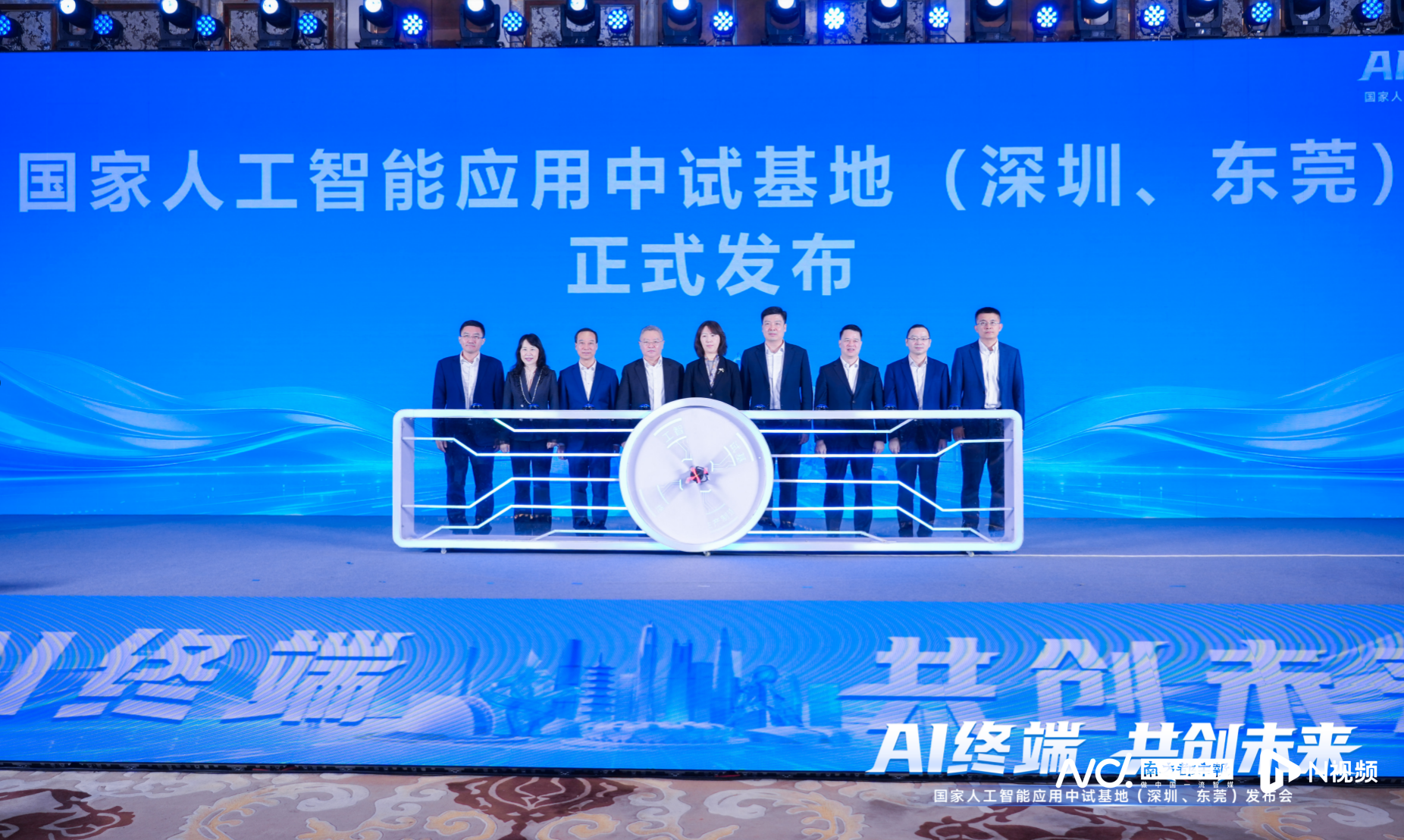
Core Insights - The establishment of the first national AI application pilot base for mobile terminals was announced during the Global Smart Machinery and Electronic Products Expo, aiming to enhance the digital and intelligent upgrade of the AI terminal industry in China [1][3] Group 1: AI Application Pilot Base - The AI application pilot base is constructed under the guidance of the National Development and Reform Commission and the Ministry of Industry and Information Technology, with collaboration between Shenzhen and Dongguan [1][3] - The base focuses on two main missions: "terminal innovation" and "manufacturing efficiency improvement," creating a layered capability foundation across five dimensions: computing power, data, models, AI application development tools, and security [3][6] Group 2: Industry Collaboration and Capabilities - The base has linked over 140 enterprises, serving as an empowerment platform for the smart terminal field in Shenzhen and an AI industry development platform in Dongguan [5] - China Unicom has contributed four key capabilities to the base, including access to vast network data, IoT module connectivity, simplified development through the intelligent platform, and extensive market access via its retail channels [5][6] Group 3: Technological Innovations and Applications - The base showcases innovations in AI-assisted structural design, PCB intelligent quoting, and flexible production, providing a full-service journey from design to mass production [8] - The exhibition highlighted AI applications in both production manufacturing and consumer terminals, demonstrating the transformative impact of AI technology on products like locks, glasses, headphones, PCs, and drones [8]

苹果17系列带动增长,国内双11期间手机销量增长3%
Xin Lang Cai Jing· 2025-12-05 12:56
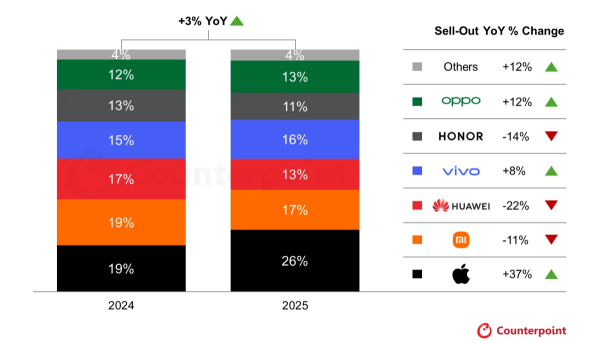
除苹果外,OPPO、vivo分别实现12%、8%的同比增 长,其他品牌阵营也有12%的涨幅,但华为、小米、荣 耀则因产品节奏、市场策略等因素销量下滑。 【天极网手机频道】根据Counterpoint Research的最新数据显示,双11周期(2025年10月20日起三周) 内,苹果在市场中的占比从2024年的19%上升至26%,同比销量增长37%。此次销量增长,iPhone 17系 列是主力,基础版机型在存储、光学系统等配置升级的前提下保持了与去年iPhone 16一样的售价,销 量同比翻倍;Pro及Pro Max机型也实现了增长,叠加双11期间300元的优惠,进一步吸引了消费者。 除苹果外,OPPO、vivo分别实现12%、8%的同比增长,其他品牌阵营也有12%的涨幅,但华为、 小米、荣耀则因产品节奏、市场策略等因素销量下滑。 Counterpoint指出,如果不看苹果的情况下,市场同比下降5%,反映出更为谨慎的消费者环境以及 Q4开局动力不足。今年不少消费者已在年初借助补贴提前购机。此外,各大智能手机品牌的战略重心 转向新推出的高端设备,虽然可能提高了平均售价,但也抑制了整体销量规模。 Counterp ...

豆包不必这么匆匆忙忙
3 6 Ke· 2025-12-05 11:44
Core Insights - The article discusses the recent adjustments made by Doubao Mobile Assistant, which will limit AI capabilities in certain scenarios, particularly in financial applications and competitive gaming, in response to public controversy [1][4] - Doubao Mobile Assistant, developed by ByteDance and ZTE, is integrated into the Nubia M153 smartphone, which has gained significant market attention and is priced at 3499 yuan, with secondary market prices exceeding 10,000 yuan [1][4] - The core innovation of Doubao Mobile Assistant lies in its ability to operate at the system level, allowing AI to perform complex tasks across different applications, which could redefine user interaction with mobile devices [4][5][6] Technical Aspects - Doubao Mobile Assistant is the first AI assistant to be integrated at the operating system level, enabling it to control the system and execute tasks across apps, which is a significant technological advancement [5][6] - The assistant relies heavily on "screen reading" technology, which monitors user interactions and simulates clicks, raising privacy concerns among users [6][8] - The AI's ability to perform tasks like price comparison and automated ordering is contingent on obtaining high-level permissions (INJECT_EVENTS) from the device manufacturer, which is a unique feature of this collaboration with ZTE [12][13] Market Dynamics - Other smartphone manufacturers, such as Huawei and Xiaomi, are also developing their AI assistants, but they do not face the same scrutiny regarding user data privacy as ByteDance does, which is perceived as having a more aggressive data monetization strategy [9][15] - The article highlights the skepticism users have towards Doubao's intentions, viewing it as a potential data harvesting mechanism rather than a genuine service [9][10] Ecosystem Challenges - The article points out that major apps like WeChat and Taobao are unlikely to open their interfaces for Doubao AI, which could hinder its functionality and user experience [11][12] - Following the launch of Doubao AI, several apps implemented security measures that restricted its access, indicating a defensive stance from established platforms against potential encroachment [11][12] Opportunities for Innovation - Doubao's attempt to address user pain points, such as intrusive ads and poor app navigation, presents a potential market opportunity if it can deliver a seamless user experience [16][17] - The introduction of the ANP (Agent Network Protocol) could serve as a breakthrough, allowing for standardized communication between different AI applications, which may facilitate interoperability and reduce privacy concerns [18][20][21] - The article suggests that Doubao should focus on refining its technology and privacy measures while seeking industry-wide collaboration to establish standards for AI integration [22]