上海家化

Search documents
中国化妆品 - 2026 展望:重启更高质量增长;投资回报率改善利好品牌龙头-China Cosmetics_ 2026 Outlook_ Reset for higher-quality growth; improving ROI favors branded leaders
2026-01-20 03:19
Summary of the China Cosmetics 2026 Outlook Industry Overview - The report focuses on the **China Cosmetics** industry, projecting trends and company performances leading into 2026 [3][9]. Key Trends Trend 1: Higher-Quality Channels - **Tmall's Growth**: Anticipated sustained growth in Gross Merchandise Value (GMV) on Tmall, supported by platform strengths such as better product returns and subsidies, increased user loyalty, and stronger brand collaborations [3][4]. - **Government Regulations**: Implementation of stricter tax enforcement limiting promotional costs to 30% of sales for cosmetics, potentially increasing traffic acquisition costs and impacting sales on traffic-dependent platforms like Douyin [3][4]. Trend 2: Product Innovation - **Consumer Preferences**: Shift towards reliability, proven efficacy, and brand trust due to the absence of a dominant ingredient cycle [4][5]. - **Ingredient Trends**: Companies are innovating with new ingredients like PDRN in skincare products, with notable examples including L'Oreal and Proya. Helena Rubinstein has increased the Pro-Xylane content in its flagship product from 30% to 50% [4][5]. Company Insights Mao Geping Cosmetics (MGP) - **Performance**: Upgraded from Neutral to Buy, with expected sales and net income CAGR of 23% and 22% from 2025 to 2027, respectively. MGP is positioned as a local premium player in the Chinese beauty market [9][10]. - **Market Position**: MGP has shown resilience with a 34% sales CAGR from 2021 to 2025 despite market headwinds, supported by a strong omni-channel strategy and consumer engagement [9][10]. Giant Biogene - **Market Leadership**: Recognized as a global leader in recombinant collagen, despite facing a projected sales decline of 21% and 8% in 2H25E and 1H26E, respectively [14][15]. - **Recovery Outlook**: Expected gradual recovery starting in 2H26E, with a projected sales growth of 12% to 17% in 2027, driven by strong product pipelines and market position in skin repair [14][15]. Shanghai Jahwa - **Turnaround Strategy**: Focused on core brands and online channels, achieving significant growth in key cosmetics brands, with Dr. Yu and Herborist showing 40% and 150% growth, respectively [19][20]. - **Future Projections**: Anticipated CAGR of 2% for personal care and cosmetics segments from 2025 to 2027, with cosmetics expected to contribute 35% of total revenue by 2027 [22][19]. Valuation and Risks - **MGP Valuation**: Target price set at HK$105 based on a 28x 2027E P/E, reflecting a premium due to its high growth profile [11][12]. - **Giant Biogene Valuation**: Target price of HK$46 based on a 22x 2027E P/E, with risks including competition and product development challenges [15][16]. - **Jahwa Valuation**: Target price of RMB 28 based on a 30x 2027E P/E, with risks related to overseas business performance and execution in online channels [20][21]. Conclusion - The China cosmetics industry is poised for growth driven by higher-quality channels and product innovation. Companies like MGP, Giant Biogene, and Shanghai Jahwa are positioned to capitalize on these trends, although they face various risks that could impact their performance.

国补高基数下12月社零同增0.9%
HTSC· 2026-01-20 02:02
Investment Rating - The report maintains a "Buy" rating for the consumer discretionary sector, highlighting structural investment opportunities [5][10]. Core Insights - The report indicates that in December, the total retail sales of consumer goods increased by 0.9% year-on-year to 4.5 trillion yuan, with a month-on-month decline of 0.4 percentage points, primarily due to high base effects from durable goods like automobiles and home appliances [7][9]. - The report emphasizes the importance of the new round of trade-in policies for 2026, which focus on core home appliance categories and expand into new categories like smart glasses and products for the elderly, supporting demand in these segments [7]. - The report suggests that consumer sentiment remains strong, particularly in sectors like emotional consumption, technology consumption, and undervalued high-dividend stocks, recommending a focus on domestic brands and global brand expansion [10]. Summary by Sections Retail Sales Performance - In December, retail sales of food and beverages grew by 2.2% and 0.7% respectively, with urban and rural retail sales increasing by 0.7% and 1.7% year-on-year [8]. - Online retail sales of physical goods in December increased by 0.8% year-on-year, with a total annual growth of 5.2%, accounting for 26.1% of total retail sales [8]. Consumer Categories - The report notes a structural differentiation in consumer categories, with home appliances, building materials, and furniture experiencing declines of 18.7%, 11.8%, and 2.2% respectively due to high base effects and trade-in policy impacts [9]. - Conversely, communication equipment saw a significant increase of 20.9% year-on-year, while emotional and self-care products like sports and entertainment goods and cosmetics grew by 9.0% and 8.8% respectively [9]. Investment Recommendations - The report identifies four main investment themes: 1. Rise of domestic brands and global brand expansion, recommending companies like Pop Mart, Shangmei, and Anta Sports [10]. 2. Technology consumption empowered by AI, recommending companies like Midea Group and Haier Smart Home [10]. 3. Emotional consumption, recommending companies like Gu Ming and Yum China [10]. 4. Undervalued high-dividend blue-chip leaders, recommending companies like Li Ning and Shenzhou International [10]. Company-Specific Insights - For Smoore International (6969 HK), the report forecasts a revenue of 10.21 billion yuan for Q1-3 2025, with a year-on-year growth of 21.8%, and maintains a "Buy" rating with a target price of 27.00 HKD [48]. - For Juzhibio (2367 HK), the report highlights the approval of a new collagen product, projecting significant sales potential and maintaining a "Buy" rating with a target price of 85.00 HKD [49]. - For Pop Mart (9992 HK), the report notes a revenue increase of 245-250% in Q3 2025, driven by strong performance in both domestic and international markets, maintaining a "Buy" rating with an updated target price of 410 HKD [51].



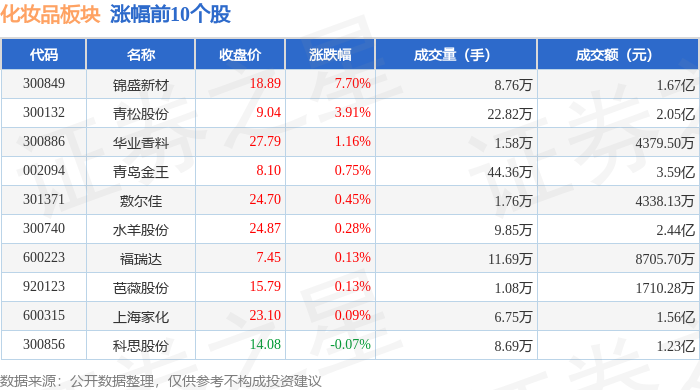
化妆品板块1月19日涨0.09%,锦盛新材领涨,主力资金净流出5088.16万元
Zheng Xing Xing Ye Ri Bao· 2026-01-19 08:58
Group 1 - The cosmetics sector experienced a slight increase of 0.09% on January 19, with Jinsheng New Materials leading the gains [1] - The Shanghai Composite Index closed at 4114.0, up by 0.29%, while the Shenzhen Component Index closed at 14294.05, up by 0.09% [1] - Jinsheng New Materials saw a closing price of 18.89, with a significant increase of 7.70%, and a trading volume of 87,600 shares, amounting to a transaction value of 167 million yuan [1] Group 2 - The cosmetics sector faced a net outflow of 50.88 million yuan from institutional investors, while retail investors saw a net inflow of 42.92 million yuan [2] - The trading data indicates that LaFang Family, with a closing price of 22.58, experienced a decline of 3.30%, with a trading volume of 70,600 shares and a transaction value of 161 million yuan [2] - The individual stock performance shows that Beitaini had a net inflow of 25.48 million yuan from institutional investors, but a net outflow of 39.58 million yuan from retail investors [3]



“达人直播的佣金比例越来越高”
第一财经· 2026-01-17 04:35
Core Viewpoint - The beauty industry in China is facing a flow dilemma, with increasing commission rates for live streaming influencers, which has led to a significant rise in marketing costs and a decline in profit margins for local brands [3][4][8]. Group 1: Industry Challenges - The commission rate for influencers in live streaming is projected to rise from 40% in 2024 to 60% in 2025, indicating a growing cost burden for beauty brands [8]. - Local beauty brands, such as Proya, have heavily relied on traffic-driven strategies, resulting in high sales expenses. In 2024, Proya's sales expenses reached 5.16 billion yuan, accounting for 47.9% of its revenue of 10.77 billion yuan [8][17]. - The marginal returns on channel expenses are diminishing, as Proya's revenue growth rate fell 8 percentage points behind its sales expense growth rate in 2024 [8]. Group 2: Shift in Marketing Strategies - Many companies are transitioning from influencer-driven sales to self-operated content, as the era of influencer marketing is perceived to be declining [9][10]. - The CEO of Youmai Technology noted that the current trend is moving away from reliance on influencers, with brands needing to develop strong in-house content capabilities to survive [12]. - Proya has established its content department in 2025 to adapt to the changing landscape and improve its marketing effectiveness [12]. Group 3: R&D Investment Concerns - The beauty industry in China has a common issue of under-investing in research and development (R&D). Proya's R&D expenditure was only 210 million yuan in 2024, representing just 1.9% of its revenue [16]. - The lack of R&D capabilities among most beauty companies is a significant concern, especially as the market becomes more competitive and consumers demand higher quality products [16][17]. - The disparity in R&D investment between local brands and multinational companies is stark, with companies like L'Oréal investing approximately 10 billion yuan in R&D in 2024, nearly equivalent to Proya's total revenue [17]. Group 4: Market Dynamics and Future Outlook - The beauty market has seen a slowdown in new brand emergence, with the flow of traffic becoming more expensive and less accessible [14][18]. - The competitive landscape is intensifying, with local brands needing to focus on brand building and R&D to avoid being outperformed by more established competitors [16][18]. - The path to becoming a globally recognized brand is challenging for local companies, as they must overcome significant organizational and operational differences compared to multinational firms [17].
美妆企业失去流量红利,它们正在放弃达人直播
Di Yi Cai Jing· 2026-01-16 15:31
Core Insights - The beauty brand Opal's founder, Zhou Yan, highlighted the increasing commission rates for influencers in live streaming, projecting it to reach 60% by 2025, indicating a significant challenge for beauty companies in managing rising costs of traffic acquisition [1][5] - Domestic beauty brands have gained market share over foreign brands, with Proya achieving over 10.7 billion RMB in revenue in 2024, marking it as the first Chinese beauty brand to surpass the 10 billion RMB threshold [4][10] - The live streaming e-commerce model has been crucial for the rise of domestic beauty brands, but the industry is facing regulatory scrutiny and a shift towards self-broadcasting as influencer costs become unsustainable [4][6] Industry Challenges - The beauty industry is experiencing a "traffic anxiety," with companies like Proya heavily reliant on platforms like Douyin and Tmall, where online sales account for over 90% of their revenue [5][10] - Proya's sales expenses reached 5.16 billion RMB in 2024, constituting 47.9% of its revenue, with a notable increase in promotional costs, indicating diminishing returns on marketing investments [5][9] - The trend of relying on influencer marketing is declining, with companies urged to develop their own content capabilities to ensure long-term sustainability [6][7] Market Dynamics - The cost of acquiring traffic has surged, with CPM rates on short video platforms rising from 30-50 RMB in 2020-2021 to 300 RMB by 2025, necessitating a multi-channel approach to reduce costs [8][9] - The beauty market has seen a stagnation in new brand emergence, with existing brands needing to focus on product development and brand positioning to remain competitive [9][10] - The disparity in R&D investment between domestic and foreign brands is significant, with foreign companies like L'Oréal investing around 13 billion euros (approximately 100 billion RMB) in R&D, comparable to Proya's total revenue [10][11] Future Outlook - The current landscape suggests that while domestic brands have capitalized on the e-commerce boom, they face a long road ahead to compete with global giants like L'Oréal and Shiseido, particularly in terms of brand development and international expansion [11][12]


毛戈平林清轩们资本市场交锋,但上市仅是开始
2 1 Shi Ji Jing Ji Bao Dao· 2026-01-16 13:10
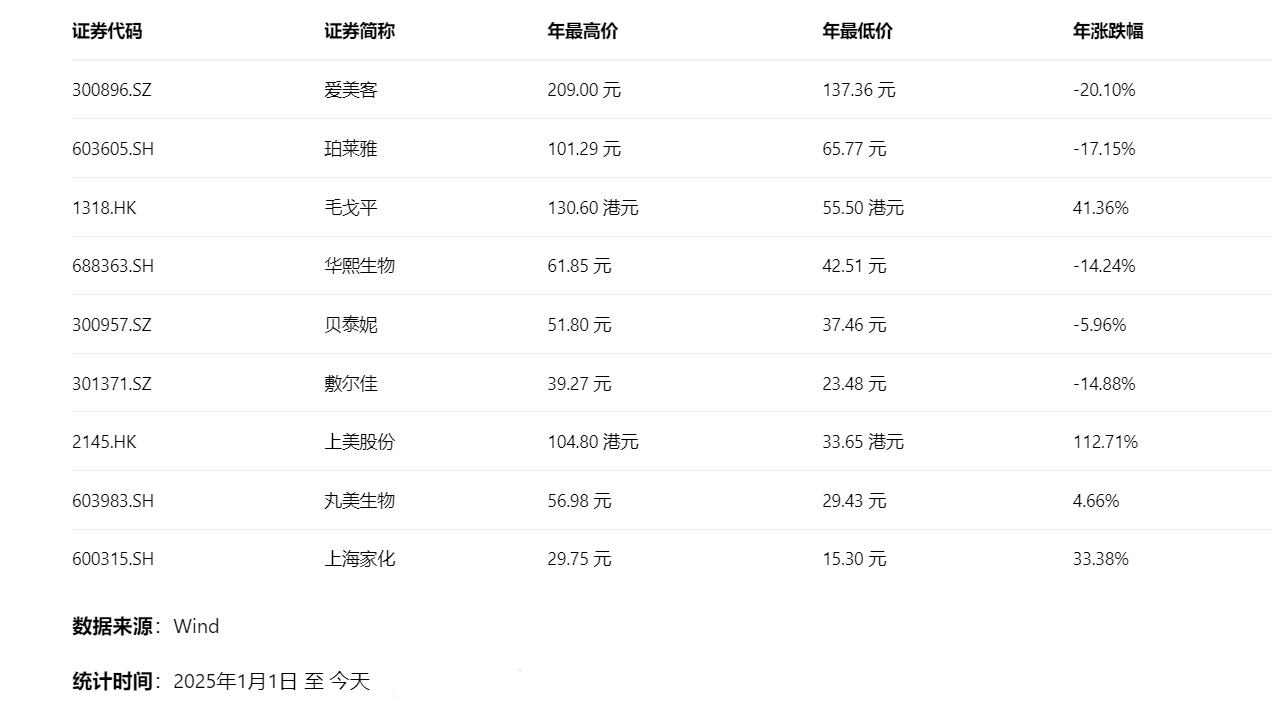
Core Insights - The Chinese beauty industry is experiencing a surge in IPOs, with over 41 beauty-related companies aiming for listings on the Hong Kong Stock Exchange since 2025, indicating a strong desire for growth and market expansion [1] - Lin Qingxuan's listing marks the beginning of its multi-brand and global strategy, while the stock performance of other brands like Maogeping shows significant volatility post-IPO [1][2] Group 1: Market Trends - Lin Qingxuan officially listed on the Hong Kong Stock Exchange on December 30, 2025, with an initial share price of 77.77 HKD, opening at 85 HKD, a 9.3% increase, and achieving a market capitalization of over 11.8 billion HKD [2] - Other companies like Perlay and Marubi are facing challenges, with Perlay's stock experiencing a significant decline and a slowdown in revenue growth, raising concerns about its market position [3][4] Group 2: Internationalization Efforts - Many beauty brands are focusing on internationalization as a core strategy, with companies like Perlay and Natural Hall aiming to enhance their global brand recognition through their IPOs [6][7] - Despite the ambitions, most brands still rely heavily on the domestic market for revenue, with limited success in overseas sales [7][8] Group 3: Investment and Development - Brands are investing in acquisitions and partnerships to strengthen their market presence, such as Perlay's investment in the cosmetic brand Huazhi Xiao and collaborations with private equity firms for global expansion [7][8] - The imbalance between marketing and research and development is a concern, as many brands have low R&D investments compared to their marketing expenditures, which may hinder their competitiveness in international markets [8][9]
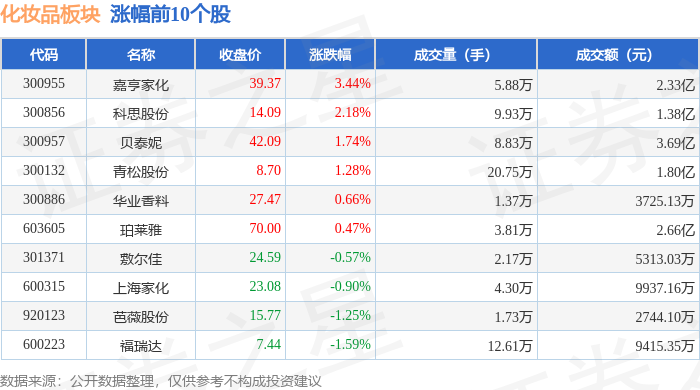
化妆品板块1月16日跌0.63%,锦盛新材领跌,主力资金净流出8996.93万元
Zheng Xing Xing Ye Ri Bao· 2026-01-16 09:03
Group 1 - The cosmetics sector experienced a decline of 0.63% on January 16, with Jinsheng New Materials leading the drop [1] - The Shanghai Composite Index closed at 4101.91, down 0.26%, while the Shenzhen Component Index closed at 14281.08, down 0.18% [1] - Key stocks in the cosmetics sector showed varied performance, with Jiaheng Jiahua rising by 3.44% to a closing price of 39.37, while Jinsheng New Materials fell by 5.09% to 17.54 [2] Group 2 - The net outflow of main funds in the cosmetics sector was 89.97 million yuan, while retail investors saw a net inflow of 82.30 million yuan [2] - The main fund inflow for key stocks included 28.22 million yuan for Proya, while Jinsheng New Materials had a net outflow of 3.97 million yuan [3] - Retail investors showed a significant net inflow in stocks like Jiaheng Jiahua and Beitaini, while Jinsheng New Materials and Shanghai Jahwa experienced outflows [3]
上海家化:化妆品调研要点-三大品牌为 2026 年核心支柱;产品创新势头延续;给予 “买入” 评级
2026-01-16 02:56
Summary of Shanghai Jahwa United (600315.SS) Conference Call Company Overview - **Company**: Shanghai Jahwa United - **Industry**: Cosmetics Key Takeaways 1. Brand Outlook & Key Initiatives for 2026 - Shanghai Jahwa identifies three brands as key growth pillars for skincare by 2026: Herborist, Dr.Yu, and Liushen - Herborist aims to exceed Rmb1 billion in sales, driven by products like "Dabai Mud" (Rmb300 million) and "Herbal Oil" (Rmb100 million) with projected high double-digit growth [1][2] - Dr.Yu also targets over Rmb1 billion in sales, focusing on sensitive skin creams and new product launches, including a large-molecule sunscreen and Artemisia annua essence [2] - Liushen expects significant growth from its Mosquito Repellent Egg, projected to reach Rmb100 million in sales by 2025, with over 50% growth anticipated [2] 2. Channel Strategy - The company expects Douyin's growth to surpass Tmall's in 2026, enhancing channel efficiency through in-house content creation [1][6] - Current sales distribution: Herborist (60% online), Dr.Yu (80% online), and Liushen (80% offline) with plans to reduce offline sales to 70% by 2026 [9] 3. Profitability and ROE Outlook - After a projected loss in 2024 and a bottoming out in 2025, profit growth is expected to outpace revenue growth in 2026, supported by economies of scale and cost optimization [1][6] - The company plans to achieve growth without significant capital expenditure or increased headcount, leveraging existing factory capacity [6] 4. Long-Term Ambition - Shanghai Jahwa aims for Rmb20 billion in revenue, targeting top-three market share in niche categories like mud, oil, and shower gel [1][7] - Specific long-term targets include Liushen at 10% CAGR, Herborist and Dr.Yu each at Rmb3 billion, and Shuangmei at Rmb1 billion [7] 5. Financial Projections - 12-month price target set at Rmb28, representing a 20.2% upside from the current price of Rmb23.29 [10] - Revenue projections for 2026 estimate Rmb7.1 billion, with EBITDA expected to grow significantly [10] 6. Key Risks - Potential impairment losses from overseas business due to shrinking demand and competition [9] - Risks associated with store closures for Herborist if offline sales continue to decline [9] - Lower-than-expected sales growth for Dr.Yu and execution challenges in online channels [9] Additional Insights - The company is strategically focusing on less competitive niche segments to enhance market share and profitability [1] - Management emphasizes the importance of brand and product development in the near term to achieve long-term goals [1][6]
全链”上市!美妆企业争做“第一股
Shen Zhen Shang Bao· 2026-01-16 00:33
Core Viewpoint - The beauty industry is experiencing a surge in IPO activities, with over 41 companies aiming for public listings in 2025, while simultaneously facing challenges with 10 companies exiting the capital market [1][4]. Group 1: IPO Activities - In December, Lin Qingxuan successfully listed on the Hong Kong Stock Exchange, marking it as the first high-end domestic skincare stock in Hong Kong [1]. - Major domestic beauty brands like Naturals, Proya, and Marubi are also pursuing listings, with Proya and Marubi aiming for dual listings in both A-shares and H-shares [1]. - The IPO wave includes a diverse range of companies across the beauty supply chain, including raw material suppliers and packaging companies, with 8 companies like Vicky Technology and Jiakai Biotechnology also in the IPO race [2]. Group 2: Market Challenges - Despite the IPO enthusiasm, 10 beauty-related companies have exited the A-share or New Third Board markets, indicating a stringent selection process by capital markets [4]. - Many companies, including Naturals and Vicky Technology, have faced delays in their IPO processes, often remaining in the application or advisory stages [4]. - The third-quarter report for 2025 shows that only a few beauty companies have maintained revenue growth, with many facing significant operational pressures [5]. Group 3: Industry Dynamics - The beauty industry is characterized by a dual trend of IPO excitement and market exits, highlighting the need for companies to address issues such as heavy reliance on marketing over research and development [6]. - Companies like Naturals have reported high marketing costs, with sales and marketing expenses reaching 57% of revenue, while R&D investment has decreased significantly [6]. - The reliance on flagship products, such as Lin Qingxuan's dependence on its essence oil, poses additional challenges for sustainable growth [7].
“全链”上市!美妆企业争做“第一股”
Shen Zhen Shang Bao· 2026-01-15 17:51
Core Viewpoint - The beauty industry is experiencing a surge in IPO activities, with over 41 beauty-related companies aiming for IPOs in 2025, indicating a robust interest in capital markets within this sector [2][3]. Group 1: IPO Activities - In December 2024, Lin Qingxuan successfully listed on the Hong Kong Stock Exchange, marking it as the first high-end domestic skincare stock in Hong Kong [2]. - Major domestic beauty brands such as Naturals, Proya, and Marubi have initiated their IPO processes, with Proya and Marubi already listed on A-shares, aiming for a dual listing in Hong Kong [2][3]. - The IPO wave includes a diverse range of companies from the beauty supply chain, including raw material suppliers, packaging companies, and brand operators [2][3]. Group 2: Market Dynamics - Since the end of 2024, there has been a notable trend of companies exiting the capital market, with 10 beauty-related companies having withdrawn from A-shares or the New Third Board [5]. - Many companies are facing delays in their IPO processes, with some, like Naturals and Weiqi Technology, still in the application or advisory stages despite having significant revenue [5][6]. - The A-share beauty companies reported a total revenue of 27.707 billion yuan and a net profit of 3.753 billion yuan in the first three quarters of 2025, with Proya leading at 7.098 billion yuan, showing only a slight growth of 1.89% year-on-year [6]. Group 3: Challenges in the Industry - The beauty industry is grappling with challenges such as an overemphasis on marketing at the expense of research and development, as evidenced by Naturals' marketing costs significantly outweighing its R&D investments [7][8]. - Companies like Lin Qingxuan are heavily reliant on a single product category for revenue, which poses risks to their long-term growth and stability [8]. - The current market environment is increasingly selective, favoring companies with solid market foundations, clear brand positioning, and strong technological barriers [5][7].