小米

Search documents
港股收评:恒指跌0.86%止步3连升,科技金融低迷,半导体午后拉升明显
Ge Long Hui· 2026-02-12 08:28
具体盘面上,作为市场风向标的大型科技股全线下跌拖累市场情绪低迷,其中,美团跌4.5%,百度跌 近3%,腾讯、小米、京东、阿里巴巴皆有跌幅;内银股、中资券商股、保险股等大金融多数下跌令大 市进一步承压;临近年关本该到旺季的餐饮股、影视股却跌幅十分明显,其中九毛九跌超5%,权重股 海底捞跌超3%,同样啤酒板块跌幅较大,千亿龙头百威亚太跌超5%。 另一方面,AI应用概念股继续活跃,港股大模型"双雄"(智谱、MINIMAX-WP)暴涨均创新高!智谱涨 价助推算力基建投入,半导体芯片股午后拉升上扬,兆易创新飙涨20%,澜起科技创历史新高,内外需 驱动!港股电力设备股集体拉升,三桶油普涨,中国石油化工创历史新高。(格隆汇) 港股三大指数全天表现低迷,大市止步3连升行情。恒生科技指数一度跌至2%,最终收跌1.65%,恒生 指数跌0.86%险守27000点,国企指数跌1%。连续三个交易日的上涨势头戛然而止。 ...
LV、迪奥、蒂芙尼,被罚超360亿韩元
新华网财经· 2026-02-12 08:06
更多财经资讯等你来看 往期推荐 据财联社,韩国个人信息保护委员会2月12日表示,对路易威登(LV)、迪奥和蒂芙尼三家国际奢侈品牌韩国销售公司共计处以逾360亿韩元(约合人民 币1.7亿元)罚款,原因是顾客信息管理不善导致个人信息泄露。 据悉,LV韩国公司的360万名顾客的个人信息被泄露,迪奥和蒂芙尼韩国公司分别有195万名和4600名顾客信息遭泄。三家公司被处罚款金额分别为213.85 亿、122.396亿和24.192亿韩元。 来源: 第一财经 关注" 新华网财经 "视频号 多家银行,上调存款利率 雷军:春节期间小米汽车因自身故障抛锚,可报销1500元高铁/机票费和 500元住宿费 ...


小米开源具身智能VLA模型Xiaomi-Robotics-0,雷军:已布局多年
Sou Hu Cai Jing· 2026-02-12 07:58
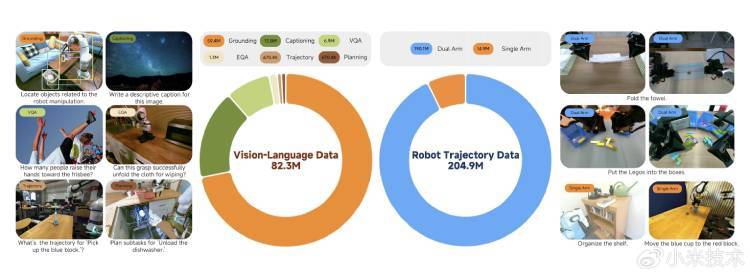
模型采用跨模态预训练的同时,还保留物体检测、视觉问答等能力。为解决传统VLA模型推理延迟导致 的"动作断层",团队采用异步推理模式与Λ-shape Attention Mask等机制,使机器人在真实场景中动作连 贯、反应灵敏,并在积木拆解、叠毛巾等高难度任务中展现手眼协调能力。 【太平洋科技快讯】2月12日消息,雷军今日在社交媒体发文称,小米机器人团队正式开源具身智能VLA 模型Xiaomi-Robotics-0。该模型拥有47亿参数,采用MoT混合架构,以多模态VLM大模型为底座,嵌入多 层DiT,使其兼顾通用理解与精细控制。 据介绍,Xiaomi-Robotics-0在主流的Libero、Calvin和SimplerEnv 测试集,包括所有的Benchmark和30种模 型对比中,均取得当前最优的成绩,且在消费级上实现实时推理。 ...
圆你导演梦,机器人实现“自办晚会”!200多位机器人集结,吸引多个消费大牌植入,又一个万亿元赛道来了?
Mei Ri Jing Ji Xin Wen· 2026-02-12 07:35
这两天Seedance 2.0横空出世,让"人人可做AI导演"照进现实,再次掀起AI(人工智能)热潮。AI卷得火热,机器人"新贵"也不甘落后,直接把战场拉到 了"晚会赛道"。 一边是宇树科技、魔法原子等砸下真金白银,把自家机器人送上总台春晚大舞台;另一边,有玩家另辟蹊径,让200多台机器人集体"打工",办了一台专属 于机器人的"晚会"。 耍醉拳、舞火棍、演小品、变魔术、跳华尔兹2月8日,由智元AGIBOT主办、机器人"主演"的机器人晚会《机器人奇妙夜》(AGIBOT NIGHT 2026)上 线,并在智元AGIBOT及"稚晖君"全网账号、芒果TV、哔哩哔哩、抖音、新华社等平台全球直播。社交平台上,网友们议论纷纷:"机器人跳华尔兹,比人 还曼妙!" 《算法华尔兹》 图片来源:企业供图 作为全球首个大型机器人晚会的负责人,邱恒接受了《每日经济新闻》记者的采访,他分享了这台"机器人晚会"背后的更多细节:250多台机器人,参与的 工程师数量不到机器人数量的十分之一,活动几乎零成本。 对于备受关注的"上春晚",智元公司方面向《每日经济新闻》记者回应:"我们非常希望能登上总台春晚,但公司整体预算有限,优先保障研发费用。" ...


具身智能企业扎堆启动上市,机器人板块走强,大族激光涨超7%,机器人ETF汇添富(159213)反包涨超1%,对比新能源汽车,机器人走到哪了?
Sou Hu Cai Jing· 2026-02-12 06:52
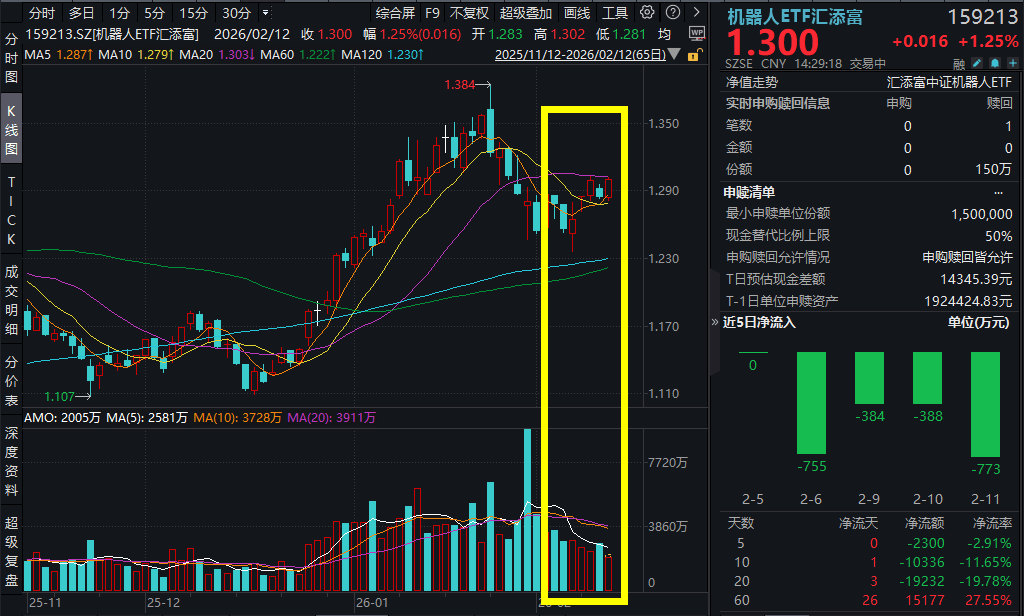
Core Viewpoint - The A-share market is experiencing an upward trend, particularly in the technology sector, with a notable rise in the robotics sector, as evidenced by the performance of the Robotics ETF Huatai-PineBridge (159213) which increased by 1.25% [1] Group 1: Robotics ETF Performance - The Robotics ETF Huatai-PineBridge (159213) has shown a mixed performance among its constituent stocks, with major gains from companies like Dazhu Laser, which rose over 7%, and others like Greentech Harmony and iFlytek, which increased by over 2% [2][3] - The top ten constituent stocks of the Robotics ETF include iFlytek with a 2.21% increase and Dazhu Laser with a 7.33% increase, indicating strong performance in the sector [4] Group 2: Technological Developments - Xiaomi has officially launched and open-sourced its first-generation robotics VLA model, Xiaomi-Robotics-0, which features 4.7 billion parameters and excels in visual language understanding and real-time execution capabilities [5] - Alibaba's DAMO Academy has released the RynnBrain model, which significantly enhances robotic intelligence by introducing spatial reasoning and memory capabilities, outperforming leading models like Google's Gemini Robotics ER 1.5 [5] Group 3: Market Trends and IPO Activity - There is a surge in companies focused on embodied intelligence initiating IPO processes, with three companies already advancing their A-share listings as of February 10 [6] - The robotics industry is compared to the electric vehicle sector, with both undergoing a phase of technological validation and expected to benefit from policy support and market demand [7][8] Group 4: Investment Insights - The investment focus in the humanoid robotics sector is shifting from thematic investments to expectations of mass production, with key milestones anticipated from Tesla's developments in humanoid robots [8] - The industry is expected to see a reduction in the timeline from technology validation to commercial rollout compared to the electric vehicle sector, due to the accumulated resources and capital in the robotics field [8]


华为小米已成新“年货”,后国补时代市场热度几何?
财联社· 2026-02-12 03:25
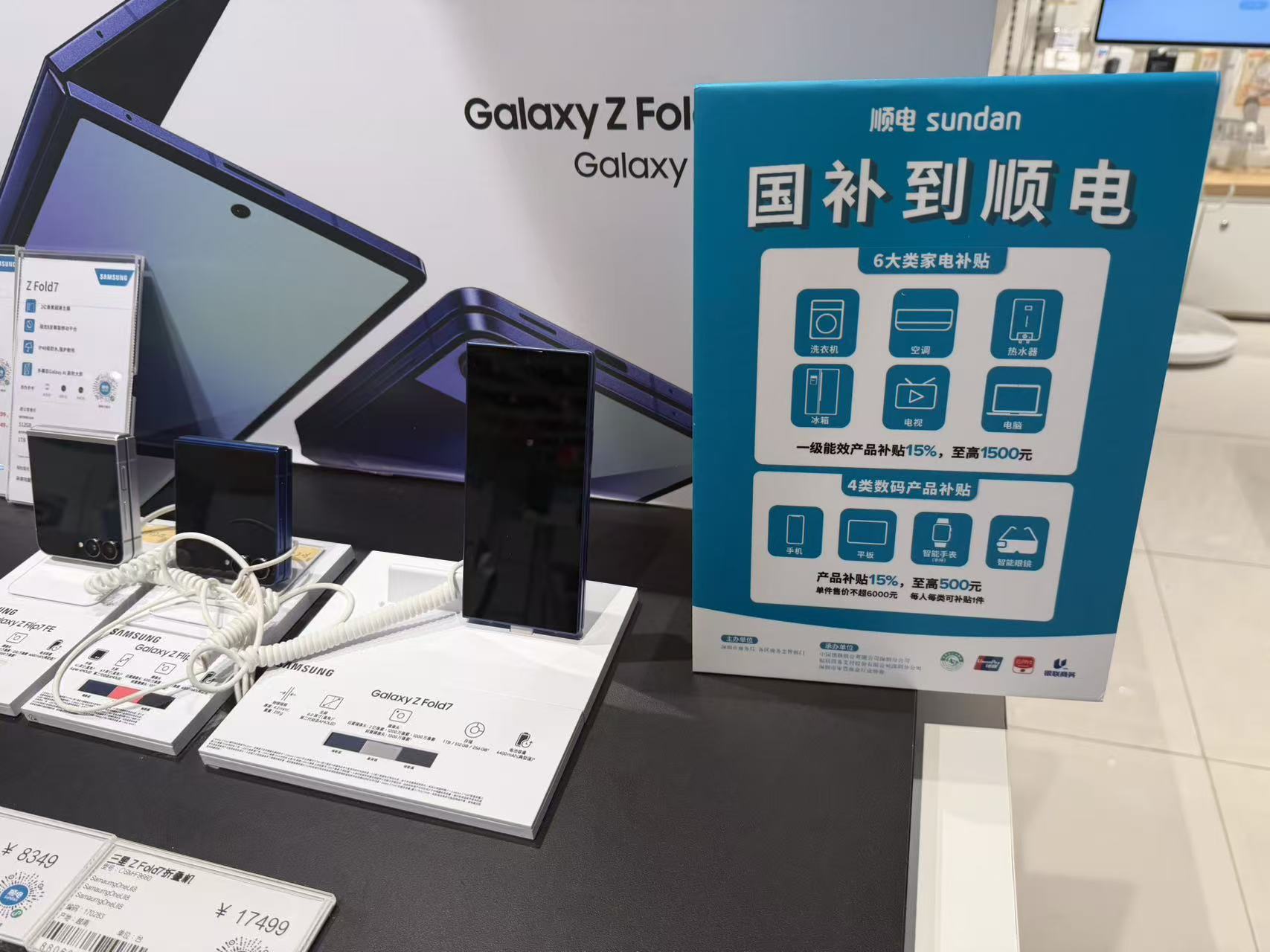
Core Viewpoint - The article discusses the impact of the new round of national subsidies on consumer electronics and home appliances during the upcoming Spring Festival, highlighting increased consumer demand and sales driven by these subsidies [2][15]. Group 1: National Subsidy Implementation - The Ministry of Commerce has allocated the first batch of 62.5 billion yuan in national subsidies, which will be distributed to local commerce departments to ensure consumers can claim these subsidies during the Spring Festival [1]. - Consumers can now apply for subsidies online for digital and smart products, with significant sales increases observed in various electronics stores [2][4]. - The new subsidies are expected to stimulate sales, particularly in the home appliance and 3C product sectors, with sales of air conditioners, refrigerators, washing machines, and televisions seeing over 90% month-on-month growth [2][11]. Group 2: Consumer Trends and Product Preferences - The demand for home appliances and 3C products has surged, with consumers increasingly seeking products that enhance efficiency and create a festive atmosphere [3][10]. - Popular products include smart appliances like automatic washing machines, large-capacity refrigerators, and high-end AI smartphones, reflecting a shift towards premium and technologically advanced items [3][16]. - The sales of energy-efficient appliances have risen significantly, with 92% of sales now comprising first-level energy/water efficiency products, indicating a trend towards greener and smarter home solutions [11][16]. Group 3: Market Dynamics and Manufacturer Strategies - Manufacturers are preparing for the Spring Festival by increasing inventory of energy-efficient products and optimizing supply chains to ensure product availability [12]. - Major brands like Huawei, Xiaomi, and OPPO are offering additional discounts alongside the national subsidies to enhance promotional efforts [12]. - Despite the positive impact of subsidies, rising costs of raw materials are leading to price increases for some products, which may affect overall sales volumes in the consumer electronics sector [13][14]. Group 4: Future Outlook and Challenges - The article notes that while national subsidies have boosted market confidence and consumer demand, the underlying issue of supply-demand mismatch remains a challenge [17]. - The effectiveness of subsidies may diminish as consumers become accustomed to them, necessitating a focus on product innovation and user engagement to sustain growth [17]. - Analysts express caution regarding the marginal benefits of subsidies in 2026, suggesting that manufacturers may prioritize high-margin products over volume sales, potentially impacting overall market performance [17].

一线实探!华为小米已成新“年货” 后国补时代市场热度几何?
Xin Lang Cai Jing· 2026-02-12 01:49
Core Viewpoint - The Chinese government has allocated 62.5 billion yuan in subsidies to stimulate consumer spending during the Spring Festival, with a focus on home appliances and 3C electronic products, leading to increased sales and market activity [1][2][6]. Group 1: Subsidy Implementation and Market Response - The Ministry of Commerce has released the first batch of 62.5 billion yuan in national subsidies, which will be distributed to local commerce departments to ensure consumers can claim these subsidies during the Spring Festival [1]. - Consumers can now apply for subsidies online for digital and smart products, with reports of increased sales activity in stores, particularly for mobile phones and home appliances [2][3]. - The combination of national subsidies, brand discounts, and platform incentives is driving consumer interest and sales, particularly in the home appliance and 3C product sectors [2][6]. Group 2: Sales Performance and Consumer Trends - Sales of major home appliances such as air conditioners, refrigerators, and washing machines have seen a month-on-month increase of over 90%, with high-end smartphones dominating the market [2][7]. - The demand for efficient and technologically advanced home appliances is rising, with products like smart air conditioners and large-screen TVs becoming popular choices for consumers during the festive season [2][7]. - The sales of energy-efficient appliances have surged, with 92% of sales being of first-level energy efficiency products, indicating a shift towards greener and smarter home solutions [7][13]. Group 3: Manufacturer Strategies and Market Dynamics - Manufacturers are preparing for the Spring Festival by increasing inventory of energy-efficient products and optimizing supply chains to ensure availability during peak demand [8][9]. - Major 3C brands are enhancing promotional efforts during the Spring Festival, with additional discounts and marketing campaigns to attract consumers [9]. - Despite the positive impact of subsidies, rising costs of raw materials are leading to price increases for some products, which may affect overall sales volumes in the future [10][11]. Group 4: Future Outlook and Industry Challenges - The effectiveness of subsidies may diminish as consumers become accustomed to them, and the market faces challenges related to supply-demand mismatches [14]. - Industry experts suggest that continuous growth will depend on product innovation and the ability to meet evolving consumer preferences, particularly in the context of AI integration in home appliances [12][14]. - The anticipated decline in smartphone sales in 2026 highlights the need for brands to adapt their strategies in response to changing market conditions and consumer behavior [11].
车企巨头,全球紧急召回!
新华网财经· 2026-02-12 01:14
Core Points - BMW Group announced a global recall of multiple vehicle models due to potential issues with the starter motor's electromagnetic switch, which may lead to starting difficulties and even short-circuit risks [1][3] - The recall affects various models produced between July 2020 and July 2022, including the 2 Series, multiple versions of the 3 Series, 4 Series, 5 Series, 6 Series Gran Turismo, 7 Series, and several X models [3] - This is not the first large-scale recall for BMW due to starter motor issues; a previous recall occurred in the fall of 2025 for similar concerns related to water ingress and corrosion [3]

2026年中国射频前端模块行业政策、产业链图谱、发展现状、竞争格局及未来发展趋势研判:5G与物联网双轮驱动,国产替代与多元应用开启成长空间[图]
Chan Ye Xin Xi Wang· 2026-02-12 01:08
Core Insights - The RF front-end module is a critical subsystem that directly impacts terminal communication quality, driven by the acceleration of global 5G commercialization and the increasing demand for multi-band compatibility in terminals [1][5] - The global market for RF front-end modules is projected to reach $14.881 billion by 2025, with modules accounting for nearly 70% of the market share [5] - China's RF front-end market is expected to grow from 22.9 billion yuan in 2020 to 33.6 billion yuan in 2024, and is projected to exceed 53 billion yuan by 2029, becoming the largest regional market globally [6][7] Industry Overview - RF front-end modules (RFFE) serve as the core components in wireless communication systems, integrating multiple RF devices into a single package to perform essential tasks such as signal processing [2][4] - The classification of RF front-end modules includes power amplifiers, low-noise amplifiers, filters, RF switches, and duplexers, among others, catering to various application scenarios [3] Market Dynamics - The demand for RF front-end devices is increasing due to the rapid commercialization of 5G, with a notable rise in the need for high-end products associated with key technologies like millimeter-wave communication [5] - The global RF front-end market is expected to grow at a compound annual growth rate (CAGR) of approximately 3.4% from 2025 to 2030, reaching $17.5 billion by 2030 [5] China's Market Growth - China's RF front-end market is experiencing rapid growth, driven by the acceleration of 5G commercialization, the rise of domestic smartphone brands, and the expansion of emerging applications like IoT [6][10] - The domestic market's growth is supported by policies promoting the semiconductor industry, which have created a robust support system for the RF front-end module sector [4] Industry Chain Analysis - The RF front-end module industry chain in China includes upstream suppliers of EDA design software and semiconductor materials, with domestic breakthroughs in certain areas [8] - Midstream focuses on module design, manufacturing, and testing, with local companies narrowing the technology gap with international giants [8] Competitive Landscape - The current market landscape shows a coexistence of international dominance and domestic breakthroughs, with major international companies holding about 76% of the global market share [12] - Domestic companies like Weijie Chuangxin, Huizhiwei, and Zhuoshengwei are gradually increasing their market share through continuous R&D and technological advancements [12] Future Development Trends - The RF front-end module industry in China is expected to develop along three main lines: technology, industry, and application, focusing on high integration and energy efficiency [13] - The trend of domestic substitution will deepen, with local companies aiming to penetrate high-end markets and enhance their competitiveness [14] - Application scenarios are expanding from consumer electronics to various fields, including smart vehicles and satellite internet, creating new growth opportunities [16]


早报(02.12)| 又跳票了?苹果突发利空;国家撒钱:超20亿元“新春礼包”即将派送
Ge Long Hui· 2026-02-12 00:13
Group 1 - The U.S. non-farm payrolls increased by 130,000 in January, significantly exceeding market expectations of 70,000, marking the largest increase since April 2025 [25] - The unemployment rate in January fell to 4.3%, the lowest since August 2025, with expectations and previous values both at 4.4% [25] Group 2 - The Chinese CPI for January rose by 0.2% year-on-year, lower than expected, while the core CPI increased by 0.8%, the highest in six months [28] - The PPI decreased by 1.4% year-on-year, slightly better than the expected decline of 1.5% [28] Group 3 - The Indonesian nickel mine is required to cut production by 70% to 12 million tons, impacting global nickel supply [11] - Meta announced an investment of over $10 billion to build a new data center in Lebanon, Indiana, creating over 4,000 construction jobs and 300 operational jobs [12] Group 4 - The OPEC maintained its global oil demand growth forecast for this year and next, despite a decline in overall production due to reduced output from countries like Venezuela and Iran [32] - South Korea's semiconductor exports surged by 137.6% in early February, driven by strong demand [34]