极飞科技

Search documents
极飞科技递表港交所 华泰国际为独家保荐人
Zheng Quan Shi Bao Wang· 2025-09-26 00:30
Core Viewpoint - Jifei Technology has submitted a listing application to the Hong Kong Stock Exchange, with Huatai International as its sole sponsor [1] Company Overview - Jifei Technology is a global leader in agricultural robotics, aiming to enhance agricultural productivity [1] - According to Frost & Sullivan, Jifei ranks second in the global agricultural robotics and agricultural drone industry for the year 2024, with market shares of 10.7% and 17.1% respectively [1] Product Offerings - The company integrates robotics, intelligence, and new energy technologies to develop a range of smart agricultural robots, including agricultural drones, unmanned agricultural vehicles, autonomous farming machinery, and smart farm IoT products [1] - Jifei's agricultural drones are among the first in China to be applied in agricultural production, capable of addressing complex terrains and providing efficient, flexible, and environmentally friendly solutions to industry challenges such as labor shortages and excessive pesticide use [1] - The agricultural unmanned vehicles are designed to meet diverse farming needs in economic crop planting scenarios and complement the agricultural drones [1] Recognition and Achievements - In 2025, Jifei was recognized as a national key "little giant" enterprise and in 2024 as a national manufacturing single champion enterprise [1]
对话极飞科技联合创始人龚槚钦:农业正步入“工业化”,未来将出现全链条整合
Mei Ri Jing Ji Xin Wen· 2025-09-16 00:08
Core Insights - The core viewpoint of the article emphasizes the transformation of agriculture towards industrialization through smart agricultural technologies, with data becoming a key production factor [1][2]. Company Overview - Jifei Technology, founded by Gong Yaqin, started with drone technology and has expanded into the smart agriculture sector, offering products like agricultural drones and unmanned vehicles [1]. - The company is transitioning from equipment sales to becoming a "smart farm service provider" [1]. Industry Trends - Three major trends in smart agriculture are identified: 1. The global proliferation of small intelligent agricultural machinery to meet decentralized and precise farming needs [2]. 2. The gradual industrialization of the agricultural sector, leading to the integration of supply chains from agricultural inputs to products [2]. 3. The increasing importance of data as a production factor due to the rise of AI technology, smart farms, and digital farmers [2]. Global Market Potential - The global smart agriculture market was valued at $14.588 billion in 2021, with hardware systems accounting for 72% of the market. It is projected to reach $34.102 billion by 2026, with a compound annual growth rate (CAGR) of 18.5% from 2021 to 2026 [3]. - Jifei Technology has expanded its products and services to over 70 countries since 2019, addressing similar agricultural challenges worldwide, such as labor shortages and rising costs [3]. Policy Support - The Chinese government has introduced various policies to encourage the development and innovation of the smart agriculture sector, including the "National Smart Agriculture Action Plan (2024-2028)" [4]. - The plan aims for an agricultural production informationization rate of over 30% by the end of 2026 and over 32% by the end of 2028 [5].
机器狗搜救、AI诊室、具身智能……这届外滩大会人工智能含量“爆表”
Xin Hua She· 2025-09-12 08:41
Group 1 - The 2025 Bund Conference in Shanghai showcases advancements in artificial intelligence across various sectors, featuring nearly 200 companies and over 30 new technology products [1] - Fudan University's Fuxi meteorological model provides global weather forecasts for the next 15 days, aiding agricultural production with precise data on temperature, wind speed, and precipitation [2] - AI is expected to significantly reshape society and drive industrial upgrades and economic structural changes, as stated by Zhang Hongjiang, a partner at Source Code Capital [2] Group 2 - AI is enhancing healthcare with applications like Fourier's "Smart Rehabilitation Port," which uses upper limb rehabilitation robots, and Ant Group's AI health application AQ, which mimics a doctor's diagnostic process [2] - Ant Group's CEO, Han Xinyi, emphasizes that AI in healthcare aims to provide personalized and accurate recommendations, although AI will not replace doctors in the foreseeable future [2] - Experts at the conference noted the deep integration of AI across various industries and sectors [2] Group 3 - The integration of AI and robotics is giving rise to the embodied intelligence industry, which involves three stages: perception, planning, and control [4] - Future AI is expected to learn through real-world interactions, evolving from a data-driven learner to an experiential explorer [4] - Challenges in embodied intelligence development include data collection and quality issues, as well as difficulties in aligning models with robotic control modalities [4] Group 4 - The current state of AI is likened to a desert with only a few opportunities, indicating a potential for explosive growth in the field [5] - The conference featured demonstrations of robots engaging in activities like boxing, showcasing the practical applications of AI and robotics [5]

新疆“新农人”打造“超级棉田”
Zhong Guo Xin Wen Wang· 2025-09-11 13:42
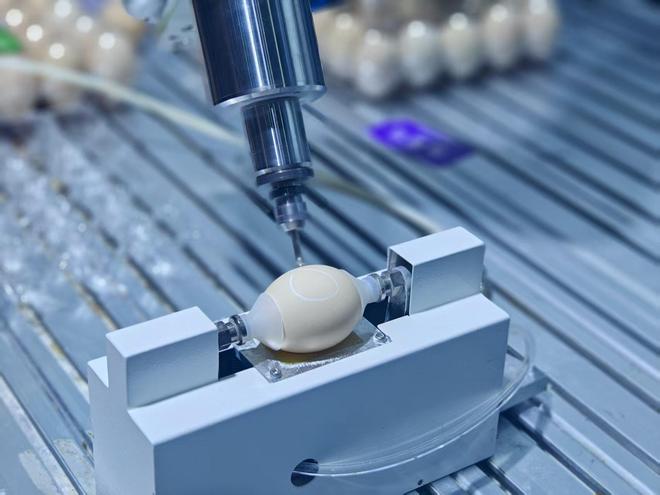
Core Viewpoint - The "Super Cotton Field" project in Xinjiang, managed by two young individuals, has achieved significant breakthroughs in cotton production, with a yield exceeding 520 kg per mu in 2024, showcasing the potential of smart agriculture in transforming traditional farming practices [1][2]. Group 1: Project Overview - The "Super Cotton Field" spans 3,000 mu and has consistently improved in total and per mu yield from 2021 to 2024, reaching top levels in the region [1]. - The project utilizes advanced technologies such as agricultural drones, autonomous farming machinery, and smart irrigation systems, achieving a 75% automation rate in operations [1]. Group 2: Challenges and Innovations - The project faced significant challenges, including a wind disaster in 2021 that halved the harvestable area and a rare snowstorm in May 2023 that required replanting 1,500 mu [2]. - Solutions to these challenges were developed through collaboration with the technology company, leading to improved techniques for pest control, weed management, and overall operational efficiency [2]. Group 3: Impact on Agriculture - The success of the "Super Cotton Field" has led to increased interest from local farmers seeking technological support, with the project now extending to over 1,200 farms across Xinjiang, covering 700,000 mu [2]. - The initiative represents a broader trend of digital empowerment and technological innovation driving the transformation of traditional agriculture in Xinjiang [3].
【砥砺奋进七十载 天山南北谱华章】新疆“新农人”打造“超级棉田”
Zhong Guo Xin Wen Wang· 2025-09-10 08:17
Core Viewpoint - The article highlights the success of the "Super Cotton Field" in Xinjiang, managed by two young individuals, which has achieved significant breakthroughs in cotton production through the integration of advanced agricultural technologies and practices [1][3]. Group 1: Production Achievements - The "Super Cotton Field" spans 3,000 acres and has seen continuous improvements in total and per-acre yield from 2021 to 2024, with a notable per-acre yield of over 520 kilograms in 2024, ranking among the best in the region [1][4]. - The management team, consisting of two individuals, has successfully implemented a 75% automation rate in the cotton farming process, utilizing various advanced technologies [3][4]. Group 2: Technological Integration - The farming process in the "Super Cotton Field" incorporates a range of technologies, including agricultural drones, autonomous farming machinery, smart irrigation systems, and remote sensing drones, all controlled via a mobile application [3][4]. - The project has faced challenges such as severe weather events, including windstorms and unexpected snow, which have tested the resilience and adaptability of the farming techniques employed [3][4]. Group 3: Knowledge Dissemination and Impact - The success of the "Super Cotton Field" has led to increased interest from local farmers seeking technological support, with the project now extending its influence to over 1,200 farms across the region, covering an area of 700,000 acres [6][4]. - The initiative is seen as a microcosm of the broader agricultural transformation in Xinjiang, where digital empowerment and technological innovation are driving significant changes in traditional farming practices [6][4].
“小巨人”百万奖励背后的新质生产力战略
Nan Fang Du Shi Bao· 2025-09-02 23:12
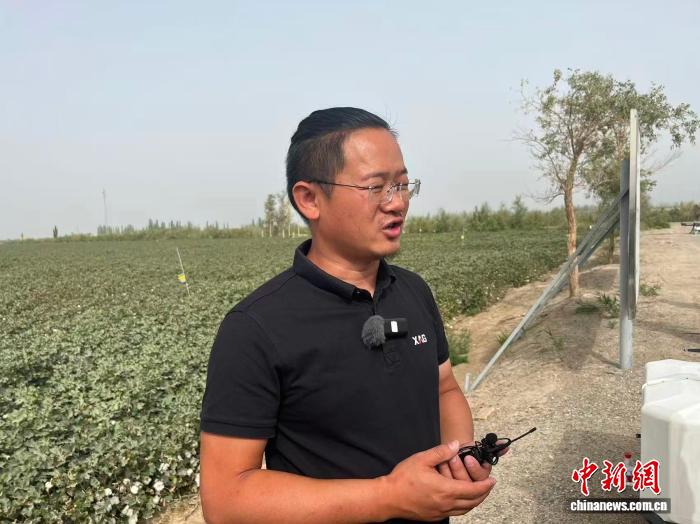
Core Points - Guangzhou has launched an upgraded support policy for specialized, refined, distinctive, and innovative (referred to as "specialized and new") small and medium-sized enterprises (SMEs), with over 1 billion yuan allocated for various enterprise support measures over the next three years [2][3] - The city has cultivated 354 national-level "little giant" enterprises and 6,399 specialized and new SMEs, generating over 800 billion yuan in annual revenue, positioning them as a driving force for new productivity [3][10] - The support measures include 25 initiatives across seven areas, such as enhancing financial support, promoting digital transformation, and optimizing comprehensive services [3][4] Financial Support - New recognized "little giant" enterprises will receive a maximum reward of 1 million yuan, while national-level manufacturing champions can receive up to 1.5 million yuan [3] - Additional financial incentives include up to 500,000 yuan for specialized and new enterprises undergoing technological transformation and 100,000 yuan for "little giant" enterprises expanding their capital [4][8] Land and Cost Reduction - Guangzhou is implementing policies to reduce land acquisition costs for specialized and new SMEs, including long-term leases and flexible land transfer terms [6][7] - The city offers an "interest-free installment" policy for industrial projects, allowing enterprises to pay only 50% of the land transfer fee upfront [7] Innovation and Growth - Specialized and new enterprises in Guangzhou have an average growth rate of 18.1% over the past three years, significantly higher than the industry average [10] - The R&D expenditure of "little giant" enterprises is 8.8%, surpassing the city's average, with an average of 40.93 patents per "little giant" enterprise [11] Industry Focus - Over 60% of "little giant" enterprises are in the industrial foundation sector, with 90% involved in key industries such as intelligent networking, new energy vehicles, biomedicine, artificial intelligence, and semiconductors [12]
广州专精特新企业年营收超八千亿元,扶持政策再加码
Di Yi Cai Jing· 2025-08-29 10:48
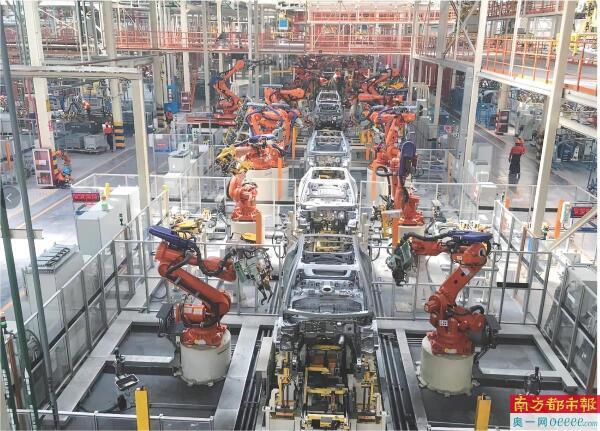
Core Insights - Guangzhou's new policies aim to enhance support for specialized, refined, and innovative small and medium-sized enterprises (SMEs), with 77.8% of new listed companies in 2024 being specialized and innovative [1][4] - The average growth rate of specialized and innovative enterprises in Guangzhou over the past three years is 18.1%, significantly higher than the industry average, indicating their role as a new driving force for economic growth [1][4] Group 1: Policy Measures - The newly released measures include 25 support initiatives across seven areas: strengthening gradient cultivation, stimulating innovation, enhancing financial support, deepening digital transformation, promoting integrated development, optimizing comprehensive services, and reinforcing organizational guarantees [1][3] - A four-tier gradient cultivation system is proposed, targeting different stages of SME development to provide precise incentives [1][3] Group 2: Enterprise Statistics - By the end of 2024, Guangzhou has nurtured 6,399 specialized and innovative SMEs, 354 national-level "little giant" enterprises, and 136 provincial-level manufacturing champions, with total annual revenue exceeding 800 billion yuan [4] - Specialized and innovative enterprises contribute significantly to innovation, with an average of 8.66 patents per enterprise, and "little giant" enterprises averaging 40.93 patents, far exceeding similar-sized companies [4] Group 3: Financial and Talent Support - The city has established a capital market financing platform in collaboration with Shenzhen Stock Exchange, registering over 800 key industry enterprises and projects, and has hosted 28 financing matching events in 2024 [3] - Specialized and innovative "little giant" enterprises receive priority in talent programs, ensuring support in housing, medical care, and education for key personnel [3]
中金 | 低空科技系列农业篇:田野上的无人机
中金点睛· 2025-08-27 00:08
Core Viewpoint - The integration of low-altitude economy and technology-driven agriculture is creating significant investment opportunities in the drone industry, particularly in agricultural modernization and efficiency improvements [2][3]. Demand Side Analysis - Food consumption significantly impacts residents' living standards, with food and beverage spending accounting for 30.4% of per capita consumption in the first half of 2025 [5]. - China, with 18% of the global population, consumes approximately 30% of the world's rice, 51% of pork, 46% of vegetables, 37% of fruits, and 40% of seafood, highlighting the importance of food security [5]. - The limited arable land, which constitutes only 8.2% of the global total, necessitates higher agricultural productivity to ensure food security [5][7]. Supply Side Analysis - The total arable land in China remained stable at 1.93 billion acres in 2023, with a slight increase of 0.58% since 2019 [13]. - The agricultural sector is primarily composed of smallholder farms, facing labor shortages and rising costs, which traditional farming methods cannot sustain [13][14]. - The demand for agricultural drones is driven by the need for efficient, large-scale operations, as the industry shifts towards mechanization and modernization [3][14]. Drone Applications and Benefits - Drones are well-suited for high-load, repetitive agricultural tasks, enhancing productivity, quality, environmental sustainability, and economic efficiency [3][16]. - Drones can increase crop yields through precise spraying and fertilization, reduce pesticide residues, and improve crop quality by minimizing soil compaction [16][17]. - The use of drones can lead to significant cost savings in water and pesticide usage, as demonstrated by a case study showing a 25% increase in yield and substantial reductions in operational costs [17]. Market Potential - The potential demand for agricultural drones in China is estimated to reach 6.24 million units, with a corresponding market value of 224.6 billion yuan, and an annual demand of 1.12 million units valued at 44.9 billion yuan [24]. - The service market for agricultural drones is projected to reach 225.6 billion yuan annually, driven by the increasing acceptance of professional services among small and medium-sized farmers [25][26]. Policy and Technological Drivers - The development of the agricultural drone industry is supported by favorable low-altitude economy policies and technological advancements that reduce costs and improve product performance [20][21]. - The Chinese government has implemented various policies to encourage the cultivation of skilled drone operators and provide subsidies for agricultural drones, enhancing the industry's growth prospects [20][21]. Industry Chain Perspective - The rapid development of agricultural drones is benefiting the entire industry chain, from upstream component suppliers to midstream brand manufacturers and downstream service providers [27][29]. - Upstream suppliers of key components such as sensors and batteries are expected to benefit from increased demand and technological advancements in the drone sector [29][30]. - Leading midstream companies like DJI and XAG dominate the market, with a combined market share of approximately 50% in the global agricultural drone market [31].

国务院划重点:十年时间,全面AI
第一财经· 2025-08-26 15:03
Core Viewpoint - The article emphasizes that 2024 is expected to be the year of AI application, while 2025 will mark the emergence of intelligent agents, transitioning AI from a reactive to a proactive service model. The Chinese government has issued a document outlining a roadmap for integrating AI into six key sectors by 2027, aiming for over 70% application penetration of new intelligent terminals and agents [1][3][7]. Summary by Sections Government Policy and Strategic Goals - The State Council's document outlines a three-phase approach for AI implementation, with a target of over 70% penetration of new intelligent terminals and agents by 2027, and over 90% by 2030. By 2035, China aims to fully transition into a smart economy and society [7][8]. - The document highlights the importance of creating an innovation-driven paradigm and enhancing self-reliance in technology to build a complete innovation ecosystem [7][8]. Key Action Areas - The six key areas for AI integration include: 1. **Scientific Technology**: Accelerating major scientific discoveries and enhancing collaboration between AI and fields like biotechnology and quantum technology [8]. 2. **Industrial Development**: Focusing on AI applications in industrial, agricultural, and service sectors to improve decision-making and production processes [8]. 3. **Consumer Quality Improvement**: Developing intelligent applications to enhance service quality across various sectors, including entertainment and healthcare [8]. 4. **Public Welfare**: Integrating AI into education and healthcare to improve service efficiency and quality [9]. 5. **Governance Capability**: Utilizing AI for better public service delivery and disaster management [9]. 6. **Global Cooperation**: Promoting international collaboration in AI development [9]. Industry Perspectives - Industry leaders, such as Zhou Hongyi from 360 Group, believe that the emergence of domestic large models has positioned China at the forefront of AI innovation, leading to a significant reduction in deployment costs and the onset of large-scale commercial applications [10]. - Yang Yuanqing from Lenovo emphasizes the shift towards human-machine collaboration, where AI serves as a foundational element for enterprise operations, transforming the relationship between humans and machines [11]. - The article also notes advancements in agricultural technology, with AI models aiding in crop breeding and the use of drones to enhance agricultural productivity [13][14]. Safety and Governance - The document stresses the importance of AI safety, mentioning the need for a multi-faceted governance framework to address emerging threats, such as "intelligent hackers" [15]. - Industry leaders advocate for a balanced approach that maximizes AI's potential while ensuring safety and reliability in its applications [15].

国务院划重点:十年时间,全面AI
Di Yi Cai Jing· 2025-08-26 13:43
Core Insights - 2024 is anticipated as the year of AI application implementation, with AI starting to integrate into daily life and smart devices, while 2025 is seen as the year of intelligent agents transitioning from "following commands" to "proactively serving" [1] - The State Council's document outlines a vision for AI integration across six key sectors by 2027, aiming for over 70% application penetration of new intelligent terminals and agents, with a goal of entering a new stage of intelligent economy and society by 2035 [4][5] AI Integration and Development - The State Council's opinion emphasizes the need for AI to cover various industries, including quantum technology, education, and healthcare, with a focus on six key action areas: scientific technology, industrial development, quality consumption, public welfare, governance capabilities, and global cooperation [4][5] - In scientific technology, the document calls for accelerating major scientific discoveries and enhancing collaboration between AI and fields like biomanufacturing and quantum technology [5] Industrial and Agricultural Applications - The integration of AI in industrial, agricultural, and service sectors is highlighted, with a focus on enhancing intelligent perception and decision-making capabilities in industrial systems and promoting AI-driven innovations in agriculture [5][9] - The document mentions the development of intelligent agricultural machinery and drones to address labor shortages and improve agricultural management [9] Consumer Experience Enhancement - The opinion outlines the development of intelligent applications aimed at improving quality of life in areas such as entertainment, e-commerce, and elder care, expanding into new service consumption scenarios [5][6] Government and Global Cooperation - AI's role in government services is emphasized, aiming for precise demand identification and proactive service planning, as well as enhancing public safety and environmental monitoring [6][10] - The document stresses the importance of global cooperation in AI development and governance [6] Industry Perspectives - Industry leaders, such as Zhou Hongyi from 360 Group, highlight the transition to a commercialized AI application era, with domestic models achieving international competitiveness [7] - Lenovo's chairman, Yang Yuanqing, notes the shift towards human-machine collaboration, transforming enterprise operations and emphasizing the need for a holistic approach to intelligent transformation [8] Agricultural Innovations - The launch of the Fengdeng breeding model represents a significant breakthrough in China's seed technology, with over 100 breeding units globally utilizing the model [9] - The integration of AI in meteorological forecasting demonstrates AI's potential in earth sciences and environmental monitoring [9] Safety and Governance - The document addresses the importance of AI safety, with specific measures to enhance security capabilities and establish a multi-faceted governance framework [10][11] - Industry leaders stress the need for responsible AI innovation that prioritizes human safety and ethical considerations [10][11]