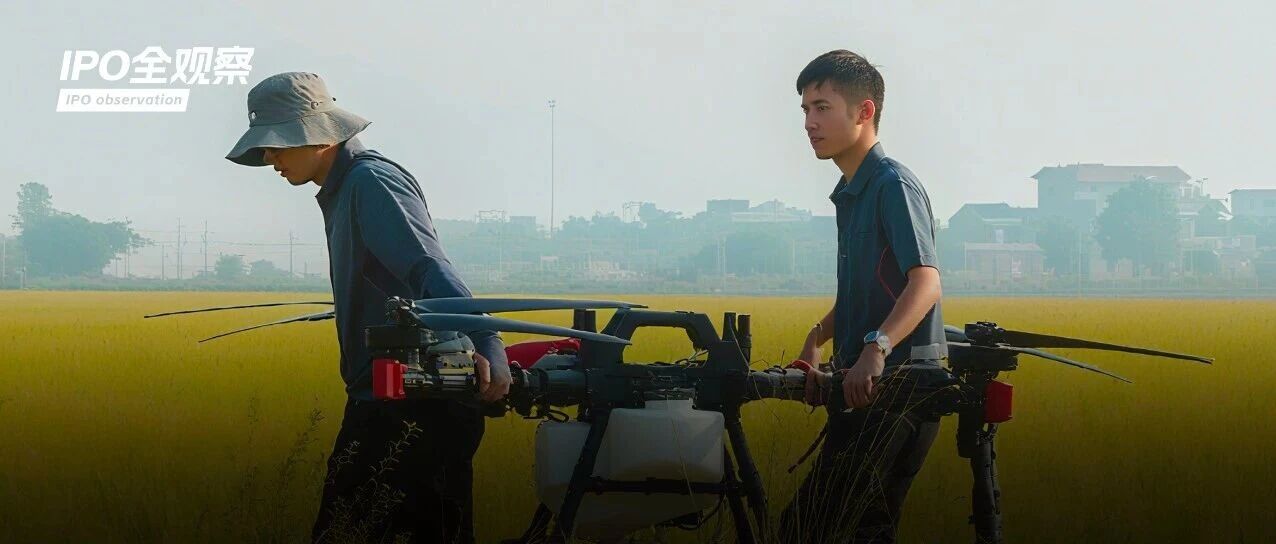
农业无人飞机

Search documents
共赴智能经济新形态:两业协同下的广东高质量发展探索样本
Nan Fang Du Shi Bao· 2026-02-24 05:24
Group 1: Manufacturing and Automation - The manufacturing process is increasingly automated, with companies like Guangdong Yida Textile achieving a 75% automation coverage in shirt production, resulting in a threefold increase in efficiency [3] - Guangdong's home appliance industry is also embracing automation, with major companies implementing automated production lines and AI technology to enhance product quality and functionality [3][4] - The integration of AI and automation in manufacturing is leading to significant improvements in production efficiency and a reduction in labor costs, exemplified by the 80% automation in certain garment production processes [3][4] Group 2: Intelligent Services and Robotics - Companies like Kuku Intelligent Robot Co. are deploying coffee robots that can prepare a cup of coffee in about one minute, showcasing the application of AI in everyday services [10] - The humanoid robots from Shenzhen Yuejiang Technology are gaining traction in global markets, with over 50% of their revenue coming from international sales [8] - The use of AI-powered robots in service industries is breaking traditional boundaries between manufacturing and services, as seen in various applications across Guangdong [10] Group 3: Autonomous Vehicles and Transportation - WeRide's Robotaxi service has commenced 24-hour operations in Guangzhou, highlighting the advancements in autonomous driving technology and its integration into urban transportation [11] - The company has developed a comprehensive autonomous driving platform that significantly reduces data collection costs, showcasing the technological capabilities of Guangdong's automotive sector [12] - The presence of a complete automotive supply chain in Guangdong is facilitating rapid growth and innovation in the autonomous vehicle industry [12] Group 4: Agricultural Technology - Guangzhou XAG Technology is pioneering smart agriculture solutions, utilizing drones and AI for crop management across various countries, enhancing agricultural efficiency [7] - The company has established an IoT platform for agriculture, enabling comprehensive monitoring and management of farming activities [7] - The integration of technology in agriculture is contributing to the overall high-quality development of Guangdong's economy [6]
从关键词读懂2025丨锚定新质生产力 产业发展开启多元“融合”
Xin Hua She· 2025-12-30 02:30
Core Insights - The article emphasizes the acceleration of new productive forces and the deepening of industrial transformation and upgrading, with "integration" becoming a prominent theme in industrial development [1] Group 1: Industrial Growth and Trends - The expected growth rate of industrial added value for the year is 5.9%, while digital industry revenue is projected to increase by 9% [1] - The core scale of the artificial intelligence industry is anticipated to exceed 1 trillion yuan [1] - The integration of traditional and emerging industries is breaking down barriers and fostering a more resilient and vibrant modern industrial system [1] Group 2: Cross-Industry Collaboration - Companies like ByteDance and ZTE are collaborating to launch new products, such as the "Doubao phone," reflecting a trend of cross-industry terminal creation [2] - In agriculture, traditional practices are evolving into smart agriculture through partnerships with emerging industries, enhancing efficiency and reducing costs [2] - In the automotive sector, companies like Dongfeng Motor are collaborating with tech firms like Huawei to innovate in areas such as intelligent driving systems and semiconductor production [3] Group 3: Digital and Real Economy Integration - Ulanqab in Inner Mongolia is becoming a key node in the "East Data West Computing" project, with significant investments in data centers and computing power [5] - National data shows a 10.2% year-on-year increase in enterprise spending on digital technologies, indicating a strong push towards digital integration in traditional industries [6] - The establishment of leading smart factories marks a significant leap towards intelligent manufacturing, with high application rates of AI technologies [6] Group 4: Innovation and Policy Support - The integration of technological and industrial innovation is being prioritized in national policy, with a focus on enhancing productivity and fostering new growth spaces [8] - Collaborative efforts between research institutions and industries are driving a comprehensive "two-innovation integration" practice across various sectors [8] - The rapid development of technology in areas like low-frequency technology for air conditioning and autonomous driving platforms showcases the vibrant innovation landscape in China [9]
从关键词读懂2025丨锚定新质生产力 产业发展开启多元“融合”
Sou Hu Cai Jing· 2025-12-30 02:16
Core Insights - The article emphasizes the acceleration of new productive forces and the deepening of industrial transformation and upgrading, with "integration" becoming a prominent theme in industrial development [1] Group 1: Industrial Growth and Trends - The expected growth rate of industrial added value for the year is 5.9%, while digital industry revenue is projected to increase by 9%, and the scale of the core artificial intelligence industry is anticipated to exceed 1 trillion yuan [1] - The integration of traditional and emerging industries, as well as the precise alignment of digital technology with the real economy, is highlighted as a key driver for breaking down industry barriers and enhancing growth potential [1] Group 2: Cross-Industry Collaboration - The collaboration between ByteDance and ZTE to launch the "Doubao Phone" and the introduction of AI glasses by Li Auto and Alibaba exemplify the trend of cross-industry terminal creation, reflecting the broader wave of industrial integration expected in 2025 [2] - In agriculture, traditional practices are evolving into smart agriculture through partnerships with emerging industries, showcasing the role of technology in enhancing efficiency and reducing costs [2] Group 3: Automotive Innovations - The rapid development of new energy vehicles is creating an inclusive innovation ecosystem, with companies like Dongfeng Motor collaborating with Huawei and others to advance intelligent driving systems and semiconductor production [3] Group 4: Multi-Dimensional Integration - The pearl industry in Zhejiang is merging with digital and green economies, creating a comprehensive ecosystem with a market scale exceeding 50 billion yuan, while Harbin is developing a composite business model around its ice and snow theme [4] - Experts predict that ongoing breakthroughs in artificial intelligence will further expand the scope of industrial integration, fostering new business models and driving economic growth [4] Group 5: Digital and Real Economy Fusion - In Ulanqab, the establishment of data centers and a significant investment in computing power are enhancing the integration of digital and real economies, with a computing power scale reaching 120,000 P [5] - The procurement of digital technology by enterprises has increased by 10.2%, indicating a solid advancement in the fusion of digital and real sectors [6] Group 6: Intelligent Manufacturing - The announcement of the first batch of 15 leading intelligent factories marks a significant leap in the intelligent transformation of manufacturing, with these factories achieving deep integration of new information technologies and advanced manufacturing [6] - The intelligent factory of Zoomlion showcases high efficiency with an 80% application rate of AI technologies, setting new records in the construction machinery sector [6] Group 7: Future Prospects - The Ministry of Industry and Information Technology forecasts a 9% growth in telecommunications and software business revenue, with the artificial intelligence industry expected to exceed 1 trillion yuan [7] - The integration of technology and industry is seen as a key catalyst for driving digital upgrades in the real economy, reshaping industrial development models [7] Group 8: Innovation and Policy Support - The integration of technological and industrial innovation is being actively promoted by government policies, indicating a clear path for practical exploration across various sectors [8] - The collaboration between academia and industry is yielding significant technological advancements, enhancing the competitiveness of various sectors [9]
从关键词读懂2025|锚定新质生产力 产业发展开启多元“融合”
Xin Hua Wang· 2025-12-30 01:53
Core Insights - The overall industrial added value is expected to grow by 5.9% year-on-year, with digital industry revenue increasing by 9%, and the core AI industry exceeding one trillion yuan by 2025, indicating a significant transformation and upgrade in industries driven by new productivity and integration [1][7]. Group 1: Cross-Industry Integration - ByteDance and ZTE launched the "Doubao Phone," while Li Auto introduced its first AI glasses, Livis, and Alibaba released six Quark AI glasses, reflecting a trend of cross-industry terminal creation as part of the broader industrial integration wave expected in 2025 [2]. - Traditional agriculture is evolving into smart agriculture through collaboration with emerging industries like low-altitude economy and new materials, exemplified by the use of agricultural drones for precision farming [2]. - In the automotive sector, companies like Dongfeng Motor are collaborating with Huawei and other firms to develop intelligent driving systems and innovative technologies in solid-state batteries and hydrogen energy [3]. Group 2: Multi-Dimensional Integration Trends - The pearl industry in Zhejiang is integrating with the digital and green economies, creating a comprehensive ecosystem with a market size exceeding 50 billion yuan [4]. - Harbin is developing a composite business model around its ice and snow theme, promoting collaboration across various sectors, including equipment manufacturing and cultural tourism [4]. - Experts predict that ongoing breakthroughs in AI and other technologies will further expand the scope of industrial integration, fostering new business models and driving economic growth [4]. Group 3: Digital and Real Economy Integration - In Ulanqab, the "Grassland Cloud Valley" has become a key node in the "East Data West Computing" project, hosting 67 data centers with a total investment exceeding 260 billion yuan and a computing power scale of 120,000 P [5]. - The latest tax data indicates a 10.2% year-on-year increase in corporate spending on digital technologies, with traditional industries seeing a 7.6% rise in digital equipment purchases [6]. - The first batch of 15 leading smart factories has been announced, marking a significant leap in the intelligent transformation of the manufacturing sector [6]. Group 4: Innovation and Integration - The Chinese Academy of Sciences is working on projects that translate laboratory innovations into industrial applications, emphasizing the importance of integrating technology and industry [8]. - Recent government policies highlight the strategic importance of integrating technological and industrial innovation, guiding practical explorations across various sectors [8]. - The rapid pace of technological innovation in China is enhancing industrial competitiveness and accelerating the commercialization of scientific achievements [9]. Group 5: Future Outlook - By 2025, AI is expected to play a crucial role in transforming industries, acting as a catalyst for the transition from laboratory innovations to market applications [10]. - AI is evolving from a mere tool to a central component of industrial ecosystems, driving structural optimization and guiding future industry development [10].
同大疆开打价格战,农业无人机行业“老二”冲击港股|IPO观察
3 6 Ke· 2025-10-17 01:04
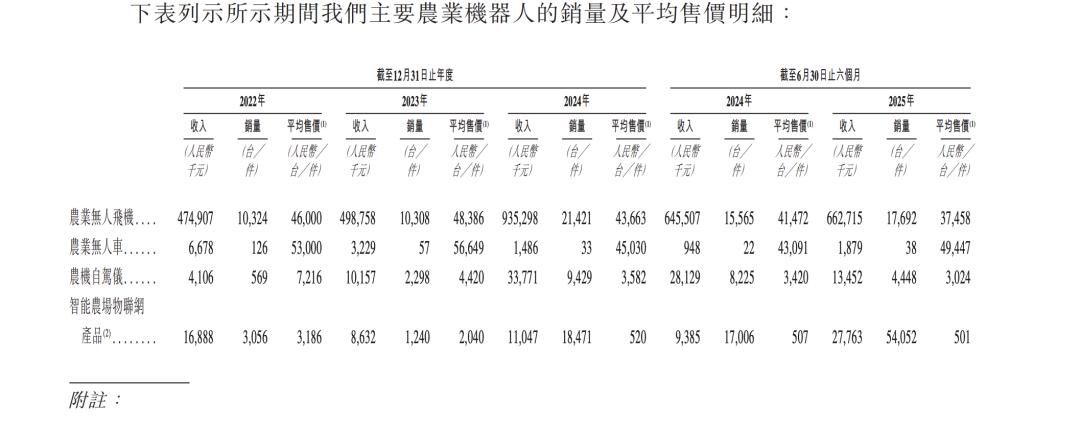
Core Viewpoint - The agricultural drone industry in China is mature, with sales expected to approach 3 billion yuan in 2024, making it the largest single market for agricultural drones globally [1][4]. Group 1: Industry Overview - In 2023, the number of agricultural protection drones in China reached 251,000, covering an area of 2.67 billion acres, marking a nearly 25% increase from the previous year [1]. - The market is primarily dominated by DJI and XAG, with DJI holding an 80.54% share of the agricultural drone subsidies in 2023 [3]. - The agricultural drone sector is characterized by high barriers to entry due to its technology and capital intensity, with a development cycle of 3-5 years from prototype to mass production [15]. Group 2: Company Performance - XAG is nearing an IPO, having submitted its prospectus in September 2023, and has achieved profitability with a net profit of 70.41 million yuan in 2024 [4][10]. - XAG's revenue from agricultural drones has been increasing, with projected revenues of 493 million yuan in 2023 and 935 million yuan in 2024, accounting for 87.8% of total revenue [12]. - The company has completed seven rounds of financing, attracting notable investors such as Baidu Capital and SoftBank [9]. Group 3: Market Dynamics - The competition between DJI and XAG has led to significant advancements in drone capabilities, with payloads increasing from 5 kg in 2017 to over 85 kg by 2024 [15]. - XAG's international revenue has grown from 146 million yuan in 2022 to 371 million yuan in 2024, indicating a focus on expanding into overseas markets [15]. - Despite the competitive landscape, XAG aims to develop localized products for different international markets to tap into their potential [16].

全球农业机器人龙头极飞科技递表港交所,产品+技术+渠道重塑农业管理范式
Ge Long Hui· 2025-10-16 00:59
Core Insights - The article highlights the challenges faced by China's agriculture sector due to urbanization and an aging rural population, leading to a significant decline in rural workforce and an increase in the aging rate [1] - The global trend of labor shortage in agriculture is driving the adoption of agricultural robotics, presenting new growth opportunities for agri-tech companies [1] - The company XAG Technology is positioned as a leader in the agricultural robotics market, particularly in the post-planting management segment, which has low mechanization rates [1][3] Industry Overview - China's rural population is projected to decrease from 510 million in 2020 to 460 million by 2024, with an aging rate rising from 17.7% to 18.7% during the same period [1] - The mechanization rates for tillage, sowing, and harvesting in China are expected to reach 87%, 65%, and 70% respectively by 2024, while the post-planting management mechanization is only at 12% [1] - The OECD forecasts a 2.0% annual decline in agricultural workforce among its member countries from 2020 to 2030, indicating a global trend towards automation in agriculture [1] Company Positioning - XAG Technology has achieved a revenue growth of 73.40% year-on-year, reaching 1.066 billion yuan in 2024, and holds a market share of 10.7% globally and 18.0% in China [3] - The company has developed a comprehensive smart agricultural ecosystem, integrating aerial and ground robotics, IoT systems, and mobile applications for remote management [3][4] - XAG's innovation is supported by a robust supply chain and a strong technical foundation, with over 420 R&D personnel and more than 2,600 patents [4] Market Strategy - XAG has established a "knowledge-intensive network" to penetrate the fragmented farmer market, utilizing a dealer system for sales, training, and maintenance [6] - The company has built a dealer network covering over 900 counties in China, enhancing market reach and service capabilities [6][7] - XAG's international expansion is supported by partnerships with major organizations, allowing for a broad market presence across nearly 60 countries [7] Future Outlook - The upcoming IPO in Hong Kong is expected to provide XAG with new capital and industry momentum, positioning the company for a new growth phase as demand for agricultural automation continues to rise [8]

大疆最强竞争对手拟赴港IPO!
Zheng Quan Shi Bao· 2025-10-12 14:41
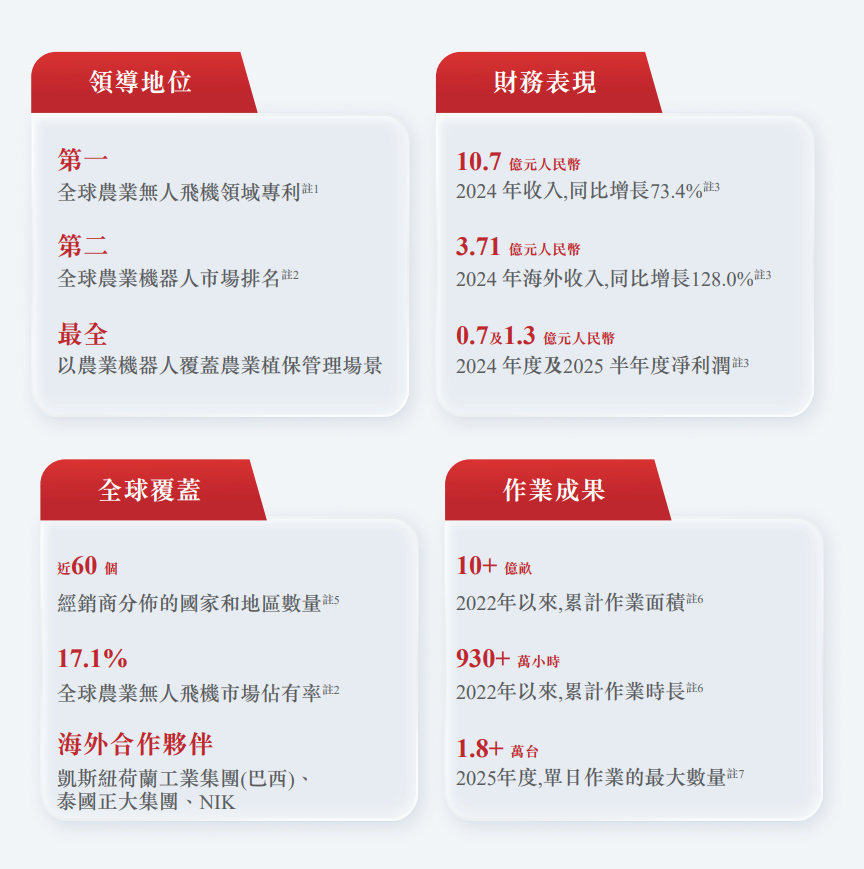
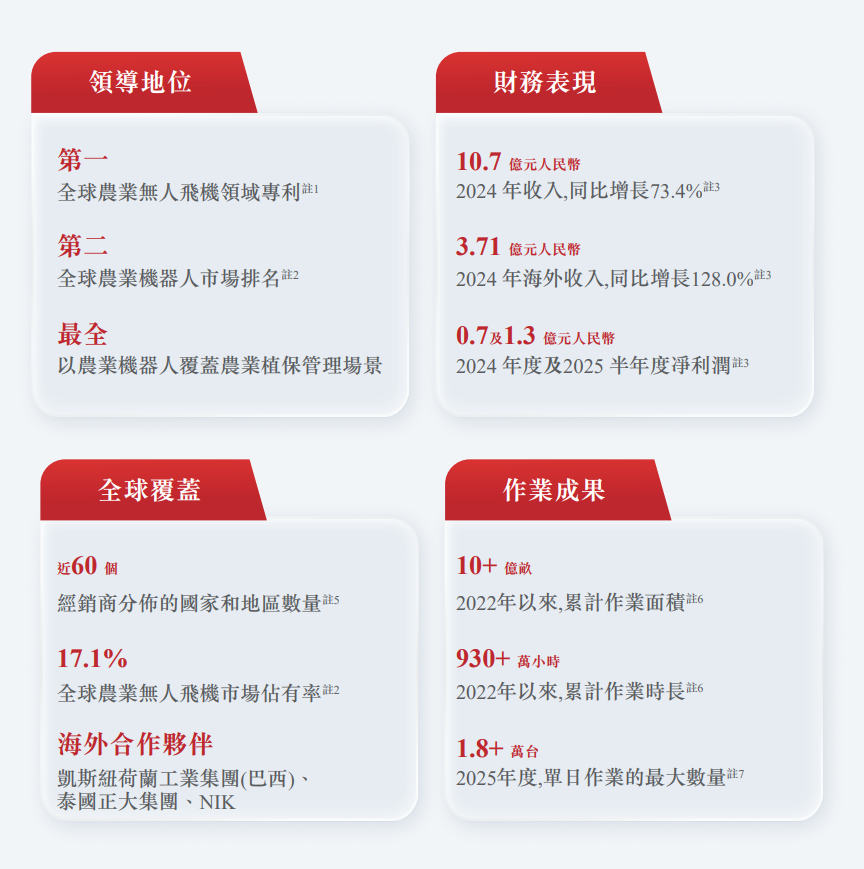
Core Viewpoint - XAG Technology, a leading agricultural robotics company and a strong competitor to DJI, has officially submitted its listing application to the Hong Kong Stock Exchange, aiming to leverage international platforms for funding and global investor outreach [1][3]. Company Overview - XAG Technology was founded by a group of technology enthusiasts and has grown to become one of the top two agricultural robotics and drone companies globally [1]. - The company previously attempted to list on the Shanghai Stock Exchange's Sci-Tech Innovation Board in November 2021 but withdrew its application in May 2022 due to market conditions and strategic planning [1]. Market Position - According to Frost & Sullivan, XAG Technology holds a market share of 10.7% in the global agricultural robotics sector and 17.1% in the agricultural drone industry, ranking second in both categories [3][7]. - In China, XAG Technology's market share is 20.8%, also placing it second in the agricultural drone market [9]. Product Development - XAG Technology has expanded its product matrix to include agricultural unmanned vehicles, autonomous farming devices, and smart IoT solutions for farms, enhancing its capabilities in precision agriculture [6]. - The company has developed mobile applications for remote operation and real-time monitoring of its agricultural robots, creating a comprehensive solution for unmanned agricultural practices [6]. Financial Performance - XAG Technology's revenue increased from RMB 604.54 million in 2022 to RMB 614.50 million in 2023, with a projected growth to RMB 1.07 billion in 2024, marking a 73.4% increase [12]. - The company recorded a net loss of RMB 254.19 million in 2022, which narrowed to RMB 132.67 million in 2023, and is expected to achieve a net profit of RMB 70.41 million in 2024 [13]. Leadership and Shareholding - The founder and CEO, Peng Bin, has a significant influence on the company, holding 29.01% of the voting rights directly and an additional 13.95% through a controlled entity [16][18]. - Notable investors include SoftBank Vision Fund, which holds 12.86%, and other prominent firms such as Innovation Works and Baidu-related Baishan Investment [17]. Future Plans - The funds raised from the IPO will primarily be allocated to the research and development of agricultural robotics and the expansion of the global sales and service network [18].
大疆最强竞争对手拟赴港IPO!多家明星机构隐身其后
Zheng Quan Shi Bao Wang· 2025-10-12 11:05
Core Viewpoint - XAG Technology, a leading agricultural robotics company and a strong competitor to DJI, has officially submitted its listing application to the Hong Kong Stock Exchange, aiming to leverage international platforms for funding and global investor outreach [1][2]. Company Overview - XAG Technology was founded by a group of technology enthusiasts and has grown to become one of the top two companies globally in the agricultural robotics and drone sector [1]. - The company aims to enhance agricultural productivity through advanced robotics, smart technology, and renewable energy solutions, addressing the significant challenge of "unmanned farming" [2][5]. Market Position - According to Frost & Sullivan, XAG Technology holds a market share of 10.7% in the global agricultural robotics sector and 17.1% in the agricultural drone market, ranking second in both categories [2][6]. - In China, XAG Technology's market share in the agricultural drone industry is 20.8%, also placing it second, but significantly behind DJI, which has a market share over three times larger [10]. Financial Performance - XAG Technology's revenue increased from RMB 604.54 million in 2022 to RMB 614.50 million in 2023, and is projected to rise by 73.4% to RMB 1.065 billion in 2024 [11]. - The company recorded a net loss of RMB 254.19 million in 2022, which narrowed to RMB 132.67 million in 2023, and is expected to achieve a net profit of RMB 70.41 million in 2024 [12]. Product Development - Over the past 18 years, XAG Technology has expanded its product offerings to include agricultural drones, autonomous vehicles, and smart farm IoT products, creating a comprehensive agricultural robotics product matrix [5]. - The company has developed mobile applications for remote operation and real-time monitoring of its agricultural robots, enhancing user experience and operational efficiency [5]. Leadership and Shareholding - The founder and CEO, Peng Bin, has a background in technology and has been instrumental in the company's growth and innovation in the agricultural sector [13][14]. - XAG Technology has attracted significant investment from notable shareholders, including SoftBank Vision Fund, which holds 12.86% of the company [15]. Future Plans - The funds raised from the IPO will primarily be allocated to the research and development of agricultural robotics products and the expansion of the global sales and service network [16].
80后带队,“大疆对手”转战港股IPO
Sou Hu Cai Jing· 2025-10-09 09:45
Core Insights - DJI's main competitor, XAG Technology, has re-entered the capital market by filing for an IPO on the Hong Kong Stock Exchange after withdrawing its previous application in May 2022 [2][5] - XAG Technology has established itself in the agricultural drone sector, achieving significant market shares of 10.7% and 17.1% in the global agricultural robot and agricultural drone markets, respectively, ranking second behind DJI [2][12] Company Overview - Founded by a group of enthusiasts, XAG Technology has focused on agricultural applications of drones, developing advanced agricultural robots that outperform traditional farming methods [2][12] - The company has received backing from prominent investors such as SoftBank, Baidu, Hillhouse Capital, and Innovation Works [3] Financial Performance - XAG Technology has shown improvement in its financials, achieving profitability in 2024 after previous losses, with revenues of RMB 10.66 billion projected for that year [4][8] - The company reported revenues of RMB 6.05 billion in 2022, RMB 6.14 billion in 2023, and RMB 7.45 billion in the first half of 2025, with a notable increase in gross margin from 17.9% in 2022 to 34.3% in 2025 [8][9] Market Position - Despite its growth, XAG Technology faces challenges in maintaining momentum, with a 2.08% revenue growth in the first half of 2025 and a significant reduction in contract liabilities [10] - The company has a strong presence in the agricultural drone market, with its primary revenue source being agricultural drones, which accounted for 89% of total revenue in the first half of 2025 [13] Competitive Landscape - XAG Technology remains a significant player in the agricultural drone market, but it continues to trail behind DJI, which holds a dominant market share of 59% globally [12][16] - The company aims to cover all agricultural scenarios, including irrigation and pesticide spraying, and claims to have the largest number of agricultural drone patents globally [16] Future Prospects - XAG Technology plans to use the funds raised from its IPO for product development, sales network expansion, and the construction of a new headquarters [16] - The company has a goal to increase its research and development investment in the coming years, having already spent RMB 5.92 billion on R&D, which represents 19.5% of its total revenue [16]
福建80后博士,靠“干农活”年入10亿,要IPO了
创业邦· 2025-10-06 03:39
Core Viewpoint - Guangzhou XAG Technology Co., Ltd. (XAG) has officially submitted its IPO application to the Hong Kong Stock Exchange, marking its second attempt to enter the capital market after withdrawing its previous application in May 2022 due to strategic adjustments [2][11]. Company Overview - XAG focuses on developing agricultural robots, with a product line that includes agricultural drones, unmanned vehicles, autonomous driving devices for farming machinery, and IoT smart farm systems [2][12]. - The company has received multiple rounds of financing from prominent investors, including Hillhouse Capital, Baidu Capital, SoftBank Vision Fund, and others [2][11]. Market Position - According to Frost & Sullivan, by 2024, XAG is expected to hold a 10.7% market share in the global agricultural robot market and a 17.1% share in the agricultural drone sector, ranking second globally in both categories [2][12]. - The Chinese agricultural drone market has grown significantly, from 800 million yuan in 2019 to an estimated 2.9 billion yuan by 2024, with projections to reach 10.9 billion yuan by 2029 at a compound annual growth rate of approximately 30% [19]. Financial Performance - XAG achieved profitability in 2024 with a net profit of 70.4 million yuan, and in the first half of 2025, the net profit further increased to 130 million yuan, representing a year-on-year growth of 49.1% [2][17]. - The company's revenue from 2022 to 2025 is projected to grow from 605 million yuan to 1.066 billion yuan, with a gross profit margin increasing from 17.9% to 34.3% during the same period [17][18]. Product Lines and Innovations - XAG's revenue primarily comes from four product lines: agricultural drones, unmanned vehicles, autonomous driving devices, and IoT smart farm products [12][14]. - The agricultural drone, as the core product, integrates advanced technologies such as autonomous driving, AI, and IoT, significantly improving efficiency in agricultural operations [12][15]. Business Model Evolution - Initially focused on consumer drones, XAG pivoted to agricultural applications after identifying market needs during field trials in Xinjiang [6][7]. - The company transitioned from a direct service model to partnering with local distributors, allowing for a more scalable and efficient service delivery [10][18]. Future Prospects - XAG plans to use the funds raised from the IPO for the development of next-generation agricultural robots, expansion of global sales channels, and establishment of new headquarters and R&D centers [18][19]. - The company envisions a future where traditional farming methods are replaced by automated solutions, aiming to transform the agricultural landscape and enhance food security [21].