DeepMind

Search documents
DeepMind CEO is talking to Google CEO 'every day' as lab ramps up competition with OpenAI
CNBC· 2026-01-16 06:00
Core Insights - Alphabet's stock performance improved significantly in 2025, marking its best year since 2009, as the company regained its competitive edge in AI, particularly through its DeepMind division [3][10]. Company Strategy and Developments - DeepMind, acquired by Google in 2014, is described as the "engine room" of Google's AI efforts, with CEO Demis Hassabis emphasizing the close collaboration with Google CEO Sundar Pichai to innovate rapidly in a highly competitive environment [4][11]. - In 2023, Google merged its Google Brain research division with DeepMind, which laid the groundwork for the success of its AI assistant, Gemini [7]. - The launch of Gemini 2.5 in March 2025 and Gemini 3 in November 2025 received positive feedback for their speed and performance, indicating a successful turnaround in Google's AI product offerings [10][11]. Competitive Landscape - The AI sector is characterized by intense competition, with companies like OpenAI, Amazon, and others vying for market share. Hassabis noted that many industry veterans consider this the most competitive environment they have ever witnessed [5][6]. - Google faced challenges in keeping pace with OpenAI after the launch of ChatGPT in November 2022, which highlighted initial product missteps in its AI tools [8][9]. Industry Trends and Perspectives - Hassabis expressed that while some parts of the AI industry may be experiencing a bubble, AI is poised to be the most transformative technology ever invented, akin to the internet during the dot-com bubble [12][13]. - Concerns were raised about unsustainable valuations in private markets, with significant seed funding rounds occurring despite a lack of developed products [15]. - The company aims to position itself advantageously regardless of whether the AI market continues to grow or faces a downturn, leveraging its established business and AI integration [16].



谷歌DeepMind CEO:中美AI模型差距小,或许只有“几个月”
Feng Huang Wang· 2026-01-16 01:17
Group 1 - DeepMind CEO Demis Hassabis stated that China's AI models may be only "months" behind those of the US and the West, contradicting the belief that China is far behind in AI technology [1] - Hassabis noted that the gap between Chinese AI models and Western technology capabilities is smaller than previously anticipated, suggesting that the difference may be just a few months [1] - The initial impact of DeepSeek's large model, which gained attention in Silicon Valley for its strong performance and lower costs despite using less advanced chip technology, has diminished, but other Chinese tech giants like Alibaba and startups such as Moonlight and Zhipu AI have launched powerful models [1] Group 2 - Nvidia CEO Jensen Huang acknowledged that the US does not have a clear leading advantage in the AI race, indicating that China is nearly on par with the US in AI models, while the US leads in chip technology [2]

China just 'months' behind U.S. AI models, Google DeepMind CEO says
CNBC· 2026-01-15 23:30
Core Insights - China's artificial intelligence (AI) models are reportedly only "a matter of months" behind U.S. and Western capabilities, according to Demis Hassabis, CEO of Google DeepMind, challenging previous assumptions of a significant gap [3][4] - Chinese AI lab DeepSeek has demonstrated strong performance with models built on less advanced chips, indicating that Chinese companies are making notable advancements in AI technology [5] - Despite progress, there are concerns regarding China's ability to innovate beyond existing technologies, with Hassabis emphasizing the difficulty of achieving frontier breakthroughs [6][8] AI Development in China - Chinese tech giants like Alibaba and startups such as Moonshot AI and Zhipu have released competitive AI models, contributing to the perception of China's rapid advancement in the field [5] - Nvidia CEO Jensen Huang acknowledged that while the U.S. leads in chip technology, China is making significant strides in AI models and infrastructure [9] Challenges Facing Chinese AI Firms - Access to critical technology, particularly advanced semiconductors from Nvidia, poses a significant challenge for Chinese technology firms, which could widen the gap between U.S. and Chinese AI capabilities over time [10][11] - Analysts predict that the lack of access to cutting-edge Nvidia chips may lead to a divergence in AI model capabilities, with U.S. infrastructure continuing to iterate and improve [12] Perspectives on Innovation - Alibaba's Qwen team technical lead, Lin Junyang, expressed skepticism about Chinese firms surpassing U.S. tech giants in AI within the next three to five years, citing a substantial difference in computing infrastructure [15] - Hassabis attributes the lack of groundbreaking innovations in China to a "mentality" issue rather than solely technological restrictions, comparing the need for exploratory innovation to the historical achievements of Bell Labs [16][17]


英国伦敦大学学院副校长Geraint Rees院士加入欧洲经济研究院
Sou Hu Cai Jing· 2026-01-14 15:03
欢迎英国医学科学院院士、英国皇家医师学会会士、英国伦敦大学学院副校长、伦敦大学学院认知神经 学教授、伦敦大学学院生命科学学院前院长、认知神经科学研究所前所长、谷歌DeepMind公司前高级 科学顾问Geraint Rees院士加入欧洲经济研究院! 项目和荣誉 Geraint Rees院士的研究兴趣是人类认知的本质和神经基础,特别是潜在的意识和相关现象;以及将高维 多变量推理("机器学习"和类似工具)应用于医疗保健提供、创新理解和其他领域的重大挑战。在伦敦 大学学院担任高级职务时,他与同事合作,作为亨廷顿舞蹈症治疗干预神经基础的联合研究员(与 Sarah Tabrizi 教授担任 PI),以及作为神经科学和医学高维推理的联合研究员(与 Parashkev Nachev 教 授)。 EUROPEAN ECONOMIC RESEARCH INSTITUTE 职业生涯 Geraint Rees 是伦敦大学学院的副教务长(研究、创新和全球参与),Geraint 负责为伦敦大学学院世界 领先的研究、知识交流和全球参与以及支持它的职能、服务和资源提供愿景和学术领导。 2014 年至 2022 年,Geraint Rees院 ...

Mint Explainer | India invited to Pax Silica: What it could mean for AI, chip supply chains
MINT· 2026-01-13 10:32
Core Insights - The US is inviting India to join Pax Silica, a strategic initiative aimed at securing the global silicon supply chain in the AI era [1][2] Group 1: Overview of Pax Silica - Pax Silica is designed to identify trusted partner nations to enhance AI efforts and create a robust global supply chain for silicon and related materials [3] - The initiative includes countries such as the US, Japan, South Korea, Singapore, the Netherlands, Israel, UAE, the UK, and Australia, with India potentially joining [3] - Each participating nation is expected to contribute unique strengths in areas like critical minerals, advanced manufacturing, semiconductor capability, and AI innovation [3] Group 2: Importance for India - India's participation in Pax Silica would signify its role in shaping future supply chains for AI and advanced computing [7] - The Indian government emphasizes the strategic importance of being involved in critical mineral security discussions [8] - India's existing initiatives in AI and semiconductors align with Pax Silica's objectives, including the India AI Mission with a ₹10,372 crore budget and the India Semiconductor Mission with a ₹76,000 crore allocation [9] Group 3: India's Technological Landscape - India hosts over 2,975 global capability centers (GCCs), employing nearly 1.9 million professionals, highlighting its significant role in the global tech ecosystem [10][11] - Major multinational investments, such as Microsoft's $17.5 billion investment in AI and cloud infrastructure in India, further strengthen its positioning [11] Group 4: Geopolitical Context - Pax Silica reflects a strategic shift where economic tools are increasingly used for geopolitical ends, particularly in the context of reducing dependence on China [12][13] - China's dominance in critical supply chains, especially in rare earth materials, has prompted India to support domestic manufacturing initiatives [14] - India's potential contributions to Pax Silica include its large market for new technology and its integration into the global tech ecosystem [15]


2025 AI 年度复盘:读完200篇论文,看DeepMind、Meta、DeepSeek ,中美巨头都在描述哪种AGI叙事
3 6 Ke· 2026-01-12 08:44
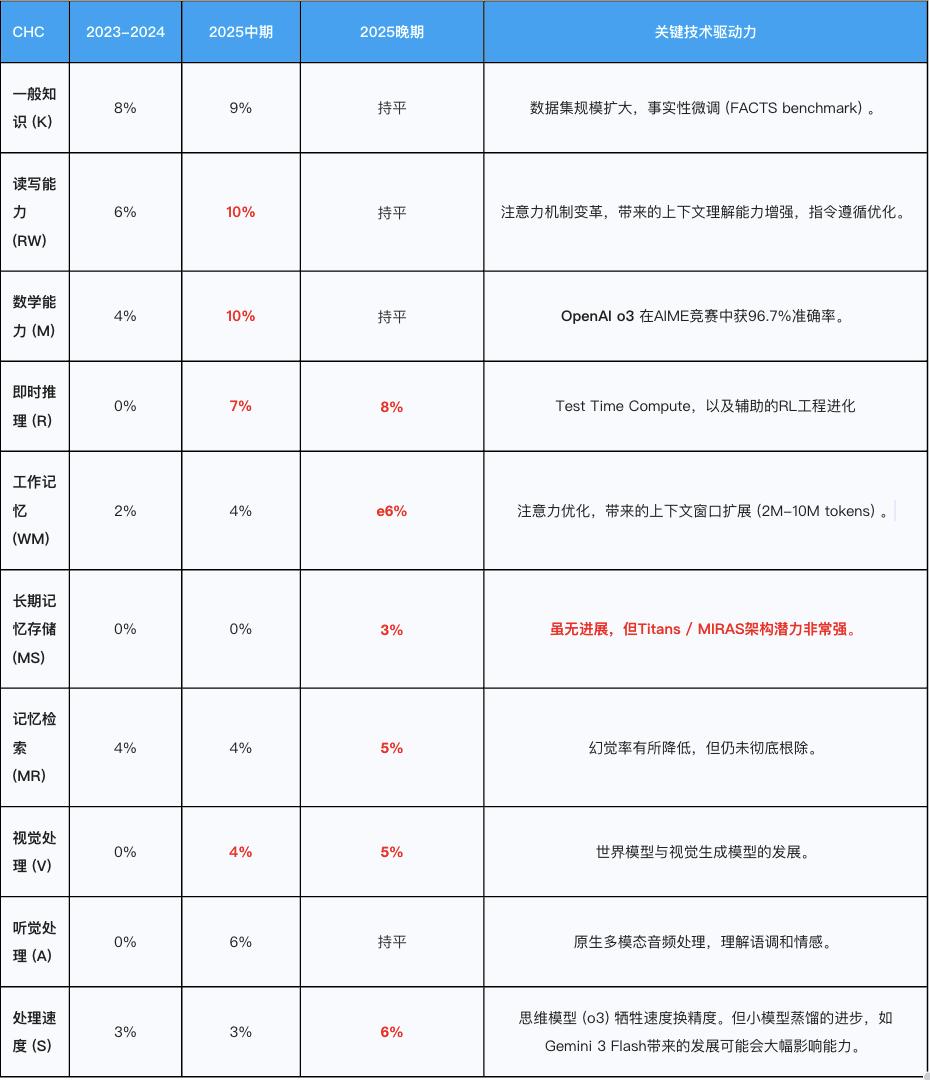
Core Insights - The article discusses the evolution of artificial intelligence (AI) in 2025, highlighting a shift from merely increasing model parameters to enhancing model intelligence through foundational research in areas like fluid reasoning, long-term memory, spatial intelligence, and meta-learning [2][4]. Group 1: Technological Advancements - In 2025, significant technological progress was observed in fluid reasoning, long-term memory, spatial intelligence, and meta-learning, driven by the diminishing returns of scaling laws in AI models [2][3]. - The bottleneck in current AI technology lies in the need for models to not only possess knowledge but also to think and remember effectively, revealing a significant imbalance in AI capabilities [2][4]. - The introduction of Test-Time Compute revolutionized reasoning capabilities, allowing AI to engage in deeper, more thoughtful processing during inference [6][10]. Group 2: Memory and Learning Enhancements - The Titans architecture and Nested Learning emerged as breakthroughs in memory capabilities, enabling models to update their parameters in real-time during inference, thus overcoming the limitations of traditional transformer models [19][21]. - Memory can be categorized into three types: context as memory, RAG-processed context as memory, and internalized memory through parameter integration, with significant advancements in RAG and parameter adjustment methods [19][27]. - The introduction of sparse memory fine-tuning and on-policy distillation methods has mitigated the issue of catastrophic forgetting, allowing models to retain old knowledge while integrating new information [31][33]. Group 3: Spatial Intelligence and World Models - The development of spatial intelligence and world models was marked by advancements in video generation models, such as Genie 3, which demonstrated improved physical understanding and consistency in generated environments [35][36]. - The emergence of the World Labs initiative, led by Stanford professor Fei-Fei Li, focused on generating 3D environments based on multimodal inputs, showcasing a more structured approach to AI-generated content [44][46]. - The V-JEPA 2 model introduced by Meta emphasized predictive learning, allowing models to grasp physical rules through prediction rather than mere observation, enhancing their understanding of causal relationships [50][51]. Group 4: Reinforcement Learning Innovations - Reinforcement learning (RL) saw significant advancements with the rise of verifiable rewards and sparse reward metrics, leading to improved performance in areas like mathematics and coding [11][12]. - The GPRO algorithm gained popularity, simplifying the RL process by eliminating the need for a critic model, thus reducing computational costs while maintaining effectiveness [15][16]. - The exploration of RL's limitations revealed a ceiling effect, indicating that while RL can enhance existing model capabilities, further breakthroughs will require innovations in foundational models or algorithm architectures [17][18].


策略周评20260112:AI辅助医疗与人形机器人等生活化产品落地
Soochow Securities· 2026-01-12 07:00
Group 1: Core Insights - The global AI industry is experiencing a dual iteration of computing power models, leading to the commercialization of AI applications such as ChatGPT Health, with significant advancements in AI-assisted healthcare and humanoid robots [2][6] - AI chip companies are launching next-generation platforms to enhance computing power support, with NVIDIA introducing the Vera Rubin platform and several collaborative design chips, thereby reducing the cost threshold for enterprises to operate large models [3][5] - Overseas companies are accelerating the commercialization of large AI models through substantial financing, while domestic firms are exploring market opportunities via open-source tools and engineering innovations [4][6] Group 2: Key Events - On January 6, AMD unveiled a comprehensive AI chip covering data centers, AI PCs, and embedded edge applications, with plans for a 2nm process MI500 series to be launched in 2027 [5] - On January 7, xAI announced it had exceeded $20 billion in Series E funding, significantly surpassing market expectations, with funds allocated for GPU cluster expansion and Grok 5 model training [5] - OpenAI launched "ChatGPT Health" on January 7, which integrates user health information with electronic medical records, tapping into a projected global AI healthcare market expected to reach approximately $505.59 billion by 2033 [5][6] Group 3: Industry Trends - The AI healthcare sector is entering a commercialization acceleration phase, with companies like OpenAI and Ant Group's AI medical app making significant strides in personalized consultation services [6] - In the humanoid robotics sector, collaborations such as DeepMind with Boston Dynamics are integrating advanced models into new generation humanoid robots, showcasing capabilities for various applications [6] - The report highlights a noticeable market trend towards higher elasticity in technology growth styles, with funds being preemptively allocated to capitalize on potential spring market movements [7] Group 4: Recommended Companies - The report recommends companies such as Ding Tai Gao Ke, which is experiencing high growth driven by AI PCB demand [8] - It also highlights Zhi Pu as a new AI player in the Hong Kong market, focusing on model iteration and ecosystem development [8] - MINIMAX-WP is noted as a benchmark for AI expansion overseas, with a multi-modal layout for future growth [8]
巴菲特的自动扶梯,直击 AI 投资狂潮的要害
3 6 Ke· 2026-01-12 01:59
Core Argument - The debate centers around whether AI represents the greatest technological revolution in human history or a capital bubble about to burst, with differing perspectives from Michael Burry, Jack Clark, and Dwarkesh Patel [1] Group 1: AI Development and Historical Context - Jack Clark highlights that the mainstream consensus in 2017 was to develop AI from scratch using trial and error in games, which ultimately proved ineffective [1] - The breakthrough came from large-scale pre-training, the Transformer architecture, and the scaling laws that show a direct relationship between data, compute power, and model intelligence [1][2] - Clark asserts that current AI capabilities are at their lowest point, with rapid iterations leading to significant advancements in AI models [2] Group 2: Investment and Economic Implications - Michael Burry warns that the current AI investment frenzy, driven by FOMO, may not yield lasting competitive advantages as all tech giants are making similar investments [4] - Burry cites that Nvidia has sold $400 billion worth of chips, yet the revenue from end-user AI products is less than $1000 billion, indicating a 4:1 ratio that suggests a bubble [4][33] - The shift towards capital-intensive hardware companies is concerning, as companies like Microsoft and Google may struggle to maintain high returns on invested capital (ROIC) [5][39] Group 3: Productivity and Market Dynamics - There is a contradiction in productivity claims, with 60% of developers reporting a 50% increase in productivity using AI, while independent studies show a 20% increase in time for merging code [6][25] - The competitive landscape in AI is volatile, with no single company maintaining a long-term advantage, as seen with Google lagging behind OpenAI despite its resources [7][8] - Burry emphasizes that if AI does not create new spending categories or significantly enhance productivity, the economic benefits may not materialize [33][34] Group 4: Energy and Infrastructure - The discussion concludes that energy is a critical constraint for AI development, with Burry suggesting a radical approach to establish a new national power grid using nuclear energy [11] - Clark agrees that AI's future relies heavily on foundational infrastructure, similar to historical electrification and road construction efforts [11] Group 5: Future Outlook and Uncertainties - The debate raises two key questions: who will ultimately capture the value of AI, and whether to trust timelines or data regarding AI's impact [12][14] - Burry posits that if the automatic escalator theory holds true, companies in the AI supply chain may not achieve excess profits, leading to value primarily flowing to end customers [13][49] - The future of AI remains uncertain, with potential surprises in revenue growth and the impact of AI on job markets and productivity yet to be fully realized [50][52]

L4数据闭环总结 | 面向物理 AI 时代的数据基础设施
自动驾驶之心· 2026-01-06 00:28
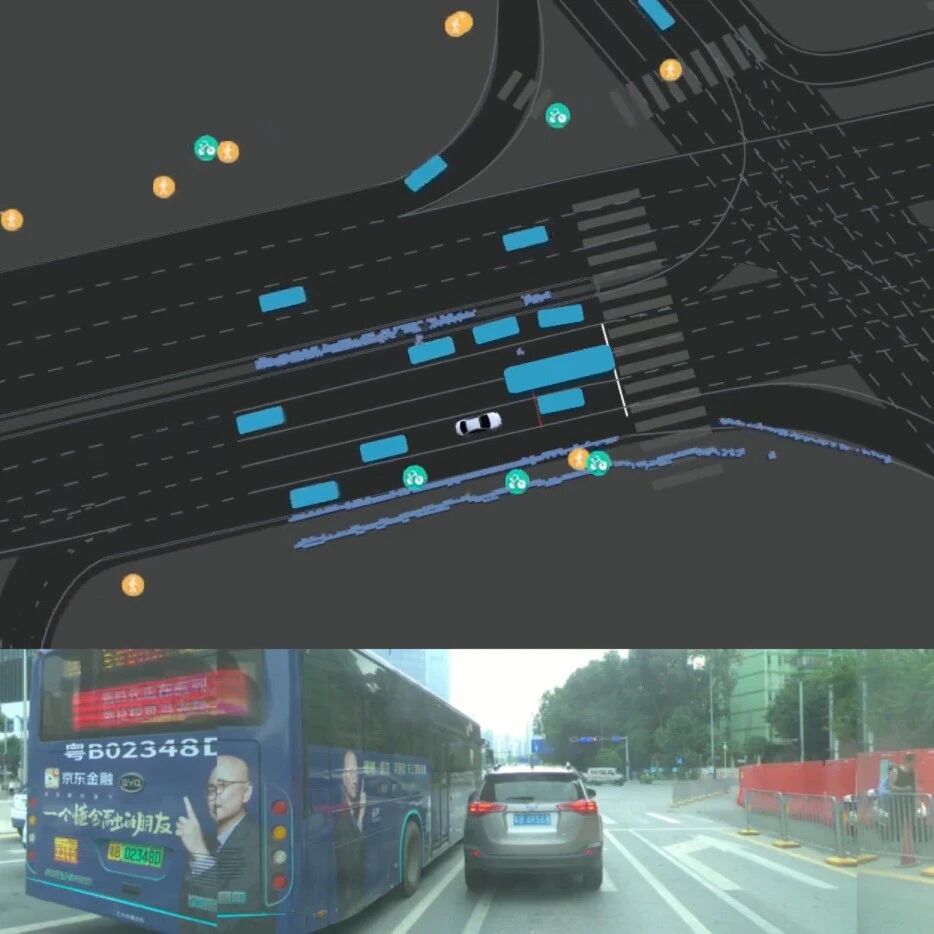
Core Viewpoint - The article emphasizes that in the pursuit of general physical intelligence, the model serves as the ceiling while the data infrastructure acts as the floor, highlighting the importance of both elements working in tandem to create a competitive barrier [2]. Group 1: Shift in Talent Demand - There has been a noticeable shift in the automatic driving and AI sectors, with a growing emphasis on recruiting talent for "data infrastructure" [3]. - Leading companies like Tesla and Wayve are focusing on extracting data from large-scale fleets to build automatic scoring systems rather than relying solely on manually written rules [4]. - The consensus is that while model algorithms are becoming rapidly replaceable, the foundational infrastructure for data extraction and defining quality remains a significant competitive advantage once established [6]. Group 2: Evolution of Physical AI - The article outlines three evolutionary stages of "Physical AI" using references from popular anime, illustrating the progression from early simulation to advanced world models [8]. - The first stage involves basic simulation and remote teaching, while the second stage incorporates augmented reality, overlaying virtual elements onto the real world [10][12]. - The third stage envisions a world model where AI can train in accelerated time, significantly enhancing learning efficiency [14]. Group 3: Data Infrastructure and World Models - The construction of a robust data infrastructure is essential for translating the chaotic physical world into a comprehensible format for world models [16]. - The article discusses various layers of data processing, including metrics for physical world perception, data classification, and automated evaluation systems [17][21][23]. - The ultimate goal is to create a closed-loop system where real-world data informs and refines AI training, enabling rapid iteration and improvement [18][20]. Group 4: Future of Physical AI - The transition from a "Bug Driven" approach to a "Data Driven" model is crucial for the advancement of physical AI [24]. - The article argues that while models may evolve quickly, the foundational infrastructure for data collection and processing will remain invaluable [27]. - The future development of AI will likely rely on a symbiotic relationship between world models as generators and data infrastructure as discriminators, ensuring that AI systems are grounded in reality [36][38].
Welcome to AIE CODE - Jed Borovik, Google DeepMind
AI Engineer· 2026-01-05 13:20
[music] Jed [music] Boravik. >> Hello. Good morning.[music] [applause] Welcome to the 2025 AI Engineering Code Summit in New York. How are we doing. All right, it's early. It's Friday.Thank you all for being here. Raise your hand if you've been to one of these events before, an AI engineering conference before. All right, pretty good.So, for those on uh those watching live stream, about half the hands up, keep your hands up. Keep your hands up. Two or more events.Okay, still have a couple. Three, four. All ...