
邮储银行

Search documents
银行短期大额存单利率进入“0字头”,专家称下行趋势或将延续
Xin Lang Cai Jing· 2026-01-09 10:57
Core Viewpoint - In early 2026, several major state-owned banks in China have launched new large-denomination time deposit products, but short-term product interest rates have generally entered the "0" range [1][3]. Group 1: State-Owned Banks - The annual interest rates for 1-month and 3-month large-denomination time deposits from major state-owned banks such as Bank of China, Agricultural Bank of China, Industrial and Commercial Bank of China, and China Construction Bank are all at 0.9%, with a minimum deposit requirement of 200,000 yuan [1][3]. - The China Construction Bank has only launched a special one-year product for the Beijing area with an interest rate of 1.4%, while Postal Savings Bank has not yet issued large-denomination time deposits [1][3]. - Since December 2025, the six major state-owned banks have collectively removed five-year large-denomination time deposits, with available products now generally limited to three years or less, and interest rates ranging from 1.10% to 1.55% [1][3]. Group 2: Other Banks - In contrast to state-owned banks, some joint-stock banks, city commercial banks, and rural commercial banks still offer short-term large-denomination time deposits with interest rates above 1%. For instance, Citic Bank's 1-month large-denomination time deposit has an interest rate of 1.1%, while Tianjin Bank's 3-month product offers 1.15% [1][3]. - Some smaller banks are also experiencing downward pressure on short-term interest rates, with certain rates entering the "0" range. For example, Yunnan Tengchong Rural Commercial Bank plans to issue a three-month large-denomination time deposit with an interest rate of 0.95% [2][4]. - Industry experts indicate that the recent interest rate adjustments are closely related to banks' ongoing efforts to manage net interest margins and reduce funding costs, suggesting that the downward trend in deposit rates may continue in the current market environment [2][4].



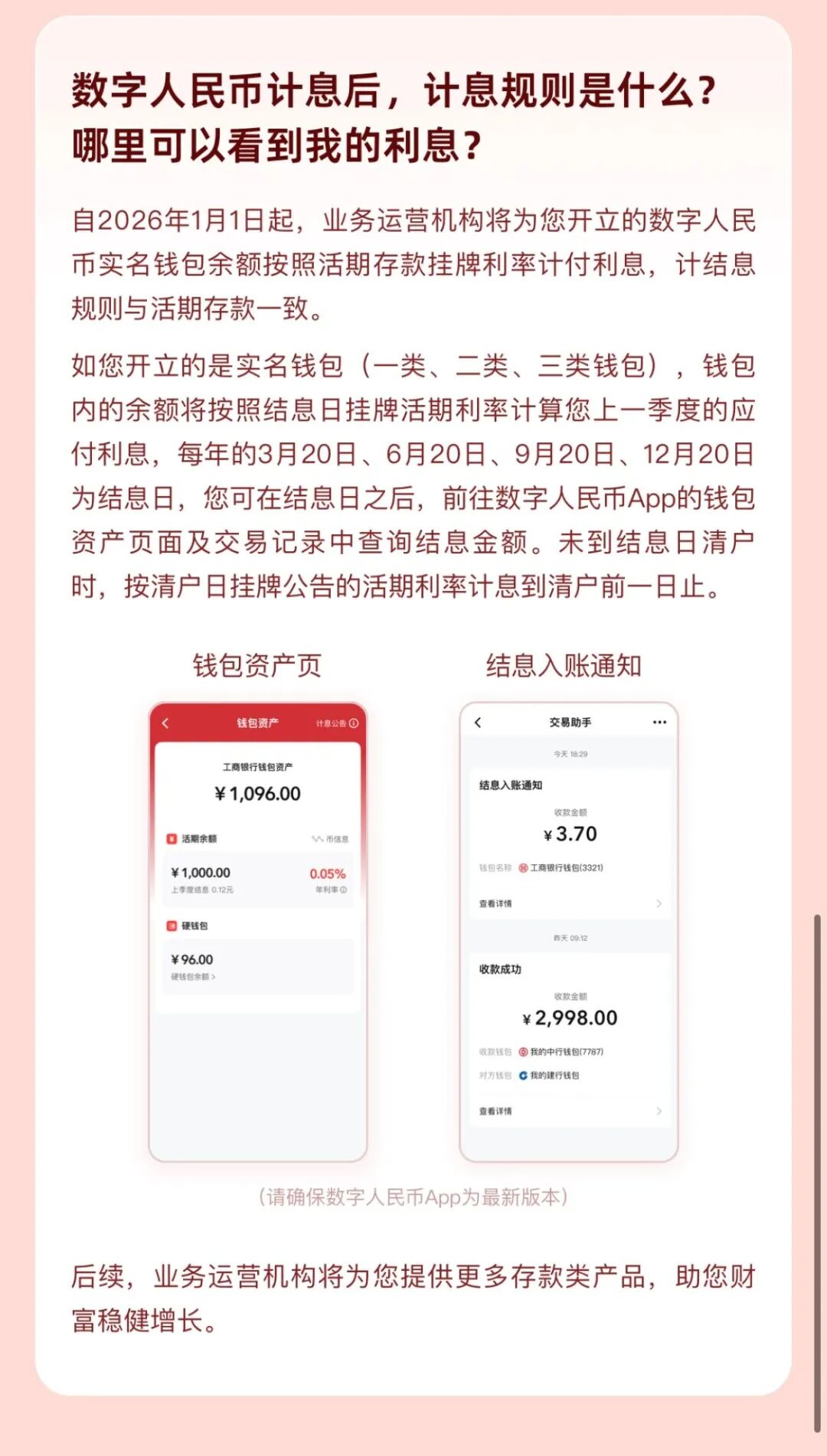
可计付利息!数字人民币升级2.0版影响几何?
Guo Ji Jin Rong Bao· 2026-01-09 10:00
Core Viewpoint - The transition of digital renminbi from cash-type 1.0 version to deposit currency-type 2.0 version will allow for interest payments on real-name digital renminbi wallet balances, aligning with bank demand deposit rates, thus enhancing its appeal and functionality in the financial system [1][8][12]. Group 1: Changes in Digital Renminbi - Starting January 1, 2026, real-name digital renminbi wallet balances will earn interest based on the bank's demand deposit rates, with interest calculated quarterly [1][8]. - The new deposit currency-type 2.0 version will include a "safety net" where commercial banks will manage digital renminbi wallets, ensuring customer security and compliance with regulations [8][9]. - The People's Bank of China has introduced a digital management service framework that emphasizes an "account system + currency string + smart contracts" approach to enhance the digital renminbi ecosystem [9][10]. Group 2: Impacts of the Transition - The shift to deposit currency-type 2.0 version positions China as a leader in central bank digital currency (CBDC) by allowing digital renminbi to integrate more easily into global interbank payment systems [12][13]. - The digital renminbi will improve data flow and information exchange, enhancing the precision and effectiveness of monetary policy transmission [12]. - The transition will provide users with cash-like convenience, such as offline payments and real-time settlements, while banks will gain asset-liability management rights, stimulating participation in the digital renminbi ecosystem [12][13]. Group 3: Recommendations for Future Development - It is suggested to expand the regulatory framework for digital renminbi, clarify its legal status, and broaden the pilot scope nationwide to encourage public participation [13]. - There is a call for accelerating the coverage of all scenarios and enhancing functional innovations to optimize the digital renminbi ecosystem [13].


邮储银行获评数据管理能力成熟度最高等级认证
Jin Rong Jie Zi Xun· 2026-01-09 09:41
Core Insights - The DCMM (Data Management Capability Maturity Model) is China's first national standard in the data management field, establishing a recognized certification system for data management maturity [1] - Postal Savings Bank of China has achieved the highest level five certification (Optimization Level) in the latest DCMM assessment, indicating its data management capabilities are at an industry-leading level [1] Data Governance - The bank has embraced the "governance as service" development philosophy, enhancing data accessibility and usability across various business scenarios [1] - Implementation of "large models + knowledge graphs" has enabled intelligent tracing of data lineage, ensuring deep integration and intelligent empowerment of management systems related to standards, quality, and security [1] Data Empowerment - Postal Savings Bank has established a five-level data architecture covering "foundation—industry—enterprise—field—scenario," creating a comprehensive data asset system unique to the bank [2] - The bank has developed a retail intelligent marketing system leveraging big data and large models, enhancing customer acquisition through precise models and optimizing product recommendations [2] - Continuous optimization of anti-fraud intelligent models supports the identification of high-risk transactions, transforming data assets into core business drivers [2] Future Outlook - The bank aims to maintain its commitment to "finance for the people," translating technological advancements into perceptible financial services that benefit various industries and households [2]

银行业内部监督职能“交棒”
2 1 Shi Ji Jing Ji Bao Dao· 2026-01-09 09:19
21世纪经济报道 记者郭聪聪 作为中国商业银行公司治理的"标配",运行近三十年的监事会制度,正在全行业范围内悄然谢幕。 自2024年新《公司法》及相关监管配套文件相继落地以来,从工行、农行等国有大行,到各地城商行、 农商行,纷纷加入调整行列,陆续宣布不再设立监事会。 据21世纪经济报道记者统计,截至2026年初,42家A股上市银行全部公开宣布撤销监事会,另有不少中 小银行正推进相关计划,原监事会的监督职能已整体移交至董事会下设的审计委员会。 这一变革的背后,既是银行机构顶层管理框架的重塑,更是金融机构治理效能的深度优化。这场治理调 整为何发生?全新的监督机制能否扛起内部监督的重任?银行业公司治理改革又将走向怎样的新征程? 监事会制度设立三十年 银行监事会制度的设立与退出,几乎贯穿了中国银行(601988)业市场化改革与现代公司治理建设的全 过程。这一制度的建立,深植于中国银行业改革与国有金融机构监督的特定历史背景之中。 1995年《商业银行法》首次明确要求国有独资商业银行设立监事会,旨在强化国有资产监督。随后近三 十年间,一系列规章指引相继出台,逐步细化了监事会的职责、构成与运行机制,使其成为与董事会、 高级 ...
深度丨银行业内部监督职能“交棒”
2 1 Shi Ji Jing Ji Bao Dao· 2026-01-09 09:11
作为中国商业银行公司治理的"标配",运行近三十年的监事会制度,正在全行业范围内悄然谢幕。 自2024年新《公司法》及相关监管配套文件相继落地以来,从工行、农行等国有大行,到各地城商行、 农商行,纷纷加入调整行列,陆续宣布不再设立监事会。 据21世纪经济报道记者统计,截至2026年初,42家A股上市银行全部公开宣布撤销监事会,另有不少中 小银行正推进相关计划,原监事会的监督职能已整体移交至董事会下设的审计委员会。 这一变革的背后,既是银行机构顶层管理框架的重塑,更是金融机构治理效能的深度优化。这场治理调 整为何发生?全新的监督机制能否扛起内部监督的重任?银行业公司治理改革又将走向怎样的新征程? 监事会制度设立三十年 银行监事会制度的设立与退出,几乎贯穿了中国银行业市场化改革与现代公司治理建设的全过程。这一 制度的建立,深植于中国银行业改革与国有金融机构监督的特定历史背景之中。 1995年《商业银行法》首次明确要求国有独资商业银行设立监事会,旨在强化国有资产监督。随后近三 十年间,一系列规章指引相继出台,逐步细化了监事会的职责、构成与运行机制,使其成为与董事会、 高级管理层并称的"三长"之一,构成了中国公司治理结 ...
银行短期大额存单利率进入“0字头”
Xin Lang Cai Jing· 2026-01-09 09:05
Core Viewpoint - The banking sector is witnessing a significant shift in the issuance of large-denomination certificates of deposit (CDs), with many banks reducing interest rates to levels comparable to regular fixed deposits, indicating a trend towards lower returns for savers [2][3]. Group 1: Large-Denomination CDs - Over 30 banks have announced the issuance of the first phase of large-denomination CDs for 2026 as of January 7, 2024 [2]. - Major state-owned banks, including ICBC, ABC, BOC, and CCB, are offering short-term large-denomination CDs with annual interest rates of 0.9% for 1-month and 3-month terms, and 1.1% for 6-month terms, with a minimum deposit of 200,000 yuan [2]. - Yunnan Tengchong Rural Commercial Bank plans to issue a 3-month large-denomination CD with an annual interest rate of 0.95% and a minimum deposit of 200,000 yuan [2]. Group 2: Long-Term CDs and Market Adjustments - The six major state-owned banks have collectively removed five-year large-denomination CDs from their offerings, with remaining three-year products seeing interest rates drop to between 1.5% and 1.75% [3]. - Some banks have increased the minimum deposit requirements for large-denomination CDs, with ICBC's current offering requiring a minimum of 1 million yuan for a 3-year CD at an interest rate of 1.55% [3]. - As of January 9, 2024, ICBC's various 3-year large-denomination CDs have sold out, with interest rates consistently at 1.55% [3]. Group 3: Interest Rate Trends - The interest rates for large-denomination CDs from the four major state-owned banks have generally remained consistent, with five-year products no longer available [4]. - Interest rates for large-denomination CDs fell below 2% in October 2024, entering the "1% range" [5]. - The net interest margin for private banks has decreased by 0.08 percentage points, reflecting broader challenges faced by the banking industry [5]. Group 4: Financial Performance - Among 26 listed banks that disclosed third-quarter net interest margin data, 12 banks reported stable or increasing margins, while 14 banks are still experiencing a downward trend [6].


神州信息参编,《AI Agent技术金融应用探索与实践》正式发布
Xin Lang Cai Jing· 2026-01-09 09:00
Core Insights - The report titled "Exploration and Practice of AI Agent Technology in Financial Applications" was collaboratively developed by leading financial institutions and technology companies, including Postal Savings Bank, Shenzhou Information, China UnionPay, and others, and has been recognized as an "Excellent Topic" by the Beijing Financial Technology Industry Alliance for 2025 [1][5] - The financial industry is accelerating its digital transformation driven by new information technologies represented by large AI models, with AI Agents serving as a crucial application paradigm for facilitating the flow of financial data elements and realizing business value [1][5] Summary by Sections AI Agent Components and Technologies - The report discusses the core components, key technological forms, and construction paths of AI Agents, analyzing critical technologies in financial scenarios from theoretical and architectural perspectives [2][6] - It addresses typical application scenarios in banking, securities, and insurance, focusing on the industry's demands for massive data processing, precise risk assessment, and personalized service customization [2][6] Design Considerations and Framework - A design reference for the financial AI Agent architecture is provided, analyzing core components, technology selection, data flow, and interaction modes, while ensuring effective integration into business processes and compliance with strict regulatory requirements [2][6] - The report emphasizes the importance of enhancing service efficiency and customer experience through the effective deployment of AI Agents [2][6] Future Outlook and Recommendations - The application of AI Agents in the financial industry is described as a systematic project that requires consideration of technical feasibility, business value, compliance requirements, security risks, and user experience [4][8] - The report offers insights into technological development trends and industry application expansion, aiming to assist financial institutions in designing advanced and practical AI-native systems to maintain competitive advantages during digital transformation [4][8] - Shenzhou Information, as a leading partner in financial digital transformation, promotes the "AI for Process" concept and has launched a series of "AIGC+" financial solutions to significantly enhance banks' R&D efficiency, data utilization, and AI model iteration speed [4][8]

新版数字人民币来了,有利息、无网也能付,推广还有哪些痛点
Sou Hu Cai Jing· 2026-01-09 08:45
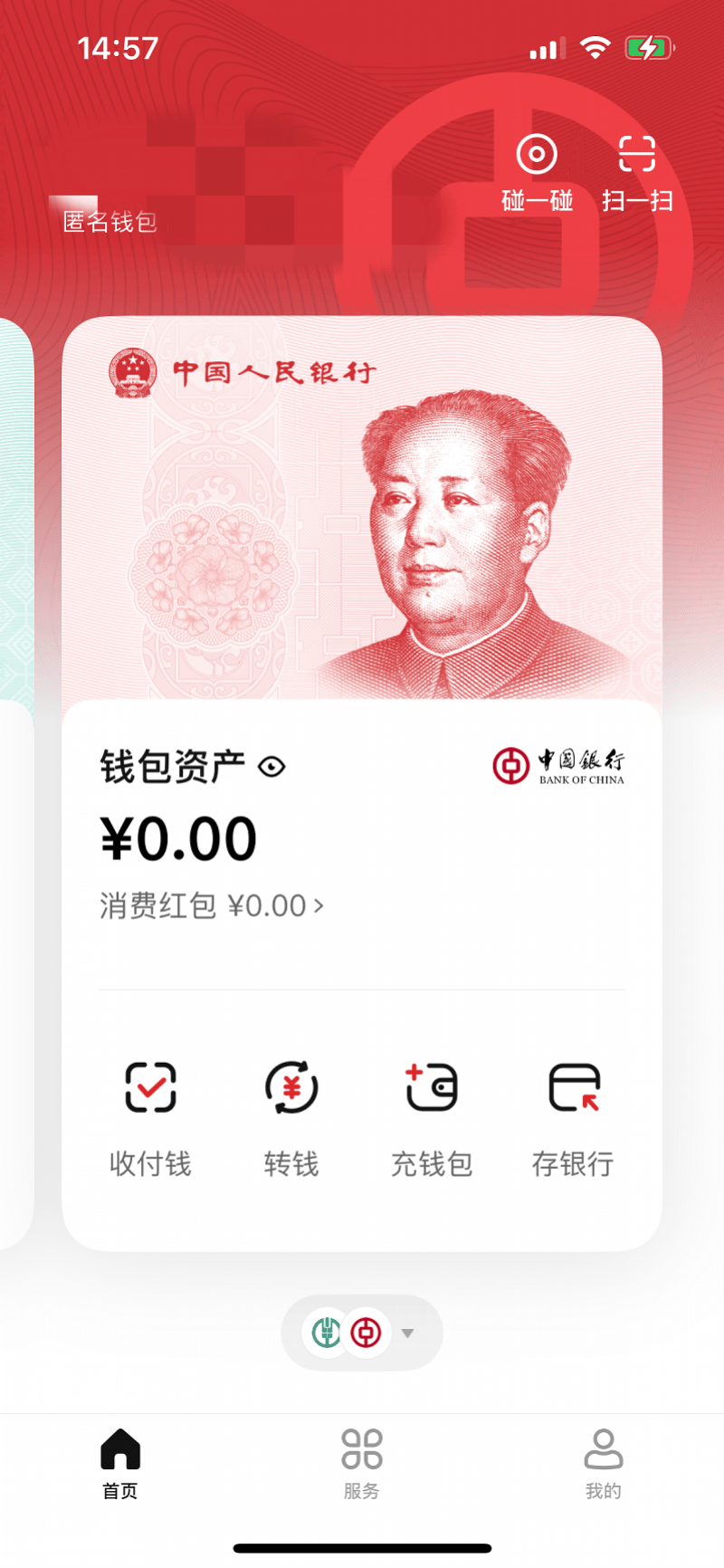
数字人民币2.0版本来了!日前中国人民银行发布《关于进一步加强数字人民币管理服务体系和相关金融基础设施 建设的行动方案》,称今年1月1日正式启动实施新一代数字人民币计量框架、管理体系、运行机制和生态体系。 数字人民币推行10年后,迈向"新纪元"。 值得一提的是,新版数字人民币不再局限于移动支付功能,而是能像活期存款一样计息,同时无需网络也能完成 支付。 正如一位银行工作人员所说:"由于微信、支付宝的用户黏性强,导致数字人民币一直没有得到全面推广。"那 么,这次升级换代后的数字人民币能否得到更进一步的推广? 新版数字人民币有何利好? 据权威消息,数字人民币是人民银行发行的数字形式的法定货币,由指定运营机构参与运营,以广义账户体系为 基础,支持银行账户松耦合功能,与实物人民币等价,具有价值特征和法偿性。 和数字人民币1.0版本相比,对于普通消费者,数字人民币2.0有以下几点优势:首先,数字人民币钱包余额能计付 利息。日前,中国工商银行、中国建设银行、中国农业银行、中国银行、中国邮政储蓄银行、交通银行、招商银 行、兴业银行、网商银行(支付宝)、微众银行(微信支付)。都宣称将开立在该行的数字人民币实名钱包(一类、二 ...
新版数字人民币来了 有利息、无网也能付 推广还有哪些痛点
Nan Fang Du Shi Bao· 2026-01-09 08:41
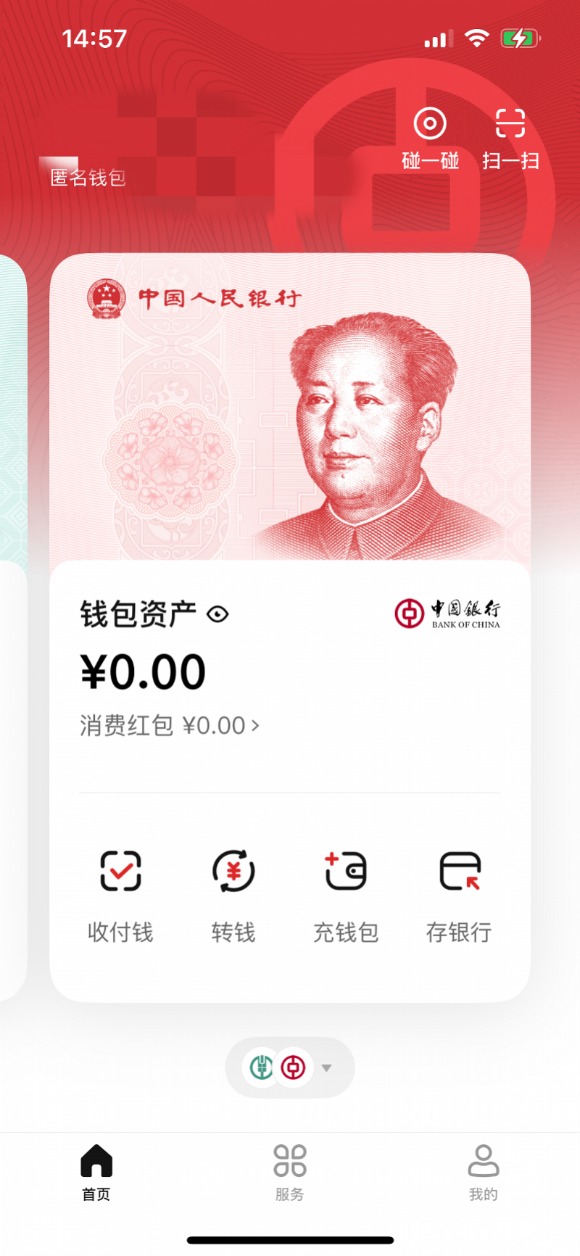
数字人民币2.0版本来了!日前中国人民银行发布《关于进一步加强数字人民币管理服务体系和相关金 融基础设施建设的行动方案》,称今年1月1日正式启动实施新一代数字人民币计量框架、管理体系、运 行机制和生态体系。数字人民币推行10年后,迈向"新纪元"。 值得一提的是,新版数字人民币不再局限于移动支付功能,而是能像活期存款一样计息,同时无需网络 也能完成支付。 正如一位银行工作人员所说:"由于微信、支付宝的用户黏性强,导致数字人民币一直没有得到全面推 广。"那么,这次升级换代后的数字人民币能否得到更进一步的推广? 新版数字人民币有何利好? 据权威消息,数字人民币是人民银行发行的数字形式的法定货币,由指定运营机构参与运营,以广义账 户体系为基础,支持银行账户松耦合功能,与实物人民币等价,具有价值特征和法偿性。 数字人民币在过去十年的试点、推广中取得了可圈可点的成绩,但至今没有得到全面推广和全民使用。 南都N视频记者了解到,堵点不在于技术,而在于社会公众和商业银行等主体意愿不足。 和数字人民币1.0版本相比,对于普通消费者,数字人民币2.0有以下几点优势:首先,数字人民币钱包 余额能计付利息。日前,中国工商银行、中国建设 ...
“港航资信贷”上线,精准赋能中小航运企业
Feng Huang Wang Cai Jing· 2026-01-09 07:53
Core Viewpoint - The launch of the "Port and Shipping Credit" product aims to address the financing bottlenecks faced by small and medium-sized shipping enterprises in Ningbo, integrating authoritative industry credit data into the bank's risk control model to provide flexible and efficient credit support [1][2]. Group 1: Product Features - "Port and Shipping Credit" features three main characteristics: precise profiling, controllable risk, and targeted empowerment, optimizing the approval process and enhancing banks' willingness to lend [2]. - The product is specifically designed for local small and medium-sized shipping enterprises that have obtained credit ratings from the Zhejiang provincial waterway transportation authority, with loan amounts directly linked to credit ratings [2]. Group 2: Financial Impact - Companies rated AA and A can secure collateralized loans up to 100 million yuan, benefiting from green approvals, no principal repayment renewals, and preferential interest rates [2]. - Ningbo Kelly Jiahe Shipping Co., Ltd. became one of the first beneficiaries, successfully obtaining a 16 million yuan loan with simplified procedures and lower interest rates than the market average, which significantly improved its cash flow for operational expenses [3]. Group 3: Market Response - As of now, six companies have received a total of 102 million yuan in credit, with another six companies in progress, indicating a positive market response to this financing model [3]. - The collaboration between government and banking sectors aims to build a shipping financial ecosystem, with the port management department acting as a "data bridge" and "demand matcher" [3]. Group 4: Future Implications - Analysts believe that the success of this initiative hinges on establishing a compliant application path for administrative data in the financial sector, which could inspire further financial innovations based on specific industry credit data, supporting high-quality development of the real economy [3].