邮储银行

Search documents
银行“开门红”变调:高息长期存款退潮,资产提升成重点
2 1 Shi Ji Jing Ji Bao Dao· 2026-01-08 12:33
Core Viewpoint - The traditional "opening red" season for banks, typically characterized by aggressive marketing and high-interest deposit promotions, is notably subdued this year due to pressures on net interest margins and a strategic shift in deposit management [1][2]. Group 1: Changes in Deposit Marketing - Banks are experiencing a decline in the enthusiasm of customer managers for deposit acquisition, as performance assessments now exclude long-term deposits of three years or more [2][3]. - The focus has shifted from merely attracting deposits to a more comprehensive evaluation of total assets under management (AUM), including wealth management products [2][3]. Group 2: Impact of Interest Rate Environment - The current economic climate has led to a significant increase in the popularity of fixed-term deposits, with annual additions exceeding 10 trillion yuan since 2020, peaking at around 20 trillion yuan annually in 2022-2023 [3]. - However, the ongoing decline in interest rates has made long-term, high-interest deposits a financial burden for banks, risking a situation where deposit costs exceed loan interest rates [3][12]. Group 3: Withdrawal of Long-Term Deposit Products - Several banks have begun to withdraw long-term deposit options, with some institutions eliminating five-year fixed-term deposits entirely [4][5][11]. - There is a notable occurrence of interest rate inversion for long-term deposits, where rates for shorter terms exceed those for longer terms, indicating a lack of interest in long-term deposits [11]. Group 4: Net Interest Margin Trends - The net interest margin for commercial banks has dropped to a historical low of 1.42% in Q3 2025, down from over 1.5% in 2024 and above 1.7% in 2023 [12]. - Despite the current challenges, there is an expectation for a stabilization and potential recovery of net interest margins, driven by improvements in funding costs and a significant volume of deposits entering a repricing cycle [12].

最高年化4.5%,挂钩黄金的结构性存款成新宠
Di Yi Cai Jing· 2026-01-08 12:25
Group 1 - The core viewpoint of the articles highlights the rising trend of structured deposits linked to gold as banks respond to increasing demand for gold investments amid rising international gold prices and heightened risk aversion [1][2][3] - Several banks, both domestic and foreign, have launched gold-linked structured deposit products with varying terms and investment thresholds, indicating a shift in investment strategies towards gold [2][4] - The risk management for precious metals business has tightened, with banks raising the risk assessment levels for individual gold accumulation products, reflecting a reassessment of the risk characteristics associated with gold investments [4][5] Group 2 - The structured deposits linked to gold offer a "capital protection + linkage" mechanism, providing investors with a balance of safety and potential higher returns, while also emphasizing the importance of understanding the product's terms [3][6] - The investment thresholds for gold accumulation products have been raised across multiple banks, ensuring that the risk levels of financial products align with the risk tolerance of investors [5][6] - The outlook for the gold market remains uncertain, influenced by geopolitical risks, economic recovery, and central bank behaviors, which are expected to support gold prices in the medium to long term [6][7]


积存金走俏!投资门槛有变化
Zhong Guo Zheng Quan Bao· 2026-01-08 10:36
"趁着前两天金价稍微回调,我以每克大约980元的价格入了几克积存金。今天打开银行App一看,已经 有浮盈了。"来自北京的投资者小林告诉记者。近期,黄金投资热度不减,银行积存金备受关注。 从银行端看,一场有关业务风控的升级正在加速进行。1月12日起,工商银行(601398)将个人积存金 业务风险准入等级上调至C3(平衡型)及以上,此前,考虑到市场波动情况、投资者保护和产品风险 属性等因素,多家银行已调整评级准入门槛,达不到门槛的低风险投资者无法办理相关业务。 业内人士预计,随着金价波动持续,未来会有更多银行上调积存金投资准入门槛。 "一点一点攒金条" "最低1克即可入场,无需一次性投入大量资金,资金量有限的投资者进场无压力,投资者可以一点一点 攒金条。"光大银行(601818)一位客户经理表示,"积存金支持T+0交易,投资者在工作日的白天和晚 上都可以在手机银行实时进行交易,利用碎片时间就能进行操作管理。交易费定价清晰透明,也没有隐 性成本支出,长期持有一定期限还能获得利息。" 上述特性让积存金成为投资者投资黄金的一大选择。记者从多位银行业内人士处了解到,自2024年黄金 开启新一轮升浪以来,积存金业务变得更加 ...
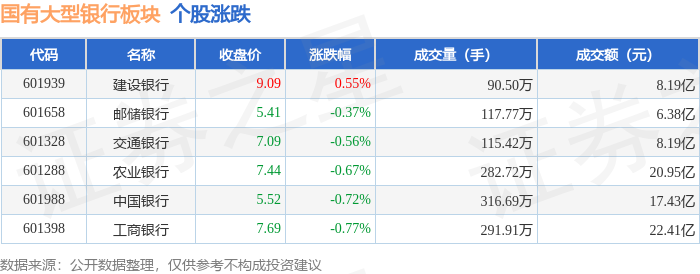
国有大型银行板块1月8日跌0.68%,工商银行领跌,主力资金净流出7.17亿元
Zheng Xing Xing Ye Ri Bao· 2026-01-08 08:56
Group 1 - The core viewpoint of the news is that the state-owned large bank sector experienced a decline of 0.68% on January 8, with Industrial and Commercial Bank of China leading the drop [1] - The Shanghai Composite Index closed at 4082.98, down 0.07%, while the Shenzhen Component Index closed at 13959.48, down 0.51% [1] - The trading performance of individual stocks in the state-owned large bank sector showed mixed results, with China Construction Bank increasing by 0.55% while others like Agricultural Bank of China and Bank of China saw declines of 0.67% and 0.72% respectively [1] Group 2 - The net outflow of main funds from the state-owned large bank sector was 717 million yuan, while retail investors saw a net inflow of 541 million yuan [1] - The detailed fund flow data indicates that China Construction Bank had a net outflow of 2.14 million yuan from main funds, while retail investors contributed a net inflow of 29.14 million yuan [2] - In contrast, Bank of China experienced a significant net outflow of 244 million yuan from main funds, but had a net inflow of 119 million yuan from retail investors [2]



数字人民币有利息了
中国建设银行· 2026-01-08 07:52
Core Viewpoint - The introduction of interest on digital renminbi by the People's Bank of China marks a significant development in the digital currency landscape, enhancing its appeal and functionality for users [2][9]. Group 1: What is Digital Renminbi? - Digital renminbi is a legal digital currency issued by the People's Bank of China, operating under a dual-layer system where the central bank issues it to operational institutions, which then distribute it to the public, eliminating speculation opportunities [4]. Group 2: How to Obtain and Use Digital Renminbi? - Users can access digital renminbi by selecting a designated operational institution through the digital renminbi app or directly via the China Construction Bank mobile banking app, where they can open and use a digital renminbi wallet [6][7]. Group 3: Interest on Digital Renminbi - Starting from January 1, 2026, China Construction Bank will pay interest on the balance of digital renminbi wallets at the bank's current deposit rate, with interest calculated quarterly based on the balance as of the last interest payment date [9]. - Interest payment dates are set for March 20, June 20, September 20, and December 20 each year, and users can check their interest amounts in the digital renminbi app or the bank's mobile app after these dates [9][10].

数字人民币开启2.0时代:从M0向M1升维,生态繁荣可期
Western Securities· 2026-01-08 06:56
Investment Rating - The industry investment rating is "Overweight" [6] Core Insights - The digital RMB has transitioned from M0 to M1, marking a significant upgrade in its monetary attributes, management model, infrastructure, and incentive mechanisms [3][10] - China is set to become the first major economy to offer interest on central bank digital currency (CBDC), which is expected to enhance user willingness to adopt digital RMB and expand its usage scenarios [4][19] - The upgrade to digital RMB 2.0 is seen as a paradigm shift, embedding it into the banking system and enhancing its role as a financial infrastructure [15][16] Summary by Sections Digital RMB Transition - The digital RMB has evolved from a payment tool to a financial infrastructure, enabling a more complex ecosystem [10] - The new version allows for interest accrual on digital RMB wallets, similar to demand deposits, which is expected to increase user retention and merchant acceptance [4][16] Strategic Importance - The upgrade has significant strategic implications for national financial security, internationalization of the RMB, regulatory capabilities, and inclusive finance [19] - The digital RMB's integration into the existing banking system is designed to balance central control with market efficiency [17][18] Market Performance - The computer industry has shown a relative performance of 33.95% over the past 12 months, outperforming the CSI 300 index [8] - The report maintains an "Overweight" rating, indicating expected growth exceeding the market benchmark by over 10% in the next 6-12 months [21]
养老理财2025成绩单:十只产品收益破5% 试点四年走向全国
2 1 Shi Ji Jing Ji Bao Dao· 2026-01-08 06:43
Core Insights - The pension financial products have evolved into a significant component of the third pillar of retirement planning, with a projected scale exceeding 100 billion yuan by the end of 2025, reaching 106.3 billion yuan [1][2] - The average annualized return for pension financial products in 2025 is expected to be 3.94%, with 10 products exceeding 5%, indicating a robust performance compared to traditional financial products [1][2] - The industry is shifting focus from scale expansion to enhancing capabilities, facing challenges such as maintaining yield resilience in a declining interest rate environment and overcoming product homogenization [1][6] Market Performance - By the end of 2025, over half of the pension financial products are expected to achieve annualized returns above 4%, with two products exceeding 6% [2] - The largest product, "Zhaoyin Wealth Management's Zhaorui Yiyang 3," has a scale of 101.35 billion yuan, making it the only product exceeding 10 billion yuan [3] - A total of 51 products are available in the market, with 7 products having scales over 5 billion yuan, collectively accounting for nearly half of the total market size [2][3] Product Characteristics - The majority of products are "fixed income plus" types, primarily based on bonds and other fixed-income assets, with a focus on risk management [3] - Most products have a five-year closed period to encourage long-term investment and mitigate short-term market fluctuations [3] - The first batch of pilot products will end their five-year closed period by the end of 2026, serving as a critical test for the industry [4] Future Challenges - The industry faces the dual challenge of generating sustainable returns in a low-interest-rate environment and addressing product homogenization [6] - Strategies for overcoming these challenges include expanding alternative asset allocations and optimizing investment strategies to enhance returns [6][7] - The future development of the pension financial market will require a shift from competition based on individual products to an ecosystem approach that leverages unique resources and capabilities [7]
银行积存金投资门槛大摸底
Bei Jing Shang Bao· 2026-01-08 06:43
Core Viewpoint - The recent announcement by Industrial and Commercial Bank of China (ICBC) to raise the risk acceptance level for personal gold accumulation business to C3 (balanced) and above has triggered significant changes in the precious metals investment market, reflecting a broader industry trend towards stricter risk management in response to increased market volatility and rising gold prices [1][6]. Group 1: Industry Trends - Major banks have collectively raised the entry-level risk tolerance for gold accumulation products to at least a balanced level (C3), with some banks even setting it to aggressive levels, indicating a comprehensive industry-wide upgrade in risk control measures [1][3][4]. - The international gold price has surpassed $4,400 per ounce, prompting banks to filter out investors with lower risk tolerance to prevent significant losses due to market volatility [6][7]. Group 2: Bank-Specific Requirements - ICBC requires personal clients to achieve a C3 (balanced) risk assessment result to engage in gold accumulation business, a shift from the previous requirement of C1 (conservative) [3][4]. - Other banks, such as Postal Savings Bank and Shanghai Rural Commercial Bank, have also raised their risk assessment standards, with some requiring a minimum of C3 or higher for participation in gold accumulation products [4][6]. - Banks like China CITIC Bank and Ningbo Bank have announced future adjustments to their risk assessment requirements, aligning with the trend of increasing risk thresholds for gold investment [6][7]. Group 3: Investor Behavior and Risks - There is a growing concern about investors attempting to misrepresent their risk tolerance in order to qualify for gold accumulation products, which undermines the integrity of the risk assessment process [8][9]. - The industry is urged to enhance investor education and awareness regarding the risks associated with gold investments, especially in a volatile market environment [8][9].





2026年贺岁币和贺岁钞东莞地区预约兑换即将启动
Nan Fang Du Shi Bao· 2026-01-08 06:12
Group 1 - The 2026 New Year commemorative coins and banknotes will be available for reservation starting January 13, 2026, in Dongguan, China [2] - The distribution quantity for the 2026 New Year commemorative coins is set at 600,000 pieces, while the commemorative banknotes will also be 600,000 pieces, with denominations of 10 yuan per coin and 20 yuan per banknote [3] - The reservation period for the commemorative coins is from January 13, 2026, 22:00 to January 14, 2026, 24:00, and for the banknotes from January 13, 2026, 22:30 to January 14, 2026, 24:00 [4] Group 2 - Reservations can be made online through the official websites and mobile banking apps of the Industrial and Commercial Bank of China, Agricultural Bank of China, and Postal Savings Bank of China [5] - Each individual can reserve and exchange a maximum of 20 commemorative coins and 20 commemorative banknotes, requiring a valid second-generation resident ID card for the process [6] - If the second-generation resident ID card is unavailable, alternatives such as household registration books or temporary resident ID cards can be used for the reservation [6]


平安人寿16次增持农行H股
2 1 Shi Ji Jing Ji Bao Dao· 2026-01-08 03:45
持股突破20% 数据显示,平安人寿对农业银行的青睐极为明显。其于2025年2月17日首次因持股比例达到5%而进行权 益披露,此举标志着其已成为农行H股的重要股东。 然而,这仅仅是个开始。在随后的10个月里,平安人寿开启了"扫货"模式。根据港交所记录,从2025年 2月至12月期间,平安人寿共计对农行H股进行了16次增持,几乎每月都有操作,增持步伐稳健而密 集。 记者丨张欣 林汉垚 编辑丨肖嘉 视频丨陈泽锴 2025年,中国平安人寿保险股份有限公司(下称"平安人寿")在港股市场展开了一场引人瞩目的银行 股"扫货"行动。其中,对农业银行H股的增持贯穿全年、力度空前。累计16次买入,推动持股比例在短 短一年内从5%,一路飙升至20.10%,大幅跃升超过15个百分点。 21世纪经济报道记者据港交所披露易公告整理发现,除农行外,平安人寿对工商银行、邮储银行、招商 银行H股也分别进行了2次、12次和15次增持。这一系列密集操作,清晰勾勒出国内险资巨头在长期利 率下行背景下,对高股息、低估值银行资产的战略性偏好与前瞻布局。 全年16次增持农行H股 平安人寿在2025年1月9日和2月12日分别增持了工行H股约5952万股和1 ...