Nvidia

Search documents
I Predicted That Oracle and Netflix Would Join Nvidia, Alphabet, Apple, Microsoft, Amazon, Broadcom, Meta Platforms, and Tesla in the $1 Trillion Club by 2030. Here's Why That Forecast Is Being Tested in 2026.
Yahoo Finance· 2026-02-13 17:31
Group 1: Market Capitalization and Stock Performance - Netflix's market capitalization is currently $346.9 billion, down 38.6% from its 52-week high [2][1] - Oracle's market capitalization stands at $410.4 billion, having fallen 56.5% from its peak [2][1] - Both companies are significantly below the $1 trillion market cap threshold, which includes major players like Nvidia, Alphabet, and Apple [2] Group 2: Oracle's AI Investments and Financial Position - Oracle is raising capital to fund its AI initiatives, focusing on expanding its Oracle Cloud Infrastructure (OCI) and multicloud data centers [5][7] - The company plans to raise $45 billion to $50 billion by 2026 through various financial instruments, including equity and bonds [7] - Oracle's long-term debt is $99.98 billion, while cash and cash equivalents are only $19.24 billion, raising concerns about its financial health [6][8] Group 3: Cash Flow and Investor Sentiment - Oracle reported negative free cash flow of $13.2 billion in Q2 of fiscal 2026, a decline from $9.5 billion in the same quarter the previous year [8] - The shift from being a high-margin cash generator to a capital-intensive operation has led to investor concerns regarding Oracle's heavy reliance on AI investments [8]

Meta, Amazon, and Goolge Lead a $700 Billion Capex Wave: What Stocks Win Beyond NVIDIA?
247Wallst· 2026-02-13 17:15
Core Insights - Major tech companies including Meta, Amazon, and Google are leading a significant capital expenditure (CapEx) wave, with a total of approximately $700 billion allocated for AI infrastructure in 2026 [1] - Despite the massive spending, Nvidia's stock has only increased by 0.24% year-to-date, raising questions about market expectations for sustained GPU demand [1] - Other companies such as Broadcom, Micron, Lumentum, and Bloom Energy have seen substantial stock price increases, indicating strong performance in the AI supply chain [1] Capital Expenditure Breakdown - Hyperscalers like Amazon, Alphabet, Meta, and Microsoft are driving the largest technology infrastructure expansion in history, with Amazon planning $200 billion, Alphabet $185 billion, and Meta up to $135 billion [1] - Secondary spending is also coming from 'neoclouds' and projects like sovereign AI data centers, further contributing to the overall CapEx growth [1] Nvidia's Market Position - Nvidia has experienced explosive growth in its Data Center segment, yet its stock price remains flat, suggesting market skepticism regarding the translation of CapEx into long-term demand for GPUs [1] - The company is a significant position in investment portfolios, reflecting confidence in its future despite current stock performance [1] Other Beneficiaries of the CapEx Wave - **Broadcom**: The company is benefiting from custom chip demand, with a 41% stock increase over the past year, despite a 4% decline year-to-date [1] - **Lumentum**: This company has seen a remarkable 637% stock surge due to strong demand for optical components in data centers [1] - **Micron Technology**: The only US-based memory manufacturer has experienced a 353% stock increase driven by AI memory demand [1] - **Bloom Energy**: The company has seen a 492% stock increase, addressing power demands for AI data centers [1]







Önyargılar gerçeği kapatmaz sadece erteler | 2026 | Zülal Tannur | TEDxResetSalon
TEDx Talks· 2026-02-13 17:08
Herkese merhaba. Öncelikle hoş geldiniz. Eee bugün ben dünyanın görme engelli ilk bilgisayar nörobilimcisi ve bir teknoloji lideri olarak eee kendi beynimin işletim sisteminin, e dünyanın algoritmasıyla nasıl çalıştığını ve hangi noktalarda error verdiğini anlatacağım. İlerledi galiba değil mi? Bu benim beynim. Eee, şimdi dünyada bütün, e, teknolojik cihazlar üç ana işletim sistemi yani yazılım üzerinde çalışıyor. Windows, eee, MacOS ve Linux'lar var. Eee, şimdi bizim beyinleri de bir bilgisayara benzetirse ...

美股震荡下跌,英伟达、特斯拉、苹果等“七巨头”齐跌!黄金爆发,重回5000美元!美国最新CPI公布,降息计划有变? | 美股开盘
Sou Hu Cai Jing· 2026-02-13 16:08
Market Performance - The three major US stock indices experienced fluctuations, with the Dow Jones down 0.03%, Nasdaq down 0.31%, and S&P 500 down 0.03% as of the report [1] - The "Big Seven" tech stocks, including Nvidia, Tesla, Microsoft, Google, Amazon, Apple, and Meta, all saw declines, with Nvidia dropping nearly 2% and other stocks falling within 1% [2][3] Sector Analysis - The storage sector, which had previously surged, also declined, with SanDisk down over 3% and Micron down over 1% [2] - The Nasdaq China Golden Dragon Index fell by 0.34%, indicating a downturn in Chinese stocks listed in the US [4] Economic Indicators - The US Consumer Price Index (CPI) rose by 2.4% year-on-year in January, lower than December's 2.7%, with core CPI (excluding food and energy) rising by 2.5%, aligning with economists' expectations [6] - The January CPI increased by 0.2% month-on-month, while core CPI rose by 0.3%, both slightly below market expectations [6][8] - Despite some price increases in categories like clothing and airfare, the overall moderation in price growth is seen as a positive sign for the US economy [6] Inflation Insights - Food prices increased by 0.2%, with five out of six major grocery categories experiencing price hikes, while energy prices fell by 1.5% [7] - The automotive market showed weakness, with new car prices rising only 0.1% and used car prices dropping by 1.8% [8] - Following the inflation data release, traders adjusted their expectations for interest rate cuts, now anticipating a total of 63 basis points of cuts this year [8]





Nvidia stock tumbles over 2%: why investors are booking profits
Invezz· 2026-02-13 15:17
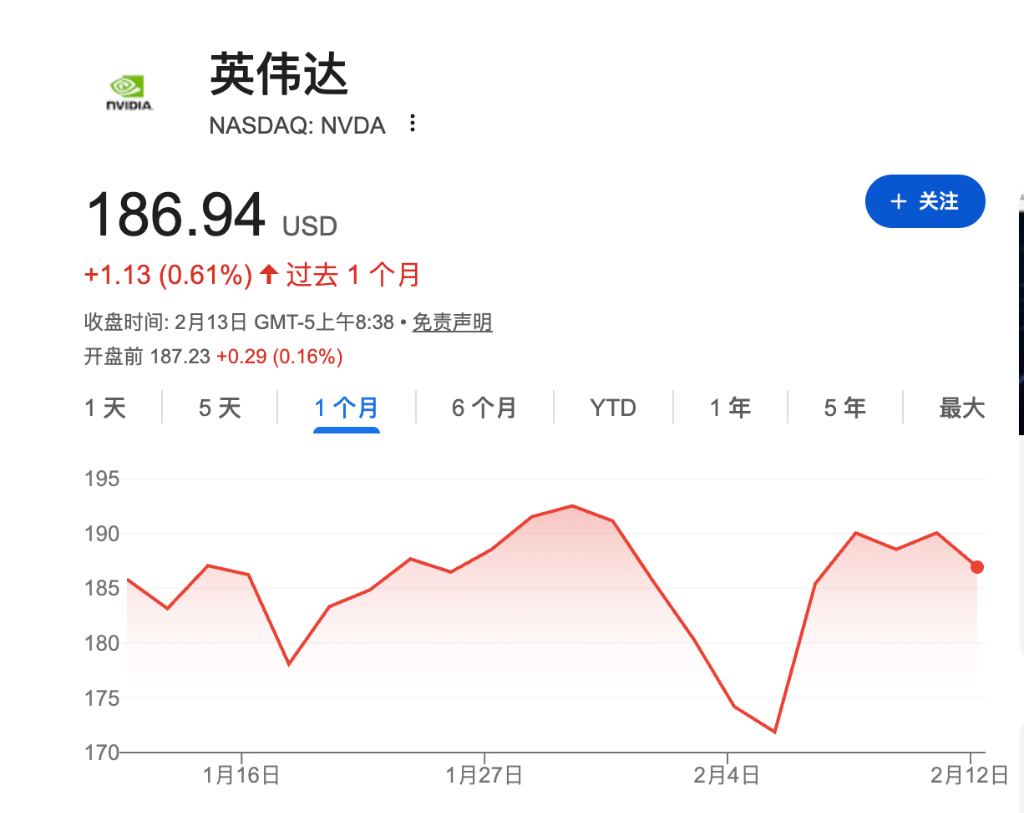
Core Insights - Nvidia stock (NASDAQ: NVDA) experienced a decline as traders took profits after a period of strong performance, reinforcing its status as a "crowded winner" in the AI-chip sector [1] Group 1: Company Performance - Nvidia's stock price fell on Friday, indicating a profit-taking move by investors following a successful run [1] - The company has been recognized as a leader in the AI-chip market, contributing to its recent stock performance [1] Group 2: Market Context - The decline in Nvidia's stock is part of a broader market trend where investors are locking in gains across various sectors [1]
AI需求仍强却带不动股价!英伟达四季度至今仅涨1%,市场观望情绪转浓
Hua Er Jie Jian Wen· 2026-02-13 14:23
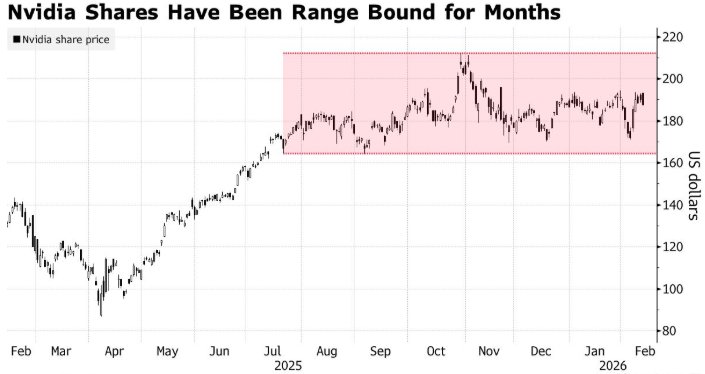
尽管人工智能领域资本支出持续膨胀,英伟达的股价表现却趋于冷却。这家AI芯片巨头自四季度以来仅上涨约1%,目前市盈率约为24倍,与纳 斯达克100指数大致持平,显示市场正重新评估其估值溢价。 竞争格局的变化成为观望情绪的核心驱动。英伟达首席执行官黄仁勋本月以约200亿美元收购推理硬件初创公司Groq的技术授权并招募其大部分 芯片团队,这一举动本身即印证了其他公司在特定领域的竞争力。与此同时,Cerebras与OpenAI签署了100亿美元的快速推理芯片供应协议, Anthropic也与多家非英伟达芯片供应商达成合作。 这些交易正在重塑市场对AI芯片格局的认知。多家初创企业表示,自Groq交易以来,潜在投资者的兴趣明显上升。SambaNova甚至放弃了以远低 于上轮估值出售公司的讨论,转而寻求新一轮融资。 对投资者而言,这一系列信号意味着:尽管英伟达仍是AI芯片领域无可争议的领导者,但其垄断地位可能不再像过去那样牢不可破。市场正 从"押注单一龙头"转向"重新定价竞争风险"。 推理芯片市场成为竞争焦点 微软支持的AI芯片公司D-Matrix首席执行官Sid Sheth指出,自去年初DeepSeek亮相以来,市场对快 ...
NVDA, INTC and AMD Forecast – Chip Stocks Look a Bit Soft in Early Action
FX Empire· 2026-02-13 13:31
EnglishItalianoEspañolPortuguêsDeutschالعربيةFrançaisImportant DisclaimersFXEmpire is owned and operated by Empire Media Network LTD., Company Registration Number 514641786, registered at 7 Jabotinsky Road, Ramat Gan 5252007, Israel. The content provided on this website includes general news and publications, our personal analysis and opinions, and materials provided by third parties. This content is intended for educational and research purposes only. It does not constitute, and should not be interpreted a ...
6000亿美元豪赌下的焦虑:大厂AI支出虽激增,英伟达(NVDA.US)股价却不再随之起舞
Zhi Tong Cai Jing· 2026-02-13 12:44
Core Viewpoint - Major tech companies are increasing their spending plans on artificial intelligence infrastructure, yet Nvidia's stock price has remained stagnant for months despite being a key beneficiary of this investment trend [1][4]. Group 1: Nvidia's Stock Performance - Nvidia's stock has seen less than a 1% increase since early Q4 of last year, despite reaching an all-time high in late October [1]. - The stock's performance in early 2026 is only slightly outperforming the S&P 500, showing a slowdown compared to nearly 40% growth in 2025 [1]. - Currently, Nvidia's stock price is approximately 24 times its expected earnings, which is in line with the Nasdaq 100 and slightly above the S&P 500, but still significantly lower than its five-year average of 38 times [4]. Group 2: Capital Expenditure and Market Sentiment - Companies like Meta, Alphabet, Microsoft, and Amazon are expected to increase their capital expenditures to over $600 billion by 2026, but concerns about the returns on these investments have not significantly boosted stock prices [1]. - Analysts express worries that the ultimate benefits of AI may not keep pace with the announced capital expenditures, potentially leading to market saturation and a pause in investments [4]. - Despite the anticipated growth in Nvidia's sales by 58% this year and 28% by 2027, the valuation of Nvidia is under pressure due to expected slowdowns in revenue growth [4]. Group 3: Analyst Perspectives - Analysts have not significantly changed their revenue and profit forecasts for Nvidia for 2026 since the announcement of spending plans by major tech firms, indicating a wait-and-see approach [5]. - Market sentiment can shift rapidly, and stocks like Nvidia may experience natural consolidation periods after significant price increases [6].
Trucking and real estate stocks struggle to gain momentum in premarket after becoming latest victims of AI fears
CNBC· 2026-02-13 12:37
Logistics Sector - Logistics stocks experienced significant declines due to AI-related fears, particularly after the introduction of a new tool called SemiCab from Algorhythm Holdings, which is marketed as a leading transportation platform [2][3] - C.H. Robinson and RXO saw their stock prices drop by as much as 20% on Thursday, with C.H. Robinson rebounding slightly by 0.7% in premarket trading, while RXO continued to decline by 1.5% [2] - Expeditors International of Washington fell over 16% on Thursday but was trading flat in premarket, while J.B. Hunt Transportation Services lost an additional 0.6% after a 9% drop the previous day [3] Real Estate Sector - The commercial real estate sector faced a continued sell-off, with CBRE among the hardest hit, extending its losses with a 0.6% decline in premarket trading [4] - Jones Lang LaSalle and Hudson Pacific Properties also saw marginal declines, while SL Green Realty rebounded slightly by 0.4% after a 5% drop on Thursday [4] Software Sector - Software stocks were affected by the broader market sell-off, with Palantir Technologies down 1.5% and Autodesk and Salesforce both down 0.1% in premarket trading [5] - The iShares Expanded Tech-Software Sector ETF (IGV) lost around 3% on Thursday and is down approximately 23% year-to-date, indicating a bear market [6] - Notably, all "Magnificent Seven" tech stocks ended Thursday in negative territory, with Tesla leading the losses at 0.8% [6] Analyst Insights - UBS strategists noted that the recent developments validate AI's monetization potential and emphasize its transformative nature, suggesting that investors should diversify across sectors and geographies rather than focusing solely on the U.S. information technology sector [7] - Dan Ives from Wedbush Securities acknowledged that while some software companies may struggle due to AI advancements, the entire sector should not be discounted, highlighting that companies like Salesforce and ServiceNow will remain integral to the AI revolution [9][10]
Wall Street analyst reveals ‘the two best physical AI' stocks to buy
Finbold· 2026-02-13 11:15
Group 1: Tesla - Tesla is evolving from a vehicle delivery company to a vertically integrated AI platform focused on autonomy, robotics, and data [2] - The company is generating real-world driving data from 10 million vehicles, which is crucial for autonomous software development and AI-driven robotics [3] - CEO Elon Musk is building what is described as 'the biggest AI company in the world' through synergies with ventures like SpaceX and xAI [2] Group 2: Nvidia - Nvidia is positioned as a leader in AI chips, being 'four years ahead' of competitors, with a potential to reach a $10 trillion valuation [5] - The company is currently valued at around $4.5 trillion and trading at approximately 25 times forward earnings, with consensus estimates seen as too conservative [5] - Demand for Nvidia chips is surging, indicating a real infrastructure buildout in the AI sector, which differentiates it from the dot-com bubble [4] Group 3: AI Industry - The AI wave is expanding beyond semiconductors into sectors like healthcare, financial services, and energy, indicating the creation of a new economy [6] - The current phase of AI development is likened to being in Las Vegas in the 1950s or Dubai 30 years ago, suggesting significant growth potential [6] - Long-term perspectives are necessary to assess the transformational shifts brought by AI technology [6] Group 4: Market Dynamics - While competitors will emerge and market share dynamics will change, Nvidia and Tesla are expected to remain key benchmarks in the AI sector [7]