
利夫生物

Search documents
工信部正式发布!凯赛/睿嘉康/丰原/圣泉/一诺生物/利夫/国生/微构/聚维元创/白银赛诺/京博中聚等上榜
合成生物学与绿色生物制造· 2026-02-07 06:11
全球政策进展 | 工信部、非粮 【SynBioCon】 获 悉,2月5日, 工业和信息化部办公厅、农业农村部办公厅 正式公布了 《 关于开展非粮生物基材料产业创新发展典型案例推荐工 作的通知 》,共计 35项。 【SynBioCon】 曾第一 时间报道: 工信部又发文!35项非粮生物制造典型案例上榜,这些企业值得关注! 共有 25家 企业相关技术入选 关键技术 创新 典型案例,分别是 山东埃尔派粉体 、 睿嘉康生物 、 博兴新材料、黑龙江博能绿色能源、 安徽丰原生物 、 山东一诺生物质 、 新乡化纤 、 上海德福伦 、 阳谷华泰 、宁夏滨泽新能源、 济南圣泉集团 、 利夫生物 、 浩森生物 、 京博中聚 、 天润和生物 、 中科国生 、万华禾香板、 聚维元创 、山东益得来生物、聊城金歌合成材料、 安徽雪龙新 材料、龙都天仁、黑龙江省秸乐农业、 海伦国投 、 白银 赛诺 。 共有 7 家 企业(8项案例)技术入选 应用场景拓展 典型案例,分别是 凯赛生物 、潍坊欣龙生物、 苏州聚维元创 、 安徽丰原生物 (2项)、 旭川化 学 、 北京微构工场 、 深圳光华伟业 。 共有 2处 开发区入 选 特色集聚区培育 典 ...

生物基材料企业「利夫生物」PEF通过国家食品接触材料审批!
synbio新材料· 2026-02-05 07:41
声明: 因水平有限,错误不可避免,或有些信息非最及时,欢迎留言指出。本文由仅作新材料相关领域介绍,本文不构成任何投资建议!转载请注明来源! 近日,国家卫生健康委国家食品安全风险评估中心(China National Center for Food Safety Risk Assessment) 通知,依据《中华人民共和国食品安全法》 相关规定,评审机构 以利夫生物相关产品为基本材料 审查了 PEF(聚2,5﹣呋喃二甲酸乙二醇酯) 作为食品相关产品新品种的安全性评估,并审查通过。 这预示着,利夫生物相关产品将被正式纳入《GB 4806.7-2023食品安全国家标准食品接触用塑料材料及制品》清单, 获准在中华人民共和国境内用于食品 接触用途。 食品接触材料的合规性,建立在材料本身的安全性与稳定性之上。通过十余年的持续研发与工程化积累,利夫生物率先将产业化 FDCA 的纯度提升至 99.99%,并围绕可能影响食品接触安全的微量杂质建立了严格的筛查与控制体系。在此基础上开发的 PEF 产品,经专家委员会评估其单体迁移测试及 NIAS(非有意添加物质)筛查等关键指标,均表现出高度稳定性, 相关数据显著优于国际同类企业 ...
今晚20:00直播!《高性能呋喃生物基材料PEF的研发和产业化》
synbio新材料· 2026-01-22 03:40
生物基材料作为替代传统石油基制品的关键方向,正迎来重要发展机遇。其中, 呋喃生物基材料 PEF 凭借高阻隔性、全生命周期低碳等优势,被视为下一代 聚酯材料的核心代表。 利夫生物 作为国内 FDCA 与 PEF 产业化领军企业,已先后建成百吨级、千吨级产线,其 万吨级生产线正在建设中 。 此外,利夫生物还 开拓了生物基芳香 族材料在食品饮料、纺织服装、3C汽车等领域的应用 ,与众多全球龙头企业建立了战略合作伙伴关系。 3)在包装领域,PEF具备数倍于传统食品接触材料的阻隔性,是理想的敏感性内容物包装材料,目前正在饮料、啤酒、果汁等场景广泛落地。 4)在纺织服装领域,利夫生物所创立的BioFleax™(PEF纤维),具备优异的吸湿速干性能、天然抑菌防螨性能、本征防晒性能,目前正被众多国际一线 品牌用于高性能服装开发。 为此,synbio深波有幸邀请到了 利夫生物CMO罗钊先生于 1月22日晚上20:00 在【synbio深波视频号】进行直播分享 , 直播 分享主题: 《 高性能呋喃生物 基材料PEF的研发和产业化 》 。 点击下方,立即 预约直播 ! (*预约后直播开始时微信会自动提醒) 锁定1月22日晚20:0 ...

DT新叶奖竞选⑩ | 华澄生物:生物基蓝色素、印染绿色解决方案
合成生物学与绿色生物制造· 2026-01-20 06:25
Core Viewpoint - The article highlights the participation of Jiangsu Huacheng Biotechnology Co., Ltd. in the 2026 DT New Leaf Award, focusing on its innovative bio-based blue pigment and green dyeing solutions aimed at promoting sustainable practices in the textile industry [2][13]. Group 1: Company Overview - Jiangsu Huacheng Biotechnology Co., Ltd. was established in 2024, focusing on synthetic biology research and product commercialization, particularly in bio-based materials and biochemicals for pharmaceuticals, cosmetics, food, and health products [3]. - The company aims to drive industrial upgrades through technological innovation, emphasizing large-scale bio-manufacturing of food colorants, chemical dyes, and functional food ingredients [3]. Group 2: Bio-based Blue Pigment - The bio-based blue pigment is produced using synthetic biology techniques, utilizing engineered microorganisms as "cell factories" for efficient fermentation [4]. - Compared to chemical dyes, bio-based dyes are natural, non-toxic, and exhibit excellent antibacterial and anti-yellowing properties, with lower damage to high-end fabrics like silk and wool [4][10]. - The production process avoids traditional petroleum-based methods, reducing harmful substance generation and wastewater treatment costs, while achieving USDA bio-based product certification [8][10]. Group 3: Green Dyeing Solutions - Traditional chemical dyes pose significant health and environmental risks, leading to complex pollution issues in the textile industry [9]. - Huacheng's approach involves replacing chemical dyes with bio-based alternatives, providing scalable clean dyeing solutions that align with national environmental goals [9]. - The innovative process utilizes renewable carbon sources and mild fermentation conditions, significantly lowering wastewater chemical oxygen demand and overall energy consumption [9]. Group 4: Awards and Recognition - The DT New Leaf Award features four categories: Innovation Material Award, Innovation Application Award, Most Commercially Valuable Award, and Innovative Industry Solution Award, with the first round of applications closing on February 10, 2026 [5][13]. - Huacheng's participation in the award reflects its commitment to sustainable practices and innovation in the bio-based industry [2][13].
2026年中国呋喃二甲酸行业发展现状、竞争格局及趋势预测
Sou Hu Cai Jing· 2025-11-26 06:13
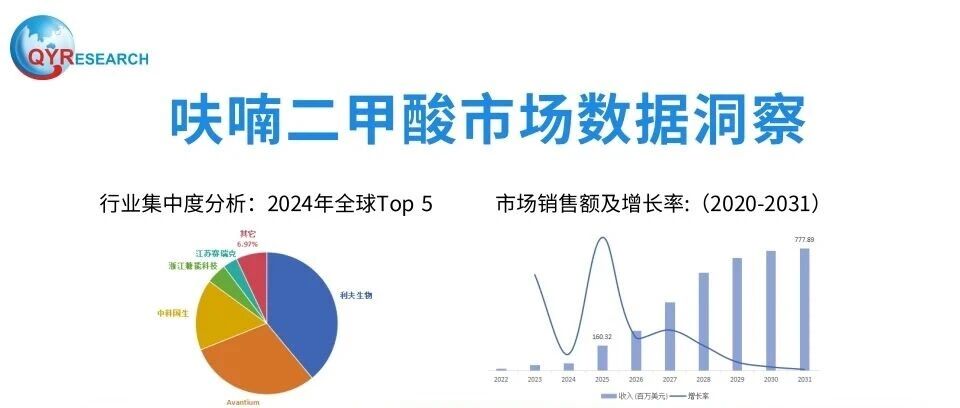
Core Insights - Furandicarboxylic Acid (FDCA) is a promising raw material with applications in surfactants, epoxy resins, and next-generation polymers like PEF (polyethylene furanoate) [1][8] - The FDCA industry chain is centered around biomass resources, utilizing renewable materials such as corn, sugarcane, and straw for production [1][13] - The global FDCA market is expected to grow significantly, with revenues projected to increase from approximately $13.8 million in 2022 to $160.32 million by 2025 [2][15] Industry Overview - FDCA was selected by the U.S. Department of Energy in 2004 from over 300 biomass-derived compounds, gaining attention in the market [2][15] - The first FDCA pilot plant was established by Avantium in the Netherlands in 2011, marking the beginning of commercial interest in FDCA [2][15] - The period from 2022 to 2031 is identified as the early stage of rapid commercialization for FDCA, with significant market fluctuations expected due to new entrants and expansion plans [2][15] Market Dynamics - The shift from petroleum-based products to bio-based alternatives has led to increased R&D investments in bio-based FDCA [2][17] - PEF, derived from FDCA, is anticipated to replace PET plastics due to its superior barrier properties [2][17] - Major global players in the FDCA market include Avantium, Zhongke Guosheng, Lif Biological, and others, with the top five companies expected to hold over 90% market share by 2024 [2][17][18] Application and Benefits - FDCA and its derivatives are used in high-performance polymers, with applications in food packaging, medical materials, and biodegradable products [1][10] - PEF exhibits better gas barrier properties and heat resistance compared to traditional PET, making it suitable for various applications [1][10] - FDCA's antibacterial and chelating properties support innovations in pharmaceuticals and biodegradable materials [1][10] Research and Analysis - The research team employs various analytical models such as SCP, SWOT, and PEST to assess the FDCA industry's market environment, policies, and competitive landscape [3][23] - A comprehensive report titled "2026-2032 China FDCA Industry Development Outlook and Investment Strategy" has been prepared to guide investment decisions and strategic planning [3][23]
全球与中国呋喃二甲酸市场现状及未来发展趋势
QYResearch· 2025-11-13 02:07
Core Viewpoint - The FDCA (Furandicarboxylic Acid) market is experiencing significant growth due to its potential to replace petroleum-based products, particularly in the production of PEF (Polyethylene Furanoate), which offers superior barrier properties compared to PET (Polyethylene Terephthalate) [3][14]. Group 1: Product Definition and Market Overview - FDCA is a key raw material for high-performance bio-based polymers, including PEF, and is derived from 5-HMF [2]. - The global FDCA market is projected to grow from approximately $1.38 million in 2022 to $77.79 million by 2031, with a compound annual growth rate (CAGR) of 30.1% from 2025 to 2031 [5]. - The commercialization of FDCA began in 2022, following increased research and development efforts since 2018 [3]. Group 2: Regional Market Dynamics - The European and Chinese markets currently dominate the FDCA market, with Europe expected to account for 32.8% and China for 66.0% of the global market value by 2024 [8]. - The production of 99.9% pure FDCA is the mainstream product, projected to represent 95.4% of global output by 2024 [8]. Group 3: Industry Players and Competition - Major players in the FDCA market include Avantium, Novamont, Stora Enso, Origin Materials, and others, with the top five companies expected to hold over 90% market share by 2024 [9]. - The competition in the industry is anticipated to intensify, particularly in the Chinese market [9]. Group 4: Applications and Future Trends - PEF is the primary application for FDCA, expected to account for approximately 92.1% of its usage in 2024 [8]. - The potential for FDCA to be used in various applications, including engineering plastics, polyamides, and polyurethanes, is significant, driven by its strong barrier properties [14]. Group 5: Policy and Regulatory Environment - The Chinese government is increasingly supportive of bio-based materials, including FDCA, as part of its environmental policies aimed at reducing carbon emissions [16]. - FDCA is classified as an "allowed" product under the 2024 Industrial Structure Adjustment Guidance Catalog, indicating a favorable regulatory environment for its development [16].
共赴进博会创新之约,解锁跨境合作黄金机遇
Sou Hu Cai Jing· 2025-10-24 11:24
Core Insights - The event on November 8 aims to facilitate cross-border cooperation and international market expansion for tech companies [1] - Plug and Play China collaborates with IntelliPro to create an efficient platform for global tech innovation [1] - The event will feature prominent speakers from various organizations, enhancing the dialogue on international collaboration [1] Group 1: Event Details - The event is scheduled for November 8, from 12:30 to 15:00, at the NH Innovation Incubation Zone, North Hall stage of the Import Expo [4] - Seven selected cross-border tech companies will present their innovative projects, aiming to establish investment and technology collaboration [2] Group 2: Company Background - Plug and Play is a globally recognized tech innovation ecosystem platform, with over 60 innovation centers worldwide and more than 20 years of experience in tech investment and incubation [5] - Since its establishment in China in 2016, Plug and Play China has set up innovation centers in multiple cities and has been actively involved in early-stage tech investment and innovation services [5] - The platform has supported 180 large enterprises and government clients, incubating over 1,000 startups annually and facilitating nearly 500 innovation technology applications [6]
绿色低碳相关产业受到关注
Orient Securities· 2025-09-17 01:45
Investment Rating - The industry investment rating is maintained as "Positive" [5] Core Viewpoints - The green low-carbon related industries, including green methanol, bio-aviation fuel, and green polyester, are gaining market attention due to their vast market potential and the need for sustainable development [8] - The green polyester sector is particularly favored as new technologies are expected to drive rapid growth, allowing for the replacement of virgin materials and opening up significant new market opportunities [8] Summary by Sections Investment Recommendations and Targets - The report recommends buying shares of Wan Kai New Materials (301216), which is well-positioned in the green polyester industry. Other recommended stocks include Sinopec (600028), Hengli Petrochemical (600346), Rongsheng Petrochemical (002493), Wanhua Chemical (600309), and Huayi Group (600623) due to expected recovery in the petrochemical and chemical sectors driven by "anti-involution" policies. Additionally, it suggests buying shares of pesticide formulation companies such as Runfeng Co., Ltd. (301035), Guoguang Co., Ltd. (002749), and Hailier (603639) [3]





东方证券:新技术驱动下绿色聚酯行业有望迎来快速发展
Zhi Tong Cai Jing· 2025-09-11 07:05
Core Viewpoint - The green polyester industry is on the verge of significant growth due to breakthroughs in new technologies that will expand the raw material base beyond bottle flakes, potentially opening up an additional 80 million tons of market space [1][2]. Industry Overview - The current processing level of the green polyester industry using physical methods is relatively mature, but it is limited to using bottle flakes as raw materials, primarily producing short fibers and bottle flakes [2]. - The annual production of polyester fibers is 79 million tons, with polyester bottle flakes accounting for approximately 32 million tons, representing about one-third of the total polyester production [1][2]. Technological Advancements - New technologies are expected to allow green polyester to completely replace virgin materials, thus significantly increasing the market potential [2]. - The recycling technology using biological methods is gaining attention, with companies like Carbios in France and Tianjin Yuantian Bio already making strides towards industrialization [3]. Market Dynamics - The polyester recycling system is relatively mature, with low-cost waste materials, which enhances the economic viability of developing new technologies [2]. - The flexibility of biological methods, which can produce recycled PTA and ethylene glycol, allows for broader applications beyond just polyester [3]. Investment Opportunities - Companies like WanKai New Materials and New Feng Ming are positioned well within the green polyester sector, with strategic investments and developments in bio-based materials [5][6]. - WanKai New Materials has established a forward-looking layout in both major development directions of green polyester and is expected to benefit from its parent company's investments [5]. - New Feng Ming, a leading polyester filament enterprise, is also investing in bio-based materials, positioning itself as a key player in the market [5]. Emerging Trends - The development of bio-based materials, such as the use of FDCA to replace PTA, is gaining traction, with significant investments from major players in the polyester supply chain [4]. - The commercialization of bio-based polyester applications is anticipated to accelerate, driven by clear application scenarios [4].

新技术驱动下绿色聚酯行业有望迎来快速发展
Orient Securities· 2025-09-11 05:44
Investment Rating - The report maintains a "Positive" investment rating for the basic chemical industry [4] Core Insights - The green polyester industry is expected to enter a rapid growth phase driven by strong demand for low-carbon consumption [10][35] - New technologies in the green polyester sector are anticipated to unlock significant development potential, moving beyond the limitations of traditional recycling methods [12][21] - The biological method in recycling technology shows distinct advantages over chemical methods, with a focus on lower energy consumption and higher flexibility in product forms [29][34] - The development of bio-based materials is gaining significant attention and is on the verge of commercialization, with key players making substantial investments [35][39] Summary by Sections 1. Rapid Development of the Green Polyester Industry - The green transformation of plastics is primarily through recycling and bio-based materials, with polyester being the fastest-growing type [10][12] - Current recycling methods are limited, but new technologies are expected to create new opportunities in the industry [10][12] 2. New Technologies in Green Polyester - The physical recycling method is mature but limited to bottle flakes, while new technologies can expand raw material sources significantly [12][22] - Polyester's properties facilitate technological advancements, making it easier to find bio-based alternatives [21][23] 3. Advantages of Biological Methods in Recycling - Chemical recycling methods are established but have limitations in temperature and product forms, while biological methods are entering commercialization with favorable market feedback [29][30] - Companies like Carbios and domestic firms are leading the way in biological recycling technology [34][35] 4. High Attention on Bio-based Materials - The development of bio-based materials, particularly using FDCA to replace PTA, is gaining traction with significant investments from major industry players [35][39] - The commercialization of bio-based polyester is expected to happen soon, driven by clear application scenarios [35][36] 5. Investment Recommendations - Companies such as Wankai New Materials and Xin Fengming are positioned well in the green polyester market, with strategic investments and projects underway [35][40] - The report highlights the potential for high returns due to the strong demand for green polyester products [35][40]
