360

Search documents
小额贷款哪个平台好?2026年正规小额贷款全指南
Sou Hu Wang· 2026-02-23 12:05
在急需资金周转时,一款好借的小额贷款产品能解燃眉之急。然而市面上的小额贷款产品较多,不少借款人会发出疑 问:小额贷款哪个平台好?今天,小编就为大家介绍四家正规的小额贷款产品(排名不分先后)。 1、微粒贷(微众银行) 额度:500元-20万元,100元起借,额度可循环使用。 利率:最新年化利率(单利)为3.06%-23.76%,按日计息。 分期:微粒贷分期有多种选择,如6、12、24期,具体期数以页面显示为准。支持提前还款,提前还款没有违约金, 利息仅计算到结清日前一天。 操作简单:微粒贷是微众银行推出的小额贷款产品,受邀用户直接在微信服务或手机QQ钱包里就能操作(如果看不到 入口,说明暂时还不能使用),不用担保和抵押,24小时都能申请,一般10秒内出额度,最快1分钟到账。 4、奇富借条(360) 2、蚂蚁借呗(蚂蚁消费金融) 额度:借呗额度最高30万。 利率:年化利率为3.6%-24%,按日计息,无隐藏费用。 分期:借呗不限制使用次数,只要还有额度就能循环借,最高可分12期。 3、京东金条(京东金融) 额度:额度最高30万。 额度:额度最高20万。 利率:年化利率为7.2%-24%。 分期:最长可分24期。 ...
A股235亿元天价离婚余波未了,康泰生物实控人解除一致行动,减持隐忧凸显
Hua Xia Shi Bao· 2026-02-12 09:39
Core Viewpoint - The recent announcement by Shenzhen Kangtai Biological Products Co., Ltd. regarding the termination of the concerted action agreement between its actual controllers, Du Weimin and Yuan Liping, has reignited concerns over the company's control stability and potential shareholder dilution following their high-profile divorce that split a market value of 23.5 billion yuan [3][5]. Group 1: Shareholder Dynamics - The termination of the concerted action agreement has resulted in Du Weimin's voting rights decreasing from 46.62% to 25.50%, while Yuan Liping now holds 17.07% [5]. - Yuan Liping has committed not to seek control of the company post-termination, aiming to alleviate market concerns regarding control instability [5]. - Since the divorce in 2020, Yuan Liping has reduced her holdings significantly, cashing out nearly 3 billion yuan, raising fears of further dilution of shares following the termination of the agreement [6]. Group 2: Operational Challenges - Kangtai Biological's core business includes the research, production, and sales of human vaccines, with key products such as the 13-valent pneumococcal polysaccharide conjugate vaccine and others [7]. - The company has faced significant operational challenges, including the resignation of a vice president and the termination of a joint venture with AstraZeneca, which was intended to invest approximately 2.76 billion yuan [8][10]. - The decision to terminate the joint venture was influenced by a rapidly changing market environment and increased risks associated with new investments in the vaccine industry [10]. Group 3: Financial Performance - Kangtai Biological's financial outlook is concerning, with a projected net profit for 2025 expected to decline by 63.80% to 75.70%, amounting to between 49 million and 73 million yuan [10]. - The company's performance has been volatile, with net profits peaking at 1.263 billion yuan in 2021, followed by a loss of 133 million yuan in 2022, and a recovery in 2023 and 2024, only to face another significant decline in 2025 [11]. - As of February 11, 2026, the company's stock price has plummeted nearly 90% from 146 yuan per share at the time of the divorce, reflecting a substantial decrease in valuation [11].



中国第一批没有论文的工科博士毕业了
猿大侠· 2026-02-10 04:11
henry 发自 凹非寺 量子位 | 公众号 QbitAI 国内博士毕业,居然不用死磕论文了! 最近,Nature专门发文关注了这一动向—— 由中国首次授予的 实践型博士 学位: 不看论文,只认硬核实践产出! | nature | | | | | --- | --- | --- | --- | | Explore content ▼ | About the journal ▼ | Publish with us ▼ | Subscribe | 报道里也把这么做的目的说得很明白:就是要培养顶尖工程师,把国家整体创新能力直接拉上一个台阶。 而且,这不光是嘴上说说而已。 顺着Nature的线索深挖我们发现,这种不要毕业论文,靠实践成果拿下博士学位的还真不少,而且还都在去年9月后扎堆出现。 换句话说,这并不是某几所高校的"个案探索",而是一条已经被制度正式打开的通道。 这下,应该没有AI公司的CEO不是博士的了吧?(doge) 第一批没有论文的博士毕业了 据公开资料显示,自去年9月以来,全国至少已有11名"实践型博士"通过实践成果获得博士学位。 这些博士生遍布能源装备、航空航天、钢铁冶金、桥隧建设、电子电源、液压控制 ...

国家再出防傻子机制,对“聪明人”没啥用
Sou Hu Cai Jing· 2026-02-10 04:00
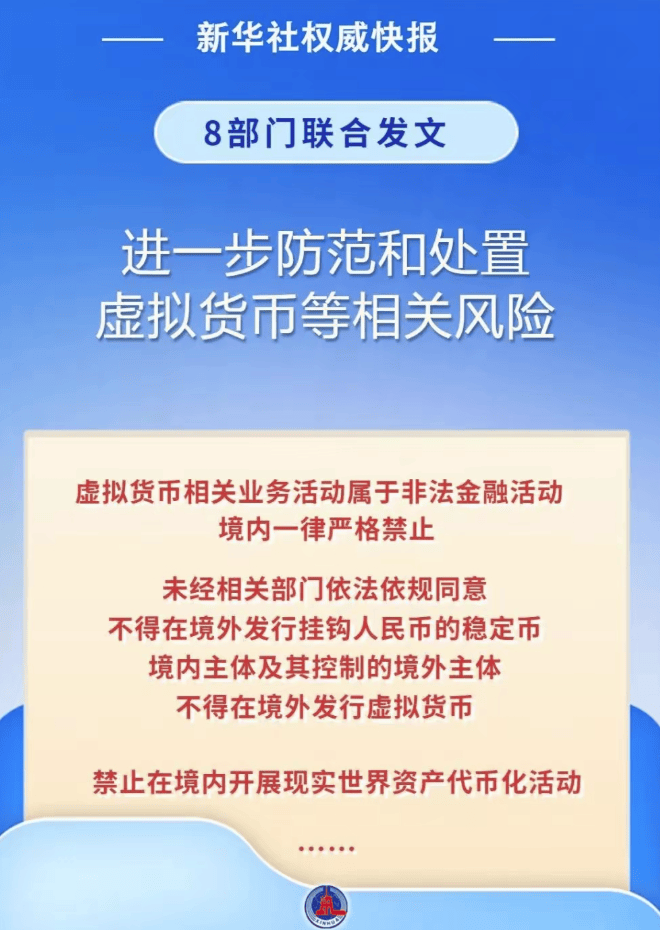
国家再出防傻子机制。 2月6日,中国人民银行、中国证监会等8部门联合发文,对虚拟货币进行全链条、无死角的常态化监 管。 这意味着,普通人炒币被割韭菜的途径将继续收窄,一些人会因为门槛太高难以参与,不得得放弃这 个"发财"的机会。 从个人的角度来看,非常支持国家的这一举措。如果没有党和国家像妈妈一样为子女计深远,相信不知 道有多少普通中国家庭会被虚拟货币割得倾家荡产。 以比特币为例,大家围绕其是否具备价值这个问题已经吵吵很多年了。我个人始终坚持其没啥价值,不 值得投资的观点,哪怕它从一文不值上涨数十万倍也坚持这样的观点。 之所以持这样的观点,没有什么太多高深的道理,主要是常识。 常识告诉我,比特币既无主权支撑,又无实物资产抵押,价格完全是靠炒作。投资炒作比特币,与走进 澳门去赌场有何区别? 之前,一些人信仰比特币之类的虚拟货币通过区块链技术去中心化,绝对安全。 事实证明,比特币一点也不安全。去年10月21日,一则爆炸性新闻震惊全球金融与执法界:美国财政部 宣布没收"太子集团"老板陈志价值140亿美元的比特币。大家猜一猜,密码永远不会被破解的比特币, 是怎么进入美国人口袋的? 我看有人还在梗着脖子争辩。先不说这桩 ...
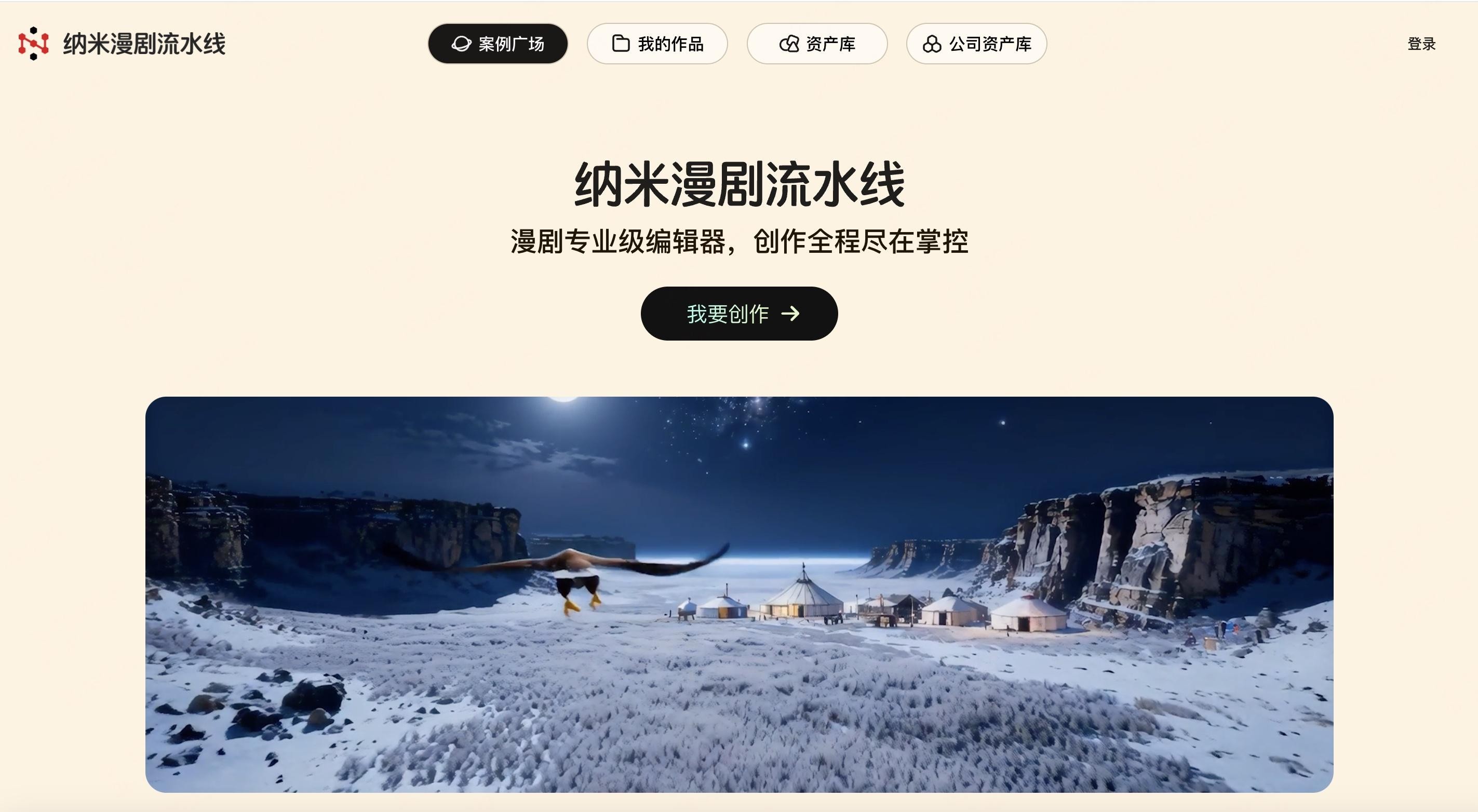
纳米漫剧流水线公测上线,开启漫剧工业化生产时代
Xi Niu Cai Jing· 2026-01-29 09:13
Core Insights - 360 has launched the "Nano Comic Production Line," the first industrial-grade AI comic production platform in China, aimed at enhancing efficiency and quality in the comic production industry [1][5]. Industry Overview - The domestic AI comic market is experiencing rapid growth, with an annual launch volume increase exceeding 80%, and the market size expected to surpass 20 billion yuan by 2025 [5]. - The industry faces challenges in balancing mass production and quality, with traditional AI tools suffering from issues like low success rates in content generation, averaging only 15% [5]. Platform Features - The Nano Comic Production Line integrates various production stages, including script analysis, asset generation, storyboard creation, and dynamic composition, allowing creators to maintain control over the creative process [5][6]. - The platform boasts a production speed over three times faster than mainstream tools, reducing the production time for a single episode to between 30 minutes and 1 hour, with a material generation success rate exceeding 90% [5][6]. - It features a proprietary "video world model" that enhances creative freedom by ensuring consistency in style and narrative throughout the production process [6]. Collaborations and Future Prospects - The platform has partnered with leading film and comic companies, including Poly Film, Huashi Entertainment, and others, to explore new production models that enhance content quality and capacity [9]. - Some collaborative projects have already been completed and are set to be released soon, including the second season of the award-winning AI drama "Mecha Bureau" [9]. - The Nano Comic Production Line is positioned not only as a productivity tool but also as a key component in establishing industry standards for AI comic production, reflecting the principle of "empowering creativity through technology" [9].
To B的智谱和To C的MiniMax,大模型生意都很难做
经济观察报· 2025-12-24 13:48
Core Viewpoint - The two companies, Zhipu and MiniMax, represent distinct commercialization paths in the AI large model sector, with Zhipu focusing on the B-end market and achieving a gross margin of 50%, while MiniMax targets the C-end market with over 70% of its revenue coming from overseas [2][4]. Group 1: Financial Performance - From 2022 to mid-2025, Zhipu accumulated revenue of 685 million yuan, with cumulative losses exceeding 6.2 billion yuan [4]. - MiniMax reported cumulative revenue of 86 million USD (approximately 600 million yuan) and cumulative losses of about 1.32 billion USD (approximately 9.3 billion yuan) from 2022 to September 2025 [5]. - Both companies operate at a revenue scale in the billion range, with MiniMax's revenue for the first nine months of 2025 being 53.4 million USD (approximately 376 million yuan) and Zhipu's revenue for the same period being 190 million yuan [6]. Group 2: Market Position and Competition - Zhipu's B-end business primarily serves large domestic government and enterprise clients, while MiniMax's C-end business relies on overseas individual users [5][10]. - Zhipu's revenue from enterprise deployments has decreased from 95% to 85% over the past three years, indicating increased competition in the B-end market [8]. - MiniMax's average monthly active users reached 27.6 million, with 1.77 million paying users, but still lagging behind major internet companies [8][9]. Group 3: Investment and Costs - Both companies face significant capital requirements, with Zhipu and MiniMax's cumulative R&D investments being 4.4 billion yuan and 500 million USD (approximately 3.5 billion yuan), respectively [6]. - In the first half of 2025, Zhipu's computing power expenditure was 1.1 billion yuan, while MiniMax's was 140 million USD (approximately 987 million yuan) [7]. - The high costs associated with computing power present a challenge for both companies, as they need to balance low revenue with substantial operational expenses [7]. Group 4: Future Outlook and IPO Strategy - Both companies are vying for the title of the first AI large model stock, with the urgency to go public for financing and providing an exit for external shareholders [12]. - MiniMax has a more robust cash position, with cash reserves of 1.04 billion USD (approximately 733.4 million yuan) as of September 30, 2025, compared to Zhipu's 2.5 billion yuan [12]. - The cash burn rate for Zhipu increased to approximately 2.21 million yuan per month in the first half of 2025, indicating a growing financial strain [12].

坏账率高达80%,中国网贷在印度栽了大跟头!
Jin Tou Wang· 2025-12-23 09:39
Core Viewpoint - Chinese online lending companies faced significant losses in the Indian market after attempting to replicate their domestic success, ultimately leading to their withdrawal due to high default rates and regulatory challenges [1][11]. Market Potential - India, with over 1.4 billion people and more than 600 million mobile users, presented a lucrative opportunity for online lending due to its low banking coverage (under 50%) and credit card penetration (less than 5%) [3]. - The absence of a clear cap on annualized loan interest rates in India allowed lenders to charge exorbitant rates, sometimes reaching 80% or even 300% for urgent loans [4]. Entry of Chinese Companies - Many Chinese online lending firms, including Xiaomi and 360, entered the Indian market around 2019, capitalizing on the regulatory environment and the lack of credit awareness among Indian consumers [4][6]. - By 2020, one-third of online lending platforms in India had Chinese backgrounds, promoting quick loans with minimal requirements [4]. Default Rates and Challenges - A significant issue arose as many Indian borrowers lacked understanding of credit, leading to high default rates, with some platforms experiencing bad debt rates exceeding 40% [6]. - The lack of a robust credit system and the ability of borrowers to evade repayment through various tactics resulted in substantial losses for Chinese lenders [6][7]. Collection Difficulties - Collection efforts in India proved ineffective due to cultural differences and language barriers, with many borrowers using local dialects to avoid communication [9]. - The introduction of new regulations by the Reserve Bank of India, which mandated transparency in fee structures and limited interest rates, forced many Chinese platforms to exit the market [9][11]. Conclusion and Lessons Learned - The failure of Chinese online lending in India serves as a cautionary tale about the importance of understanding local market dynamics and cultural contexts [11]. - The experience highlights that financial models based on exploiting human weaknesses may not be sustainable across different cultural and regulatory environments [11].

天龙集团(300063.SZ):与巨量引擎、腾讯等媒体平台保持战略合作关系
Ge Long Hui· 2025-12-17 00:56
Group 1 - The core viewpoint of the article highlights that Tianlong Group (300063.SZ) has established a comprehensive media resource matrix in its internet marketing segment, covering mainstream information flow media, search engine media, and smart terminal manufacturer media [1] - The company maintains strategic partnerships with major media platforms such as Douyin, Tencent, Baidu, Huawei, Xiaomi, Vivo, and 360 [1]

360市值单日蒸发40亿,前高管举报周鸿祎做假账几十亿,称会全网公布,回应来了
2 1 Shi Ji Jing Ji Bao Dao· 2025-12-16 23:19
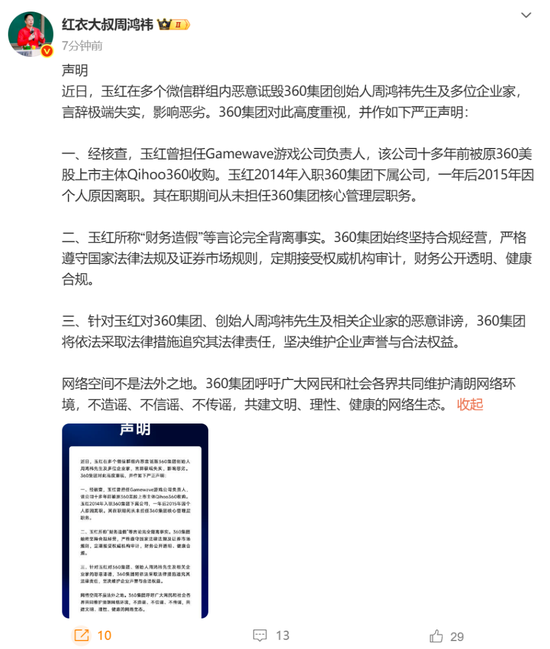
Core Viewpoint - The former executive of 360, Yu Hong, publicly accused the company's founder Zhou Hongyi of large-scale financial fraud, claiming to have evidence of significant financial misconduct [1][2]. Group 1: Allegations and Impact - Yu Hong alleged that he helped Zhou Hongyi falsify accounts by at least tens of billions, stating he would disclose this information online [2]. - Following these allegations, 360's stock price fell by 5.07% to 10.86 CNY per share, resulting in a market capitalization drop of 40 billion CNY to 760.15 billion CNY [2]. - The accusations have led to a surge of inquiries from investors on Zhou Hongyi's social media platforms [2]. Group 2: Company Response - 360 Group swiftly denied the allegations, asserting that there is no financial fraud occurring within the company [3]. - The company emphasized its commitment to compliance with laws and regulations, stating that its financial status is transparent and healthy [4]. - In a statement, 360 clarified Yu Hong's past role, noting he was never part of the core management team and had left the company for personal reasons [5]. Group 3: Legal Actions and Future Developments - 360 announced that it has initiated legal proceedings against Yu Hong for malicious defamation [8]. - The company plans to pursue legal responsibility for the allegations made by Yu Hong, who has not yet provided the claimed "core evidence" [11]. - The situation is being closely monitored as it could have lasting effects on the company's stock price and brand image [11].
360市值单日蒸发40亿,前高管举报周鸿祎做假账几十亿,称会全网公布,回应来了
21世纪经济报道· 2025-12-16 16:33
Core Viewpoint - The article discusses serious allegations of financial fraud against 360 Group, initiated by former executive Yu Hong, which has led to a significant drop in the company's stock price and raised concerns about its financial integrity [2][3][11]. Group 1: Allegations and Reactions - Yu Hong publicly accused 360's founder Zhou Hongyi of large-scale financial fraud, claiming he helped fabricate accounts amounting to at least tens of billions [2]. - Following these allegations, 360's stock price fell by 5.07% to 10.86 CNY per share, resulting in a market capitalization decrease of 40 billion CNY to 760.15 billion CNY [3]. - 360 Group quickly denied the allegations, asserting that it operates in compliance with laws and regulations, and that its financial status is transparent and healthy [5][6]. Group 2: Company Defense and Legal Actions - In a statement, 360 clarified Yu Hong's background, noting he had never held a core management position within the company and had left for personal reasons after a brief tenure [6][7]. - The company emphasized that its gaming business revenue, averaging about 20 million CNY annually since its restructuring, complies with accounting standards and has been audited without reservations [7]. - 360 announced it would pursue legal action against Yu Hong for defamation, indicating a commitment to protect its reputation [9][12]. Group 3: Background of Yu Hong - Yu Hong, a former senior vice president at 360, was previously the founder of Gamewave, which was acquired by 360 in 2014 [10][11]. - His reputation has been marred by controversies related to a blockchain project, which faced accusations of fraud and led to significant financial losses for investors [11].